fan fiction
Diving head first into the intricate worlds of superheroes, movies, and all things pop culture.
James Van Der Beek
For a generation, the name James Van Der Beek is inextricably linked with one character: Dawson Leery from the iconic teen drama Dawson's Creek. His face, filled with earnest ambition and teenage angst, became a defining image of late-90s television. But to reduce his career to that single role is to miss the fascinating journey of an actor who has consciously and creatively navigated the challenging path from teen idol to respected character actor.
By KAMRAN AHMADabout a year ago in Geeks
Reform UK, Nigel Farage, and the Battle Over ILR
In the turbulent landscape of British politics, few figures are as influential or divisive as Nigel Farage. As the honorary president and driving force behind Reform UK, he has once again thrust immigration to the forefront of the national conversation. A key point of contention in this debate is the future of policies like Indefinite Leave to Remain (ILR), a status that Reform UK has pledged to overhaul as part of its core platform. For migrants and political observers alike, understanding this proposed shift is critical.
By KAMRAN AHMADabout a year ago in Geeks
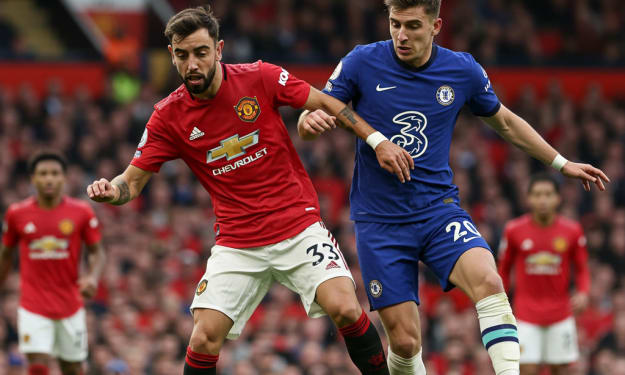
Manchester United vs. Chelsea
In the world of football, certain fixtures transcend the boundaries of mere games, becoming cultural events that capture global attention. Among these, the clash between Manchester United and Chelsea stands out as a spectacle of skill, strategy, and raw passion. Whether referred to as Man Utd vs Chelsea, Chelsea vs Man United, or simply the "Red vs Blue" showdown, this encounter is a highlight of the Premier League calendar, blending history with modern-day intensity.
By KAMRAN AHMADabout a year ago in Geeks
The Rise of the Everyday Geek
M Mehran There’s a moment in everyone’s life when they feel out of place. Maybe it’s sitting alone at lunch with a book nobody else cares about. Maybe it’s getting laughed at for talking too much about dinosaurs, space travel, or video games. For geeks, that moment isn’t just once—it’s a pattern. But the thing about geeks is this: what once made them outsiders often becomes the very thing that makes them extraordinary. Consider Sara. As a child, she memorized every constellation in the night sky. While other kids wanted to be singers or athletes, she dreamed of telescopes and distant galaxies. Her classmates teased her, calling her “Space Girl.” But she didn’t stop. She collected books on astronomy, saved up for her first telescope, and stayed awake until dawn scanning the skies. Years later, Sara became an astrophysicist, working on a team that discovered new exoplanets. The same passion that made her stand out in school is now helping humanity understand the universe. This is the quiet magic of geeks: they are driven by love, not approval. Geeks don’t chase trends. They don’t care if their favorite topics are popular. They devote themselves to the things that light them up inside—whether it’s coding, art, cosplay, music, science, or storytelling. That devotion is what sets them apart in a world where most people dabble in everything but master nothing. Think of the innovations we take for granted today. The smartphone in your hand. The video platforms we stream on. The virtual worlds we escape to in games. All of these came from people once dismissed as “too obsessed” or “too weird.” It was the geeks—those who spent nights tinkering in garages, sketching designs on napkins, or coding until their fingers ached—who built the future. But being a geek isn’t just about technology. It’s about intensity. A cooking geek can spend hours perfecting a single recipe. A history geek might know more about a century-old battle than most professors. A film geek can quote entire scenes and analyze camera angles with excitement that seems endless. To be a geek is simply to care more deeply than the average person. And here’s why that matters: passion fuels progress. The world doesn’t change because of people who shrug their shoulders. It changes because of people who say, “This matters to me,” and keep working until it matters to everyone else. When you walk into a convention center filled with comic fans, you’re seeing a living example of this. Thousands of people gather not because it’s fashionable, but because it’s meaningful to them. They trade theories, celebrate characters, and create art that connects strangers across the globe. What was once niche has become a global culture. For years, geeks were told to hide their passions. Now, they wear them proudly. T-shirts with superheroes, collections of rare figures, libraries filled with fantasy sagas—it’s no longer embarrassing, it’s empowering. To declare yourself a geek today is to declare that you refuse to be ashamed of what you love. And the world is better for it. Because geeks remind us of something essential: curiosity is powerful. A geek’s curiosity leads to discovery, creativity, and resilience. When others give up after a few failures, a geek tries again. When most say, “That’s impossible,” a geek whispers, “What if?” That stubborn curiosity has given us electric cars, virtual reality, cures for diseases, and art that moves millions. Back to Sara—the girl who became an astrophysicist. Years after her discoveries, she returned to her hometown and visited her old school. She gave a talk to the students, telling them how she used to sit in the same classroom and get laughed at for being “too into space.” She paused, smiled, and said, “The truth is, the things that make you different might just be the things that make you powerful. Don’t ever stop being curious.” The room was silent, but in the back, a young boy who loved building model rockets sat up a little straighter. Maybe, just maybe, he thought, being a geek wasn’t a weakness after all. That’s how culture shifts—not all at once, but through moments of recognition, inspiration, and courage. So here’s the message: if you’re a geek, don’t hide it. The world doesn’t need more people pretending to like what’s popular. It needs more people chasing what they truly love, no matter how unusual it seems. Because when geeks rise, society rises with them. After all, the future doesn’t belong to the people who laugh at passion. It belongs to the people who live it.
By Muhammad Mehranabout a year ago in Geeks
When the World Belongs to Geeks
M Mehran On the first day of college, Daniel walked into the cafeteria holding a laptop under his arm. Not just any laptop—a bulky, sticker-covered machine he had rebuilt piece by piece, upgrading parts he could barely afford. He carried it everywhere like someone else might carry a skateboard or guitar. To most students, it looked like a strange accessory. To Daniel, it was his identity. He wasn’t the guy who scored goals on the soccer field or drew applause on stage. He was the guy who stayed up all night trying to make a line of code work, who debated the merits of different graphics cards like others debated movies, who got lost in fantasy novels so thick they could double as doorstops. He was a geek—and he knew it. What he didn’t know was that being a geek would eventually become his greatest strength. For decades, geeks lived on the margins. They were teased for caring too much about the “wrong” things: comics, computers, science fiction, trivia, chess. They were the kids sitting alone at lunch, the ones drawing superheroes in notebooks or sketching rocket designs in math class. Society told them to tone it down, to stop being weird, to “get a real hobby.” But here’s the secret: geeks never stopped. They didn’t let go of their passions, no matter how unpopular they seemed. And because they didn’t let go, the world quietly shifted in their direction. Think about it. The Marvel movies dominating box offices? Built on the passion of comic book geeks who refused to give up their stories. The video game industry that rivals Hollywood? Born from kids who spent hours obsessing over pixels. The phone in your pocket? The result of countless nights where geeks like Daniel stayed up, tinkering with circuits and code. Daniel’s story wasn’t glamorous at first. He spent countless weekends indoors while others went to parties. His roommates teased him for “dating his laptop.” But slowly, people began noticing something. When their own computers crashed, they came to him for help. When they needed a new app idea for a class project, they asked him to build it. Suddenly, the guy they dismissed as “too into tech” became the guy everyone relied on. That’s the paradox of geeks: mocked in the beginning, indispensable in the end. But what makes geeks so powerful isn’t just intelligence—it’s passion. Passion that drives them to stay curious, to ask questions others overlook, to keep working long after everyone else has given up. Passion that refuses to be quiet, even when the world laughs. And this passion is contagious. Walk into a comic convention, and you’ll see thousands of people dressed as their favorite characters, proudly geeking out over every detail. Step into a robotics competition, and you’ll see kids with sparks in their eyes, cheering as their creations move across the floor. What was once “nerdy” is now celebrated—and that celebration has created a culture where creativity thrives. Daniel eventually started a small software company. At first, it was just him and two other geeks coding in a cramped apartment. They didn’t look like entrepreneurs—no suits, no glossy presentations, just three friends with mismatched chairs and endless pizza boxes. But their love for building something new gave them an edge. Within a few years, their program was being used in schools across the country. The boy who once hid behind his laptop became the man shaping the future of education. This is what geeks do. They take the things they love—whether it’s technology, games, books, or science—and they turn them into something bigger than themselves. They remind us that passion, even when misunderstood, has the power to change everything. And maybe that’s the greatest lesson geeks have to offer: don’t hide what you love. Whether it’s astronomy, anime, history, or hacking, your obsession is your gift. The world doesn’t move forward because of people who play it safe; it moves forward because of those willing to dive headfirst into their passions, no matter how unusual they seem. Today, the word “geek” isn’t an insult anymore—it’s a compliment. It means you care deeply. It means you’re unafraid to stand out. It means you’re willing to build, explore, and imagine. The world once belonged to the strong. Then it belonged to the rich. But today, and tomorrow, it belongs to the geeks. Because geeks don’t just live in the world. They reimagine it.
By Muhammad Mehranabout a year ago in Geeks
Why Avengers: Doomsday Could Be Marvel’s Game-Changer
The MCU universe is expanding faster than Tony Stark’s tech lab, and nothing has fans more hyped (and maybe slightly terrified) than the announcement of Avengers: Doomsday. With the return of Doctor Doom, the officially confirmed integration of the X-Men, the Fantastic Four’s long-awaited entrance, plus the New Avengers lineup — this might not just be another Avengers flick. It could be Marvel’s moment of reinvention. 1. What Do We Know So Far Here’s what makes Doomsday different: Doctor Doom is back — and with him comes legacy. Doom isn’t just any villain; he’s been one of Marvel’s most complex antagonists across comics, balancing tyranny, genius, and occasional “I’m saving my country” vibes. The movie is gathering multiple teams: Classic Avengers, New Avengers, Wakandans, Fantastic Four, and the original X-Men. That’s a crossover of epic proportions. It's set to be part of Phase Six of the MCU. After some movies underperformed (The Marvels, Captain America: Brave New World, Thunderbolts*) due to audience confusion or fatigue, Marvel seems to be trying to pull everything together. 2. Why This Might Reset Marvel’s Narrative Stakes If Marvel nails this, Doomsday could do more than please fans — it could redirect MCU’s whole trajectory. Here’s how: High stakes, high payoff: With all major teams and characters converging, the emotional and narrative stakes go way up. If characters we love are threatened or changed, fans will feel it deeply. Bridging decades: Fantastic Four (legacy comic roots), X-Men (returning under Marvel Studios), and Doctor Doom bring older, established threads into the newer MCU universe. It creates nostalgia and freshness. Opportunity to fix past mistakes: Some recent MCU films suffered from “you need to know all existing shows/characters to understand this.” Doomsday offers a chance to bring clarity — show why this matters, make it accessible even for casual fans. 3. The Challenges & What Could Go Wrong But epic as it sounds, Doomsday has dangerous traps: Overcrowding: With so many heroes and origin stories and plot threads, the movie might become bloated. Characters could be under-used, motivations skimmed. Comparison fatigue: Fans might compare it to Infinity War / Endgame. The benchmark is high. Marvel needs to deliver emotionally, not just visually. Villain overload: Doctor Doom is massive, but he’s not the only big bad. If too many villains compete for screen time (or are in background shadows), none shine. Audience disconnect: After the criticism that fans felt lost with some recent MCU offerings, Marvel must ensure Doomsday doesn’t require you to watch dozens of shows to keep up. 4. What Would Make It Legendary Here are elements that could push Avengers: Doomsday into iconic status — trending, meme-worthy, and unforgettable: Strong character arcs: Let characters grow. Let the stakes change them. Maybe someone dies, maybe someone gives up, or someone returns — but it must feel earned. Doctor Doom, not just villain, but complex: Show his motivations, maybe even sympathetic traits. Give him depth beyond “evil power”. If Doom gets screen time, give him weight. Fan moments + surprises: Cameos, unexpected returns (X-Men, older heroes), twists that reward longtime MCU watchers and entertain newcomers. Visual spectacle + grounded moments: Big battles, multiverse implications, but also quieter scenes: grief, moral decisions, fallout. Balance is critical. Accessibility: Make the story understandable even if you haven’t kept up with everything. Marvel should include brief recaps or show new characters in ways that feel intuitive. 5. What This Means for the Future of MCU If Doomsday succeeds, here’s what it might lead to: A new standard for MCU team-ups: more crossovers, deeper connections between TV and film. Revived interest: More people rewatching old shows, catching up. Could drive streaming numbers + fandom buzz. New villains or philosophies: Doom isn’t just about world domination — his worldview might challenge heroes morally. Could open MCU to more ideological conflict, not just fight scenes. Phase Six could end strong — with people excited for Secret Wars and whatever comes next. Final Geek Verdict Avengers: Doomsday is Marvel’s bold gamble. It could be the film that re-unites divided fans, delivers emotional weight, and re-builds trust in the MCU’s ambitious storytelling. Or it could be just another jam-packed spectacle that feels more like a checklist than a story. I’ll bet this: if Marvel leans into character, consequence, clarity, fans will love it — they already are buzzing with hope. Call to Action Are you excited for Avengers: Doomsday? What do you want to see most: Doctor Doom’s motivations, the X-Men’s integration, or the Fantastic Four finally getting their full MCU spotlight? Comment below and let the geek war begin. 👇
By Mustafa Khanabout a year ago in Geeks
Fallout: New Division
Piper sat at her old rusty workbench table covered in old newsprint with Headlines about The Wonderer scattered through the pile slowly building around the surface of the table. Her darkened, sunkened, exhausted eyes reflected the soft glow of the candle light as it danced to its melted wax as it dripped over a few of the browning paper. The dust lay stilled and Cloudy around the room. Piper had noticed that she was out of catfood.
By Parsley Rose about a year ago in Geeks
Luigi Mangione
Luigi Mangione: The Enduring Fascination with a Shadowy Figure In the vast landscape of organized crime history, certain names resonate with a particular, almost mythical, infamy. One such name is Luigi Mangione. While not as universally recognized as Al Capone or John Gotti, Mangione's story is a compelling chapter in the annals of American crime, a tale that continues to spark curiosity and occasional Luigi Mangione news cycles decades later.
By KAMRAN AHMADabout a year ago in Geeks
Robert Irwin on DWTS
Robert Irwin on DWTS: Continuing a Family Legacy of Grace Under Pressure The Dancing with the Stars ballroom is no stranger to wildlife warriors. In 2015, Bindi Irwin captivated audiences and judges alike, ultimately taking home the coveted Mirrorball Trophy with partner Derek Hough. Now, nearly a decade later, the Irwin family legacy continues as her younger brother, Robert Irwin, steps onto the famous floor for DWTS's latest season.
By KAMRAN AHMADabout a year ago in Geeks
Your Ultimate Guide to 'Dancing with the Stars' 2025
Your Ultimate Guide to 'Dancing with the Stars' 2025: How to Watch, Vote, and Everything You Need to Know The wait is almost over! The ballroom lights are dimming, the orchestra is tuning up, and a new cast of celebrities is ready to trade their day jobs for dance shoes. Dancing with the Stars 2025 is upon us, promising another season of breathtaking routines, shocking eliminations, and plenty of drama. Whether you're a longtime fan or a curious newcomer, here is your complete guide to everything DWTS.
By KAMRAN AHMADabout a year ago in Geeks
Robert Redford
Robert Redford: Separating the Man from the Myth, Celebrating a Living Legend The name Robert Redford evokes an immediate image: blond hair, steely blue eyes, and the relaxed, all-American charm that made him one of Hollywood's most enduring stars. Yet, a quick online search reveals a troubling trend: queries like "robert redford died," "robert redford cause of death," and "did robert redford die" are unfortunately common. Let's set the record straight: Robert Redford is alive. This article cuts through the misinformation to celebrate the life, legacy, and incredible career of a true icon who continues to inspire.
By KAMRAN AHMADabout a year ago in Geeks