
Survey Says: Family Feud's Still Iconic at 50
A look into the history of Family Feud as the hit game show celebrates 50 years


As the saying goes, "Life begins at 50."
I've been a huge game show fan since as early as the age of two or three. So yeah, game shows are basically my life. You name it, I've watched it on a loop. Jeopardy!, Wheel of Fortune, The Price is Right, the Pyramid shows, Hollywood Squares, among many others. One such show that I can't help but have fond memories of watching is the subject of this piece: Family Feud.
I think I was about six years old when I first watched Family Feud, at least that's how old I was in my earliest memories of watching the show. Like clockwork, 6PM hit, Family Feud time. On summer vacations, I could watch the daytime version at 9AM as well. More personal memories to come. Right now, the history:
Similar to several other game shows during that period, we have Mark Goodson to thank for this one. We all know that name, don't we? Mark Goodson, the alphabetical front half of Goodson-Todman Productions, cooked up this idea of having a show pitting two families against each other. That concept, the title, and the theme music were all based on the Hatfields and the McCoys (thankfully, no rifles are involved in this one).
The concept was simple; two competing families are asked survey questions, and the object was to find the top answers on the board. The number of top answers always varied from as low as three or four to as many as seven, eight, or even nine. It always starts with a face-off featuring one member of each family, and that's when the question is asked. It's always from a 100-person survey, and the question could be anything. For example, "Name a current NHL player who has never won the Stanley Cup, but truly deserves one." I guarantee you the #1 answer will be Connor McDavid. Whoever gets the top answer gets control of the board, and it's that family's object to fill the board and get all of the answers. Failing to answer or saying one that's not up there counts as a strike, and just like in baseball, three strikes and you're out. The opposing family has a chance to "steal" the tally that their opponents racked up, and all they have to do is get one answer. If it's up there, they steal it. If it's not, the main family retains the tall as their own.
Four rounds were often played, and in the early years, points were only doubled, and even then, it was only in that last round. It was just a few years later that points could be doubled in one late round and tripled in the last round. The overall winning goal, at first, was 200 points, but it was increased to 300 later on, and that's been the central number even to this day. In some rare instances, 400 was the goal. Family Feud was one of select few game shows that had what this sports fan can't help but call an "overtime" period. In current years, if neither family reached the 300 point goal, a sudden death round was played featuring the fifth members of each family. It was a face-off only, the point value was tripled, and they were looking for the top answer only. The sudden death question is always a cakewalk, like, for example, "Name a TV show that has been on for at least a decade." The Simpsons has to be the #1 answer.
The winning family plays the Fast Money round, which features two players from the winning family. The object is to answer five survey questions in a certain amount of time, and to get the best answers possible. The first contestant originally had 15 seconds to answer all five, but it was increased to 20 in 1994. The second contestant would be asked the same five questions, but could not duplicate previous answers (a buzzer would sound if they did). Because of that degree of difficulty, the second contestant would get five additional seconds. The goal in Fast Money is 200 points, and if they reach 200 points, the family wins the top cash prize; originally $5,000, increased to $10,000 (though it varied during the first half of the 1990s), and now, it's currently $20,000. If they failed to get 200, the family would be awarded $5 per point, with the most they could win being $995 (199 points). I'm still waiting for that to increase to $10 per point, especially with how high the cost of living is nowadays.
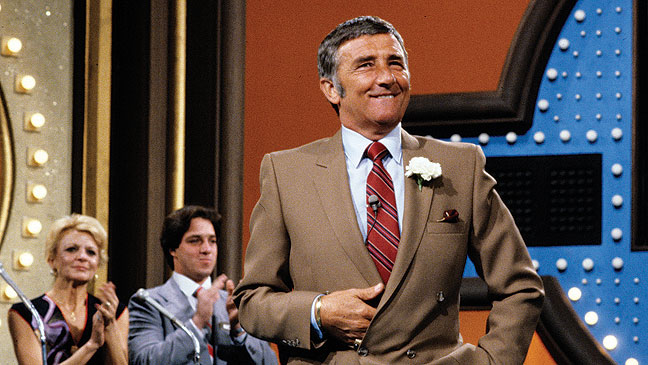
Family Feud premiered on ABC on July 12, 1976, and the original host was none other than the late, great Richard Dawson, though Goodson definitely didn't plan it that way. At the time, Dawson (who is also best remembered for playing Cpl. Peter Newkirk on Hogan's Heroes) was a panelist on another Goodson show, Match Game, and he had a deal in his contract that the next Goodson-Todman pilot would be offered to him. Goodson tried to keep Feud hidden from Dawson, and auditioned different candidates (including William Shatner, who was Goodson's top choice). However, Dawson found out about Feud, and his agent gave an ultimatum: either Dawson gets the offer or he stops his lively banter on Match Game--the very thing that has people watching the show. Goodson gave in, Dawson auditioned, and the rest is history.
Dawson hosted both the daytime show on ABC, which premiered on July 12, 1976, as well as the syndicated version that premiered on September 19, 1977. It was in May of 1978 that the "All-Star Specials" started, and they were one-hour editions often featured celebrities, sports figures, and yes, they even did one that featured pageant queens. Yep. The Celebrity Feud that we enjoy now? It all started back during Dawson's original tenure.
Speaking of Dawson, I have to address this. I was debating whether or not to mention this, after much thought, I have to bring it up, and you know what it is. "The Kissing Bandit." Dawson's original Feud tenure came (mostly) before my time, but I did learn about this when I was a kid. I don't know when this started, but I know this: Dawson habitually kissed the female contestants quite a bit. And it was a topic of controversy even then, so you know it's frowned upon now. Dawson defended the kissing staunchly, revealing that it was for love and luck and his mother did the same with him as a child. He actually stated that he believed the scrutiny against the kissing was racially motivated, as he also kissed some Black women on TV. My thoughts: Dawson doing all of that kissing is very off-putting, and many re-watching now in this current climate are definitely saying the same thing.
Dawson's tenure as Feud host lasted nine years, and they weren't exactly perfect. A lot of clashes behind the scenes, and yeah, Dawson (still ticked over nearly being undercut) definitely clashed with Goodson. Despite this, the show was strong from the beginning until it's end in 1985, with the syndicated version ending on May 17 of that year, while the daytime Feud ended on June 14, 1985.
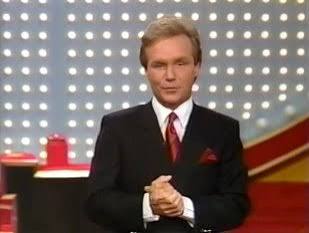
It would not be the last we would see of Feud, as the show returned on July 4, 1988, with a new host. True story: Goodson actually wanted Joe Namath, the Hall of Fame QB who guaranteed victory in Super Bowl III, and made good on his guarantee. Namath was a no go, so Goodson went with a wild choice: Ray Combs, an up and coming stand up comedian. They also had a new network, as the show was now on CBS, and it was on September 19, 1988 that a syndicated version premiered.
Combs was the host when I started watching as a kid, and I remember CBS's two-hour game show block at that time. Back then, in 1991, it was Feud at 9AM, daytime Wheel at 9:30AM (hosted by Bob Goen), and of course, The Price is Right at 10AM. That changed a year later. Daytime Wheel was gone, allowing Feud to become an hour long for the first time ever. The temporarily retitled Family Feud Challenge introduced the infamous "Bullseye" round, which had five questions being asked, with only the top answer adding money to the respective family's bank. Whatever the bank was after the Bullseye round would serve as the respective family's top cash prize for Fast Money. In addition, the first half would see two new families face off, with the winners facing the returning champions in the second half.
Daytime Feud becoming an hour long was done to improve ratings, because the ratings were not good, and Combs was getting blamed for it. A few higher ups, including Mark Goodson's son, Jonathan Goodson, not only wanted Combs out, they wanted Richard Dawson back. Many on the show, including and especially Mark Goodson, said no to that. Mark Goodson was Combs' biggest supporter, and as long as he was living, Combs would be Feud's host.
Sadly, that changed on December 18, 1992.
On that day, Mark Goodson passed away at the age of 77. One of the great game show titans was gone, and along with it, Combs' protection. Good ratings for the 1992-93 season kept Combs on, but that following year saw them dip again, big time. With Mark Goodson gone, Combs had no shield, and Jonathan Goodson got right to work getting Dawson back, and succeeding. Combs was out in 1994, and his final episode saw him rant about his exit before abruptly walking off at the end of the episode. Two years later, on June 2, 1996, Ray Combs committed suicide at the age of 40.
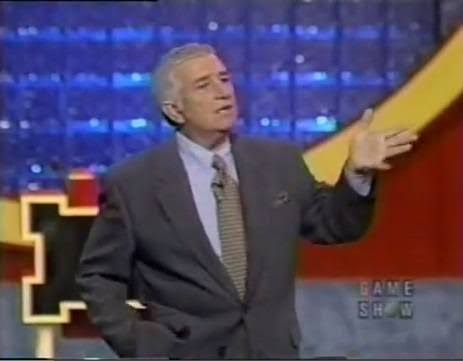
The seventh season saw Richard Dawson back as host for the first time in nine years, and he came out to a massive ovation. Dawson's response: "If you do too much of that, I won't be able to do a show for you because I'll cry." Dawson later spoke about how Feud was now an hour, adding that he always wanted to do an hour long show, because he'll meet more families, and give away more money. "So there's more of the Feud," Dawson added, "unfortunately, there's also more of me." That last line was Dawson quipping over his own weight gain since he last hosted.
I vividly remember watching that Dawson season in 1994 and 1995. I didn't know he was the original host until my dad told me during that year. I also remember that it was a task to watch those episodes because a certain trial was all over media back then. Episodes weren't airing until late hours, and that ended up killing that iteration of Family Feud. Dawson officially called it a career afterwards, and on June 2, 2012 (16 years to the day after Ray Combs' passing), Dawson passed away at the age of 79.
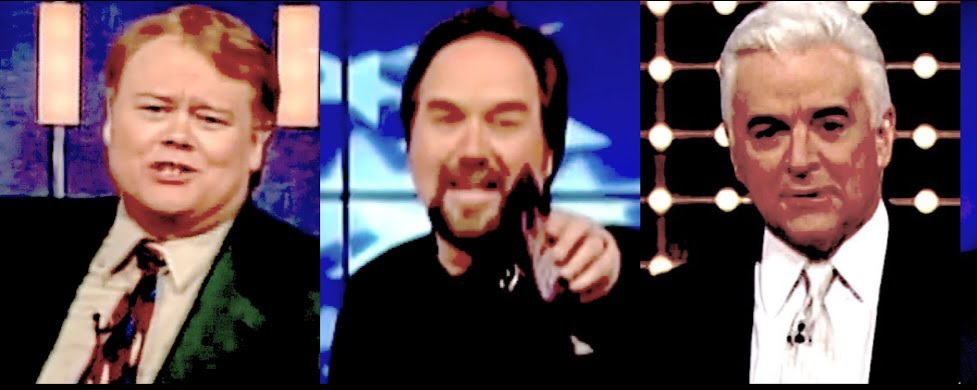
I remember being surprised by the promos that Family Feud was returning, and on September 20, 1999, it was time to play the Feud again. They picked the right time to bring back the show, as primetime game shows were becoming popular again. Not only was Family Feud back in syndication, this is the iteration that is still on now. On that date, the late, great Louie Anderson became the show's third host, doing so for the first three seasons of this iteration. In 2002, Richard Karn (Al Borland from Home Improvement) took over as host, lasting four seasons. 2006 saw John O'Hurley take over, and he not only played a game show host once (on the short-lived UPN sitcom, The Mullets), he also hosted To Tell the Truth. O'Hurley, of course, is best known for his long run as J. Peterman on Seinfeld, and for being the runner-up in the very first season of Dancing With the Stars.
So 11 seasons passed, and they had three different hosts. All good in their own right, but they were still looking for that perfect host who could take Family Feud to the next level. In the fall of 2010, that host arrived:
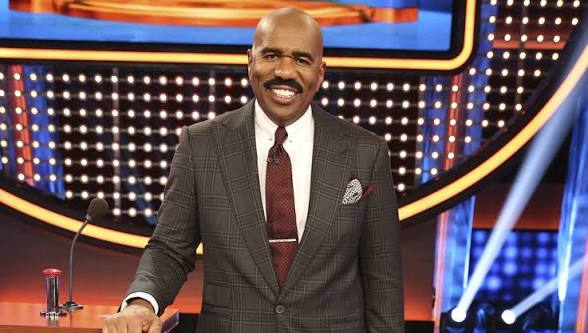
We all know who this man is. Broderick Stephen Harvey, but we know him simply as Steve Harvey. We all know what he's done. Stand up legend. A pair of sitcoms in Me and the Boys and The Steve Harvey Show. One of the Original Kings of Comedy. Hosted Showtime at the Apollo. I never thought that "Family Feud host" would be part of his résumé, but in the fall of 2010, it happened. Steve Harvey became Feud's sixth host, and the show's first Black host, and the whole feel of the show permanently changed when Harvey took over. The reactions were wilder, as were the questions, and we'd see many viral moments of Steve Harvey's hilarious reactions to bad answers. Family Feud not only became mega popular on TV, but online as well.
Steve Harvey remains Feud's host to this day, long surpassing Richard Dawson as the show's longest tenured host. The run includes hosting the primetime Celebrity Family Feud since 2015, with that version airing every summer on ABC, the network that originally aired Feud from 1976-1985.
Family Feud, once upon a time, could be considered an underrated show compared to game shows like The Price is Right, Jeopardy!, and Wheel of Fortune. Recent years have seen that tag removed. Here it is, the 50th anniversary, and Family Feud is regarded as one of the greatest game shows ever. Richard Dawson and Ray Combs both set the bar, and Steve Harvey totally raised it. In fact, I think that Steve Harvey's popularity as a host has led to more Black game show hosts popping up. Prior to Harvey, Wayne Brady began his run as the host of the current Let's Make a Deal, but since both of them, Michael Strahan has hosted the primetime The $100,000 Pyramid, Anthony Anderson hosted To Tell the Truth, and Nate Burleson currently hosts CBS' iteration of Hollywood Squares, just to name a few.
I am glad that I've enjoyed Family Feud for 35 years, and I will continue to enjoy this amazing show. Congratulations, Family Feud, on 50 years! Here's to 50 more!
About the Creator
Clyde E. Dawkins
I'm a big sports fan, especially hockey, and I've been a fan of villainesses since I was eight! My favorite shows are The Simpsons and Family Guy, etc.
Enjoyed the story? Support the Creator.
Subscribe for free to receive all their stories in your feed. You could also become a paid subscriber, letting them know you appreciate their work.
Comments
There are no comments for this story
Be the first to respond and start the conversation.