
Supergirl (1984): The Superman Spin-Off That Accidentally Changed Superhero History
Helen Slater’s Supergirl was meant to save the Superman franchise in 1984. Instead, it became a box office disaster that reshaped superhero movies for decades.

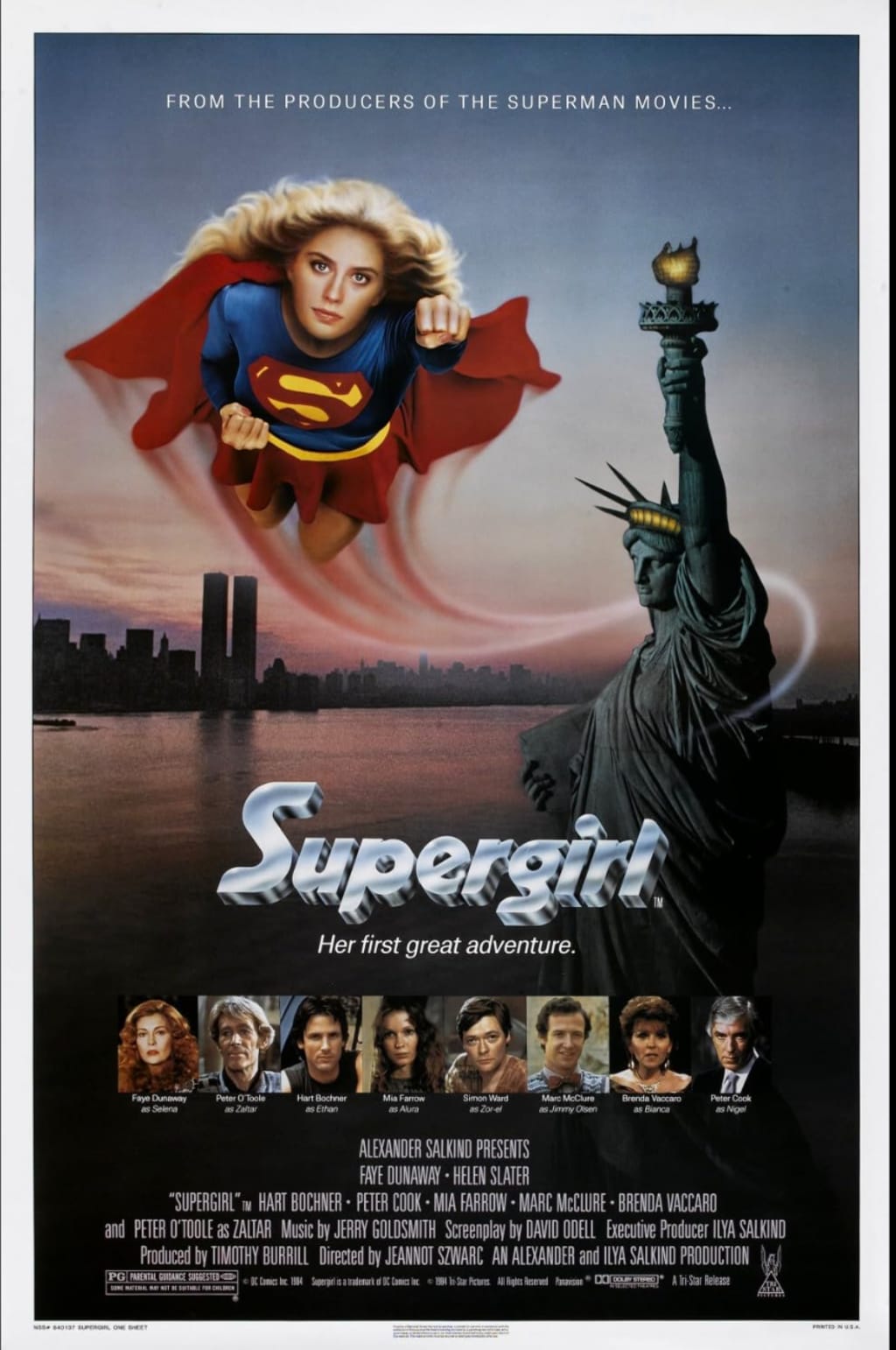
When people talk about the Superman films of the 1980s, the conversation usually begins with Christopher Reeve soaring through the skies in Superman and ends with the infamous collapse of Superman IV: The Quest for Peace. Lost somewhere in the middle is Supergirl (1984), a strange, ambitious detour that tried to expand Superman’s cinematic universe years before Hollywood even knew what a shared universe was.
Directed by Jeannot Szwarc, Supergirl stars Helen Slater as Kara Zor-El, Superman’s cousin, who leaves the isolated city of Argo to recover the Omegahedron, a powerful source of energy that accidentally falls into the hands of an aspiring witch named Selena, played with unapologetic gusto by Faye Dunaway.
It was supposed to breathe new life into the Superman franchise.
Instead, it became the beginning of the end.
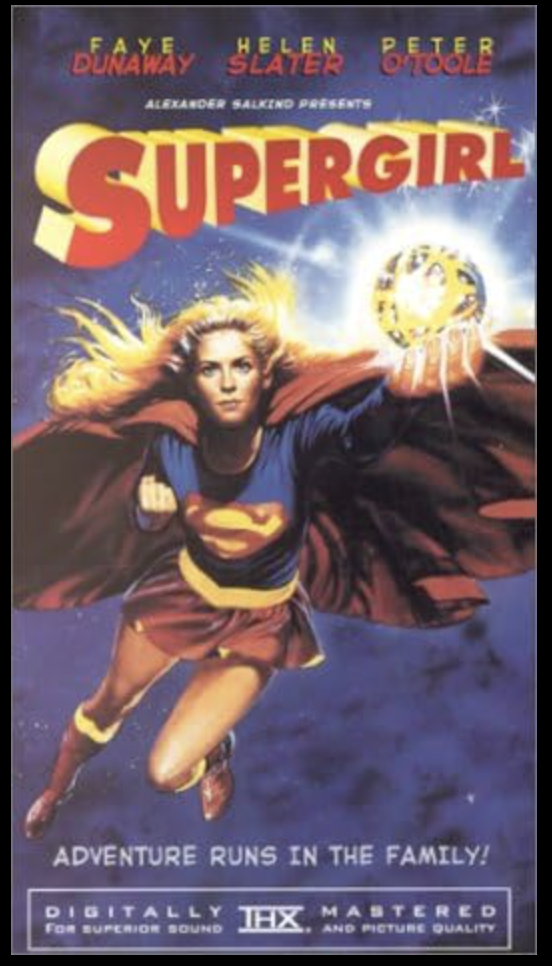
Looking for a New Hero
Producers Alexander and Ilya Salkind had controlled the Superman film rights since the 1970s, overseeing both Superman and Superman II. But after the disappointing reception to Superman III in 1983, it was obvious the series had lost much of the magic that made audiences believe a man could fly.
Rather than rush into another sequel, the Salkinds decided to try something different.
They had owned the rights to Superman’s extended family for years, and Supergirl seemed like the logical next step. Early discussions even considered introducing Kara in Superman III, but Warner Bros. wasn’t enthusiastic about the idea. Instead, the producers moved ahead with a standalone feature centered entirely on Superman’s cousin.
Christopher Reeve was approached about appearing in the film to help bridge the two stories, but he declined. Following his frustrations making Superman III, he reportedly had little confidence in the project. The screenplay simply explains Superman is away on a peace mission in space, leaving only photographs and references to remind audiences that this story exists in the same universe.
Finding the Girl of Steel
Screenwriter David Odell, who had also worked on Superman III, crafted a story that emphasized fantasy and fairy-tale adventure rather than traditional superhero action.
For the title role, the filmmakers wanted a fresh face.
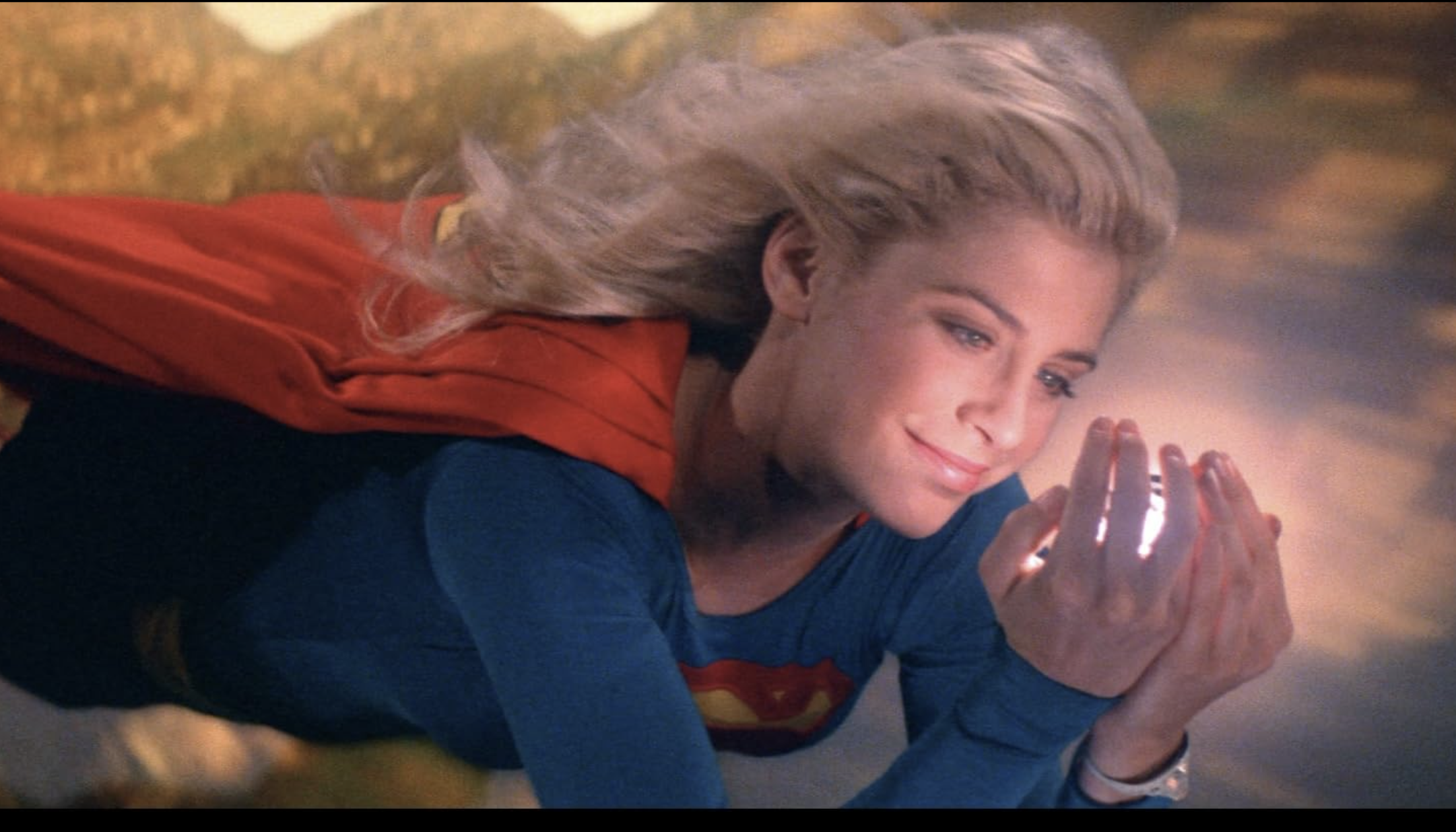
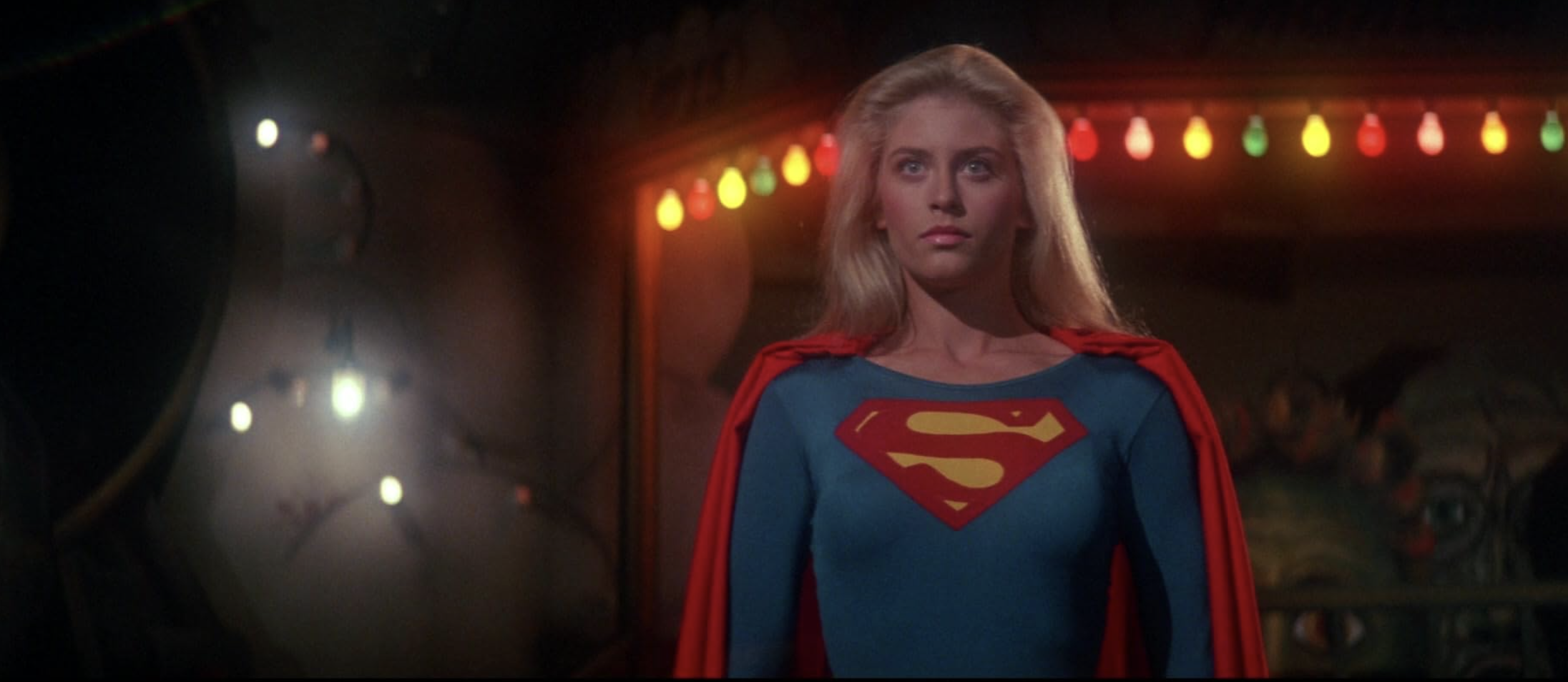
That search ended with drama student Helen Slater, who reportedly impressed producers by arriving at her audition wearing a homemade Supergirl costume. She beat out several better-known actresses and instantly became the heart of the production.
It’s still the movie’s greatest strength.
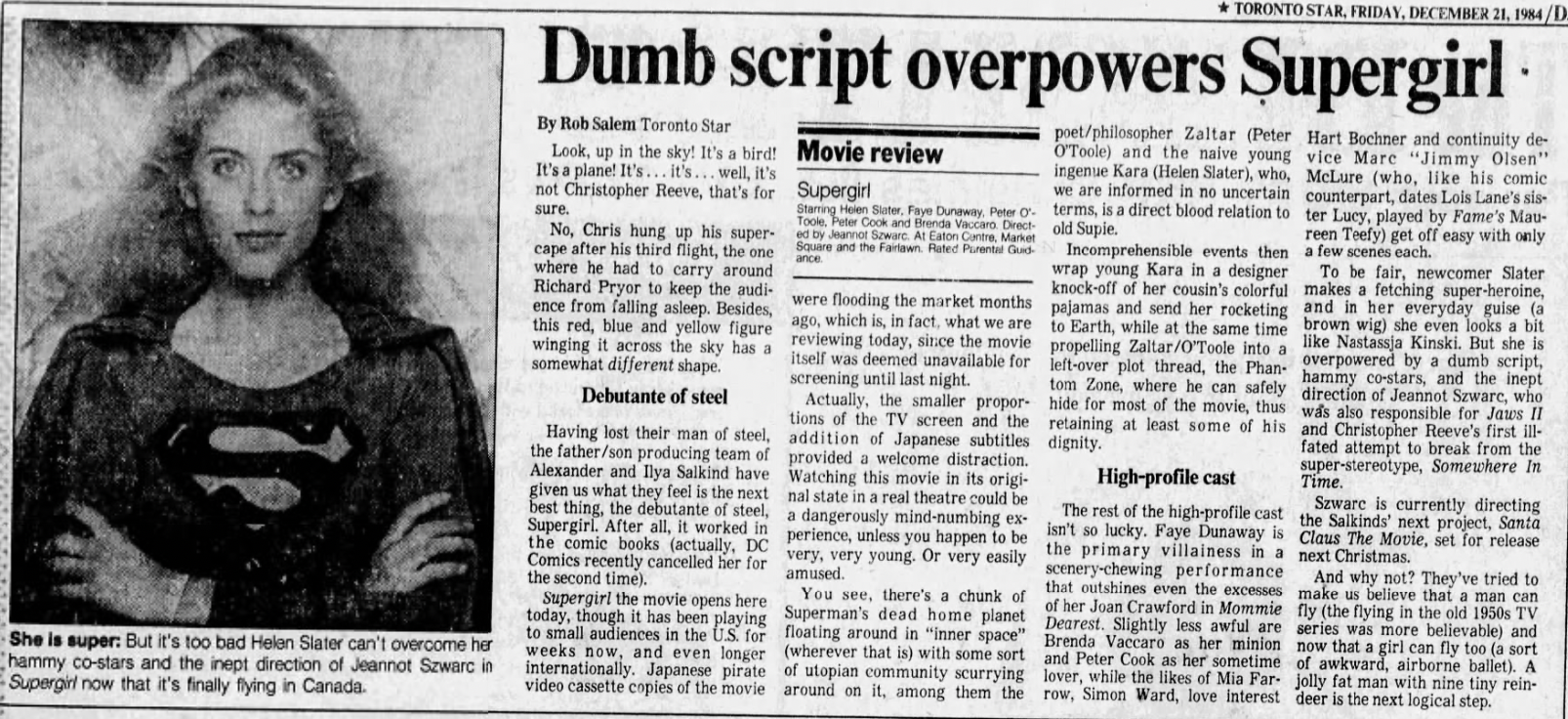
Slater plays Kara with genuine warmth and optimism, giving the character an innocence that recalls Christopher Reeve’s original portrayal of Superman. Even critics who disliked virtually everything else about the film usually admitted she deserved a better movie.
Opposite her, Faye Dunaway embraces the scenery-chewing role of Selena after Dolly Parton reportedly passed on the part. Dunaway doesn’t simply play the villain—she attacks every scene with theatrical enthusiasm, creating a performance that’s either wonderfully campy or completely ridiculous depending on your perspective.
Flying Wasn’t Getting Easier
Filming took place primarily at Pinewood Studios in England between April and October 1983 with a budget of approximately $35 million.
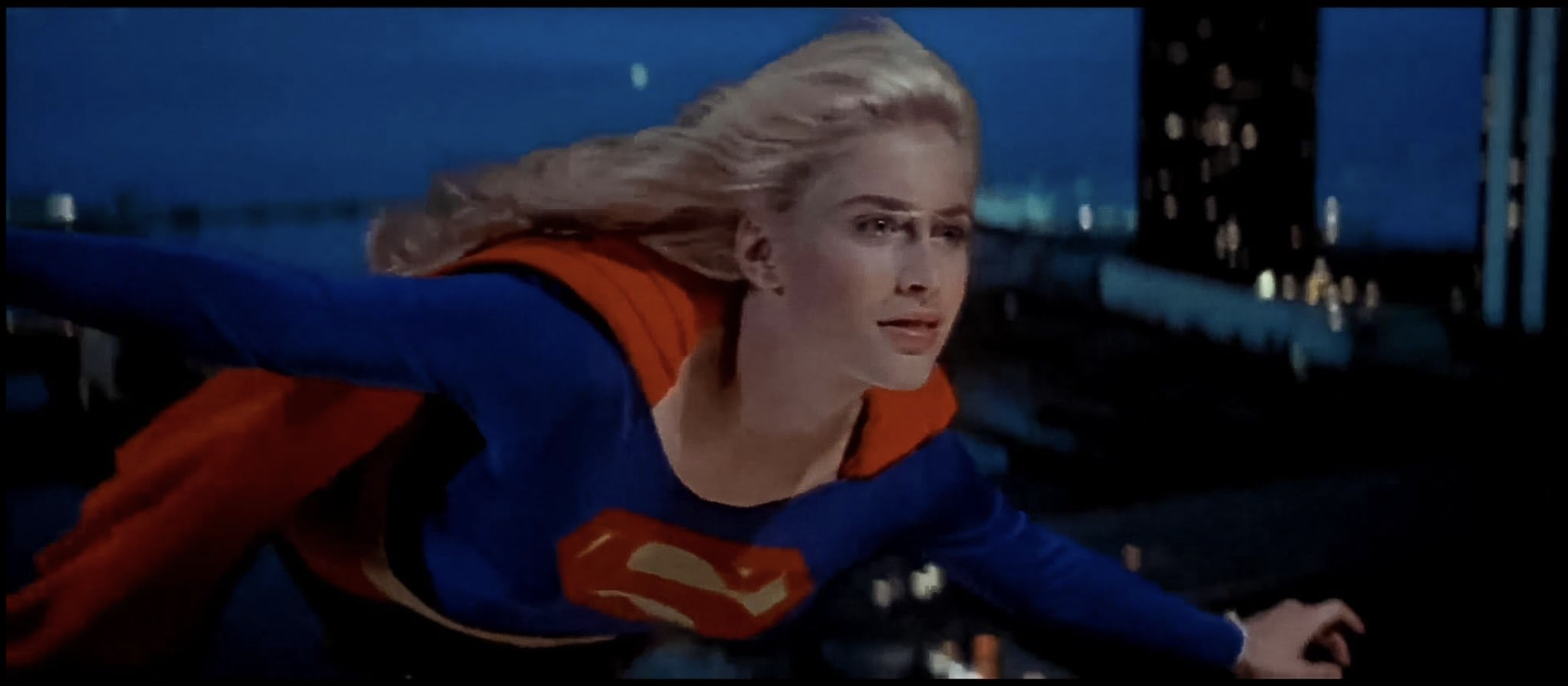
The production built enormous sets, including an entire Midvale town, and invested heavily in flying effects intended to match the earlier Superman films.
Unfortunately, the technology hadn’t become any easier.
The elaborate wire systems were cumbersome, uncomfortable, and notoriously difficult to operate. Cast and crew later described the flying rigs as awkward and primitive, requiring endless adjustments that slowed production to a crawl. Combined with reports of delays and behind-the-scenes frustrations, the ambitious production often struggled to keep pace with its own expectations.
What looked effortless on screen in 1978 suddenly felt much harder to recreate six years later.
A Troubled Release
Early test screenings reportedly alarmed the filmmakers.
Large sections of the movie were removed, resulting in a heavily trimmed 105-minute American release, while longer international and director’s cuts later emerged that restored substantial material. Even today, fans debate which version best represents the filmmakers’ intentions.
The film opened in Britain during the summer of 1984 before arriving in American theaters that November through Tri-Star Pictures after Warner Bros. distanced itself from the project.
For one weekend, things actually looked promising.
Supergirl opened at number one with roughly $5.7 million.
Then audiences disappeared.
Poor word of mouth sent attendance into freefall, and the film concluded its domestic run with only $14.3 million. Against its sizable budget, it wasn’t merely disappointing—it was one of the year’s biggest financial failures.
The Legacy Nobody Wanted
Reviewers criticized nearly every aspect of the production, from its uneven script to its uncertain tone and inconsistent special effects. The movie couldn’t decide whether it wanted to be a sincere fantasy, a superhero adventure, or broad comedy, often shifting between all three within the same scene.
Yet Helen Slater escaped almost entirely unscathed.
Her performance has remained the one element nearly everyone agrees deserved better, and over the decades she’s become one of those actors audiences continue to root for despite the film surrounding her.
Ironically, Supergirl’s biggest impact happened after it left theaters.
Its failure convinced the Salkinds to sell the Superman film rights to Cannon Films, leading directly to the disastrous production of Superman IV: The Quest for Peace. Perhaps even more damaging was the lesson Hollywood thought it had learned. For years, studio executives pointed to Supergirl whenever the idea of a female-led superhero movie came up, using one unsuccessful film as justification for avoiding the concept altogether.
That perception lingered for more than three decades before films like Wonder Woman finally proved audiences had never rejected female superheroes—they had simply rejected bad movies.
Today, Supergirl has developed a modest cult following. Its earnest optimism, colorful 1980s aesthetic, and Helen Slater’s charming performance have earned it far more affection than it received during its original release.
It’s unquestionably flawed.
But it’s also fascinating.
Long before Marvel made interconnected universes the biggest business in Hollywood, Supergirl was already trying to expand Superman’s world. It simply arrived before audiences—or perhaps the filmmakers themselves—were ready.
Sometimes forgotten movies deserve another look because they’re hidden masterpieces.
Supergirl deserves another look because it changed superhero history by failing.
About the Creator
Movies of the 80s
We love the 1980s. Everything on this page is all about movies of the 1980s. Starting in 1980 and working our way the decade, we are preserving the stories and movies of the greatest decade, the 80s. https://www.youtube.com/@Moviesofthe80s
Enjoyed the story? Support the Creator.
Subscribe for free to receive all their stories in your feed.
Comments
There are no comments for this story
Be the first to respond and start the conversation.