

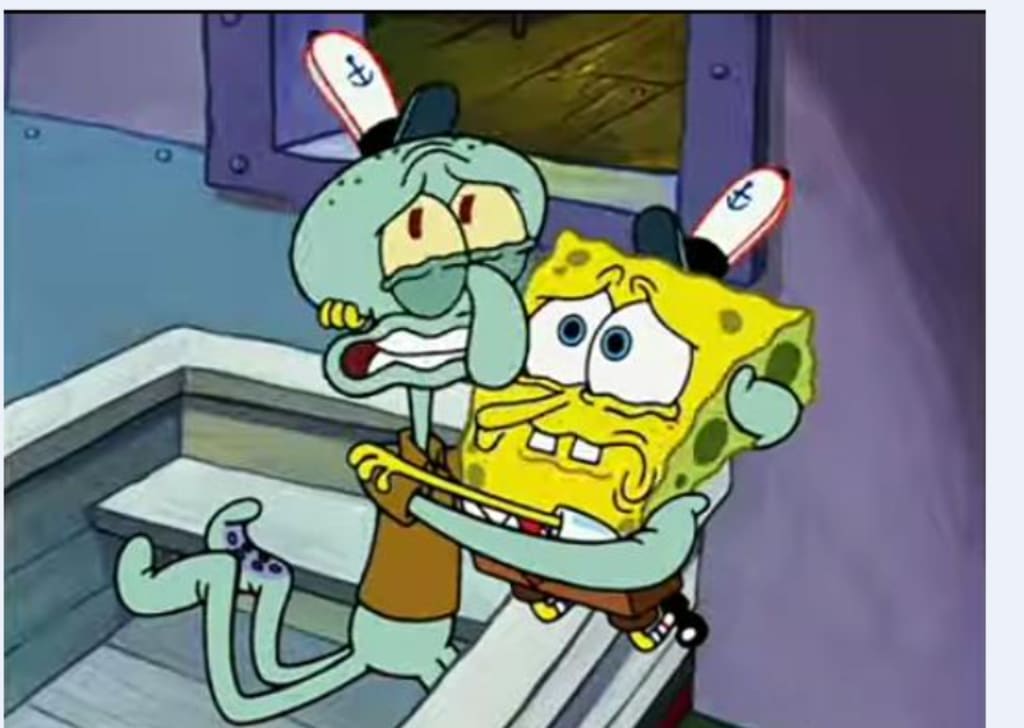
The "Graveyard Shift" stands as a quintessential masterpiece of animated television, perfectly blending the mundane drudgery of retail work with an expertly crafted atmosphere of supernatural dread. The episode begins with Mr. Krabs, driven by his insatiable and legendary greed, deciding to transform the Krusty Krab into a twenty-four-hour establishment simply to squeeze a few more cents out of the nocturnal residents of Bikini Bottom. This shift in the status quo sets a haunting stage, as the familiar, brightly lit restaurant is suddenly bathed in the eerie, cool blues of the deep-sea night, creating a sense of isolation and vulnerability for the two protagonists trapped within its glass walls.
Squidward Tentacles, ever the cynical and weary employee, quickly finds himself succumbing to extreme boredom as the hours stretch into the early morning without a single customer in sight. To amuse himself at the expense of his overly enthusiastic coworker, he decides to weave a gruesome ghost story about a legendary figure known as the "Hash-Slinging Slasher." Squidward paints a vivid, terrifying picture of a former fry cook who met a clumsy end and now returns every Tuesday night to claim new victims. His narrative is filled with specific, chilling omens—the flickering lights, the phone ringing with no one on the other end, and the arrival of a ghostly bus—all designed to exploit SpongeBob’s boundless imagination and inherent naivety.
The legend of the Hash-Slinging Slasher is described with such Macabre detail that it instantly becomes one of the most memorable lore pieces in the series' history. Squidward describes the spectral figure as having a rusty spatula for a hand, a detail that adds a visceral, industrial horror to the nautical setting. As he recounts how the "slasher" was struck by a bus and subsequently "fired" from life, the tension in the kitchen becomes palpable despite the comedic nature of the show. The brilliance of this segment lies in how it captures the universal experience of telling scary stories in the dark, where every creak of the floorboards begins to feel like an approaching threat.
SpongeBob’s reaction to this tall tale is nothing short of hysterical, characterized by his loud, repetitive screaming and a physical manifestation of fear that only an animated sponge could achieve. His terror is so disruptive and high-pitched that Squidward eventually finds his own prank backfiring, as the constant noise becomes more annoying than the boredom he was trying to escape. In an attempt to restore peace and quiet, Squidward is forced to admit that the entire story was a fabrication, a mere product of his imagination meant to pass the time. He painstakingly explains that there is no such person as the Hash-Slinging Slasher, hoping to settle SpongeBob's frayed nerves so they can finish their shift in silence.
However, the episode takes a brilliant turn toward the uncanny when the fictional elements of Squidward’s story begin to manifest in reality, one by one. The lights begin to flicker rhythmically, the walls start to ooze a mysterious "green slime" (which they eventually realize is just mustard), and the telephone rings only to reveal a silent caller. The atmosphere shifts from playful teasing to genuine suspense as both characters realize that the very signs Squidward invented are occurring exactly as he described them. This escalation is a masterclass in building tension, making the audience question whether a supernatural force has actually been summoned by the mere mention of its name.
The climax of the episode reaches a fever pitch when a spectral bus pulls up to the Krusty Krab in the dead of night, and a dark, silhouetted figure with a spatula hand emerges from the gloom. The terror felt by Squidward and SpongeBob is brilliantly conveyed through the animation, as they huddle together, certain that their ends have finally arrived at the hands of the Hash-Slinging Slasher. The figure approaches the door with an ominous, slow gait, and the music swells to a frightening crescendo. Just as the fear becomes unbearable, the "ghost" steps into the light, revealing that he is not a vengeful spirit at all, but rather a nervous young man who simply wanted to apply for a job as a fry cook.
In a stroke of comedic genius, the episode concludes by defusing the horror with a grounded, relatable resolution followed by one of the most famous non-sequiturs in cartoon history. The reveal that the terrifying "slasher" was just a potential recruit named Richard adds a layer of irony to the preceding events, highlighting how easily fear can distort reality. The final gag, featuring the vampire Nosferatu flickering the lights, serves as a surreal and iconic parting gift to the viewers, cementing "Graveyard Shift" as a top-tier episode. It remains a fan favorite because it perfectly captures the spooky fun of a late-night shift while maintaining the heart and humor that define the world of SpongeBob SquarePants.
About the Creator
Forest Green
Hi. I am a writer with some years of experiences, although I am still working out the progress in my work. I make different types of stories that I hope many will enjoy.
Enjoyed the story? Support the Creator.
Subscribe for free to receive all their stories in your feed.
Comments
There are no comments for this story
Be the first to respond and start the conversation.