
Sony Just Broke a 17-Year Rule for a Chinese Game—And Now I Know Why
20 minutes of gameplay. 55 weapons. A 66-day death clock. And a steam-powered lion dance that just changed the action-RPG landscape forever.
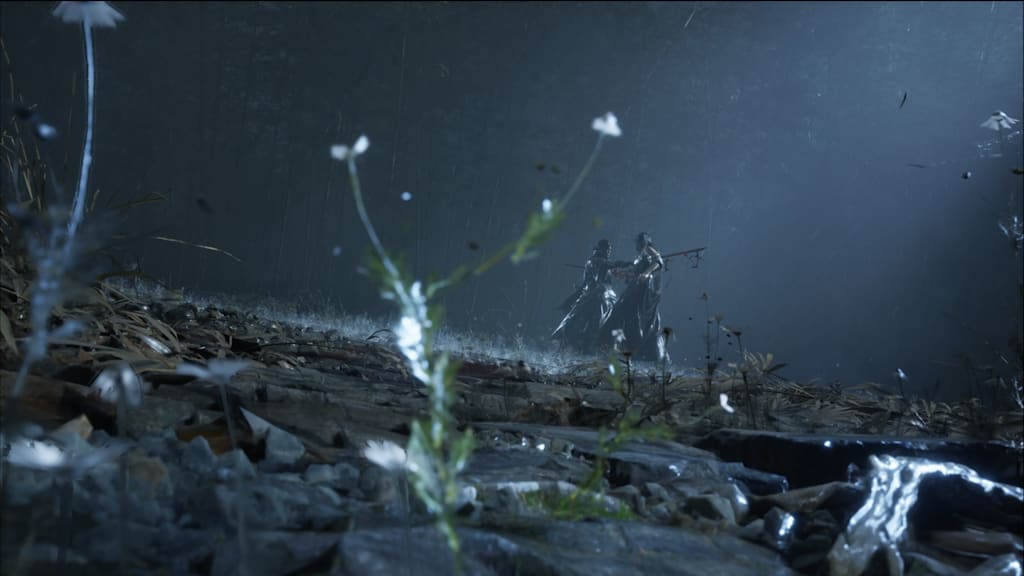
Sony Gave It 20 Minutes.
At 10 a.m. on August 18, the Sony State of Play stream ran a 20-minute segment.
No Chinese game had ever gotten that slot. State of Play is Sony's regular showcase for first-party announcements and major third-party titles—normally they pack five or six games into one show, each getting three or four minutes. This time, the entire broadcast was one title: Phantom Blade Zero from S-GAME.
When the news broke, players didn't take it seriously. A month earlier, the game had dropped a pre-order trailer with choppy editing, and the internet joked that the studio "doesn't know how to cut trailers." Producer Liang Qiwei posted on Weibo: "Please judge for yourselves when it's out." The replies mostly said, "You'd better mean that."
The verdict came within two hours after the show ended. The pre-order page hit #1 on Steam's global top sellers. Community sentiment flipped from "cautiously skeptical" to "absolutely top-tier."
Donnie Yen Was Covered in Motion-Capture Dots.
In the presentation video, Donnie Yen wore a black mocap suit dotted with white markers. He plays a character named "Moyuan," and his official title is Creative Supervisor.
That title isn't honorary. The Yen Family Stunt Team choreographed all the martial arts sequences. In one demo clip, the arc of a blade swing and the subtle wrist rotation after a strike didn't look like the exaggerated motions typical of game mocap—they felt closer to the practical combat framing of a long take in a martial arts film. Liang Qiwei said in the voiceover: "Mr. Yen's understanding of the word 'kung fu' is exactly what we've been pursuing."
He didn't follow that with "we're deeply honored" or any other boilerplate. Just that one line, and then the footage cut back to gameplay.
Eight Ink Paintings and a Steam-Powered Iron Tower.
The game's world is called "Shadow Realm." It's stitched together from eight hand-painted Chinese ink-wash maps into one large region. At the center is Pang Town, surrounded by bandit-controlled valleys, an abandoned warehouse full of hanging puppets, and a steam-driven iron tower.
The combination is unusual. Ink-wash paintings usually depict bamboo forests, mountain temples, and misty pavilions. Those elements are present in Phantom Blade Zero, but right next to them are gears and pipes, and the tower emits steam instead of cooking smoke. The studio calls this aesthetic "kung fu punk."
One shot in the demo shows the protagonist crossing a wide lake. To do it, he has to take a special fast boat with exposed bronze mechanisms that click and clatter as it moves. There's no combat in this sequence, no dialogue—just the character riding from point A to point B. They didn't cut it. That suggests the team believes the Shadow Realm itself is worth looking at, without needing fights to fill the frame.
55 Weapons and "Switch According to the Enemy."
The presentation revealed the weapon count: 30 primary weapons and 25 secondary ones.
The number itself isn't the story. What caught attention was that every weapon has a distinct underlying logic:
Drunk Sword builds "drunkenness" to boost evasion—the more you drink, the better you dodge.
White Python Red Scorpion is dual-wielded; alternating attacks charges a long-range sword beam.
Spirit Snake Soft Sword is specifically for cutting airborne mechanisms, like enemy wires.
Tiger Cannon is a ranged firearm for detonating hazardous targets early.
Blazing Lion Head is a flamethrower for clearing crowds of smaller enemies.
That sounds like "different weapons for different enemy types"—standard action-game design. But the demo kept coming back to one phrase: "Switch according to the enemy."
The idea is that you're not just facing "enemy classes." You're facing battlefield shifts.
Take an enemy with a massive shield. You break his guard with an iron fist, and he drops the shield to fight hand-to-hand. Now your heavy hammer is too slow—you need to swap to a faster weapon to counter his new moveset. In a single fight, weapon switching isn't "preparation." It's real-time decision-making.
The progression system supports this. Upgrading a weapon doesn't just increase attack power—it unlocks new techniques and forms. There's an item called "Reverse Refinement Talisman" that lets you reclaim all upgrade materials spent on a weapon without loss, so you can immediately invest them into a new one. The subtext: you don't have to grind for hundreds of hours just to test a different playstyle.
Dynamic AI and "Sixty-Six Days."
There are three standard difficulty options: Ruzhen (Easy), Poju (Normal), and Nitian (Hard).
"Nitian" has a special mechanic: enemy AI adapts to your attack patterns in real time. If you keep using the same opening move, enemies gradually learn to predict it and interrupt you at specific frames. This isn't fighting "stronger monsters." It's fighting monsters that know you better.
The real card is hidden in New Game+, a mode called "Sixty-Six Days."
This mode features permadeath. An in-game timer starts at 66 days. Each story progression consumes days, and each defeat consumes days too. The moment it hits zero, your save is deleted. You start over.
This design works because it's tied directly to the story. The protagonist, Soul, is stabbed through the heart and revived by a mysterious healer—at the cost of having only 66 days left to live. The "Sixty-Six Days" mode merges the player's failure experience with the character's fate: you can't afford to die, because your life is literally ticking away.
A Steam-Powered Lion Dance.
The final segment of the presentation was a full boss fight demo.
The boss is a massive lion head in the traditional Chinese lion dance style, but with exposed steam machinery inside—brass racks and connecting rods clanking as it moves. Its attacks include headbutts, flame breath, and tail sweeps, with different rhythm shifts in each phase. The backing track is traditional gong-and-drum music.
Overseas viewers reacted more intensely than domestic audiences. "Amazing," "What is this," "Chinese culture?" scrolled repeatedly across chat feeds.
Chinese players saw something else—a lion head combined with steam mechanisms, not as a "cultural flavor" gimmick, but as a combat encounter. You're cutting down a mechanical lion that shoots fire. The game never needs to say "this is our traditional heritage." It just is the fight.
October 29.
The date appeared at the end: October 29, 2026. Global simultaneous release.
PS5, PS5 Pro, Steam, Epic, WeGame, TapTap PC—all platforms, no exclusivity locks.
Liang Qiwei spoke at the close. He said the team has stayed focused on the core of Chinese martial arts culture, refined the original content through iteration, and received strong support from the community. The game has gradually become something better—tighter combat, clearer visual language, a more confident rhythm in its cuts.
Players clipped that part and shared it widely. Not because it was eloquently phrased, but because a month earlier, after the "can't edit trailers" backlash, he offered no excuses. This showcase was his response.
About the Creator
Jin
Writer of reamstories
https://reamstories.com/jin
Enjoyed the story? Support the Creator.
Subscribe for free to receive all their stories in your feed. You could also become a paid subscriber, letting them know you appreciate their work.
Comments
There are no comments for this story
Be the first to respond and start the conversation.