
Sinners Is a Near-Masterpiece And That's Exactly the Problem
Ryan Coogler's genre-defying horror film is one of the most ambitious Hollywood originals in years. It is also a film that almost collapses under the weight of its own brilliance and the gap between what it promises and what it delivers is worth talking about honestly.

By Mark Lim
Friday, 09 May 2026
☕ 10 min read · Critique · Film · Cinema
Director
Ryan Coogler
Starring
Michael B. Jordan, Hailee Steinfeld, Jack O'Connell
Runtime
2h 17m · Rated R
Score
Ludwig Göransson
Box Office
$370M+ worldwide / $90–100M budget
Rotten Tomatoes
97% critics · Audience divided
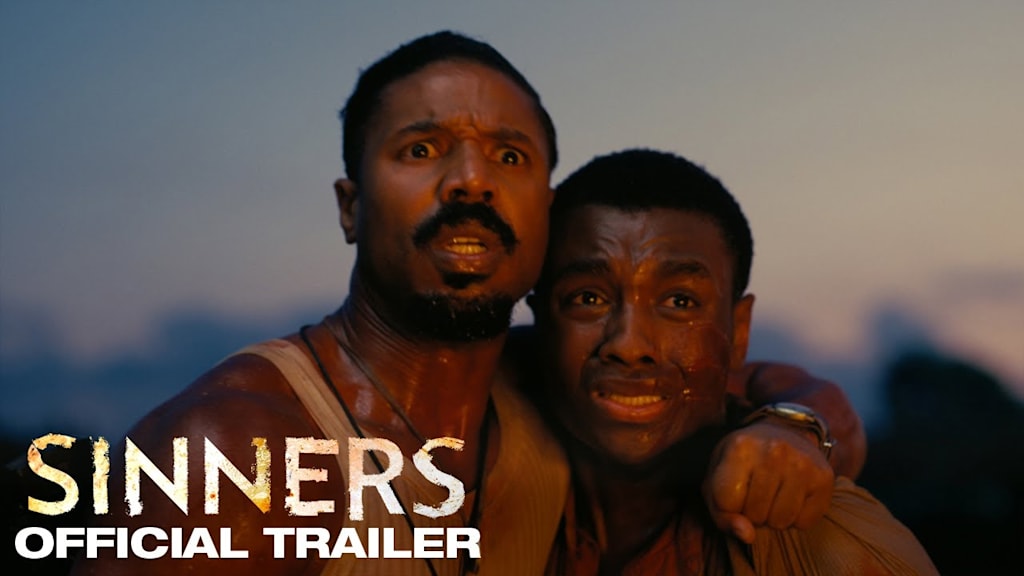
Let's get something out of the way first. Sinners is a genuinely extraordinary piece of filmmaking for long stretches of its runtime. Ryan Coogler's first wholly original blockbuster set in the Jim Crow South of 1932 Mississippi, starring Michael B. Jordan in a dual role as twin gangsters who open a juke joint only to find themselves besieged by vampires is the kind of film Hollywood supposedly cannot make anymore: R-rated, unapologetically Black, emotionally complex, and built from an original idea rather than an existing IP. It is also a record-breaking Oscar winner, the highest-grossing original film since Coco, and one of the most talked-about movies of the last several years. All of that is true. And yet. There is a conversation worth having about the film that the 97% Rotten Tomatoes score has made almost impossible to have a conversation about what Sinners does brilliantly, what it fumbles, and whether the cultural weight loaded onto it has warped our ability to assess it clearly.
What Coogler gets exactly right
Start with the first half, because it is genuinely special. Coogler sets up the world of Darras Smoke and Stack Miller two brothers returning home after years running with Chicago mobsters with a patience and richness that Hollywood rarely affords genre pictures. The 1932 Mississippi Delta is rendered in extraordinary detail, from the red dust on the roads to the social architecture of a community existing in the shadow of both poverty and racial terror. The cinematography by Autumn Durald Arkapaw who won the Best Cinematography Oscar for this film, the first woman and first Black winner in the category's history is sumptuous and restrained in equal measure. She does not shoot the period as nostalgia; she shoots it as a living, breathing, dangerous world.
Michael B. Jordan's performance as the twins is the film's emotional anchor. Playing two distinct characters one calculated and hard, one warmer and more emotionally available without ever losing the thread of either is a formidable technical and artistic challenge. Jordan makes it look almost effortless, which is perhaps the highest compliment one can pay. Miles Caton, in his film debut as a young blues musician, is an extraordinary discovery. And the decision to make music not just a backdrop but the film's central metaphysical force described in the opening as something "so pure it can pierce the veil between life and death" pays off in one extraordinary sequence that is among the most visually and emotionally inventive things put on a cinema screen in years.
The musical centrepiece of Sinners a single unbroken sequence in which the blues collapses time itself, pulling past and future into one ecstatic, terrifying moment is one of the great scenes in recent cinema. Nothing else in the film comes close.
Ludwig Göransson's score is a character in itself. Drawing on the deep roots of Delta blues, West African rhythm, and contemporary sonic experimentation, it does not merely accompany the film it argues with it, extends it, sometimes corrects it. When the film's ideas are working, the music makes them soar. This is a soundtrack that earns its Oscar.
Where it begins to fracture
Then the vampires arrive. And here is where the critique begins in earnest not because the vampire conceit is wrong, but because of how abruptly and awkwardly Coogler deploys it. The shift from richly textured period drama to genre horror in the film's second half is jarring in a way that feels less like deliberate tonal provocation and more like two films sutured together at the midpoint. The pacing, so deliberate and assured in the first act, becomes frantic and then strangely slack. The horror sequences themselves while visually accomplished lack the sustained dread and inventiveness of the drama that precedes them. The vampire mythology is gestured at rather than developed. The threat never quite becomes terrifying in the way the film needs it to be.
The structural problem is this: Coogler has written a first half that demands a second half of equal sophistication and emotional weight. What he delivers instead is a genre exercise competent, occasionally thrilling, but fundamentally thinner than what came before it. The allegory is clear enough: the vampires represent white appropriation and exploitation of Black culture, feeding off the vitality of the juke joint community while offering a grotesque promise of belonging and immortality. It is a sharp idea. But it remains mostly an idea, never fully dramatised. Jack O'Connell's lead vampire is compelling and menacing in his introduction, then increasingly underwritten as the action takes over.
Performances
9.5
Jordan is exceptional. Caton is a revelation. Supporting cast holds up.
Cinematography
9.5
Arkapaw's Oscar was deserved. Every frame intentional.
Score & Music
10
Göransson's best work. The musical centrepiece alone earns a perfect score.
Screenplay
7
First half: brilliant. Second half: structurally rushed, thematically underdeveloped.
Direction
8.5
Coogler's vision is singular and confident, even when the material doesn't fully cooperate.
Horror
6.5
The genre mechanics disappoint after the drama's richness. Tension rarely lands.
The Oscar question
Sinners received a record-breaking 16 Academy Award nominations more than any film in history and won four, including Best Actor for Jordan, Best Original Screenplay for Coogler, Best Cinematography for Arkapaw, and Best Original Score for Göransson. All four wins are entirely defensible. The record-breaking nomination count is harder to make sense of.
🏆 Best Actor — Michael B. Jordan
🏆 Best Original Screenplay — Ryan Coogler
🏆 Best Cinematography — Autumn Durald Arkapaw
🏆 Best Original Score — Ludwig Göransson
Sixteen nominations is a number that invites scrutiny. It reflects, in part, genuine craft the film's technical achievements across production design, costume, sound, and editing are all worthy of recognition. But it also reflects the cultural moment surrounding the film: the hunger for a major awards season narrative, the desire to celebrate an original Black-led blockbuster at a time when Hollywood's diversity record is under persistent scrutiny, and the relief of critics and industry figures who found in Sinners a film worthy of their enthusiasm. None of that makes the nominations wrong. But it does mean the film has been asked to carry a significance beyond its own text and that weight has made honest criticism feel almost transgressive.
The Hollywood-didn't-want-it myth
A narrative solidified around Sinners almost from its first weekend: this was the hit Hollywood tried to undermine, the original vision the industry's risk-averse machinery couldn't accommodate. It is a compelling story, and there is truth in it. Coogler did fight for creative control. The film is genuinely unusual in the context of a 2025 box office dominated by sequels, remakes, and IP extensions. Its success crossing $200 million domestically, becoming the first original film to do so since Coco in 2017 is meaningful and worth celebrating.
But the narrative has been amplified to a degree that flattens the film's actual complexity. Sinners was not a scrappy independent that clawed its way to the multiplex it was a Warner Bros. theatrical release that opened on IMAX screens and was backed by the full weight of a major studio's marketing apparatus. Framing it as a radical act of resistance to the system somewhat obscures the fact that it was also very much a product of that system, distributed and profited from by one of Hollywood's oldest institutions. This is not a criticism of Coogler navigating that contradiction is part of what makes his achievement interesting. But it is worth naming clearly, because the myth of the underdog has been used to insulate the film from the scrutiny that any major Oscar-winning blockbuster deserves.
So what is Sinners, exactly?
It is a film with one of the great opening hours in recent blockbuster cinema, followed by a second hour that is merely good. It is a showcase for Michael B. Jordan's career-defining work, an extraordinary breakthrough for Autumn Durald Arkapaw, and a vehicle for Ludwig Göransson's best score. It is a film with something genuinely important to say about cultural appropriation, Black creativity, and the vampiric nature of white America's relationship to Black art and a film that says it incompletely, at times clumsily, through a genre framework that it never fully commits to or transcends.
It is also, more than anything, a film that proves original visions can still draw enormous audiences to cinemas when given the chance. That lesson perhaps the most important one the film has to teach Hollywood should not be obscured by either uncritical celebration or contrarian backlash. Sinners is not a masterpiece. It is something rarer and more interesting: a deeply flawed, deeply felt, genuinely ambitious film that reaches for something extraordinary and almost, tantalizingly, gets there.
About the Creator
Mark Lim
Hi I am mark an automotive student and a car, tech and food enthusiast ! Im gonna try and post daily & hope you enjoy what I write and do share my page with people you know. I would gladly appreciate it! Cheers
Enjoyed the story? Support the Creator.
Subscribe for free to receive all their stories in your feed. You could also become a paid subscriber, letting them know you appreciate their work.
Comments
There are no comments for this story
Be the first to respond and start the conversation.