
Sinners, Idlewild, and Honeydripper: A Comparative Film Analysis
These three black film musicals have similar elements but different time eras.

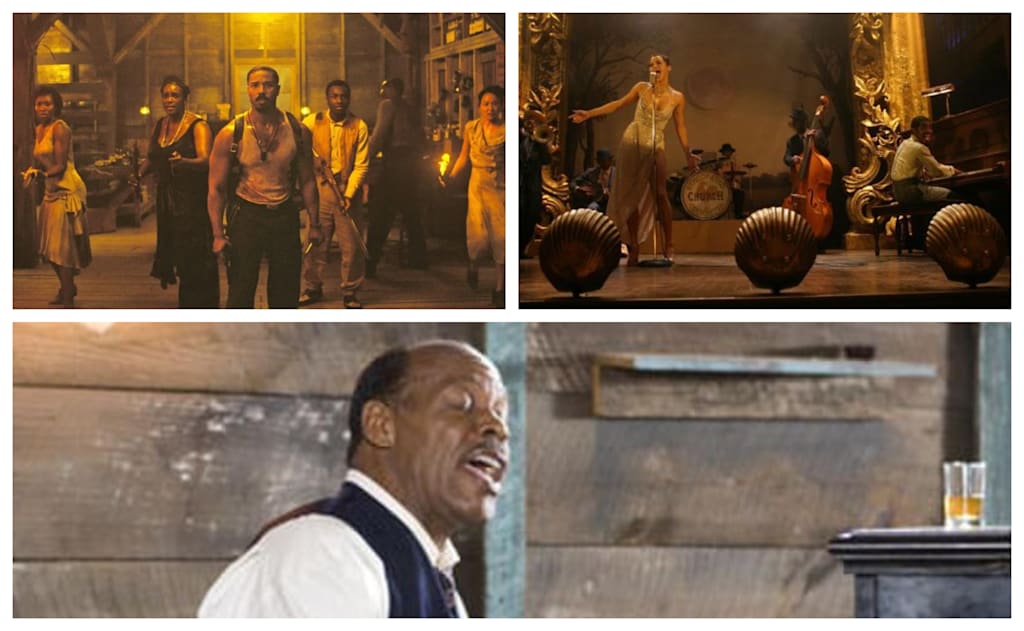
Musical films have the ability to tell stories through a combination of music, movement, dialogue, and visual storytelling. While some musicals use songs primarily to entertain audiences, others use music to explore culture, identity, history, relationships, and personal struggles. Three films that demonstrate different approaches to music and storytelling are Sinners (2025), directed by Ryan Coogler; Idlewild (2006), starring the musical duo OutKast; and HoneyDripper (2007), directed by John Sayles. Although these films share an interest in African American musical traditions and the communities surrounding them, each approaches music differently. Sinners combines supernatural horror with blues and cultural history, Idlewild blends musical performance with romance and crime, and HoneyDripper focuses on the evolution of blues music and the survival of a struggling juke joint. Examining these films together reveals how music can become more than entertainment: it can serve as a character, a source of conflict, a form of cultural expression, and a powerful storytelling device.
Idlewild (2006)
Idlewild, released in 2006 directed Bryan Barber, takes a different approach to musical storytelling. Starring André Benjamin and Antwan Patton, better known as André 3000 and Big Boi of OutKast, the film is set in the fictional town of Idlewild, Georgia, during the 1930s. It follows Percival (played by Andre3000), a gifted pianist who works at his father's funeral home and performs at a nightclub, and Rooster (played by BigBoi), a charismatic entertainer whose involvement with the club's criminal world complicates his life.
Unlike Sinners, which combines blues music with supernatural horror, Idlewild uses music, dance, romance, and crime to create a highly stylized world. Its musical identity blends period jazz and swing influences with hip-hop, funk, and contemporary production. This mixture of sounds gives the film a distinctive visual and musical style. Rather than attempting to recreate the 1930s in a strictly realistic manner, the film presents the period through an imaginative combination of historical atmosphere and modern musical sensibilities, which is kind of similar to Lin-Manuel Miranda's Broadway Hamilton, except this was different and this was years before Hamilton took the musical stage in 2015.
The friendship between Percival and Rooster provides the emotional foundation of the story. Although both men are connected to the same nightclub, they have different ambitions and responsibilities. Percival is a serious musician who struggles to balance his artistic interests with his father's expectations, while Rooster is a performer whose success brings him into conflict with dangerous people. Their relationship explores the tension between loyalty, personal ambition, and the desire to escape difficult circumstances.
Music in Idlewild is closely connected to the characters' identities. Percival's piano playing reflects his artistic sensitivity, while Rooster's performances emphasize his confidence and showmanship. The nightclub becomes a space where music, fashion, dance, romance, and criminal activity intersect. This gives the film a natural foundation for musical theater because it's setting already functions as a performance space.
Honeydripper (2006)
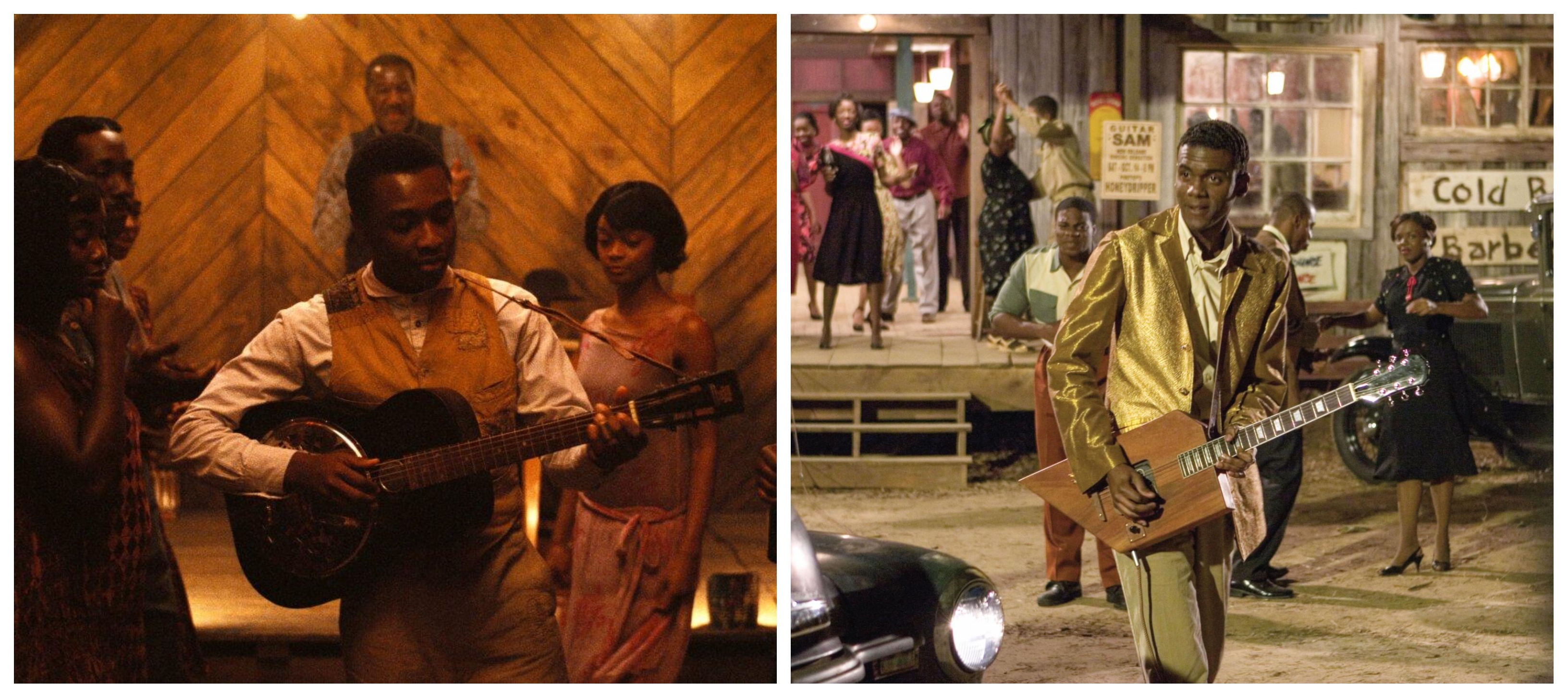
Honeydripper released in 2007 and directed by John Sayles, offers a more intimate and grounded exploration of music. Set in Alabama in 1950, the film centers on Tyrone Purvis (played by Danny Glover), a struggling club owner trying to save his juke joint from financial ruin. Hoping to attract customers, Tyrone plans to bring in a popular electric guitarist. Meanwhile, Sonny Blake, aka "Guitar Sam," a young musician (played by Gary Clark Jr.), arrives in the area and becomes connected to the club's future.
Sinners (2025)
Sinners is a supernatural horror film set in the Mississippi Delta in 1932. The story follows twin brothers Smoke and Stack (both played by Michael B. Jordan), who return to their hometown and establish a juke joint for the local Black community. As the brothers attempt to create a place where people can gather, dance, and enjoy music, they encounter a supernatural threat that endangers their community.
Vampires!!!!
One of the film's most important features is the way it connects blues music with African American cultural identity, history, and spiritual expression. Music is not simply something the characters perform in the background. It becomes part of the film's larger exploration of Black life, memory, tradition, and the forces that seek to exploit or destroy cultural expression. Sammie, aka PreacherBoy, a young blues musician who is the son of Preacher, who disapproves of his being a blues musician, and the cousin of the twins (played by Miles Caton), represents the power of music to connect generations and to express what ordinary conversation cannot always convey.
The juke joint is also central to the film's dramatic structure. It begins as a place of celebration, freedom, and community, but gradually becomes a location of danger. This transformation creates a powerful contrast between the joy of musical performance and the fear generated by the supernatural events. The film's horror elements give its musical sequences an additional layer of meaning, as music becomes linked to both liberation and vulnerability.
Setting and Time
In Sinners, the story takes place in 1932 Mississippi during the Jim Crow South, where racial oppression and the history of Black cultural expression form part of the dramatic world. The juke joint offers a space for celebration and community, but supernatural forces turn that refuge into a battleground.
In Idlewild, set in 1930s Georgia (the same era as Sinners), the Prohibition era provides a world of speakeasies, nightlife, criminal power, glamour, and ambition. Its fictional setting is more stylized than strictly naturalistic, allowing the musical performances to become extravagant cinematic events.
In HoneyDripper, the rural South is depicted during the 1950s, a period of changing musical tastes and economic hardship. Tyrone's financial struggle gives the film an immediate practical question: how can a small nightclub attract customers and survive.
The juke joint in Sinners begins as a place of possibility and becomes a place of danger. Church in Idlewild is a place of entertainment, professional ambition, and criminal competition.
The Honeydripper Lounge is a modest business fighting for survival. Its worn furniture, old piano, and intimate atmosphere make the audience feel that the characters' livelihood depends on what happens inside that room.
How each film uses music
The films also differ in how they represent musical tradition. Sinners uses the blues to connect the present action with a much deeper cultural history. Honeydripper focuses on the transition between established blues traditions and a new musical sound. Idlewild combines historical influences with contemporary musical sensibilities to create a distinctive hybrid style.
In Sinners, the blues carries meaning beyond its sound. Sammie’s music connects him to a cultural inheritance that predates the events of the film. The supernatural elements intensify the importance of this inheritance, making music a source of power and a focal point of conflict. The film therefore treats cultural expression as something that can inspire and unite, yet also become the target of forces seeking to exploit it.
Honeydripper explores a different relationship between tradition and change. Tyrone’s musical world is built around an established blues tradition, but the club’s financial problems compel him to consider a newer sound. Sonny’s electric guitar becomes a symbol of musical transformation. The shift is not simply a contest between old and new instruments; it raises questions about how traditions evolve, how musicians respond to new audiences, and who gets to shape the future of a musical culture.
While Sinners emphasizes the power and historical significance of the blues, Honeydripper emphasizes its capacity for change. Both films recognize the importance of African American musical traditions, but they approach that importance from different directions. One places music at the center of a supernatural struggle; the other places it within a social and economic transition.
Idlewild differs from both because its musical identity is intentionally more hybrid and stylized. The film blends jazz and swing influences associated with its 1930s setting with the hip-hop and funk sensibilities of OutKast. Its musical approach does not rely on recreating a historical period exactly. Instead, it uses the period as a framework for a contemporary artistic interpretation. This creates a world in which the past and present coexist through music, visual design, and performance.
The Protagonists in the Film
The protagonists provide another useful point of comparison. Smoke and Stack in Sinners, Percival and Rooster in Idlewild, and Tyrone and Sonny in Honeydripper are connected by music, but their personal goals and the obstacles they face differ.
In Sinners, Smoke and Stack return home hoping to begin again, but their plans are interrupted by a threat larger than their business ambitions. Their juke joint becomes a focal point for a conflict that places the community at risk. Sammie adds another dimension to the story because his musical aspirations connect the younger generation to the cultural traditions that surround him. The film’s central conflict therefore extends beyond the success of individual characters: it concerns the fate of a community and the meaning of the culture it sustains.
In Idlewild, Percival and Rooster are lifelong friends whose different personalities and ambitions create both contrast and tension. Percival is more reserved and introspective, while Rooster thrives on public performance. Their friendship is tested as they navigate the nightclub’s dangers and pursue their own futures. Their differences make them effective dramatic partners because each character represents a distinct relationship with performance and ambition. Their story asks whether friendship can endure when personal dreams, romantic relationships, and external pressures pull people in different directions.
In Honeydripper, Tyrone’s goal is particularly concrete: he needs to save his club. His situation gives the story a clear dramatic engine because the consequences of failure are immediate. Sonny’s arrival introduces a possible solution, but it also connects the club’s survival to a musical future that Tyrone cannot fully control. Their relationship brings together experience and innovation, with the older musician facing the possibility that the next generation may help preserve the institution he has struggled to maintain.
Too Similar
Despite the films' juke-joint storytelling, they are too similar. In Sinners and HoneyDripper, two young blues musicians have the same name except one is named "Sammie" and the other is "Guitar Sam" but his real name is Sonny Blake and Sammie's nickname is "PreacherBoy,"; however, Sammie wanted to be a blues musician even though his father disapproves of it. Both of the Sammies have love interests. Guitar Sam falls for China Doll and makes a song about her.
Sammie meets Pearline, who is married, while promoting their club juke joint at a train station. The two would hook up after Sammie sings at the joint. Pearline is also a singer, and she got a chance to sing at the joint.
Will There Be Lawsuit????? Not really....
Here's the thing: despite the films being similar, the setting and time are different, and the cast of characters is different. These differences affect the kind of musical numbers each story would need. In Sinners, songs could reveal the characters’ connection to history, their fears, and their determination to protect the community. In Idlewild, musical numbers could dramatize the tension between Percival’s quieter artistic ambitions and Rooster’s public confidence. In Honeydripper, songs could communicate Tyrone’s desperation, Sonny’s potential, and the uncertainty surrounding the club’s future. Also, Guitar Sam is similar to Sammie except he is a well-known star.
Sinners, Idlewild, and Honeydripper demonstrate three different ways of combining music with dramatic storytelling. Sinners uses blues, cultural history, and supernatural horror to explore the power and vulnerability of a community. Idlewild combines jazz influences, hip-hop, dance, romance, and crime to create a stylized story about friendship and ambition. Honeydripper presents a more intimate drama about a struggling club, changing musical traditions, and the determination to survive. These films reveal that music is most effective when it serves a purpose beyond entertainment. It can preserve cultural memory, communicate emotions, expose conflict, strengthen relationships, and transform the direction of a story. Ultimately, the best musical storytelling occurs when music is necessary to the drama. It should reveal character, heighten conflict, express cultural identity, or change the course of events. These three films succeed in exploring different aspects of that relationship, making them valuable examples of how music can do far more than accompany a story: it can become one of the forces that drives the story forward.
Which film do you favor: Sinners, Idlewild, or HoneyDripper????
Comment below
If you love Idlewild, you are going to love this article on OutKast:
About the Creator
Gladys W. Muturi
Hello, My name is Gladys W. Muturi. I am an Actress, Writer, Filmmaker, Producer, and Mother of 1.
TALES & CONFESSIONS OF A HIGH SCHOOL NOBODY COMING SOON
Enjoyed the story? Support the Creator.
Subscribe for free to receive all their stories in your feed. You could also become a paid subscriber, letting them know you appreciate their work.
Comments
There are no comments for this story
Be the first to respond and start the conversation.