
'Simon' (1980) - The Strange Little Sci-Fi Satire That Wanted to Reprogram America
Alan Arkin goes from psychology professor to supposed extraterrestrial in Marshall Brickman’s wonderfully odd 1980 comedy about television, paranoia, and the dangers of letting other people do your thinking.

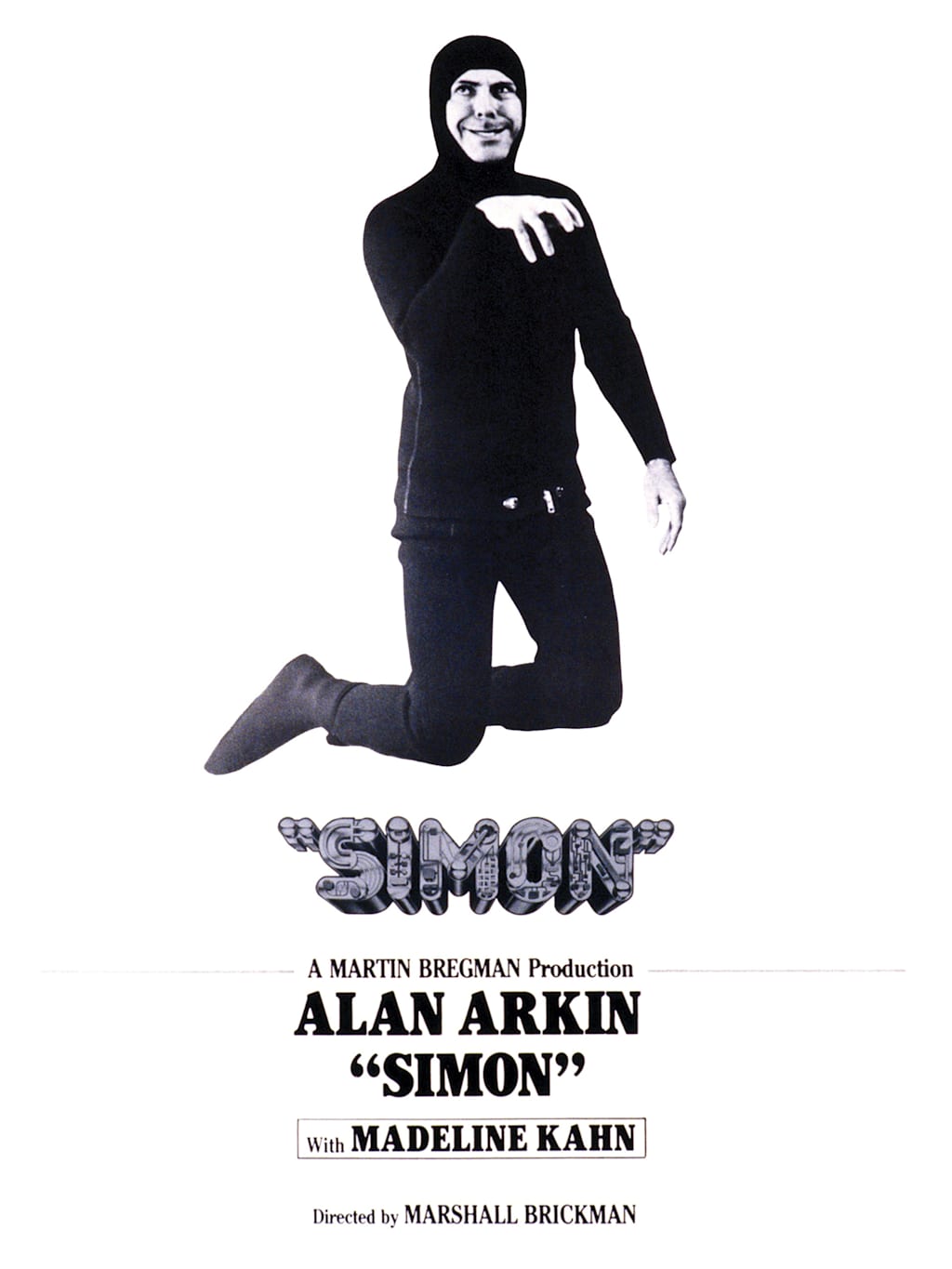
When America Needed a Little Reprogramming
There are movies that feel like products of their time, and then there are movies that seem to have been assembled from the anxieties of their time.
Simon is very much the latter.
Released in 1980, Simon marked the feature directorial debut of screenwriter Marshall Brickman, who had already established himself as one of the sharpest comedic voices in New York cinema. Brickman had co-written Woody Allen’s Annie Hall and Manhattan, and his first film behind the camera carried much of that same intellectual restlessness.
Only this time, the target was considerably stranger.
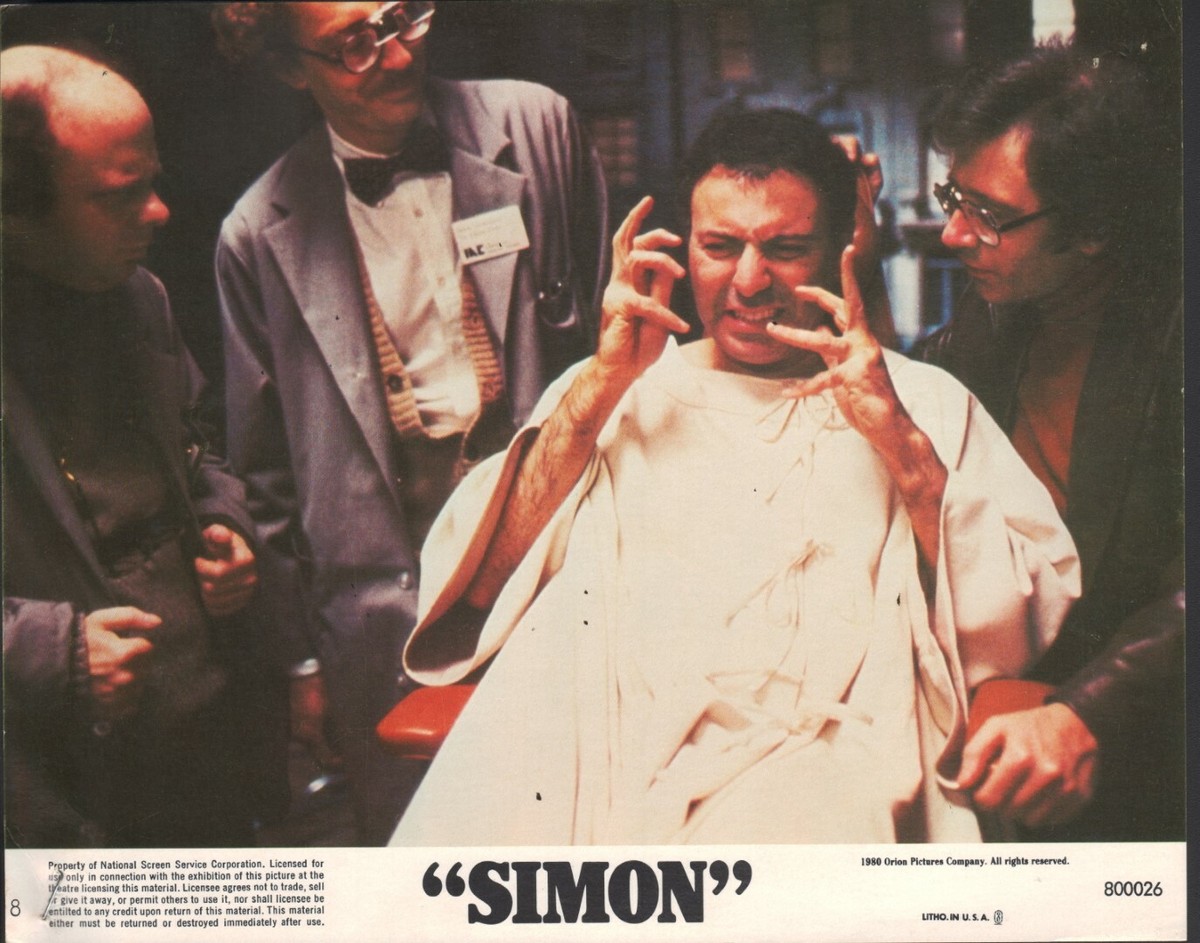
Alan Arkin plays Simon Mendelssohn, a psychology professor who becomes the unwilling subject of an elaborate experiment conducted by the Institute for Advanced Concepts, a secretive think tank convinced that television has effectively taken control of the American mind.
Their solution is as ridiculous as it is sinister.
They kidnap Simon, place him in sensory deprivation, and systematically convince him that he is actually an extraterrestrial visitor from another planet.
Naturally, things don’t go exactly according to plan.

Alan Arkin Is the Secret Weapon
If the premise sounds like it could collapse under the weight of its own cleverness, there is one very good reason Simon remains watchable: Alan Arkin.
Arkin was perfectly suited to the material. He could play intellectuals, lunatics, everymen and complete oddballs without ever making any of them feel like conventional movie characters. As Simon, he spends much of the film trying to navigate a world that has suddenly become completely incomprehensible.
And then he begins to believe the lie.
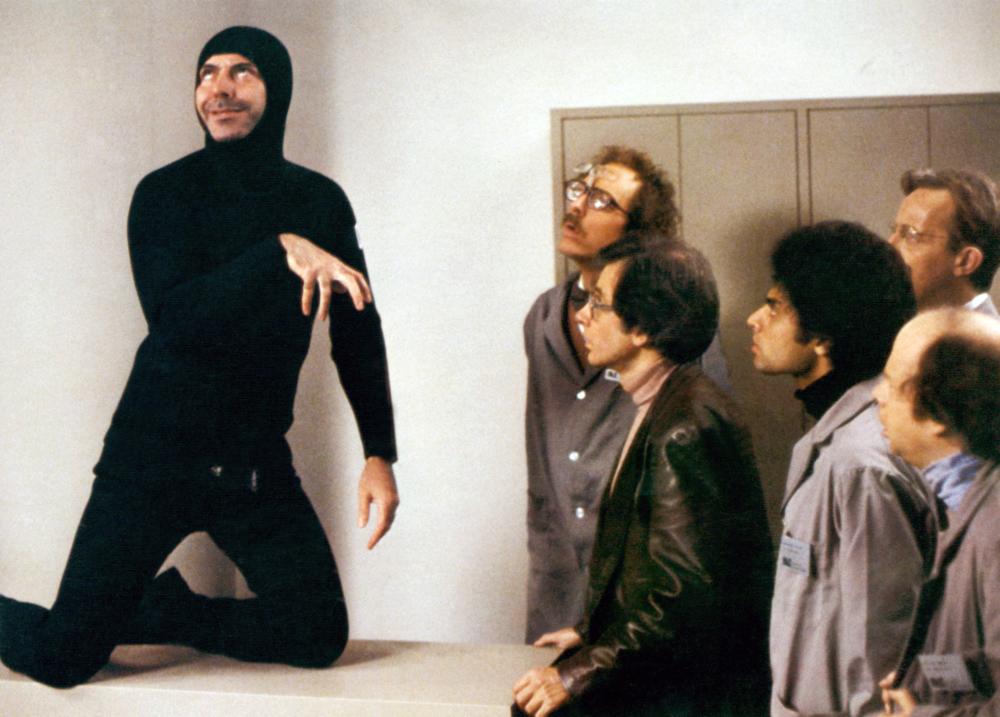
Arkin throws himself into the physical comedy and absurdity with the sort of manic commitment that makes even the film’s more questionable ideas worth watching. One of the movie’s most memorable sequences has Simon performing an extended mime version of the history of human evolution, a moment that perfectly captures the film’s peculiar combination of high-minded satire and low-key lunacy.
It’s the kind of performance that can make a movie considerably better than its screenplay.
And Simon needs all the help it can get.
A Very Strange Think Tank
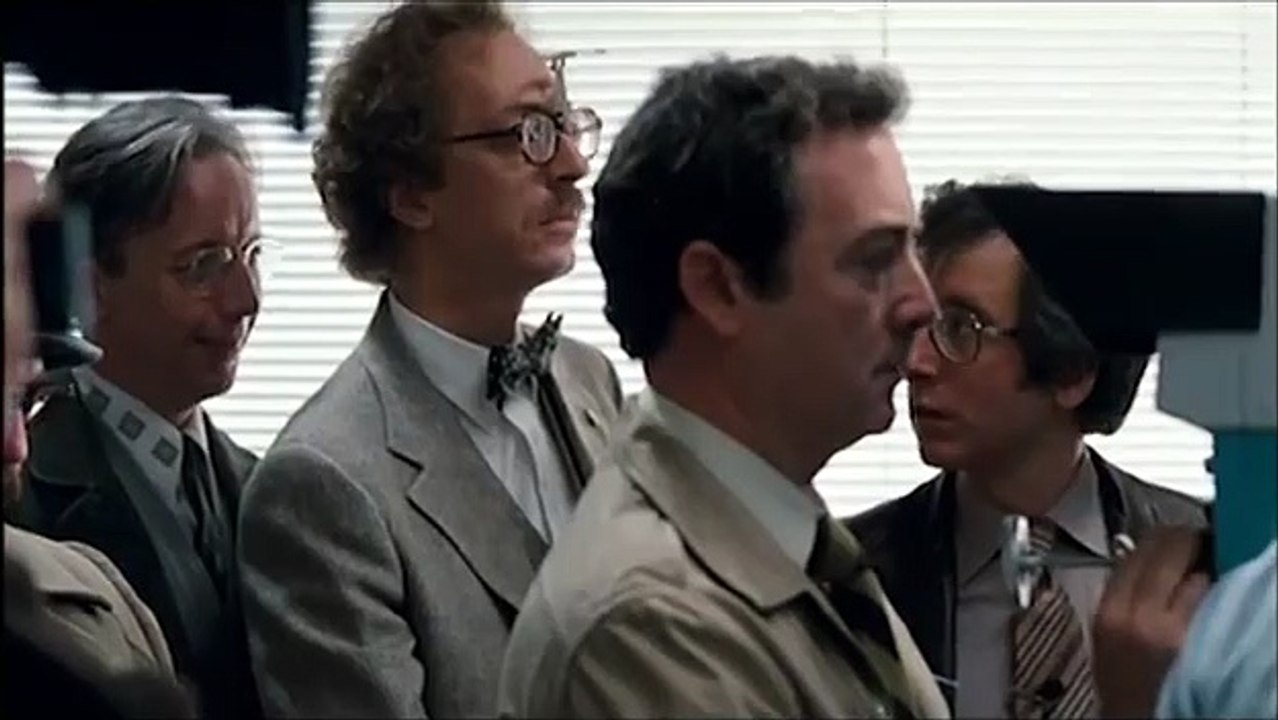
The Institute for Advanced Concepts is the movie’s central comic invention.
Its scientists aren’t exactly mad scientists in the traditional sense. They’re something much more recognizable: intellectuals who have become so convinced of their own theories that they’ve stopped noticing how completely insane they sound.
Simon becomes their guinea pig in an elaborate attempt to create a new kind of human being.
The joke, of course, is that the people trying to manufacture a superior human may be considerably crazier than the man they’re attempting to manipulate.
Brickman uses the setup to take aim at television, consumer culture, scientific arrogance and America’s growing obsession with manufactured reality. In a world increasingly dominated by television, advertising and mass media, the idea that somebody could literally be programmed to believe something absurd didn’t seem quite as ridiculous as it might have a decade earlier.
If anything, Simon was tapping into an anxiety that was becoming increasingly familiar.

The World According to Marshall Brickman
Brickman’s background working with Woody Allen is impossible to ignore.
Like Allen’s films, Simon is filled with intellectual characters, neurotic personalities, New York locations and jokes that assume the audience is willing to follow along. It isn’t interested in becoming a conventional science-fiction comedy.
Instead, it keeps changing direction.
One minute we’re watching a psychological experiment. The next we’re dealing with television executives. Then there’s a commune populated by people who have essentially surrendered their lives to television.
The film has ideas everywhere.
The problem is that it doesn’t always know what to do with them.
Simon is frequently very funny, but it is also remarkably loose. Brickman keeps throwing new concepts into the story, apparently hoping that enough of them will eventually connect. Some do. Others simply drift away.
The result is less a carefully constructed satire than a collection of clever observations looking for a movie to live inside.

From New York to Outer Space
The production itself reflected the movie’s unusual personality.
Filming began in February 1979 and continued for approximately ten weeks, using locations that included the Bronx Development Center and NASA’s Kennedy Space Center. The visual design deliberately contrasts the familiar energy of New York with the cold, sterile environments of the Institute.
That contrast works surprisingly well.
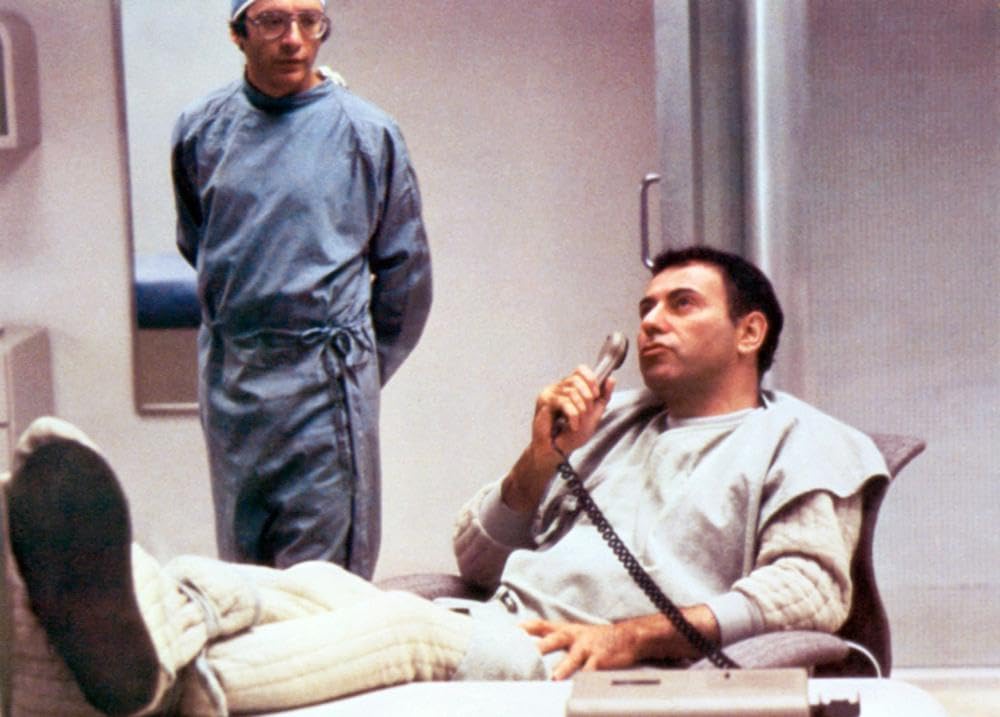
The Institute feels almost aggressively clinical, with its white surfaces and futuristic architecture creating the impression that Simon has wandered into a science-fiction movie that doesn’t quite realize it is supposed to be funny.
Then Brickman drops him back into the colorful chaos of New York.
The effect reinforces the film’s central idea: reality itself is becoming increasingly difficult to distinguish from the artificial worlds people create for us.
A Quiet Arrival in 1980
Simon arrived in theaters in February 1980 without becoming anything resembling a major hit.
It eventually earned roughly $6 million at the box office, hardly an impressive figure for a theatrical release backed by the emerging Orion Pictures and distributed through Warner Bros.
The film’s modest theatrical performance effectively guaranteed that it would become one of those movies people discovered rather than one they were told to see.
And that is exactly what happened.
Cable television and VHS gave Simon a second life during the 1980s. It was the kind of oddball movie that could suddenly appear on late-night television and leave a viewer wondering why they had never heard of it before.
For some people, that was probably the ideal way to discover it.
The Critics Were Not Exactly Sold
Contemporary critics were decidedly mixed.
Some admired the premise but found the execution frustratingly uneven. The movie’s structure could be difficult to follow, and its increasingly bizarre collection of subplots sometimes made its social commentary feel scattered rather than incisive.
Gene Siskel was among those who found the film wanting, particularly in its inability to sustain its promising central idea.
Yet even critics who didn’t care much for Simon frequently found something to admire in Arkin’s performance.
That’s understandable.
Arkin gives the movie a center of gravity it desperately needs. Without him, the film’s intellectual gamesmanship might become exhausting. With him, even the strangest moments have a pulse.

A Movie That Was Probably Too Strange for Its Own Good
The most interesting thing about Simon today may be that it isn’t quite the movie it appears to be.
It sounds like a science-fiction comedy.
It looks like a New York intellectual comedy.
It behaves like a paranoid satire.
And occasionally, it becomes something much more melancholy.
At its heart, Simon is about people losing control of their own identities. It’s about institutions deciding that they know what’s best for everyone else. It’s about television telling people what to think, scientists deciding that human behavior can be engineered, and a society increasingly willing to surrender individual judgment to somebody else’s version of reality.
Those ideas haven’t exactly become obsolete.
If anything, they have aged rather uncomfortably well.
A Forgotten Oddity Worth Rediscovering
Simon isn’t a lost masterpiece.
It isn’t even particularly close.
But that doesn’t mean it deserves to remain forgotten.
There is something genuinely appealing about a movie this strange, particularly one made at a moment when Hollywood was still willing to let an unusual idea become an unusual movie.
Marshall Brickman would go on to have a long and distinguished career, but Simon remains a fascinating footnote in his filmography. It captures a very specific moment between the cynical intellectual comedies of the 1970s and the increasingly commercialized Hollywood of the 1980s.
And then there’s Alan Arkin, wandering through the whole thing as a man who has been told he is an alien and eventually has to figure out what that means.
Maybe that’s the real joke.
In a world increasingly determined to tell us who we are, Simon suggests that perhaps the strangest thing we can do is think for ourselves.
That’s not a bad idea for a forgotten movie from 1980.

About the Creator
Movies of the 80s
We love the 1980s. Everything on this page is all about movies of the 1980s. Starting in 1980 and working our way the decade, we are preserving the stories and movies of the greatest decade, the 80s. https://www.youtube.com/@Moviesofthe80s
Enjoyed the story? Support the Creator.
Subscribe for free to receive all their stories in your feed.
Comments
There are no comments for this story
Be the first to respond and start the conversation.