
She Didn’t Fight the System. She Learned to Read It.
How Orchid Fragrance as Before turned a low-ranking maid’s two ways of seeing power into 2026’s biggest dark-horse hit.
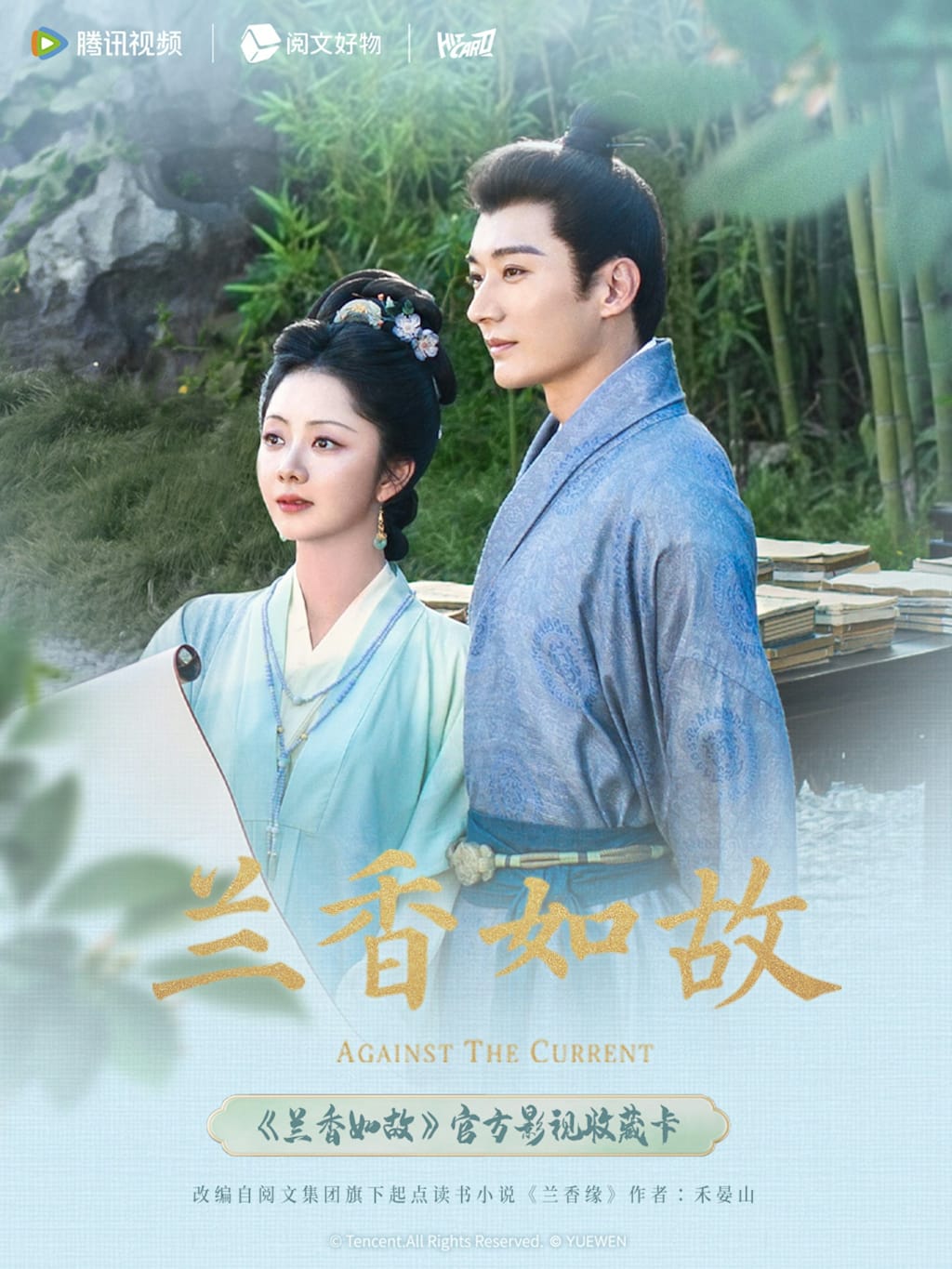
1. It opened eighth. Ten days later, it passed 42%.
On September 11, 2026, Orchid Fragrance as Before premiered on CCTV-8’s secondary prime-time slot and Tencent Video. No top-tier stars. No large marketing push. It opened with a 4.9% market share on Yunhe, ranked eighth, and drew about 6 million plays. Many in the industry stopped watching.
By day five, it hit No. 1 on the Yunhe daily chart with 24.7% playback share and earned Yunhe’s S+ rating. Then it kept climbing: 42.6% single-day share, making it the third 2026 drama to pass 40% in a day; 33,491 peak popularity on Tencent Video, top three on the platform; 2.3% peak rating on CCTV-8, with an 11.99% single-episode share, first among 2026 evening dramas already aired. Douban opened at 7.5.
Overseas, it did the same. On WeTV it hit No. 1 in Singapore, the U.S., Japan, Malaysia, Vietnam, and more than ten other markets. On Disney+ it reached No. 1 in North America, Spain, Portugal, and Japan. MyDramaList users scored it 8.8 out of 10, with more than 12,000 marking it “watching.”
The reversal is easy to see. The reason is harder.
2. It doesn’t sell catharsis. It sells a way to think.
Costume dramas usually build their heroines around winning. She slaps the villain. She talks back. She uses modern ideas to break ancient rules. She wins every fight. After a decade of this, viewers know the pattern before the first episode ends.
Orchid Fragrance as Before goes the other way. Xu Lanxiang starts with everything gone. Shen Jialan, the legitimate eldest granddaughter of a grand secretary’s household, loses her family overnight. She takes the slave identity of a rescued girl, Xu Lanxiang, and enters the Lin household as a third-class maid. The old formula says she should start cutting people down. Instead, she hides. “She dares not offend anyone,” the drama says. “She only wants to survive.”
Viewers complained at first. In the early episodes, her problems look small. She identifies a painting so her adoptive father can get a raise. She keeps a friend from being beaten to death. She helps the eldest madam hide a secret. None of it feels like a win.
That choice is the point. The show gives viewers a cognitive experience. It does not chase emotional release.
Xu Lanxiang runs two systems in her head. One looks top-down: What do the powerful want? Where is the danger? The other looks bottom-up: What do the small clues mean? Where is the opening? In a strict household, this lets her choose the best move, not the most satisfying one.
One scene explains it. Xu Lanxiang accidentally learns that the mistress lends money at usurious rates and has an affair. She knows the secret can kill her. “If the eldest madam knows I know, I die,” she thinks. “If the eldest master knows I know, I also die.” Knowing is death. Hiding it is death. She does not expose. She does not pick a side. She hides her sharpness and lets everyone underestimate her.
This is a power analysis. Morality is not the frame. Xu Lanxiang calculates interests and risks. Viewers do not watch her win. They watch her think.
The contrast with other characters is sharp. When Zhao Xingtang’s maid Qingxiang is forced by the first madam to marry an old man, Zhao kneels and begs. She hopes for compassion. She never asks what she can trade. Lü Jier sees only the glow around powerful people. She thinks delivering Buddhist sutras to Master Lin is a chance to get close. She cannot see the danger. Both are trapped in their own level. They see scattered chances and threats. They miss the structure.
That gap is what holds viewers. It offers a way to think that transfers to real life. Some viewers have said Xu Lanxiang’s moves “work in a modern office.” Stay alive in the cracks. Build room to negotiate. Pay the smallest cost for the largest gain. That is the survival skill many young viewers need now.
3. The kill shot: move the conversation from favor to duty.
Xu Lanxiang’s cognitive system has a defensive side: hide. It also has an attack side: reframe.
The letter to the Marquis of Yongchang shows it. Yuchan, a trusted first-class maid, steps forward, announces herself, and begs the marquis to take the letter. He refuses with political routine: “If Lin Fengtai has evidence, he should submit it to the Central Military Command.” The surface is procedure. The subtext is clear: publicly accepting the letter means taking a side. Lin Jinqi has been removed and is under investigation. If I accept his letter now, I take political risk. I will not wade in.
Yuchan hears a personal favor. My master is in trouble. Please, Marquis, for an old acquaintance, help us.
Xu Lanxiang changes the frame. She does not call him “Marquis.” She calls him “Commander Yuan.” No matter how great a marquis you are, you are still an official. In your position, you must do your job. Then she says: “My master is sending a letter to Commander Yuan. He is not asking you to investigate a case. This is a river-defense matter.”
The subtext is hard: I am not asking a personal favor. I am looking for an official to perform his duty. A favor can be refused. A duty cannot be ignored. You cannot turn a blind eye to military affairs.
The Marquis of Yongchang’s face changes. He turns his horse around. He opens the letter.
The scene shows a trap people at the bottom fall into. Most place themselves as the weak. They try to wake compassion in the powerful. Xu Lanxiang finds the other person’s rigid need. She makes herself impossible to ignore. She is not begging for help. She is solving a problem the other person cannot avoid.
The Prince Han rebellion shows the same skill at scale. The clues: village dogs outside the city die overnight. The Lu father and son act strangely. Commander Tian, a longtime opera lover, suddenly cancels his opera troupe. The villagers see ghosts. The monks say ghost soldiers are passing. The opera manager thinks a rival stole his business. Everyone is locked in their own level. They see strange events.
Xu Lanxiang connects the dots. Every abnormal move points one way: Prince Han is about to rebel.
4. No cheat. That’s why it works.
The cognitive story only works because the creators removed every cheat.
In the original novel Lan Xiang Yuan, the heroine is reborn with memories of her past life. She knows her enemies. She knows the next move. Revenge and rise are calm. The drama deletes the rebirth line. Xu Lanxiang loses every information advantage beyond her era. She must observe and reason. She gropes in the dark.
Director Huang Yingxiang said: “We did not want to create a floating costume-drama aesthetic. We wanted to find our own Eastern aesthetics.” That idea shows in the sets. The crew traveled to Suzhou and Nanjing’s ancient gardens. Over eight months in Hengdian, they built a garden set of more than 25,000 square meters. The architecture follows Ming dynasty ritual. The team spent four months preparing. They designed architecture, landscape, ornaments, utensils, carriages, boats, patterns, and motifs. From pavilions and halls to carved flowers under the eaves and plants before the steps, they polished details.
Those clumsy efforts match the cognitive strategy. The real garden set gives the world weight. Removing the cheat makes every breakthrough hard-won. Viewers do not receive plot armor. They follow Xu Lanxiang as she thinks and takes risks.
The household scheming skeleton is thin. What replaces it is a patient question: How should a person live? Her mother writes “live” in blood on a safety amulet before she dies. That word runs through Xu Lanxiang’s growth. She is saved. Then she protects her adoptive parents. Then she holds up the whole family. She moves from surviving to living better to living with choices and value. That arc gives the story force.
5. It writes people, not just a heroine.
The show’s success is not accidental. It marks a turn in Chinese costume dramas that is not finished yet.
For a decade, the strong female lead has lived inside the harem. Empresses in the Palace set the pattern. Women’s wisdom, strategy, and emotion are codes for survival and power. They attach to the emperor. Story of Yanxi Palace broke out with a ruthless, silent heroine, but it is still a survival game walkthrough. The Story of Minglan has Sheng Minglan apply feudal survival rules to perfection. These dramas never truly escape a male-dominated power frame.
Orchid Fragrance as Before moves one step. It stops asking how a woman wins a man’s game. It asks how a person preserves herself, builds energy, and finds a way out when the environment is impossible. Xu Lanxiang’s rise comes from no cheat and no male rescue. It comes from a cognitive skill anyone can learn.
That is what viewers need now. In an uncertain era, grand success stories have lost their pull. People need wisdom for finding room inside the rules. Xu Lanxiang gives that. Every time she hides, she has read the situation. Every time she acts, she has calculated interests. She does not teach viewers how to win. She teaches them how to find space and possibility when there seems to be none.
A Taiwanese viewer called the drama “like watching a restored version of Dream of the Red Chamber.” The praise sounds too big, but it catches something. The show gives every supporting character a life. Guo Keyu’s adoptive mother, Li Meng’s Zhao Xingtang, Zheng Hehuizi’s Du Cuique all have arcs. It is a portrait of many people.
6. Long-form drama still has value. Viewers can see it.
The success of Orchid Fragrance as Before points to a simple fact: viewers can tell when something is made with care.
Short dramas are eating the market. Long dramas often add water. This show spent eight months on sets, four months on art, and wrote biographies for every supporting role. It proves that long-form drama still has value. Chief screenwriter Tong Hua and producer Xinglian Film and Television made Lost You Forever. Here they kept the same standard.
The show stands against the assembly line. It tells causes and consequences, grievances and entanglements, at its own pace. Viewers noticed. Many wrote that “long dramas really are wonderful.” The success did not come from marketing. It came from word of mouth. It launched with little promotion. Viewers spread it. The popularity index broke through.
For the industry, the show also signals the return of the Guangdong film and TV force. Guangdong dramas once swept the country with Miss Public Relations, Migrant Girls, and Love Fills the Pearl River. They hit a 90.99% ratings myth. After years of quiet, Orchid Fragrance as Before proves something: when creators give the audience the choice and keep quality and innovation, popular work and premium work can coexist.
Conclusion
The reason Orchid Fragrance as Before broke out is simple: it treats a poor person’s mind with respect.
Xu Lanxiang’s two systems, top-down structure and bottom-up risk, are her survival rules. They also drive the show. Viewers do not sit back and receive plot armor. They follow her. They use reason and observation. They look for life in the cracks of the rules.
That is why it became 2026’s dark horse. It is more serious about a maid’s brain than any other costume drama. That seriousness is rare. It is also what the audience wanted.
About the Creator
Jin
Writer of reamstories
https://reamstories.com/jin
Enjoyed the story? Support the Creator.
Subscribe for free to receive all their stories in your feed. You could also become a paid subscriber, letting them know you appreciate their work.
Comments
There are no comments for this story
Be the first to respond and start the conversation.