
Shaken, Stirred, and Reborn: How Casino Royale Rescued James Bond
Celebrating the 20th anniversary of Casino Royale, the brutal masterclass in franchise reinvention that broke the Bond formula to save it

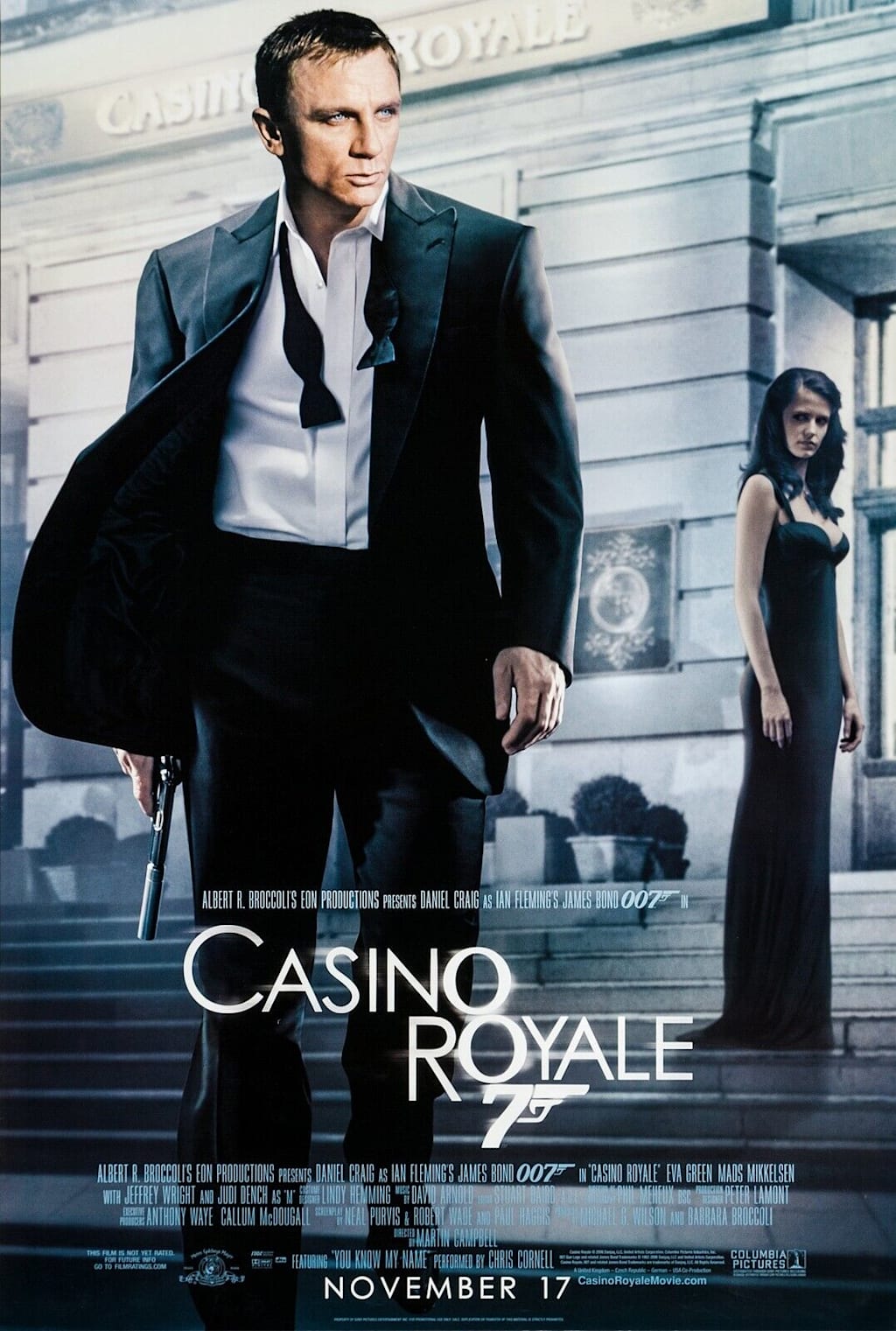
You Know His Name. Earn The Number
Since 1962, the James Bond franchise has constantly adapted to shifting cultural tides, with each leading actor tailoring the British secret agent for their respective eras. The franchise, however, had begun to lean heavily into extravagant gadgets and campier storytelling, with the invisible car becoming an symbol of how far it had moved from its earlier identity.
Enter Casino Royale, with Martin Campbell once again at the director’s helm (he previously directed GoldenEye). The film grounds the character in a gritty post-9/11 landscape. Crucially, his doomed, vulnerable relationship with Vesper Lynd provides the emotional foundation of the story, shaping the cold, calculating operative audiences recognize today.
The Performances Behind Bond’s Reinvention
Daniel Craig brings a raw, visceral edge to James Bond, offering a portrayal that strips away much of the character’s familiar sophistication. As a newly promoted 00 agent embarking on his first major assignment, Bond is inexperienced and makes reckless mistakes. Craig demonstrates this through subtle facial expressions and his detached demeanor, particularly when confronted with death. His physicality, showcased during the pursuit of an African bomb maker and the film’s intense fight sequences, establishes a Bond who is still comprehending the toll the job will take on him.
Eva Green brings intelligence and emotional complexity to Vesper. Rather than simply serving as Bond’s love interest, she plays a crucial role in the narrative by setting up his participation in a high-stakes poker game against Le Chiffre. Her exchanges with Bond gradually reveal a more vulnerable side to the otherwise emotionally reserved secret agent. Their relationship becomes the emotional highlight, while Vesper’s mysterious nature gradually undermines Bond’s ability to trust others.
Mads Mikkelsen delivers a compelling performance as Le Chiffre, presenting an antagonist who is both calculating and increasingly desperate. Tasked with recovering his organization’s money, he sees the poker tournament as an opportunity to appease his superiors. Mikkelsen makes the panic beneath Le Chiffre’s composure apparent, giving Bond an opponent who challenges him psychologically as well as strategically.
Jeffrey Wright’s Felix Leiter and Giancarlo Giannini’s René Mathis provide valuable support throughout Bond’s dangerous assignment. Their contributions reinforce an important aspect of the film: despite his independence and confidence, Bond cannot accomplish everything alone.
Finally, Judi Dench commands the screen as M, balancing authority with a maternal concern for Bond’s well-being. Her stern warnings about his judgment reflect her desire to see him become a more disciplined and effective agent. Through their interactions, Dench establishes a compelling dynamic between an experienced authority figure and a young operative who still has time to learn.
The Best Moments Of Bond’s Rebirth
The film’s black-and-white opening introduces Bond before he has fully earned his 00 status. His assassinations of the corrupt MI6 section chief Dryden and his contact establish a colder, more lethal agent, while the bleak cinematography gives the scene a stripped-down intensity.
That approach continues during the parkour chase with bomb maker Mollaka. The wide shots emphasize the scale and physicality of the chase, but Bond’s decision to blow up the embassy risks damaging Britain’s relations with Madagascar, showing that Bond’s impulsiveness can cloud his judgment.
The train scene offers a quieter contrast. As Bond and Vesper meet for the first time, their conversation reveals two sharp, observant personalities testing one another. Vesper challenges Bond’s attitude toward women, while the intimate lighting and restrained atmosphere allow their chemistry to develop. His confident smirk as she walks away suggests he believes he has the upper hand.
Bond’s confrontation with African warlord Steven Obanno and his henchman shifts the film back into phsyical danger. The stairwell fight leaves Bond struggling, but his refusal to give up establishes his determination while reminding audiences that Bond is not invulnerable.
Shaken, Not Rewritten: From Fleming to Film
Ian Fleming’s Casino Royale and its 2006 film adaptation share the same basic plot, but several changes bring Bond’s first adventure into a contemporary setting. The novel takes place in the early 1950s, with Le Chiffre working for SMERSH, an organization whose name from comes from the Russian phrase Smiert Shpionam, meaning “Death to Spies.”
The movie moves the story to 2006 and replaces SMERSH with a mysterious criminal network, later identified as Quantum in the following film, Quantum of Solace. This change updates the threat surrounding Bond while maintaining Le Chiffre’s role as a financier for dangerous interests.
The biggest difference in the central competition is the card game itself. Fleming’s novel features baccarat, whereas the film uses Texas Hold’em poker. This change gives the filmmakers a more recognizable game for contemporary audiences while preserving the tension of Bond risking everything at the table.
Other details are changed along the way. In the novel, Le Chiffre’s men capture Bond, and one of them overpowers him with his expertise in jujitsu. The book also includes a bombing while Bond is meeting René Mathis, an incident that does not appear in the film in the same way.
Despite these changes, the adaptation retains important elements of the novel. In both versions, Le Chiffre tortures Bond. Bond and Vesper celebrate his victory over dinner before she is kidnapped. Bond follows her captors by car, by the pursuit ends in a crash.
Ultimately, the film remains faithful to the novel’s central story while updating it for the modern world.
The Secrets Behind 007’s Rebirth
Rebooting an iconic franchise required more than casting a new James Bond; it meant finding a direction that could make 007 feel relevant again. Some of the production stories behind Casino Royale show how carefully that reinvention was considered.
Daniel Craig initially declined the offer because he was concerned the franchise would remain stagnant. After reading the script, however, he changed his mind and saw an opportunity to take Bond in a different direction. That decision helped shape the raw, unrefined version of the character.
The parkour chase also reflects the production’s commitment to giving audiences something new. The sequence took at least six weeks to shoot, with Sebastian Foucan, who plays the bomb maker Mollaka, bringing free-running experience to the film. Foucan was a co-founder of the discipline,helping give the pursuit an energy that made it distinct from previous action scenes in the franchise.
There were other ideas for the franchise’s reboot before the film took shape. Quentin Tarantino proposed a period-set story in the 1960s with Pierce Brosnan returning as Bond, but the idea was rejected. Matthew Vaughn was also considered to direct, although he ultimately did not get the job.
The Miami airport sequence, in which Bond tries to stop a bombing at Skyfleet, was filmed across three different countries. The scale of the production reflects the ambition behind the reboot.
Together, these details demonstrate the care put into ensuring 007’s rebirth would resonate with audiences at a time when more grounded heroes like Jason Bourne were changing the genre.
Mission Closed: The Enduring Legacy of James Bond
Casino Royale demonstrated that rebooting a franchise does not mean abandoning the qualities that made its central character memorable. Instead, it’s about placing those familiar traits in a new setting to keep the character relevant. Daniel Craig’s portrayal proved that 007 could evolve with the times without losing what made him one of cinema’s most recognizable characters. As long as Bond continues to reinvent himself, his legacy will endure.
Originally published: https://medium.com/theentertainmentbreakdown/shaken-stirred-and-reborn-how-casino-royale-rescued-james-bond-deea99e0c291
About the Creator
TheScreenAnalyst
I am a passionate movie and TV enthusiast, devoted to analyzing storytelling, characters, visuals, and performances. I provide thoughtful critiques and insights, exploring both mainstream and independent works to engage audiences.
Enjoyed the story? Support the Creator.
Subscribe for free to receive all their stories in your feed.
Comments
There are no comments for this story
Be the first to respond and start the conversation.