
Runaway: Tom Selleck, Gene Simmons, and the Strange Future That Nobody Wanted
Michael Crichton’s 1984 techno-thriller had killer robots, heat-seeking bullets, and Gene Simmons as a homicidal mad scientist. So why does it feel so oddly… ordinary?

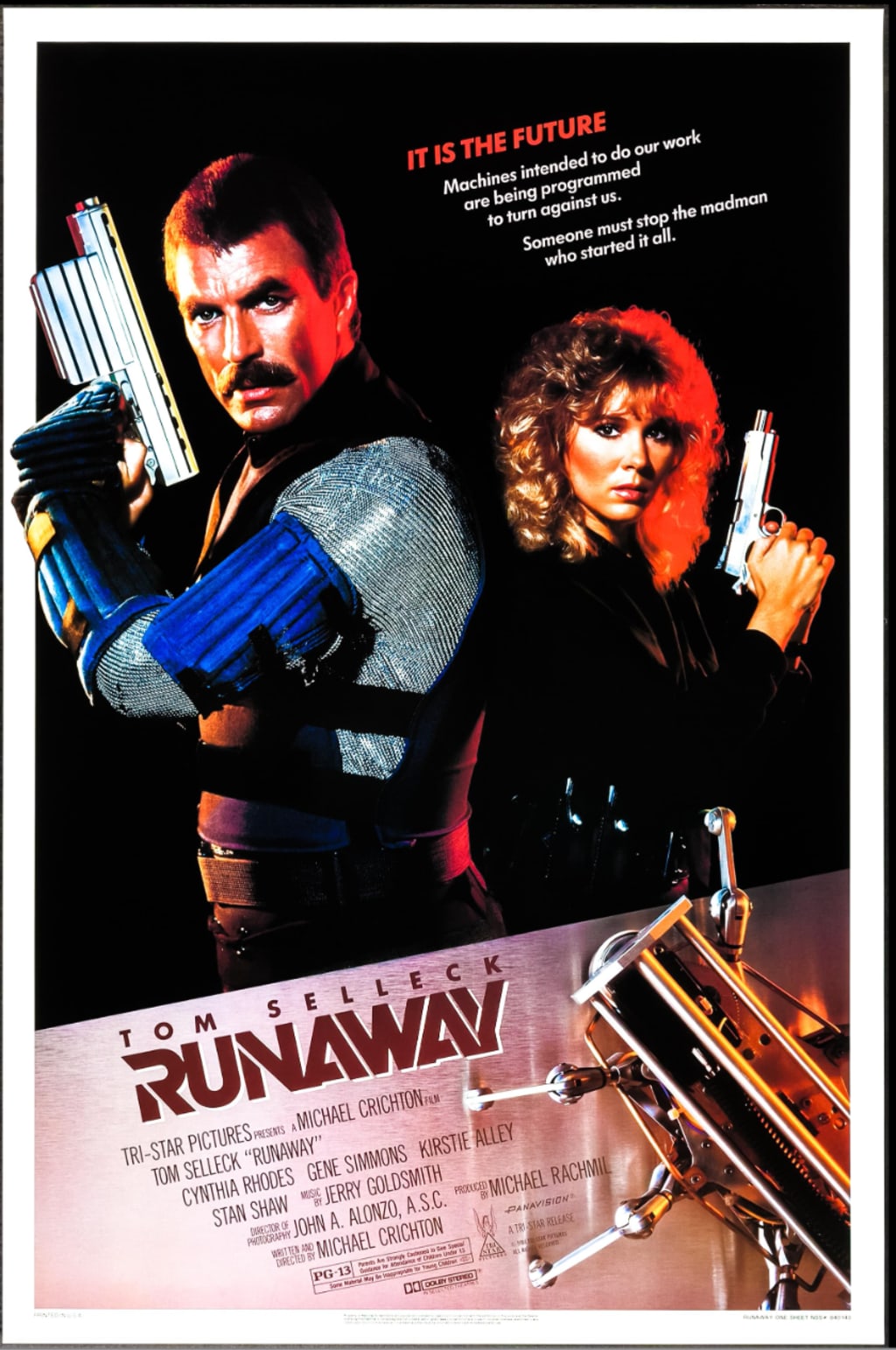
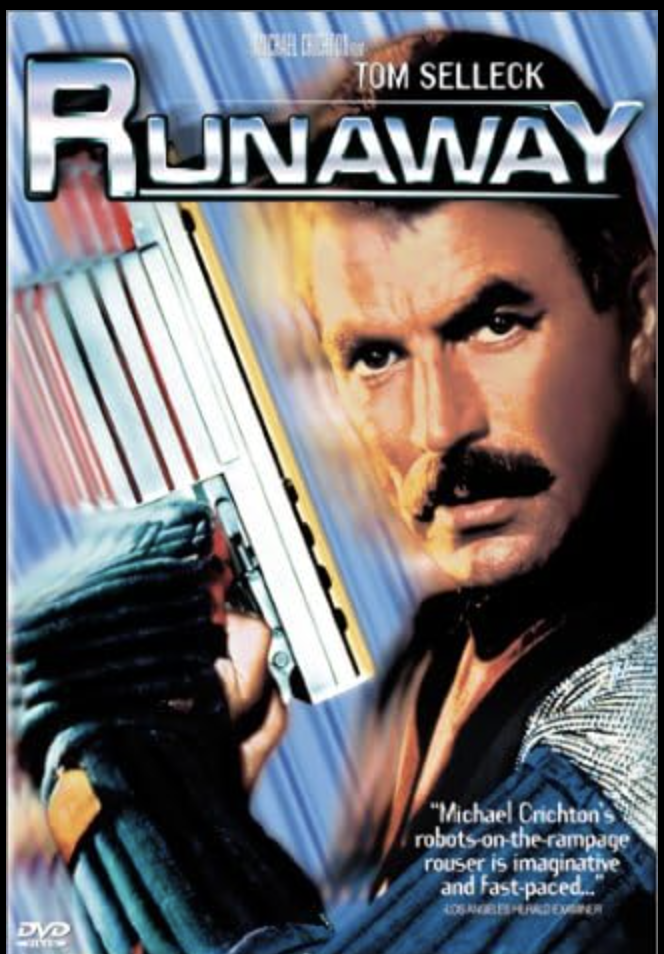
There is something wonderfully strange about Runaway, the 1984 science-fiction thriller written and directed by Michael Crichton.
This is, after all, a movie in which Tom Selleck plays a futuristic cop hunting malfunctioning household robots. Gene Simmons makes his acting debut as a psychotic weapons designer. There are heat-seeking bullets that chase human targets around corners, tiny mechanical spiders that attack people, and a computerized future that is supposed to make the present look primitive.
And yet Runaway is obsessed with the mundane.
That may be its most interesting quality.
Rather than presenting the future as some dazzling technological wonderland, Crichton imagines it as a slightly upgraded version of the world we already know. People still go to work. They still argue with their spouses. Police officers still deal with paperwork and malfunctioning equipment. Housewives still yell when the vacuum cleaner stops working.
The robots just happen to be doing it now.
It is a peculiar approach to science fiction, particularly in the middle of the 1980s, when movies were becoming increasingly fascinated with the idea of technology turning against humanity. The Terminator was right around the corner, WarGames had already made computers terrifying, and Blade Runner had transformed the future into a neon-soaked nightmare.
Crichton went another direction.
He made the future look boring.
And somehow, that makes Runaway one of the more fascinating forgotten movies of the 1980s.

Welcome to the Future. Please Fix the Robot.
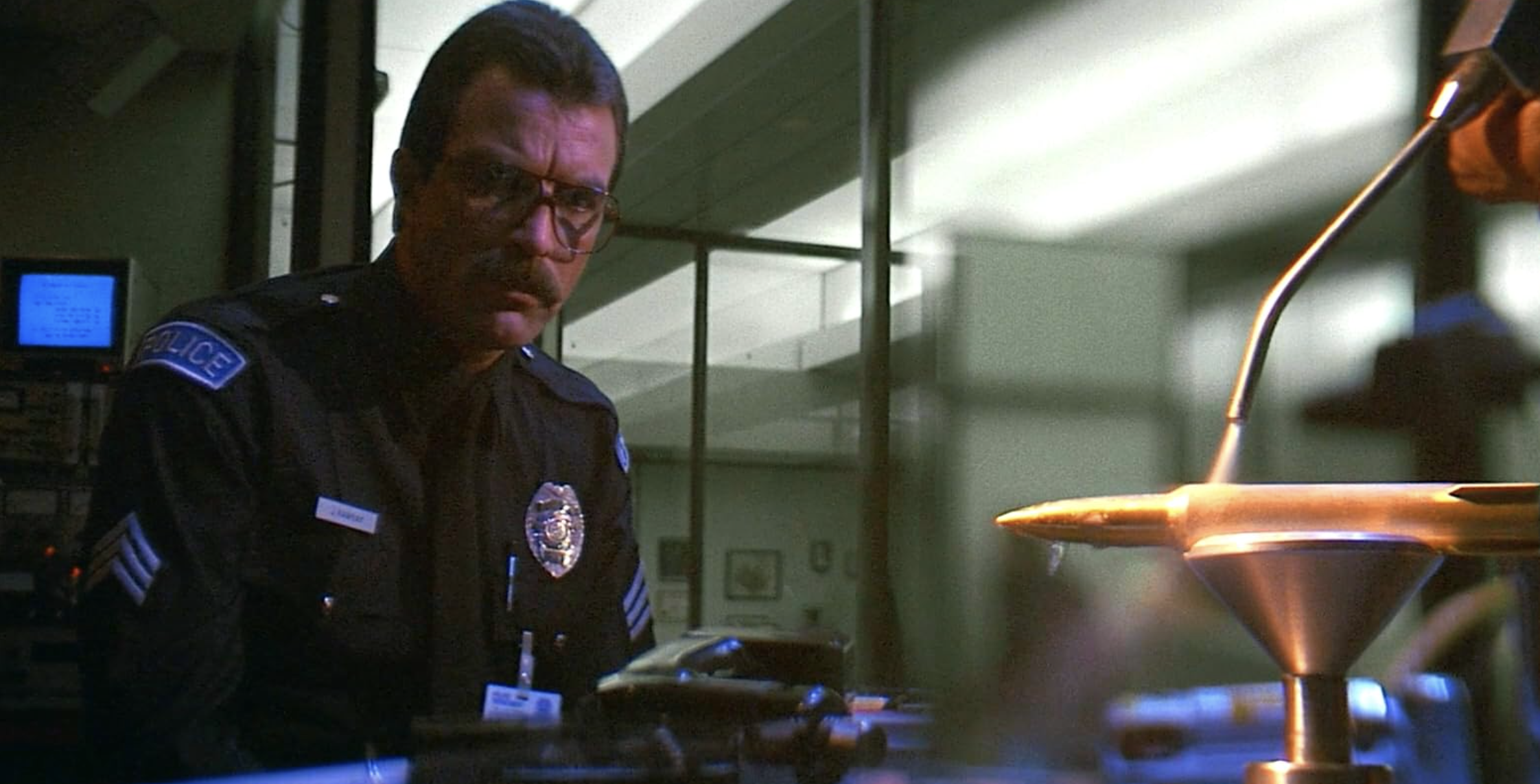
Tom Selleck stars as Sergeant Jack R. Ramsay, a police officer working the decidedly unglamorous “runaway” division.
The runaways aren’t criminals.
They’re robots.
In Crichton’s future, robots have become commonplace. They vacuum floors, work in factories, perform household chores and generally make life a little easier. But technology, as technology tends to do in movies, occasionally breaks.
When it does, Ramsay gets called.
That setup gives Runaway an unusually grounded premise. Instead of being a cop chasing bank robbers or terrorists, Selleck spends much of the movie dealing with malfunctioning machines. It is basically a futuristic version of the world’s least exciting police beat.
And that is exactly what Crichton wanted.
The writer-director wasn’t particularly interested in creating another glossy science-fiction fantasy. He wanted a world that felt recognizable. The technology was supposed to look primitive and imperfect rather than magical. These weren’t omnipotent artificial intelligences. They were machines that occasionally screwed up.
That distinction is important.
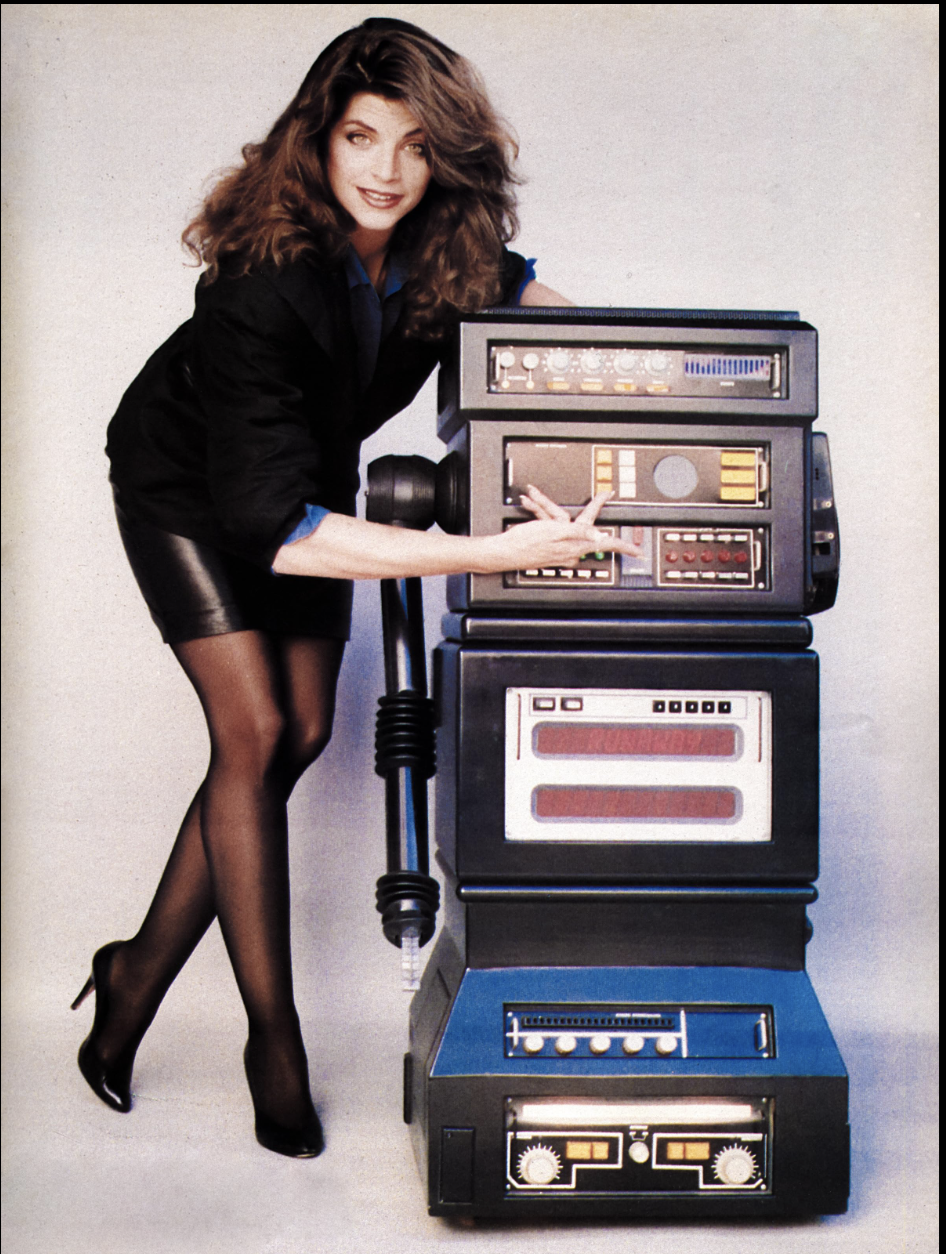
The robots in Runaway don’t feel like they belong to some distant future. They feel like products sitting on a shelf at Sears in 1984.
The movie’s vision of tomorrow is essentially yesterday with better appliances.
Then Gene Simmons Shows Up
If the first half of Runaway feels like a futuristic police procedural, the movie eventually remembers that it is supposed to be a science-fiction thriller.
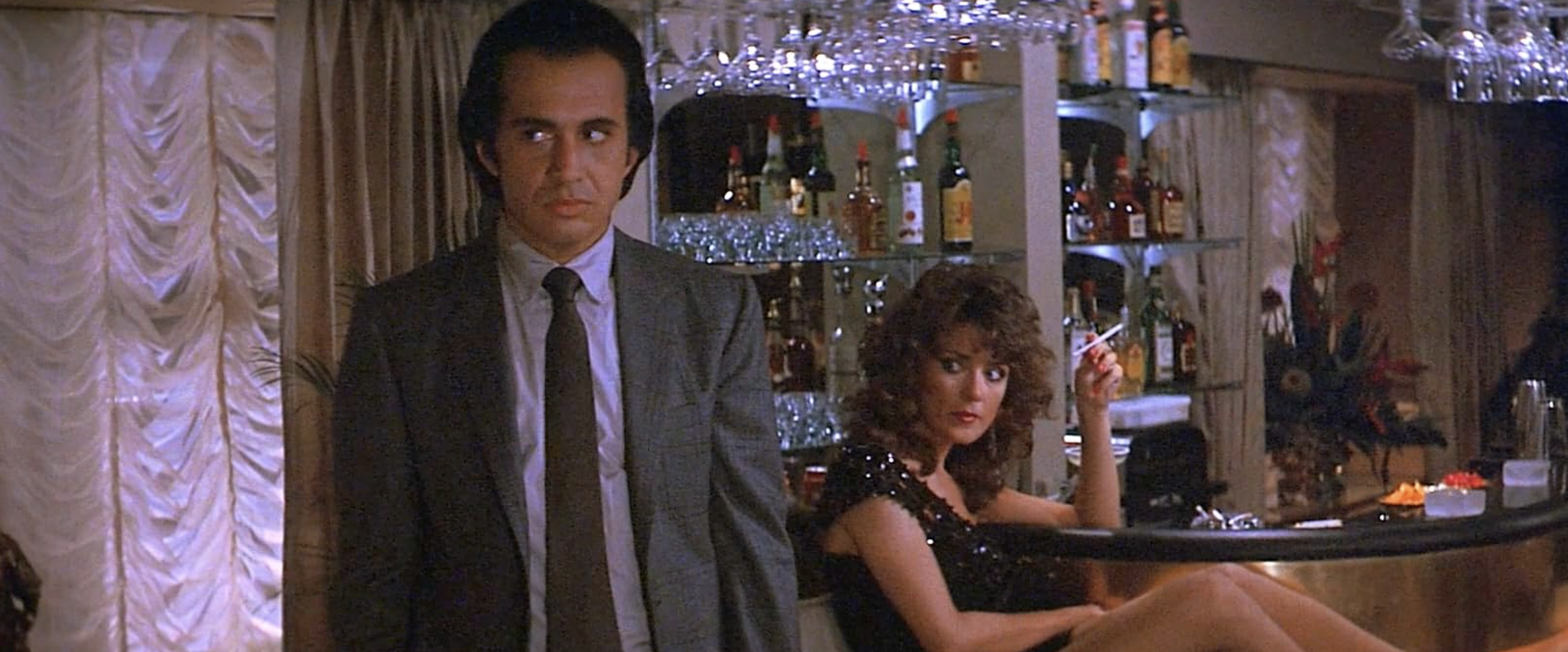
Enter Gene Simmons.
The KISS bassist makes his screen debut as Dr. Charles Luther, a weapons designer who has developed some truly unpleasant technology.
Luther’s inventions include programmable bullets capable of tracking their targets and small, spider-like machines that can crawl into homes and unleash some very nasty surprises.
It is an inspired bit of casting.
Simmons doesn’t exactly disappear into the role. In fact, he barely seems interested in pretending that he isn’t Gene Simmons. He delivers Luther’s dialogue with the cold, theatrical menace of a man who has spent his entire life performing for thousands of screaming people.
And why shouldn’t he?
Simmons was already an enormous rock star, but Runaway gives him an opportunity to become something else entirely: a science-fiction movie villain.
The result is gloriously 1980s.
Luther is exactly the kind of villain who believes that the only thing wrong with advanced technology is that people aren’t using enough of it to murder each other.
And Simmons has a blast.
A Future Made of Metal, Plastic and Synthesizers
One of the best things about Runaway is its physicality.
This isn’t a movie where the future exists primarily because somebody painted a computer screen blue and added some glowing lights.
Crichton’s future is built out of actual objects.
The production used Mercury Topaz police cars. The robots were tangible pieces of machinery. The environments had weight and texture. Vancouver provided the urban backdrop, giving the film a slightly grimy, industrial appearance that keeps it from becoming too polished.
Cinematographer John A. Alonzo helps sell the world without drawing too much attention to himself.
The movie looks like 1984 imagining what 1995 might look like.
That is part of its charm.
And then there is Jerry Goldsmith.
Goldsmith was one of Hollywood’s great orchestral composers, but Runaway gave him an opportunity to experiment with something radically different. Working with his son Joel, he created an almost entirely electronic score, built around the synthesizer sounds that were rapidly becoming associated with futuristic cinema.
It is a fascinating soundtrack because it sounds unmistakably like its era.
Today, the score doesn’t necessarily make the future sound futuristic.
It makes 1984’s idea of the future sound futuristic.
That’s a subtle distinction, but it is exactly what makes the movie such a wonderful time capsule.
The Problem Was That the Future Had Arrived Early
The problem for Runaway was that 1984 was already an extraordinary year for science fiction and technology-driven thrillers.
Crichton’s movie arrived in the same general cultural moment as The Terminator, and it had to compete with movies that were far more aggressive about selling audiences a vision of the future.
Then there was Beverly Hills Cop, which became one of the year’s defining blockbusters.
Runaway simply didn’t have the same impact.
Made for approximately $8 million, the movie opened to around $1.2 million and ultimately earned only about $6.8 million domestically.
For a movie starring one of television’s biggest stars and featuring a respected filmmaker behind the camera, that was a disappointment.
The timing probably didn’t help.
There is a strange irony to Runaway being released in 1984. Its vision of technology was actually more modest and plausible than many of its contemporaries, but audiences weren’t necessarily looking for modest and plausible.
They wanted the future to blow something up.
Runaway wanted to show you a robot vacuum cleaner malfunctioning.
That is a harder sell.
The Machines Were More Interesting Than the People
The critical reaction followed a similar pattern.
There was plenty to admire technically. The robots were convincing. The practical effects worked. The mechanical spiders remain genuinely creepy. The heat-seeking bullets provide some wonderfully inventive action sequences.
But the human story never quite rises to the level of the machinery surrounding it.
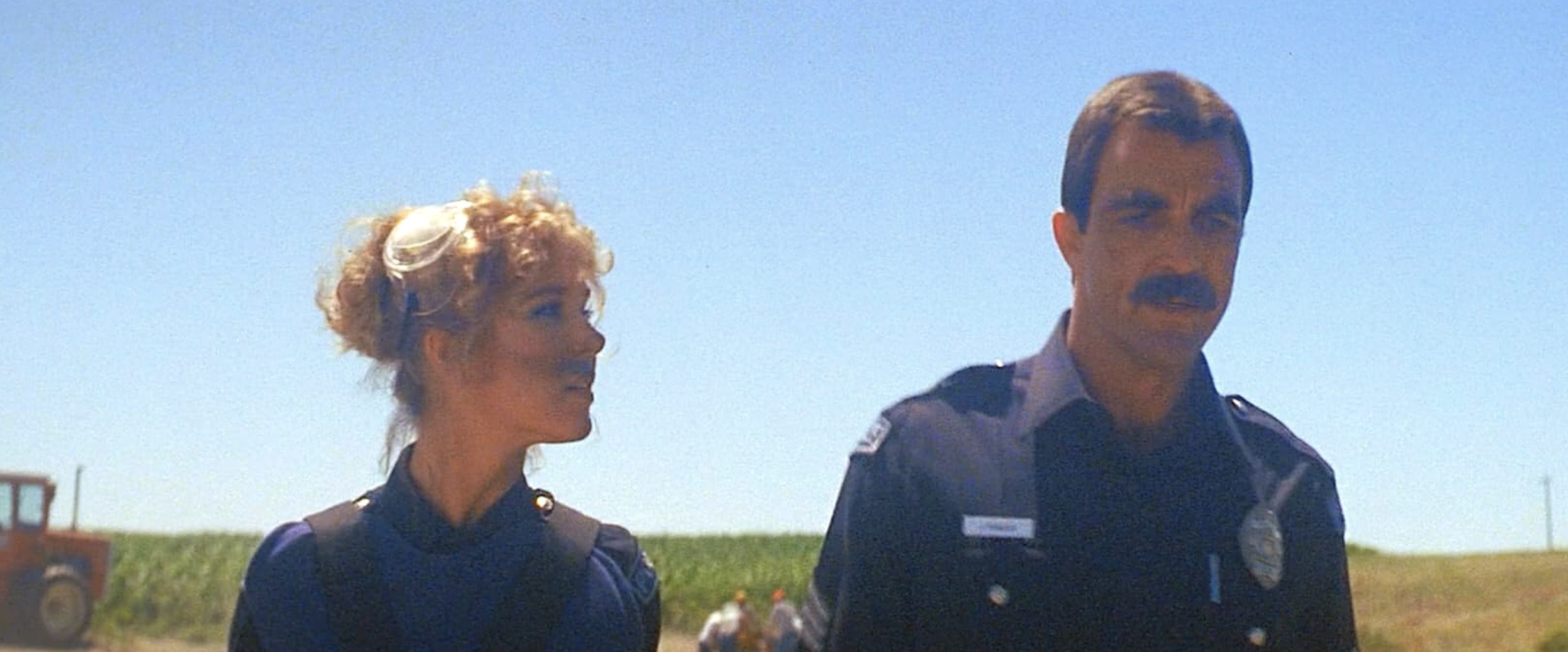
Selleck is perfectly likable as Ramsay, but the role doesn’t give him much room beyond being the calm, competent guy who knows how to handle a robot.
The screenplay is similarly functional.
Crichton clearly understands technology. He understands systems. He understands the way a machine works and, more importantly, how a machine can fail.
His characters are another matter.
That disconnect is essentially the movie’s greatest weakness.
Runaway wants us to care about the people living in this technological future, but the movie is much more excited about the technology itself.
It is difficult not to feel that the killer spider has more personality than some of the supporting characters.
A Forgotten 80s Movie That Has Aged Better Than Expected
And yet Runaway has survived.
Not as a classic. Not as a masterpiece. Not even as one of the essential science-fiction movies of the decade.
It has survived because it is so specifically of the 1980s.
There is something enormously appealing about its vision of the future. It doesn’t look like 2025, 2035 or some abstract dystopian tomorrow. It looks exactly like the future that somebody in 1984 might have imagined while standing in a Radio Shack.
The technology is recognizable. The fears are recognizable. The synthesizers are unmistakable.
Even the movie’s limitations have become part of its appeal.
Selleck brings the effortless cool of a television star who had just become one of Hollywood’s most recognizable leading men. Simmons brings a ridiculous amount of rock-star menace to his first major film role. Crichton brings his fascination with technology and human vulnerability.
Put it all together and you get a movie that is much more interesting than its reputation suggests.
Runaway isn’t The Terminator. It isn’t Blade Runner. It isn’t even particularly interested in competing with either one.
It is something stranger.
It is a police procedural about broken robots that slowly mutates into a story about killer machines, futuristic weapons and a rock star trying to murder Tom Selleck.
And maybe that is why it has found its little corner of the 1980s movie graveyard.
There are worse fates for a forgotten movie than becoming a cult favorite.
Especially when that cult favorite comes equipped with Gene Simmons, killer spiders, heat-seeking bullets and Jerry Goldsmith playing synthesizers like the future depends on it.
Congratulations, Runaway.
You may not have predicted the future.
But you sure as hell preserved 1984.
About the Creator
Movies of the 80s
We love the 1980s. Everything on this page is all about movies of the 1980s. Starting in 1980 and working our way the decade, we are preserving the stories and movies of the greatest decade, the 80s. https://www.youtube.com/@Moviesofthe80s
Enjoyed the story? Support the Creator.
Subscribe for free to receive all their stories in your feed.
Comments
There are no comments for this story
Be the first to respond and start the conversation.