
Revisiting Moonlight, 10 Years Later
the film that defined a generation
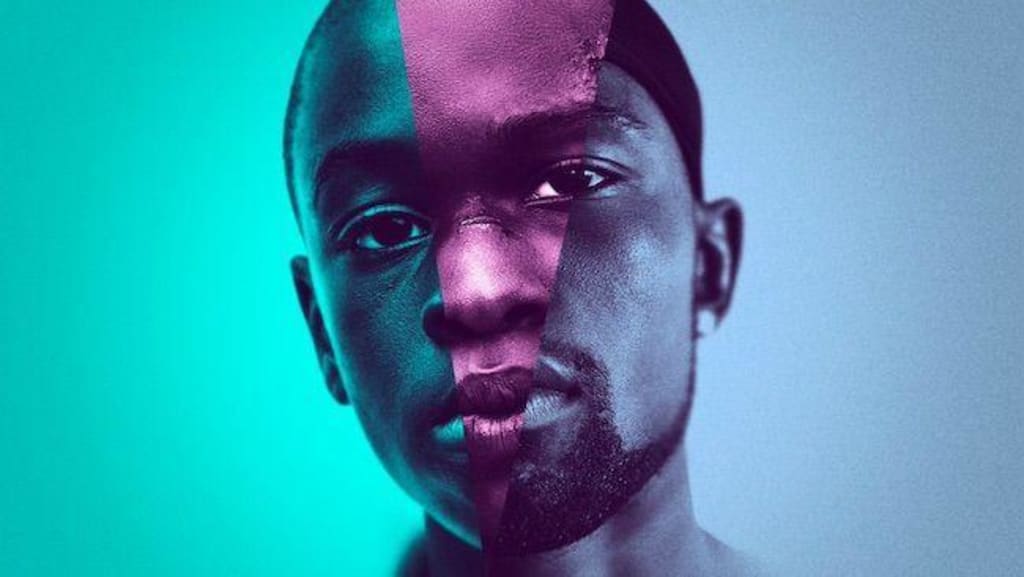
"At some point, you gotta decide for yourself who you gonna be. Can't let nobody make that decision for you."
How can a movie be so beautiful, yet so gut-wrenchingly sad at the same time? And how can all that sadness, all that pain, still leave you with a sense of hope once it's over?
Something shifted when Moonlight came out. It was subtle, almost imperceptible, like the gradual realisation that we were witnessing something truly special. And Moonlight didn't just break through barriers; it shattered them in a way that very few films had before.
Whilst awards don't mean everything (and often don't mean much at all), it still matters that progress is made and continues to be made in the kinds of films that receive recognition within the industry. Moonlight became the first film with an all-Black cast to win Best Picture at the Academy Awards. It was also the first LGBTQ-themed film to take home the night's top prize, and, perhaps most significantly, the first Best Picture winner centred on a queer Black protagonist. Those milestones weren't just symbolic; they represented a shift in what stories Hollywood was willing to celebrate on its biggest stage.
Whilst there had been acclaimed Black films and acclaimed queer films before it, Moonlight was significant because it places Black queer identity at the very centre of its story, rather than treating it as a subplot within a broader theme. More than that, the film doesn't simply focus on race, sexuality, or a coming-of-age narrative in isolation. It weaves all of these elements together. It brings Black identity, queer identity, masculinity, poverty, and coming-of-age storytelling into a single, deeply intertwined whole. At its heart, it's the story of a gay Black boy growing up in a poor, abusive, and unwelcoming environment.
But Moonlight's legacy doesn't just lie in its awards; it lies in its impact. A decade later, it continues to be cited as a benchmark for authentic queer and Black storytelling. Many films have tried to emulate its influence, but few have matched its combination of critical acclaim, cultural impact, and awards success.
In Moonlight, we follow the life of our protagonist through three stages of his life: childhood (when he goes by the nickname "Little"), adolescence (when he goes by Chiron, his actual name), and early adulthood (when he goes by the nickname "Black"). We see the difficulties Chiron faces as a Black gay man, from the bullying he suffers as a child to the physical and emotional abuse that shapes much of his upbringing. Around him are the people who define his world: his mother Paula, a drug addict; Juan, a dealer who becomes an unexpected mentor and father figure; his childhood friend Kevin; and his main bully, Terrel.
What makes this movie so special and unique is that it tells a story without showing all the “big events” you would expect a film to show. We don’t see Juan die, nor do we witness his funeral. We don’t see Chiron going to juvie in Atlanta. We don’t see him becoming a drug dealer. We don’t see his mom being committed to a drug treatment centre. Had this movie been made by a different director, we would’ve seen all of these events.
But Barry Jenkins instead chooses to focus on everything that happens in between: all the small, day-to-day moments that make us who we really are. Juan and his wife making Little a meal; Chiron and Kevin sharing a blunt and an intimate moment on the beach; Black having a heartfelt conversation with his mom. These are the moments that define who we are, and it’s this understanding, and the decision to tell the story through these quiet moments, that sets Moonlight apart and makes it such an incredibly special film.
There can’t be enough said about how fantastic the entire cast is. All three actors who portray Chiron manage to make you believe they are the same person at different stages of life. We see him undergo a striking physical transformation from Chiron in his adolescence (played by Ashton Sanders) to Black in his early adulthood (played by Trevante Rhodes). In the third act, he looks different, he carries himself differently, and he presents a hardened exterior. But as soon as he receives that phone call from Kevin, he slips back into the softer Chiron we met in the earlier parts of the film.
Trevante Rhodes delivers an incredible performance, conveying everything Black is feeling with just a look, a shift in expression. The tough exterior is suddenly shattered, revealing the same gentle character that has always been there beneath it. When the third act begins, you look at the grown-up Chiron and think, “wow, he looks so different.” And then the phone call comes, and in an instant he feels like that younger version of himself again. And that transformation, in both directions, is down to an absolute masterclass in acting.
The very last lines of the movie are like a bullet through the chest.
"You're the only man that's ever touched me. You're the only one. I haven't really touched anyone since."
In that moment, there is a transcendent sadness mixed with beauty and vulnerability that I’ve never experienced in a film before. The release from Chiron is palpable; it’s the first time in the entire movie we see him let his guard down completely, the first time he says exactly what he’s thinking. Chiron spends the entire movie (and his entire life) suppressing his true feelings, and it’s only in Kevin’s presence that he allows this small beam of vulnerability to slip through the cracks. It’s a beautiful scene, a beautiful moment, and it wraps the story up in a way that feels perfect.
Moonlight was truly monumental, and it helped define the last decade of cinema. It raised the bar for what films should feel like, what they should look like, and what they should stand for. As someone who hopes to one day make my own films, I can only hope to create something that stays with people the way this film has stayed with me.
About the Creator
Enjoyed the story? Support the Creator.
Subscribe for free to receive all their stories in your feed. You could also become a paid subscriber, letting them know you appreciate their work.
Comments
There are no comments for this story
Be the first to respond and start the conversation.