
Ranabaali Ending Explained: Vijay Deverakonda’s British Empire Revenge Story, True History and Famine (Spoilers)
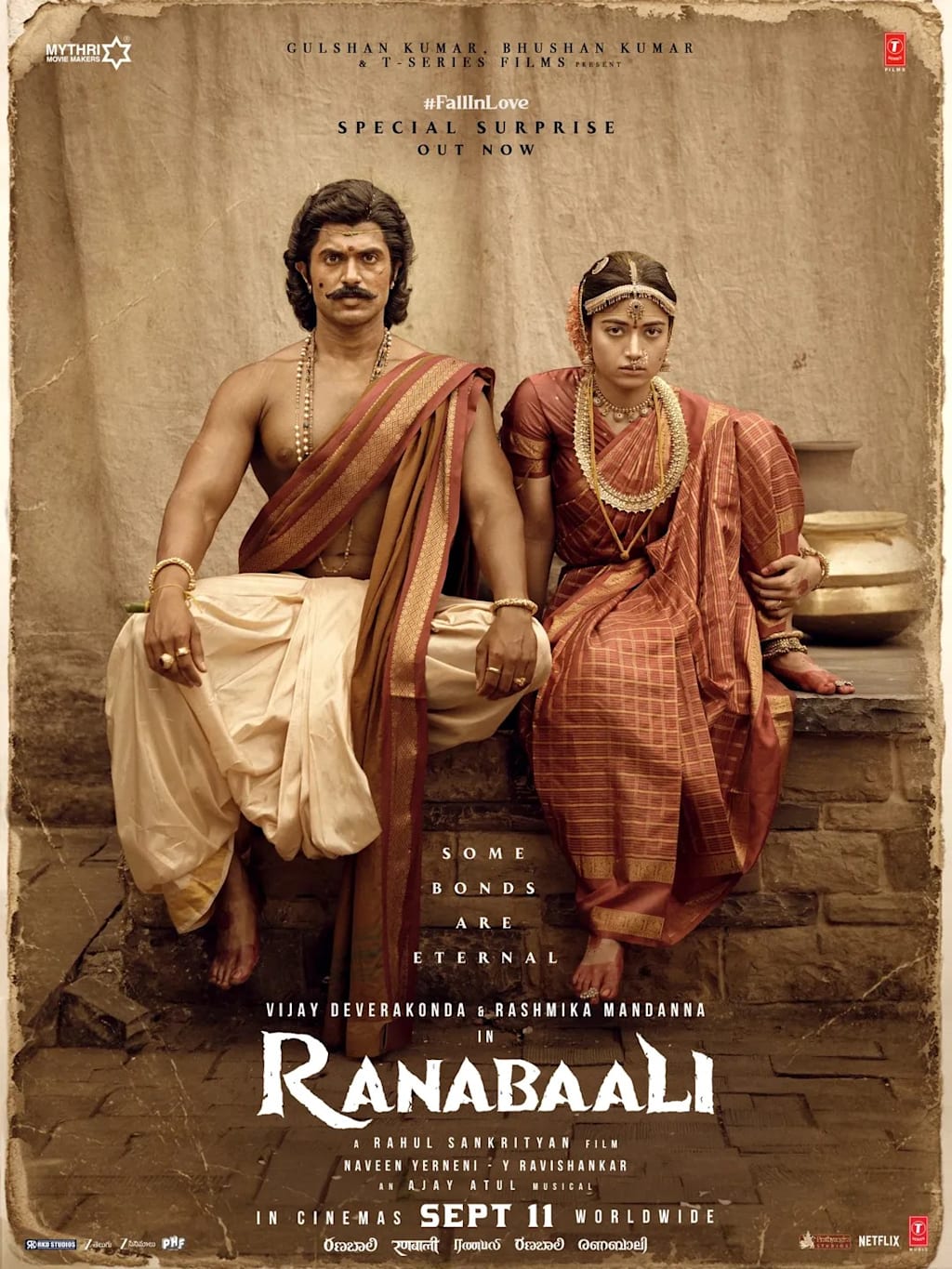
Ranabaali (2026) Full Movie Story Explained in English: Discover the real history of the Great Madras Famine of 1876–1878, British colonial rule, railway exploitation, grain exports and the fictional warrior played by Vijay Deverakonda.

Spoiler Warning: This article contains the complete story, major twists and ending of Ranabaali (2026).
What if one man stood against the British Empire when millions of innocent people were dying from hunger? What if someone decided to fight back against the system that allowed food to leave the country while ordinary people struggled to find even a handful of rice?
These are the powerful questions explored in Ranabaali (2026), a historical action drama starring Vijay Deverakonda and Rashmika Mandanna.
Directed by Rahul Sankrityan, Ranabaali takes inspiration from one of the darkest chapters in Indian history: the Great Famine of 1876–1878, also known as the Madras Famine.
However, the film is not a completely true story. It combines historical events, British colonial policies and fictional characters to create an alternate-history narrative about resistance, revenge, survival and humanity.
Let's explore the complete story of Ranabaali, including its major characters, historical background and ending.
The Story Begins During the Great Madras Famine of 1877
The film opens in 1877 at the Madras Port, where British officers are supervising Indian workers loading enormous quantities of grain onto ships.
The situation is deeply disturbing because the surrounding region is experiencing a devastating famine. Ordinary families have nothing to eat, children are starving, and thousands of people are struggling to survive.
Yet food grains are still being transported through the port for overseas trade.
During this operation, a British officer named Sir Theodore Hector notices a little boy hiding a few grains of food in his clothes. Hector immediately points his gun at the child and demands that the hidden food be handed over.
Terrified by the officer's behaviour, the other workers surrender whatever grain they have secretly kept in their turbans.
Hector is determined to fulfil an ambitious grain-export target because he believes that achieving it will help him secure a powerful position in the colonial administration.
His ambition becomes one of the central motivations behind the film's fictional conflict.
Ranabaali's Mysterious Birth
The story then moves to a village in the Rayalaseema region of Andhra Pradesh.
A traditional storyteller is narrating the legend of a warrior named Singanamala Bobbili Ranabaali.
The narrative takes us approximately 25 years into the past, where a pregnant woman named Kasturi is desperately running away from members of her own family.
They want to kill her because of a property dispute.
While escaping, Kasturi reaches a mysterious cave where a spiritual figure named Bhadr Mallanna is performing intense meditation.
Suddenly, she goes into labour and gives birth to a baby boy.
However, the newborn does not appear to be breathing.
Desperate to save her child, Kasturi asks the spiritual figure for help. After examining the baby, he reveals that the child has been born for a special purpose.
According to his prophecy, the boy cannot die until he fulfils his destined mission.
Bhadr Mallanna uses his spiritual powers to bring the child back to life.
The boy is named Ranabaali.
Ranabaali Grows Into a Fearless Warrior
Years pass, and Ranabaali grows into a powerful young man.
He cannot tolerate injustice, especially when someone weaker is being mistreated. Whenever he sees someone bullying innocent people, he immediately intervenes.
However, his greatest weakness is his uncontrollable anger.
He often punishes his enemies without understanding the circumstances that forced them into wrongdoing.
One day, a major religious festival is taking place in his village. Everyone is trying to pull a massive ceremonial chariot, but despite their combined efforts, it refuses to move.
The villagers are already frightened because of the ongoing famine.
Suddenly, a group of robbers disguised as wolves enters the village.
When Ranabaali discovers their presence, he takes on the entire group alone.
Despite being heavily outnumbered, he defeats almost everyone.
Only the leader, Munna, survives long enough to explain the real reason behind the attack.
Munna reveals that his own village is also suffering from famine. His wife and little daughter, Chinni, have been starving for days.
A wealthy landlord promised him money and food if he killed Ranabaali.
Munna accepted the offer because he wanted to save his daughter.
But Ranabaali refuses to forgive him and kills him.
After returning to the village with Munna's severed head, Ranabaali finally manages to pull the enormous chariot forward.
The villagers celebrate his strength, but his mother Kasturi remains worried because she remembers the prophecy surrounding his birth.
Ranabaali Marries Jayamma
After another confrontation with the landlord who had hired Munna, Ranabaali's mother decides that marriage might help him become more responsible.
She arranges his marriage to a young woman named Jayamma.
Unfortunately, their relationship gets off to a difficult start.
Ranabaali enjoys drinking and spending time with his companions, while Jayamma cannot tolerate his irresponsible behaviour.
Their arguments become so intense that Jayamma even threatens to jump into a well.
However, as time passes, they begin understanding each other.
Jayamma discovers that Ranabaali is not simply an aggressive man. He deeply loves his horse, respects his companions and treats people without discrimination.
Gradually, affection develops between them.
But Jayamma is about to teach Ranabaali an important lesson that will completely change his outlook on life.
The Incident That Changes Ranabaali Forever
One day, Jayamma takes Ranabaali to Munna's house.
There, he meets Munna's widow and their little daughter Chinni.
The family is living in terrible conditions. They have almost nothing to eat, and the little girl is still struggling with hunger.
Ranabaali feels deeply uncomfortable after seeing their situation.
He removes his golden ring and offers it to Munna's wife so she can purchase food for her daughter.
However, she refuses to accept anything from the man who killed her husband.
Ranabaali returns home feeling disturbed.
He becomes angry with Jayamma for taking him there, but she explains something that he has never properly considered.
Munna was not necessarily a naturally cruel person. He was a desperate father who had been forced into a terrible situation because his daughter was starving.
For the first time, Ranabaali begins understanding that circumstances can push ordinary people towards desperate decisions.
He realises that Munna was not the only person suffering.
There are thousands of families facing similar problems.
This realisation motivates Ranabaali to travel beyond his village and witness the situation for himself.
What he discovers changes his life completely.
British Officers Arrive to Build Railway Lines
During his journey, Ranabaali sees dried-up fields, starving children and families struggling to survive.
Animals are dying because of the shortage of food and water.
Meanwhile, British officers arrive in his village and announce that railway construction work is about to begin.
They promise food to villagers who agree to work on the project.
However, when some villagers question their methods, the officers threaten them.
Ranabaali becomes furious and attacks the officer, warning the British that nobody will be allowed to enslave his villagers while he is alive.
But there is a serious problem.
Although Ranabaali manages to drive the officers away, he cannot solve the villagers' hunger.
Eventually, many desperate families are forced to accept railway construction work.
Among the workers are Munna's widow and daughter Chinni.
The labourers are made to work extremely hard, yet the food they receive is barely enough to survive.
When Sir Theodore Hector visits the construction site, he orders that children and elderly people who cannot work should not receive food.
His decision makes the already terrible situation even worse.
The film suggests that the railway project is primarily being used to transport grain from the interior regions to Madras Port, where it can be shipped overseas.
Ranabaali begins understanding that the problem is much bigger than a few cruel British officers.
The entire system is working against ordinary people.
The Brutal Punishment of Two Children
One night, Ranabaali has a disturbing dream in which he sees his village completely deserted.
After waking up, he notices Munna's widow waiting outside his house.
She tells him that British officers have caught Chinni and another child stealing food.
The children have been brutally beaten and subjected to a horrifying public punishment.
They have been tied up and exposed to the scorching sun to frighten the other workers.
When Ranabaali hears what has happened, he loses control.
He immediately rushes to the construction site and attacks the British officers responsible for the punishment.
He manages to rescue the children, but unfortunately, the other child has already died.
Chinni is unconscious, and Ranabaali desperately tries to bring her back to her senses.
Eventually, she opens her eyes.
Ranabaali then kills the officer responsible and leaves a warning for the British administration.
But this incident makes him realise that killing individual officers will never be enough.
The real problem is the larger colonial system that continues to take food away from starving communities.
Ranabaali Attacks the Landlords' Grain Storage
As his investigation continues, Ranabaali discovers that several wealthy landlords are secretly storing enormous quantities of grain in their warehouses.
While poor families are dying from hunger, these landlords are accumulating food and cooperating with the British authorities.
Ranabaali gathers his companions and attacks one of the warehouses.
They seize the stored grain and distribute it among the starving villagers.
For a short time, people finally have enough food to survive.
However, Ranabaali understands that this is only a temporary solution.
If the British continue taking grain from other villages, the same situation will happen again.
He therefore decides to investigate where all the stolen food is going.
Eventually, he discovers that grain is being transported through railway networks to Madras Port before being loaded onto ships.
Ranabaali decides that he must stop the transportation operation itself.
He and his companions manage to stop a goods train, hoping to find the grain.
However, when they inspect the railway compartments, they discover that the train is carrying something else.
Meanwhile, Ranabaali has been away from home for several days.
Jayamma, who is pregnant, becomes increasingly worried about him.
She eventually decides to travel to find her husband.
After witnessing the suffering of the starving villagers, she also begins understanding the importance of his mission.
She even sings a song to encourage the people.
Ranabaali tells her that his next mission could cost him his life and asks her to return home.
But Jayamma refuses.
She explains that she cannot simply abandon the innocent children and families she has seen suffering.
Before Ranabaali leaves, she makes him promise that he will return alive.
He promises her that he will come back.
Hector Takes Revenge on Ranabaali
Meanwhile, Hector has realised that Ranabaali is becoming a major obstacle to his plans.
The railway construction is facing repeated interruptions, grain warehouses are being attacked, and British officers are being killed.
Hector understands that he must eliminate Ranabaali if he wants to regain control.
He sends soldiers to Ranabaali's village.
The soldiers search for him but eventually find Jayamma.
They drag her away and physically assault Kasturi when she tries to protect her daughter-in-law.
Jayamma is taken before Hector.
Despite knowing that she is being used to provoke her husband, she refuses to show fear.
Instead, she warns Hector that his actions will have terrible consequences.
Hector responds by shooting her.
When Ranabaali receives the news, he immediately abandons his mission and rushes back home.
He finds Jayamma lying in a pool of blood.
Although she is still alive, her condition is extremely serious.
Ranabaali sits beside her and reminds her of his promise.
He tells her that he has returned alive, just as he promised.
But Jayamma knows that she might not survive.
She begs him to save their unborn child.
The doctors perform an emergency operation and manage to save the baby.
Unfortunately, Jayamma dies.
Her death completely destroys Ranabaali emotionally.
She was the person who taught him to understand the suffering of others. She helped him realise that people sometimes commit terrible acts because they have no other way to survive.
Now the person who changed his life is gone.
Ranabaali's Attack on Madras Port
Hector believes that Jayamma's death has finally removed the biggest obstacle standing in his way.
He resumes his efforts to transport grain to Madras Port.
But he has underestimated Ranabaali.
One day, a train arrives at the port.
The British officers expect to find another shipment of grain.
However, when the compartments are opened, Ranabaali and his companions emerge instead.
They launch a surprise attack against the British forces.
Indian workers at the port also join the rebellion.
A massive battle breaks out.
Ranabaali attacks the British ships and eventually confronts Hector.
For Ranabaali, this is no longer simply a fight to protect food supplies.
He is also facing the man responsible for murdering his wife.
The two engage in a brutal fight.
Just when Ranabaali appears ready to finish Hector, the British officer falls into the water with a serious neck injury.
Ranabaali assumes that Hector has died.
Following the battle, the captured grain is distributed among starving communities.
For the first time, many families receive the food they desperately need.
After Jayamma's death, Ranabaali begins raising his newborn son with the help of his mother.
He also brings Chinni into his home.
This is particularly meaningful because Chinni is the daughter of Munna, the man Ranabaali had once killed without understanding his circumstances.
The child now becomes part of his own family.
Who Betrays Ranabaali?
Although Ranabaali believes that the conflict is over, the story has another major twist.
One day, his horse suddenly disappears.
While searching for it, Ranabaali reaches the same mysterious cave where he was born.
However, several men are already waiting for him.
They surround him and launch an attack.
Ranabaali fights back, but there are too many attackers.
Eventually, he becomes severely injured and collapses.
It is then revealed that some people from his own side have betrayed him.
After Hector fell into the water during the port battle, one man rescued him.
In exchange, Hector promised to provide that man with a government position.
Driven by personal ambition, the man turns against Ranabaali.
The warrior who had risked everything to protect his people is now betrayed by some of the very people he fought for.
The attackers leave, and Ranabaali's companions carry his injured body back to the village.
Everyone believes that he has died.
The villagers mourn him and bury him.
But Hector is still not convinced.
He wants to see Ranabaali's severed head to make absolutely certain that his greatest enemy is dead.
He therefore arrives in the village and orders the soldiers to dig up the grave.
What happens next completely surprises everyone.
Ranabaali Ending Explained: Is Ranabaali Really Immortal?
When the grave is opened, the soldiers discover something unexpected.
Ranabaali's body is missing.
Instead, they find a tunnel leading towards the cave where he was born.
It turns out that Ranabaali was never actually dead.
He had survived the attack and escaped through the underground passage.
He had deliberately allowed everyone to believe that he was dead.
Now, Ranabaali appears once again in front of Hector.
The British officer is shocked to see the man he believed had already been buried.
This moment also brings the story back to the prophecy made during Ranabaali's birth.
Remember how Bhadr Mallanna had predicted that Ranabaali could not die until he completed his destined mission?
Throughout the film, Ranabaali survives several seemingly impossible situations.
Even when his enemies believe they have finally killed him, he manages to return.
The prophecy becomes an important symbolic element in the climax.
Ranabaali once again confronts Hector.
This time, he manages to defeat and kill the British officer, finally taking revenge for Jayamma's death.
With Hector gone, Ranabaali rides away on his horse.
And this brings the story of Ranabaali to its conclusion.
Ranabaali True Story: What Really Happened During the Great Madras Famine?
Although Ranabaali's central warrior and revenge story is fictional, the historical background of the film is connected to real events.
Between 1876 and 1878, large parts of southern India experienced one of the most devastating famines of the nineteenth century.
It is commonly known as the Great Famine of 1876–1878 or the Madras Famine.
The disaster affected regions including the Madras Presidency, Mysore and parts of the Bombay Presidency.
Severe drought, failed monsoons and crop destruction caused widespread food shortages.
Millions of people suffered, and millions died during the wider famine crisis.
However, drought alone does not explain the scale of the disaster.
Colonial economic policies, poverty, land revenue demands, inadequate relief measures and the administration's commitment to free-market principles made the situation considerably worse.
One of the most controversial aspects of this period was the continued movement and export of food grains despite widespread starvation.
Historical research has documented substantial wheat exports to Britain during the famine years.
The problem was not simply that India had no food anywhere. It was also that millions of poor people could no longer afford to purchase the food available in the market.
The film uses this historical background to create its fictional story about Ranabaali's resistance.
Why Did the British Build Railways in India?
Another important subject explored in the film is the construction of railway networks during British rule.
The first passenger railway in India began operating in 1853, connecting Bombay and Thane.
During the following decades, the railway network expanded rapidly.
But why were the British so interested in building railways across India?
There were several reasons.
1. Transporting Raw Materials and Expanding Trade
Railways connected agricultural and resource-rich interior regions with major ports such as Bombay, Madras and Calcutta.
This made it easier to transport cotton, wheat and other commodities for domestic and international trade.
It also helped British manufacturers bring their products into Indian markets.
2. Moving British Soldiers
Railways were also strategically important for the British military.
They allowed troops, weapons and supplies to move across large distances much faster than traditional transportation methods.
This helped the colonial government maintain control over its territories.
3. Supporting Colonial Administration
A railway network made it easier for the British government to move officials, communicate across regions and administer a vast territory.
4. Famine Relief and Food Distribution
Interestingly, railways also had the potential to help famine-affected communities.
They could transport food from regions with available supplies to areas suffering from shortages.
However, the existence of railway lines did not automatically mean that starving people could afford the food being transported.
The benefits depended on government policies, prices, distribution systems and the availability of relief.
Therefore, it would be historically inaccurate to say that the British built railways only to take food away from Indians.
Their purposes were multiple, including commercial expansion, military control, administration and, increasingly, famine relief.
Nevertheless, the colonial economic structure often prioritised imperial trade interests over the immediate needs of the poorest people.
Final Thoughts on Ranabaali (2026)
Ranabaali is more than a fictional revenge story set during British rule.
Through the character of Ranabaali, the film explores what might have happened if an ordinary warrior had decided to challenge the colonial system during one of India's worst humanitarian disasters.
Vijay Deverakonda's character represents resistance against injustice, while Jayamma plays a crucial role in transforming his understanding of humanity.
The Great Madras Famine, colonial economic policies, grain exports and the expansion of Indian railways provide the historical foundation for the narrative.
However, Ranabaali himself, his supernatural birth, his personal revenge against Hector and the major battles shown in the film should be understood as fictional storytelling rather than documented historical events.
The film ultimately raises an interesting question: what happens when a person who once fights only for himself begins fighting for the survival of an entire community?
That is the central idea behind Ranabaali.
What do you think about Vijay Deverakonda's Ranabaali? Did you enjoy the combination of historical events, fictional action and revenge? Share your thoughts in the comments!
About the Creator
parwinder singh
🎬 Movie & Entertainment Writer sharing reviews, ending explanations, story breakdowns, plot twists and hidden details from Bollywood, Hollywood, South Indian cinema, Korean dramas and OTT releases.
Enjoyed the story? Support the Creator.
Subscribe for free to receive all their stories in your feed.
Comments
There are no comments for this story
Be the first to respond and start the conversation.