
Porky’s Revenge (1985): The Raunchy Trilogy’s Last Gasp
A dancing chimpanzee, a riverboat full of bad decisions, and a soundtrack packed with rock legends couldn’t save the Angel Beach gang from the law of diminishing returns.

The Party Was Almost Over
There was a time when Porky’s could do no wrong. Well, commercially speaking, anyway.
The original 1981 comedy about a bunch of horny Florida teenagers and their increasingly desperate attempts to lose their virginity became one of the great box-office surprises of the early 1980s. It was crude, frequently tasteless, and unapologetically juvenile. It also made an extraordinary amount of money, helping turn the teenage sex comedy into one of Hollywood’s favorite new cash cows.
Hollywood being Hollywood, nobody was going to leave that kind of money on the table.
Porky’s II: The Next Day arrived in 1983, bringing back the Angel Beach gang for another round of adolescent misadventures. This time, however, the filmmakers broadened the story to include a battle over censorship, religious hypocrisy, and the town’s theatrical ambitions. The results were less commercially impressive than the original, and some observers felt the sequel had lost sight of what audiences wanted in the first place.
Enter Porky’s Revenge.
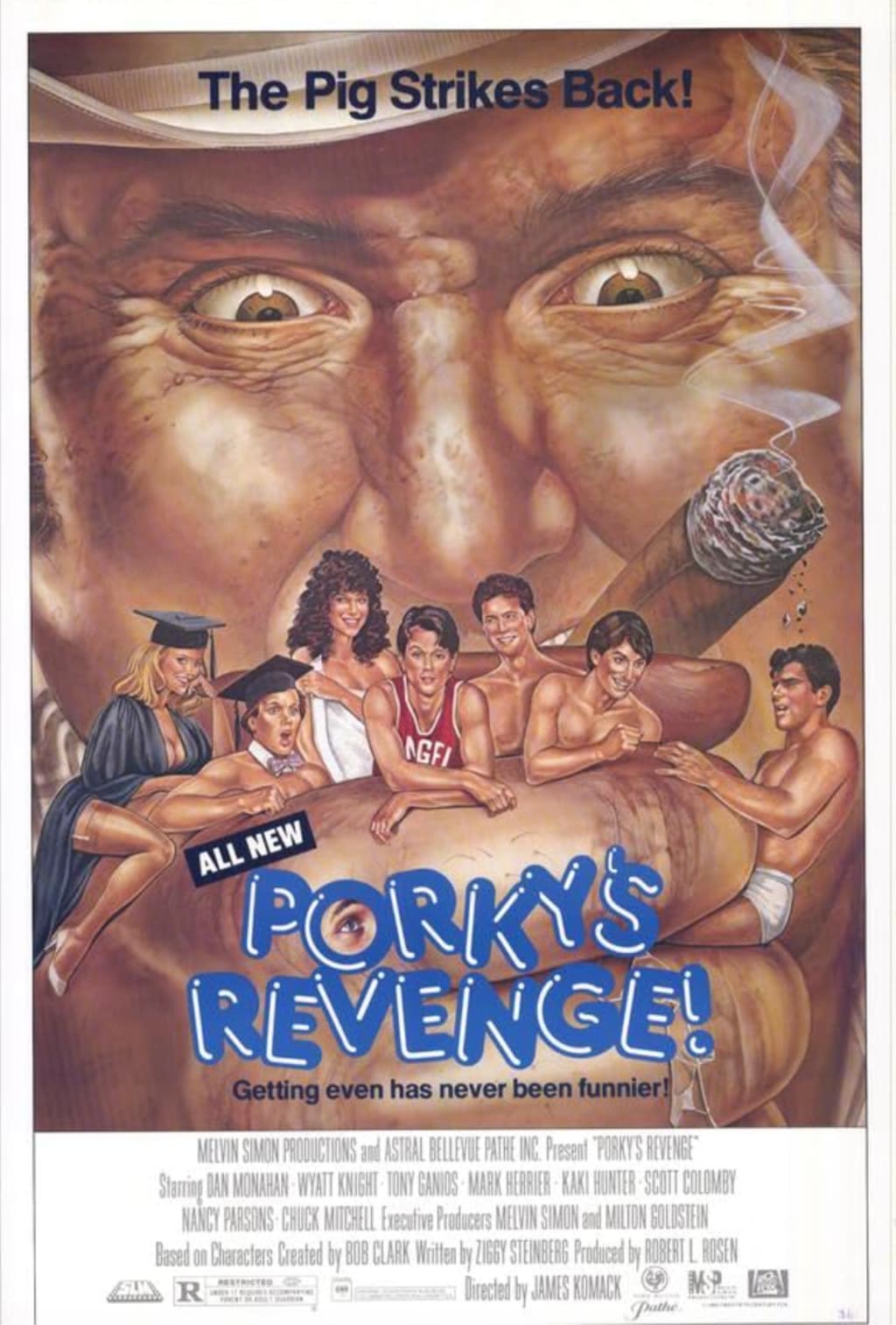
Released in March 1985, the third film attempted to restore the franchise’s bawdy credentials while sending the boys into another round of sexual humiliation, elaborate schemes, and general stupidity. James Komack, a veteran television producer making a long-awaited move into feature filmmaking, took the director’s chair.
The production also involved a chimpanzee named Wanda, an elaborate gambling-and-strip-club riverboat, and a Miami mansion that would have been considerably more dignified without the monkey business.
Literally.
If the original Porky’s was a lightning bolt, Porky’s Revenge was Hollywood trying to bottle the electricity after somebody had already unplugged the machine.
Hollywood Wanted Its Porky’s Back
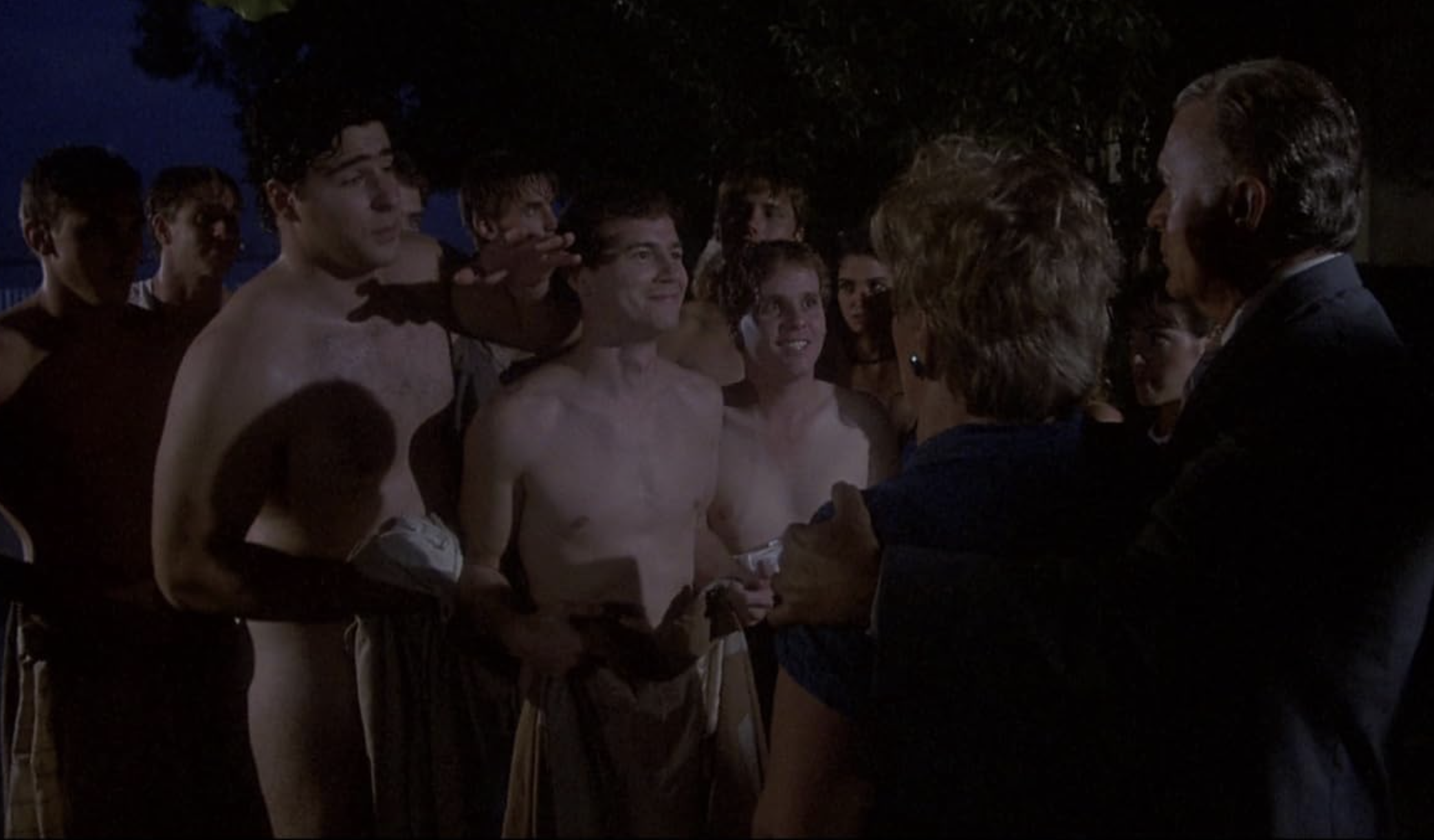
The commercial logic behind a third Porky’s wasn’t particularly complicated. The first two films had demonstrated that the Angel Beach boys could attract an audience, even if the second installment hadn’t matched the original’s extraordinary performance.
The challenge was figuring out how to get the magic back.
James Komack was brought aboard with an assignment that sounded simple enough: make the third film raunchier than the second.
Komack wasn’t a newcomer to television. His credits included Chico and the Man and Welcome Back, Kotter, two popular sitcoms that made him familiar with the rhythms of commercial comedy. But directing a feature film was a different proposition, and he’d spent years trying to make that transition.
In a 1984 interview, Komack discussed his ambitions for the project and his dissatisfaction with Porky’s II. He believed the sequel had moved too far away from the sexual comedy that had made the original successful.
His diagnosis was straightforward. The series had lost its nerve.
Komack also believed the material offered more than a collection of dirty jokes. Beneath the anatomical humor and adolescent scheming, he saw a conventional dramatic structure, with characters whose relationships could develop within the familiar framework.
That distinction matters. Komack wasn’t necessarily approaching Porky’s Revenge as a disposable collection of gags. He saw an opportunity to make a commercially successful picture while demonstrating that he could handle a feature film.
There was just one small problem.
Hollywood had already started to discover that repeating a successful formula wasn’t quite the same thing as repeating its success.
Miami, Monkeys, and a Very Unusual Film Set
Principal photography took place in the Miami area during the summer of 1984, with production reportedly running from mid-July into September.
The filmmakers made extensive use of local locations, including Miami Senior High School and the grounds of Vizcaya, the spectacular waterfront estate that now operates as the Vizcaya Museum and Gardens.
Vizcaya is the sort of place where you might expect to encounter European antiques, formal gardens, and visitors contemplating the finer points of architecture.
You probably wouldn’t expect to find a chimpanzee preparing to simulate a striptease.
And yet here we are.
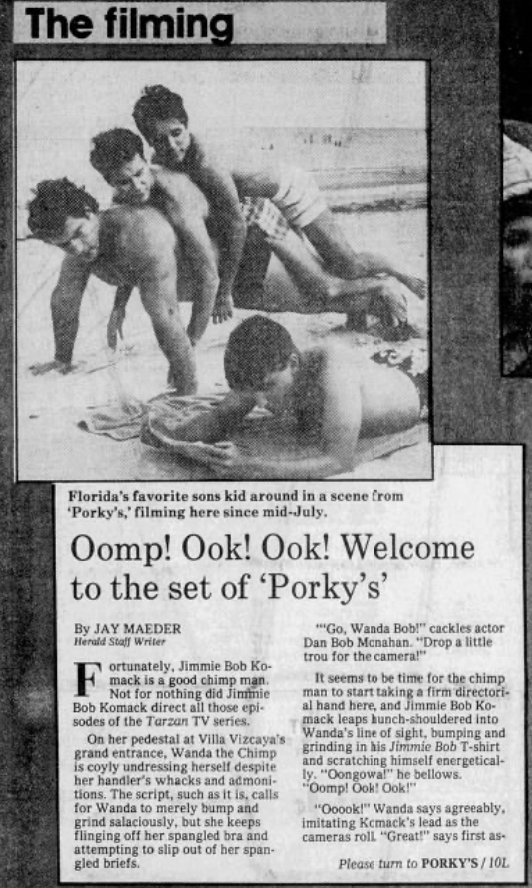
A September 30, 1984, Miami Herald report by Jay Maeder offered a wonderfully undignified glimpse of the production. Wanda, the chimpanzee, had a scene at Vizcaya involving some suggestive bumping and grinding. The animal apparently took the assignment in a direction the filmmakers hadn’t entirely anticipated, with further undressing becoming part of the on-set comedy.
Komack, referred to in the report by the decidedly informal nickname “Jimmie Bob,” found himself dealing with a performer whose interpretation of the material wasn’t necessarily constrained by the screenplay.
Dan Monahan, who played Pee Wee in the series, was also part of the chimpanzee-related festivities.
It’s the sort of production anecdote that seems almost too perfectly suited to a Porky’s movie. The franchise had built its reputation on the collision between adolescent sexual curiosity and spectacularly poor judgment. Now the filmmakers had a chimpanzee threatening to steal the show.
Wanda may not have received top billing, but she understood the assignment.
The production’s other ambitions were considerably more elaborate. One of the major set pieces involved the construction of a large, two-story gambling and strip-club riverboat positioned on a barge in a lagoon.
This was not a production content to send the boys down to the local swimming hole and call it a day.
The reported budget landed somewhere in the $7 million range, a substantial commitment for a comedy whose commercial appeal depended on audiences wanting another helping of the same basic ingredients.
The Miami production also created the usual headaches for people trying to get through their daily routines. Period automobiles and heavy production equipment occupied streets, while temporary closures complicated local traffic. At least one resident reportedly found the inconvenience compounded by the fact that Miami Vice was also filming nearby.
Imagine being unable to get where you’re going because two television-and-movie productions have turned your neighborhood into a backlot.
Welcome to Hollywood, Florida edition.
Still, the production received cooperation from local officials and schools, and Miami provided a colorful backdrop for the film’s increasingly elaborate antics.
For Komack, the shoot represented a long-awaited opportunity to prove himself as a feature director. For everyone else, it was a summer of traffic disruptions, expensive equipment, period costumes, and a chimpanzee who apparently had ideas of her own.
The Angel Beach Gang Tries Again
One advantage of making a third film in an established franchise is that nobody needs a lengthy introduction to the characters.
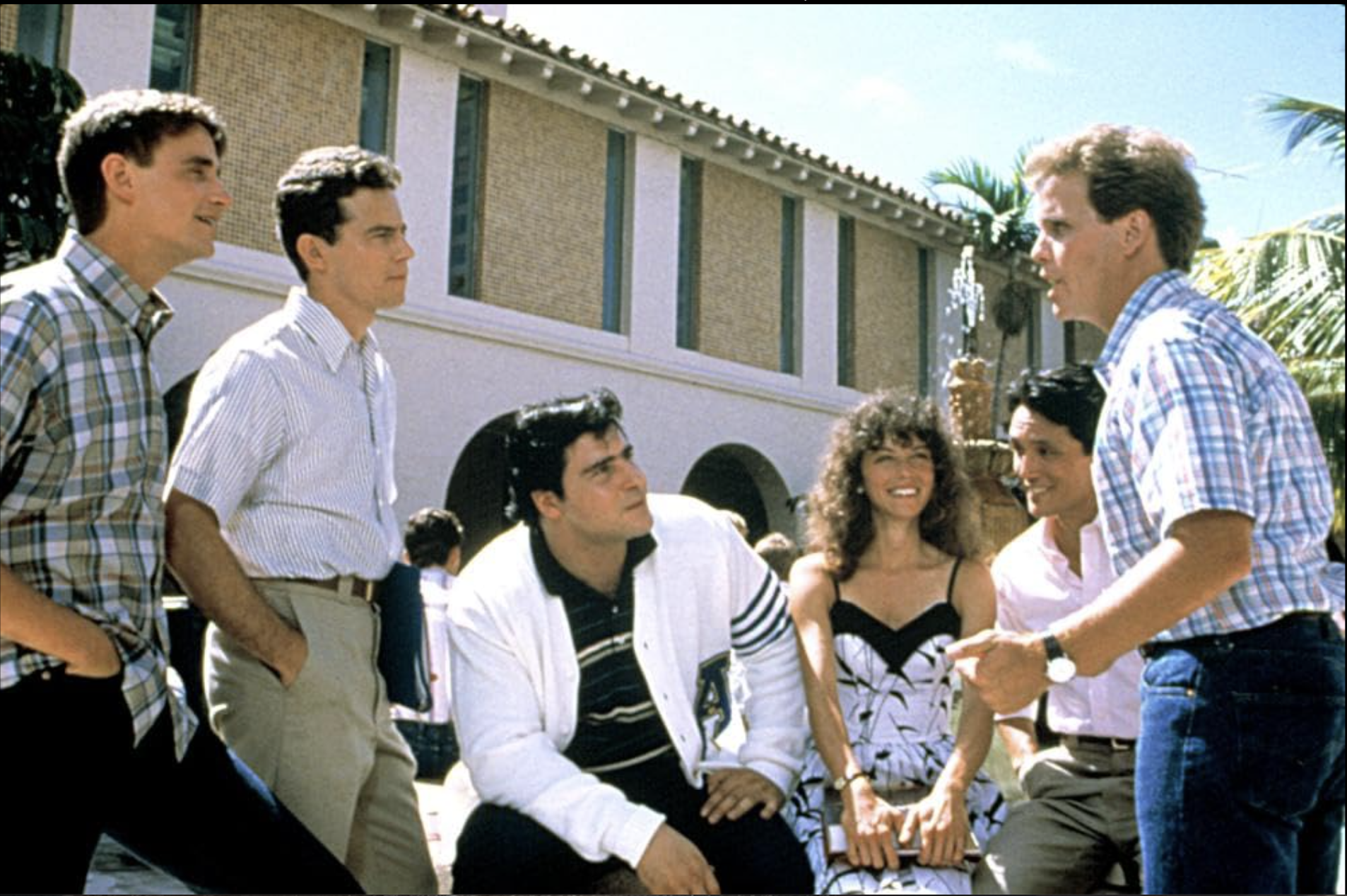
By 1985, the Angel Beach boys were familiar faces. Dan Monahan returned as Pee Wee, while Tony Ganios reprised his role as Meat. Chuck Mitchell was back as Porky, the formidable proprietor whose name had become synonymous with the series.
The production also introduced Kimberly Evenson as Inga. Her casting attracted attention beyond the usual movie publicity, including notice of her modeling career.
The returning cast offered continuity with the earlier films, but continuity wasn’t necessarily the problem. The characters hadn’t suddenly become unrecognizable. The question was whether audiences still wanted to spend time with them.
Teenage sex comedies had become a recognizable commercial category. The original Porky’s had benefited from the novelty of its particular brand of vulgarity, along with the simple appeal of watching a group of teenage boys make fools of themselves.
By the third installment, the novelty had worn thin.
That doesn’t mean the filmmakers stopped trying. The riverboat, the strip-club setting, and the increasingly elaborate schemes all suggest a production attempting to give the audience more of everything.
More elaborate situations. More sexual comedy. More reasons for the boys to get themselves into trouble.
But there’s a difference between escalating a formula and finding a new reason for it to exist.
Porky’s Revenge had plenty of the former.
Whether it had enough of the latter was another question entirely.
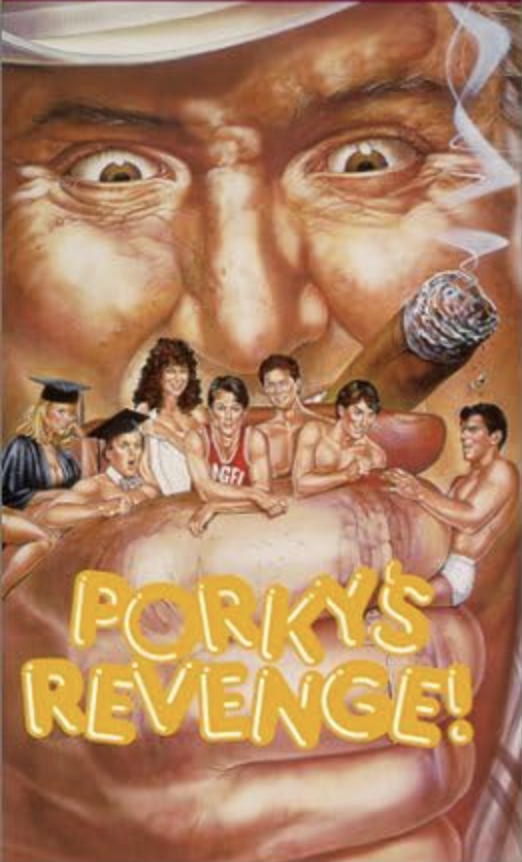
March 1985: The Revenge Was on the Box Office
Porky’s Revenge opened in the United States on March 22, 1985, arriving in wide release as Hollywood attempted to catch the spring-break audience.
The timing made sense. The film was aimed at teenagers and college-age moviegoers looking for an uncomplicated comedy, and the franchise still had name recognition.
The opening weekend was respectable, with the picture earning approximately $6.2 million and debuting in second place.
Then came the harder part: keeping audiences interested.
The film ultimately collected roughly $20.5 million at the domestic box office. Against a reported production budget in the $7 million range, that was hardly a catastrophic theatrical result. The film could still generate revenue, and its performance needs to be understood in the context of distribution costs, marketing expenses, and the money theaters retained.
Nevertheless, the decline from the first film’s extraordinary success was unmistakable.
The original Porky’s had become a phenomenon. Its sequel had already demonstrated that the formula wasn’t guaranteed to produce another blockbuster. The third film continued the downward trajectory.
This wasn’t a case of a once-dominant franchise suddenly becoming worthless. It was something more ordinary and, for a Hollywood studio, perhaps more frustrating.
The audience hadn’t disappeared. The audience’s enthusiasm had diminished.
That distinction is important. A film can make money and still disappoint the people who financed it. When a series begins with an enormous hit, merely turning a profit may not feel like victory.
The Angel Beach gang had survived another round of trouble. The franchise’s commercial prospects were another matter.
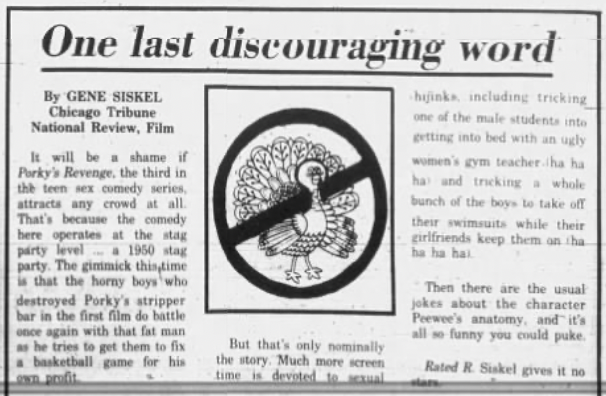
The Critics Weren’t Laughing
The contemporary critical reception was largely hostile.
Reviewers found the film predictable, crude, and short on the freshness that had helped distinguish the original. What had once seemed transgressive now looked increasingly mechanical, with the familiar collection of sexual misunderstandings and adolescent schemes doing much of the heavy lifting.
Gene Siskel was among the film’s harshest critics, giving it no stars. Reviews from major outlets, including The New York Times and Variety, were also negative. Leonard Maltin’s assessment was similarly dismissive.
The criticism wasn’t simply that the movie was vulgar. Vulgarity had always been part of the franchise’s identity. The more damaging complaint was that the vulgarity had become routine.
There is a difference between a comedy that shocks an audience and a comedy that merely reminds the audience it knows how to shock.
By the time Porky’s Revenge arrived, the series had been around long enough for its once-provocative material to feel familiar. The original had benefited from being an unexpected commercial sensation. The third film arrived carrying the burden of two predecessors and the expectations attached to a successful brand.
The film’s treatment of women also attracted criticism. The franchise’s adolescent male perspective had always been central to its comedy, but by 1985, the distinction between deliberately exaggerated teenage behavior and the film’s own worldview was becoming harder to ignore.
That doesn’t mean every crude comedy must deliver a moral lesson or that audiences should approach an exploitation-minded sex comedy expecting sophistication.
It does mean that the joke has to work.
And when the same jokes keep coming around, the audience eventually starts looking at its watch.
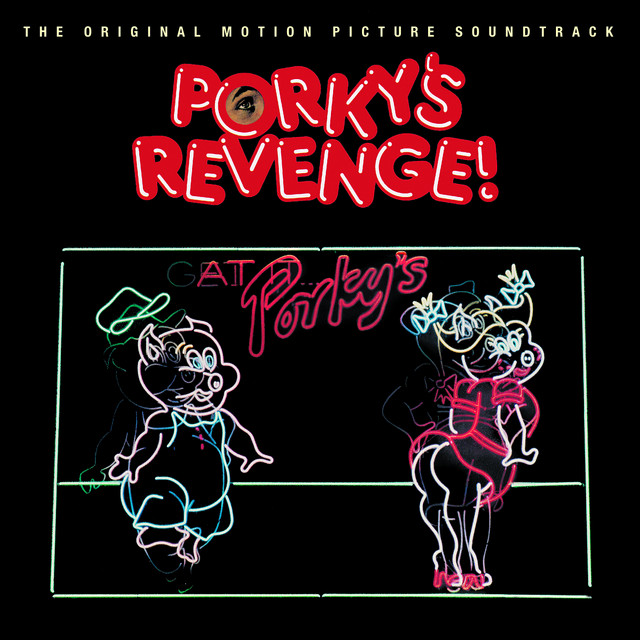
The Soundtrack Was Having a Much Better Time
Here’s the curious thing about Porky’s Revenge: the movie’s musical credentials were arguably more impressive than its cinematic ones.
The soundtrack, produced by Dave Edmunds, assembled an unusually distinguished collection of rock and country performers. Among the artists associated with the project were George Harrison, Jeff Beck, Carl Perkins, and Willie Nelson. Robert Plant and Phil Collins also appeared together as members of the Crawling King Snakes.
That’s quite a lineup for a teenage sex comedy whose critical reputation was already heading in the wrong direction.
Harrison’s contribution was particularly notable. His involvement connected the film to a musical world far removed from the hormonal misadventures unfolding on screen. Beck brought his formidable guitar pedigree, while Perkins and Nelson represented different branches of the American musical tradition.
Edmunds, himself a respected musician and producer, helped give the soundtrack a musical identity beyond its function as a promotional tie-in.
The result offered a strange but appealing contrast. On screen, the Angel Beach gang was still stumbling through the same basic problems. On the soundtrack, an impressive group of musicians was doing considerably more interesting work.
The album has consequently developed a reputation as one of the more appealing elements of the Porky’s Revenge package.
There’s something wonderfully perverse about that. A movie built around the idea that the boys need to grow up a little winds up accompanied by musicians who had already spent years making records that outlasted the fashions of their time.
The soundtrack couldn’t save the film, but it gave the production a musical legacy that was rather more respectable than its critical standing.
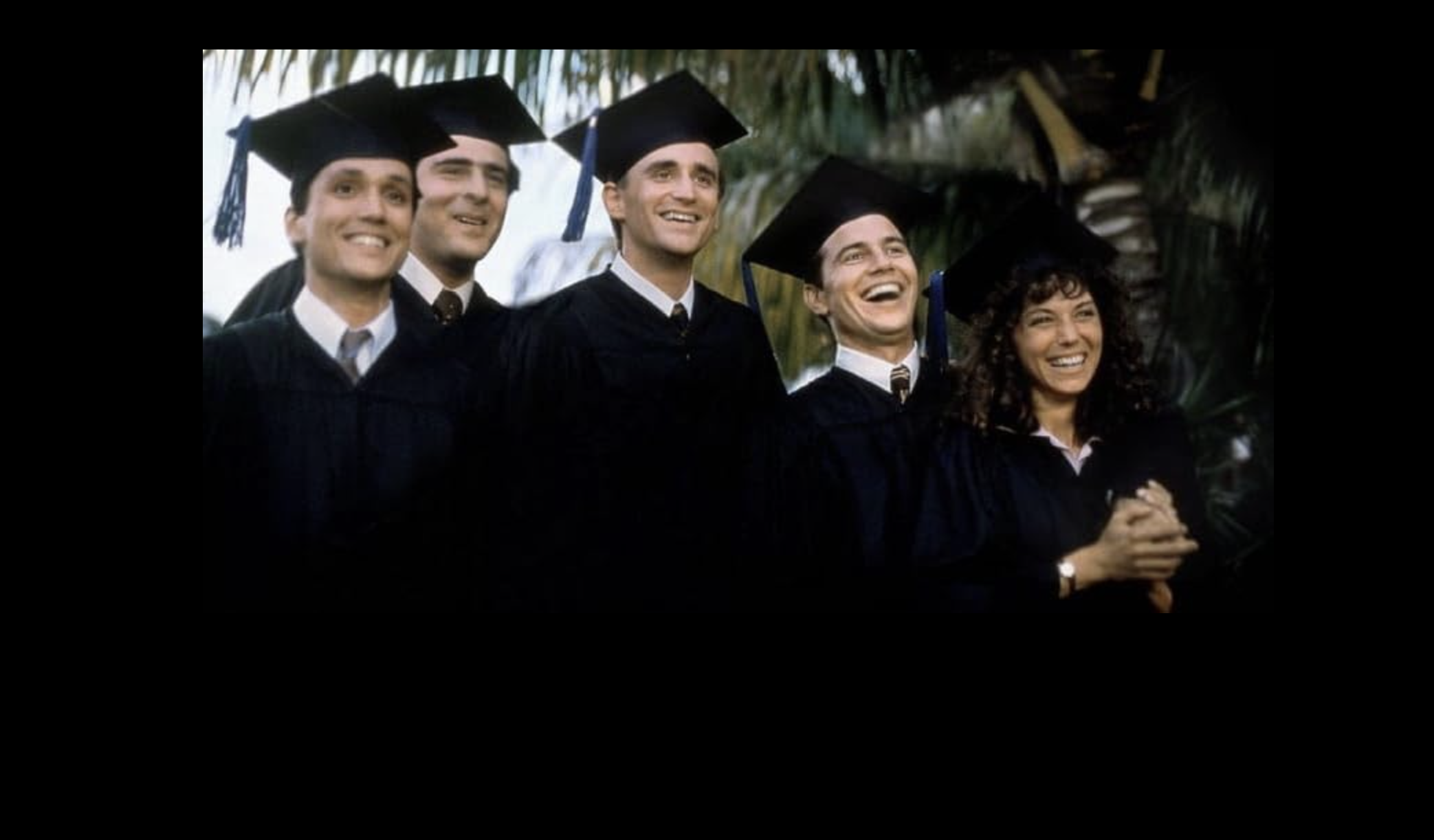
The Last Dance at Angel Beach
Porky’s Revenge brought the original theatrical trilogy to a close.
The franchise’s later history included a direct-to-video spin-off, but the original series of theatrical films ended with the third installment. The Angel Beach boys had made their mark, and Hollywood eventually moved on to other ways of selling adolescent sexual anxiety.
The influence of the original Porky’s continued to hang over the teen comedy genre. Its commercial success helped demonstrate the enormous appetite for stories about teenagers, sex, and the humiliations of growing up. Later films, including the American Pie series, would revisit some of the same territory with their own generational sensibilities.
But Porky’s Revenge is a reminder that influence and repetition aren’t the same thing.
A successful movie can establish a formula. A sequel can expand it. A third installment can bring back the familiar cast, spend more money, add bigger set pieces, and assemble a soundtrack that would make a classic-rock radio station jealous.
None of those things guarantees that the result will feel necessary.
Komack had approached the production as an opportunity to demonstrate his ability to direct a feature film. The production brought the Angel Beach gang back together, put them through another round of elaborate misadventures, and offered the audience the bawdy comedy that had made the original famous.
It also gave us Wanda the chimpanzee, a two-story riverboat, and a soundtrack that deserved a better movie.
That’s not nothing.
Still, the central problem remained. The original Porky’s had captured a moment when its particular brand of adolescent vulgarity felt fresh enough to become a box-office phenomenon. By 1985, that moment had passed.
Porky’s Revenge wasn’t the end of the teen sex comedy. Nor was it an unmitigated financial disaster. It was something more revealing: an example of Hollywood trying to extend a hit beyond the point where the audience’s enthusiasm could be taken for granted.
The studio wanted another Porky’s. The filmmakers tried to give it one.
But lightning doesn’t always strike twice. And sometimes, when you try to recreate the original conditions, all you get is a chimpanzee dancing in a historic mansion while the party slowly winds down.
In the world of Porky’s, that might be the most appropriate ending imaginable.
Explore the making of Porky’s Revenge (1985), from James Komack’s attempt to restore the original’s raunchy spirit to its chaotic Miami production, rock-star soundtrack, and disappointing box-office performance.
Tags
Porky’s Revenge, Porky’s, 1980s Movies, 1985 Movies, Teen Sex Comedies, James Komack, Dan Monahan, Tony Ganios, George Harrison, Dave Edmunds, Cult Movies, Movies of the 80s, Movie History, Film Production, 1980s Hollywood
Jay Maeder, The Miami Herald, September 30, 1984.
United Press International, spring 1984.
James Komack interview, August 4th 1984 Calgary Herald
Contemporary reviews. Gene Siskel Chicago Tribune
Box-office records.
Soundtrack credits and album documentation.
Production and location records.
About the Creator
Movies of the 80s
We love the 1980s. Everything on this page is all about movies of the 1980s. Starting in 1980 and working our way the decade, we are preserving the stories and movies of the greatest decade, the 80s. https://www.youtube.com/@Moviesofthe80s
Enjoyed the story? Support the Creator.
Subscribe for free to receive all their stories in your feed.
Comments
There are no comments for this story
Be the first to respond and start the conversation.