
'Permanent Vacation' (1980): Jim Jarmusch’s Raw Debut and the Birth of Indie Cool
Before Stranger Than Paradise made him a defining voice of American independent cinema, Jim Jarmusch wandered through a nearly abandoned Manhattan with a $12,000 budget, a 16mm camera, and absolutely no interest in playing by Hollywood’s rules.

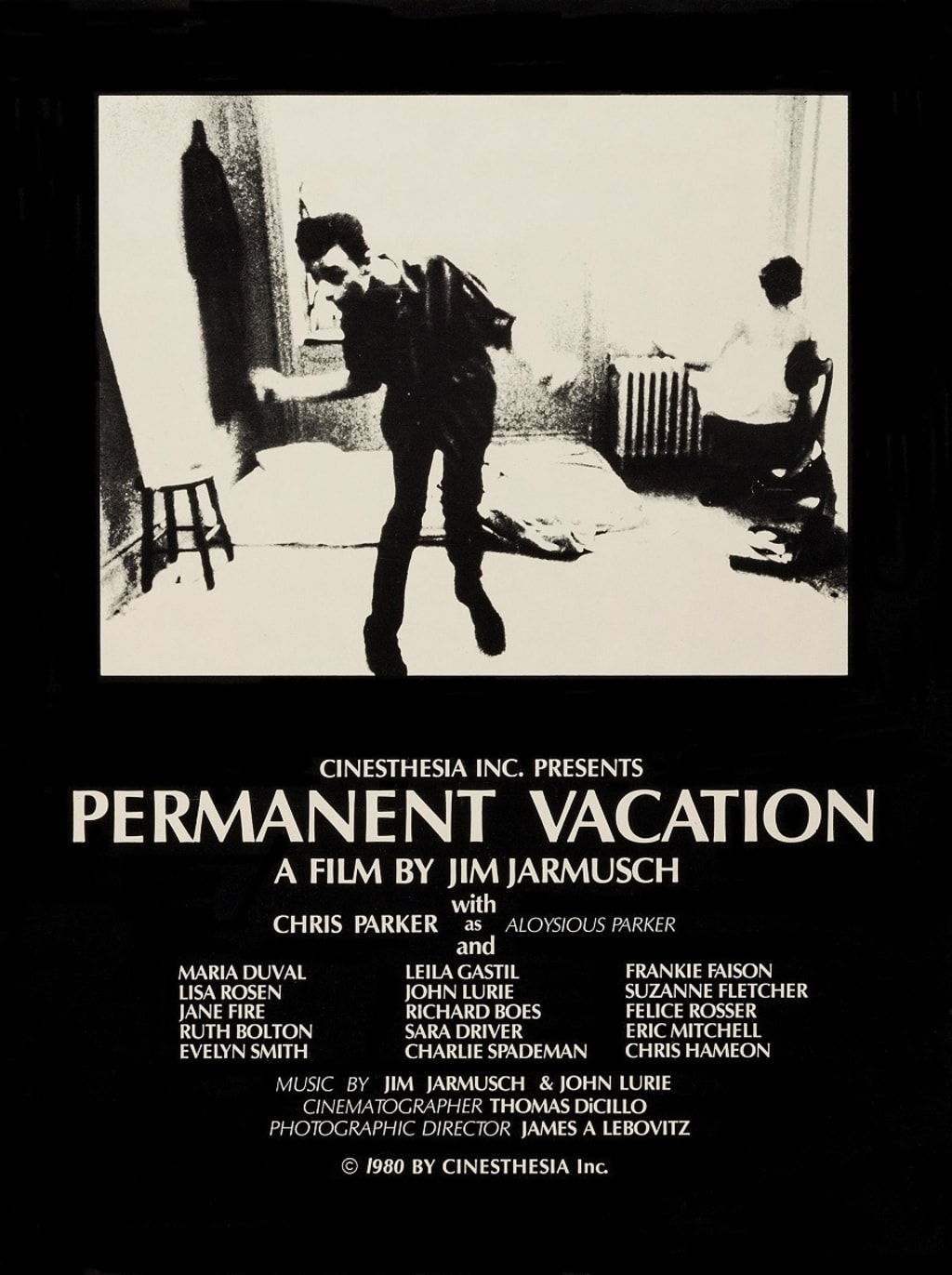
Before Stranger Than Paradise, There Was Permanent Vacation
Jim Jarmusch would eventually become one of the most recognizable names in American independent cinema. His movies developed their own particular rhythm: unhurried conversations, eccentric characters, unexpected encounters, and people who seemed perfectly comfortable being uncomfortable.
There was always something a little off-center about his filmmaking. His characters wandered. They talked. Sometimes they did very little at all. And somehow, that was enough.
But before Stranger Than Paradise (1984) introduced a much wider audience to Jarmusch’s peculiar cinematic universe, there was Permanent Vacation (1980).
Made for approximately $12,000, shot on 16mm film, and assembled from the creative energy of New York’s downtown art scene, Jarmusch’s feature debut is a decidedly rough-around-the-edges piece of filmmaking. It’s also a fascinating introduction to an artist who already seemed to understand exactly what interested him.
The movie follows a young man drifting through a nearly deserted Manhattan, encountering strangers, avoiding responsibilities, and searching for something he can’t quite identify.
It’s not particularly concerned with conventional storytelling. There’s no elaborate plot waiting to unfold, no dramatic transformation, and certainly no tidy resolution.
Instead, there’s atmosphere. Loneliness. A little humor. And a city that seems to have been abandoned by everyone except the people who don’t know where else to go.
In retrospect, it’s difficult not to recognize the beginnings of the Jim Jarmusch we would come to know.
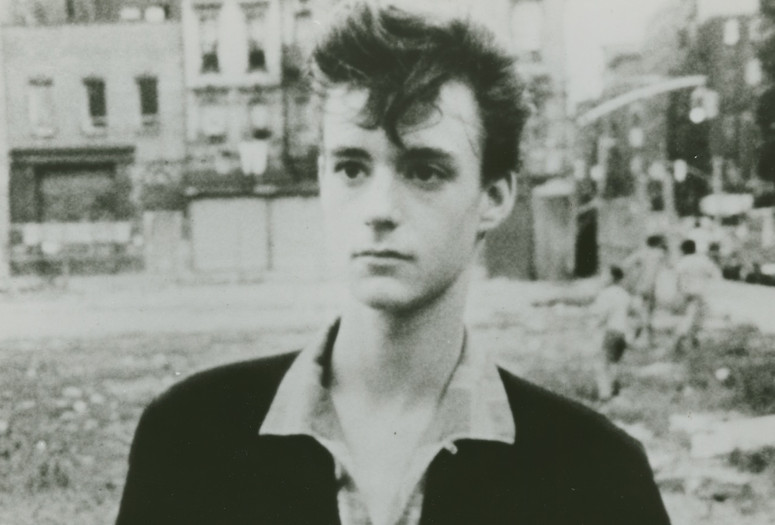
A Film School Project That Became Something Else
Jarmusch arrived in New York from Akron, Ohio, eventually studying at Columbia University before enrolling in New York University’s graduate film program.
It was there that Permanent Vacation began as a student thesis project.
The circumstances surrounding its production have become part of the film’s mythology, although Jarmusch himself has explained the story in interviews.
He received a Louis B. Mayer fellowship, but a financial mistake resulted in the scholarship money being sent directly to him rather than being applied toward his tuition.
Jarmusch used the money to make his movie.
In a 1999 interview with The Guardian, he recalled that the film cost approximately $12,000. The school wasn’t particularly enthusiastic about the project, and Jarmusch ultimately left without receiving his degree.
He had, however, made a feature film.
The production was appropriately unconventional. Shot in just ten days on New York streets, Permanent Vacation used the available locations and personalities of the downtown scene rather than attempting to manufacture a traditional movie production.
The cast included Chris Parker, John Lurie, Eric Mitchell, and Sara Driver. These weren’t the sort of familiar Hollywood faces audiences might have expected to find in a theatrical release. They were connected to the same creative environment that had helped make the film possible.
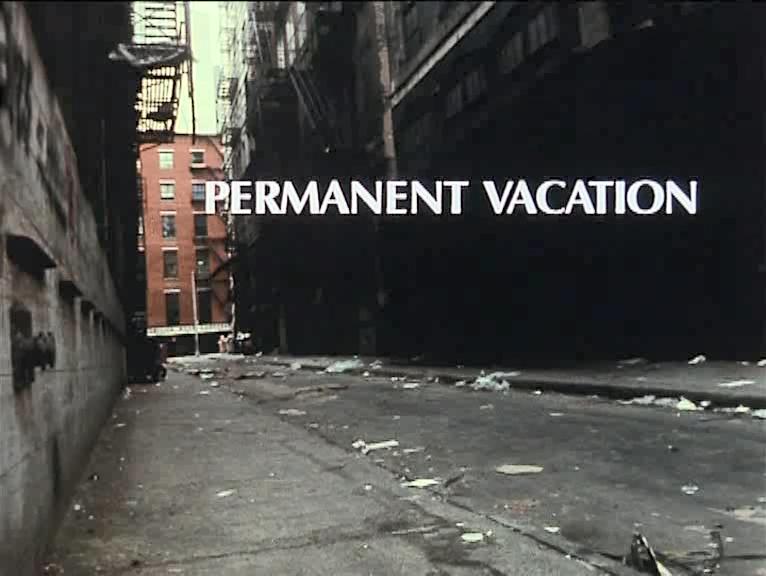
Tom DiCillo and James A. Lebovitz handled cinematography, capturing a New York that looks considerably different from the familiar postcard version of the city.
The result belongs to the No Wave movement, an experimental downtown New York scene that brought together musicians, filmmakers, artists, and performers who were largely uninterested in conventional commercial entertainment.
No Wave filmmaking wasn’t especially concerned with making things accessible. It was interested in experimentation, spontaneity, and finding new ways to express the experiences of people who existed outside the mainstream.
Permanent Vacation fits comfortably into that world.
One of the ideas associated with the film’s development was that people become like the rooms they inhabit. Eventually, those rooms accumulate their own particular feeling of dread. The solution is to keep moving.
It’s a pretty good description of the movie itself.
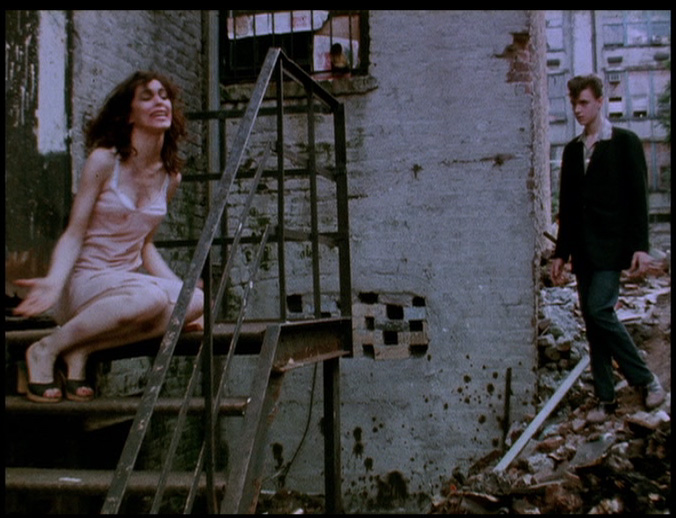
Wandering Through an Empty Manhattan
Chris Parker plays Aloysious Christopher Parker, usually called Allie, a young man whose life seems to consist primarily of wandering.
Over several sleepless nights and days, Allie moves through Manhattan, encountering an assortment of characters who briefly interrupt his otherwise aimless existence.
There’s a Spanish-singing woman on a fire escape, a troubled war veteran, a saxophone player, and various other inhabitants of a city that seems to be slowly disappearing around him.
He also visits his institutionalized mother, although even this encounter doesn’t provide much in the way of emotional clarity.
Allie isn’t exactly searching for something. Or perhaps he is searching for everything.
The movie’s Manhattan is particularly striking. Rather than presenting the city as an exciting center of cultural activity, Jarmusch gives us empty streets, deteriorating buildings, abandoned interiors, and neighborhoods that feel strangely disconnected from the rest of the world.
There are moments when the camera observes the crowded movement of midtown Manhattan in slow motion before returning to the almost deserted streets downtown.
The contrast is important.
The city is full of people, but that doesn’t necessarily mean anybody is connecting with anybody else.
Allie moves through it like a visitor who has overstayed his welcome, although it’s difficult to determine where he might actually belong.
There’s a certain post-punk coolness to the whole experience. The film doesn’t rush to explain itself, and its protagonist doesn’t seem especially interested in explaining himself either.
John Lurie’s music helps establish the atmosphere, while Jarmusch’s understated visual approach allows the locations and encounters to carry much of the emotional weight.
The movie occasionally feels like a collection of disconnected observations rather than a fully developed narrative. That’s not necessarily a criticism. It’s simply the kind of movie Jarmusch was interested in making.
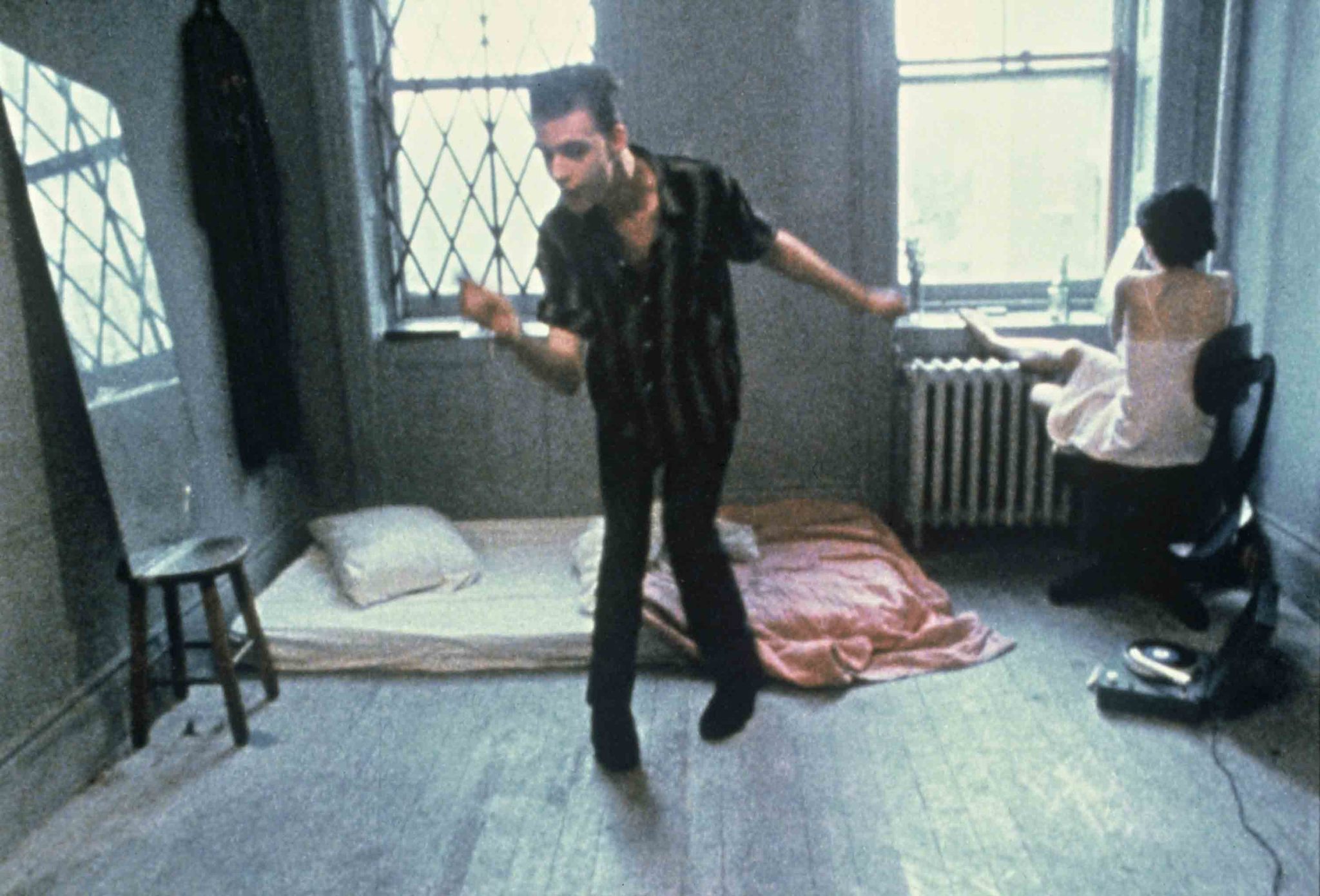
What Did the Critics Think?
The film’s initial American exposure was modest, and its early screenings were often treated as something of a downtown cultural event rather than a conventional theatrical release.
A contemporary notice titled “Low-budget blues” promoted a Bleecker Street Cinema engagement in the theater’s James Agee Room, describing the picture as a low-budget New Wave production.
The preview emphasized the film’s dreamlike movement through Manhattan and its unusual atmosphere. The idea of keeping moving, rather than allowing yourself to become trapped by your surroundings, was central to the way the film was being presented.
A subsequent Los Angeles screening at Al’s Bar generated a more substantial critical response.
David Ehrenstein, reviewing the film in a piece titled “Life beyond alienation — a post-punk look,” recognized the movie’s distinctive visual approach and its ability to sustain a particular mood.
He also wasn’t entirely convinced by everything Jarmusch was attempting.
Ehrenstein noted the film’s stylistic ambitions, including echoes of filmmakers such as Jean-Marie Straub and Wim Wenders, while suggesting that some of its more schematic writing and characterizations occasionally undermined those ambitions.
Chris Parker’s performance was discussed in the context of a long tradition of disaffected movie bohemians. Eric Mitchell and John Lurie also received attention.
But the review ultimately recognized something important about what Jarmusch had accomplished.
Creating a mood and sustaining it throughout a feature-length film was, in Ehrenstein’s assessment, “no small achievement.”
That’s probably the fairest way to approach Permanent Vacation.
It’s not a perfectly realized movie. There are awkward performances, stretches where the narrative seems to disappear entirely, and moments when the filmmaking feels more ambitious than the material supporting it.
But there’s an unmistakable personality behind the camera.
And that’s something.
The Beginning of the American Independent Revolution
It’s tempting to look at Permanent Vacation as a stepping stone toward Stranger Than Paradise, but the film deserves consideration on its own terms.
It emerged from a particularly interesting moment in American filmmaking.
The late 1970s and early 1980s saw independent filmmakers experimenting with production methods, storytelling conventions, and visual styles that had little relationship to mainstream Hollywood.
The New York No Wave scene was one part of that larger creative environment.
These filmmakers weren’t necessarily interested in making movies that looked expensive or even particularly professional. They were interested in making movies that reflected their own experiences and artistic interests.
Jarmusch would eventually become one of the most successful ambassadors of that approach.
His next feature, Stranger Than Paradise, took some of the ideas explored in Permanent Vacation and developed them into something more controlled and accessible without sacrificing their eccentricity.
The deadpan humor, disconnected characters, minimal storytelling, and fascination with people who seem permanently out of place were already there.
The difference was that Jarmusch had become a more confident filmmaker.
Permanent Vacation is the earlier, messier version of that cinematic personality. It’s less concerned with entertaining an audience than with creating an experience.
And sometimes that experience is genuinely haunting.
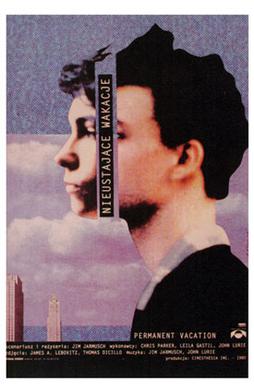
A Permanent Vacation From the World
For years, Permanent Vacation remained something of a curiosity in Jarmusch’s filmography. It wasn’t the movie that established his reputation, and its limited distribution meant that many American viewers had little opportunity to see it.
Its later availability through The Criterion Collection helped change that.
When Criterion released its special edition of Stranger Than Paradise on DVD in 2007, it included a restored presentation of Permanent Vacation as a bonus feature. The 2019 Blu-ray edition continued that tradition, presenting the 75-minute film in a high-definition restoration supervised by Jarmusch himself.
It also became available through the Criterion Channel, giving a new generation of viewers an opportunity to discover the director’s first feature.
Today, the film works on two levels.
It’s a historical document of downtown Manhattan before the transformation and gentrification that would eventually reshape so much of the neighborhood. The locations, streets, and people give it a documentary quality that extends beyond its fictional narrative.
It’s also an early statement of artistic identity.
Jarmusch was already interested in outsiders, people who didn’t quite fit into their surroundings, and the strange little connections that occasionally develop between strangers.
Those interests would continue through Down by Law, Mystery Train, Night on Earth, and much of the director’s subsequent work.
There’s something appealing about the fact that a filmmaker whose career would eventually encompass international stars, major festivals, and a substantial body of acclaimed work began with a movie this small and unassuming.
No grand ambitions for commercial success. No carefully engineered career launch. Just a young filmmaker, a camera, a collection of downtown characters, and a city that seemed to be waiting for somebody to notice it.
Permanent Vacation isn’t always an easy movie to love. Its rough edges are impossible to ignore, and its deliberate lack of narrative momentum will test the patience of viewers expecting a conventional film.
But that’s part of its appeal.
In a decade that would become famous for excess, Jarmusch offered something considerably quieter. A movie about loneliness, movement, and the peculiar freedom of having nowhere in particular to go.
Sometimes the most interesting stories happen when you simply keep moving.

Discover Permanent Vacation (1980), Jim Jarmusch’s $12,000 feature debut, a haunting No Wave portrait of alienation, downtown Manhattan, and the beginnings of American indie cinema.
tags
Jim Jarmusch, Permanent Vacation, Independent Cinema, 1980s Movies, No Wave Cinema, American Film History, Stranger Than Paradise, New York City, Cult Movies, Movie History
About the Creator
Movies of the 80s
We love the 1980s. Everything on this page is all about movies of the 1980s. Starting in 1980 and working our way the decade, we are preserving the stories and movies of the greatest decade, the 80s. https://www.youtube.com/@Moviesofthe80s
Enjoyed the story? Support the Creator.
Subscribe for free to receive all their stories in your feed.
Comments
There are no comments for this story
Be the first to respond and start the conversation.