
Onimusha: Way of the Sword Review – Brutal Samurai Combat, Epic Boss Fights and Miyamoto Musashi
Capcom’s Onimusha delivers precise sword combat, memorable characters, challenging boss battles and a surprisingly personal journey built around Miyamoto Musashi.

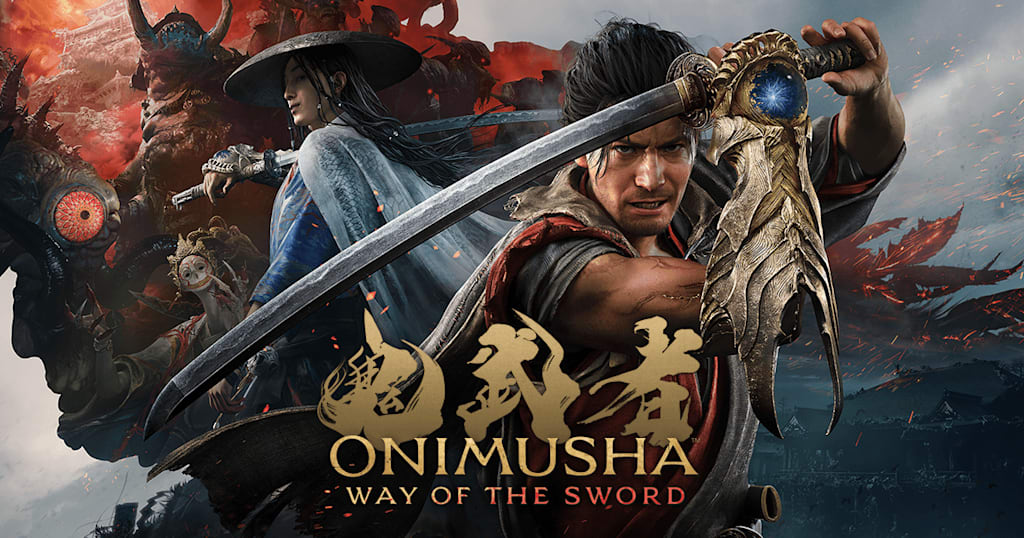
Onimusha: Way of the Sword Is All About Mastering the Fight
Some action games make you feel powerful. Others make you earn every victory.
Onimusha belongs firmly in the second category.
At its best, the game reduces everything to a few crucial seconds. An enemy attacks, Miyamoto Musashi reacts, swords collide, and one perfectly timed decision can completely change the fight. Dodge too early or mistime a counter and you may be punished immediately. Get the timing right and the result can be spectacular.
That constant battle between risk and precision is what makes Onimusha’s combat so satisfying.
But beneath the sword fights and supernatural monsters is also a character-driven story about strength, confidence and learning to believe in your own ability.
Miyamoto Musashi Leads a Supernatural Samurai Story
Onimusha uses real historical figures as the foundation for a very loose piece of historical fiction.
Miyamoto Musashi and his rival Sasaki Ganryu are attacked by supernatural creatures known as Genma. Musashi is eventually brought back to life and forced to wear an Oni gauntlet capable of absorbing the souls of defeated enemies.
Inside that gauntlet is the spirit of a woman named Shizuka.
Musashi and Shizuka eventually join forces with fellow Onimusha Takamura and his assistant Okuni as they attempt to protect the world from the growing corruption caused by the Genma.
The larger supernatural conflict gives the game scale, but the characters are what really make the story work.
Musashi Is More Than a Typical Action Hero
Musashi immediately stands out because he is not presented as a naturally heroic warrior.
He is arrogant, crude and extremely confident in his abilities. At the same time, he struggles with the power granted to him by the Oni gauntlet because he feels he did not earn that strength himself.
That internal conflict makes him far more interesting than a straightforward unstoppable swordsman.
He can insult demons one moment and destroy them in spectacular fashion the next, but underneath that swagger is someone who takes enormous pride in his own skill.
His relationship with Shizuka also becomes one of the strongest parts of the story.
What begins as an uneasy partnership gradually becomes a genuine bond built on trust. Shizuka is never treated as someone who simply exists to support Musashi. Her strength is essential to his survival, making the two characters feel like genuine partners.
Strong facial animation and voice performances help sell those relationships even further.
Musashi’s appearance and mannerisms are also modeled after legendary Japanese actor Toshiro Mifune, giving the character an instantly recognizable cinematic presence.
Onimusha’s Combat Rewards Precision
The combat system begins with familiar mechanics.
Musashi has light and heavy attacks that can be combined into short offensive sequences. However, the defensive mechanics are where the system becomes much more interesting.
Musashi can block, dodge, parry, deflect and perform powerful Issen counterattacks.
Each option serves a different purpose.
Dodging is reliable and useful when avoiding dangerous attacks, although it does not always immediately create an offensive opportunity.
Parrying involves greater risk but can damage an enemy’s stamina and create openings for additional attacks.
Deflecting is especially useful against heavily armored enemies because draining their stamina can be more effective than simply attacking them normally.
Then there is the Issen.
Landing an Issen Feels Incredible
The Issen is one of the most satisfying techniques in the game.
By attacking at exactly the right moment, Musashi rapidly avoids an incoming strike before delivering a devastating counterattack.
Against ordinary Genma, successful Issen attacks can even be chained together, allowing Musashi to tear through groups of enemies in seconds.
The timing requirement means the technique never feels automatic.
Every successful counter feels earned.
There are also clashes that demand specific inputs or rapid button presses depending on the situation, ensuring that combat rarely becomes passive.
You constantly have to watch your opponent and decide how to respond.
Reflex Dodges Add Another Layer to Combat
Well-timed dodges also contribute to a special meter.
Once the meter is full, performing a perfectly timed reflex dodge can trigger a reflex combo.
These attacks can eliminate weaker Genma and deal substantial damage to stronger opponents.
Parries contribute to another combat mechanic called the blazing gauge. Filling it sets Musashi’s sword on fire and increases his damage output.
Because different defensive actions provide different advantages, combat becomes less about finding one powerful technique and repeatedly using it.
Instead, the game encourages players to understand when each technique is useful.
Break Issen Can Completely Change a Battle
Some of the most dramatic moments come from successfully staggering enemies and performing powerful Break Issen attacks.
Against normal enemies, the technique can kill them immediately.
Boss battles work differently.
Players can choose which weak point to attack. Red weak points inflict enormous damage, while purple weak points deal less damage but provide additional souls.
That creates an interesting decision.
Do you shorten the battle by dealing maximum damage, or sacrifice damage in exchange for resources that may help you survive?
Those decisions become even more important during difficult boss fights.
Playing Without Items Turns Every Fight Into a Test
One of the most interesting experiences described in the review comes from a self-imposed challenge: completing the game without using items.
That means no healing items, revival items or temporary buffs.
Instead, recovering health depends largely on absorbing souls or reaching spirit mirrors between encounters.
This dramatically changes how boss battles are approached.
Rather than simply surviving long enough to consume another healing item, every defensive decision becomes important.
Players have to understand when to parry, when to deflect, when to attempt a dangerous counterattack and when to use limited resources.
A difficult fight can suddenly become a sequence of tiny challenges.
Survive the next attack.
Make the next counter.
Stay alive for another ten seconds.
Eventually, instinct takes over.
That feeling of surviving through technique rather than resources creates some of the game's most rewarding moments.
Boss Battles Are One of Onimusha’s Biggest Strengths
Boss fights are where the combat system truly comes together.
Different attacks require different responses, and relying entirely on a single defensive strategy can quickly lead to defeat.
Certain attacks cannot be countered using the same technique, forcing players to recognize patterns and adjust their strategy immediately.
Missing a high-risk counter can also leave Musashi completely exposed.
That danger is part of what makes successful counters so satisfying.
Boss battles become less about repeatedly attacking a large health bar and more about learning the rhythm of an opponent.
When everything works, the encounters feel like genuine sword duels.
Kyoto Becomes the Center of the Adventure
Kyoto serves as Musashi's primary base of operations.
Players fight Genma, close supernatural rifts and destroy sources of corruption spreading across the city.
Progress gradually opens additional areas for exploration.
The adventure does not remain limited to Kyoto, either.
Musashi and Shizuka travel through temples, forests, mountains and even the Imperial Palace.
The structure is not a traditional open world. Instead, it works more like interconnected areas branching outward from a central hub.
That design still provides plenty of opportunities for exploration, secrets and upgrade materials.
Side Missions Make the World Feel More Alive
The optional content is another major strength.
One memorable series of missions comes from Lady Murasaki, a writer whose spirit remains in the world because she still wants to tell stories.
She sends Musashi to investigate unusual events that might inspire new tales.
These stories can involve everything from a child searching for a father consumed by revenge to someone who believes the gods have granted him immortality.
Some quests connect across multiple smaller stories before becoming part of Murasaki's written collection.
Other activities are simpler.
Players can search for hidden treasure, return to previous areas, defeat flying Genma and help ordinary citizens around Kyoto.
Even collectible-style activities receive some personality.
Finding Murasaki's missing lion dogs rewards players with retellings of Japanese mythology, ranging from funny stories to darker and stranger legends.
Exploration Also Improves Musashi
Optional exploration is tied directly to character progression.
Equipable charms and stat upgrades provide meaningful reasons to search different parts of Kyoto and revisit previously inaccessible locations.
Shortcuts gradually make navigation easier as more of the city becomes available.
This creates a satisfying relationship between exploration, combat and progression.
Finding an upgrade improves Musashi.
A stronger Musashi makes difficult fights more manageable.
Winning those fights opens additional areas.
Those new areas lead to more discoveries.
Each part of the game supports another.
Repeated Enemies Still Provide Opportunities for Mastery
Some enemies and bosses appear several times throughout the adventure.
Normally that kind of repetition could become frustrating.
Here, however, returning battles can function as tests of how much the player has improved.
An opponent who once seemed overwhelming may become much easier after mastering parries, dodges and counters.
Later encounters therefore become opportunities to measure progress rather than simply repeat old content.
Completing the campaign also opens additional challenges, including New Game Plus and the harder Carnage difficulty.
For players who enjoy mastering combat systems, that gives the game considerable replay value.
Onimusha Makes Skill Feel Personal
The strongest part of Onimusha is not simply that its combat is difficult.
It is that the game gives players enough tools to overcome that difficulty through understanding and practice.
Parries, deflections, reflex dodges, Issen attacks, Oni abilities and regular sword techniques all work together.
The game may provide systems designed to make progression easier, but mastery can sometimes allow players to overcome challenges even when deliberately refusing to use some of those advantages.
That creates an unusually personal relationship between the player and Musashi.
Musashi believes deeply in his technique.
Eventually, the player has to do the same.
Every failed attempt teaches something.
Every successful counter builds confidence.
And every impossible-looking boss becomes another opportunity to prove that improvement is possible.
Final Thoughts
Onimusha succeeds because its story, characters, exploration and combat all reinforce each other.
Miyamoto Musashi is charismatic enough to carry the adventure, while Shizuka provides an equally important presence beside him.
Kyoto offers plenty to discover, optional quests add personality to the world, and the supernatural story creates memorable situations.
But combat remains the star.
Few things are more satisfying than surviving a dangerous attack with perfect timing and immediately turning defense into a devastating counterattack.
That is where Onimusha becomes something more than another action game.
It becomes a game about learning to enjoy the challenge itself.
You fail.
You learn.
You try again.
And for the next ten seconds, you believe you can win.
About the Creator
parwinder singh
🎬 Movie & Entertainment Writer sharing reviews, ending explanations, story breakdowns, plot twists and hidden details from Bollywood, Hollywood, South Indian cinema, Korean dramas and OTT releases.
Enjoyed the story? Support the Creator.
Subscribe for free to receive all their stories in your feed.
Comments
There are no comments for this story
Be the first to respond and start the conversation.