
One of the First Self-Driving Cars Was a 1956 Ford Fairlane on The Twilight Zone
The eerie episode "You Drive" emphasized taking responsibility for your actions or fate will step in.
Drive, On
Electric driverless vehicles are becoming popular in our modern society. When Henry Ford created the Model T, he probably did not envision a future where self-driving cars were a possibility.
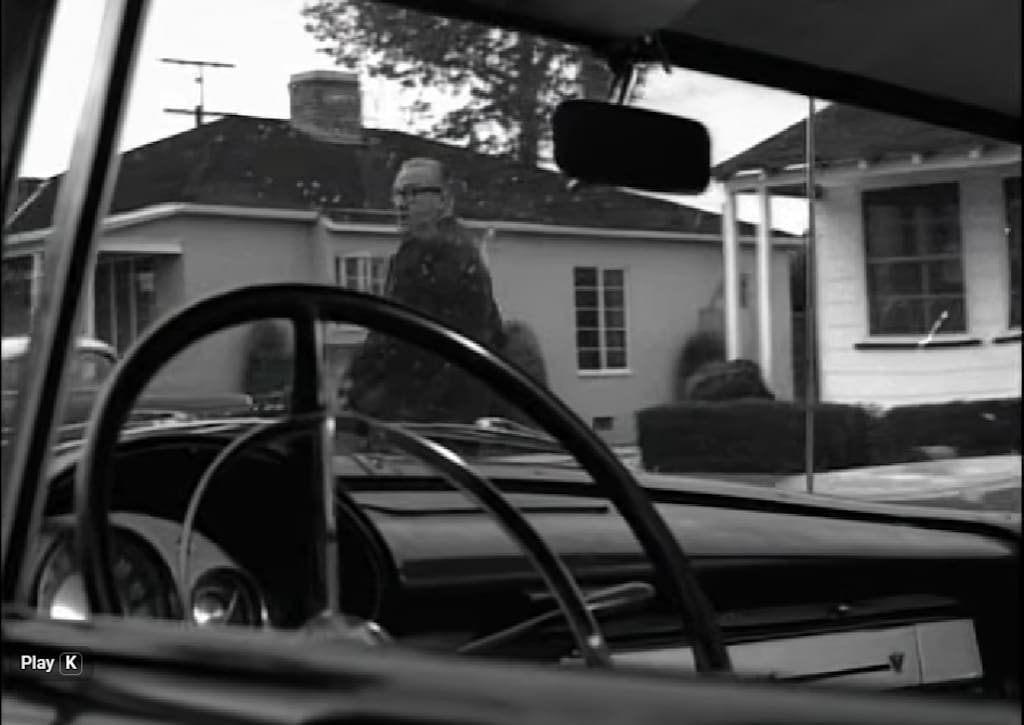
Life often imitates art, and one of the first self-driving automobiles appeared on television. It was a 1956 Ford Fairlane on an episode of the science fiction TV series The Twilight Zone.
Long before Stephen King's Christine frightened moviegoers, Rod Serling's sci-fi program gave viewers chills, thrills, and something to think about. The Season 5 episode “You Drive,” which premiered on January 3, 1964, was written by Earl Hamner Jr., who created The Waltons.
It revolves around Oliver “Ollie” Pope (Edward Andrews), an office manager who's preoccupied with his rivalry with coworker Pete Radcliff (Kevin Hagen), whom he believes is after his job.
Pope is distracted while driving home one rainy evening and hits 12-year-old newspaper delivery boy Timmy Danvers (Michael Gorfain), who is riding his bike. The sight of the child's body and the spinning bicycle wheels troubled many viewers,
Oliver gets out of his car and sees the badly injured child, but does not call the police or offer assistance. Instead, he looks at the boy, notices there appear to be no witnesses, panics, and drives away.
Later, Ollie and his wife Lilian Pope ( Helen Westcott) hear on the radio that Timmy has died, and someone did see what happened. A witness to the accident, Totty Ames (Muriel Hastings), mistakenly identifies Pope's coworker as the hit-and-run driver.
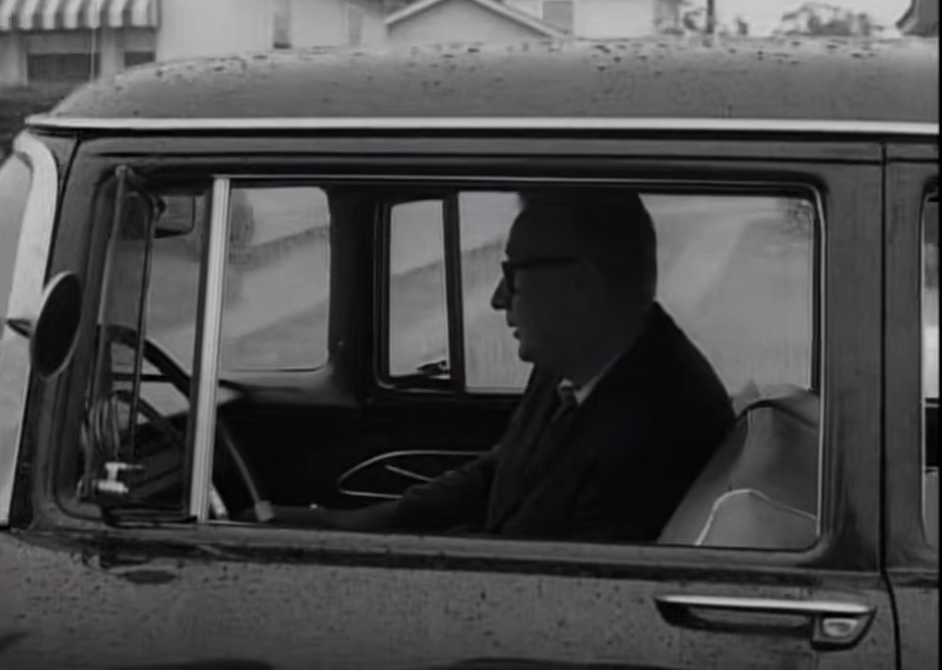
After Pete is arrested, Pope thinks he's killed two birds with one stone. He believes he has gotten away with the hit-and-run and that Radcliff can no longer attempt to get his manager position.
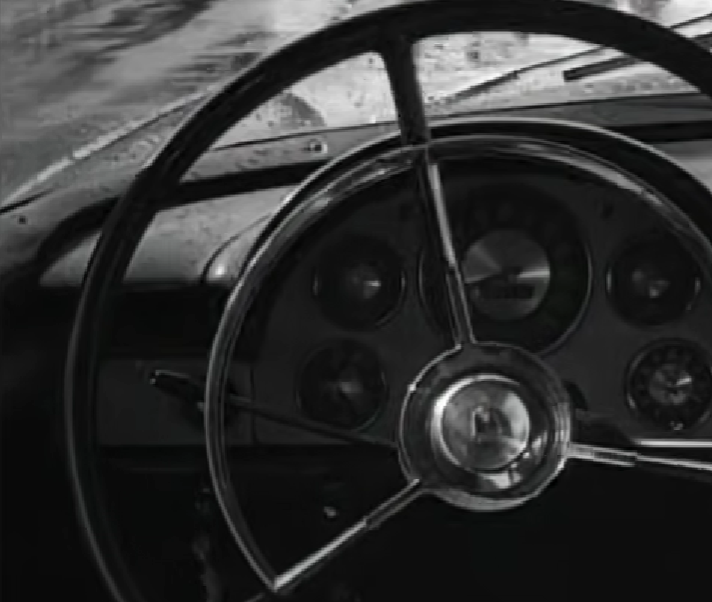
However, Pope's 1956 Ford Fairlane takes matters into its own hands and starts behaving as though it has a mind of its own. That night the headlights turn themselves on and off, and the horn starts honking by itself.
Oliver smashes the headlights and unplugs the horn in an attempt to stop the madness. Most chilling is how the car's radio repeatedly reports news of the accident and Timmy's death.
When Lillian drives the car the next day, it takes her to the location of the accident and stalls. She asks questions, but her husband offers no satisfactory answers. The following morning, Pope decides to walk to work.
You Drive
Lillian watches in stunned silence as the vehicle starts itself and leaves the garage. It begins following Oliver, who is walking down the sidewalk. He begins running in the street, and the car chases him.
He takes a shortcut, and his vehicle goes in a different direction and stops in front of him. The passenger door opens by itself, and Oliver resigns himself to his fate by getting inside.
The door shuts, and the car drives its owner to the police station, where it is presumed that Pope goes in and confesses to the hit-and-run.
At the end of the episode, the bumper that was damaged after hitting Timmy seems intact, and the headlights, which were smashed, are working normally. This brings to mind Christine, who would repair herself after each attack on someone.
Christine was possessed, and Oliver Pope's vehicle was teaching him a moral lesson. Still, you have to wonder if it is possible that today's self-driving vehicles can malfunction.
Could a car lock its doors, trapping a driver inside, and take them somewhere they never intended? Will there be situations with these driverless vehicles seemingly having a mind of their own, where you wonder whether man or machine is in control? Only time will tell.
About the Creator
Cheryl E Preston
Cheryl is currently pursuing a Bachelor of Science in Psychology. She enjoys writing about current events, history and baby boomer nostalgia. Tips are greatly appreciated.
Enjoyed the story? Support the Creator.
Subscribe for free to receive all their stories in your feed. You could also become a paid subscriber, letting them know you appreciate their work.
Comments
There are no comments for this story
Be the first to respond and start the conversation.