
Mudborn Ending Explained: Hsu-chuan’s Sacrifice, the Clay Doll Curse and Final Hospital Twist (Spoilers)
A complete breakdown of Mudborn’s terrifying ending, the truth behind the cursed clay doll, why the spirits wanted Mu-hua’s unborn baby, and whether Hsu-chuan is secretly still alive.

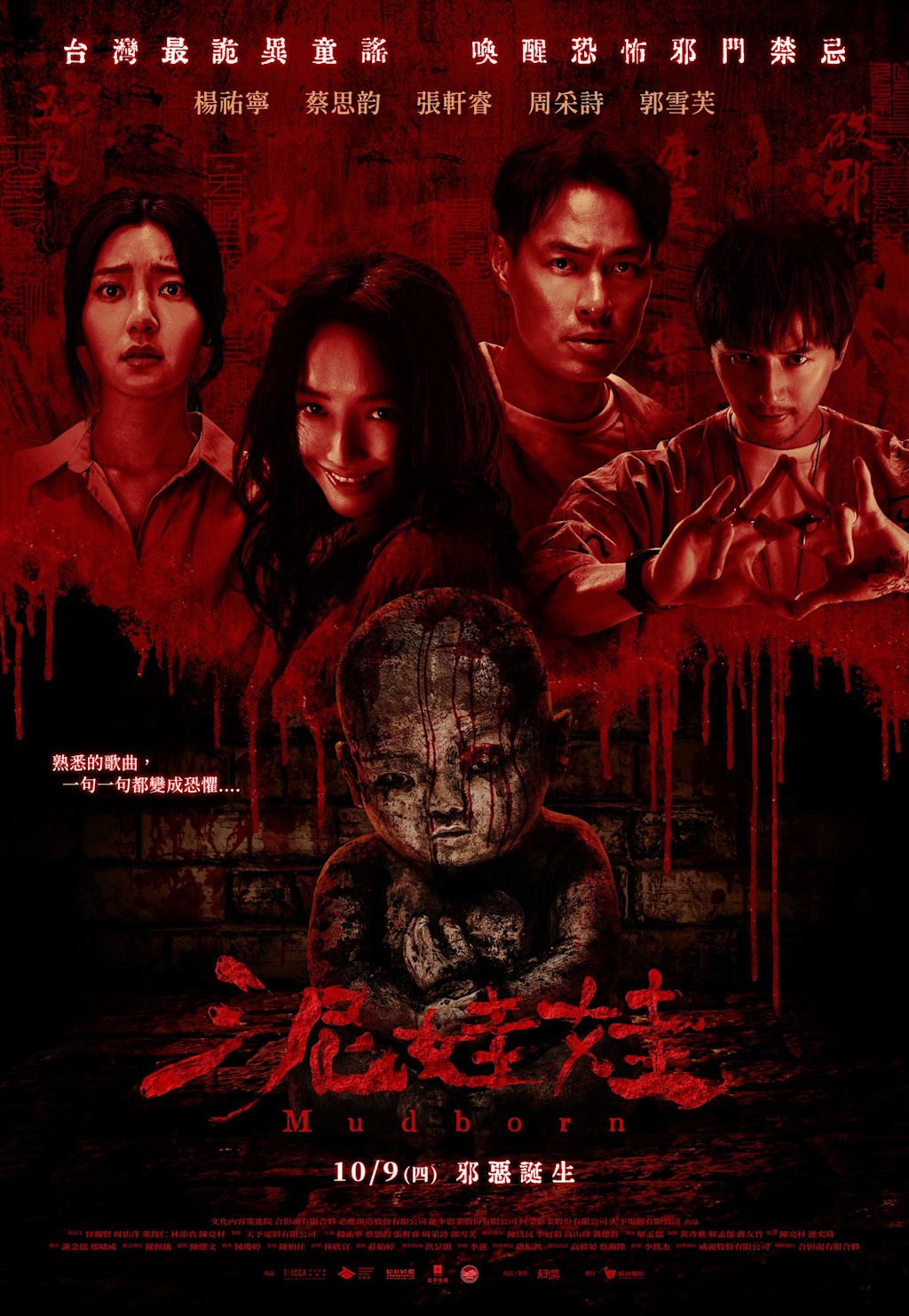
Spoiler Warning: This article contains major spoilers for Mudborn, including its ending and final-scene revelations.
Taiwanese supernatural horror film Mudborn blends traditional folklore with modern technology, creating a story about grief, motherhood, obsession, possession and sacrifice. Directed by Shieh Meng-ju, the film begins with what appears to be a conventional haunted-object story but gradually reveals something much darker.
At the center of everything is a broken clay doll carrying a binding talisman. Once blood touches it, the entity trapped inside can attach itself to a human host. What makes the curse particularly disturbing is that the spirits are not simply trying to kill people. They want a way to be born again.
That goal ultimately puts pregnant Mu-hua and her unborn daughter at the center of the nightmare.
And although Hsu-chuan appears to sacrifice his life to save them, Mudborn delivers one final twist suggesting his story may not actually be over.
How the Curse Begins in Mudborn
The horror begins when Cheng and Ai visit an abandoned house for a VR game company.
Their job is to scan the property so it can be recreated inside a horror game. The house already has a disturbing reputation because its owner was believed to have murdered his entire family. His wife's body was never discovered, adding another mystery to the case.
Inside her old pottery studio, the men discover a strange clay doll.
After the doll is accidentally broken, a mysterious inscription or talisman is revealed on its back. Ai is injured when a metal ladder falls on him, and his blood eventually reaches the doll.
The doll turns red.
This becomes one of the movie's most important supernatural rules: blood activates the curse and allows the entity connected to the doll to possess its victim.
Ai is no longer himself after the accident.
Before long, Cheng is attacked by an invisible force, while Ai eventually returns to the office behaving as though something has entered him.
The cursed doll then finds its way into the belongings brought back from the house.
Eventually, it reaches Hsu-chuan's home.
Why Mu-hua Becomes the Doll's Next Victim
Hsu-chuan works for the game company and is given responsibility for developing the haunted-house project.
His wife, Mu-hua, is pregnant and works as a restoration technician. Her profession becomes critically important because she knows how to repair damaged historical objects.
One night, Mu-hua discovers the broken clay doll.
She cuts her finger while examining it.
Her blood touches the doll.
Just as happened with Ai, the doll becomes red and the supernatural influence begins taking control of her.
At first, the changes are relatively subtle. Mu-hua behaves strangely, starts eating raw meat despite being pregnant, becomes increasingly aggressive and develops a disturbing red appearance in one eye.
Then things escalate.
Without consciously choosing to do it, she repairs the broken clay doll and partially removes the talisman painted on it.
That detail explains why the spirit appears almost to have chosen her deliberately.
Mu-hua is not merely another victim. Because she is skilled in restoration, she is capable of repairing the vessel and weakening the seal keeping the evil trapped inside.
Why Ai Dies
Hsu-chuan eventually receives a terrified call from Ai telling him to find a Taoist priest.
When Hsu-chuan reaches him, Ai has already been horribly injured.
At the same time, Mu-hua manipulates another doll back at home.
When she damages the doll, Ai suffers corresponding injuries.
She breaks its arm, and Ai's arm breaks.
She twists its neck, and Ai's neck follows.
Before his apparent death, Ai repeats the same warning connected to the original haunting:
Put the doll back.
The sequence confirms that the supernatural force has grown powerful enough to affect people through human-like objects, almost like a form of ritualistic puppet control.
For Hsu-chuan, Ai's fate finally proves that what is happening cannot be dismissed as stress, hallucination or an ordinary medical problem.
What Is the Binding Talisman?
Hsu-chuan eventually finds help through a specialist in talismans, referred to as the Master.
After examining the symbol on the clay doll, the Master explains that it is a binding talisman.
Such a talisman is used when an evil entity is too dangerous to destroy or appease normally. Instead, the spirit is imprisoned inside a human-like object such as a doll.
But repairing the doll while erasing parts of the talisman has weakened that supernatural prison.
The Master attempts to force the spirit out of Mu-hua by transferring it back into the doll.
For a moment, it works.
Then the talisman burns and the entity immediately returns to Mu-hua.
The Master realizes they are dealing with something far more powerful than a single ordinary ghost.
He also reveals another frightening rule: Mu-hua has only seven days before the possession becomes effectively irreversible.
Hsu-chuan brought the doll home six days earlier.
They have approximately one day left.
What Really Happened to the Family in the Haunted House?
One of Mudborn's biggest revelations comes when Hsu-chuan, the Master and the dead woman's sister, Liu, investigate the house's past through a ritual.
Until this point, everyone believes the male owner of the house murdered his family.
That story is wrong.
The ritual reveals that the owner's wife had previously gone to a graveyard to collect soil. While returning home, she suffered a miscarriage.
Devastated by the loss of her child, she mixed the child's remains with the graveyard soil and created a clay doll.
The combination was catastrophic.
The graveyard soil was already associated with negative spiritual energy, and the blood and remains of her lost child turned the doll into a vessel capable of attracting dangerous spirits.
She became possessed.
Under their influence, she murdered her husband and the rest of the family.
The belief that her husband committed the murders was essentially the false version of events left behind after the tragedy.
Why the Woman Sealed Herself Inside the House
Eventually, the woman realized what she had created.
She painted a binding talisman on the clay doll to imprison the spirits.
But a doll alone was apparently not enough.
To prevent the evil from returning to the outside world, she sealed herself behind a brick wall inside the firing room and burned herself.
That explains another mystery established at the beginning of the movie.
Her body was never found because she had deliberately hidden herself inside the wall.
Her repeated ghostly warning throughout the film — telling people to put the doll back — therefore has a completely different meaning than it first appears.
She is not necessarily trying to attack Hsu-chuan.
She is warning him.
She understands exactly what is imprisoned inside the doll because she was responsible for sealing it there.
Removing the clay doll from the house restarted a supernatural cycle she had sacrificed herself to stop.
Why the Spirits Want Mu-hua's Baby
The biggest revelation comes during the final confrontation.
Hsu-chuan and the Master return to the house with Mu-hua.
Using the VR reconstruction created by his company, Hsu-chuan searches the digital version of the property while the Master explores the physical house.
The idea is clever because the game contains a detailed scan of the building from before everything began.
Hsu-chuan is therefore able to search the virtual environment for missing pieces of the talisman while the Master searches for the dead woman's physical remains.
They eventually recover enough information to reconstruct the binding symbol.
But when the Master tries to transfer the spirits from Mu-hua into the dead woman's remains, the plan fails.
The spirits escape like a dark cloud.
Then Mu-hua's unborn baby begins moving violently.
The Master finally understands what the evil really wants.
The spirits want the baby.
They are searching for a way to be reborn.
Mu-hua is valuable because she carries a new life inside her. Her unborn child represents the perfect vessel through which the spirits could potentially enter the physical world again.
This also explains several earlier signs, including Mu-hua's disturbing appetite for raw meat and the increasingly intense supernatural activity surrounding her pregnancy.
Mudborn Ending Explained: Why Hsu-chuan Sacrifices Himself
The Master tells Hsu-chuan that stopping the spirits may require sealing them through the unborn baby.
Essentially, saving Mu-hua could mean sacrificing their child.
For Hsu-chuan, that is unacceptable.
Earlier in the movie, Mu-hua had asked him to promise that if he were ever forced to choose between her and their baby, he would save the child.
Hsu-chuan had refused to accept that choice and promised to save them both.
During the climax, he finds a third option.
The Master previously explained that a powerful human body could function as a vessel for the spirits.
Hsu-chuan therefore cuts himself and deliberately places his blood on the doll.
Instead of allowing the spirits to take his daughter, he offers himself as their new vessel.
The entities immediately enter him.
But the plan comes with a terrible price.
Why Hsu-chuan Removes His Own Eye
Once the spirits enter Hsu-chuan, he rapidly loses control.
One of his eyes turns red, showing that possession has begun.
He attacks the Master and moves toward Mu-hua.
For a moment, it looks as though his sacrifice has failed and the spirits are going to use his body to kill the people he was trying to save.
But Hsu-chuan manages one final act of resistance.
Using what remains of his own willpower, he removes the possessed red eye.
The horrifying act gives him enough control to tell the Master to finish the ritual.
The Master then paints the completed binding talisman directly onto Hsu-chuan's back using blood.
Instead of the clay doll becoming the prison, Hsu-chuan himself becomes the final supernatural prison.
The spirits are sealed inside his body.
Mu-hua and their daughter are saved.
Hsu-chuan tells Mu-hua that their daughter will live a healthy life before his body gives out.
The clay dolls around them also return to their normal color, indicating that the active supernatural force has finally been contained.
At first, the scene strongly suggests that Hsu-chuan has died.
But Mudborn has one final surprise.
What Happens Six Months Later?
Six months pass.
Mu-hua is now raising their baby daughter.
She receives a package from Hsu-chuan's company containing an extraordinary digital system.
Inside it is a virtual version of Hsu-chuan designed to age over time.
Mu-hua speaks to his digital recreation and tells him their daughter is now six months old, healthy, and deeply missed by both of them.
The scene connects directly to the movie's repeated combination of supernatural folklore and modern technology.
Hsu-chuan may have disappeared physically from his family's life, but technology allows a version of him to remain beside them.
However, the film is not finished.
Is Hsu-chuan Really Dead?
The final scene completely changes how we interpret Hsu-chuan's sacrifice.
He is shown lying unconscious in a hospital bed.
That means his physical body may still be alive.
The movie deliberately refuses to explain his exact condition.
He could be in a coma.
His body could be biologically alive while his consciousness remains trapped because it is functioning as a prison for the spirits.
Or the supernatural entities sealed inside him may have changed him into something that can no longer safely return to normal life.
The important point is that his death is not as definitive as the earlier scene makes it appear.
Hsu-chuan may have sacrificed his ordinary human existence rather than literally dying.
That possibility creates one of the film's strongest sequel hooks.
Why Liu's Final Scene Is So Suspicious
Liu also behaves strangely near the end.
She places the evil clay doll inside an art gallery rather than destroying or permanently hiding it.
Considering everything that happened because of the doll, this is an extremely questionable decision.
Her attachment to her dead sister could be influencing her actions.
One theory is that Liu wants to discover a way to bring her sister back.
If she learns that Hsu-chuan remains alive with powerful spirits sealed inside his body, he could potentially become part of another ritual.
However, the movie does not confirm that Liu has already done this.
Her behavior should therefore be viewed as a deliberate mystery rather than proof that she has become a villain.
Still, putting the doll on display strongly suggests that the supernatural story has not completely ended.
What Do the Master's Missing Talismans Mean?
Another major sequel tease comes from the Master.
His collection contains spaces associated with mysterious powers including stealing souls, borrowing life and resurrection.
Those labels massively expand the supernatural world of Mudborn.
The clay doll's binding talisman may represent only one small part of a much larger system of occult forces.
It also raises questions about the Master himself.
Why is he collecting these talismans?
Is he gathering them simply to protect people?
Is he researching them because he expects an even greater supernatural threat?
Or does he have a personal reason for wanting access to powers involving life, death and resurrection?
The movie leaves these questions unanswered.
Could Hsu-chuan Become the Next Threat?
There is another disturbing possibility.
Hsu-chuan did not absorb one harmless spirit.
He became the vessel for multiple dangerous entities.
The binding talisman may keep them contained, but his continued survival means that the prison itself is still alive.
If the talisman weakens, becomes damaged or is deliberately removed, those entities could potentially return.
Even worse, years of being trapped together might change them.
Hsu-chuan could eventually become something more dangerous than the original clay doll — a living supernatural vessel carrying several entities inside one human body.
That would create a tragic continuation in which the man who saved everyone becomes the thing they eventually need to stop.
Again, Mudborn does not confirm this outcome, but the hospital scene clearly keeps the possibility open.
Could the Curse Spread Through the Horror Game?
One of the movie's most fascinating ideas involves technology.
While testing the VR horror game, Hsu-chuan sees a female ghost that his development team claims they never programmed.
That means the supernatural force may somehow be influencing the digital recreation of the haunted house.
If so, the implications are enormous.
Traditionally, cursed objects spread evil through physical items — dolls, photographs, mirrors or ritual objects.
Mudborn introduces the possibility that supernatural information could eventually move through a digital environment.
If the horror game were released publicly while traces of the curse remained inside it, potentially thousands or millions of players could encounter something connected to the original haunting.
The film never proves that the curse can completely transfer itself through software, so this remains a theory.
But the unexplained ghost inside the game makes the idea difficult to dismiss.
The Deeper Meaning of Mudborn's Ending
Underneath its supernatural horror, Mudborn is ultimately a story about parenthood and the dangerous line between love and obsession.
The original mother loses her child.
Unable to process that grief, she uses the child's remains to create something resembling life.
Her desperate attempt to preserve a connection with her baby instead creates a vessel for death.
Mu-hua represents the opposite path.
She becomes a mother fighting to protect a living child from the consequences of another mother's grief.
Hsu-chuan completes the theme through sacrifice.
Rather than sacrificing his daughter or his wife, he chooses to turn himself into the prison.
The original tragedy begins because someone cannot accept losing a child.
The final tragedy ends because someone willingly gives up himself to save one.
That contrast gives Mudborn much more emotional weight than a simple cursed-doll horror story.
Final Thoughts
Mudborn seemingly resolves its central conflict while intentionally leaving several doors open.
Mu-hua survives.
Her daughter survives.
The spirits are sealed inside Hsu-chuan.
But Hsu-chuan himself appears to remain physically alive somewhere in a hospital.
The Master continues collecting mysterious talismans.
Liu keeps the clay doll instead of letting its history disappear.
And the VR game has already shown signs of supernatural interference that nobody programmed.
So the curse may have been contained, but the supernatural world surrounding it is far from finished.
The most important question left by the final shot is no longer whether Hsu-chuan survived.
It is what Hsu-chuan has become now that he is alive with multiple evil spirits sealed inside him.
If Mudborn continues with another chapter, that mystery could become the foundation of an even darker story.
About the Creator
parwinder singh
🎬 Movie & Entertainment Writer sharing reviews, ending explanations, story breakdowns, plot twists and hidden details from Bollywood, Hollywood, South Indian cinema, Korean dramas and OTT releases.
Enjoyed the story? Support the Creator.
Subscribe for free to receive all their stories in your feed.
Comments
There are no comments for this story
Be the first to respond and start the conversation.