
'Mrs. Soffel' (1984): The Prison Warden’s Wife Who Chose the Gallows
Diane Keaton, Mel Gibson and Gillian Armstrong turned a sensational 1901 Pittsburgh scandal into one of the most haunting dramas of the 1980s.

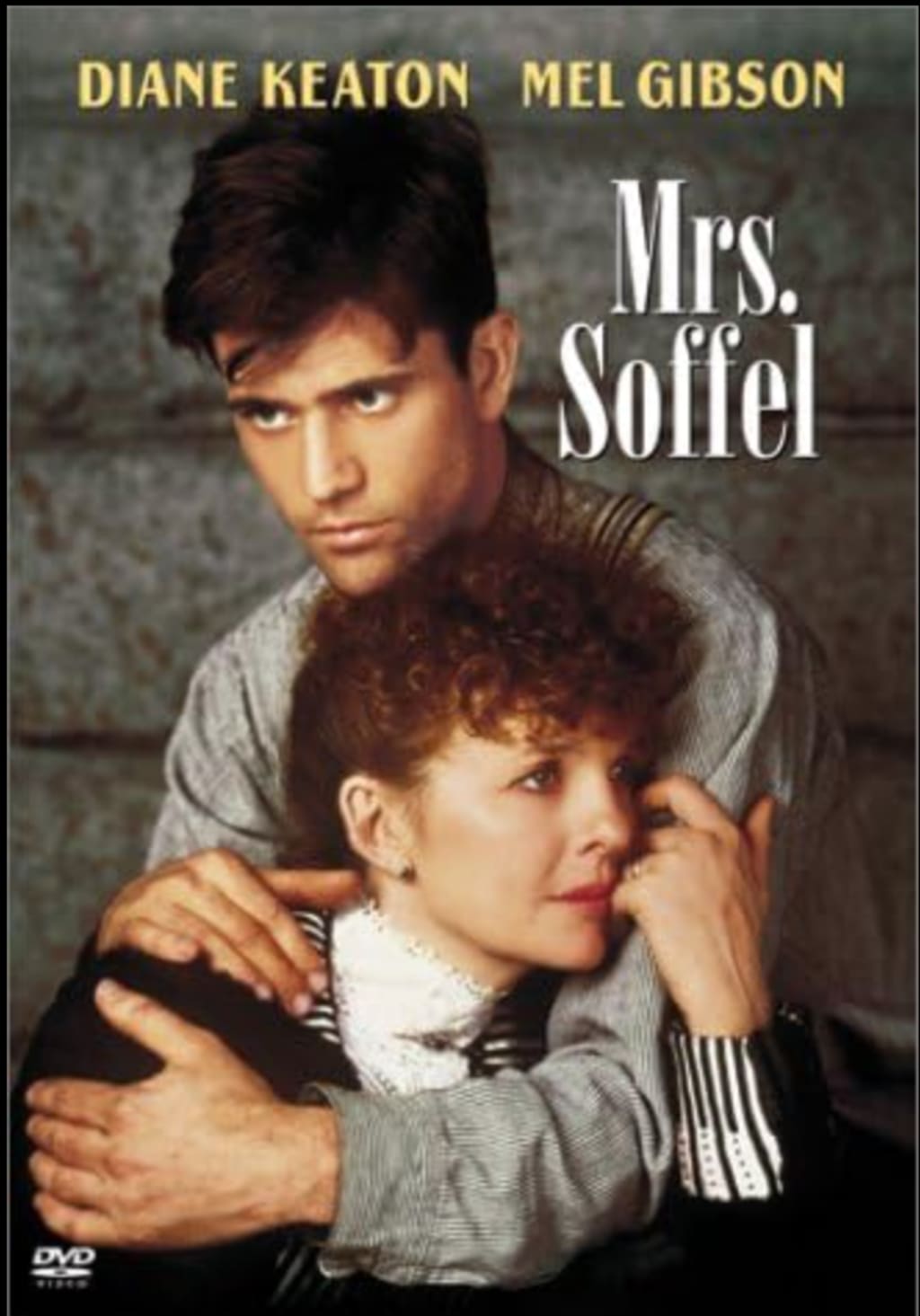
A Love Story Behind Prison Walls
By the time Mrs. Soffel arrived in theaters in 1984, Diane Keaton had already established herself as one of Hollywood’s most recognizable stars. Mel Gibson was rapidly becoming an international sensation thanks to Mad Max. Gillian Armstrong had made an impressive debut with My Brilliant Career.
On paper, that sounds like the foundation for a prestige picture destined to make an impact.
Instead, Mrs. Soffel became one of those strange little films that slipped through the cracks.
Set against the grim industrial landscape of turn-of-the-century Pittsburgh, the film tells the true story of Kate Soffel, the deeply religious wife of a prison warden who becomes emotionally entangled with condemned murderer Ed Biddle. Along with his brother Jack, Ed is awaiting execution when Kate begins visiting the prisoners.
What starts as religious compassion gradually becomes something far more dangerous.
Kate falls in love with Ed.
And eventually, she decides to help the two brothers escape.
That premise might sound like the setup for a conventional period romance or a Bonnie and Clyde knockoff. Armstrong’s film is considerably stranger than either. Mrs. Soffel is a story about repression, faith, sexuality and the frightening consequences of discovering that the life you’ve been living isn’t the life you actually want.
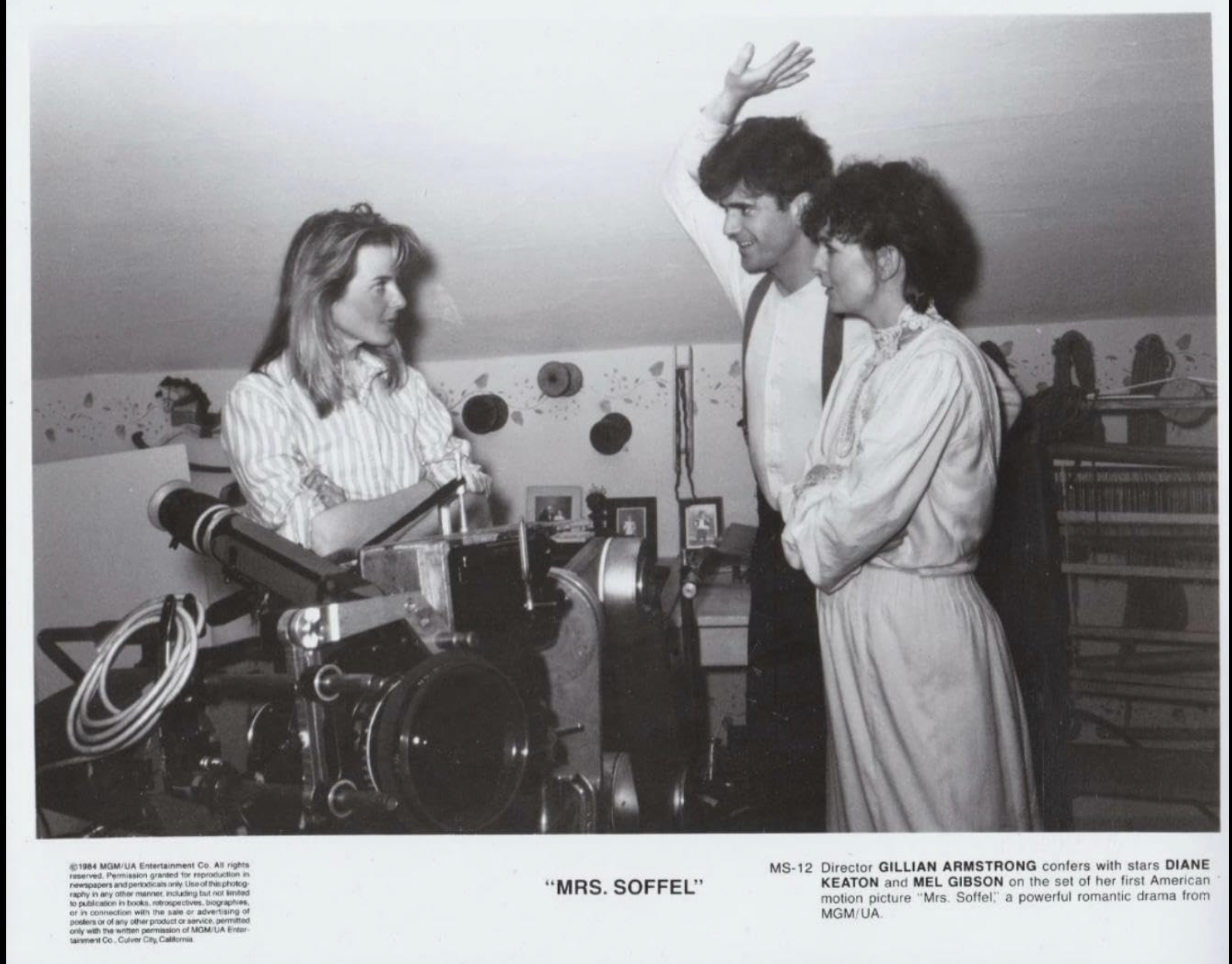
From Pittsburgh Scandal to Hollywood Drama
The story originated with Pennsylvania native Ron Nyswaner, who began developing the screenplay in late 1982.
Nyswaner, who would later write Philadelphia, was fascinated by the legend of the Biddle brothers and especially by the woman who was willing to throw away everything she had for them.
The screenplay attracted Diane Keaton, who became attached to play Kate Soffel. That casting gave the project the credibility it needed to move forward as a major studio production.
Producer Edgar J. Scherick, working with Scott Rudin and David A. Nicksay, brought Gillian Armstrong aboard. Armstrong had already demonstrated with My Brilliant Career that she had a remarkable ability to explore women’s lives within restrictive social environments.
That made her an unusually good choice.
Kate Soffel wasn’t simply a woman who falls for a criminal. She was a woman who had spent years living inside a cage of her own making.
Armstrong understood that.
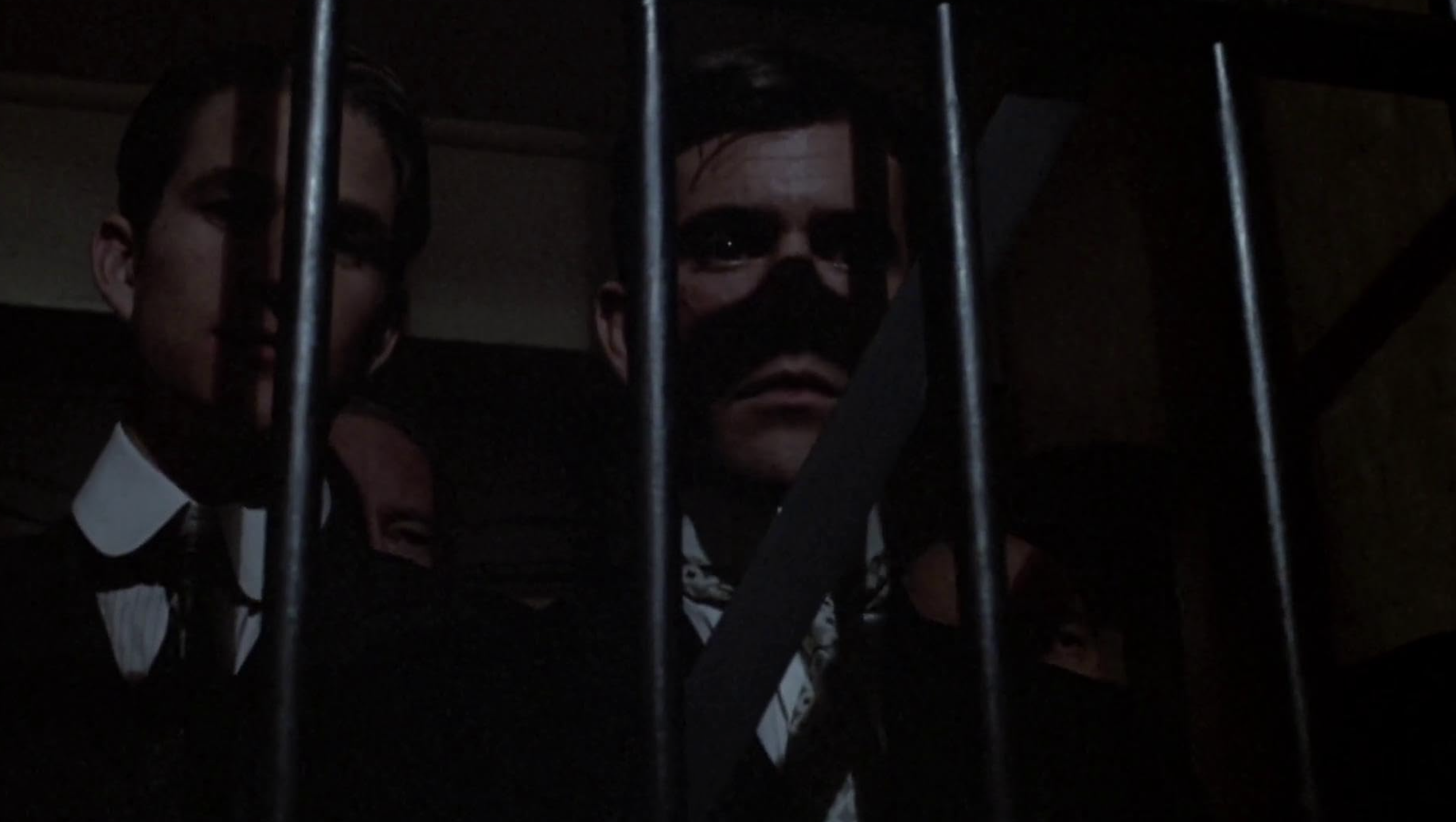
The Prison Wasn’t a Movie Set
Filming began in February 1984 and continued through May, with the production working on a fourteen-week schedule and a budget of approximately $11 million.
Although some location work was completed in Pittsburgh, much of the production was shot in Ontario. The Canadian winter provided Armstrong with exactly the kind of bleak, unforgiving landscape the story demanded.
The film’s visual design is one of its strongest elements. Cinematographer Russell Boyd and production designer Luciana Arrighi created a world of smoke, snow, stone and industrial grime. Nothing feels particularly romantic about Kate’s existence.
Even the romance itself seems to take place in a world that is slowly suffocating the characters.
The filmmakers were also given extraordinary access to Pittsburgh’s historic Allegheny County Jail. Actual inmates appeared as extras, while off-duty guards were brought in to provide security.
That kind of access gives the prison sequences an authenticity that would have been difficult to reproduce on a conventional soundstage.
For Mel Gibson, the role came at an interesting moment in his career. Mad Max had turned him into an international action star, but Mrs. Soffel gave him the opportunity to demonstrate that there was more to him than leather jackets, cars and post-apocalyptic violence.
As Ed Biddle, Gibson plays a man who understands exactly how to manipulate people. There’s charm there, but also calculation.
His chemistry with Keaton is what makes the relationship believable.
Kate isn’t simply seduced by Ed.
She’s seduced by the possibility of becoming someone else.
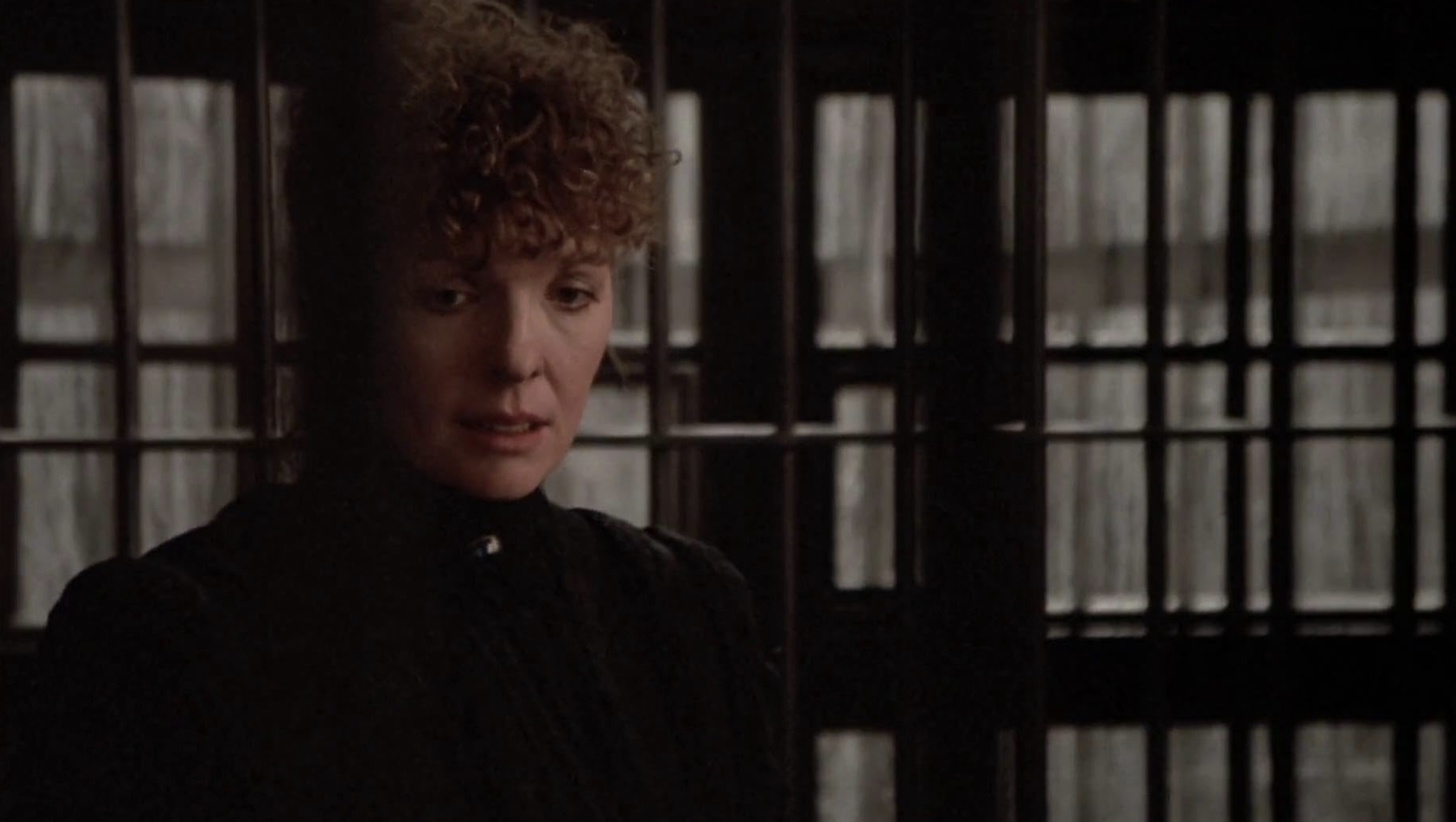
Diane Keaton Behind the Bars
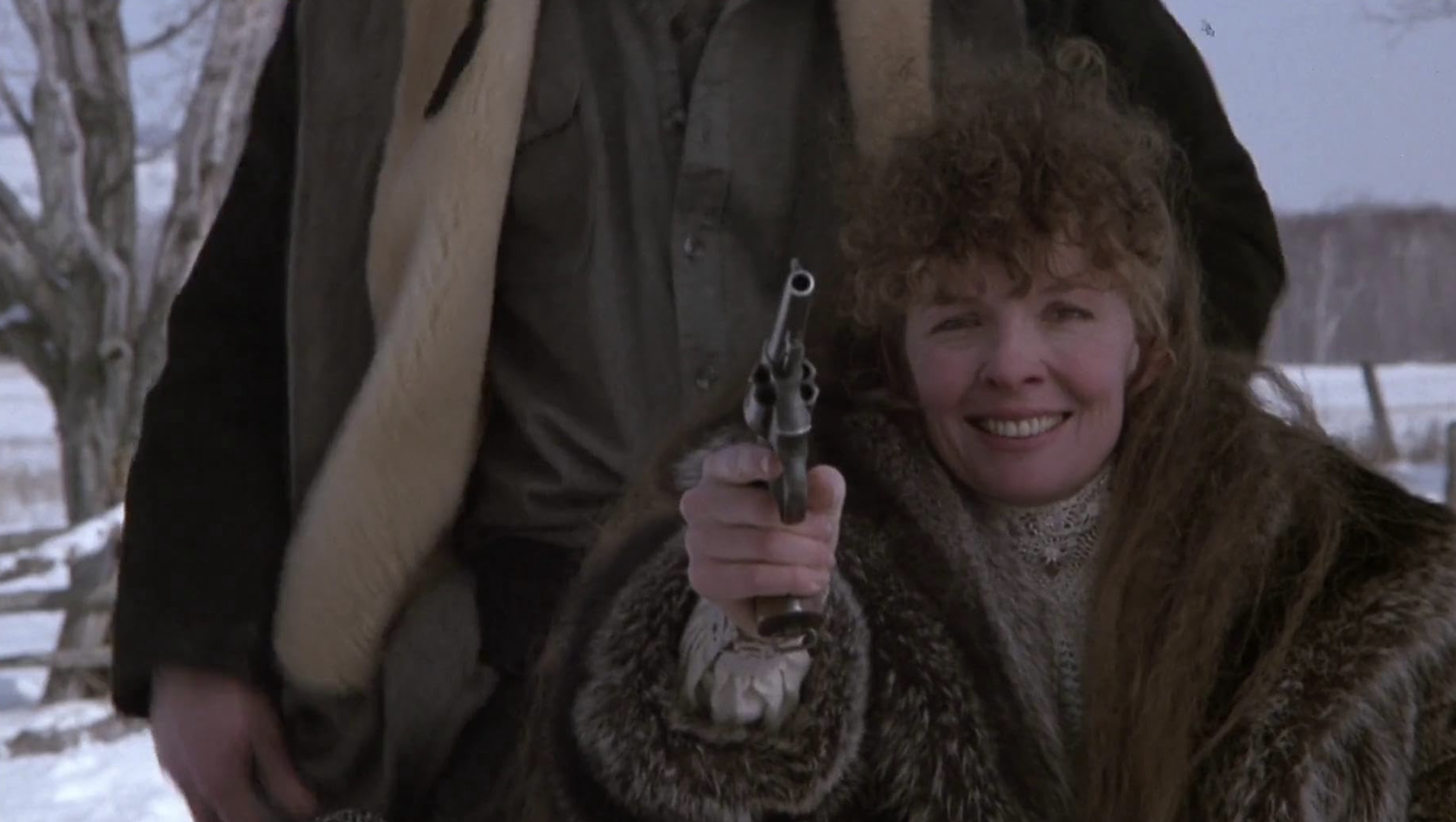
Diane Keaton’s Kate Soffel is perhaps the most interesting aspect of the entire film.
At first, she appears almost painfully restrained. She’s a prison warden’s wife, a devout Christian and a woman whose life revolves around rules. She has little control over anything that happens around her.
Then Ed enters her life.
Suddenly, all of those rules begin to look less like principles and more like prison bars.
Keaton plays the transformation gradually. Kate doesn’t wake up one morning and decide to become a fugitive. Her rebellion emerges in tiny increments until eventually there is no going back.
And Keaton isn’t afraid to make Kate strange.
There’s a nervous energy underneath the character’s religious composure, a suggestion that the passions she has spent her entire life suppressing haven’t disappeared. They’ve simply been waiting for somewhere to go.
Pauline Kael was particularly taken with Keaton’s performance, including what she described as the actress’s “dirty little giggle.”
It’s an oddly perfect observation.
Because when Kate finally begins to experience something resembling freedom, it isn’t graceful.
It’s messy.
It’s desperate.
And sometimes it’s almost frightening.
The Problem With Being a “Prestige” Movie
MGM/UA released Mrs. Soffel on December 26, 1984, positioning it squarely in the prestige-movie corridor of the holiday season.
Unfortunately, it was entering a marketplace dominated by a very different kind of movie.
Beverly Hills Cop was becoming a phenomenon.
Mrs. Soffel was asking audiences to spend two hours watching a religious prison warden’s wife slowly destroy her life because she falls in love with a condemned murderer.
That was never going to be an easy sell.
The film opened respectably in New York and Los Angeles before expanding to approximately 800 theaters. But the broader audience never materialized.
The result was a brutal commercial disappointment.
The $11 million production earned only about $4.4 million domestically.
For a major studio release starring Diane Keaton and Mel Gibson, that was a spectacularly poor return.
And then there was the marketing problem.
Mrs. Soffel is difficult to sell because it doesn’t fit comfortably into one genre. It’s a prison drama, a historical tragedy, a love story, a crime film and, in some ways, a feminist drama.
The trailer could sell the escape.
It could sell the romance.
It could sell Mel Gibson.
But it couldn’t really sell what the movie was actually about.
Critics Couldn’t Quite Agree
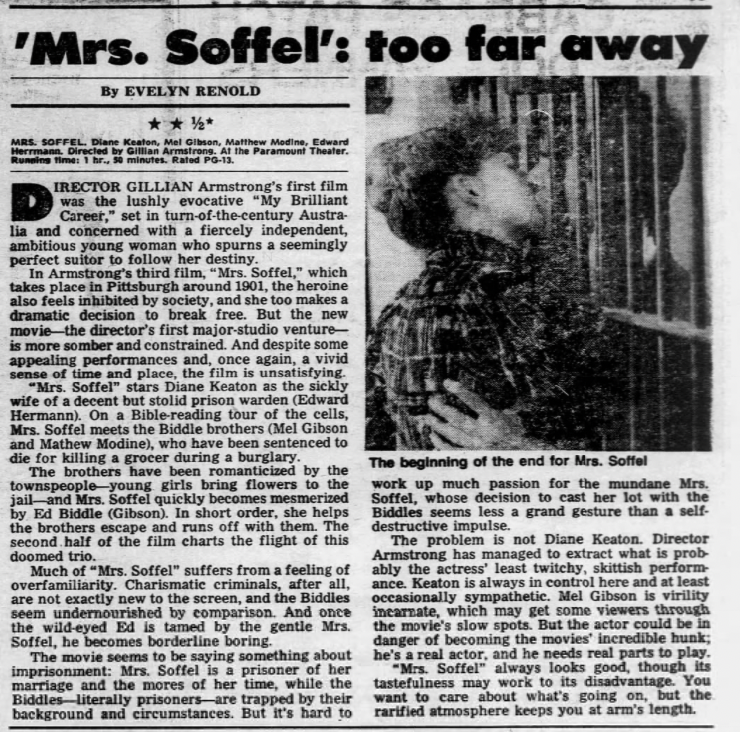
The critical response was similarly divided.
Roger Ebert wasn’t convinced, seeing the film as a lesser relative of Bonnie and Clyde that never fully justified its dramatic ambitions.
Vincent Canby of The New York Times found the story fascinating but thought the execution occasionally became muddled, even while acknowledging the strength of the performances.
Pauline Kael, meanwhile, saw something considerably more exciting.
Her enthusiasm for Keaton’s performance and the film’s increasingly feverish final act reflected what makes Mrs. Soffel interesting today: it isn’t really interested in giving the audience a comfortable interpretation of Kate.
Is she a romantic heroine?
A foolish adulterer?
A religious woman experiencing a spiritual crisis?
A prisoner escaping one prison only to enter another?
The answer is probably all of them.
Keaton’s performance earned her a Golden Globe nomination for Best Actress, while Armstrong received recognition at the Berlin International Film Festival, where the film competed for the Golden Bear.
The movie clearly had admirers.
It simply didn’t have enough of them.
A Different Kind of Escape
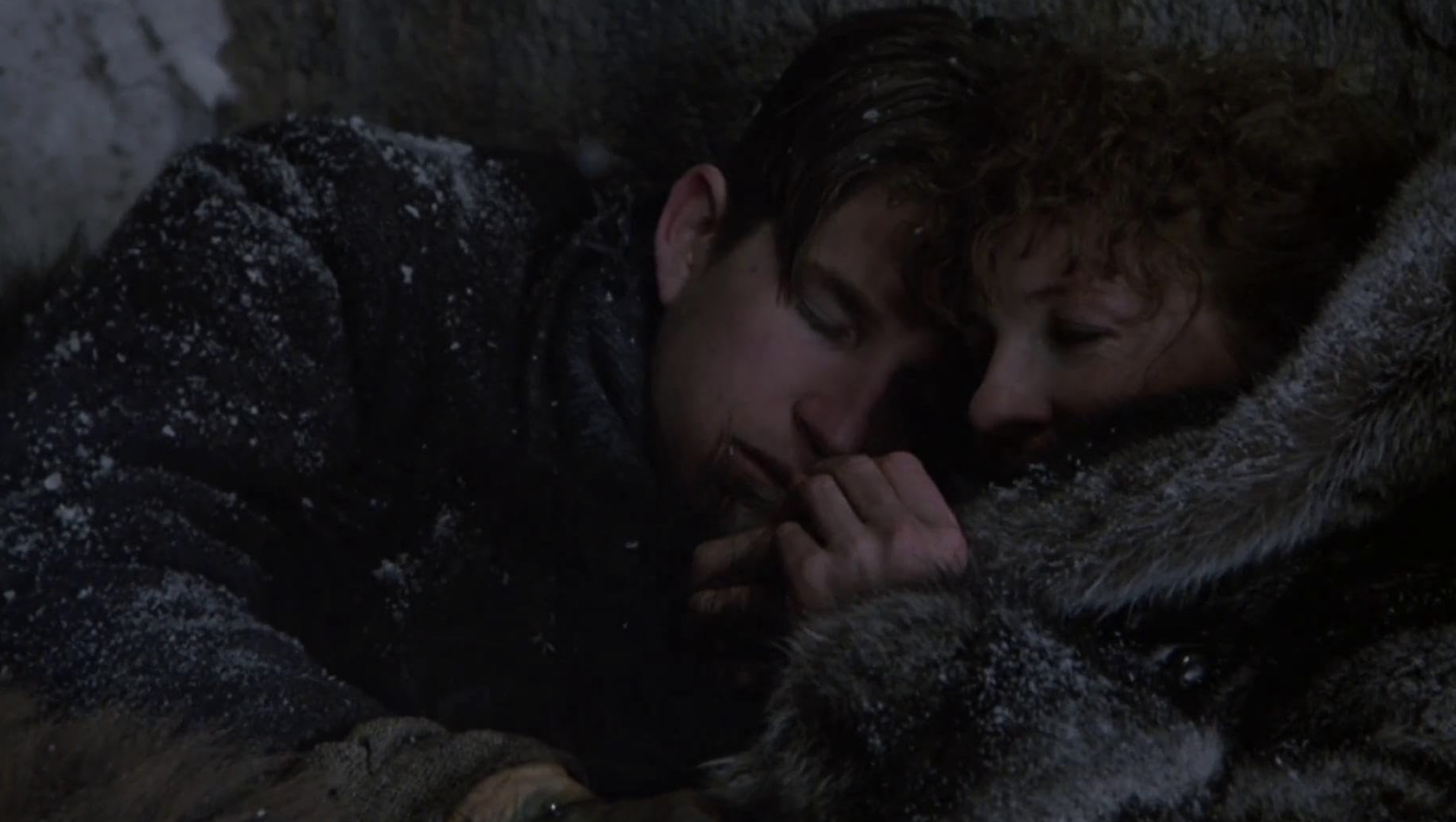
The easiest way to misunderstand Mrs. Soffel is to treat it as a movie about an escape from prison.
It isn’t.
The escape is merely the physical manifestation of something that has been happening to Kate throughout the film.
She is escaping her marriage.
Her religion.
Her social position.
Her sexuality.
Her identity.
And ultimately, she’s escaping the version of herself that everyone else has created for her.
That makes the movie considerably more interesting than its reputation as a forgotten period crime drama might suggest.
Armstrong doesn’t romanticize the decision.
There is no guarantee that Kate’s new life will be better. In fact, virtually everything about the final act suggests that freedom may simply be another form of punishment.
Kate has spent her life believing that obedience will protect her.
Then she discovers that obedience has protected nothing.
The Strange Afterlife of Mrs. Soffel
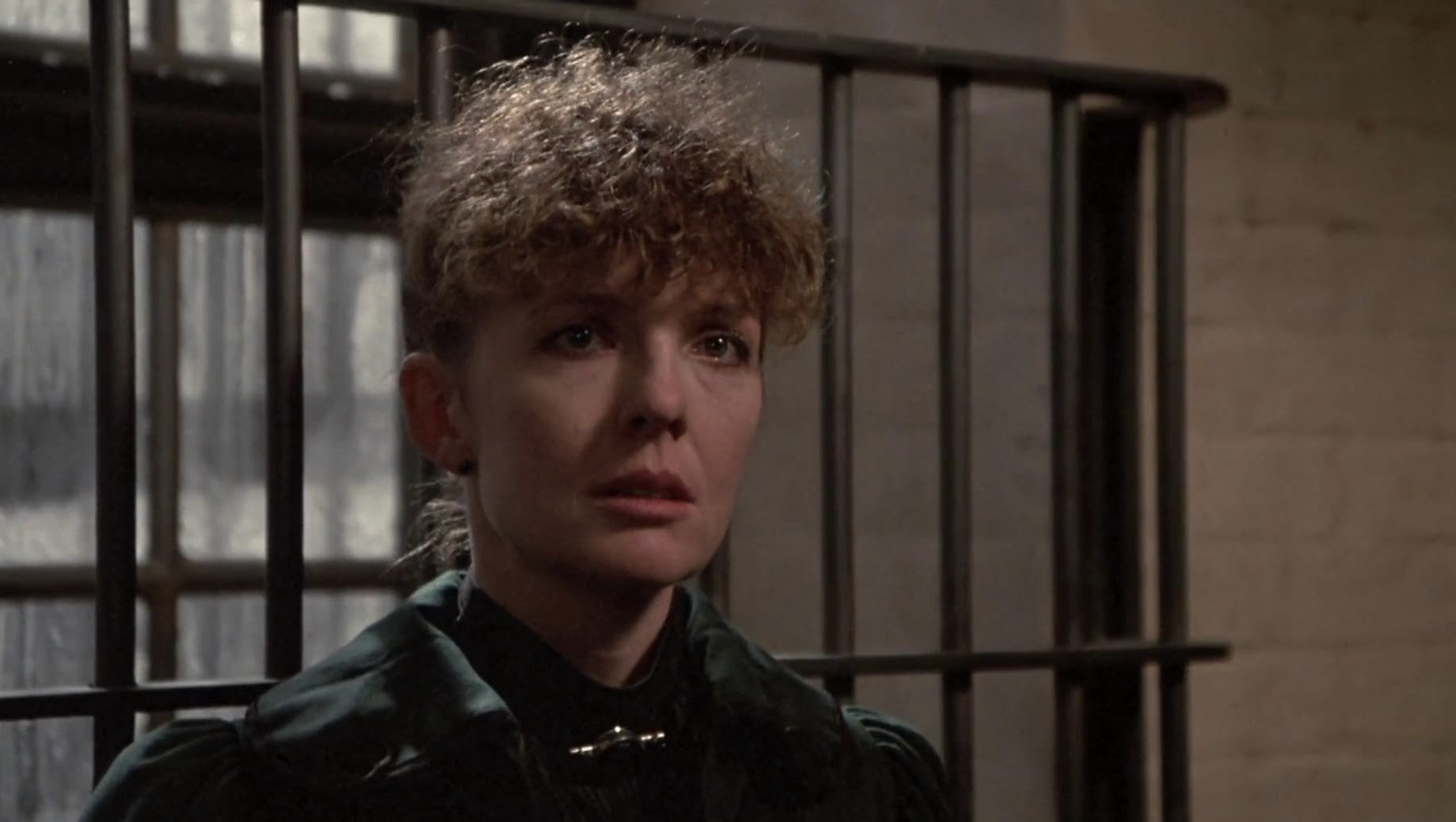
Mrs. Soffel never became a major hit, and it never developed the kind of cult following enjoyed by many other 1980s films.
But it has aged remarkably well.
Part of that comes from Armstrong’s direction. The film feels less like a conventional Hollywood production than an Australian filmmaker’s deliberately bleak interpretation of an American historical tragedy.
Part of it comes from Keaton, who was willing to make Kate vulnerable, awkward and occasionally unsettling.
And part of it comes from the sheer oddness of the story itself.
The Biddle brothers and Kate Soffel were real people. Their story once captivated the public, and the old Allegheny County Jail became part of the mythology surrounding the escape.
Hollywood eventually turned that scandal into a movie.
The result wasn’t a blockbuster.
It wasn’t a romantic classic.
It wasn’t even particularly fashionable when it was released.
But Mrs. Soffel is exactly the kind of film that makes revisiting the movies of the 1980s worthwhile.
It comes from a period when a major studio could spend $11 million on a grim, morally complicated historical drama and put Diane Keaton and a rising Mel Gibson at its center without needing to turn the story into a conventional crowd-pleaser.
Today, that kind of movie feels almost impossible to imagine.
And perhaps that’s the real reason Mrs. Soffel deserves another look.
It isn’t simply the story of a woman who helped two condemned murderers escape prison.
It’s the story of a woman who spent her entire life behind invisible bars—and finally decided that she would rather risk everything than remain there.

About the Creator
Movies of the 80s
We love the 1980s. Everything on this page is all about movies of the 1980s. Starting in 1980 and working our way the decade, we are preserving the stories and movies of the greatest decade, the 80s. https://www.youtube.com/@Moviesofthe80s
Enjoyed the story? Support the Creator.
Subscribe for free to receive all their stories in your feed.
Comments
There are no comments for this story
Be the first to respond and start the conversation.