
Movies of the 80s: 'Water' (1985) — When Michael Caine, George Harrison and an Island Full of Laxatives Collided
A promising British satire with an absurd premise, an incredible cast, and just about everything else working against it.


The Movie Had Everything Going for It
There are some movies that seem almost impossible to screw up.
Water is one of them.
In 1985, British director Dick Clement took a potentially terrific satirical premise, surrounded it with an absurdly talented cast and crew, put it under the banner of George Harrison’s HandMade Films, and sent everyone off to the Caribbean to make a comedy about colonialism, revolution, corporate greed and… laxative mineral water.
And somehow, it didn’t quite work.
That’s not to say Water is without its charms. Far from it. This is one of those strange little movies where the story behind the movie can sometimes be more entertaining than the movie itself. Michael Caine is in it. Billy Connolly is in it. Leonard Rossiter is in it. George Harrison is in it. Ringo Starr and Eric Clapton show up. Douglas Slocombe is behind the camera. Eddy Grant contributes music.
You’d think somebody had accidentally discovered the secret formula for a classic.
Instead, Water became one of those increasingly obscure corners of 1980s British cinema that you stumble across and wonder, How have I never heard of this before?
Welcome to Cascara
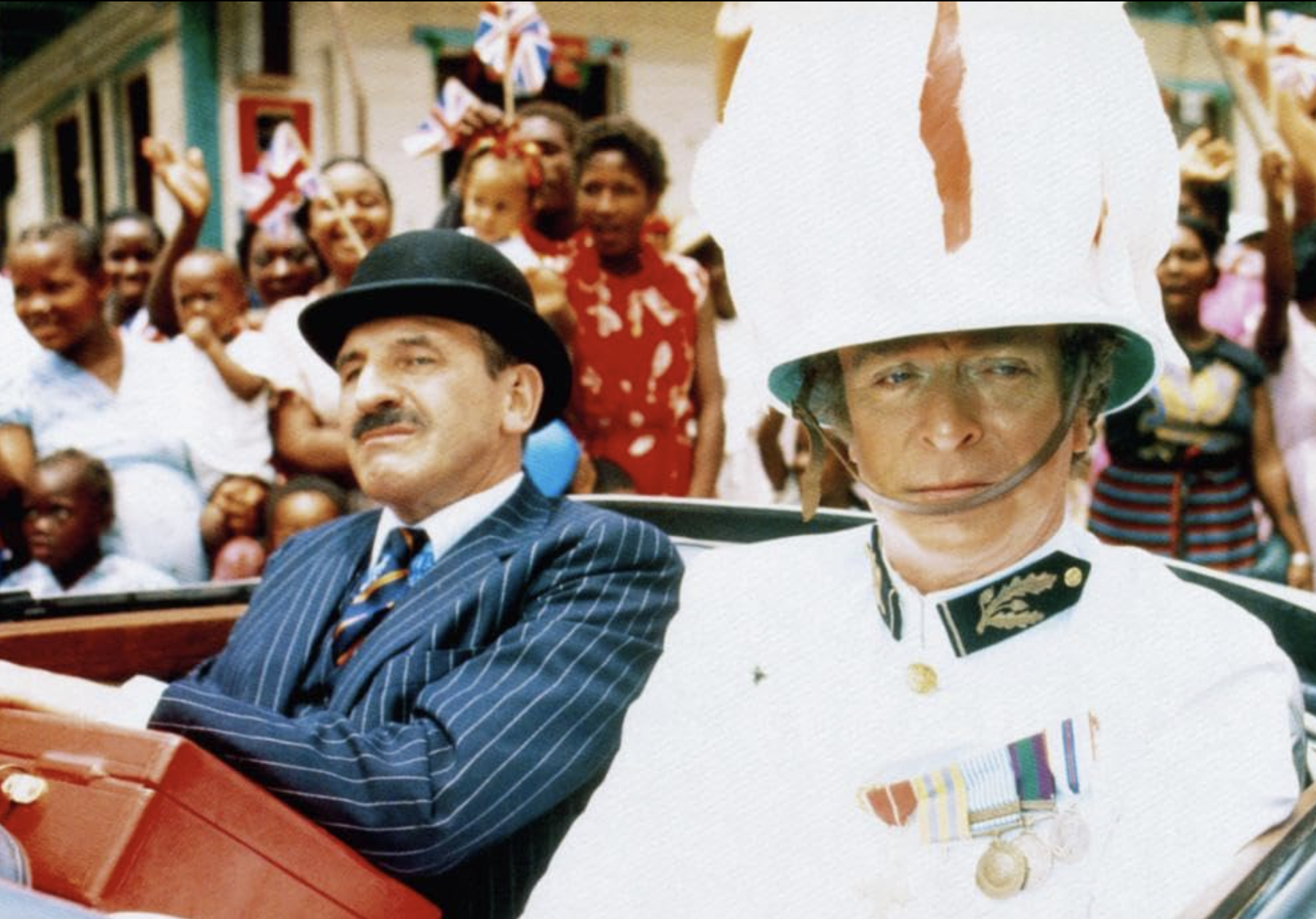
Caine plays Baxter Thwaites, the governor of Cascara, a fictional Caribbean island that has been left behind by the British Empire.
Thwaites isn’t exactly the embodiment of colonial efficiency. He’s lazy, self-interested and more interested in maintaining his comfortable existence than solving the island’s problems.
Then something potentially revolutionary happens.
A source of mineral water is discovered.
And it turns out the water has rather unusual properties.
It is, shall we say, extremely effective at keeping things moving.
Suddenly, everybody wants a piece of Cascara.
Oil companies see an opportunity. Revolutionaries see a chance to overthrow the existing order. The British government sees another potential international headache. And the island’s inhabitants find themselves caught in the middle of a geopolitical struggle that is considerably more complicated than anyone expected.
The premise is ridiculous.
That’s also what makes it promising.
Water was conceived as a political satire, taking aim at colonialism, corporate exploitation and the increasingly absurd nature of international politics. The fictional island was intended as a comic reflection of real-world conflicts, including the tensions surrounding the Falklands War.
At its best, the movie understands that the easiest way to expose political absurdity is to make the situation itself completely absurd.
Unfortunately, Water doesn’t always know where to stop.
A HandMade Production in Every Sense
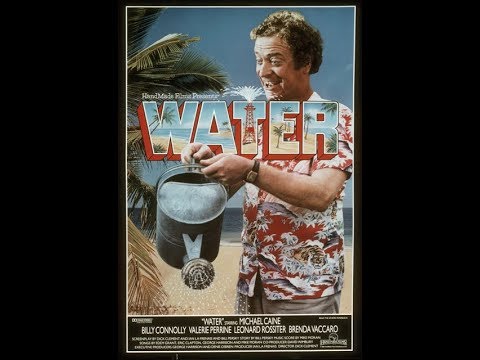
The movie grew out of an idea from writer Bill Persky, who originally envisioned something considerably sharper as a satire about colonial independence.
The project eventually found its way to HandMade Films, the production company George Harrison had helped establish after the Beatles’ breakup. HandMade had developed a reputation for taking chances on unconventional British movies, including Monty Python’s Life of Brian and The Long Good Friday.
That made the company a perfect home for something like Water.
The screenplay eventually became a collaboration between Clement, Ian La Frenais and Persky, with Clement also taking the director’s chair.
Michael Caine’s involvement was crucial. His enthusiasm for the project helped push it toward production.
Not everybody was convinced.
John Cleese reportedly turned down the role that eventually went to Leonard Rossiter. Michael Palin also backed away, reportedly feeling that the material lost the momentum of its early sections.
Looking back, it’s difficult not to wonder if Palin had a point.
Because Water has a terrific setup.
The problem is that the movie doesn’t always know what to do with it.
Making a Movie While Making It Up
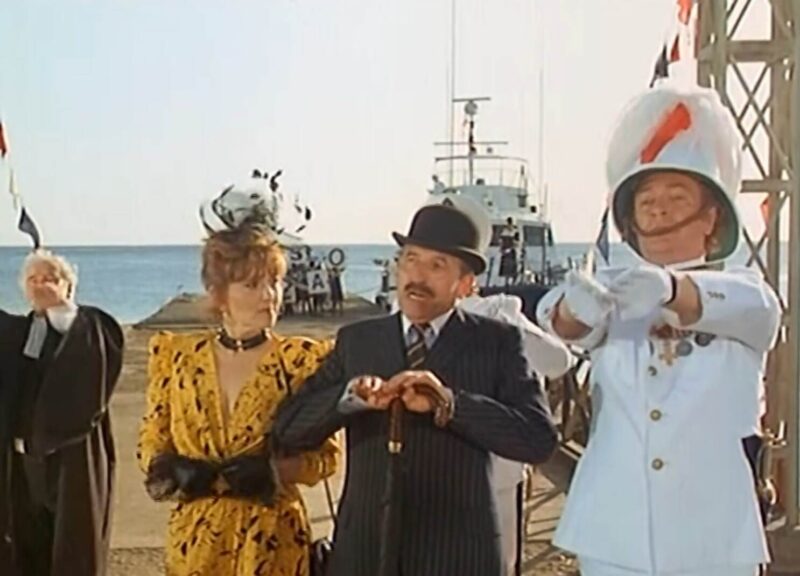
Production began in May 1984, with Saint Lucia providing the primary Caribbean locations.
It was not exactly a trouble-free production.
Independent filmmaking has always involved a certain amount of financial improvisation, but Water apparently took that philosophy to another level. Billy Connolly, who plays activist Delgado Fitzhugh, later recalled flying toward the Caribbean for the production while the financing had temporarily disappeared.
The money returned by the time he landed.
That’s one way to start shooting a movie.
The production moved between locations in Saint Lucia, London and Devon, including work at Shepperton Studios and on oil rigs. Through all of this, Douglas Slocombe—one of Britain’s great cinematographers—was there to photograph it.
And the movie looks good.
Really good.
Slocombe’s photography gives Water the kind of sun-drenched Caribbean atmosphere you would expect from a much more expensive production. There is color, scale and texture everywhere.
It’s almost frustrating.
You can see the movie Water could have been hiding inside Water.
And Then George Harrison Invited His Friends
Then there’s George Harrison.
HandMade Films wasn’t just Harrison’s production company. Harrison himself had a habit of showing up in his movies and bringing his friends along.
Water takes that idea to glorious extremes.
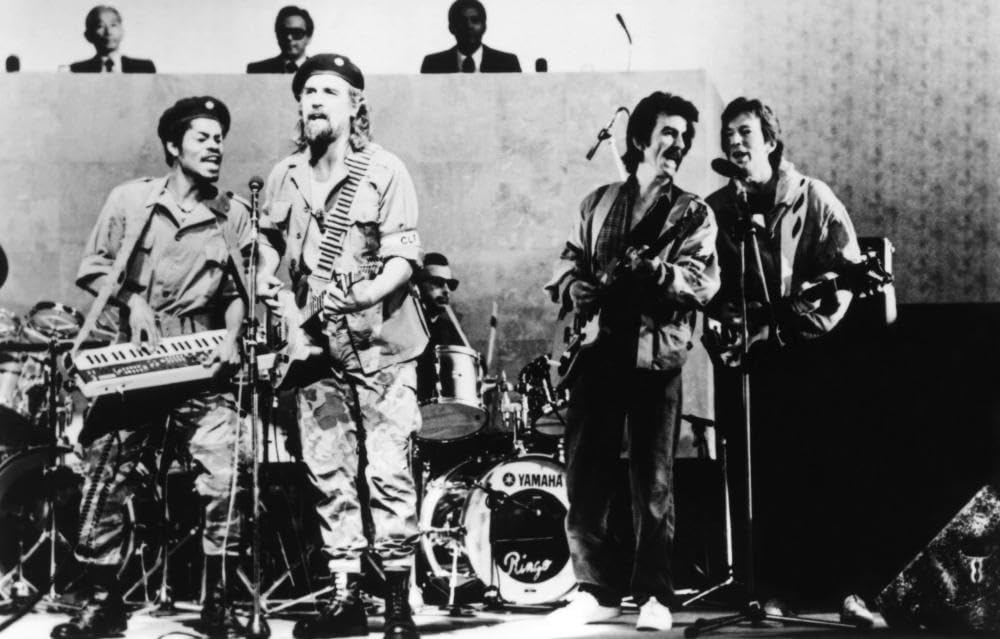
For one sequence, Harrison assembled a remarkable collection of musicians for a concert scene filmed at Shepperton Studios.
Ringo Starr appears.
Eric Clapton appears.
And Harrison himself is there.
The sequence has the unmistakable feeling of a bunch of enormously famous musicians getting together because, well, they could.
It’s one of the movie’s great curiosities.
Eddy Grant’s reggae-inflected soundtrack adds another layer to the Caribbean setting, giving the film a distinctly mid-1980s musical personality.
For a movie that is otherwise so uneven, these elements are fascinating.
And they help explain why Water is worth remembering even if it isn’t particularly worth defending.
Michael Caine Tries to Hold It Together
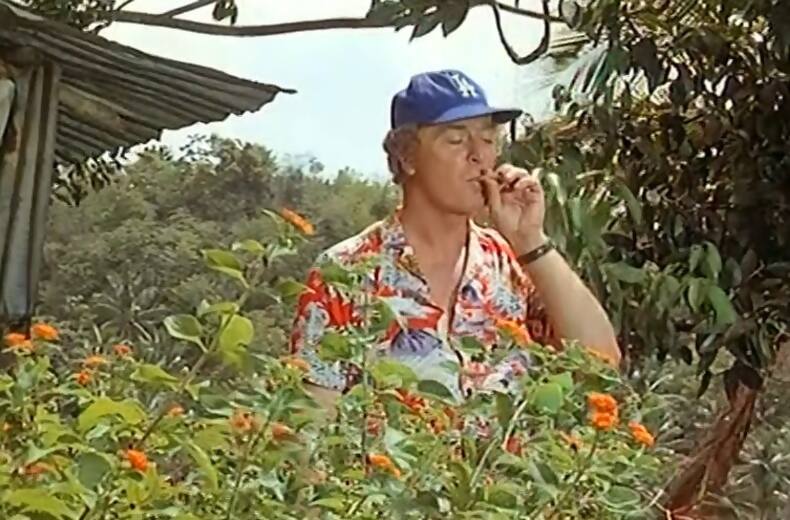
Caine is probably the best reason to spend time with the movie.
His performance as Baxter Thwaites is deliberately relaxed. He’s not playing the governor as a larger-than-life comic caricature. Instead, Caine approaches him as a fundamentally ordinary man who has somehow found himself sitting in the middle of an international crisis.
That straight-man quality works.
Leonard Rossiter, meanwhile, brings the kind of professional comic timing you’d expect from one of Britain’s great character actors.
Billy Connolly is given considerably more room to be Billy Connolly.
And therein lies part of the problem.
Water keeps bouncing between political satire, broad comedy, slapstick, marijuana jokes, character comedy and outright farce. Individual pieces occasionally work. The whole thing never quite gels.
It’s as though several different movies are fighting for control of the same script.
The Joke Runs Dry
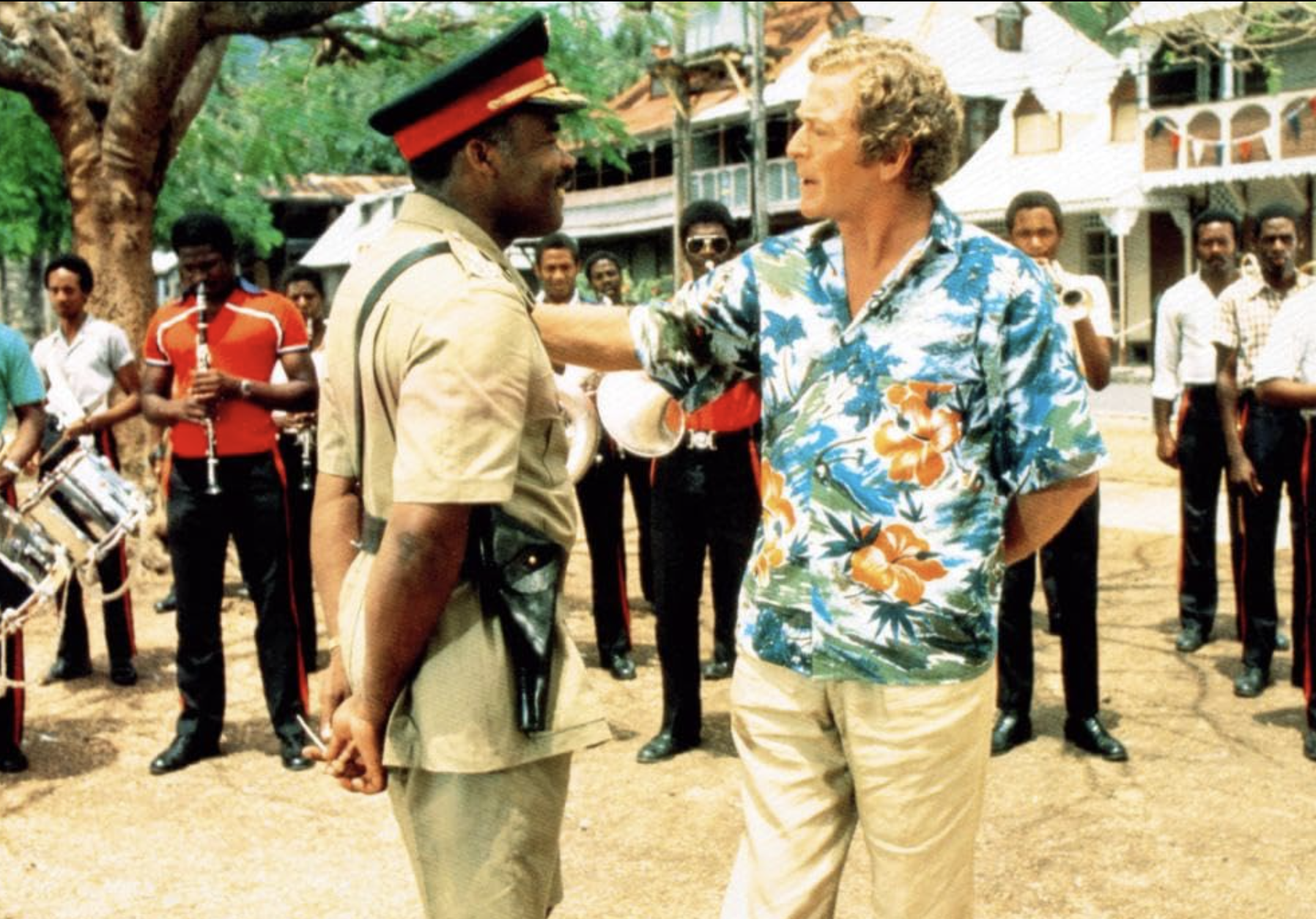
When Water arrived in British theaters in January 1985, it didn’t exactly set the box office on fire.
Its American release came considerably later, in April 1986, where Atlantic Releasing tried to introduce the film to North American audiences.
It didn’t find much of one.
The film ultimately made only about $1.26 million in the United States.
That seems almost cruelly appropriate for a movie about a valuable resource that nobody seems to know what to do with.
Critics were similarly divided, although the negative reaction tended to focus on the same problem: the satire was simply too scattered.
The movie takes aim at colonialism, corporations, British politics, international conflict and various other targets, but it rarely stays focused long enough to really hit any of them.
The premise promises something pointed.
The movie keeps reaching for something broader.
And broader isn’t necessarily better.
A Fascinating Failure
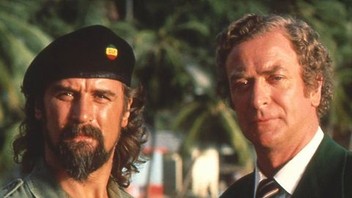
Even Clement himself eventually acknowledged that the movie didn’t quite hit the target, describing it as a case where the result “just misses.”
That’s probably the fairest assessment.
Water isn’t a disaster. There are too many talented people involved for that.
It’s something more interesting.
It’s a missed opportunity.
The movie has the cast. It has the locations. It has the cinematography. It has the music. It has the HandMade Films pedigree. It has a wonderfully stupid premise that could have supported a genuinely sharp political comedy.
What it doesn’t have is focus.
And focus matters.
The great Ealing comedies that inspired Water understood that absurdity works best when it is built around a strong central idea. Water has several ideas and keeps wandering between them.
Eventually, the jokes start to feel like they’re being thrown at the screen simply because somebody has them.
One of the Oddest Movies of the 80s
There’s something I find appealing about movies like Water.
Not because they’re secretly masterpieces.
They’re not.
But because they tell us something about the era in which they were made.
Water belongs to a fascinating period in British cinema when filmmakers could still take enormous creative swings, independent companies like HandMade Films could gamble on eccentric projects, and established stars could wander into bizarre productions simply because the material sounded like fun.
And sometimes the gamble paid off.
Sometimes you got The Long Good Friday.
Sometimes you got Withnail & I.
And sometimes you got Water.
A movie about a forgotten Caribbean island, a useless governor, revolutionaries, oil companies, British imperialism and miracle mineral water that gives everybody diarrhea probably shouldn’t be boring.
And yet, somehow, Water manages to be exactly that in places.
Still, I can’t quite bring myself to dismiss it.
There’s too much personality here. Too many great names. Too many strange details. Too much evidence of the movie that might have existed if all those pieces had come together.
Water may not have revived the spirit of Ealing comedy.
But as a forgotten artifact of 1980s British filmmaking, it is something almost as valuable.
It’s a reminder that sometimes the most fascinating movies aren’t the masterpieces.
They’re the ones that almost were.

About the Creator
Movies of the 80s
We love the 1980s. Everything on this page is all about movies of the 1980s. Starting in 1980 and working our way the decade, we are preserving the stories and movies of the greatest decade, the 80s. https://www.youtube.com/@Moviesofthe80s
Enjoyed the story? Support the Creator.
Subscribe for free to receive all their stories in your feed.
Comments
There are no comments for this story
Be the first to respond and start the conversation.