
Movies of the 80s: 'Tuff Turf' (1985) — When the 80s Turned Teen Rebellion Into a Music Video
James Spader, Robert Downey Jr., leather jackets, gang warfare, and enough New Wave attitude to power an entire decade.


The 1980s had a peculiar talent for taking familiar movie formulas and covering them in neon.
Take Rebel Without a Cause. Strip away some of the existential angst, add a Los Angeles street gang, throw in a romantic subplot, crank up the music, give everybody spectacular hair, and shoot it like MTV might interrupt at any moment.
You get Tuff Turf.
Released in 1985, Fritz Kiersch’s film is one of those movies that could only have come from the 1980s. It is a teen drama, a romance, a gang movie, a musical, and a fashion show disguised as a coming-of-age story. It isn’t always sure what it wants to be, but that’s part of its charm.
And sitting right in the middle of all of it is a young James Spader.
Before Pretty in Pink, before Less Than Zero, before Sex, Lies, and Videotape turned him into one of Hollywood’s most fascinatingly strange leading men, Spader was Morgan Hiller, an affluent teenager whose family has fallen on hard times and relocated him to a rougher part of Los Angeles.
Morgan isn’t exactly prepared for his new surroundings.
And Los Angeles isn’t exactly prepared for Morgan.
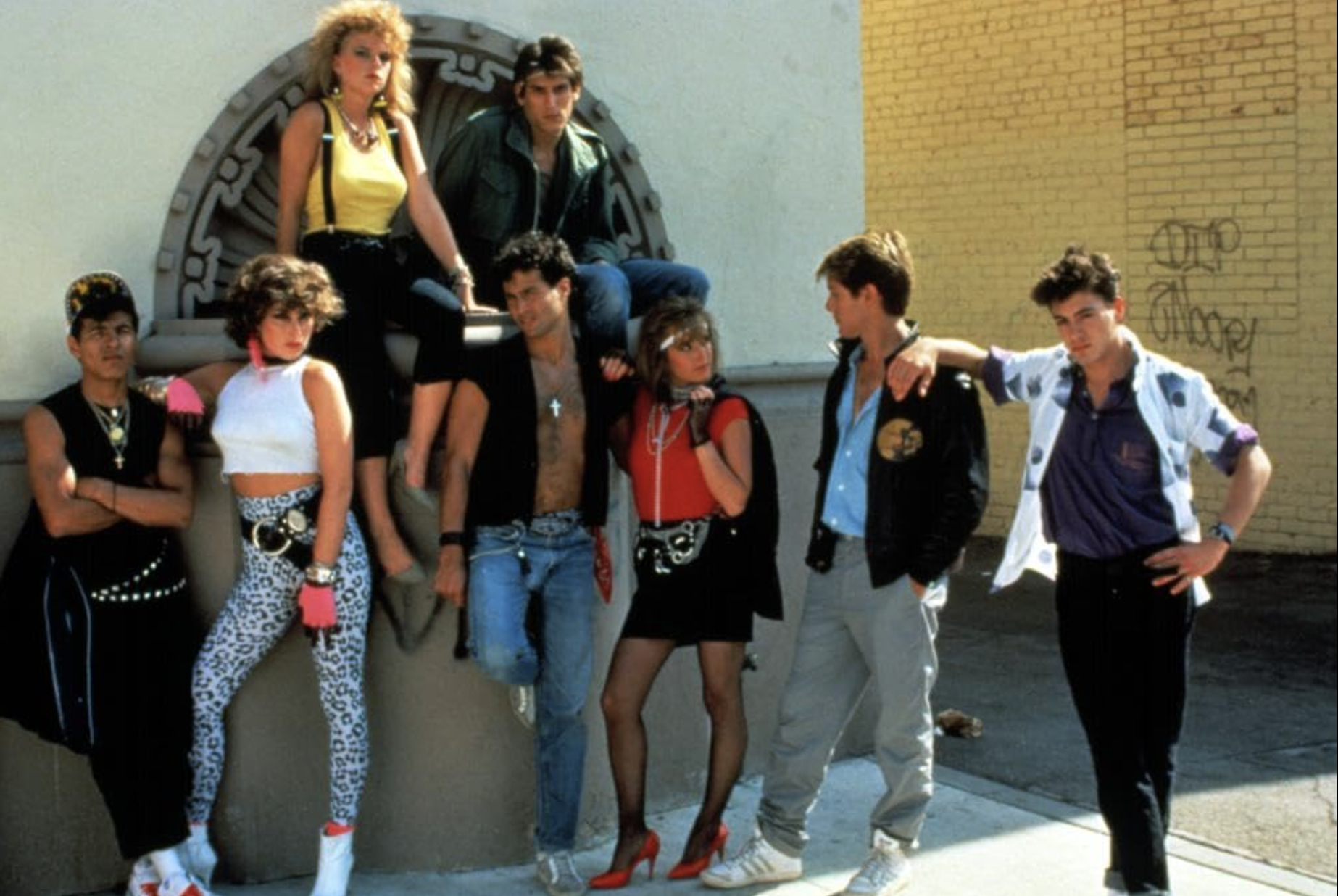
Welcome to the Neighborhood
Morgan has gone from privilege to something considerably closer to desperation.
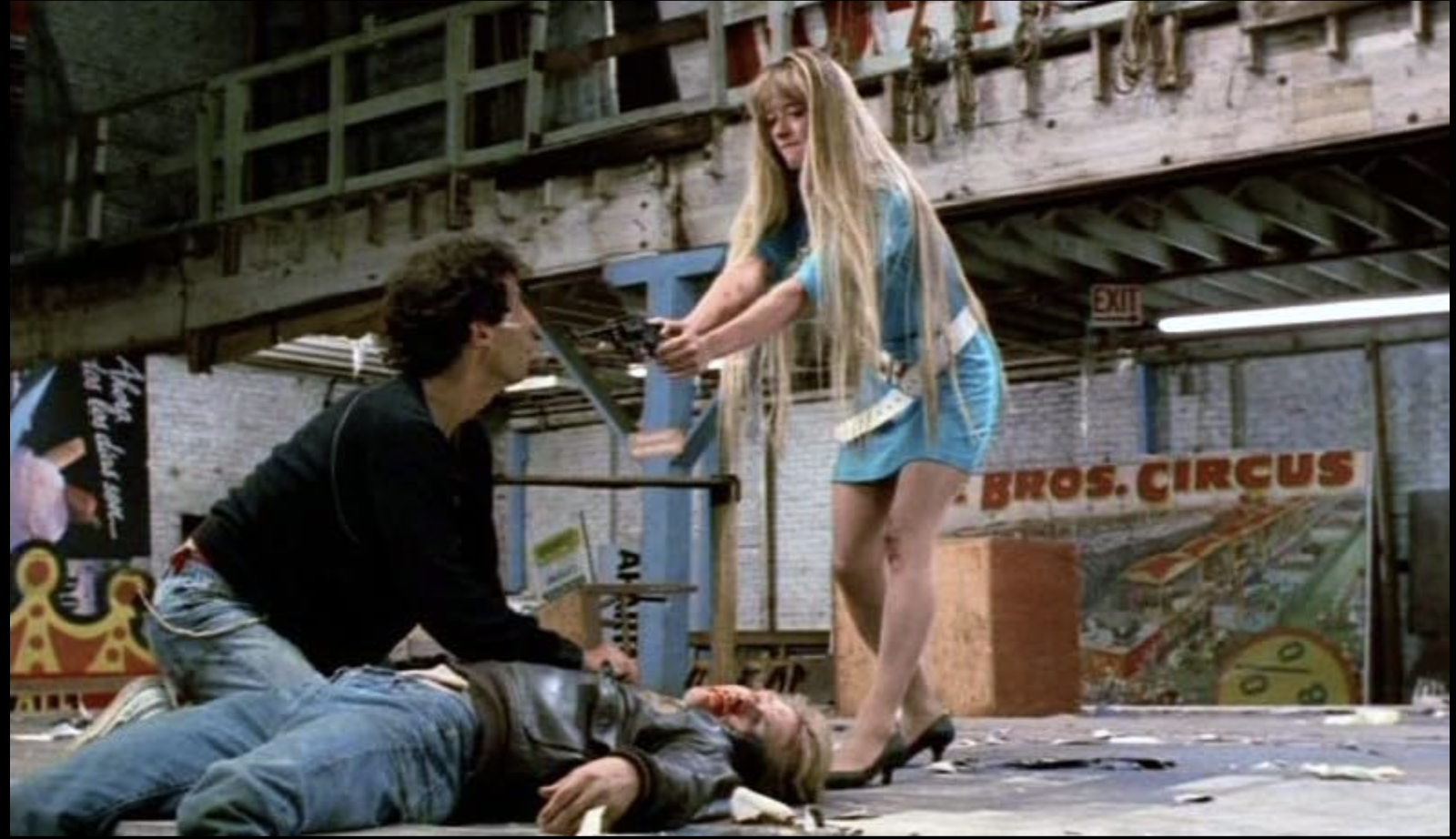
His family’s financial problems have forced them to move, putting Morgan into a world populated by street gangs, tough kids, territorial disputes and the kind of casual violence that seemed to be everywhere in 1980s teen cinema.
At the center of that world is Frankie Croyden, played by Kim Richards.
Frankie isn’t the typical helpless love interest. She’s tough, streetwise and already deeply embedded in the neighborhood’s dangerous social ecosystem.
Then there’s Nick Hauser, played by Paul Mones, who has the general demeanor of someone who has never encountered a problem that couldn’t be solved with a fist.
Morgan’s arrival upsets the balance.
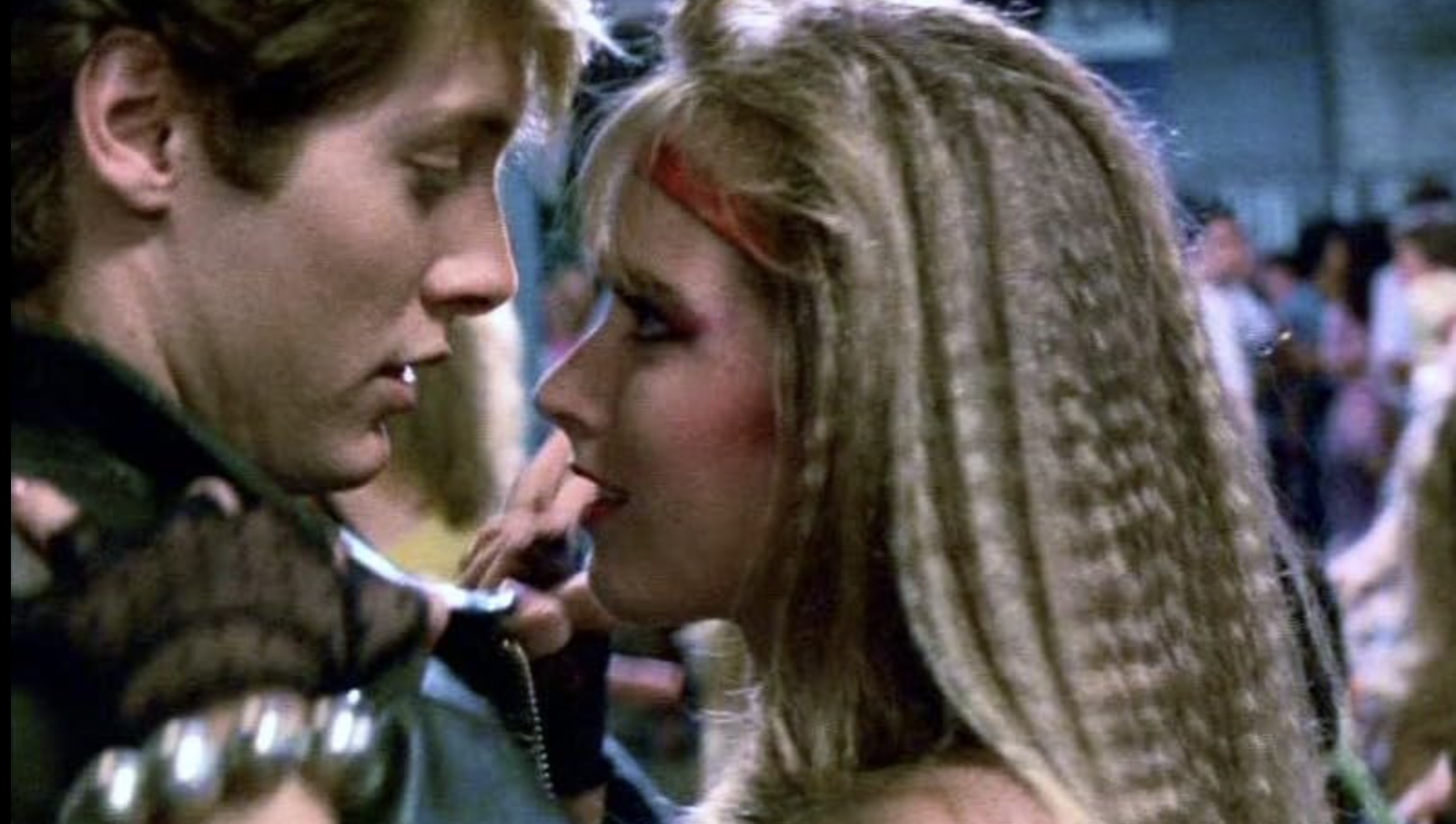
Naturally, he falls for Frankie.
Naturally, Nick doesn’t appreciate it.
And naturally, things escalate.
The basic premise isn’t particularly revolutionary. It’s the sort of story Hollywood had been telling for decades.
But Tuff Turf wasn’t really interested in reinventing the story.
It wanted to reinvent the look.
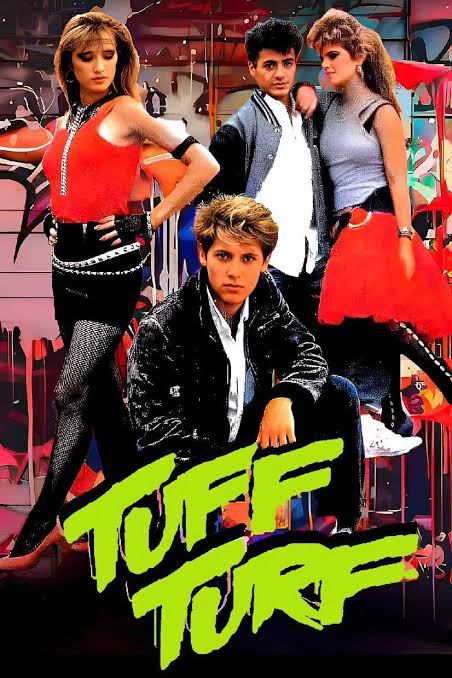
The MTV Generation Gets a Gang Movie
This is where Tuff Turf becomes considerably more interesting.
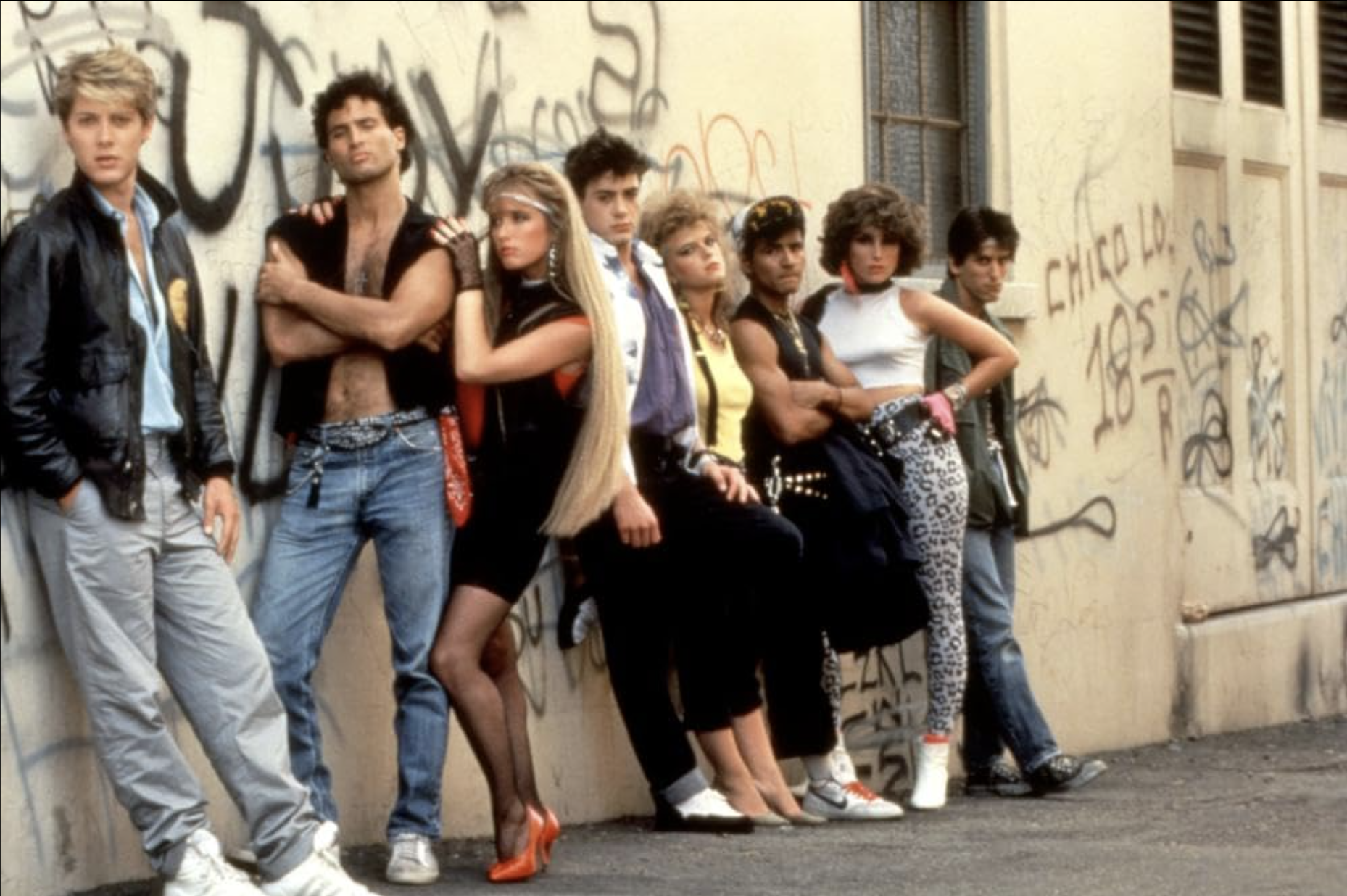
The movie feels like somebody took a traditional 1950s juvenile-delinquent picture and ran it through a 1980s music-video machine.
There are leather jackets, elaborate hairstyles, neon lighting, punk and New Wave fashion, nightclubs, street fights and musical performances. Characters don’t simply walk into a room. They arrive looking like they have just stepped out of a record-store window.
That aesthetic was everywhere in the decade.
Movies weren’t merely movies anymore. They were increasingly extensions of the music-video culture that had exploded with MTV.
Tuff Turf embraces that transformation completely.
Sometimes it works.
Sometimes it doesn’t.
But you can never accuse the movie of being visually sleepy.
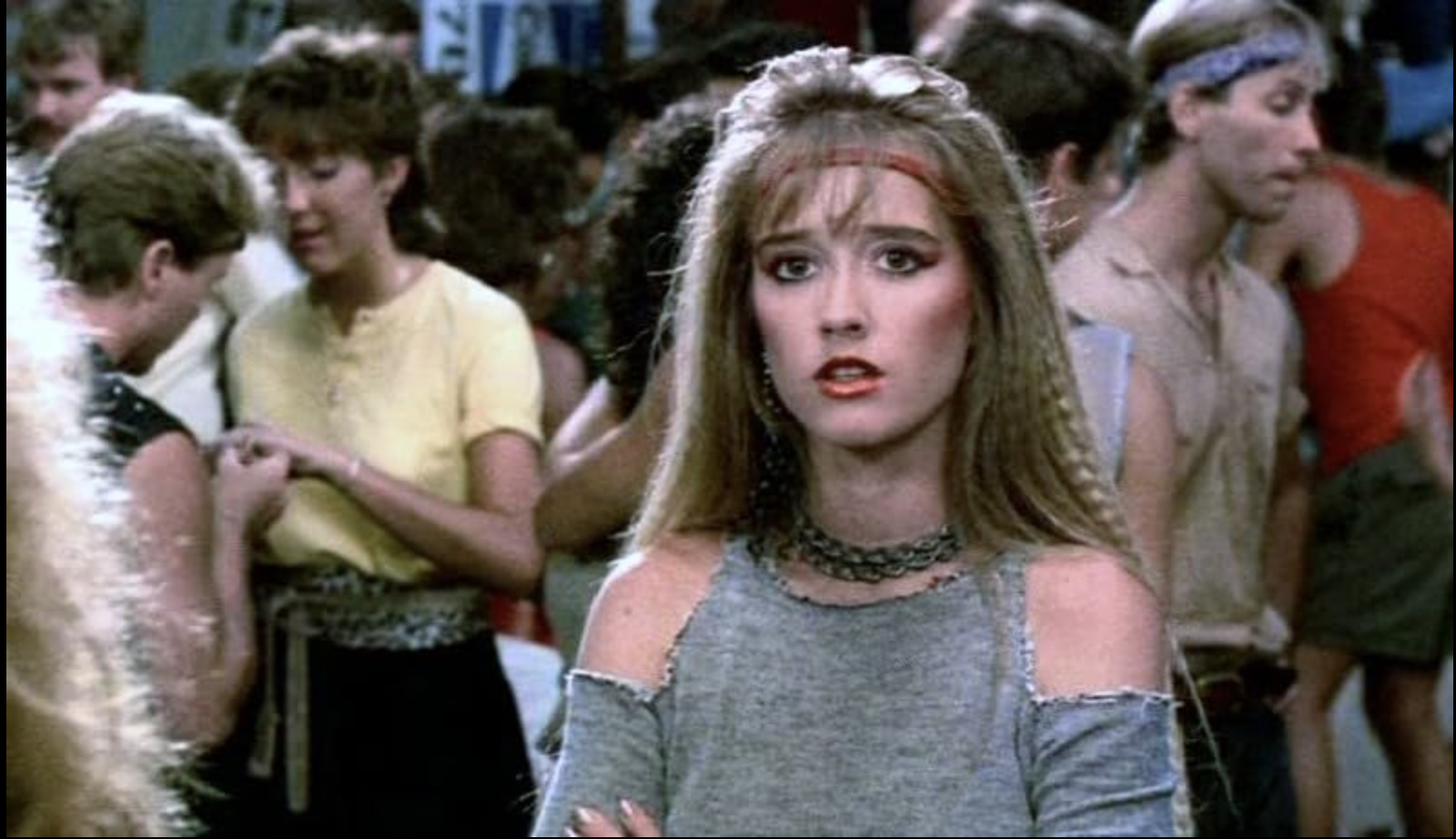
From Club Lingerie to the Screen
The movie reportedly grew out of producer Donald P. Borchers’ fascination with the New Romantic scene surrounding Hollywood’s Club Lingerie.
That’s an important piece of the puzzle.
Borchers wasn’t simply looking for another teenage gang picture. He was interested in the collision between music, fashion and youth culture. After seeing an R&B performance at the club, he began imagining a story about a kid who suddenly finds himself on the wrong side of the economic divide.
That became Morgan.
And the idea of pairing him with a tough, independent girl became Frankie.
Even the title tells you something about the movie’s personality.
It’s Tuff Turf.
Not Tough Turf.
Because apparently regular spelling wasn’t sufficiently 1985.
The screenplay was written by Jette Rinck with remarkable speed, reportedly taking less than a month to complete.
The resulting movie feels like that sometimes.
There is a lot happening here.
Maybe too much.
But there is also an unmistakable sense that the filmmakers were trying to bottle a very specific moment in Los Angeles youth culture before it disappeared.
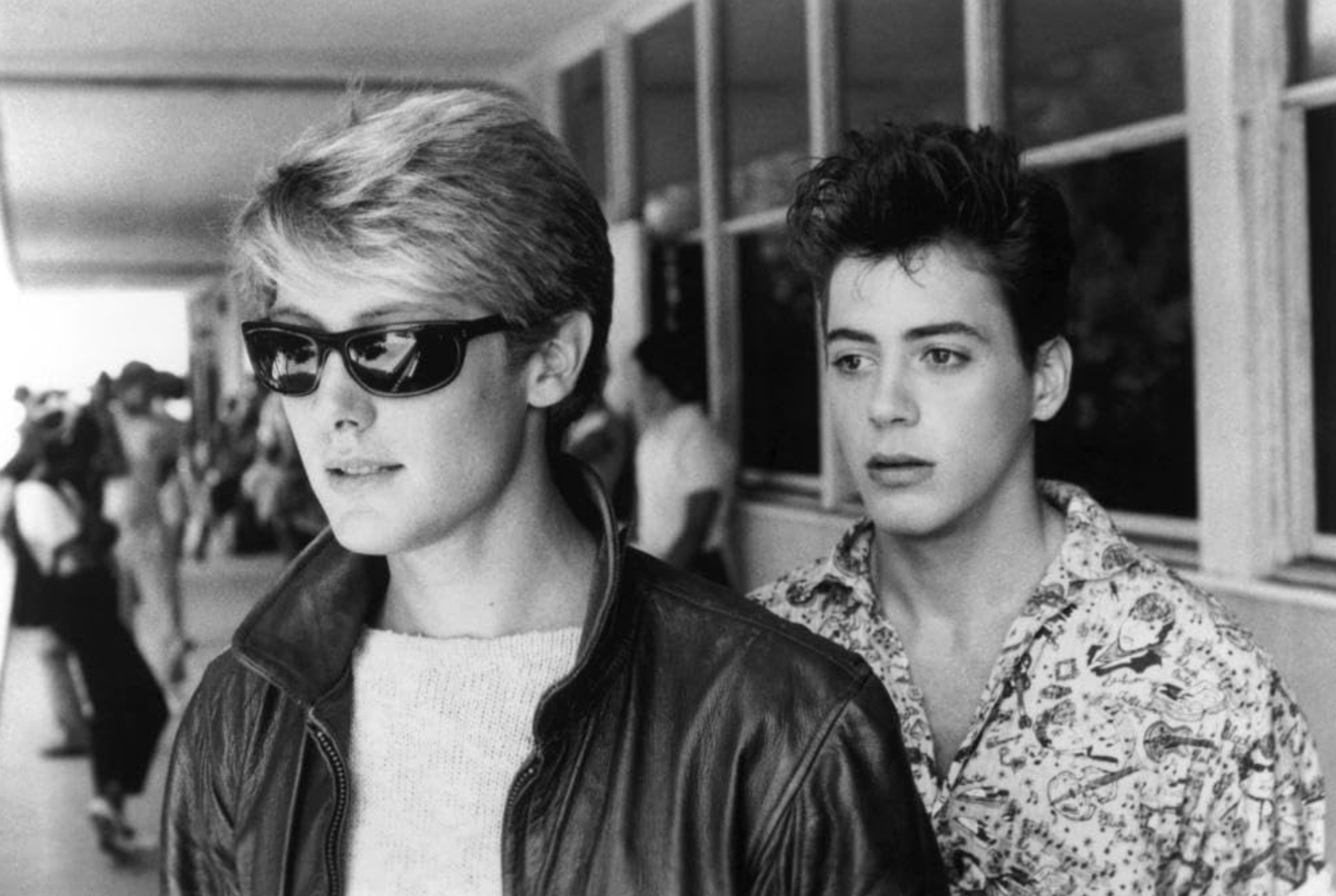
Before They Were Stars
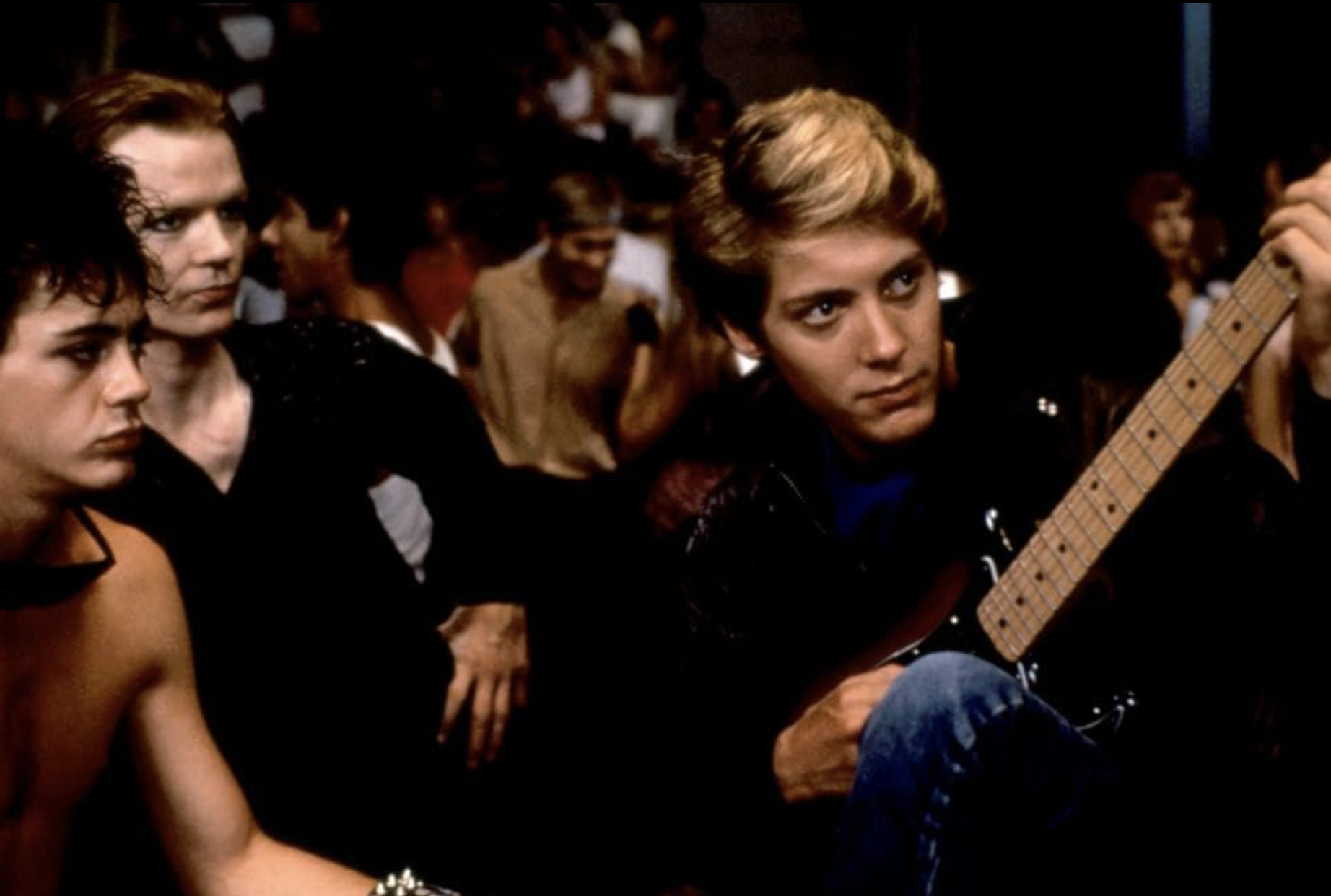
One of the great pleasures of watching Tuff Turf today is the cast.
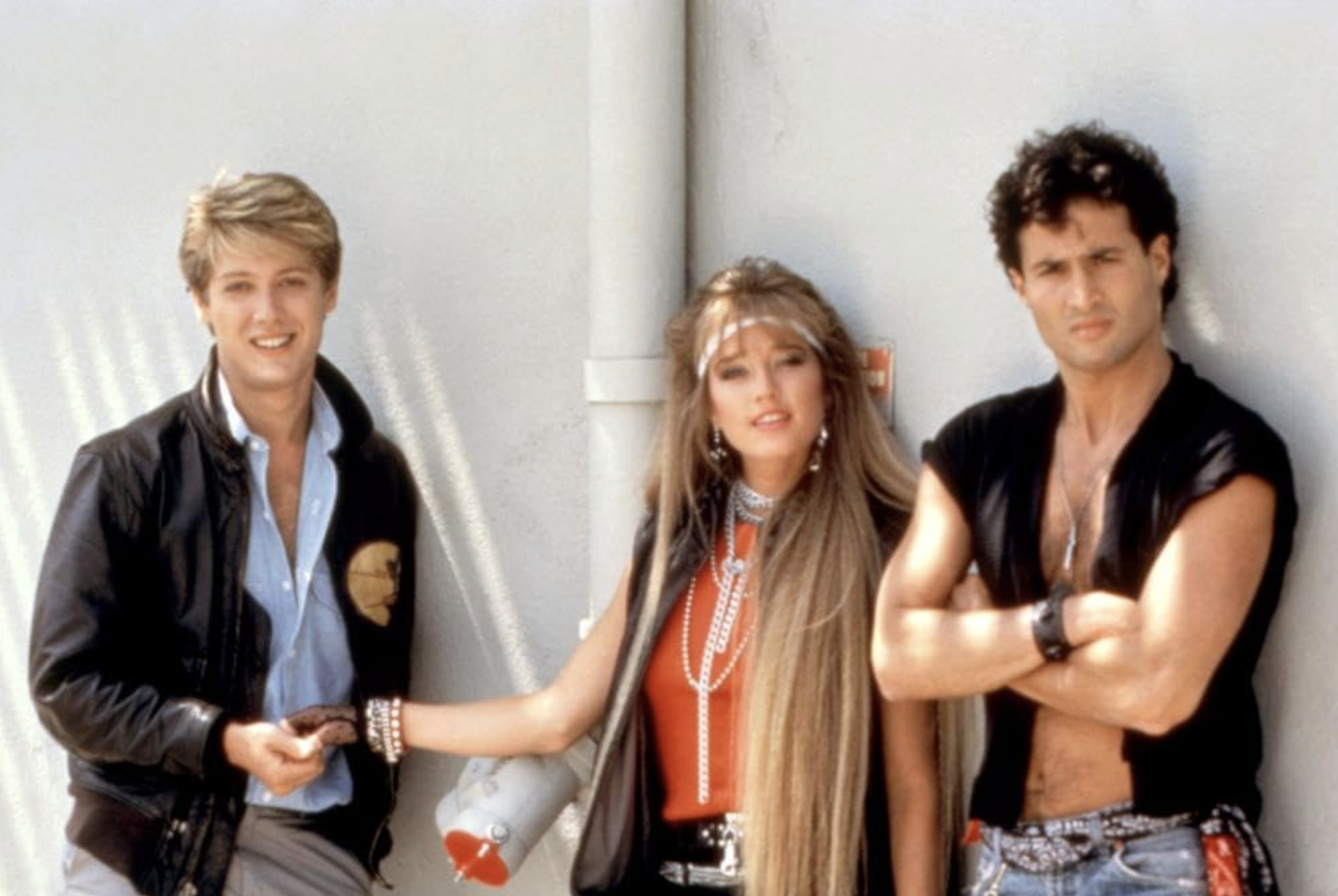
James Spader is already fascinating.
He’s not yet the cold, sophisticated provocateur he would become, but you can see the beginnings of that persona. Morgan has an arrogance that never completely disappears, even when circumstances force him to adapt.
And then there’s Robert Downey Jr.
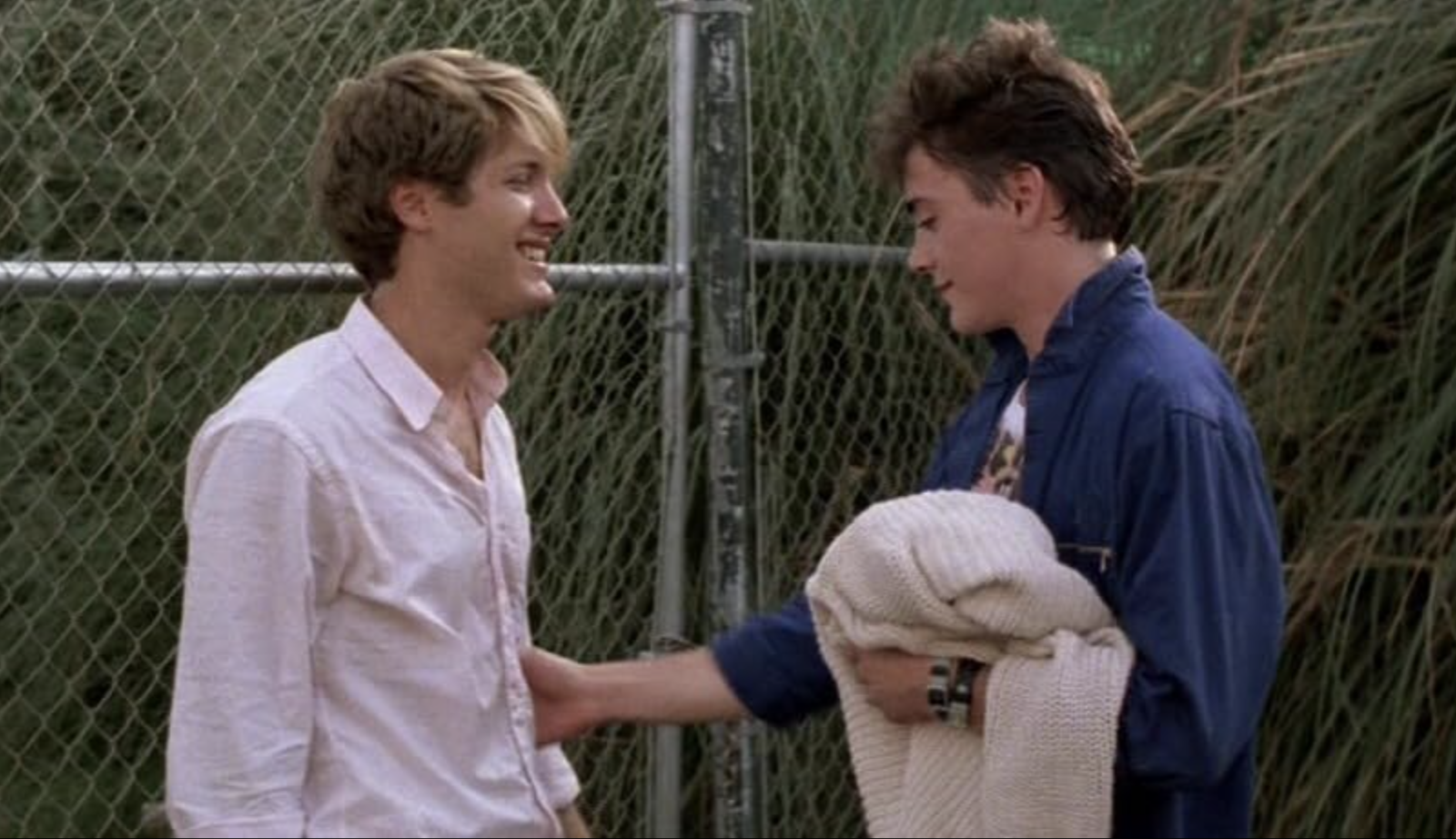
He’s Jimmy Parker, a charismatic member of Morgan’s new social circle, and Downey has the kind of natural screen presence that makes it immediately obvious why Hollywood was going to notice him.
He wasn’t yet a superstar.
He wasn’t even close.
But the energy is already there.
Downey reportedly came into the production after Crispin Glover became unavailable, and it’s difficult to imagine the role without him now. He fits perfectly into the movie’s strange ecosystem of punk attitude, teenage bravado and exaggerated 1980s cool.
Watching Spader and Downey together feels a little like discovering a time capsule.
You know what these actors are going to become.
The movie doesn’t.
A $3 Million Gamble
New World Pictures wasn’t exactly operating with blockbuster money.
Tuff Turf was made for around $3 million, which was hardly pocket change but was modest compared with the increasingly enormous budgets being thrown at Hollywood’s major productions.
There were apparently doubts about whether the project should move forward, particularly after other youth-oriented films struggled.
That’s understandable.
Teen movies were everywhere by the middle of the decade.
The difference was that the biggest hits had begun establishing recognizable formulas and stars.
The Karate Kid had become a phenomenon.
Tuff Turf was something stranger.
It didn’t have the same clean inspirational arc.
It wasn’t really a sports movie.
It wasn’t quite a traditional gang picture.
It wasn’t a straightforward romance.
And it certainly wasn’t afraid to get weird.
That’s both its greatest strength and its biggest problem.
Los Angeles, Four Weeks at a Time
Principal photography took place during the summer of 1984, with locations around the San Fernando Valley and Redondo Beach helping provide the movie’s distinctly Southern California atmosphere.
The production had to work around the logistical complications created by the 1984 Summer Olympics in Los Angeles, which complicated location shooting and access throughout the city.
For a movie operating on a relatively small budget and a tight schedule, the result is surprisingly ambitious.
The cinematography by Willy Kurant gives the film a glossy but occasionally grimy appearance, while Jonathan Elias’ score helps push everything toward that unmistakably heightened 1980s atmosphere.
The soundtrack also contributes heavily to the movie’s identity, with music from artists including Marianne Faithfull and the Jim Carroll Band.
This isn’t background music.
The music is part of the movie’s bloodstream.
At times, Tuff Turf feels less like a traditional narrative than a collection of scenes assembled around an attitude.
And honestly?
That’s not necessarily a bad thing.
When the Movie Loses Its Balance
The problem is that the movie’s different personalities don’t always get along.
The romance wants one kind of movie.
The gang violence wants another.
The musical sequences want something else entirely.
And the filmmakers occasionally seem to believe that all three can occupy the same movie without any tonal consequences.
They can’t.
The result is an uneven experience that can move from genuinely threatening to almost cartoonish within minutes.
The violence can be surprisingly nasty.
Then the movie will suddenly become playful.
Then somebody starts dancing.
Then there’s a confrontation.
Then there’s another song.
It’s as though several different 1980s movies are fighting for control of the same reel of film.
But there’s something oddly endearing about that.
Because the movie isn’t cynical about any of it.
It genuinely seems to believe that all these things belong together.
That’s very 1980s.
The Critics Weren’t Buying It
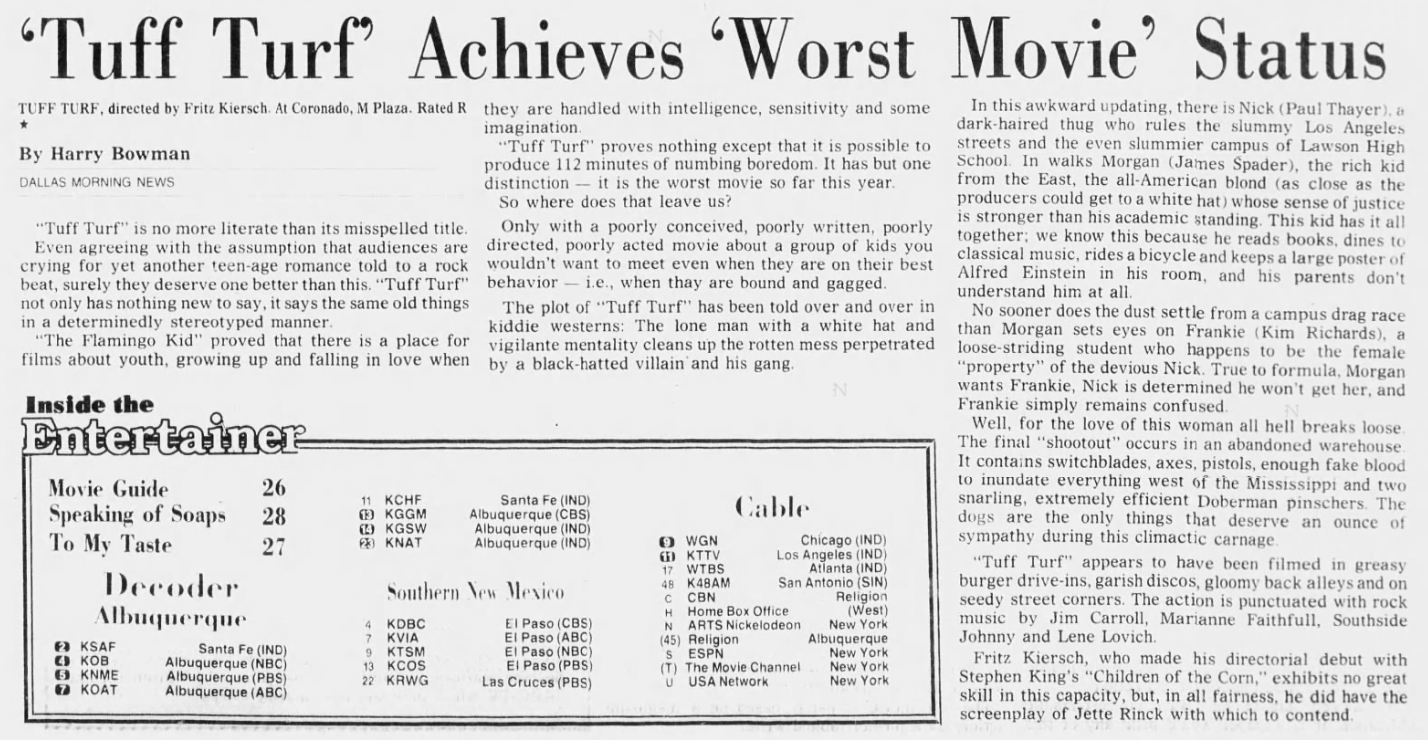
When Tuff Turf arrived in theaters in early 1985, it didn’t exactly receive a royal welcome from critics.
Roger Ebert was particularly dismissive, viewing the movie as a derivative exploitation exercise that didn’t possess enough humor or structural strength to overcome its clichés.
That criticism isn’t difficult to understand.
The movie absolutely is derivative.
Its DNA comes from Rebel Without a Cause, juvenile-delinquent pictures, rock musicals, teen romances and the increasingly stylized youth movies of the early 1980s.
But originality isn’t really the reason people remember Tuff Turf.
They remember it because it is so aggressively of its time.
The Box Office Never Found Its Turf
New World opened the movie in roughly 440 theaters.
It eventually earned about $9.37 million domestically.
That isn’t a disaster, particularly against a production budget of approximately $3 million, but it was hardly a cultural earthquake.
And the competition was brutal.
The mid-1980s were becoming one of the greatest periods in Hollywood history for commercially successful teen entertainment. Movies like The Karate Kid weren’t merely successful; they were becoming cultural phenomena.
Tuff Turf never had that kind of reach.
It arrived, made some noise, and disappeared.
But disappearance isn’t always the same thing as death.
Sometimes it’s the beginning of a movie’s second life.
The Movie That Time Forgot
Home video gave Tuff Turf something the theatrical marketplace never really did:
time.
Time to be rediscovered.
Time for viewers who weren’t around in 1985 to stumble across it.
Time for people to watch James Spader and Robert Downey Jr. before either actor had become the star audiences would eventually know.
And time for the movie’s spectacularly dated aesthetic to transform from a liability into an attraction.
That’s the funny thing about the 1980s.
The things that made some movies look ridiculous when they were released can eventually become the very things that make them fascinating.
The hair.
The clothes.
The music.
The attitude.
The neon.
The exaggerated violence.
The idea that every teenager in Los Angeles might be one leather jacket away from becoming the next great rock star.
All of it has become historical evidence.
A Perfectly Imperfect 80s Movie
Tuff Turf isn’t a masterpiece.
It isn’t even particularly close.
But I’ve never believed that every movie has to be a masterpiece to be worth remembering.
Some movies matter because they capture something.
Tuff Turf captures a very particular version of 1980s Los Angeles, when youth culture was becoming increasingly inseparable from music-video aesthetics and Hollywood was willing to throw almost anything at the teenage audience to see what stuck.
It also captures two future stars before we knew what they were going to become.
James Spader is already carrying that strange mixture of arrogance and vulnerability that would become one of his trademarks.
Robert Downey Jr. seems almost incapable of not being interesting whenever the camera finds him.
And around them is a movie that simply refuses to settle down.
Is it a gang movie?
A romance?
A teen drama?
A musical?
A fashion show?
A punk fantasy?
Yes.
It’s all of those things.
And that’s why Tuff Turf remains such an entertaining little artifact from the great teenage-movie explosion of the 1980s.
It may not have found the audience New World wanted in 1985.
But decades later, it has found something arguably more valuable.
A reason to be remembered.
And sometimes, for a forgotten movie, that’s enough.

About the Creator
Movies of the 80s
We love the 1980s. Everything on this page is all about movies of the 1980s. Starting in 1980 and working our way the decade, we are preserving the stories and movies of the greatest decade, the 80s. https://www.youtube.com/@Moviesofthe80s
Enjoyed the story? Support the Creator.
Subscribe for free to receive all their stories in your feed.
Comments
There are no comments for this story
Be the first to respond and start the conversation.