
MOVIES OF THE 80s: 'FATSO' (1980) A Forgotten Starring Role for Dom Deluise
Anne Bancroft’s Bittersweet, Uncomfortable Search for Appetite, Love, and Self-Acceptance

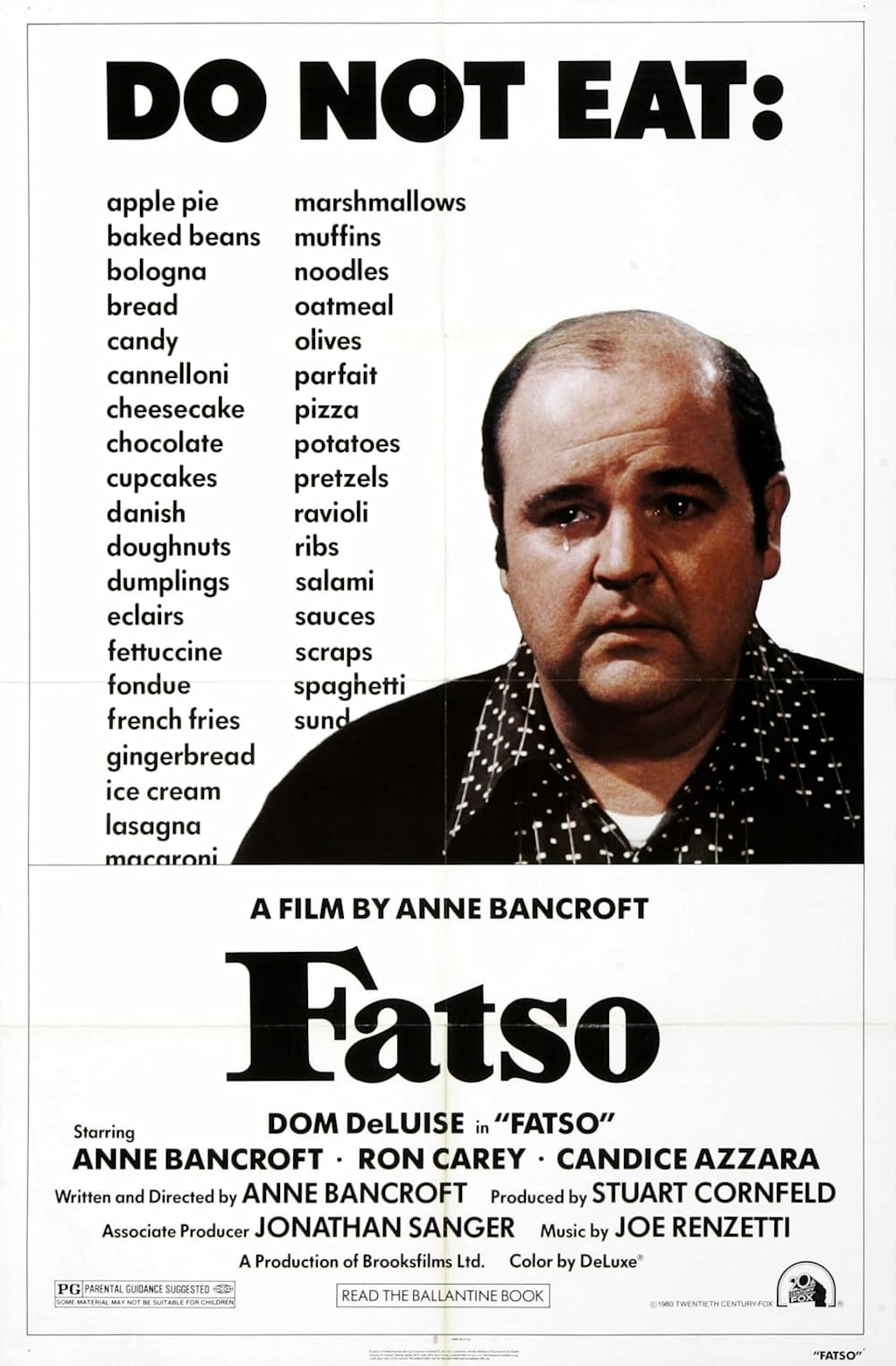
There are certain movies that seem almost impossible to imagine being made by a major Hollywood studio today.
Not because the story is particularly outrageous, but because the movie is willing to sit with something uncomfortable. It doesn’t have an easy hero. It doesn’t have a conventional transformation. And it isn’t particularly interested in making its central character’s problems either inspirational or funny enough to make them painless.
Anne Bancroft’s Fatso is one of those movies.
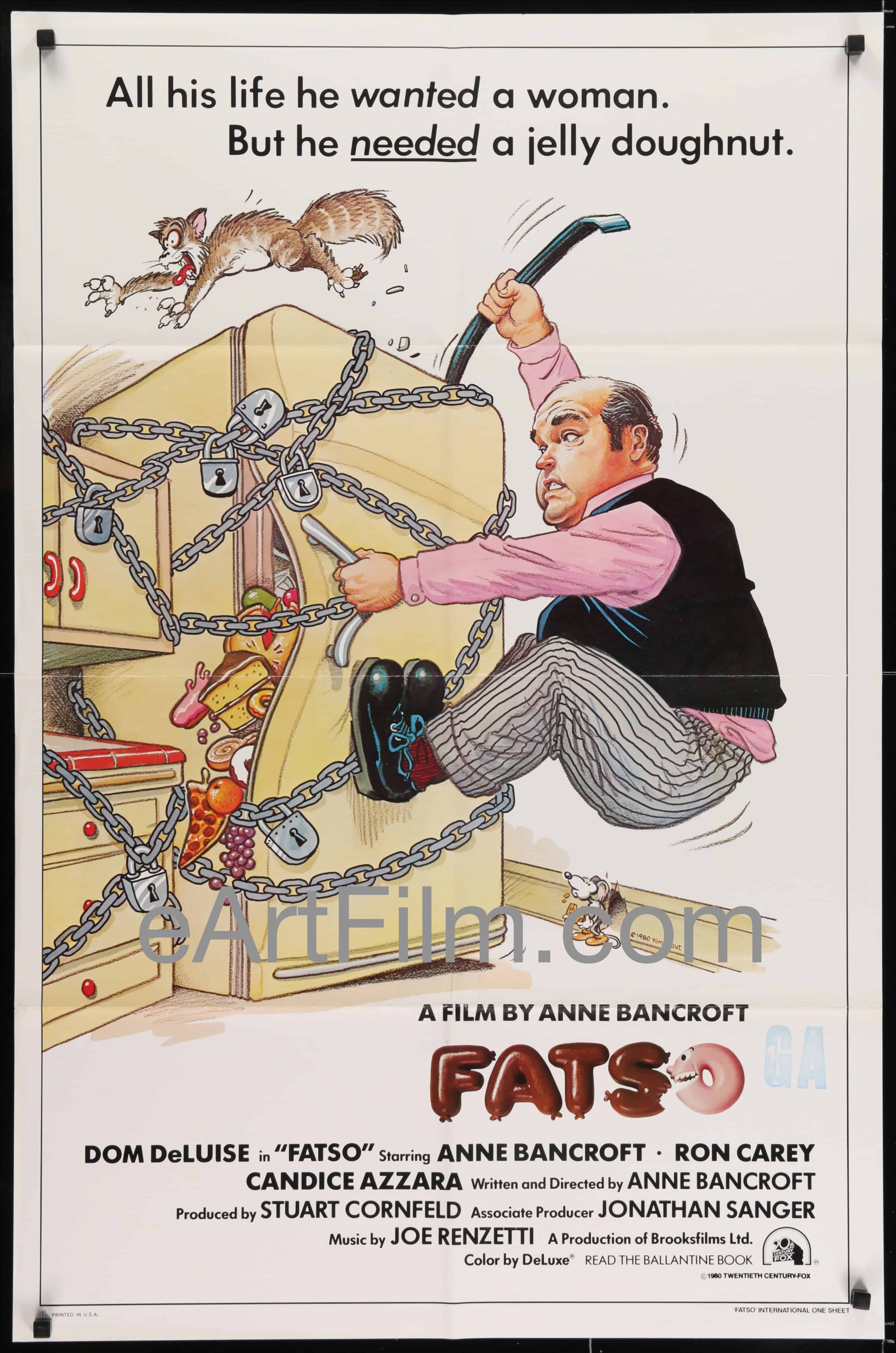
Released in 1980, the film stars Dom DeLuise as Dominick DiNapoli, an overweight bachelor whose life has become increasingly defined by food, family expectations, loneliness, and a desperate desire to find someone who might love him. Bancroft wrote and directed the film, drawing heavily from her own Italian-American background and using the DiNapoli family as a fictionalized reflection of the culture in which she grew up.
The result is an unusual mixture of comedy, family drama, romance and an examination of compulsive eating.
It is also one of the more fascinating directorial debuts of the early 1980s.
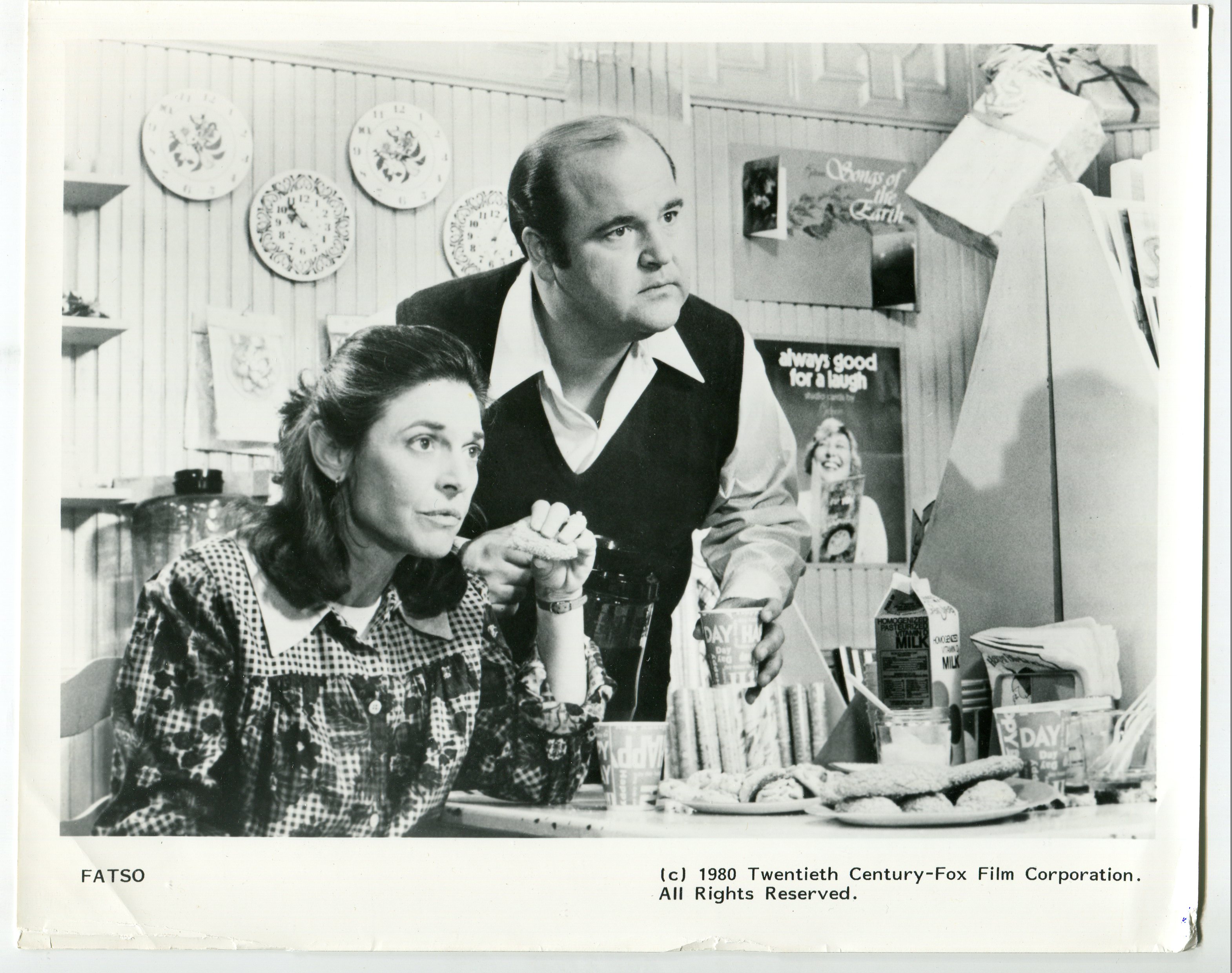
A Story That Hit Close to Home
Fatso began as a short film Bancroft developed through the American Film Institute’s Directing Workshop for Women in the late 1970s.
The project eventually expanded into a feature screenplay, allowing Bancroft to explore something much more personal than a conventional romantic comedy.
Food is everywhere in Fatso. It is comfort, celebration, family, tradition and, eventually, something closer to an addiction.
That distinction is important.
Dominick isn’t simply the stereotypical “fat guy” who exists so everyone else can make jokes about him. His relationship with food is connected to loneliness and emotional repression. His family loves him, but that love is frequently expressed through food and an almost suffocating concern about his personal life.
Bancroft understood that world intimately.
The surname DiNapoli was borrowed from her mother’s maiden name, giving the film an additional autobiographical thread. The Italian-American household isn’t merely background decoration. It is part of the movie’s DNA.
For Bancroft, food was culture.
For Dominick, it had also become a prison.
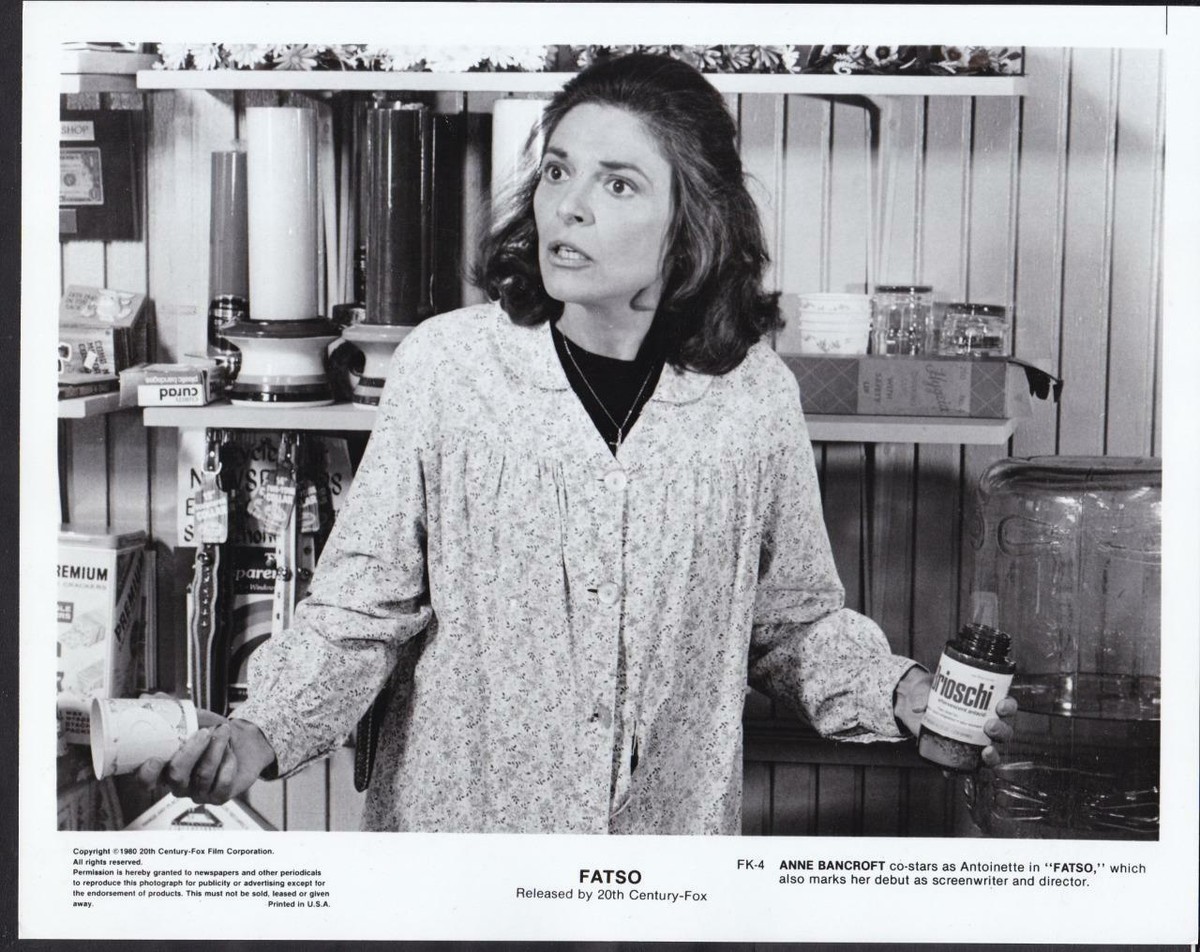
Anne Bancroft Behind the Camera
What makes Fatso particularly significant is that Bancroft wasn’t simply starring in or producing someone else’s story.
She wrote it.
She directed it.
And she was doing so at a time when women directors remained an extraordinary rarity in the American film industry.
Fatso became the first production released under Mel Brooks’ newly established Brooksfilms banner, giving the project a personal connection to the Hollywood power couple. Brooks reportedly helped the film secure the backing of 20th Century Fox, with studio chief Alan Ladd Jr. giving the project the green light.
That combination gave Bancroft something relatively unusual for the era: the opportunity to make a deeply personal movie with the resources of a major studio behind it.
It wasn’t a typical Hollywood comedy.
And Bancroft wasn’t interested in making one.
From Hollywood to New York
Filming began in April 1979, with production taking place both on the 20th Century Fox lot and in New York City.
Bancroft wanted the world surrounding Dominick to feel authentic, and that attention extended to some surprisingly specific details.
According to accounts of the production, she insisted that pastries be brought in from the East Coast because she wanted the food on screen to resemble the food she remembered from her own childhood.
That might seem like a minor production anecdote.
It really isn’t.
Food is practically another character in Fatso, and Bancroft understood that getting those details right mattered.
The production also broke ground behind the camera. Cinematographer Brianne Murphy became the first woman to receive a director of photography credit on a major union feature, another small but important piece of Hollywood history attached to a movie that is otherwise easy to overlook.
The reported budget was around $3 million, making Fatso a relatively modest production even by the standards of its day.
Dom DeLuise Gets a Chance to Be Vulnerable
Dom DeLuise was already well established as a comic performer when he made Fatso.
Audiences knew the broad physical comedy. They knew the exaggerated reactions. They knew the larger-than-life personality.
Bancroft wanted something different.
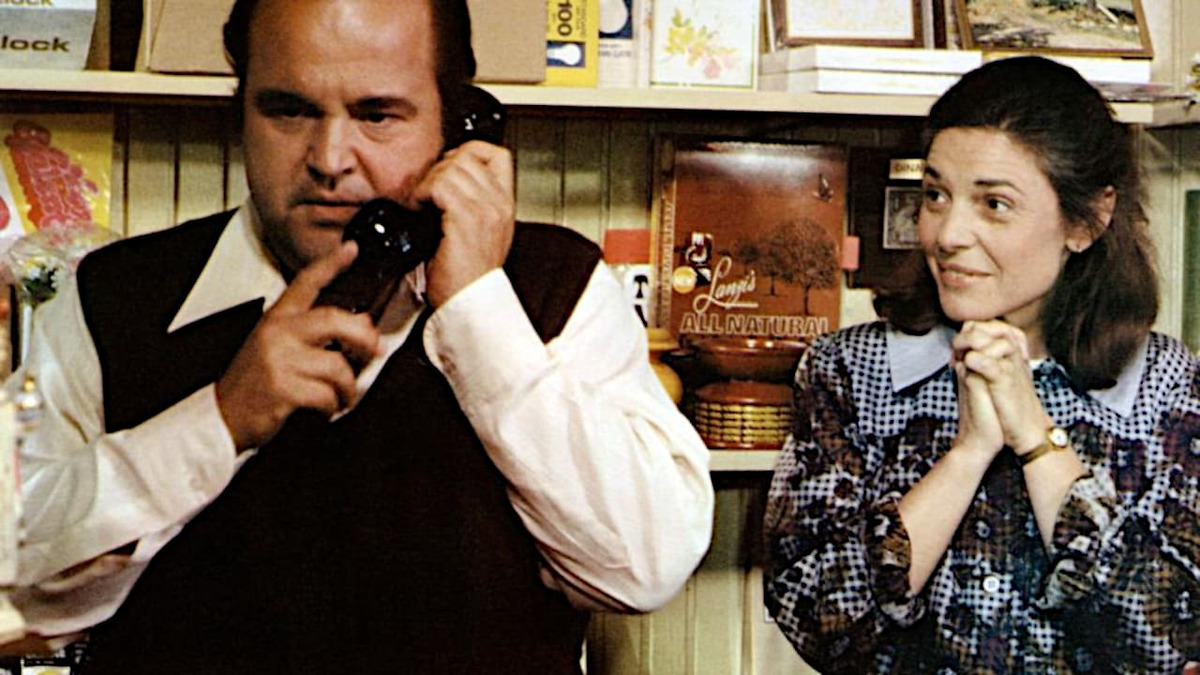
As Dominick, DeLuise is still funny, but the comedy is constantly competing with something much sadder. He is a man who has spent years being defined by his weight and who has gradually begun to believe that definition himself.
That makes his romantic storyline particularly important.
Dominick isn’t simply looking for a diet.
He’s looking for a life.
He’s looking for companionship.
And perhaps most importantly, he’s looking for a reason to believe that he is worthy of being loved exactly as he is.
DeLuise gives the character a surprising amount of warmth, resisting the temptation to turn Dominick into a walking punchline.
Ron Carey and Candice Azzara round out the ensemble, helping Bancroft create a family environment that can be affectionate one moment and suffocating the next.
When Comedy and Drama Collide
This is also where Fatso runs into its biggest problem.
The movie wants to be several things at once.
It wants to be a broad ethnic comedy.
It wants to be a romantic story.
It wants to examine compulsive eating.
It wants to be a family drama.
And it wants to make a larger statement about self-worth.
Those ambitions don’t always coexist comfortably.
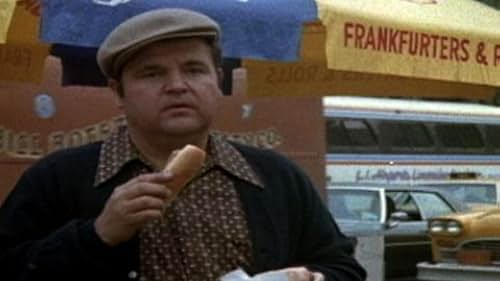
One moment, Fatso is playing its characters and situations for laughs. The next, it is asking the audience to confront the genuine emotional pain underneath Dominick’s behavior.
That tonal instability frustrated many contemporary critics.
Roger Ebert was particularly unimpressed, arguing that the film never completely decided whether obesity was supposed to be treated as tragedy or farce. Janet Maslin similarly found the humor unfocused and felt the film leaned more heavily into sentimentality than comedy.
Variety was also critical of the movie’s sluggishness and its failure to make the most of its cast, while Gene Siskel complained that the screenplay didn’t provide enough opportunity for either Bancroft or DeLuise to demonstrate their full abilities.
The criticism wasn’t necessarily that Fatso had nothing to say.
It was that the movie didn’t always know how to say it.
A Movie That Refused to Disappear
Fatso wasn’t a major theatrical success.
Released on February 1, 1980, it arrived in a crowded marketplace and never approached the commercial heights of the year’s biggest studio releases. Its domestic box-office performance was modest, with reported grosses generally falling somewhere in the $7.6 million to $8.7 million range.
And then, as happens with so many movies from the era, time did something interesting.
It gave Fatso another chance.
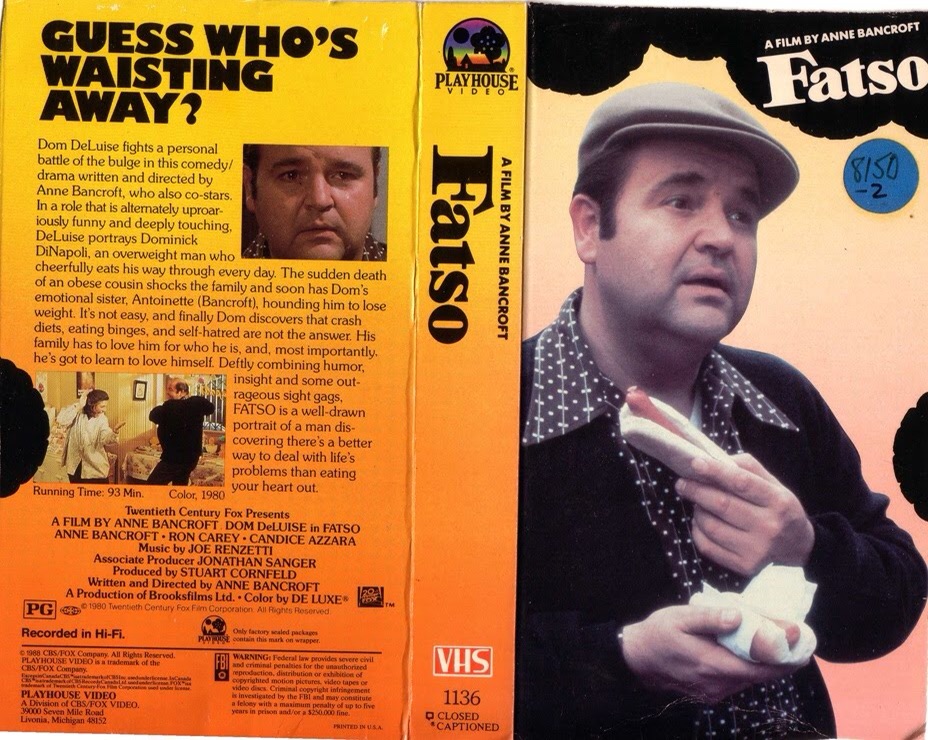
Home video allowed the movie to find audiences who might never have encountered it in theaters. Later releases, including a 2019 Blu-ray from Shout! Factory, helped bring Bancroft’s unusual directorial effort back into circulation.
That doesn’t mean Fatso suddenly became a lost masterpiece.
It didn’t.
But it did become something perhaps more valuable.
A time capsule.
An Imperfect Movie With a Genuine Heart
There is an understandable temptation to dismiss Fatso because it doesn’t completely work.
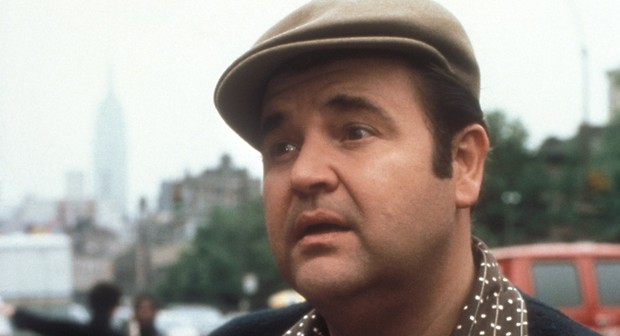
The tonal shifts can be jarring. Some of the comedy has aged better than other parts. The sentiment occasionally overwhelms the drama. And Bancroft’s ambitions as a filmmaker aren’t always matched by the screenplay.
But there is something admirable about the attempt.
Fatso was trying to talk about compulsive eating and body image at a time when mainstream Hollywood was still perfectly comfortable making overweight characters the butt of the joke.
Bancroft wanted the audience to laugh at Dominick.
But she also wanted us to care about him.
More importantly, she wanted us to understand him.
That’s what makes the film worth revisiting.
The Movie Behind the Movie
Perhaps the most fascinating thing about Fatso isn’t whether it succeeds as a comedy.
It’s what the movie represents.
This was Anne Bancroft stepping behind the camera to tell a story rooted in her own cultural background. It was a woman director making a personal studio-backed feature at a time when that was still unusual. It gave Dom DeLuise an opportunity to move beyond the broad comic persona that had defined so much of his career.
And it attempted to treat food as something more complicated than a source of jokes.
Fatso isn’t polished enough to become a classic.
It isn’t consistently funny enough to become a great comedy.
And it isn’t emotionally disciplined enough to become the great character drama Bancroft may have envisioned.
But sometimes the movies that stay with us aren’t the perfect ones.
Sometimes they’re the strange ones.
The movies that reach for something bigger than their execution can quite manage.
Fatso is one of those movies.
It is messy, sentimental, funny, uncomfortable and deeply human.
And somewhere beneath all the food, family and laughter is a simple idea that still resonates more than four decades later:
Being loved begins with believing you’re worth loving.

About the Creator
Movies of the 80s
We love the 1980s. Everything on this page is all about movies of the 1980s. Starting in 1980 and working our way the decade, we are preserving the stories and movies of the greatest decade, the 80s. https://www.youtube.com/@Moviesofthe80s
Enjoyed the story? Support the Creator.
Subscribe for free to receive all their stories in your feed.
Comments
There are no comments for this story
Be the first to respond and start the conversation.