
Movie Review: 'Nightbitch' is a Must See Movie
Amy Adams and Marielle make for a dynamic duo in Nightbitch



Nightbitch
Directed by Marielle Heller
Written by Marielle Heller
Starring Amy Adams, Scoot McNairy
Release Date December 12th, 2024
Published December 28th, 2024
What I love about Nightbitch is the raw honesty that drives so much of Amy Adams’ performance and the script of Nightbitch. The film is about the sacrifices women make to become a mother, beyond the physical toll and into the intellectual and emotional toll. Women don’t get the chance to talk about these feelings as it can seem, on a very base level, that they aren’t happy to be mothers or that they didn’t participate in the choice of becoming a mother. It’s a nuanced conversation that some, mostly men, aren’t comfortable with.
Nightbitch doesn’t shy away from it. Instead, writer-director Marielle Heller takes Rachel Yoder’s bestselling novel, and her remarkably unique premise, and builds on it with Amy Adams’ raw performance and a visual style that compliments the unusual metaphor at the heart of the movie. If you’re not aware, in Nightbitch, Amy Adams turns into a dog at night, partially at first, with a full-on transition as the story progresses. She doesn’t remain a dog, it’s merely a part of her, an instinctual, animalistic element of her Mother character that represents aspects of herself that have lain dormant.
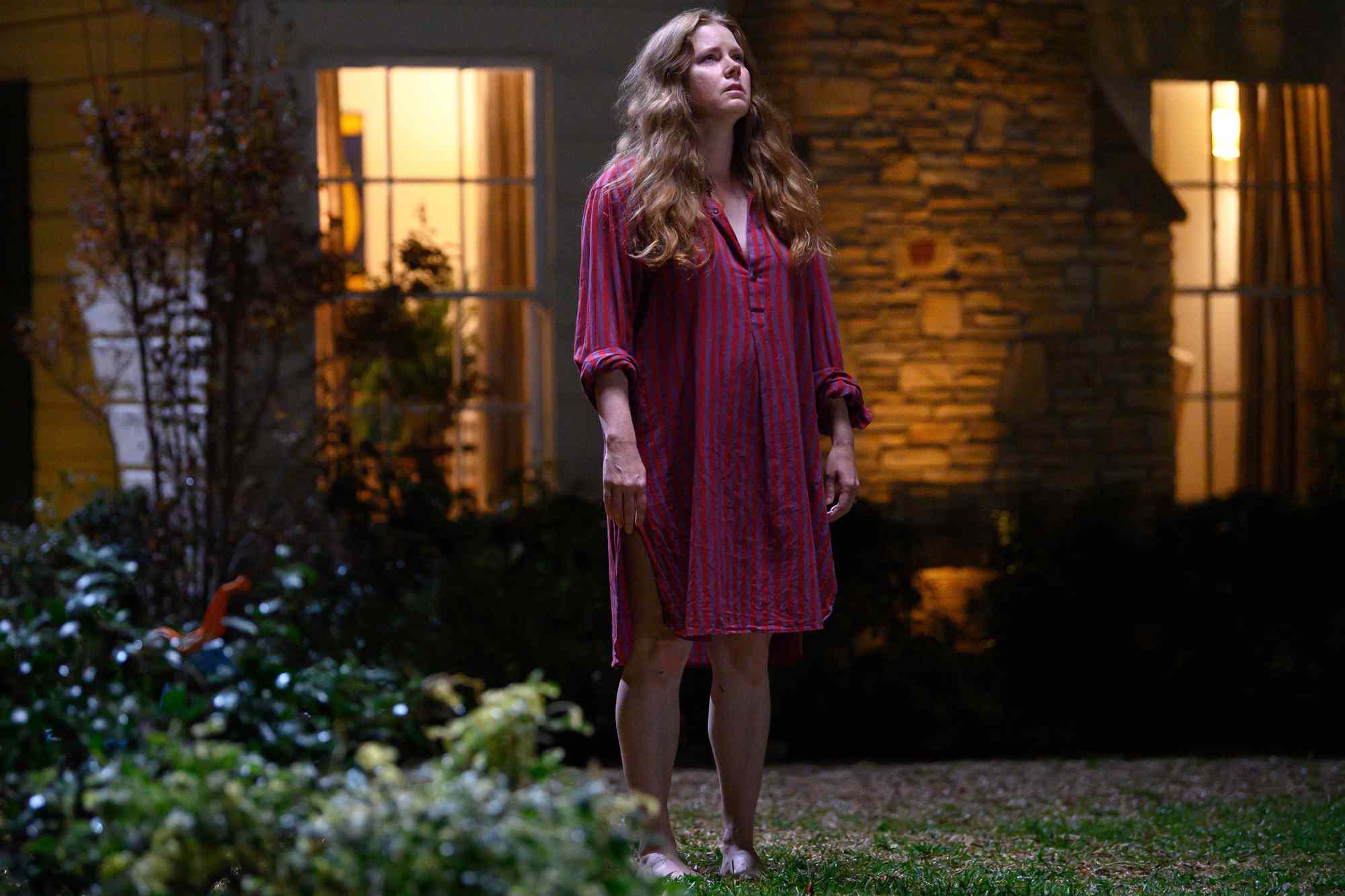
Mother (Adams) was an artist before she gave up a life of gallery openings and late night gatherings with fellow artists to compare portfolios and catty asides about the artists you don’t like. It was a life she enjoyed and was successful in. She gave that up after falling in love with her husband (Scoot McNairy) and moving to the suburbs to raise a child. She assumed that this would be a 50/50 partnership, giving each of them the opportunity to work and share the load at home. But, as their life and marriage progressed, more and more of the work of raising their baby fell on Mom while her Husband took out of town trips for work only to come home and play videogames.
Her growing frustration with her marriage coincides with strange incidents that seem like dreams at first. Neighborhood dogs appear at her door at night, looking to her as if she were their absent alpha. Another night, she finds herself in the yard digging holes with her bare hands. Eventually, she sees herself growing a tail and it becomes clear that this is more than a dream, it’s a psychosis or perhaps, it’s really happening, her reaction to the growing frustration of daily life, her marriage, and the things she gave up to be a wife and a mother.

The turning into a dog may not be a one to one use of metaphor. It’s a little more abstract than that. The freedom she finds in giving into her instincts and chasing after things on a base, instinctual level provides an outlet for the anger and frustration of her daily life. Becoming the alpha dog gives Mother the confidence and determination to take hold of her life, confront her husband, and find the balance she needs between the life of a mother and the desires of a talented, ambitious woman and artist.
Amy Adams’ is one of our finest actors. Her performance here is brave, bold, funny and smart. She’s navigating a lot of complicated emotions and expressing thoughts about motherhood that aren’t easy to say. She resents some of what she’s given up to be what other people consider a ‘good mother.’ She is frustrated with the demands of motherhood and she feels guilty for getting frustrated. She loves her son but he is also a symbol of the things she gave up to be a mother. That’s a complicated emotional space that Nightbitch navigates with nuance, humor, and a complicated metaphor.
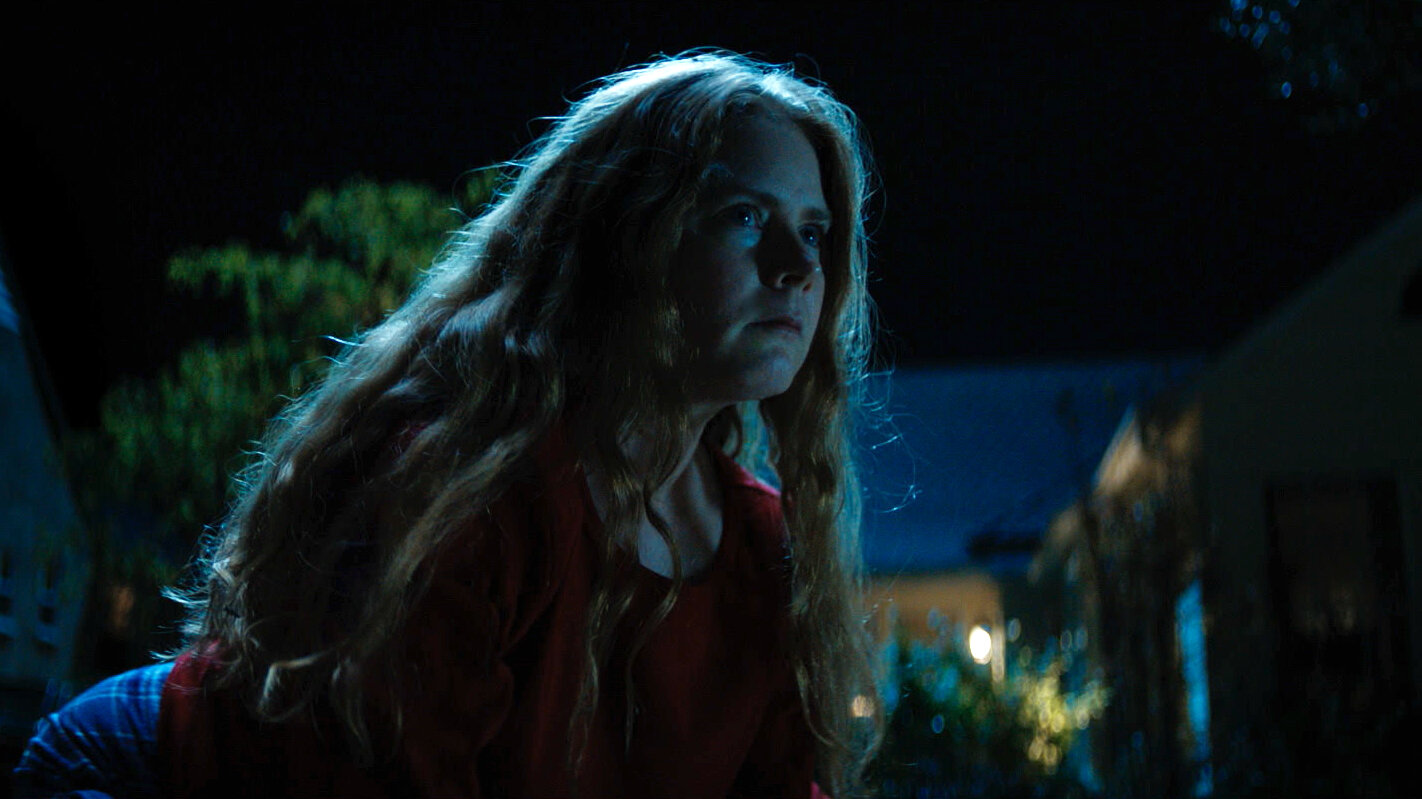
Marielle Heller directs Nightbitch with a deft hand. She gives Amy Adams a strong platform from which to explore her character while providing a visual palette that does well to underline the strange and fascinating journey of the character. The color palette wafts between muted beiges and and the often garish colors of children’s toys and clothes to stronger dark colors, brown, black and gray. It’s subtle but substantial. The cinematography is hazy in the scenes at home where Mother is tired all the time and notably more crisp during her nightly outdoor excursions. Again, subtle but with substance.
In the end, Nightbitch is valuable as a movie that gives a woman a platform to express something other than unending gratitude over the privilege to be a parent. Being a mom is not a black and white scenario, there is good and bad. There are rewards and deficits. That Nightbitch engages the subject with an eye towards being understanding toward its symbol of motherhood, makes it more honest and engaging than so many other movies that make the challenges of motherhood into sitcom fodder.

Find my archive of more than 20 years and more than 2000 movie reviews at SeanattheMovies.blogspot.com. Find my modern review archive on my Vocal Profile, linked here. Follow me on Twitter at PodcastSean. Follow the archive blog on Twitter at SeanattheMovies. And join me on my new favorite social media site, BlueSky. Listen to me talk about movies on the I Hate Critics Movie Review Podcast. If you have enjoyed what you have read, consider subscribing to my writing on Vocal. If you’d like to support my writing, you can do so by making a monthly pledge or by leaving a one time tip. Thanks!
About the Creator
Sean Patrick
Hello, my name is Sean Patrick He/Him, and I am a film critic and podcast host for the I Hate Critics Movie Review Podcast I am a voting member of the Critics Choice Association, the group behind the annual Critics Choice Awards.
Enjoyed the story? Support the Creator.
Subscribe for free to receive all their stories in your feed. You could also become a paid subscriber, letting them know you appreciate their work.
Comments
There are no comments for this story
Be the first to respond and start the conversation.