
Mission: Impossible: The Espionage Classic That Launched Ethan Hunt Into Cinema
Thirty years later: inside the masks, moles and betrayals that defined the first Impossible Mission.

Mission Briefing: Plot Analysis
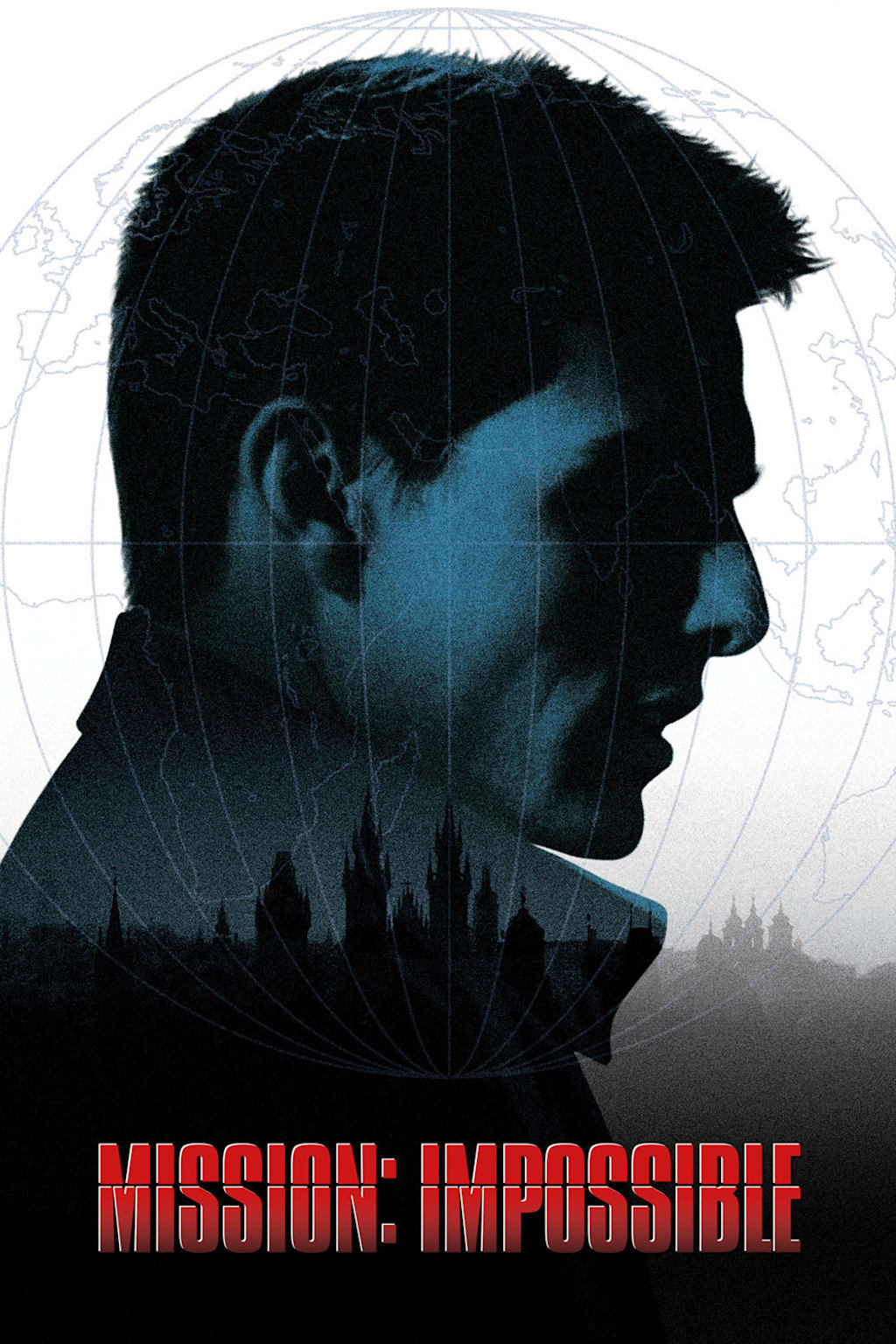
Ethan Hunt finds himself trapped in a carefully constructed conspiracy after a covert IMF (Impossible Mission Force) operation goes catastrophically wrong in Prague. When a mission to retrieve a stolen NOC (Non-Official Cover) list is compromised, Hunt’s entire team is killed in the field, leaving him the sole survivor. Branded a traitor and suspected of orchestrating the disaster, he is officially disavowed by the IMF and placed at the center of an international manhunt. Forced into hiding, Hunt must uncover the truth behind the betrayal, evade CIA surveillance, and operate in the shadows of a world where every ally could be a double agent, and nothing is what it seems.
IMF Personnel File: Agent Performance Analysis
Tom Cruise delivers a breakthrough performance as Ethan Hunt, grounding the character in agility, precision, and rapid improvisation under pressure. Rather than portraying a conventional action hero, he presents Hunt as a field operative defined by adaptability, constantly navigating shifting intelligence, surveillance gaps, and high-stakes uncertainty.
Jon Voight plays Jim Phelps with composed authority and veteran confidence, embodying the ideal IMF field leader whose experience and reputation command immediate trust. His presence reinforces the film’s themes of loyalty, protocol, and operational secrecy within intelligence work.
Ving Rhames brings steady charisma to Luther Stickell, portraying a capable hacker and dependable field asset whose technical skill and loyalty make him an essential part of Hunt’s survival. Emmanuelle Béart adds emotional complexity as Claire Phelps, balancing vulnerability with guarded intent, contributing to the film’s atmosphere of uncertainty and layered motivations.
The supporting cast strengthens the espionage framework with precision. Vanessa Redgrave’s Max operates as a detached intelligence broker navigating information networks with calm calculation, while Henry Czerny’s Eugene Kittridge delivers bureaucratic intensity as a CIA authority figure enforcing security and containment. Jean Reno’s Frank Krieger adds unpredictability as a professional operative driven by opportunity, and Kristin Scott Thomas provides grounding presence as Sarah Davies, highlighting the personal stakes behind the intelligence missions.
Mission File: Ethan Hunt Operations Report
One of the film’s most memorable early moments occurs during Ethan’s meeting with Eugene Kittridge, the CIA director, in a quiet restaurant. What begins as controlled interrogation quickly escalates into a desperate escape. Ethan realizes he is being cornered and uses a piece of exploding chewing gum to create a sudden diversion, enabling him to flee.
Another standout sequence is the CIA headquarters infiltration in Langley. In one of the most iconic stealth sequences in action cinema, Ethan suspends himself from the ceiling of a high-security vault to extract the NOC list. The tension intensifies when a technician unexpectedly enters the room, forcing Ethan to maintain absolute stillness and control to avoid detection, with even the slightest movement risking failure.
In Prague, the early operation involving a formal gathering sets the tone for the film’s espionage world. Ethan and his team operate in a volatile environment while protecting sensitive information, highlighting the precision and coordination required in covert missions.
The film culminates in a high-speed showdown aboard the TGV train. Ethan Hunt faces off against the true antagonist in a confined, rapidly moving environment, resulting in a final battle that blends physical struggle with mechanical danger, bringing the espionage plot to a tense and decisive close.
Production Dossier: The Making of Mission: Impossible
Mission: Impossible features a number of notable behind-the-scenes stories that shaped its final form and tone as a modern espionage thriller.
One notable fact is that Tom Cruise personally selected Brian De Palma to direct the film. According to reports from Yardbaker, Cruise met with De Palma while having dinner with Steven Spielberg, later going home to watch several of De Palma’s movies before making his decision. This led to the director being brought on board to shape the film’s distinct visual style.
Another early plan for the film included a love triangle between Ethan Hunt, Jim Phelps, and Phelps’ wife Claire. However, George Lucas — who was a friend of De Palma at the time — suggested removing the subplot, arguing it would distract from the central espionage narrative. De Palma agreed, streamlining the story.
Tom Cruise also influenced one of the film’s most iconic sequences: Ethan Hunt’s escape during the restaurant interrogation. Although a stuntman was originally intended to film the scene, De Palma was displeased with the results, so Cruise performed it himself, despite the significant risk involved.
Additionally, Apple played a major promotional role in the film’s production. At the time, the company was experiencing financial troubles and reportedly offered $15 million for producer placement, even though the featured device was not yet fully functional.
Intelligence Briefing: Thematic Analysis
The central theme of deception runs throughout the film, shaping both its structure and its depiction of espionage tradecraft. The use of masks and identity swaps becomes a visual representation of intelligence work, illustrating how field operatives rely on disguise, misdirection, and construction of identities to access classified information and manipulate outcomes. In this world, truth is fragile, and appearances are fabricated rather than trusted.
Closely tied to this is the theme of uncertainty and divided loyalty within intelligence networks. Ethan Hunt faces escalating scrutiny as questions arise about internal compromise within the IMF. This atmosphere of suspicion drives the narrative forward, as shifting perspectives and incomplete intelligence force both the characters and the audience to reassess what they believe. The film continually positions individuals in ways that suggest alignment or opposition, only to complicate those assumptions as the story unfolds.
A further key element is collaboration under high-stakes operational constraints. Despite the breakdown of trust and the fragmented nature of the operation, coordinated effort remains crucial. Field agents must rely on specialized skill sets, communication discipline, and rapid adaptation in order to achieve their objectives within a hostile intelligence environment.
Closing Intelligence Report
Mission: Impossible transformed a classic television series into a modern espionage thriller defined by deceit, covert operations, and surveillance. It reintroduced Ethan Hunt as a field operative navigating a world of intelligence manipulation, establishing the foundation for a long-running spy franchise. Over the next three decades, the series expanded in scale and ambition while retaining its core themes of trust and betrayal within global intelligence networks. The franchise concluded in 2025 with Mission: Impossible - The Final Reckoning, bringing Ethan Hunt’s journey to a definitive end while leaving the original installment as a landmark of espionage cinema.
About the Creator
TheScreenAnalyst
I am a passionate movie and TV enthusiast, devoted to analyzing storytelling, characters, visuals, and performances. I provide thoughtful critiques and insights, exploring both mainstream and independent works to engage audiences.
Enjoyed the story? Support the Creator.
Subscribe for free to receive all their stories in your feed.
Comments
There are no comments for this story
Be the first to respond and start the conversation.