
Mass Appeal (1984): The Jack Lemmon Movie You Probably Forgot
Before the 1980s became all about blockbusters, there were movies like Mass Appeal—small, thoughtful films that got lost in the noise.

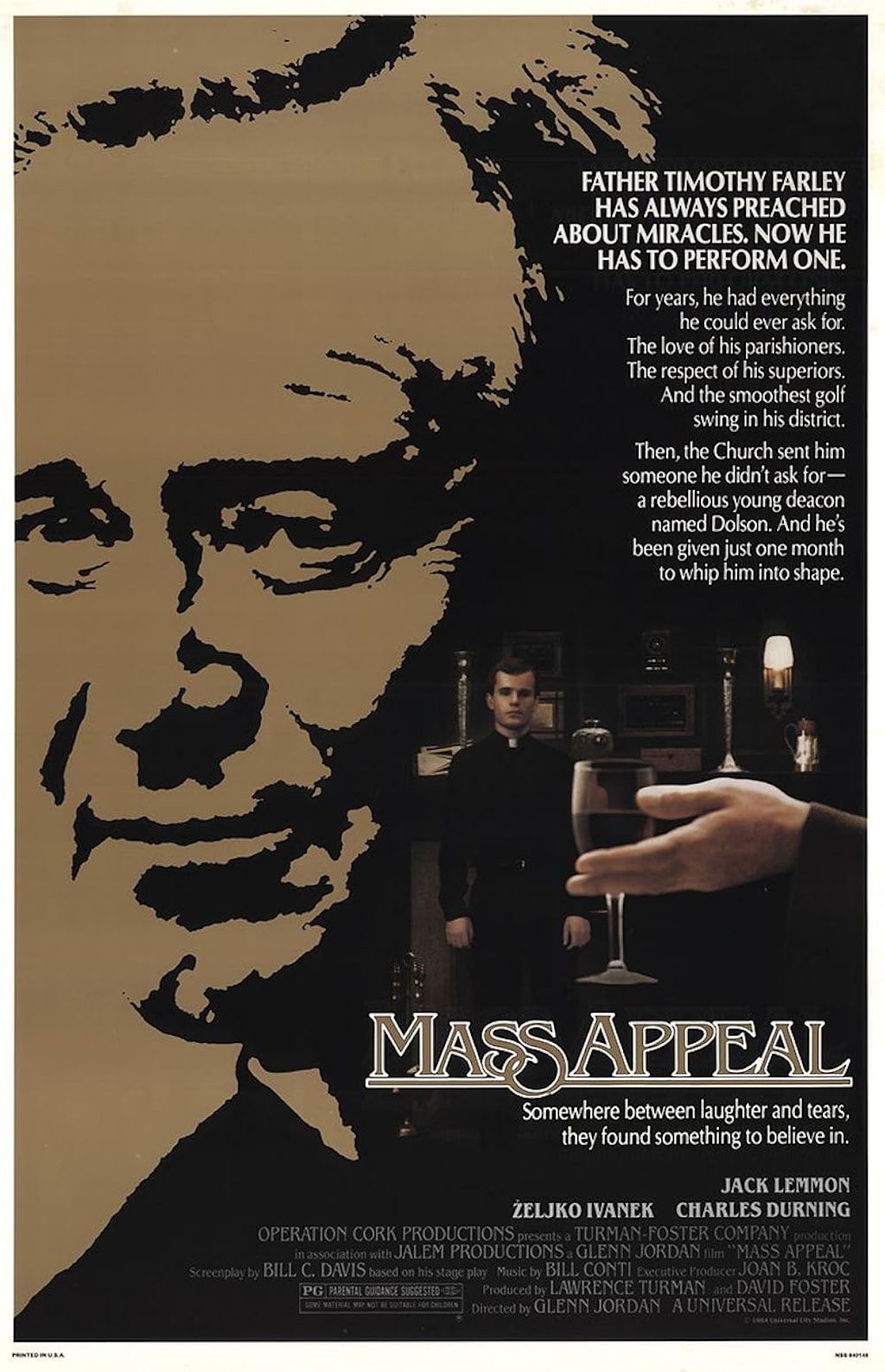
There is something almost strange about watching Mass Appeal today.
Not because the movie itself is particularly strange. Quite the opposite. It is quiet, thoughtful and deliberately old-fashioned, a character-driven drama built almost entirely around two people having an argument about faith, morality and what it means to do the right thing.
What’s strange is remembering that this was released in 1984.
Because 1984 was not exactly a quiet year at the movies.
This was the year of Ghostbusters, Beverly Hills Cop, The Terminator, Indiana Jones and the Temple of Doom, Gremlins, The Karate Kid, Footloose, Amadeus and This Is Spinal Tap.
And somewhere in the middle of all that came a movie about a Catholic priest who has become very good at telling people exactly what they want to hear.
Nobody was exactly lining up around the block.
That is a shame, because Mass Appeal is one of those forgotten 1980s movies that becomes more interesting the longer you think about it.
Jack Lemmon Plays a Priest Who Has Figured Everything Out
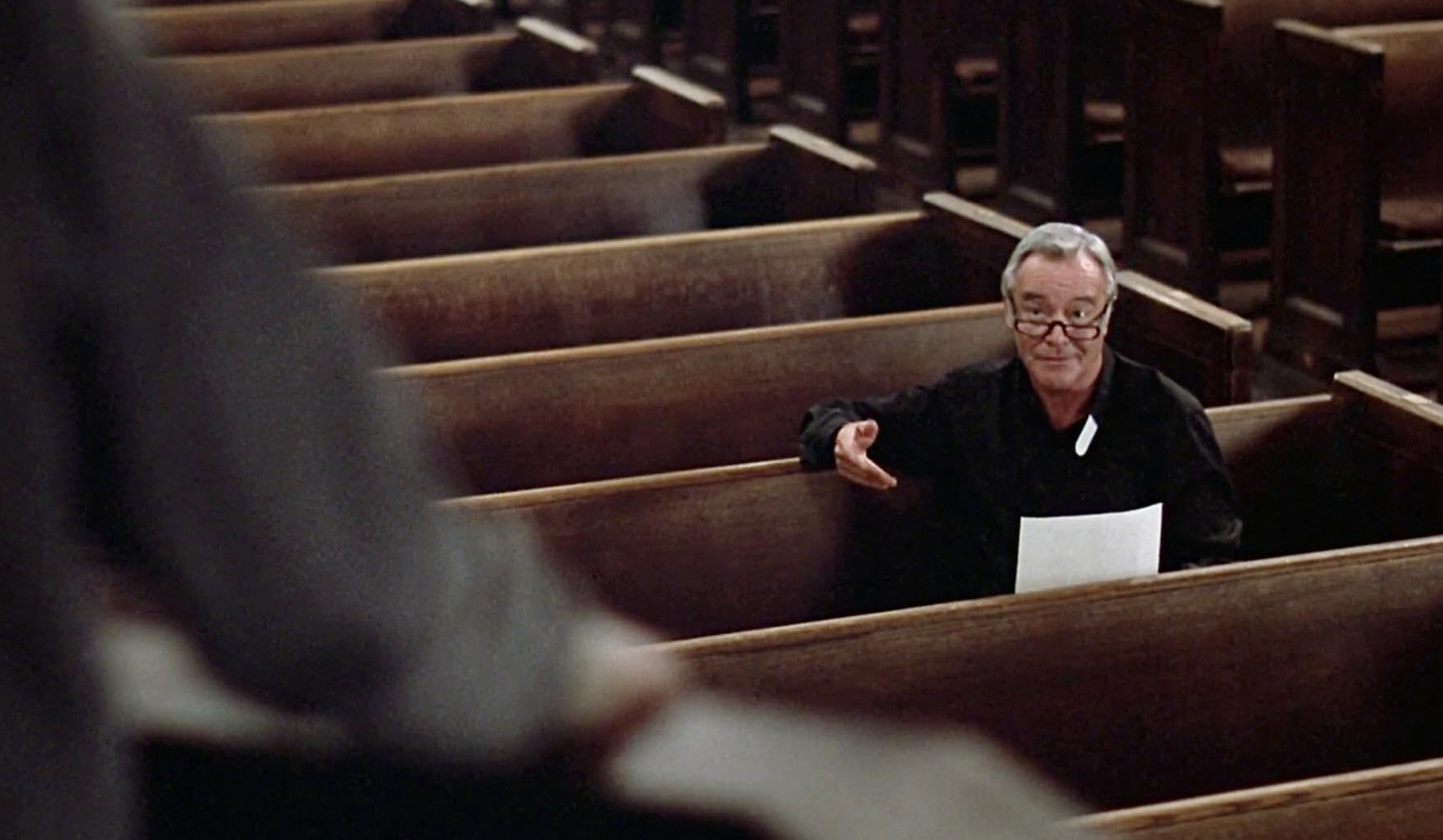
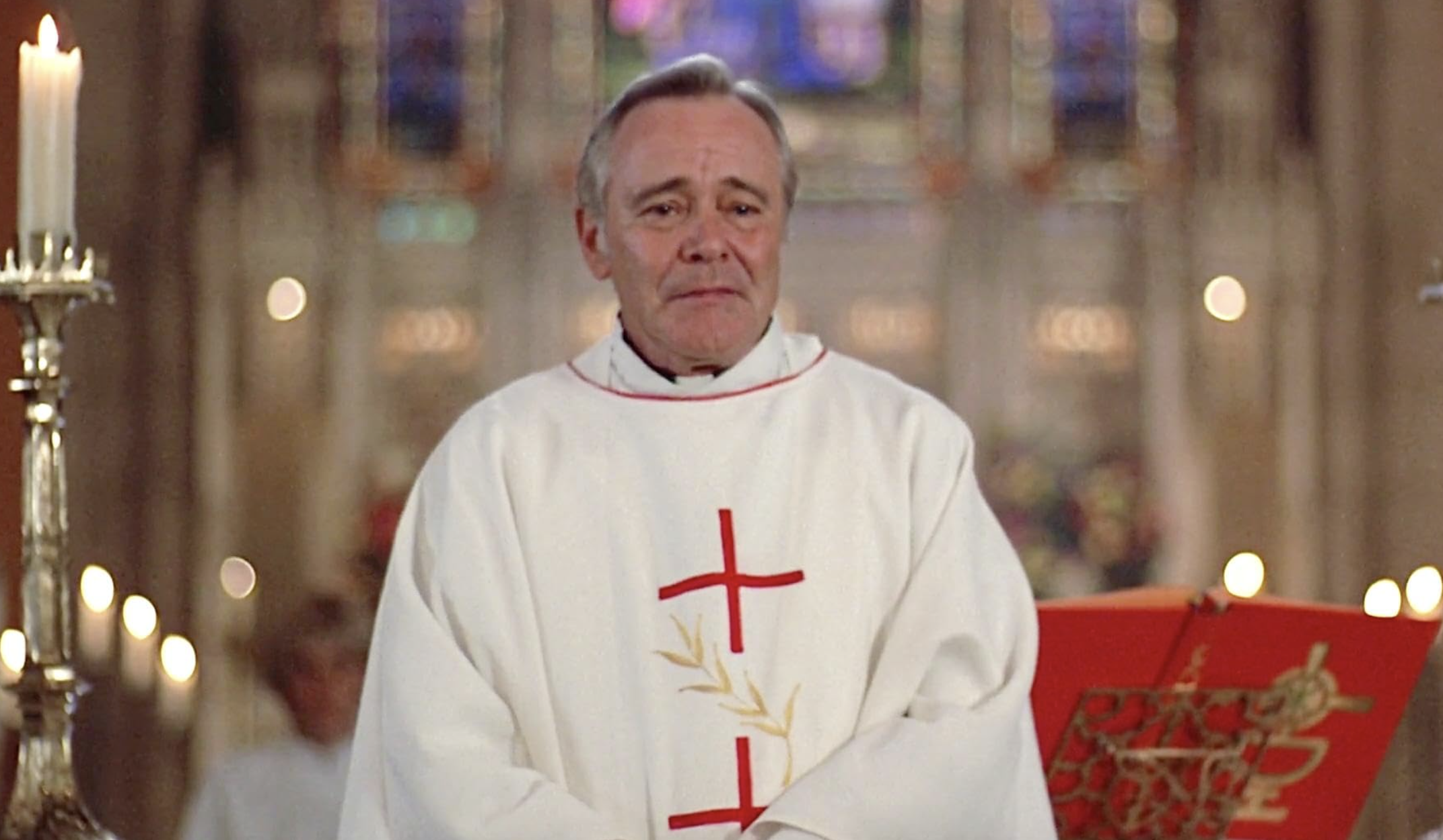
Jack Lemmon plays Father Tim Farley, a popular Catholic priest who seems to have figured out the secret to his profession.
Don’t upset anybody.
Farley is charming. He’s funny. He’s approachable. He knows his congregation and understands how to talk to them. His sermons are accessible and reassuring.
They are also deliberately unchallenging.
Farley isn’t interested in shaking anybody’s faith.
He’s interested in making sure everybody leaves church feeling good about theirs.
And Lemmon is absolutely perfect for the role.
By 1984, Lemmon had spent decades perfecting the art of playing ordinary men who were simultaneously sympathetic and deeply flawed. Farley initially feels like another variation on that familiar Lemmon persona.
You like him immediately.
That’s important.
Because the movie is going to ask you to question him later.
And it’s much harder to condemn someone you genuinely like.
Then Comes the Idealist
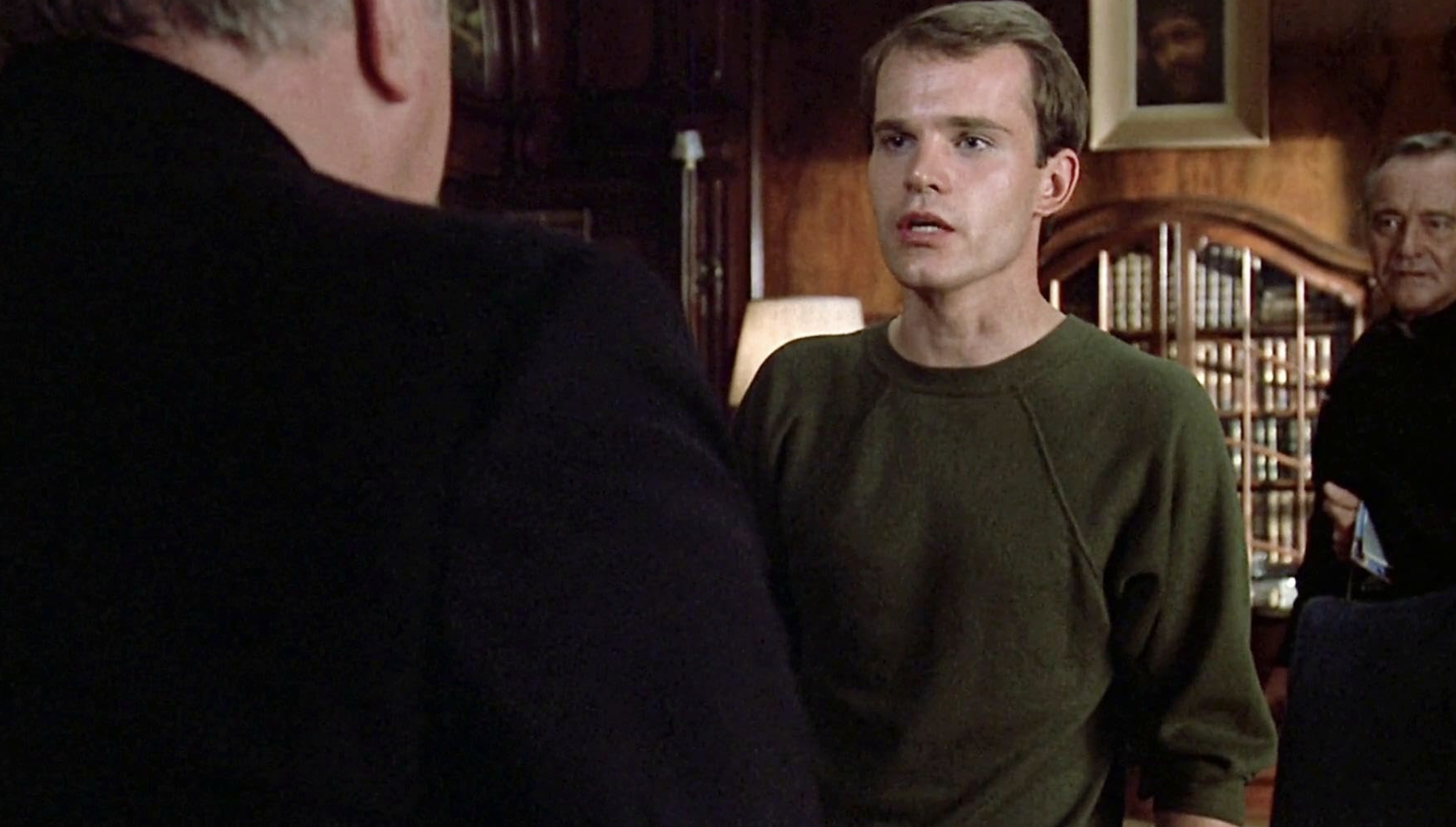
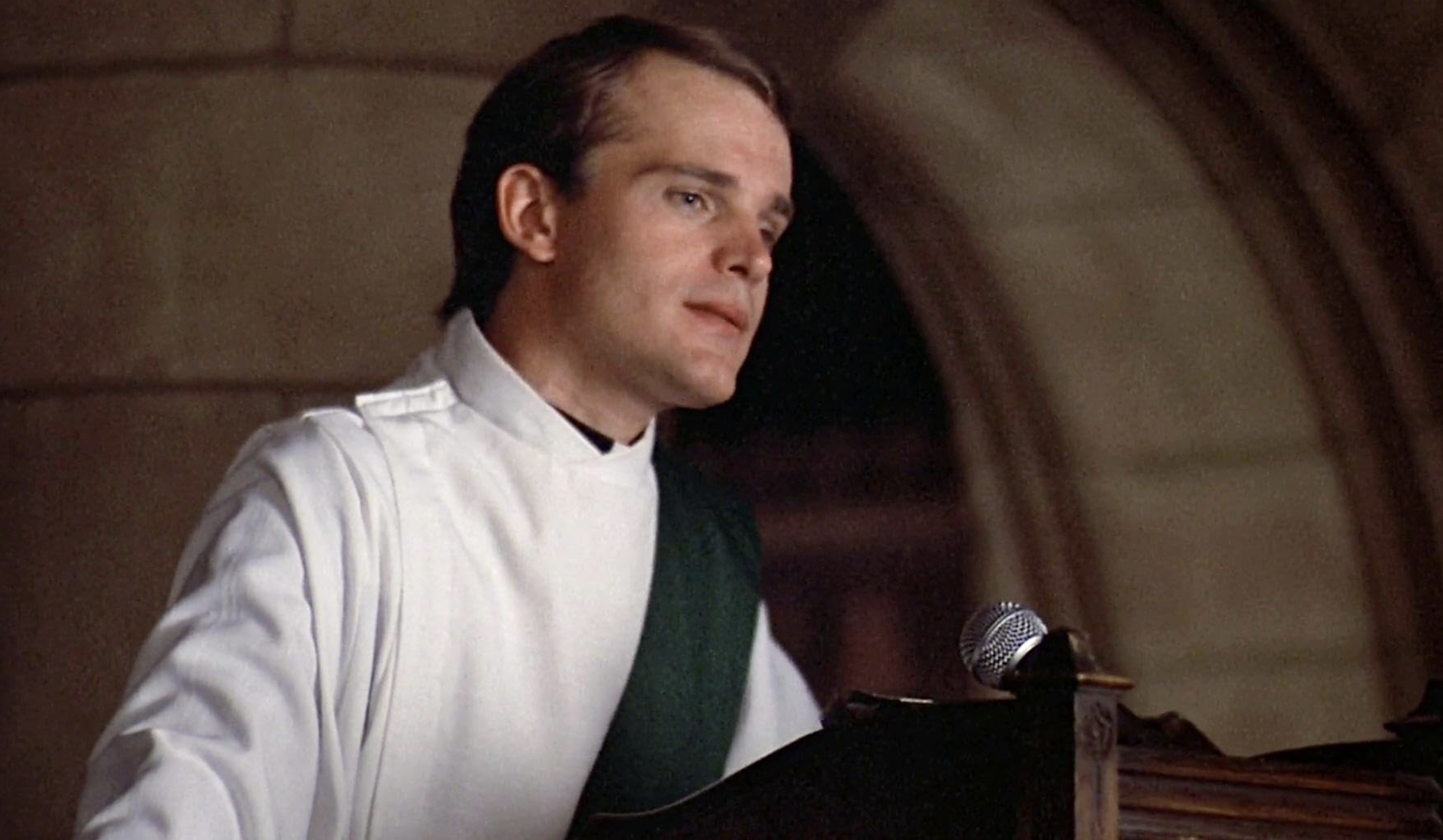
Enter Mark Dolson, played by Željko Ivanek.
Dolson is a young deacon who hasn’t yet learned the rules.
Or, more accurately, he has learned them and doesn’t care.
He is idealistic, intelligent and increasingly uncomfortable with the Church’s position on issues including celibacy, homosexuality and the role of women in the priesthood.
Farley sees a young man who needs to grow up.
Dolson sees an institution that needs to change.
And suddenly the friendly neighborhood priest has a problem.
Because Dolson isn’t simply some angry troublemaker.
He’s asking legitimate questions.
That makes it much harder for Farley to dismiss him.
From Broadway to Hollywood
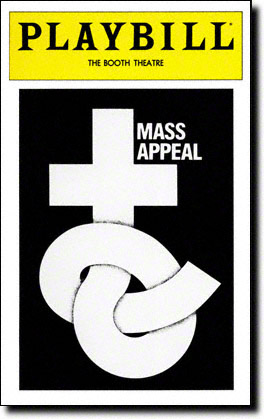
Mass Appeal actually began as a stage play by Bill C. Davis.
The original production was a two-character piece, with the entire story essentially built around the relationship between Farley and Dolson.
It opened Off-Broadway in 1980 and eventually transferred to Broadway in 1981, earning Tony nominations and considerable critical attention.
Hollywood came calling almost immediately.
CBS bought the screen rights for a reported $500,000 and began developing a film version. There were plans to shoot it in 1983, and a number of actors were considered for the role of Dolson.
Then CBS pulled out.
For a while, it looked like Mass Appeal was going to become another successful play that Hollywood couldn’t quite figure out how to turn into a movie.
Then Joan B. Kroc stepped in.
Kroc, the philanthropist and widow of McDonald’s executive Ray Kroc, learned about the project after meeting Jack Lemmon at a San Diego Padres game.
She read the script.
She liked it.
And she decided to finance it.
Just like that, Mass Appeal was back.
The 1980s Were Still Making Movies Like This
One of the things I find most interesting about Mass Appeal is that it feels like a movie from a Hollywood that was already disappearing.
There was still room for a modest, adult drama that wasn’t based on a bestseller, wasn’t part of a franchise and didn’t require a special-effects budget.
It was a movie about people.
That’s it.
No aliens.
No killer robots.
No supernatural creatures.
No car chases.
Just a priest and a young man arguing about what the Church should be.
And yet, watching it today, I find that incredibly refreshing.
The movie isn’t trying to be bigger than it is.
It’s trying to be honest.
Charles Durning Makes Everything More Complicated
The movie expanded Davis’s original stage play by adding supporting characters and opening up the story beyond the church.
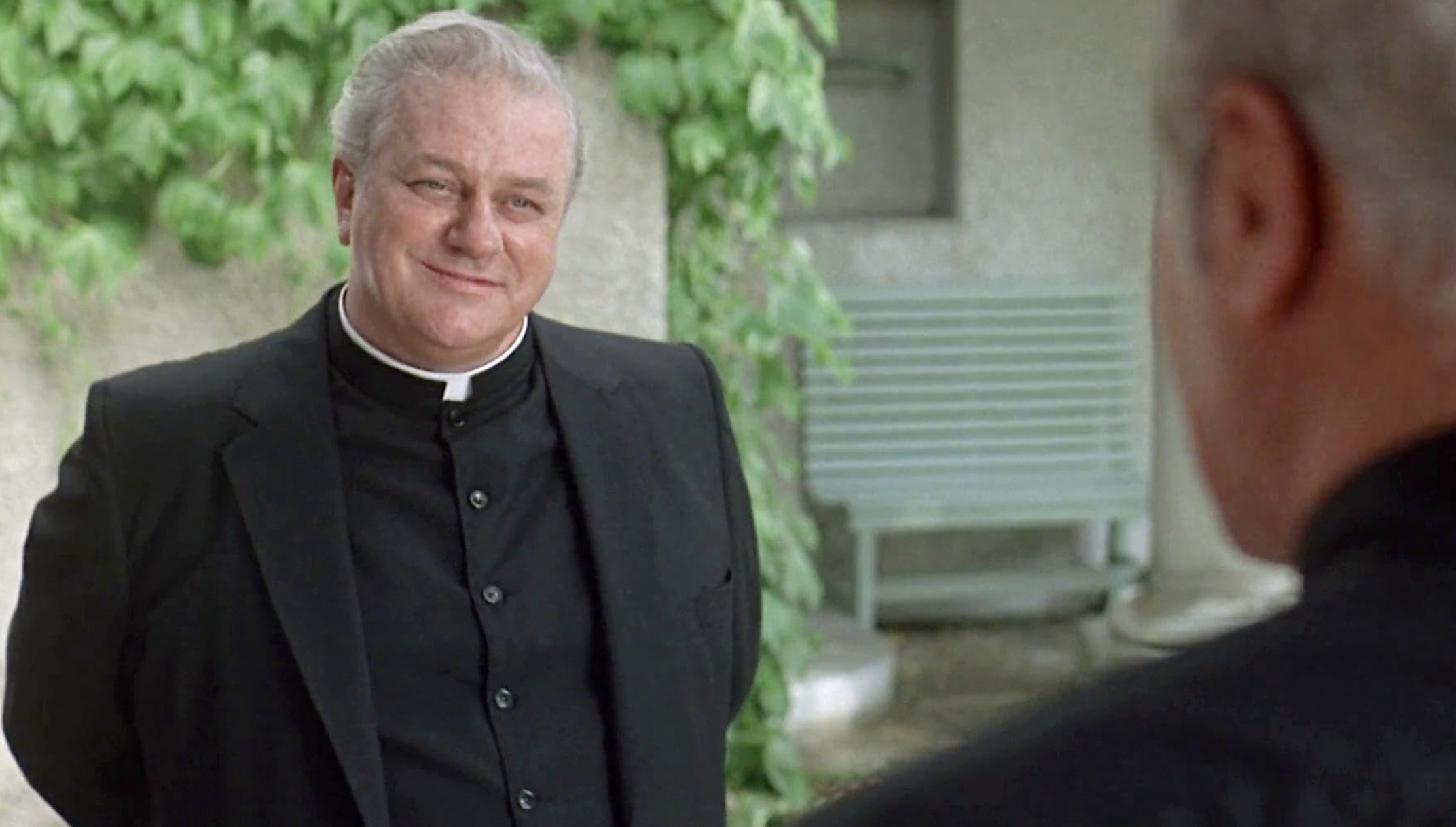
That includes Charles Durning as Monsignor Thomas Burke.
And casting Durning as a representative of the Church hierarchy was a terrific choice.
Durning could convey authority without doing very much at all.
His presence changes the stakes.
Farley may be comfortable ignoring difficult questions when he’s talking to his congregation, but he knows there are people above him who have the power to make his life considerably more difficult.
And that is where the movie’s central conflict gets interesting.
Farley isn’t simply afraid of losing his congregation.
He’s afraid of losing the position he has carefully constructed for himself.
The Difference Between Faith and Institution
This is where Mass Appeal becomes more than a movie about Catholicism.
Because you don’t have to be Catholic to understand the argument.
Every institution has its Farleys.
People who entered with good intentions, learned how things worked and eventually became part of the system they once questioned.
And every institution occasionally produces a Dolson.
Someone young enough, idealistic enough and stubborn enough to ask:
Why do we do it this way?
Those people are useful.
They are also incredibly annoying.
Farley knows that.
And one of the smartest things about the movie is that it doesn’t make him a villain.
He genuinely cares about people.
He genuinely believes he is helping.
He has simply reached the point where keeping everyone happy has become more important than confronting uncomfortable truths.
That is a much more complicated kind of failure.
Jack Lemmon and Željko Ivanek
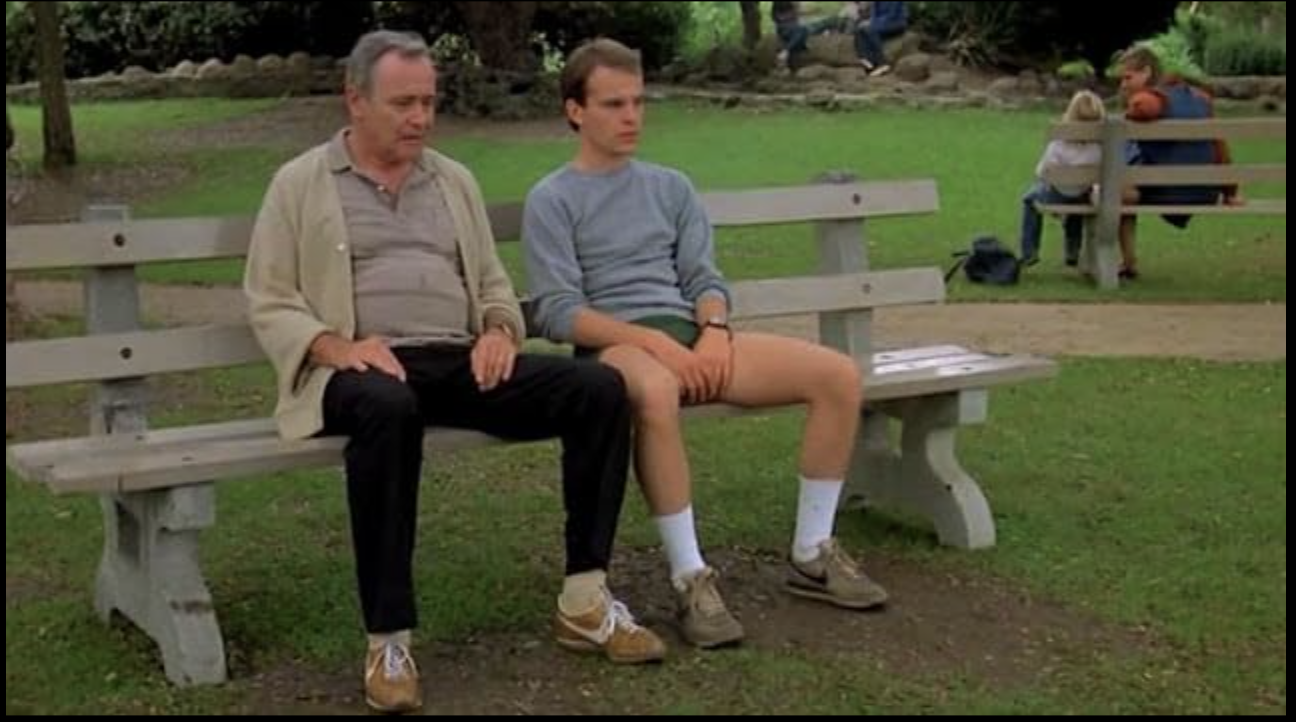
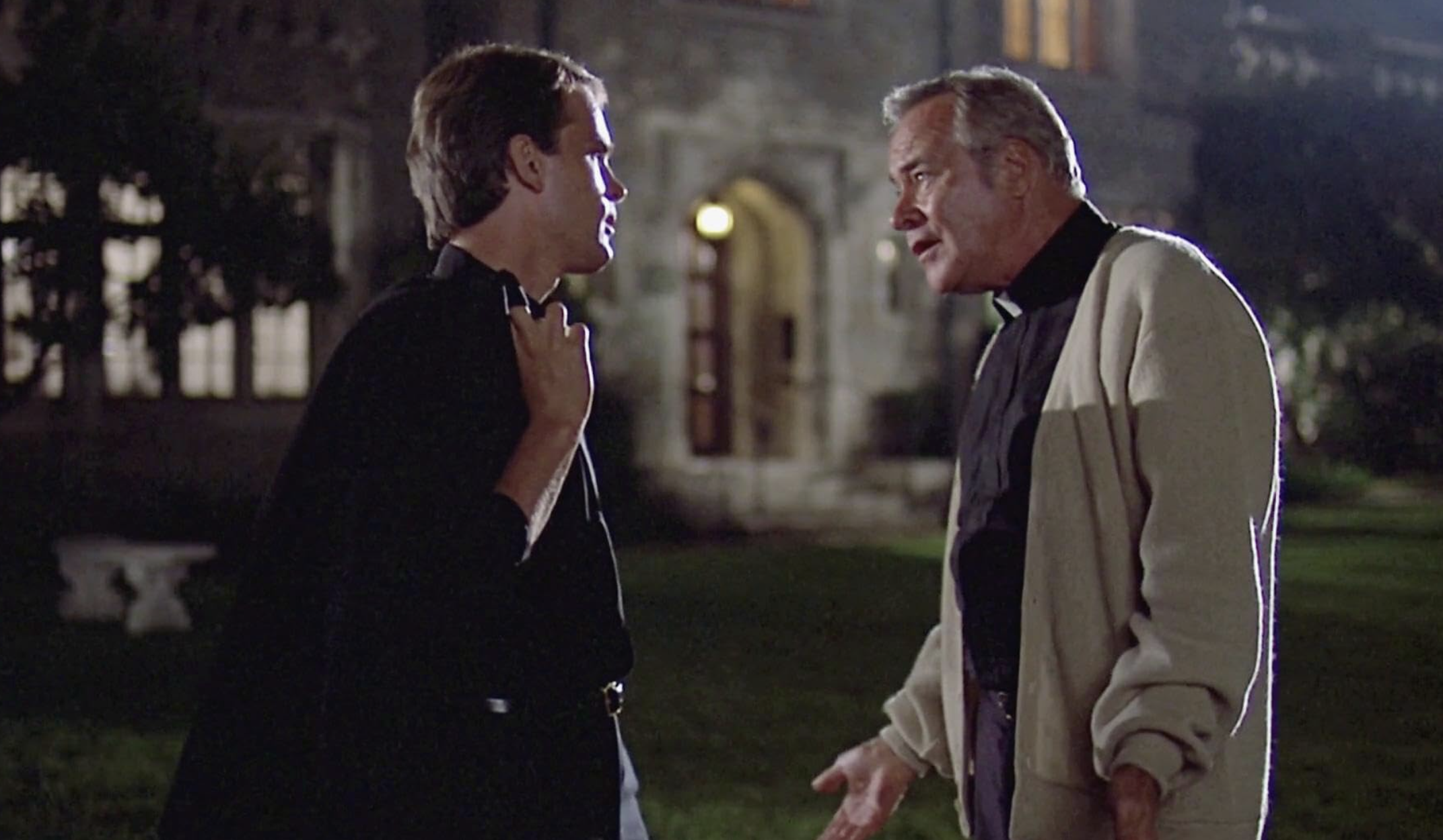
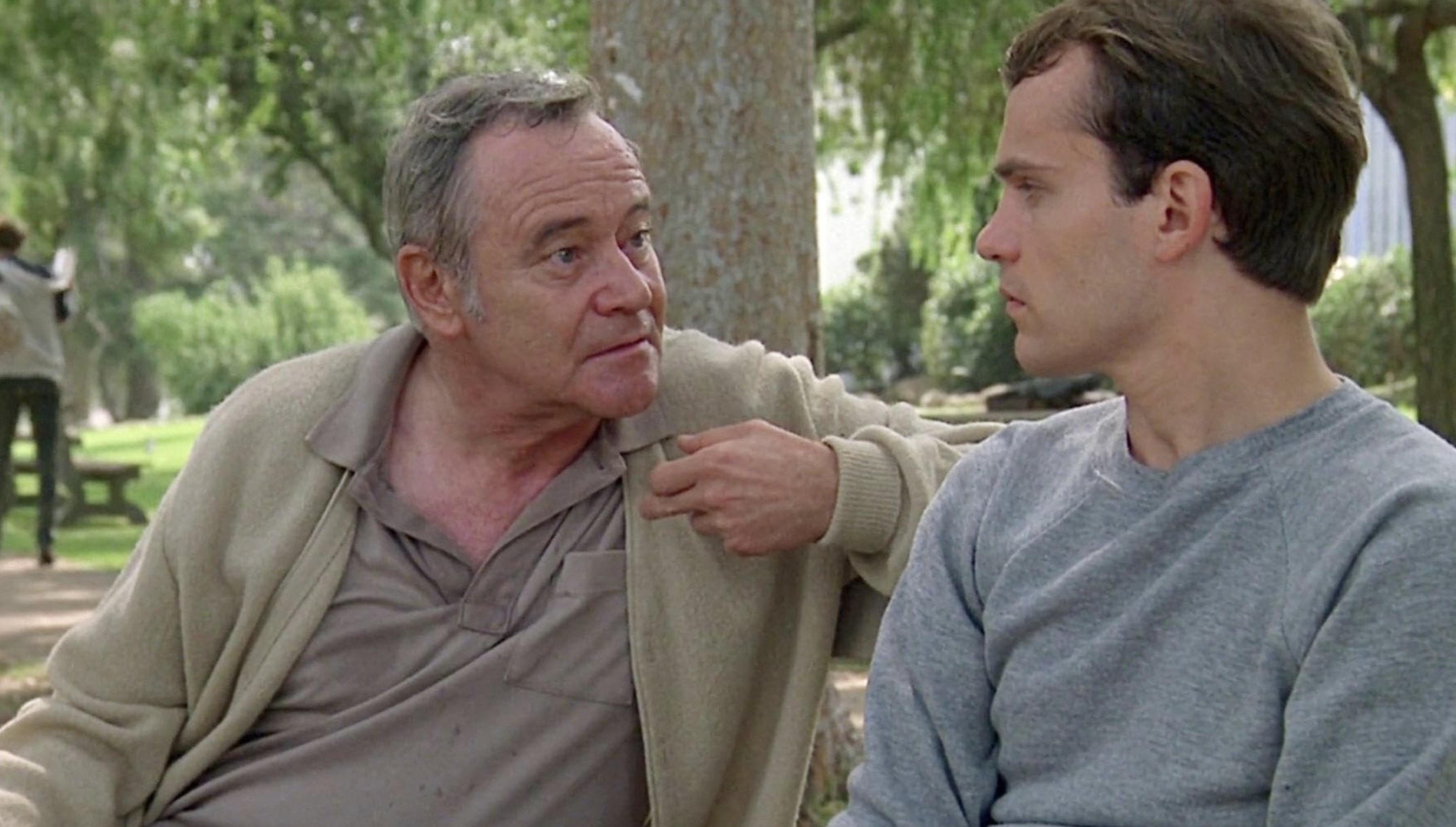
The movie belongs to Lemmon and Ivanek.
Their chemistry is terrific because they don’t feel like two actors delivering opposing viewpoints.
They feel like two people who actually know each other.
Farley sees some of his younger self in Dolson.
Dolson sees what he might eventually become in Farley.
That’s the tragedy.
The older man is trying to teach the younger man how to survive.
The younger man is trying to remind the older man why he entered the priesthood in the first place.
Neither one is entirely wrong.
Neither one is entirely comfortable with the other.
And eventually, something has to give.
A Movie That Got Buried in 1984
Mass Appeal opened in December 1984.
That was probably the worst possible time to ask America to pay attention to it.
The movie opened in Los Angeles on December 14 and New York three days later before expanding to fewer than 100 theaters.
It made roughly $1.9 million at the domestic box office against a budget of around $7 million.
That’s not just a flop.
That’s a movie that disappeared.
And honestly, it’s easy to understand why.
Imagine being a moviegoer in December 1984.
You have Beverly Hills Cop.
You have The Terminator.
You have Amadeus.
You have Gremlins.
You have The Karate Kid.
You have Indiana Jones and the Temple of Doom.
And the theater down the street is showing Jack Lemmon as a Catholic priest arguing with a young deacon.
You might save that one for Tuesday.
Except Tuesday never came.
Critics Saw Something Audiences Didn’t
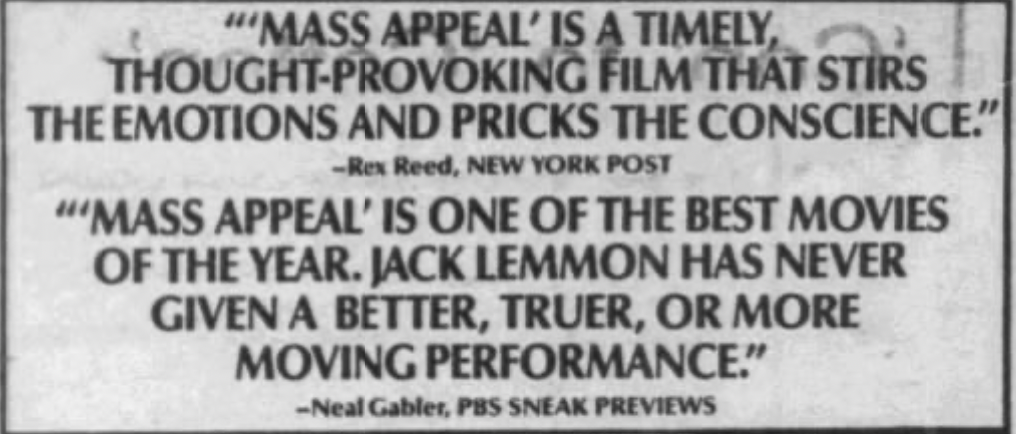
The critical response was considerably kinder.
Some critics compared the film to Educating Rita or even Going My Way, while others appreciated the strength of Davis’s dialogue and the performances.
Janet Maslin of The New York Times praised the momentum of the drama and the way Lemmon and Ivanek’s relationship developed, although she found Glenn Jordan’s direction somewhat bland and television-like.
That criticism isn’t entirely unfair.
Mass Appeal does look like a stage play that has been carefully moved in front of a camera.
But I’ve never found that particularly damaging.
Sometimes a movie doesn’t need to pretend it’s something else.
The performances are the movie.
And they’re good enough to carry it.
One of the Forgotten Jack Lemmon Performances
When people talk about Jack Lemmon, Mass Appeal doesn’t usually come up.
That’s understandable.
There are a lot of movies competing for that space.
But that’s exactly why I think it’s worth rediscovering.
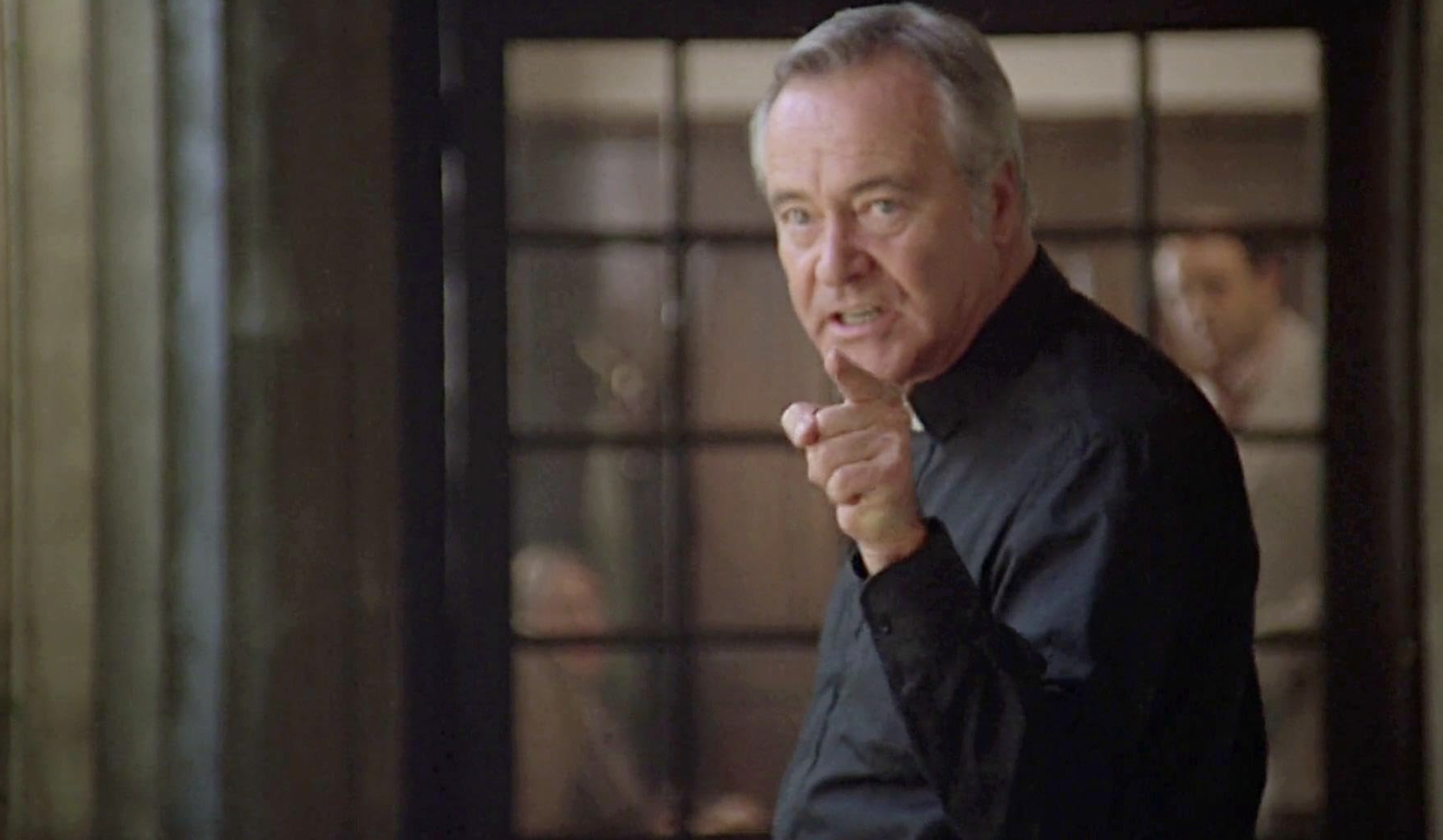
Lemmon’s Farley is funny without being a clown.
He’s sympathetic without being innocent.
He’s flawed without becoming despicable.
Most importantly, he’s comfortable.
Farley has made peace with the compromises he’s made.
The movie’s young idealist hasn’t.
That difference is everything.
The Forgotten Movie of a Very Loud Year
There is a tendency to remember the 1980s as one long explosion.
That’s not really what the decade was.
Yes, the blockbusters were getting bigger. Hollywood was discovering the enormous commercial potential of franchises, merchandising and event movies.
But alongside all of that, movies like Mass Appeal were still being made.
Small movies.
Adult movies.
Movies about people arguing.
Movies that expected you to sit still for 99 minutes and actually listen to what the characters were saying.
Those movies didn’t necessarily make money.
Some of them didn’t even survive in the public consciousness.
Mass Appeal is one of them.
And that’s precisely what makes discovering it now feel like finding a little time capsule.
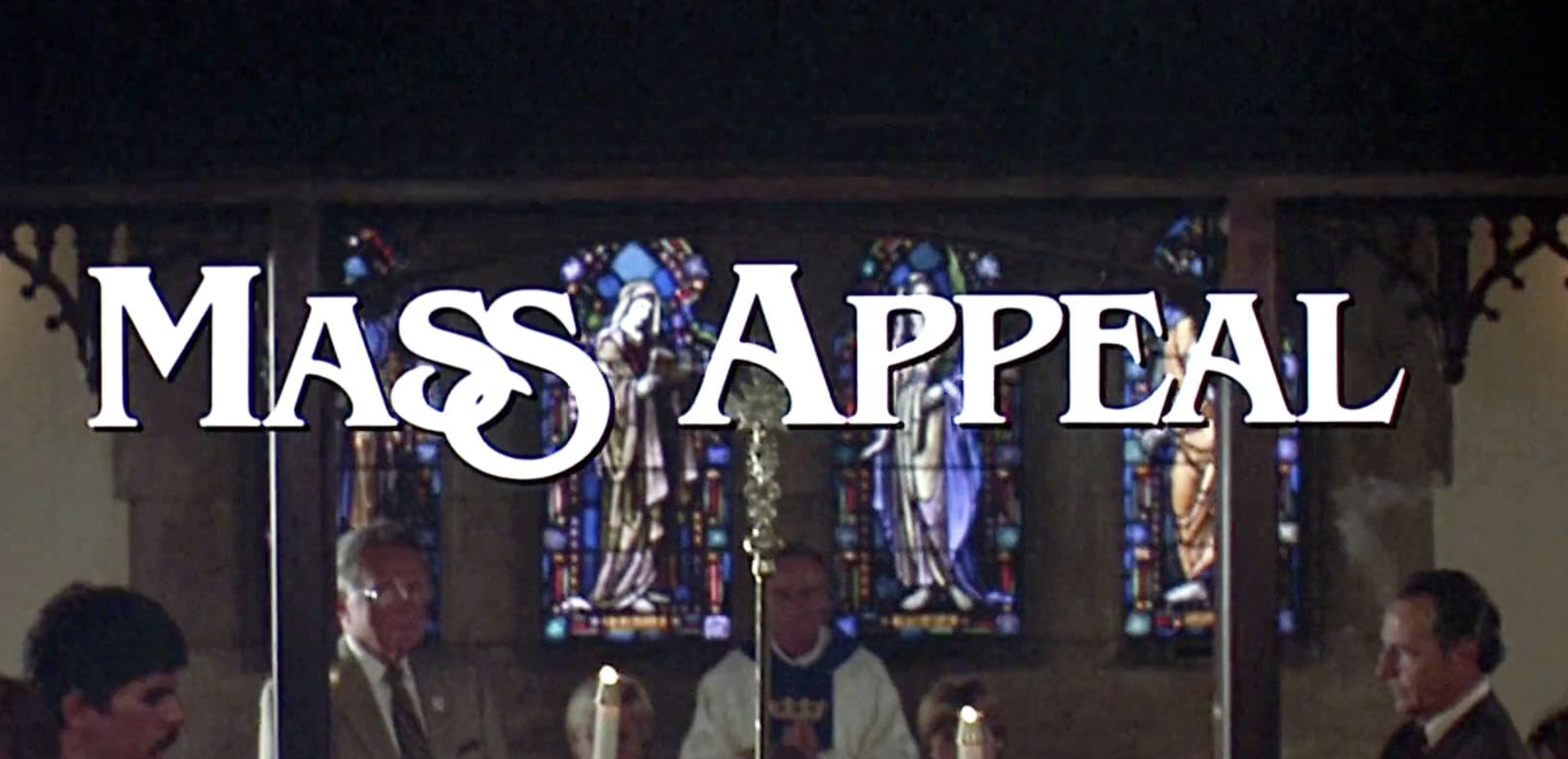
Mass Appeal Deserves a Second Look
Mass Appeal isn’t a masterpiece.
It isn’t going to suddenly make you rethink the entire history of 1980s cinema.
But it is a good movie.
More importantly, it’s an interesting movie.
It’s about idealism and compromise. It’s about the difference between following rules and understanding why those rules exist. It’s about the danger of becoming so comfortable inside an institution that you forget why you joined it in the first place.
And it features Jack Lemmon giving one of those performances that reminds you why he was one of the great actors of his generation.
The movie’s title is almost ironic.
Mass Appeal was about a priest who understood exactly how to appeal to the masses.
The movie itself never found them.
In the summer and fall of 1984, audiences wanted Ghostbusters, cyborgs, martial arts, teenage romance and adventure.
There wasn’t much room for a movie asking uncomfortable questions about faith and institutional authority.
More than forty years later, though, those questions haven’t gone away.
If anything, they’re more interesting.
And maybe that’s the strange little legacy of Mass Appeal.
It was a movie about a man who had become very comfortable with the way things were.
And a young man who refused to let him stay that way.
That’s not exactly the loudest story Hollywood told in 1984.
But it might be one of the more enduring.

About the Creator
Movies of the 80s
We love the 1980s. Everything on this page is all about movies of the 1980s. Starting in 1980 and working our way the decade, we are preserving the stories and movies of the greatest decade, the 80s. https://www.youtube.com/@Moviesofthe80s
Enjoyed the story? Support the Creator.
Subscribe for free to receive all their stories in your feed.
Comments
There are no comments for this story
Be the first to respond and start the conversation.