
Made In India: A Titan Story Ending Explained: How Titan Survived Failure to Become an Indian Watchmaking Icon (Spoilers)
From rejected bank loans and faulty watches to a revolutionary ultra-slim design, Made In India: A Titan Story follows Xerxes Desai and his team as they fight impossible odds to build one of India’s most recognizable watch brands.

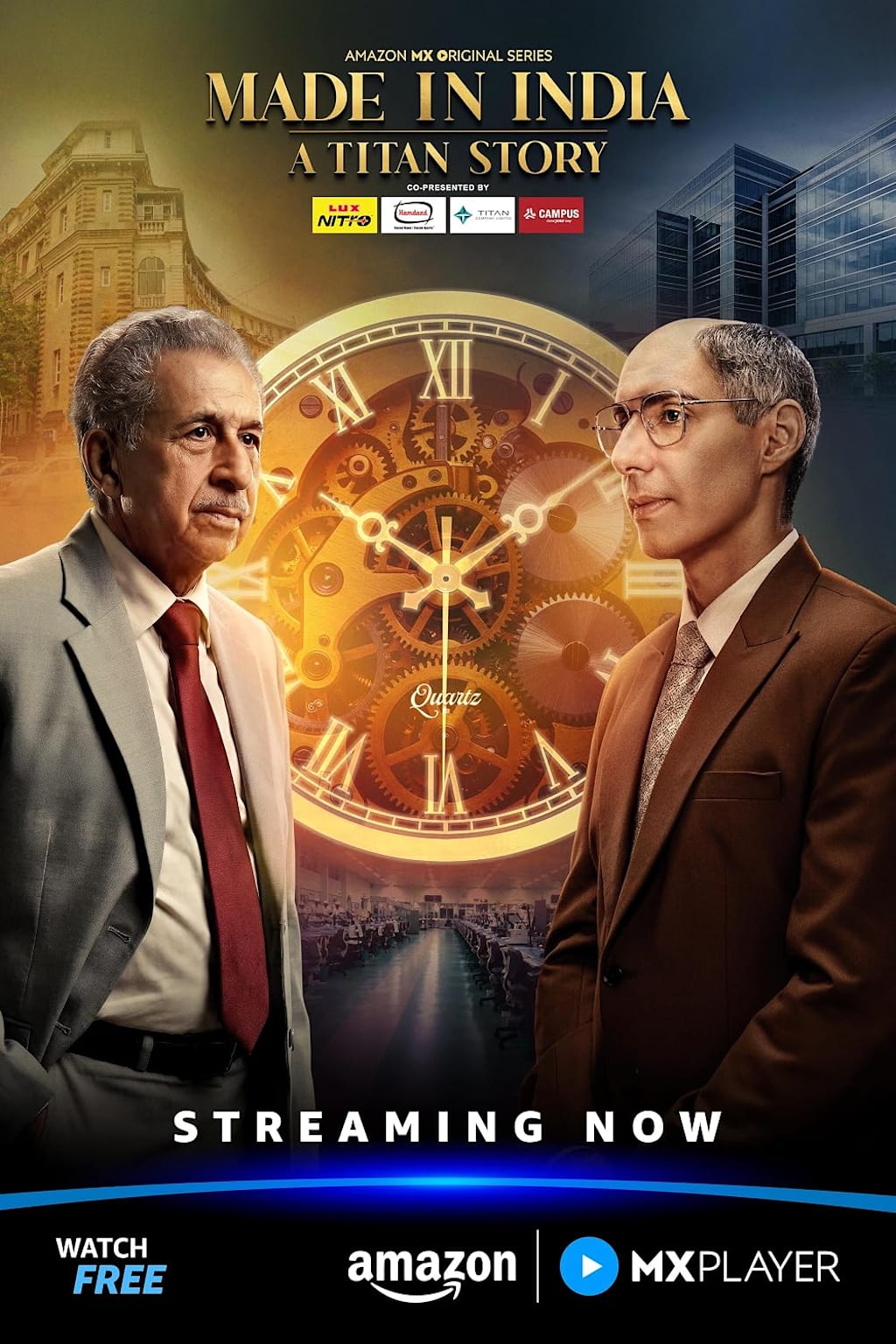
Spoiler Warning: This article contains major spoilers for Made In India: A Titan Story, including the final episode and ending.
Made In India: A Titan Story – The Dream Behind Titan
Made In India: A Titan Story is not simply a story about manufacturing watches. It is about ambition, failure, innovation, friendship, leadership and the determination to create something that people initially believe cannot be done.
At the center of the story is Xerxes Desai, a determined Tata executive who begins to see an enormous opportunity in India’s watch market. Imported watches are desirable but expensive, while smuggled foreign watches are being sold in huge numbers.
Xerxes realizes that Indians clearly want stylish watches. The real problem is that India does not yet have a modern watch brand capable of competing with international companies.
That realization eventually gives birth to the idea that becomes Titan.
However, building the company proves far more difficult than simply recognizing an opportunity.
Xerxes Desai Discovers India’s Hidden Watch Market
The story initially establishes Xerxes as a manager who thinks differently from the people around him.
While working away from the Tata Group, he handles a workers’ protest by trying to understand what the employees actually need instead of simply replacing them. His ability to solve problems earns him respect.
After returning to the Tata Group, Xerxes is assigned another difficult challenge involving Tata Press.
During his investigation into different business problems, he learns something surprising: watches are being smuggled into India in enormous quantities.
Foreign watches have become aspirational products.
Xerxes visits the market himself and begins investigating how the illegal watch trade operates. What he discovers convinces him that the demand for watches is far greater than official sales figures suggest.
This becomes the foundation of his idea.
India should manufacture its own watches.
J.R.D. Tata Initially Questions the Watch Business
Xerxes presents his idea to J.R.D. Tata, but the proposal does not immediately receive enthusiastic support.
Xerxes argues that a watch is more than something used to check the time. It can represent personality, identity and status.
India has a huge population, growing aspirations and practically no modern domestic watch brand capable of satisfying that demand.
Still, entering an entirely new industry is risky.
The turning point comes after an international watch company dismisses the possibility of Indian manufacturing and suggests that India can provide labor but cannot develop the necessary skills.
The insult transforms the project.
Instead of depending completely on a foreign company, the team becomes determined to prove that world-class watches can be created in India.
Xerxes is eventually given the opportunity to build the business.
The Titan Team Begins to Take Shape
Turning the dream into an actual company requires a strong team.
Akash becomes one of Xerxes’ closest partners. Megha is selected for marketing, while Gaurav proves his technical abilities during an unusual recruitment test involving the assembly of a ceiling fan.
The team begins researching everything from watch technology to manufacturing and consumer demand.
Their plan is especially ambitious because they do not want to simply copy the mechanical watches already dominating the Indian market.
They want to bet on quartz technology.
Quartz watches can operate for years using a battery and require far less maintenance than traditional mechanical watches.
Xerxes believes this technology represents the future.
Convincing everyone else is much harder.
Investors and the Government Nearly Kill the Dream
When Xerxes approaches investors, he uses a simple demonstration.
He asks people in the room to look at their watches.
Almost none of them are wearing watches manufactured in India.
The team explains that official domestic production represents only part of the real market because millions of imported and smuggled watches are also being purchased.
The opportunity appears enormous.
Even then, investors remain divided.
Eventually the project receives enough support to move forward, but another major problem appears when government regulations threaten to block it.
The company has barely begun and already seems close to collapse.
Akash becomes frustrated and temporarily walks away.
However, he later recognizes a possible way around the regulatory problem. The team restructures its approach and begins looking for government participation.
After negotiations, they receive support and land for the manufacturing project.
During this period, the company finally gets its name:
Titan.
Banks Refuse to Finance Titan
Government approval does not solve everything.
Titan still needs money.
Xerxes and his colleagues approach bank after bank, but lenders repeatedly reject them.
The problem is not necessarily that the watch idea is terrible. The bankers simply do not understand the technology well enough to feel comfortable financing it.
Megha eventually realizes that the team has been explaining the product in language that is too complicated.
Xerxes changes his approach.
Instead of presenting quartz technology like an engineering lecture, he explains it simply: mechanical watches require winding, while quartz watches can run for years using a battery.
Now the idea becomes understandable.
The company finally begins moving forward.
Building Titan’s Factory and Training a New Workforce
Finding the right location for the factory creates another challenge.
The team requires solid land suitable for precision manufacturing. Eventually a suitable location is selected and Titan’s manufacturing operation begins taking shape.
Recruitment follows.
Instead of relying only on experienced industrial workers, the company trains local people, including many young women.
The training is extremely demanding because watchmaking requires extraordinary precision.
Workers practice tasks such as threading a needle within seconds and arranging tiny mustard seeds carefully on a surface.
These exercises develop patience, concentration and fine motor control.
Eventually the trainees begin working with actual watch components.
Then the moment everyone has been waiting for finally arrives.
Titan produces its first watch.
For Xerxes, it represents years of rejection, research and risk finally becoming something real.
He proudly takes the watch to J.R.D. Tata.
Unfortunately, the celebration does not last long.
Titan’s First Major Failure
J.R.D. Tata proudly wears the new Titan watch during an important gathering.
Someone asks him for the time.
He confidently reads the Titan watch.
But the displayed time is completely wrong.
The embarrassing moment reveals a devastating truth: Titan’s first product is unreliable.
The team investigates and discovers problems affecting the watch.
For a young company trying to prove that India can build world-class products, this could have destroyed everything.
Xerxes reacts differently.
Instead of treating the failure as proof that Titan should stop, he treats it as part of the process.
The company studies the problems, works with international suppliers and continues improving its watches.
Titan has failed its first major test, but it refuses to disappear.
Titan Creates Its Own Design Identity
Another major challenge is design.
Titan cannot become a premium brand by simply copying existing Indian watches.
Designer Ravindran joins the project and begins creating designs intended to make Titan visually different from its competitors.
International watch exhibitions also become a source of inspiration as the company studies global trends.
Titan wants watches that are not merely functional.
They must look desirable.
Eventually the company develops several elegant designs and prepares for the market.
But creating an attractive product does not guarantee that anybody will buy it.
Why Retailers Initially Reject Titan Watches
When Titan representatives approach traditional watch retailers, they repeatedly hear the same answer.
Customers already know the established mechanical-watch brands.
Why would stores risk valuable shelf space on an unfamiliar company selling quartz watches?
Titan receives rejection across multiple major cities.
Xerxes responds with another bold decision.
If existing retailers do not present Titan properly, Titan will create its own premium retail experience.
Dedicated Titan stores begin opening.
The stores attract plenty of visitors, yet sales remain disappointing.
Hundreds of people may enter, but only a handful actually buy watches.
Consumers are still asking for mechanical watches.
For the team, it is another painful reminder that creating a better product does not automatically change consumer habits.
Chor Bazaar Reveals Titan’s Unexpected Success
Then something strange happens.
Sales begin appearing in regions where Titan does not expect strong demand.
The mystery becomes even more confusing when Megha receives a genuine Titan watch that was supposedly purchased somewhere the company does not even have an official store.
The team investigates.
Eventually they trace the watches back to the illegal market.
At first, they assume the watches must be counterfeit.
They are not.
They are genuine Titan products.
The explanation is surprisingly important.
Because taxes and transportation expenses differ between regions, Titan watches can effectively have different costs in different places. Traders are buying watches where they are cheaper, transporting them elsewhere and reselling them.
Ironically, the same underground watch market that originally inspired Xerxes to enter the business now proves that consumers genuinely want Titan.
The company has created enough demand for its own watches to become valuable in the parallel market.
Titan Realizes That Watches Are Emotional Products
Titan’s marketing strategy then begins evolving.
The company understands that watches are especially powerful as gifts.
Unlike cash or a temporary present, a watch can remain on someone’s wrist for years.
It can become connected to birthdays, weddings, anniversaries and important memories.
Titan therefore begins positioning the watch as an emotional product rather than merely a device that tells time.
The company also expands the number of designs it offers.
The inspiration comes from a simple observation: people expect variety when buying clothes, so why should consumers accept only a few choices when buying watches?
More designs allow Titan to appeal to different personalities and occasions.
The Advertising Gamble That Changes Titan
Xerxes next wants Titan to advertise heavily on television.
The idea creates concern because the company is already struggling financially.
A national advertising campaign is expensive, and reaching different parts of India adds even more cost.
Still, Xerxes believes brand-building is essential.
Titan eventually develops advertising built around an unforgettable classical musical identity.
The music becomes strongly associated with the brand.
Instead of simply explaining watch specifications, Titan begins selling elegance, emotion and aspiration.
It is one of the decisions that helps transform Titan from another manufacturer into a recognizable consumer brand.
But success also makes Xerxes more ambitious.
And that ambition leads to the greatest crisis of the story.
Xerxes’ European Gamble Nearly Destroys Titan
After Titan begins gaining momentum, Xerxes wants to expand internationally and compete directly with major European watch companies.
The decision is extremely risky.
More importantly, he pushes forward despite concerns from people around him.
Akash eventually discovers that Xerxes has committed to the European expansion without properly involving him.
Their argument becomes personal.
Years of friendship and shared struggle collapse under the pressure of Xerxes’ growing ego.
Akash leaves.
At the same time, the international gamble places Titan under enormous financial pressure.
Investors give Xerxes a frightening deadline.
He has only months to turn things around or the company could effectively be finished.
The man who spent years fighting external obstacles finally realizes that the biggest danger may now be himself.
Xerxes Realizes His Biggest Mistake
Xerxes begins understanding that confidence and ego are not the same thing.
Confidence helped him create Titan when almost nobody believed in it.
Ego now prevents him from listening to the people who helped him build it.
He visits Akash and tries to repair their relationship.
At Akash’s home, Xerxes witnesses the painful condition of Akash’s father, whose fading memory creates an emotional moment for the family.
Shortly afterward, Akash’s father dies.
The tragedy places their professional conflict into perspective.
Titan was never built by one person.
It survived because people trusted each other, challenged each other and continued working after repeated failure.
That realization prepares Xerxes for his final attempt to save the company.
Made In India: A Titan Story Ending Explained
The ending brings the entire story back to Titan’s central theme: innovation.
Xerxes is at home cutting tomatoes when he notices the thinness of a kitchen knife.
The observation sparks an idea.
What if Titan could create an extraordinarily thin watch?
Instead of trying to win by copying established international companies, Titan could build something technically distinctive.
Xerxes takes the idea back to the team.
Ravindran helps transform the concept into an actual design.
What emerges is an incredibly slim watch unlike anything the company has previously produced.
This becomes Titan’s answer to the crisis.
The company does not survive by becoming more like its competitors.
It survives by becoming more innovative.
Why the Ultra-Slim Watch Matters
The final watch represents far more than another product.
Throughout the series, foreign manufacturers repeatedly underestimate Indian engineering and manufacturing ability.
Titan’s entire existence begins partly as a response to that humiliation.
By the ending, the company has developed a watch capable of surprising the same international industry it once struggled to enter.
J.R.D. Tata encounters the foreign watch executive again while traveling.
This time, Titan is no longer simply trying to prove that India can manufacture a reliable watch.
It has produced something capable of attracting international attention.
The balance of power has changed.
Titan has moved from imitation and survival to innovation.
Did Titan Survive?
Yes.
The ending shows that Xerxes’ final innovation gives Titan the breakthrough it desperately needs.
The company survives the financial crisis and continues moving toward becoming a major watch brand.
More importantly, Xerxes learns that bold leadership must be balanced with humility.
His determination created Titan, but his refusal to listen nearly destroyed it.
The final breakthrough succeeds because the company once again relies on creativity and teamwork rather than ego alone.
What Does the Ending Really Mean?
The ending of Made In India: A Titan Story is ultimately about refusing to accept the limits other people place on you.
At almost every stage, somebody says the Titan project cannot work.
Foreign companies doubt Indian skills.
Investors question the market.
Government rules block the project.
Banks refuse financing.
The first watch fails.
Retailers reject the product.
Customers resist quartz technology.
International expansion almost bankrupts the company.
Yet every setback produces another solution.
That pattern is the heart of the story.
Titan does not become successful because Xerxes correctly predicts everything from the beginning. In fact, the company makes numerous mistakes.
Its strength is the willingness to learn quickly enough to survive them.
From Smuggled Watches to an Indian Brand
There is also a satisfying circular structure to the story.
Xerxes originally becomes interested in watches because he discovers how many foreign watches are being smuggled into India.
Years later, Titan watches themselves appear in unauthorized markets because consumers want them badly enough for traders to move them between regions.
The product that once represented India’s dependence on foreign brands becomes evidence of demand for an Indian brand.
That transformation gives the story its emotional payoff.
Titan begins as an idea that almost nobody understands.
It ends as proof that Indian design, manufacturing and marketing can create something capable of standing confidently beside international brands.
Final Thoughts
Made In India: A Titan Story works because Titan’s success is not presented as a smooth journey.
The company repeatedly comes close to failure.
Money disappears. Technology fails. Customers hesitate. Friends fight. Ambition becomes dangerous.
But the team continues adapting.
The ending therefore does not suggest that successful people never fail.
It suggests almost the opposite.
Failure becomes valuable when it forces people to improve the product, question their assumptions and try something genuinely new.
Xerxes Desai begins the journey wanting to create an Indian watch.
By the end, Titan has become something much larger: a symbol of what can happen when ambition is combined with innovation, persistence and the willingness to learn from failure.
And that is why the final ultra-slim watch matters so much.
It is not simply Titan’s newest product.
It is the moment when a company that spent years trying to catch the world finally creates something capable of making the world look back.
About the Creator
parwinder singh
🎬 Movie & Entertainment Writer sharing reviews, ending explanations, story breakdowns, plot twists and hidden details from Bollywood, Hollywood, South Indian cinema, Korean dramas and OTT releases.
Enjoyed the story? Support the Creator.
Subscribe for free to receive all their stories in your feed.
Comments
There are no comments for this story
Be the first to respond and start the conversation.