
'Mad Max' (1980) - The Black Sheep That Changed Australian Cinema
George Miller was a doctor who wanted to make a movie about cars, violence and the end of civilization. Australia wasn’t quite sure what to make of him. Then the rest of the world saw Mad Max.


The Black Sheep of Australian Cinema
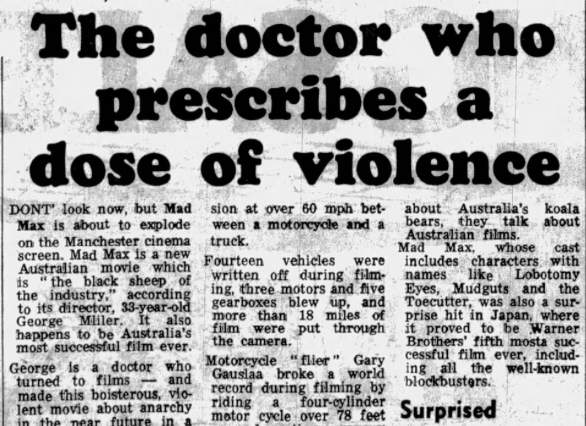
In 1980, a British newspaper ran a story about a strange new Australian movie that was about to explode onto a Manchester cinema screen.
The headline was wonderfully blunt:
“The doctor who prescribes a dose of violence.”
The doctor in question was George Miller, a 33-year-old former medical practitioner who had decided to abandon medicine for filmmaking.
His first feature was Mad Max.
Miller had a pretty good idea of where he stood in the Australian film industry.
He called his movie “the black sheep of the industry.”
That may have been an understatement.
Australian cinema in the late 1970s was going through something of a cultural awakening. After years of struggling to establish itself as a legitimate national film industry, Australia was producing movies that were increasingly being taken seriously around the world.
They were often period films.
They dealt with Australia’s history, its colonial past and its national identity. They were the sort of movies that could be discussed in terms of culture and artistic importance.
Mad Max was something else entirely.
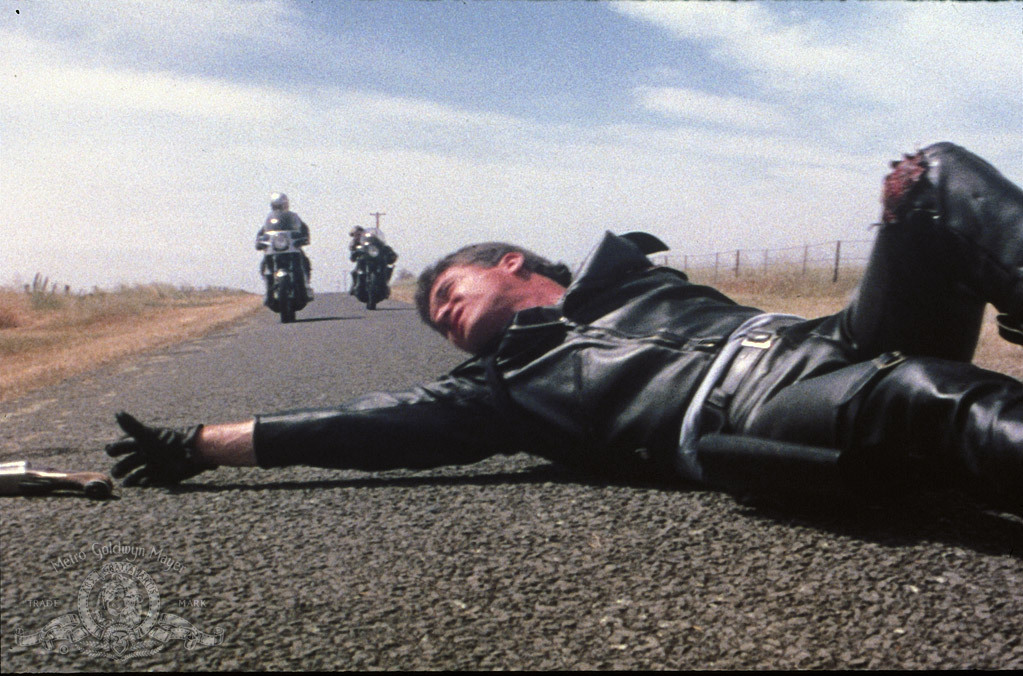
It was a movie about cops, bikers, leather jackets, revenge and insanely fast cars.
It was loud.
It was violent.
It was commercial.
And George Miller was not particularly interested in apologizing for any of it.
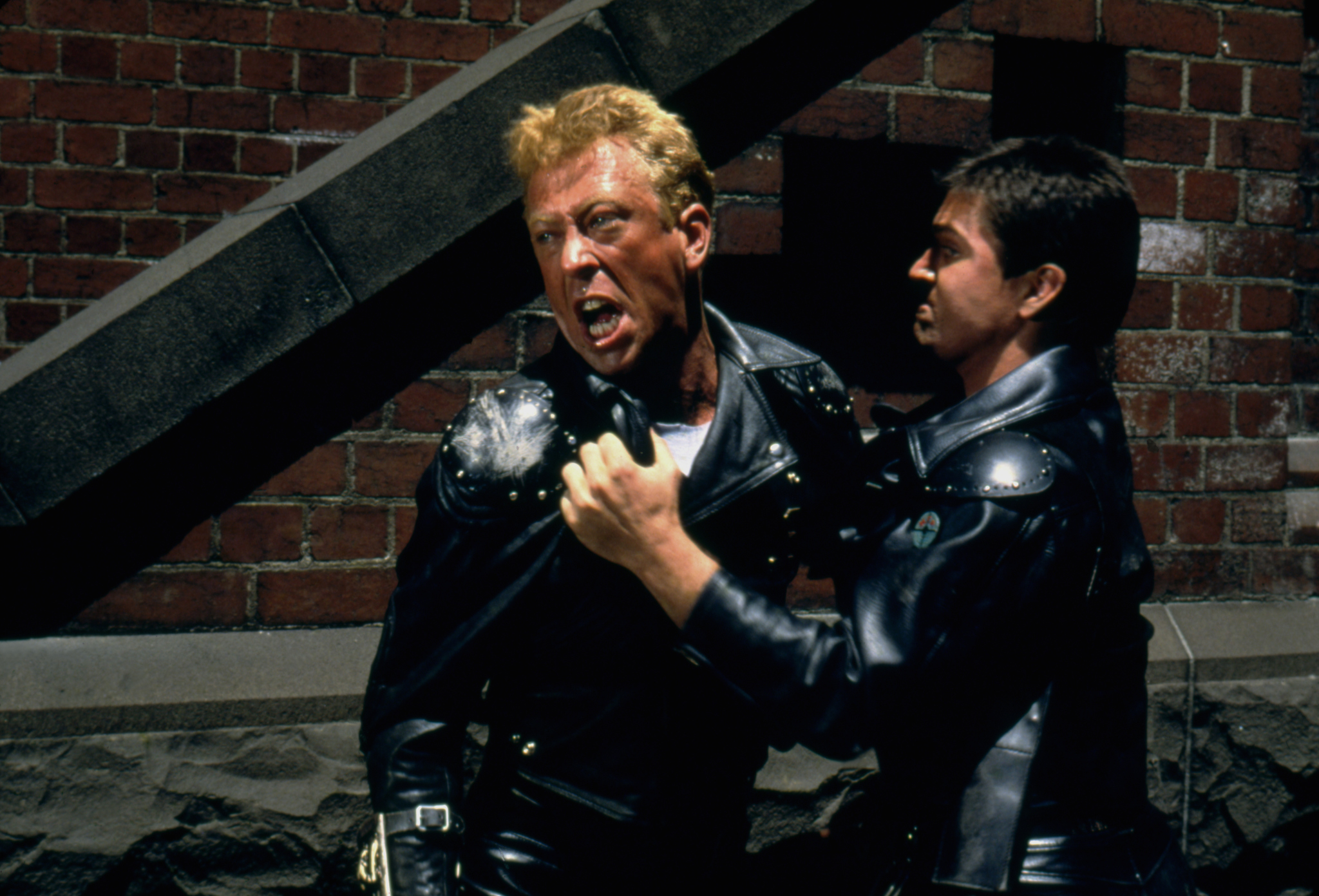
The Doctor Had a Different Prescription
Miller’s background makes the whole thing stranger.
He had trained as a doctor and had worked in emergency medicine. He had seen firsthand what Australia’s car culture could do to people.
Australia had enormous roads, enormous distances and a deeply ingrained relationship with the automobile.
Miller became fascinated by the contradiction.
Cars represented freedom.
Cars also killed people.
He and producer Byron Kennedy began thinking about how that could become a movie.
But Miller wasn’t simply trying to make an Australian version of an American car picture.
His cinematic influences went much deeper.
He had become fascinated with silent cinema, particularly Buster Keaton and Harold Lloyd, and with the idea that filmmaking could communicate through movement rather than exposition.
Years later, Miller described his intention for Mad Max as “pure cinema.”
He wanted to make a movie that moved.
“I felt more and more you have to make a film that’s fast-paced, has suspense, and contains things you haven’t seen in a movie before.”
That philosophy explains Mad Max better than the usual description of it as an Australian Death Wish with cars.
Miller wasn’t simply making an exploitation movie.
He was experimenting with the language of action cinema.
The fact that nobody knew quite what to make of the experiment was almost beside the point.
Nobody Had Much Money Either
The other problem was money.
Mad Max was independently financed for roughly $350,000 — a tiny budget for a movie that required elaborate car stunts, destroyed vehicles, motorcycles, crashes and explosions.
Miller and Kennedy didn’t have the luxury of a conventional production.
They delivered scripts themselves.
They couldn’t afford to fly the actors playing the bikers to the production, so the bikers rode their motorcycles from Sydney to Melbourne and essentially rehearsed being a gang along the way.
When they crashed cars, Miller and Kennedy sometimes stayed behind afterward and swept the roads themselves.
The movie was edited in a friend’s apartment, with Miller cutting picture in the kitchen and sound being cut in the lounge room.
The production was so improvised that even some of its equipment was effectively rescued from other movies.
It sounds romantic now.
At the time, it was simply what they could afford.
And then there were the cars.
A contemporary British newspaper article noted that 14 vehicles were written off during filming, along with three motors and five gearboxes. Eighteen miles of film were shot.
One motorcycle stunt alone sent Gary Gauslaa’s bike and rider over 78 feet.
This wasn’t exactly the genteel Australian cinema establishment’s idea of cultural enrichment.
And Then the Critics Saw It
When Mad Max opened in Melbourne on April 12, 1979, the response was immediate.
The movie was a hit.
It also infuriated some people.
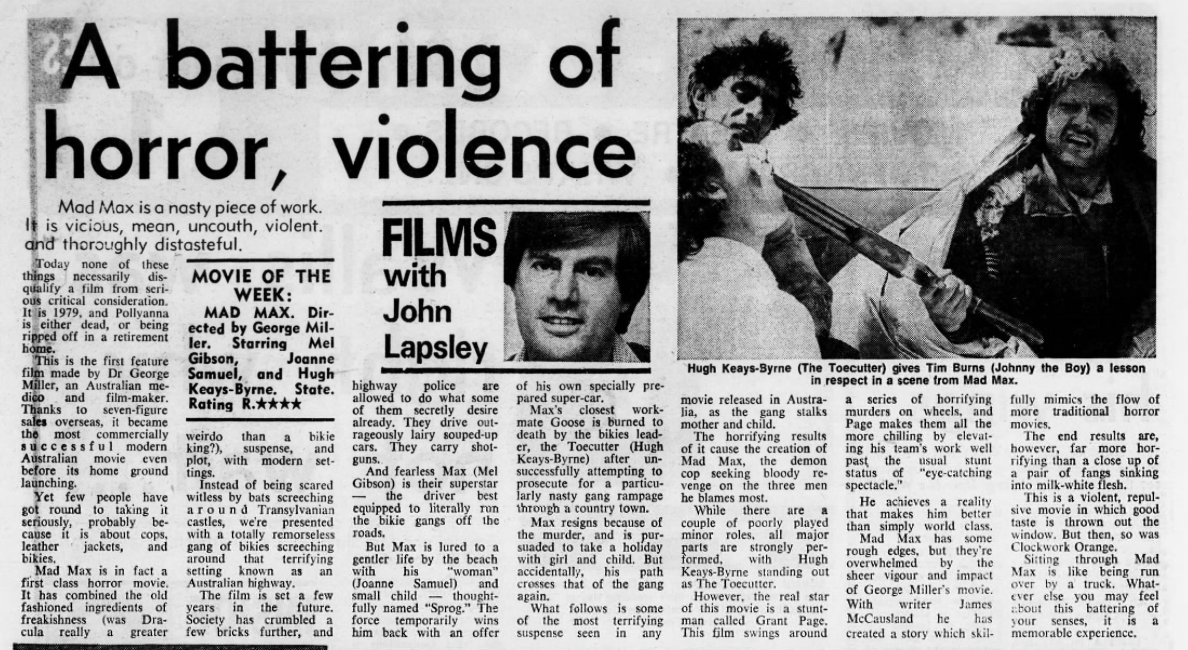
One contemporary reviewer called it:
“vicious, mean, uncouth, violent, and thoroughly distasteful.”
The same review wondered why anyone should take a movie like this seriously when it was essentially about cops, leather jackets and bikers.
That was the fascinating part.
The movie wasn’t being dismissed because it was incompetent.
It was being judged for being the wrong kind of movie.
Australian cinema was trying to establish its cultural credentials.
George Miller had made a movie that seemed almost aggressively uninterested in having any.
Producer and commentator Phillip Adams became one of its most famous detractors, describing Mad Max as having “the moral uplift of Mein Kampf.” Other critics were considerably more enthusiastic. One called it Australia’s most exciting film of the decade.
The contradiction was already there.
Mad Max was simultaneously being condemned as trash and recognized as something extraordinary.
And then the audience decided.
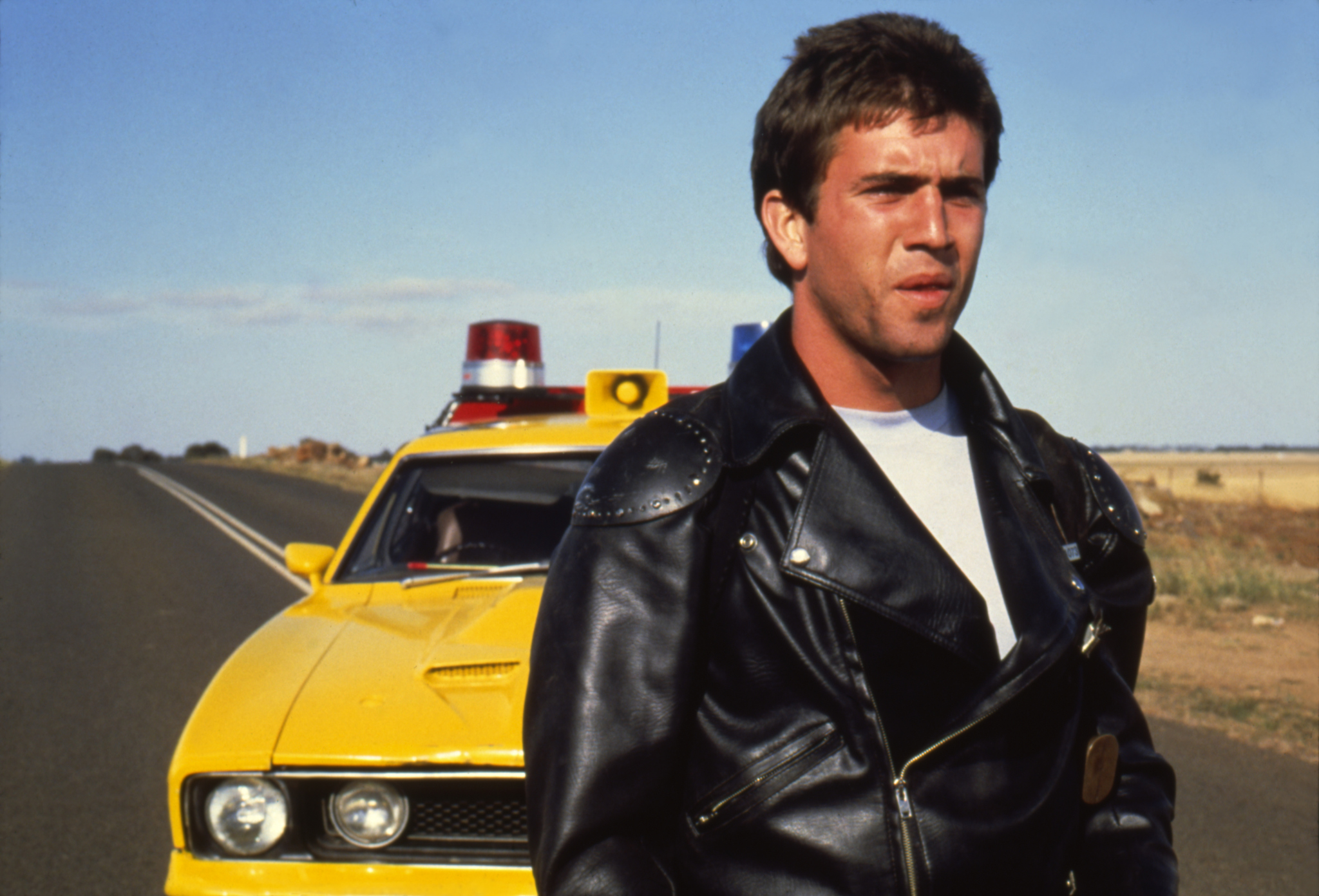
The Black Sheep Escapes
The movie didn’t stay in Australia.
It escaped.
By the time it began appearing internationally in 1980, the conversation was changing.
The British press was fascinated by the fact that this bizarre little Australian movie had been made by a doctor.
Audiences were fascinated by the movie itself.
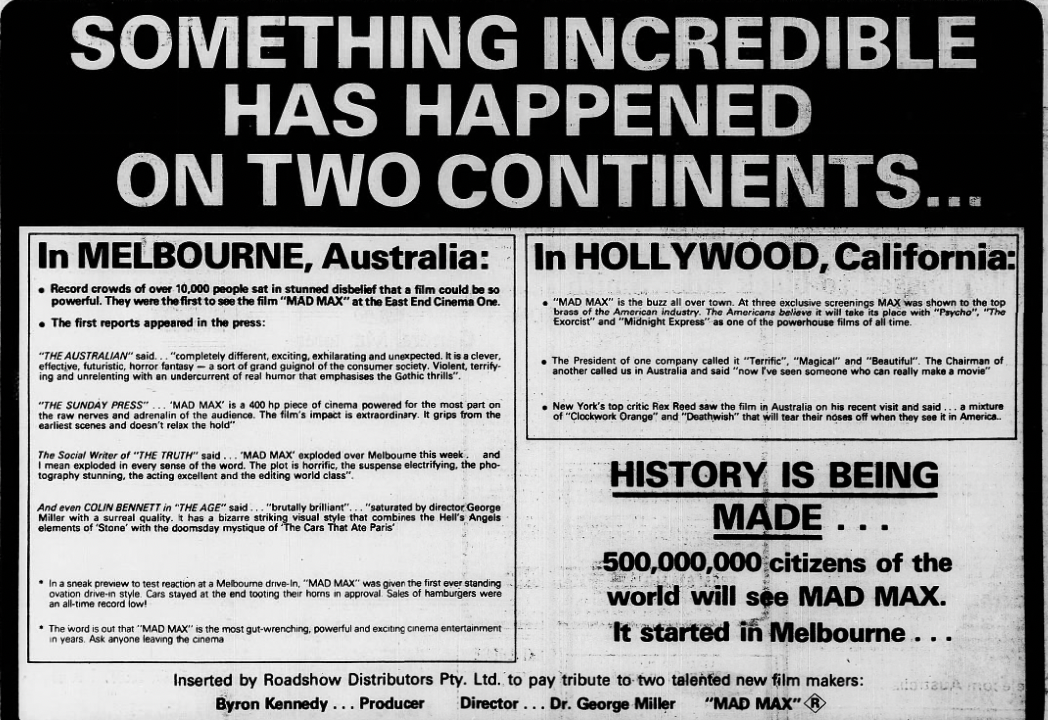
Roadshow Pictures leaned into the phenomenon.
One contemporary advertisement proclaimed:
“Something incredible has happened on two continents…”
On one side was Melbourne, where more than 10,000 people had reportedly turned out in stunned anticipation.
On the other was Hollywood.
The advertisement claimed that Mad Max was already being discussed as one of the most powerful films of its kind.
This wasn’t just marketing.
It was the beginning of the legend.
The black sheep had gotten loose.
Australia Wanted One Kind of Movie. Miller Made Another.
There is a temptation to tell the Mad Max story as a simple battle between George Miller and the Australian government.
That’s not quite right.
Even Miller himself later explained that he and Kennedy weren’t consciously making Mad Max as a rebellion against Australia’s period-film culture. They simply wanted to make the kind of movie they were interested in making.
But the contrast was unavoidable.
Australia was investing heavily in films that looked backward, telling Australians their own history.
Miller looked forward.
Or at least sideways.
He took Australia’s car culture, its enormous roads, its violence and its mythology and turned them into something that didn’t need an Australian history lesson to understand.
That was the secret.
The movie was distinctly Australian without needing to explain Australia.
And when it reached other countries, audiences translated it into their own mythology.
Miller later remembered Japanese audiences treating Mad Max like a samurai movie. French audiences saw a Western on wheels. Scandinavian audiences saw a Viking figure.
Miller suddenly realized that he had stumbled onto something bigger than the movie he thought he was making.
He had discovered mythology.
The Joke Was on Everyone
Mad Max became an international phenomenon.
The film’s extraordinary return on its tiny budget became part of its legend, and the movie eventually launched one of the most enduring action franchises in cinema history. The NFSA notes that its roughly A$380,000 budget once helped it hold the Guinness record for the highest box-office-to-budget ratio of any motion picture.
And then came Mad Max 2.
Then Beyond Thunderdome.
Then decades of filmmaking that would eventually include Babe, Happy Feet, Mad Max: Fury Road and Furiosa.
George Miller went from the doctor who made the black sheep of Australian cinema to one of the country’s most important filmmakers.
And perhaps the funniest part is that Miller himself never really stopped thinking of the first Mad Max as an experiment.
He has described it as a rehearsal for Mad Max 2 — an opportunity to examine everything he thought he’d done wrong and try again.
That’s another thing I love about George Miller.
The legend says he arrived fully formed.
The man himself says he was figuring it out.
The Establishment Eventually Caught Up
The Australian film industry didn’t disappear.
It evolved.
And George Miller became part of the establishment he had once seemed so completely removed from.
But he never really needed to defeat it.
He simply made a movie outside its expectations.
That may be the real legacy of Mad Max.
George Miller didn’t prove that Australian cinema didn’t need serious films.
He proved that serious Australian cinema didn’t have to look serious.
The movie that some critics regarded as vicious, uncouth and distasteful became an international calling card for Australian filmmaking.
The movie that looked like the black sheep became the one everybody wanted to claim.
And the doctor who prescribed a dose of violence ended up giving Australian cinema something much more valuable.
A new language.

About the Creator
Movies of the 80s
We love the 1980s. Everything on this page is all about movies of the 1980s. Starting in 1980 and working our way the decade, we are preserving the stories and movies of the greatest decade, the 80s. https://www.youtube.com/@Moviesofthe80s
Enjoyed the story? Support the Creator.
Subscribe for free to receive all their stories in your feed.
Comments
There are no comments for this story
Be the first to respond and start the conversation.