
Lust in the Dust (1985): Camp, Cowboys, and Divine in the Wild West
Paul Bartel’s outrageous Western spoof brought Tab Hunter, Divine, and a very strange collection of Hollywood veterans together—and somehow became a cult movie almost by accident.

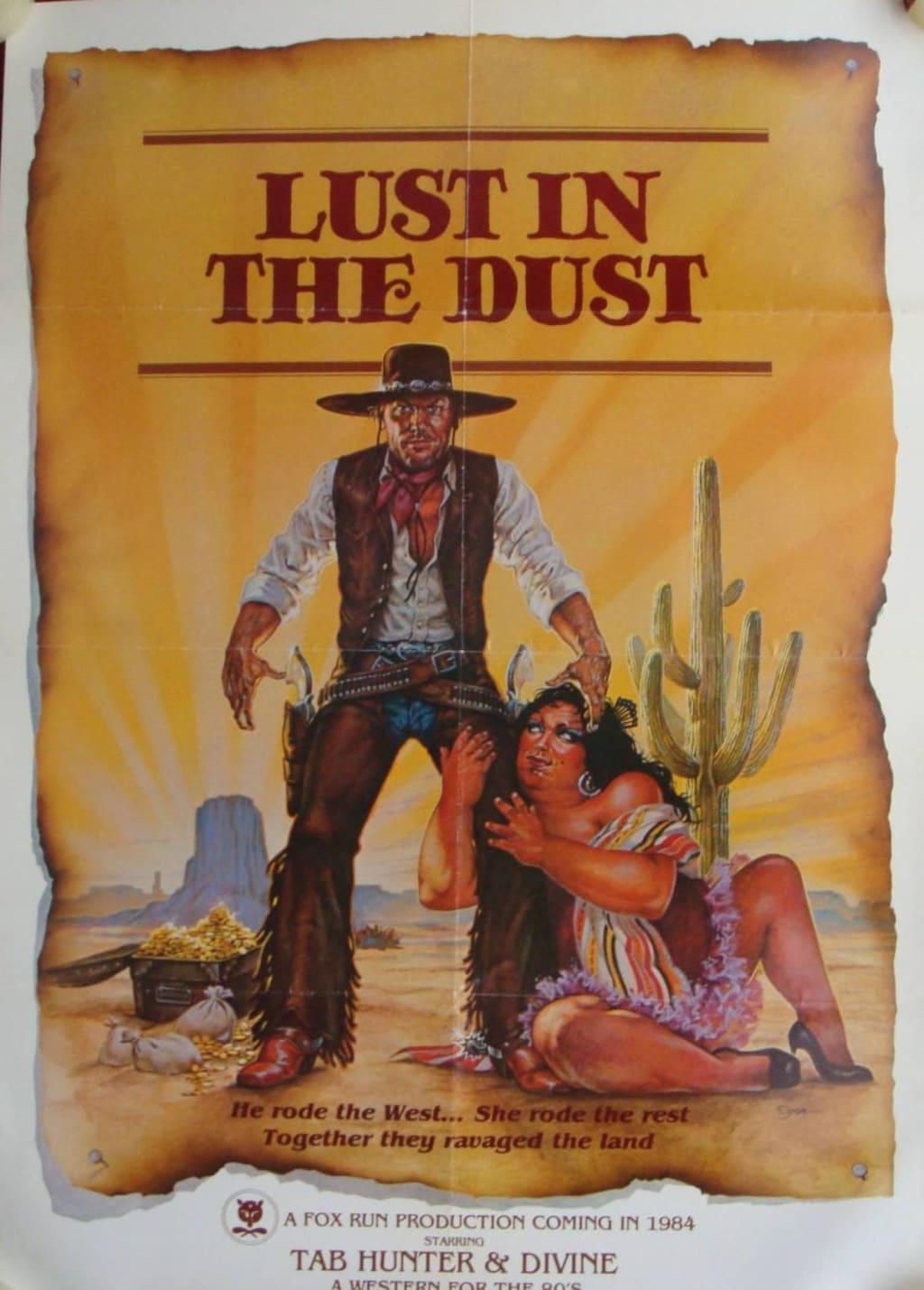
There are movie titles that tell you exactly what kind of movie you are about to watch.
Lust in the Dust is one of them.
You don’t need to see the poster. You don’t need to read the reviews. You don’t even really need to know anything about the plot.
There is lust.
There is dust.
And somewhere in between, Divine is probably going to say something that would make your grandmother leave the room.
The 1985 Western spoof Lust in the Dust was one of those wonderfully strange attempts to take something that had grown out of the underground and push it toward something resembling the mainstream. It brought together Tab Hunter, Divine, Eating Raoul director Paul Bartel, Lainie Kazan, Geoffrey Lewis, Henry Silva, César Romero and Woody Strode for a deliberately vulgar parody of the Western.
It was not exactly a recipe for Raiders of the Lost Ark numbers.
But that wasn’t really the point.
The movie was born from the same peculiar cultural collision that produced so much fascinating independent filmmaking in the 1980s: old Hollywood stars, underground performers, genre movies, drag, camp and people who had absolutely no interest in behaving themselves.
And then there was the title.
Lust in the Dust was a joking nickname for David O. Selznick’s famously overheated 1946 Western Duel in the Sun. Tab Hunter and producer Allan Glaser eventually adopted it for their own considerably cheaper version of Western excess.
That is almost the entire movie in miniature.
Take an old Hollywood Western.
Turn everything up.
Then throw Divine into it.
From The Reverend and Rosie to Lust in the Dust
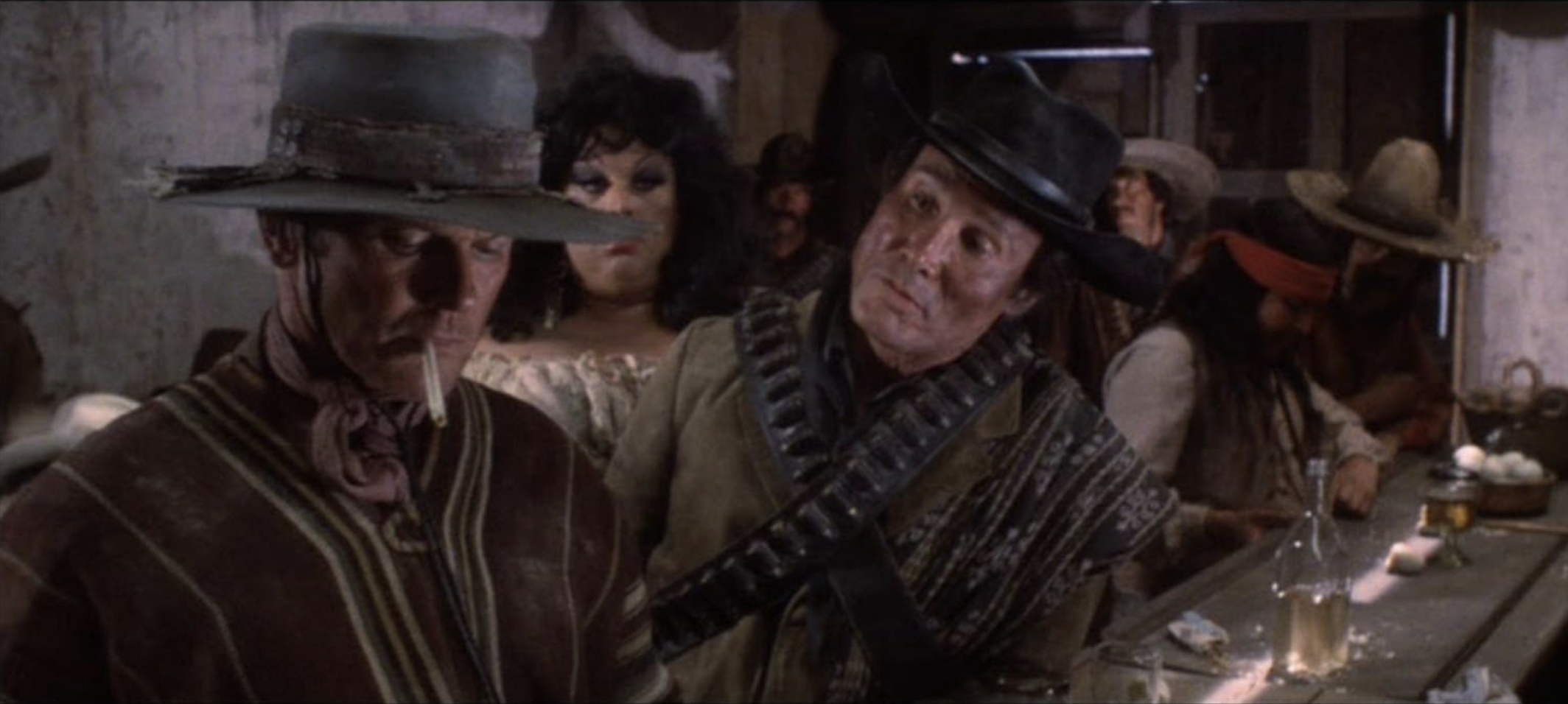
The movie didn’t begin life as the movie we eventually got.
According to the AFI Catalog, the project was originally conceived as a television production called The Reverend and Rosie. It had already been kicking around for years, at a time when the Western had fallen badly out of fashion. A 1983 trade report described it as a potential $3 million production, with shooting planned in Santa Fe.
Tab Hunter was the driving force behind the project.
Hunter had spent much of his career being treated as an impossibly handsome Hollywood commodity. By the 1980s, however, he was working in a very different movie culture. His appearance in John Waters’ Polyester put him together with Glenn Milstead, better known as Divine.
That pairing apparently stuck.
Hunter wanted Divine for Lust in the Dust, and the idea was not simply to bring some underground notoriety into a Western. Divine was supposed to be part of the movie’s central comic engine.
The screenplay was eventually written by Philip John Taylor, a television writer whose credits included sitcom work. The producers were Hunter and Allan Glaser through Fox Run Productions.
John Waters was approached about directing.
He declined.
That may be the first great alternate-universe version of Lust in the Dust.
A John Waters-directed Lust in the Dust starring Divine, Tab Hunter and Lainie Kazan is the sort of hypothetical movie that makes you want to invent a time machine purely to see what would have happened.
But Waters hadn’t written the script, and he passed.
Paul Bartel got the job instead.
That choice makes a certain amount of sense. Bartel had already demonstrated that he could make deliberately tasteless, subversive comedy with Eating Raoul. But Lust in the Dust was conceived as something somewhat broader.
This wasn’t supposed to be a tiny underground oddity.
The producers wanted a real movie.
And they had a few million dollars to prove it.
The Hollywood money gets involved
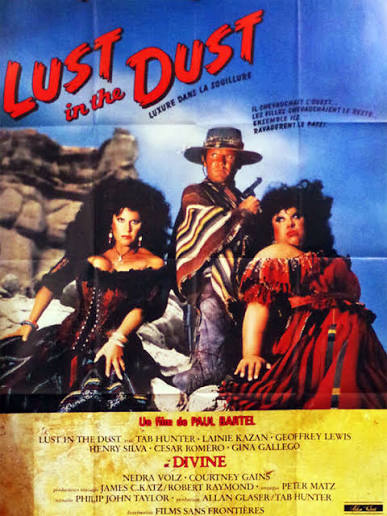
The budget was reportedly somewhere around $2.5 million to $3 million in some contemporary accounts, although later accounts put the financing higher. Either way, this was considerably more money than Bartel had been working with on Eating Raoul.
That difference mattered.
Eating Raoul had been made for very little money and turned its limitations into part of its personality.
Lust in the Dust had locations, costumes, established stars and a genuine Western production design.
It was still ridiculous.
It just had a little more money with which to be ridiculous.
The casting became one of its greatest attractions.
Lainie Kazan played Marguerita Ventura, the owner of the saloon in Chili Verde. Geoffrey Lewis played the wonderfully named outlaw Hard Case Williams. Henry Silva played Bernardo. César Romero was Father Garcia. Gina Gallego played Ninfa. Woody Strode was among the supporting players.
And then there was Divine.
There was always going to be Divine.
Edith Massey, one of Waters’ regular performers, was originally associated with the role of Big Ed. She was ultimately replaced by Nedra Volz.
Chita Rivera had also been considered for Kazan’s role before the part eventually went to Kazan.
It’s a cast that makes Lust in the Dust feel almost like somebody emptied an old Hollywood address book into a blender.
And then turned the blender on.
Welcome to Chili Verde
The story is almost beside the point, but it does technically have one.
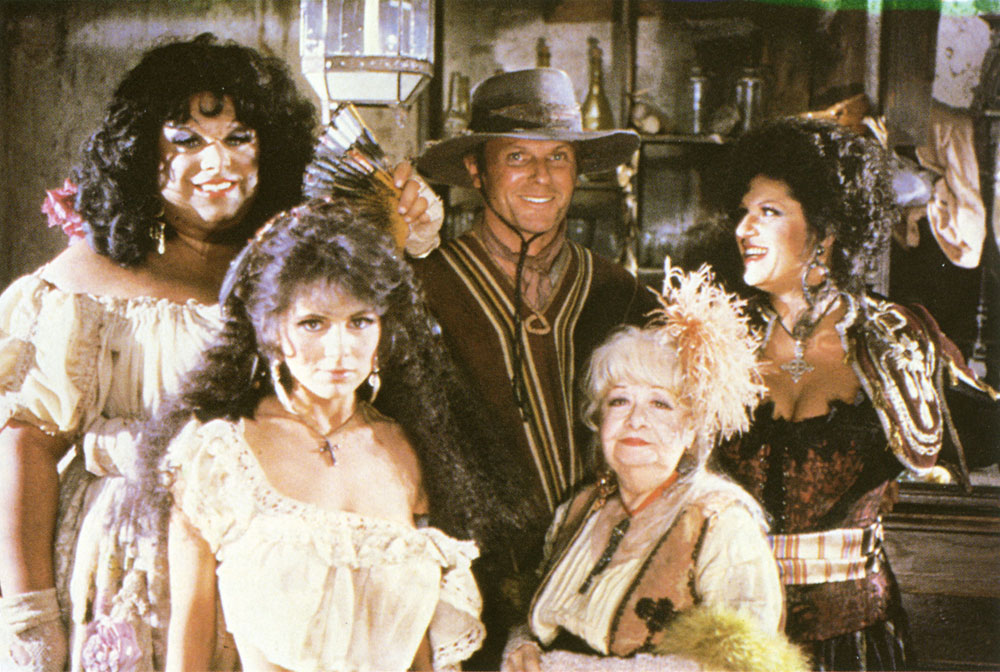
Rosie Velez is a dance-hall girl who finds herself stranded in the desert. She eventually crosses paths with Abel Wood, a taciturn gunfighter played by Tab Hunter.
Abel is basically the mysterious Western stranger.
Rosie is basically Divine.
And Chili Verde is basically the kind of Western town where everybody is either looking for gold, having sex, killing somebody, or discussing the possibility of doing one of those things.
The town’s saloon is run by Marguerita, and there is a treasure hidden somewhere in the area.
The treasure hunt involves a limerick, a map and some anatomically inconvenient clues.
Because, naturally, this is not Shane.
The joke is that Lust in the Dust takes the familiar machinery of the Western—the stranger riding into town, the saloon, the outlaw gang, the buried treasure, the mysterious past—and gives every piece of it a dirty, campy makeover.
Variety described the movie as a “saucy, irreverent, quite funny send-up” of the Western, specifically noting the way it turned familiar genre conventions upside down.
That’s a pretty good description.
The movie knows exactly what kind of Western it is making fun of.
The question is whether all of its jokes are as funny as the people making them seem to think they are.
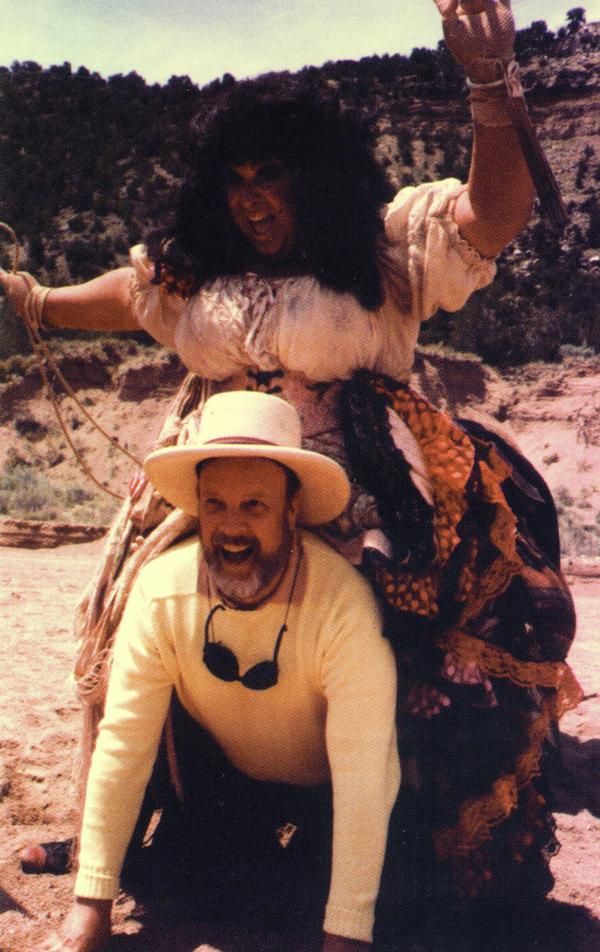
Paul Bartel tries not to let the whole thing explode
Principal photography took place in New Mexico, with the production using the Eaves Ranch Western town set near Santa Fe. The movie was shot quickly and efficiently, with production lasting roughly five weeks.
And this is where Paul Bartel becomes an interesting choice.
Because Bartel understood camp.
But he also understood restraint.
That sounds like an odd combination when we’re talking about a movie starring Divine, but it matters.
Lust in the Dust isn’t quite the anything-goes John Waters movie some people might expect it to be. Bartel gives the material an actual Western framework. There are gunfights. There are horses. There are saloon scenes. There is a plot.
And then Divine shows up.
That tends to complicate things.
Divine had already become an underground legend through Waters’ movies, particularly Pink Flamingos and Polyester. But by 1985, Glenn Milstead was increasingly interested in being taken seriously as an actor.
He wasn’t interested in being reduced to the joke.
In one contemporary interview, Divine pushed back against the way the press characterized him:
“I used to do interviews and talk shows in drag and I was always pushing that I wasn’t a transvestite, I was an actor.”
That distinction was important to him.
Divine wasn’t simply playing dress-up.
He was performing.
And Lust in the Dust gave him an opportunity to demonstrate that he could exist inside something resembling a conventional movie.
That was a bigger deal than it might seem now.
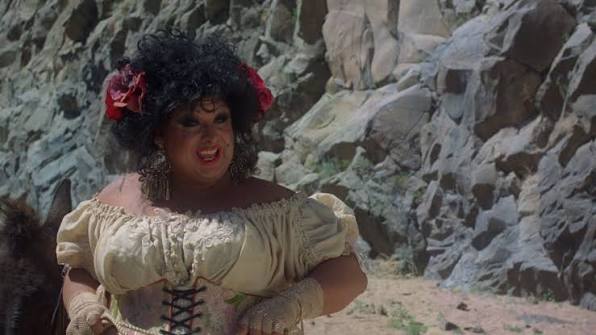
Divine wanted to be an actor
There’s something fascinating about watching Divine in Lust in the Dust today.
The character is obviously outrageous.
The performance isn’t.
At least, not all the time.
Divine could have played Rosie as pure chaos. Instead, there are moments when he seems genuinely interested in playing the character rather than simply being Divine.
That makes the movie’s relationship to his persona more complicated.
The audience came to see Divine.
But Divine was trying to show them Glenn Milstead could act.
And Tab Hunter understood that.
The two had worked together on Polyester, and their friendship helped make the unusual pairing possible. Contemporary coverage emphasized that Hunter and Divine were friends, and Divine saw the movie as an opportunity to move into a somewhat more mainstream filmmaking environment.
There is something almost touching about that ambition.
Because Lust in the Dust is ridiculous.
But the people making it weren’t necessarily treating their careers as a joke.
That distinction is important.
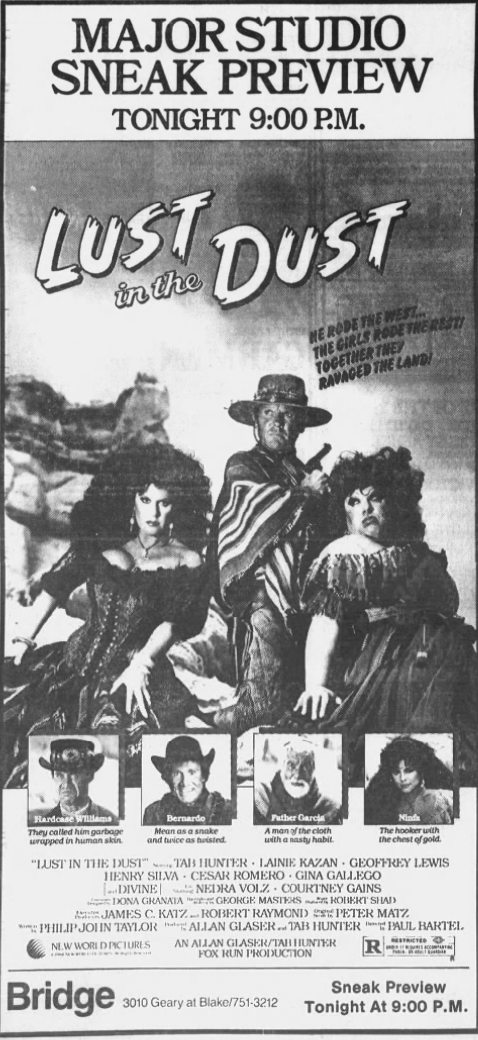
The movie finally hits the screen
New World Pictures picked up the film for distribution after screenings for potential distributors in 1984. It premiered in the United States in early 1985 and opened theatrically in New York on March 1.
The movie found an especially receptive audience in some urban markets.
San Francisco was one of them.
The Castro Theatre reportedly gave the film an extended run and a box-office record, while gay audiences in New York and elsewhere helped sustain interest.
That makes sense.
Lust in the Dust wasn’t really competing with the mainstream studio comedies of 1985.
It was competing for the people who wanted something stranger.
Something dirtier.
Something that looked like it had escaped from another movie and wandered into the theater.
And Divine was the main attraction.
The film was rated R and ran approximately 85 minutes.
It did not become a major commercial success.
But it didn’t disappear, either.
That’s an important distinction.
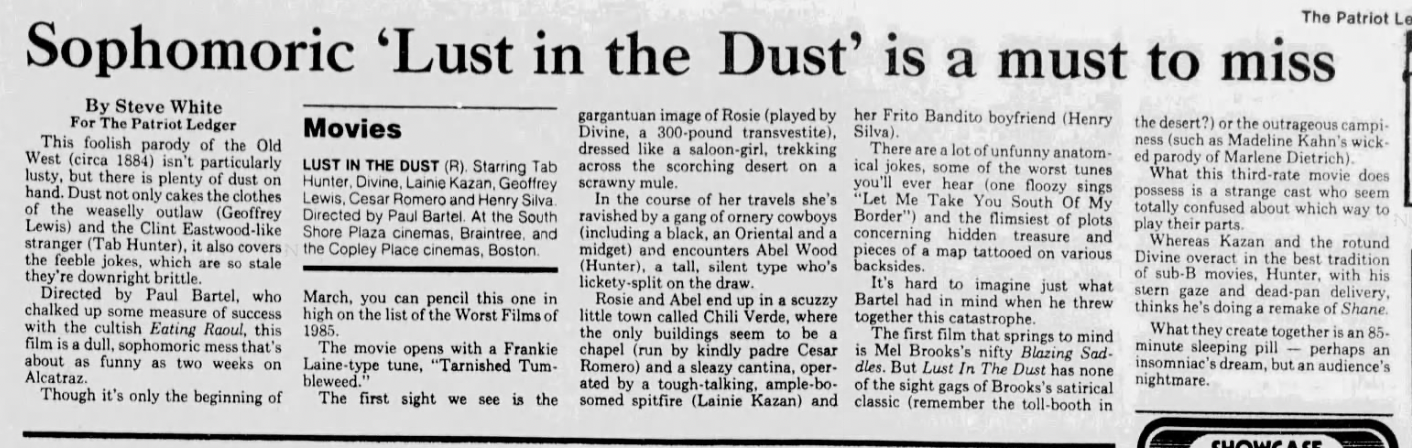
Critics couldn’t quite agree on the joke
The reviews were all over the place.
Some critics understood exactly what Bartel and company were attempting.
Others seemed to be waiting for the movie to become something it wasn’t.
Variety was relatively enthusiastic, calling it a saucy and irreverent Western spoof. Other contemporary reviews praised the performances and the sheer audacity of the concept.
Roger Ebert was less convinced.
He gave Lust in the Dust two stars and thought the movie was funniest during its opening stretch. His basic complaint was that the movie eventually became interested in its plot.
And Ebert didn’t care about the plot.
His argument was essentially: why bother with a story when you have Divine, Tab Hunter and Lainie Kazan standing around together?
That’s a fair criticism.
It is also a problem the movie can’t entirely escape.
Once Lust in the Dust starts worrying about who gets the gold, it becomes less funny.
The jokes stop flying quite as quickly.
The plot starts dragging the movie toward something resembling a normal Western.
And nobody bought a ticket for a normal Western.
The Los Angeles Times was harsher, describing the screenplay as more like an unstructured collection of gags and sketches than a coherent story.
That criticism has some merit.
The movie is funniest when it stops trying to be a movie.
Which is both its strength and its problem.
Divine is the movie
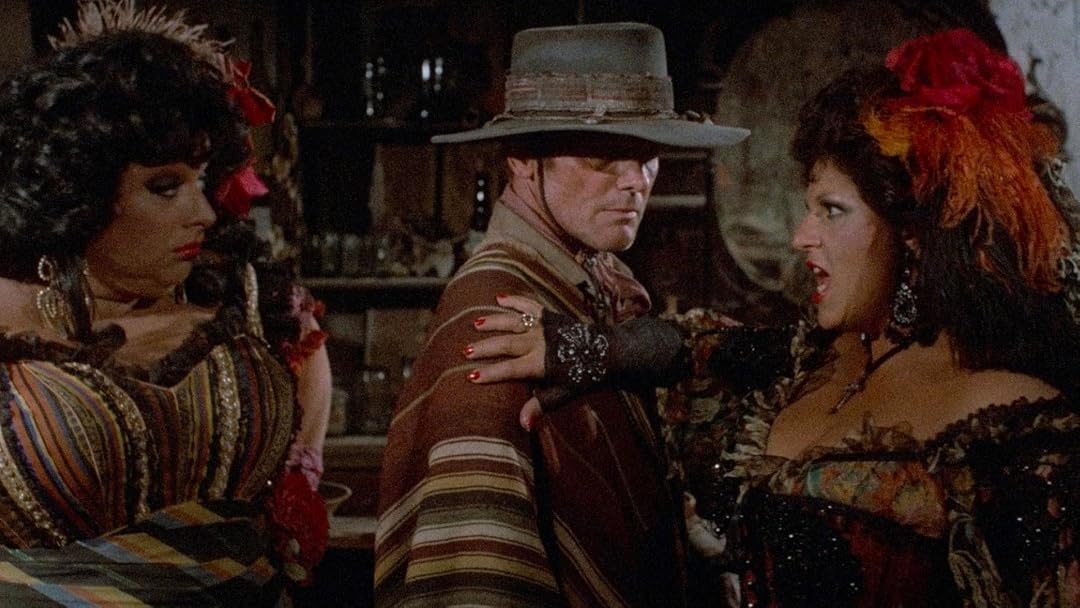
The great thing about Lust in the Dust is also the thing that makes it difficult to evaluate as a conventional comedy.
Divine dominates it.
Not because every scene is necessarily hilarious, but because Divine’s very presence changes the temperature of the movie.
Put Divine in a Western saloon and suddenly the genre feels different.
Put Tab Hunter beside Divine and you have another layer of comedy: the impossibly handsome 1950s movie star standing next to one of the most notorious performers of the underground film world.
And then add Lainie Kazan.
And Geoffrey Lewis.
And César Romero.
And Henry Silva.
And Woody Strode.
The movie starts to resemble some kind of cinematic garage sale.
You keep finding things you didn’t know were in there.
And that’s part of the fun.
The strange legacy of Lust in the Dust
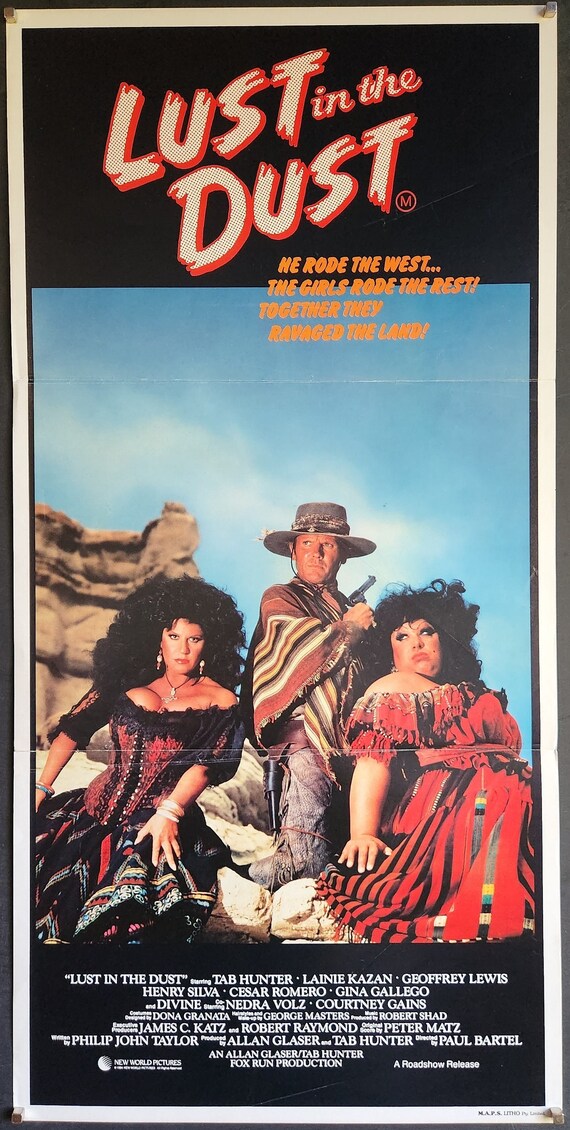
Lust in the Dust wasn’t a blockbuster.
It wasn’t a critical darling.
It wasn’t the movie that transformed Paul Bartel into a mainstream comedy director.
But it survived.
That’s sometimes more important.
The movie found another life through home video, television and midnight screenings. It became one of those 1980s movies that people discovered after the fact, usually because somebody said:
“You have to see this.”
And then you watch it.
And you realize that the person who recommended it was absolutely correct.
You also realize that they may not have been entirely sure what they were recommending.
That’s the nature of cult movies.
Lust in the Dust occupies an interesting position in Divine’s career, too. It arrived at a moment when he was attempting to move beyond the underground persona that had made him famous.
There is a certain melancholy to that when you know what happened later.
Divine died in 1988 at only 42.
So Lust in the Dust now exists as part of a much shorter career than anyone watching it in 1985 could have imagined.
It also captures Tab Hunter at an unusual point in his career. The former teen idol was no longer the Hollywood heartthrob of the 1950s, but he had found an unexpected second act through independent filmmaking and his collaboration with Divine.
And Paul Bartel was still trying to figure out what came next.
In interviews around the film’s release, Bartel discussed ideas for an Eating Raoul sequel and even a stage musical adaptation. He understood that audiences wanted him to somehow top the outrageousness of Eating Raoul.
But he also recognized the trap.
As he put it, people expect you to top yourself when they like something you’ve done.
That’s a difficult game.
Eventually, Lust in the Dust became something different.
It became a time capsule.
The movie that wanted to be bigger than its cult
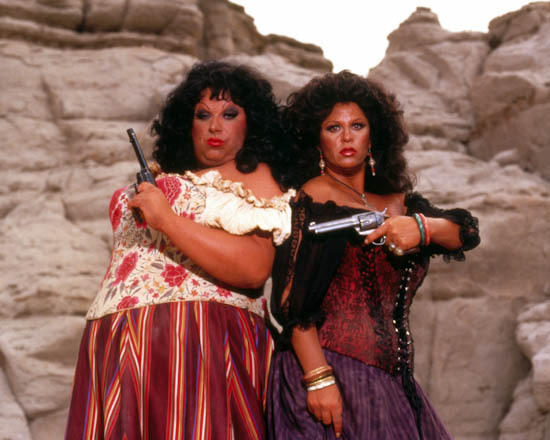
There is something almost wonderfully American about Lust in the Dust.
A couple of guys decide they can turn a bizarre little idea into a movie.
They get a former Hollywood heartthrob.
They get Divine.
They get Lainie Kazan.
They get César Romero.
They shoot a Western in New Mexico.
They spend millions of dollars.
They get New World Pictures to distribute it.
And then the movie goes out into the world and discovers that the world has no idea what to do with it.
That’s the story of a lot of 1980s independent movies.
Some became hits.
Some became disasters.
Some became classics.
And some became Lust in the Dust.
It isn’t a perfect movie. The story gets tangled. Some of the jokes feel like they were written on the back of a cocktail napkin. The movie occasionally seems to confuse being outrageous with being funny.
But when it works, it really works.
Divine is impossible to ignore.
Tab Hunter is an unexpectedly good straight man for the madness surrounding him.
Lainie Kazan understands precisely what movie she’s in.
And Bartel keeps the whole thing moving just enough that it never completely collapses under the weight of its own absurdity.
That’s something.
And maybe that’s why Lust in the Dust has survived.
It doesn’t really belong to the Western genre.
It doesn’t quite belong to the John Waters universe.
It isn’t exactly mainstream Hollywood.
It isn’t completely underground, either.
It’s sitting in the middle.
Covered in dust.
Probably wearing too much makeup.
And waiting for somebody to rediscover it.

Lust in the Dust (1985) brought Paul Bartel, Divine, and Tab Hunter together for a raunchy Western spoof that found its audience in the strange corners of 1980s cult cinema.
Tags: Lust in the Dust, Divine, Tab Hunter, Paul Bartel, Lainie Kazan, 1980s movies, 1985 movies, cult movies, Westerns, John Waters, New World Pictures, Movies of the 80s
Sources
AFI Catalog of Feature Films, Lust in the Dust — production credits, release date, original The Reverend and Rosie concept and production history.
Turner Classic Movies, “Lust in the Dust” — development history, Tab Hunter and Allan Glaser’s involvement, casting, production and release history.
Roger Ebert, “Lust in the Dust,” RogerEbert.com, March 22, 1985 — contemporary critical response and Ebert’s two-star review.
Sheila Benson, “‘LUST’ GETS LOST IN ITS OWN DUST,” Los Angeles Times, March 8, 1985 — contemporary review and criticism of the screenplay.
Variety, “Lust in the Dust,” 1983 — contemporary assessment of the film as a Western spoof.
Rotten Tomatoes, Lust in the Dust — contemporary-review aggregation and film information.
About the Creator
Movies of the 80s
We love the 1980s. Everything on this page is all about movies of the 1980s. Starting in 1980 and working our way the decade, we are preserving the stories and movies of the greatest decade, the 80s. https://www.youtube.com/@Moviesofthe80s
Enjoyed the story? Support the Creator.
Subscribe for free to receive all their stories in your feed.
Comments
There are no comments for this story
Be the first to respond and start the conversation.