
Kenatha Kanom Ending Explained & Spoilers: Why the Villagers Hide the Dinosaur Bones and What the Egg Twist Means
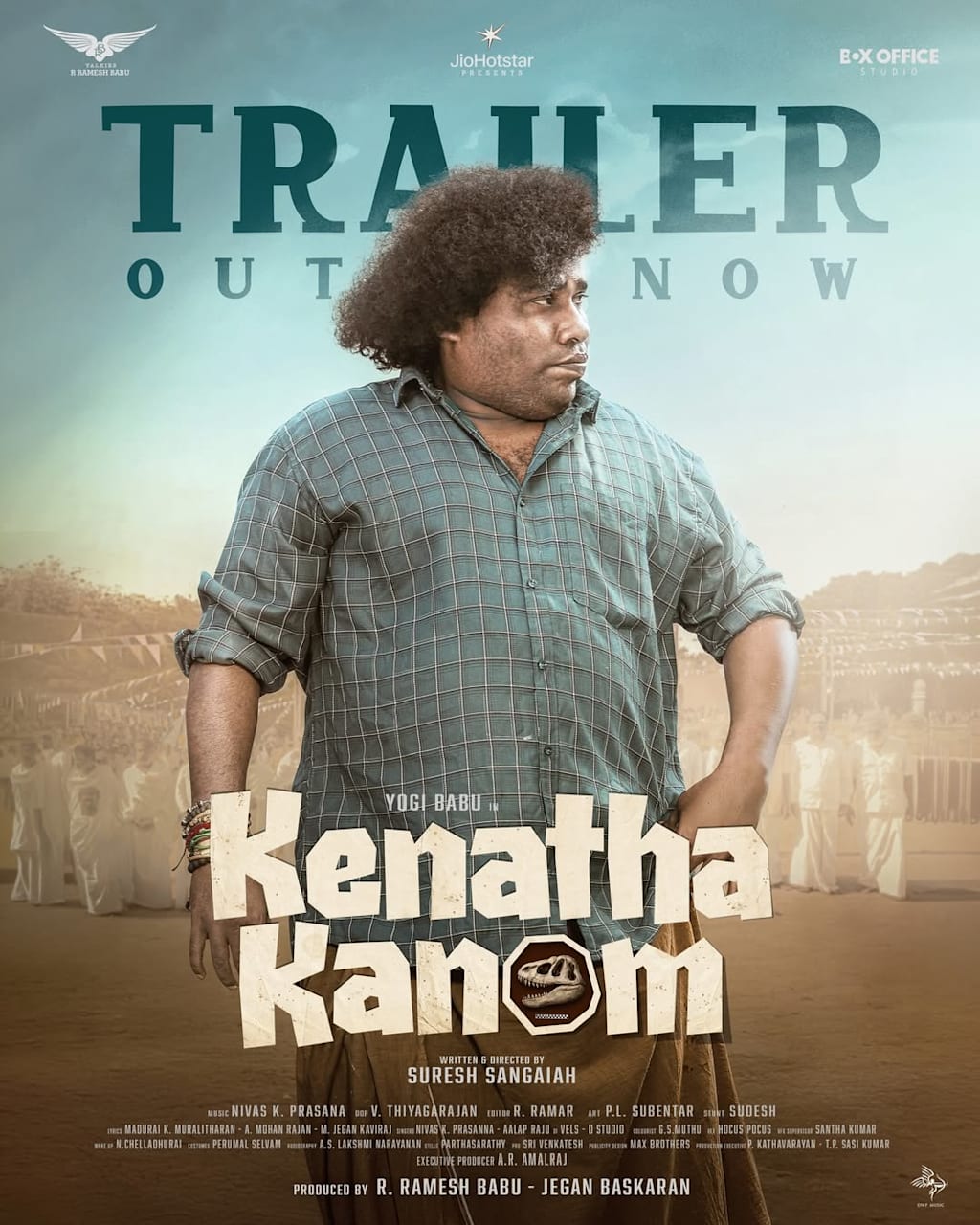
Yogi Babu’s Kenatha Kanom turns a village water crisis into an unusual battle over dinosaur fossils, government neglect and the value of human lives.

Spoiler Warning: This article contains major spoilers for Kenatha Kanom, including the complete story, climax and final dinosaur egg scene.
Kenatha Kanom Movie Explained
Kenatha Kanom begins in a drought-stricken Tamil Nadu village where water has become a daily struggle. The villagers travel long distances just to collect enough water to survive, while repeated requests to government officials bring almost no meaningful help.
At the centre of the story is Manivasagam, a village priest played by Yogi Babu. He is in love and wants to get married, but his girlfriend’s father refuses to send his daughter to a village where even basic access to water is uncertain.
He gives Manivasagam one condition: solve the village’s water problem first.
That personal problem soon becomes connected to the entire village’s fight for survival.
The Villagers Dig for Water — But Find Dinosaur Bones
After government promises lead nowhere, the villagers decide to search for groundwater themselves.
A spot near Manivasagam’s house is identified as a possible location for water, and the villagers begin digging a well. Everyone believes their long struggle may finally be over.
Instead of water, however, they discover something completely unexpected: huge fossilised bones believed to belong to a dinosaur.
The discovery immediately changes everything.
Officials, researchers and authorities who had shown little interest in the village’s water crisis suddenly arrive because the fossils may be historically important.
The digging site is taken over for scientific investigation, leaving the villagers unable to continue searching for the water they desperately need.
Why Do the Villagers Fight the Authorities?
The conflict becomes much bigger when researchers believe dinosaur remains could be spread beneath a larger section of the village.
That means homes and land may have to be cleared for excavation.
For the villagers, this is deeply unfair. When they were struggling for drinking water, almost nobody came to help them. But as soon as ancient bones appeared, officials, police and politicians became interested in their village.
Manivasagam also suffers a devastating personal loss when excavation around the site contributes to his house collapsing and his grandfather dies.
His anger now becomes more than a fight over a well. It becomes a fight to protect the entire village.
Why Do Manivasagam and the Villagers Hide the Dinosaur Bones?
After heavy rain fills the excavation pit, the fossils suddenly disappear.
The authorities initially have no idea where they have gone.
The truth is that Manivasagam and the villagers secretly removed and hid the dinosaur bones.
This becomes their most powerful bargaining tool.
The government desperately wants the fossils back, especially because senior officials are now involved. Police pressure the villagers and question them, but nobody reveals the location.
Manivasagam finally gets the opportunity he had wanted from the beginning: someone in power is forced to listen.
Kenatha Kanom Ending Explained
When the minister meets the villagers and asks for the fossils to be returned, Manivasagam presents three demands.
First, the government must permanently solve the village’s water problem.
Second, no resident should be forced to leave their home or ancestral land because of the fossil discovery.
Third, a dinosaur museum should be built in the village itself, allowing the fossils to remain connected to the place where they were discovered while also bringing recognition to the village.
The minister agrees.
This is the film’s most important moment because Manivasagam exposes the irony at the heart of the story: why did dead dinosaurs receive more attention from the system than living people who had been begging for water?
The fossils ultimately give the villagers the political leverage that years of requests and complaints could not.
Does the Village Finally Get Water?
Yes.
A large water tank is eventually installed, finally ending the village’s long water crisis.
Manivasagam’s marriage can also move forward now that the main objection from his bride’s family has been resolved.
The dinosaur fossils are preserved through a museum instead of becoming the reason for destroying the village.
In an emotional symbolic moment, the precious water represents more than a basic necessity. It represents dignity, recognition and the villagers finally being heard.
What Does the Dinosaur Egg Mean?
The movie saves one final surprise for its last scene.
Along with the dinosaur fossils, an egg has also been discovered and placed in the museum.
Someone suddenly notices that the egg appears to be moving.
Manivasagam looks toward it and sees the shell beginning to crack.
The film ends before revealing exactly what is inside.
The scene deliberately leaves viewers with a playful cliffhanger. After spending most of the movie treating dinosaurs as ancient history, the final shot jokingly suggests that something prehistoric may actually be alive.
It could simply be an absurd final gag fitting the film’s satirical tone, but it also leaves the door open for a possible continuation.
What Is the Real Meaning of Kenatha Kanom?
Behind its comedy and unusual dinosaur storyline, Kenatha Kanom is fundamentally about government priorities, rural neglect and human dignity.
The villagers repeatedly ask for something as basic as water and are ignored. Their village becomes important only when something valuable to institutions is discovered beneath it.
By hiding the fossils, the villagers reverse that power relationship.
For once, the authorities need something from them.
That is what finally gives ordinary people enough leverage to make themselves heard.
About the Creator
parwinder singh
🎬 Movie & Entertainment Writer sharing reviews, ending explanations, story breakdowns, plot twists and hidden details from Bollywood, Hollywood, South Indian cinema, Korean dramas and OTT releases.
Enjoyed the story? Support the Creator.
Subscribe for free to receive all their stories in your feed.
Comments
There are no comments for this story
Be the first to respond and start the conversation.