
Just Tell Me What You Want: The Forgotten 1980 Movie That Was Too Cynical for Hollywood
Sidney Lumet turned sex, money, corporate power and a deeply dysfunctional relationship into one of the strangest comedies of the early 1980s—and audiences wanted nothing to do with it.

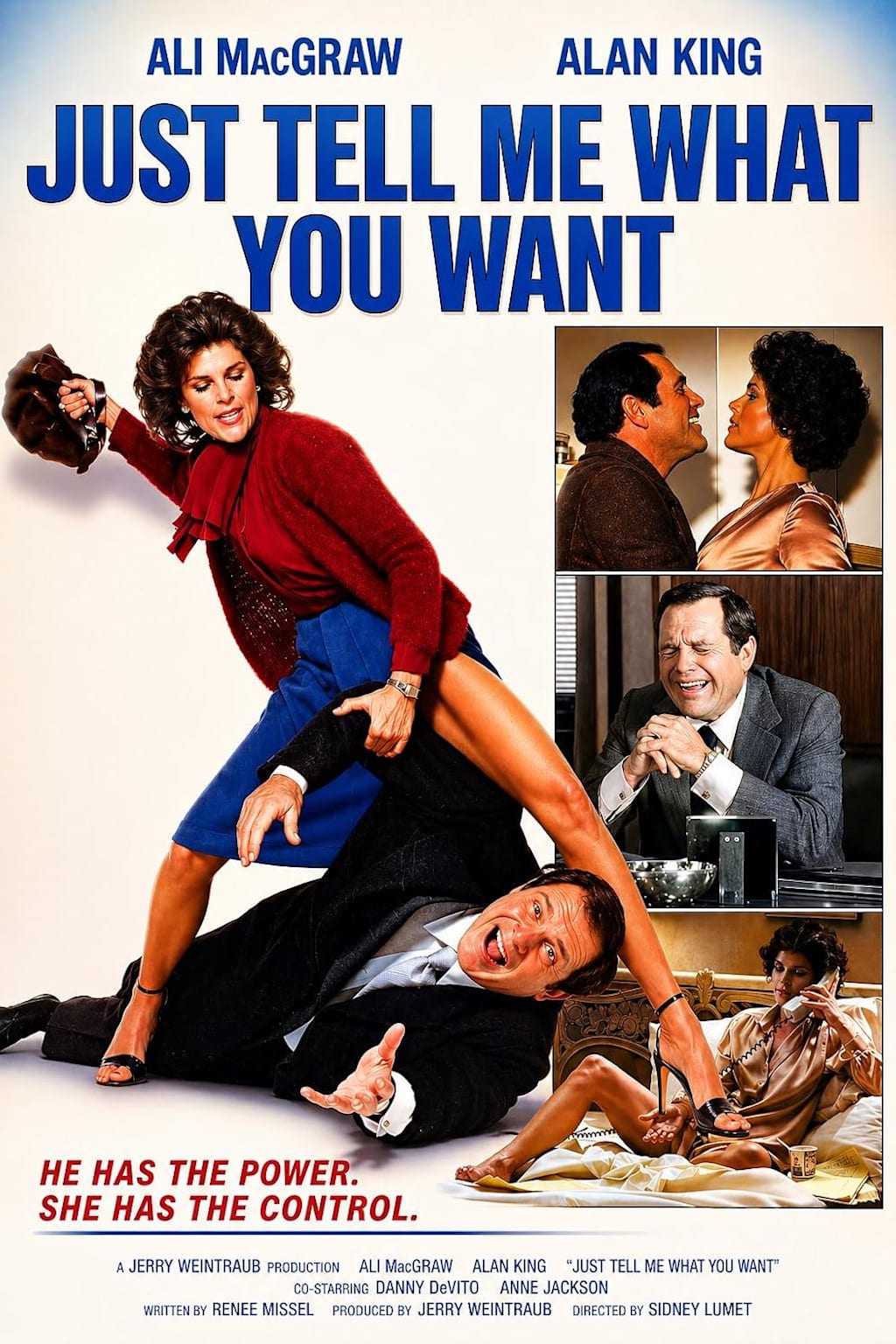
Sidney Lumet’s Just Tell Me What You Want (1980), starring Ali MacGraw and Alan King, was a biting comedy about sex, money and power that bombed at the box office.
There is something wonderfully strange about Just Tell Me What You Want.
Released in 1980, the film arrived with the kind of pedigree that suggested Warner Bros. had a major adult comedy on its hands. It had Sidney Lumet in the director’s chair, Jay Presson Allen adapting her own novel, Ali MacGraw and Alan King at the center of the story, Peter Weller in an early role, and one of Hollywood’s great legends, Myrna Loy, making her final feature-film appearance.
And yet, somehow, almost nobody remembers it.
That is a shame, because Just Tell Me What You Want is one of those peculiar movies that feels like it fell through the cracks between decades. It is technically an early-’80s movie, but its attitude belongs firmly to the cynical, sexually liberated, aggressively adult world of late-’70s New York. It is funny, vulgar, nasty, sophisticated, ridiculous, and occasionally downright vicious.
In other words, it is very much a Sidney Lumet movie.
Only this time, instead of cops, criminals, courtroom battles, or political corruption, Lumet turned his attention toward Manhattan’s world of corporate power, expensive apartments, sexual manipulation, and people who treat relationships like hostile takeovers.
And he brought Alan King along for the ride.

A Love Story Where Everyone Is Trying to Win
At the center of the movie is Max Herschel, a wealthy and powerful corporate titan played by comedian Alan King.
Max has money. He has influence. He has an enormous ego.
What he does not particularly have is the ability to maintain a normal relationship.
Enter Bones Burton, played by Ali MacGraw.
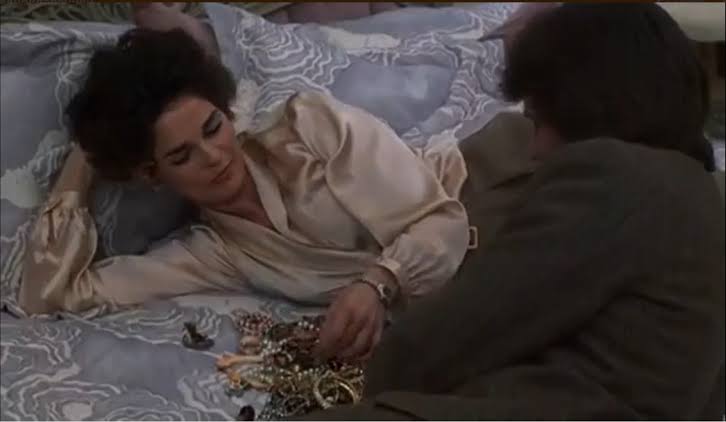
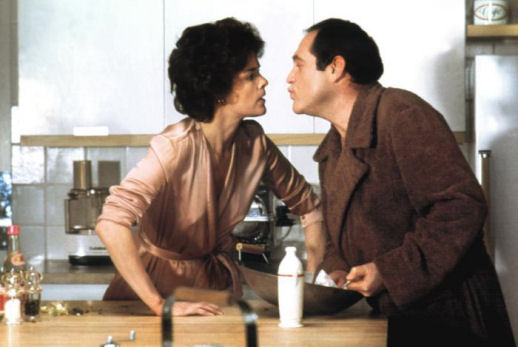
Bones is Max’s former protégé and current mistress, and their relationship is less a romance than a prolonged negotiation conducted with insults, manipulation and sex. Max wants to possess Bones without actually committing to her. Bones wants to escape Max’s orbit while simultaneously making him understand exactly what he is losing.
Neither is particularly good at letting go.
That is what makes their relationship so much more interesting than a conventional romantic comedy. These two people don’t simply love each other. They compete with each other.
Every conversation is a battle.
Every argument is a negotiation.
Every moment of tenderness contains the possibility that somebody is about to pull the rug out from underneath the other.
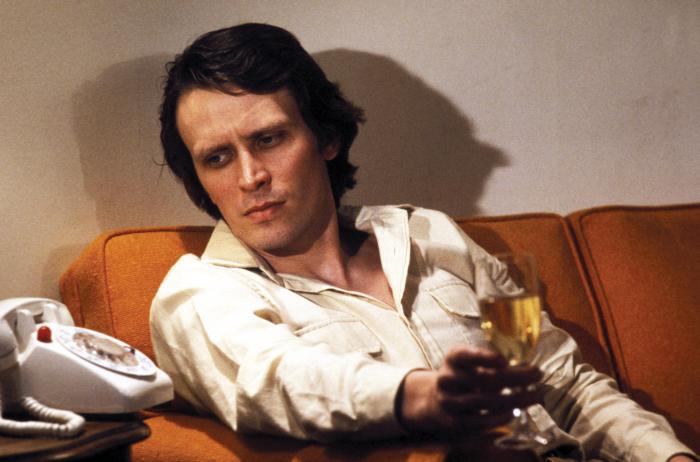
Bones eventually marries a much younger playwright, played by Peter Weller, partly because she genuinely wants a different life and partly because she knows exactly how much it will irritate Max.
This is not exactly When Harry Met Sally.
It is closer to watching two incredibly wealthy people conduct psychological warfare while pretending they aren’t emotionally invested in the outcome.
And then things get physical.
Very physical.
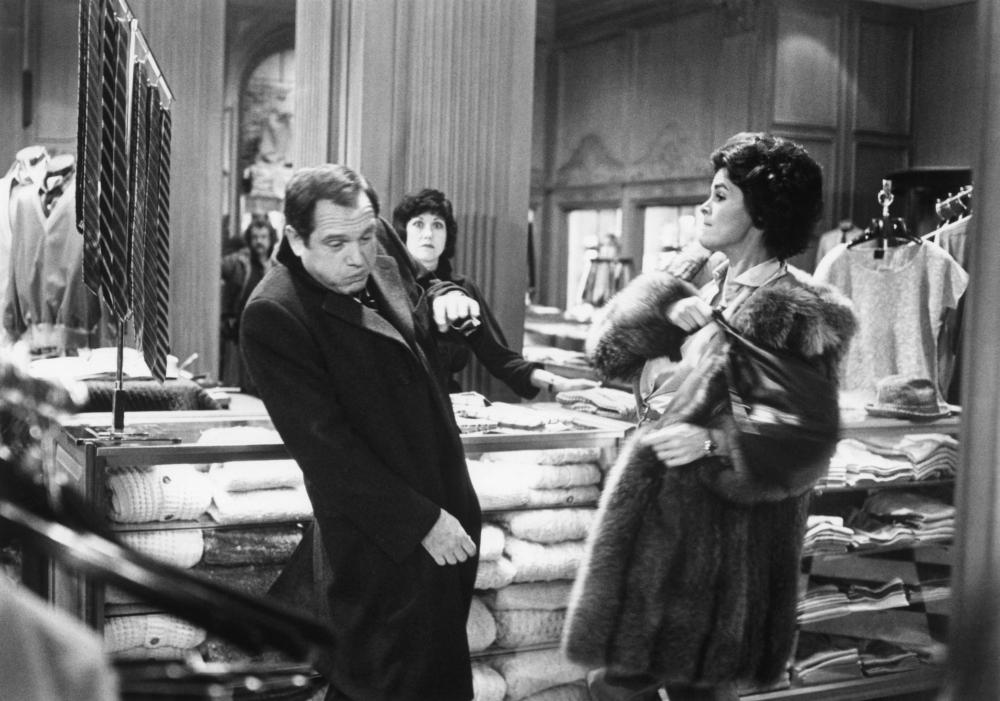
The Bergdorf Goodman Brawl
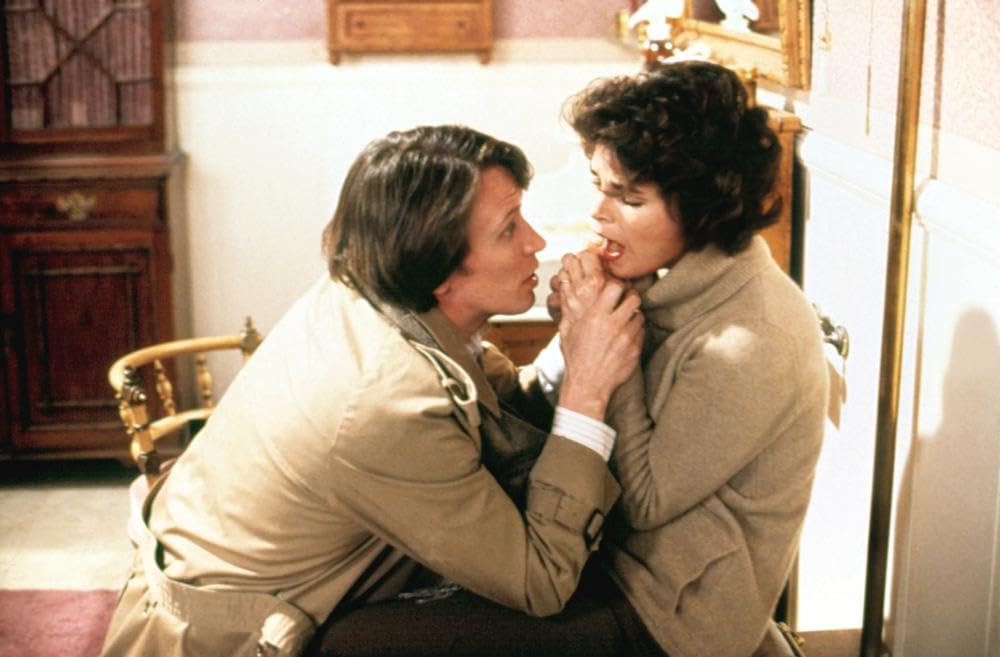
The movie’s most famous sequence takes place inside Bergdorf Goodman, where Max and Bones get into an increasingly ridiculous physical altercation among the store’s aisles.
It is the kind of scene that sounds completely insane when described on paper.
And it is.
But that is also the point.
The sophisticated verbal sparring that has defined their relationship suddenly explodes into something resembling a marital wrestling match. Clothes, merchandise, furniture and dignity are thrown around with equal enthusiasm.
Lumet stages the sequence with the kind of physical energy that seems almost out of place in the rest of the movie.
It is also one of those wonderfully bizarre examples of an adult comedy refusing to behave like a respectable adult comedy.
The film is interested in money and class and power, but it is also perfectly happy to have its wealthy protagonists rolling around a department store like a pair of lunatics.
That tension defines Just Tell Me What You Want.
It wants to be sophisticated.
Then it gets dirty.
It wants to be a social satire.
Then somebody throws somebody else across a room.

Jay Presson Allen Had Teeth
The screenplay came from Jay Presson Allen, adapting her own 1975 novel.
Allen was hardly an unknown quantity. She had already written the screenplay for Alfred Hitchcock’s Marnie and later worked on Cabaret. She understood sharp dialogue and complicated people, and Just Tell Me What You Want gives her plenty of opportunities to indulge both.
Warner Bros. reportedly paid $500,000 for the rights to the novel and Allen’s screenplay, a substantial investment that reflected how highly the studio regarded the material.
Mike Nichols was initially attached to direct before the project eventually found its way to Lumet.
That turned out to be an inspired choice.
Lumet was one of the great New York filmmakers, and New York itself feels like one of the movie’s characters. The offices, apartments, restaurants, department stores and streets give the movie a sense of place that a more polished Hollywood production probably could not have duplicated.
Lumet understood that these people needed to live in a city that was just as aggressive as they were.
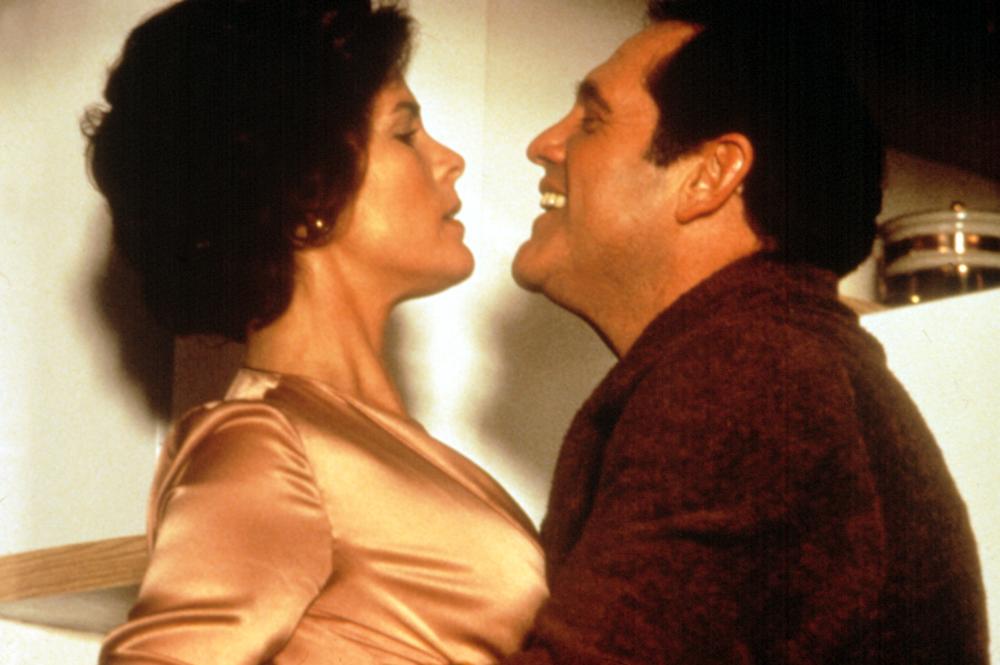
Ali MacGraw Meets Alan King
Warner Bros. clearly wanted star power.
MacGraw reportedly received $650,000 plus a percentage of the profits for the role, an enormous commitment for a movie that would ultimately struggle commercially.
And then there was Alan King.
King was best known as a comedian, but Max Herschel gives him a chance to demonstrate just how effective he could be when he stopped trying to be likable.
Max is funny, but he isn’t necessarily nice.
He is controlling, selfish, vulgar and frequently infuriating. Yet King never reduces him to a cartoon villain. There is something recognizable beneath the arrogance. Max genuinely cares about Bones. He simply has no idea how to express that affection without turning it into another exercise in ownership.
MacGraw is equally good at refusing to make Bones a conventional romantic heroine.
She is smart. She is angry. She is manipulative. She can be selfish. She can also be vulnerable.
The movie works best when it allows both characters to be terrible to each other.
Because that’s where the truth is.
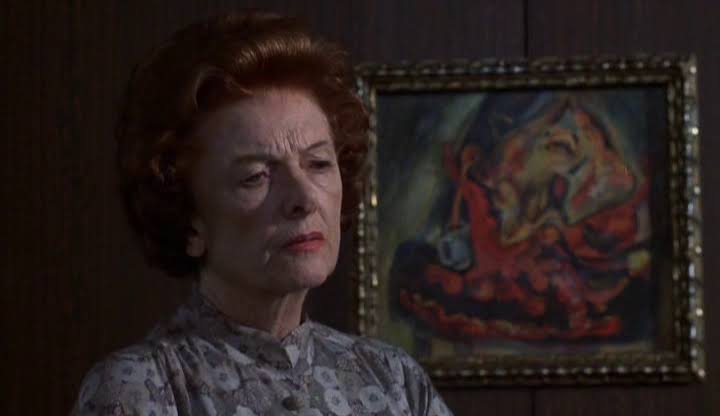
And Then There Was Myrna Loy
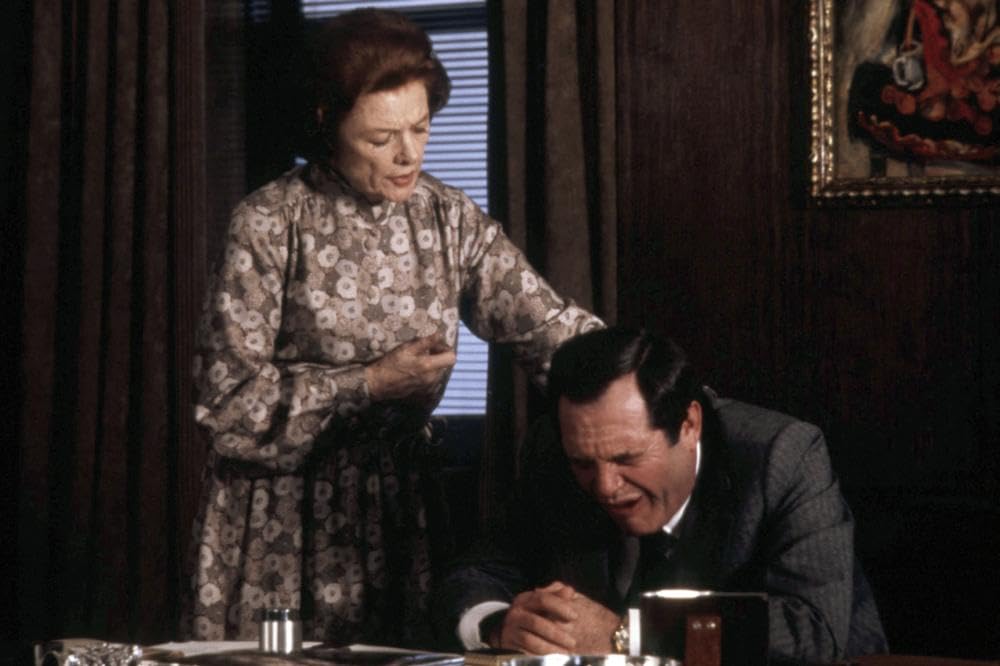
For all the attention given to MacGraw and King, Myrna Loy walks into the movie and practically steals it.
Loy plays Max’s perceptive secretary, and there is something almost haunting about watching her here.
This is Myrna Loy, the star of The Thin Man, Mr. Blandings Builds His Dream House, Libeled Lady and countless other films that helped define Hollywood’s golden age.
By 1980, the industry she had once ruled looked very different.
Loy was 75 years old when the film was released, and Just Tell Me What You Want became her final theatrical feature.
That gives the movie an accidental poignancy.
Loy isn’t playing a glamorous relic from another era. She is simply there, observing the absurdity around her with an intelligence and amusement that suggests she has seen this sort of behavior before.
She probably had.
Her performance was widely singled out by critics as one of the film’s highlights.
It is difficult not to watch her and think about the extraordinary distance Hollywood had traveled between the 1930s and 1980.
A Movie Caught Between Two Eras
Production began on January 29, 1979, with filming taking place around Manhattan and at Kaufman Astoria Studios.
Production designer Tony Walton created the film’s various worlds of wealth and privilege, from Vermont farmhouses to lavish executive suites. Cinematographer Oswald Morris gave the movie a polished but grounded visual style, while Charles Strouse supplied the score.
But the most important production element may have been Lumet’s commitment to New York.
This was a city in transition.
The old glamour was still there, but it was increasingly surrounded by cynicism, financial desperation and a sense that the rules of American success had changed.
That makes Just Tell Me What You Want feel almost like a missing link between the movies of the 1970s and the corporate culture films that would explode later in the decade.
The movie understands that money changes people.
It also understands that people who have money tend to believe they are entitled to everything else.
Including other people.
The Critics Couldn’t Quite Agree What It Was
When the film opened in 1980, critics were divided.
Roger Ebert gave it three stars and appreciated the way King managed to give Max enough humanity to keep the movie from becoming mere “high-class trash.” He also admired MacGraw and the film’s ability to create characters who felt considerably more complicated than the material initially suggested.
Others were far less enthusiastic.
Janet Maslin called it a “fascinating mess,” particularly taking issue with the movie’s tonal shift following the Bergdorf Goodman fight.
Frank Rich argued that the movie seemed caught between corporate cynicism and conventional romantic sentiment.
And that may be the movie’s greatest problem.
It doesn’t quite know what it wants to be.
A romantic comedy?
A satire of corporate America?
A sex comedy?
A New York character piece?
A portrait of two emotionally damaged people?
The answer is apparently: yes.
A Box Office Disappointment
Whatever Warner Bros. hoped to get from the movie, it didn’t happen.
Just Tell Me What You Want opened in early 1980 and earned only about $2 million domestically.
For a film carrying this much talent and this kind of investment, that was a serious disappointment.
Audiences apparently weren’t particularly interested in watching Ali MacGraw and Alan King spend two hours psychologically torturing each other.
Which is unfortunate, because the movie has aged in an interesting way.
The corporate world that seemed exaggerated in 1980 now looks remarkably familiar.
The obsession with money.
The casual sexual politics.
The enormous egos.
The belief that relationships can be negotiated like business contracts.
The assumption that wealth somehow gives you ownership over everyone around you.
None of this feels particularly dated.
If anything, it feels more recognizable.
The Forgotten Sidney Lumet Movie
There is a tendency to think of Sidney Lumet primarily through his serious films: 12 Angry Men, Dog Day Afternoon, Network, Serpico, Prince of the City.
But Lumet could be funny.
He could also be incredibly nasty.
Just Tell Me What You Want allows him to explore a different side of his filmmaking, and that alone makes it worth rediscovering.
It is not a perfect movie. The tonal shifts are real. The story occasionally feels like it is fighting with itself. Some of the comedy has aged better than other parts.
But there is something wonderfully alive about it.
It has the energy of a movie made by people who weren’t afraid of unpleasant characters.
And maybe that’s why it disappeared.
Hollywood in 1980 was changing rapidly. The blockbuster had arrived. The old studio system was long gone. Younger audiences were increasingly looking for spectacle, horror, science fiction and youth-oriented entertainment.
There wasn’t necessarily much room left for an expensive, adult, dialogue-heavy comedy about two wealthy New Yorkers who can’t decide whether they want to sleep together, kill each other, or get married.
So Just Tell Me What You Want simply got lost.
The Final Word
Maybe Just Tell Me What You Want didn’t fail because it was too cynical.
Maybe it failed because it was cynical in a way audiences weren’t ready to admit they enjoyed.
This is a movie about people who use money as a weapon, sex as leverage and love as a bargaining chip. Max doesn’t simply want Bones—he wants to own the relationship. Bones doesn’t simply want freedom—she wants Max to suffer for making her feel dependent on him. They lie, manipulate, insult and hurt each other, then seem genuinely surprised when the other person fights back.
And somehow, that makes the movie feel remarkably modern.
Watch it now and the corporate satire isn’t particularly shocking. The casual misogyny isn’t particularly shocking. The narcissism isn’t particularly shocking. Even the idea that wealthy people can turn every human relationship into a transaction feels less like satire than a description of everyday life.
What is shocking is that Hollywood once spent serious money making a movie this adult, this unpleasant and this unwilling to tell its audience who they were supposed to root for.
That’s what makes Just Tell Me What You Want worth rediscovering.
It isn’t a lost masterpiece. It is something more interesting: a movie that got away with being mean.
Sidney Lumet wasn’t interested in giving us a lovable couple. Jay Presson Allen wasn’t interested in giving us a comforting romantic fantasy. And Alan King certainly wasn’t interested in making Max Herschel a nice guy.
The result is a strange, funny, occasionally infuriating movie about people who have everything except the ability to behave like decent human beings.
Audiences stayed away.
Maybe they knew themselves better than Hollywood did.
Or maybe, just maybe, Just Tell Me What You Want was simply released twenty years too early.
Because in 1980, Max Herschel looked like a caricature.
Today, he looks like the guy sitting in the corner office.
And that may be the most uncomfortable joke in the entire movie.
About the Creator
Movies of the 80s
We love the 1980s. Everything on this page is all about movies of the 1980s. Starting in 1980 and working our way the decade, we are preserving the stories and movies of the greatest decade, the 80s. https://www.youtube.com/@Moviesofthe80s
Enjoyed the story? Support the Creator.
Subscribe for free to receive all their stories in your feed.
Comments
There are no comments for this story
Be the first to respond and start the conversation.