
“I Hate This Guy” – A Short History of How Good Intentions Created a Digital Monster 👾
How a Simple Solution for Car Ads Accidentally Broke the Internet

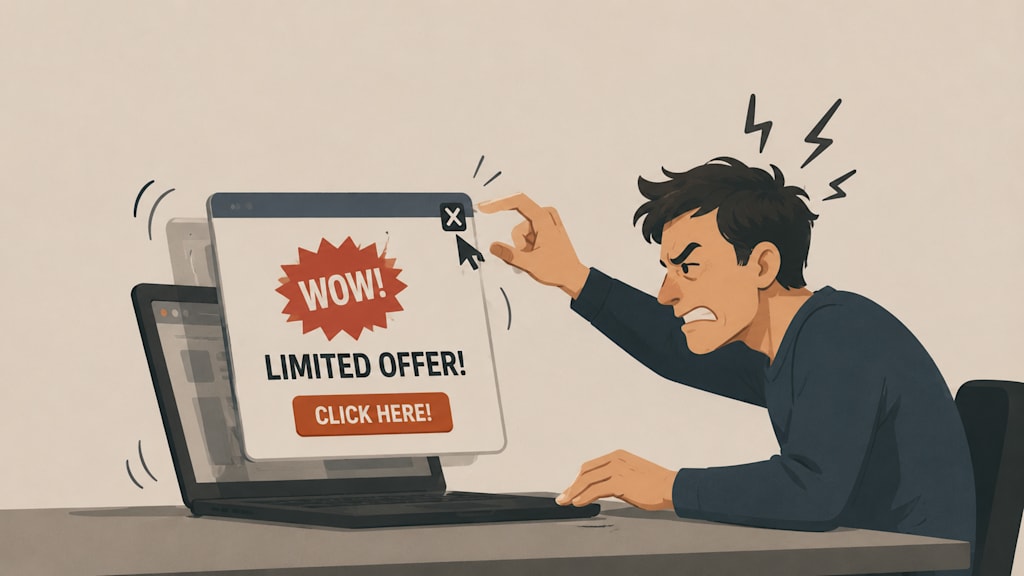
Imagine stepping back in time to the mid-1990s. Your computer is making those strange, screeching noises that sound like robots fighting—that’s just your 56k modem 🔊 trying to handshake with the world. You wait patiently for several minutes for a simple text-based page to load. Suddenly, instead of the content you were looking for, a small, extra window "pops up" in the center of your screen with a bright advertisement. Congratulations—you’ve just fallen victim to the very first pop-up in history.
Today, these windows are like mosquitoes on a humid summer night: irritating, persistent, and nearly impossible to eliminate entirely 🦟. But did you know that the man who wrote the first code generating pop-ups actually issued a public apology for his invention? This is the story of Ethan Zuckerman and his "original sin," an act of engineering that changed the face of the web forever.
The Engineer Who Meant Well 🛠️
In 1994, the internet was still the "Wild West." Ethan Zuckerman was working for a portal called Tripod.com, which offered free web hosting for college graduates. At the time, nobody really knew how to make the web profitable. Banner ads already existed, but they were "glued" to the top of the page. And that is where an unforeseen branding nightmare began.
A major car company 🚗 had bought a campaign on Tripod. As fate would have it, their shiny, family-friendly sedan ad appeared directly on a page containing content that was definitely not for children (Zuckerman later recalled it was a page celebrating a rather niche sexual preference). The brand was horrified. Their marketing team went into a tailspin—they didn't want their luksury logo sitting right next to such "questionable" material.
Zuckerman’s task was simple: find a way for the ad to appear "near" the content without being directly associated with it. He needed to create a digital separator.
The Birth of the "Separate Entity" 🖥️
Zuckerman sat down and wrote a few lines of code in JavaScript 💻. The mechanism was straightforward: upon entering the main page, the browser would automatically trigger a second, smaller window (window.open) where only the advertisement would load.
From an engineering perspective, it was an elegant solution. It’s a bit like a waiter in a restaurant bringing you the bill on a separate little tray instead of dropping it directly into your soup. The advertiser was thrilled—their brand now floated in a "safe," isolated space. The user, in theory, could simply close the window and get back to reading. At the time, no one realized they had just opened Pandora’s box.
When the Bedroom Becomes a Battlefield 🏹
In the world of technology, every effective tool eventually falls into the hands of those who aren't afraid to abuse it. Pop-ups proved to be incredibly effective because they were impossible to ignore. You had to interact with them—if only to hunt for that tiny, retreating "X" in the corner ❌.
Within a few years, the internet transformed into a psychological battlefield for attention. Sites began opening dozens of windows at once, some stacking on top of each other, while others—known as "pop-unders"—would hide beneath your main browser window to surprise you later. The most malicious ones would even "flee" from your mouse cursor. Zuckerman’s good intentions were trampled by an army of marketers who turned the web into a jungle of digital weeds.
The “Original Sin” of the Internet 🍎
In 2014, Ethan Zuckerman published a famous essay in The Atlantic titled The Internet’s Original Sin. It was there that he uttered the famous words: "I’m sorry. Our intentions were good."
However, Zuckerman wasn't just apologizing for the annoying windows. His diagnosis went deeper. The pop-up became the symbol of a business model built on surveillance and forced attention. This invention solidified the idea that the internet must be "free," and the currency we pay for it is our time and privacy. We built a monster that feeds on our focus, and the pop-up was merely its first, loud roar.
A Legacy of Frustration ⏳
Today, classic pop-ups are largely blocked by modern browsers, but their ghost lives on in new forms. They have evolved into "overlays" asking you to join a newsletter, intrusive cookie consent banners 🍪, or auto-playing videos that follow you as you scroll.
Ethan Zuckerman’s story is a classic tale of technology escaping the control of its creator. It is ironic proof that even if you only want to move a car ad away from controversial content, you might accidentally ruin the afternoon of billions of people. The next time you furiously click the "X" on your smartphone screen, spare a thought for Ethan 🙏. He really didn't mean for it to turn out this way.
About the Creator
Piotr Nowak
Pole in Italy ✈️ | AI | Crypto | Online Earning | Book writer | Every read supports my work on Vocal
Enjoyed the story? Support the Creator.
Subscribe for free to receive all their stories in your feed.
Comments
There are no comments for this story
Be the first to respond and start the conversation.