
How to Pick the Best Office Chair
Learn how to pick the best office chair with simple, practical tips on ergonomics, posture support, lumbar design, and comfort to reduce back pain and improve daily productivity.

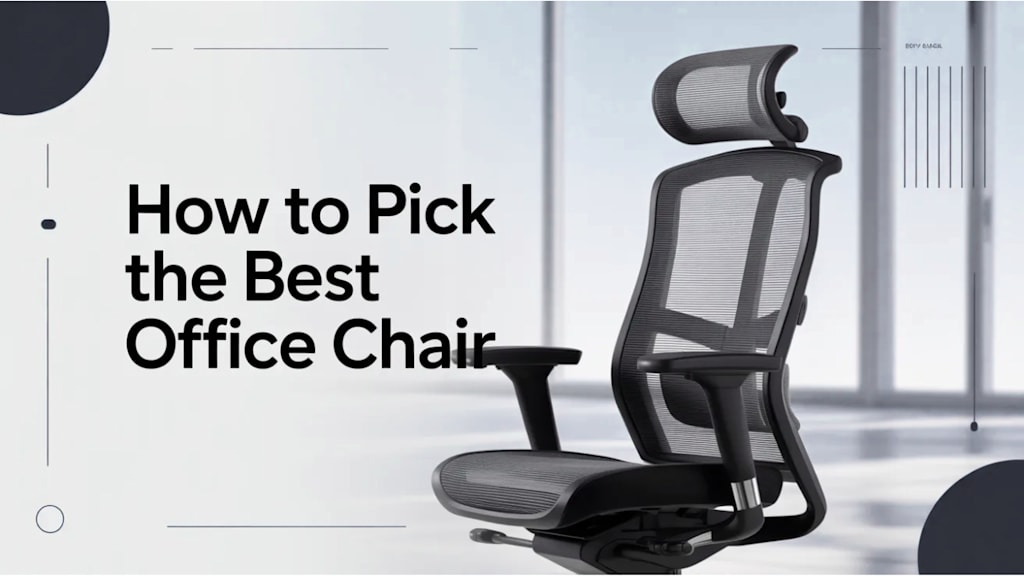
Most people do not think much about their office chair until something starts hurting.
At first, it is just a small discomfort in the lower back after a long day. Then it becomes stiffness in the shoulders. Eventually, even short periods of sitting start to feel uncomfortable. By that point, the chair you sit on every day stops being just furniture and starts becoming part of the problem.
Choosing the right office chair is not about trends or expensive branding. It is about understanding how your body works while sitting and finding a chair that supports it properly for long hours.
This guide breaks the process down in a simple, practical way so you can actually make a better decision without getting overwhelmed by technical jargon.
Why Your Office Chair Matters More Than You Think
Sitting itself is not the enemy. The real issue is how you sit and what supports your body while you are sitting.
Your spine has a natural curve. When a chair does not support that curve, your body slowly compensates. You might lean forward without noticing or round your shoulders just to feel balanced. Over time, your muscles work harder than they should, which leads to fatigue and pain.
A good office chair does something simple but important. It keeps your spine in a natural position so your muscles can relax instead of constantly adjusting your posture.
That is why the right chair is less about comfort in the moment and more about how your body feels after hours of use.
Start With How You Actually Work
Before looking at features, it helps to think about how you actually use your chair.
Do you sit for long uninterrupted hours, or do you move around often? Do you work from a fixed desk, or do you switch between tasks, calls, and meetings?
People who sit for long stretches usually need a well-designed ergonomic chair with strong lumbar support and better adjustability. People who move frequently may benefit more from a flexible chair that allows small posture changes without discomfort.
There is no single “best chair” for everyone because sitting habits are not the same for everyone. Before you decide, keep these points in mind to choose the best office chair.
1) Lumbar Support Is Not Optional
If there is one feature you should never ignore, it is lumbar support.
This is the part of the chair that supports your lower back. Without it, your spine naturally collapses into a slouched position over time. That is where most long-term back pain begins.
A proper ergonomic chair provides lumbar support that does not feel forced. It should gently fill the gap between your lower back and the chair so your spine maintains its natural curve without effort.
Some chairs offer adjustable lumbar support, which is even better because it allows you to match the chair to your body instead of adapting your body to the chair.
2) Adjustability Changes Everything
A chair can look comfortable and still be wrong for your body if it is not adjustable.
A good ergonomic chair allows you to adjust seat height, backrest tilt, and armrest positioning. These might sound like small details, but they determine how your body weight is distributed while sitting.
If your feet are not flat on the floor, your lower back tends to take more pressure. If your armrests are too high or too low, your shoulders stay tense. If the backrest is fixed, your spine has to adapt instead of being supported.
The more a chair adapts to you, the less your body has to compensate.
3) Seat Comfort Is Not Just About Softness
A common mistake is assuming that a softer seat is automatically better.
In reality, a very soft seat can actually cause problems because it allows your hips to sink too much, which affects spinal alignment. On the other hand, a seat that is too hard can create pressure points and discomfort.
The ideal seat is balanced. It should feel supportive but not rigid. You should be able to sit for long periods without feeling pressure building under your thighs or hips.
4) Backrest Design Shapes Your Posture
The backrest is where most of your posture is actually controlled.
Some chairs use rigid backrests that force you into a fixed position. Others use flexible designs that move with your spine. Both can work, but they serve different needs.
If you tend to sit still for long hours, a structured backrest with strong lumbar support is often better. If you shift positions frequently, a flexible backrest may feel more natural.
The important thing is that your backrest should support movement without letting you collapse into poor posture.
5) Armrests Are More Important Than People Think
Armrests are often overlooked, but they play a bigger role in posture than most people realize.
When armrests are positioned correctly, they reduce strain on your shoulders and upper back. This indirectly helps your lower back because your entire upper body is better balanced.
Adjustable armrests are especially useful because they allow you to align your arms with your desk height. This prevents shoulder tension that builds up over long working hours.
6) Breathability and Material Matter More Than You Expect
If you spend long hours sitting, heat buildup becomes a real issue.
Mesh chairs allow airflow, which keeps your body cooler and reduces fatigue. Fabric chairs offer more cushioning but can sometimes trap heat. Leather chairs often feel premium but may become uncomfortable during long sessions if ventilation is poor.
This is not just about comfort. Temperature affects how long you can stay focused without shifting constantly.
7) Price Does Not Always Equal Comfort
It is easy to assume that a higher price automatically means a better chair. That is not always true.
Premium chairs often offer better adjustability, durability, and ergonomic design. However, there are mid-range and budget chairs that still provide solid support if chosen carefully.
The key is not to focus on price alone but to focus on whether the chair fits your body and your work habits.
Sometimes a well-adjusted mid-range chair is more comfortable than a poorly adjusted expensive one.
8) Try to Think Beyond the Chair
Even the best office chair cannot fix everything on its own.
If you sit for long hours without movement, your body will still feel stiff regardless of the chair. Small habits make a big difference.
Standing up occasionally, stretching, and changing your sitting position helps reduce pressure on your spine. Even small movements throughout the day improve circulation and reduce fatigue.
A good chair supports your body, but your habits complete the system.
Final Thoughts
Picking the best office chair is not about chasing the most popular model or the most expensive option.
It is about understanding your body, your work habits, and the kind of support you actually need throughout the day.
A proper ergonomic chair can significantly improve comfort, reduce strain, and help you work longer without pain, but only if it matches your body and usage style.
If you focus on lumbar support, adjustability, and proper seat design, you are already ahead of most people making random buying decisions.
At the end of the day, the right chair does not feel like something you constantly notice. It simply allows you to work longer, sit more comfortably, and finish your day without unnecessary pain.
That is what a truly good office chair is supposed to do.
About the Creator
Saif
Exploring different parts of life.
Enjoyed the story? Support the Creator.
Subscribe for free to receive all their stories in your feed.
Comments
There are no comments for this story
Be the first to respond and start the conversation.