
House of the Dragon Season 3 Episode 1 Review: Every Major Easter Egg, Reference, and Hidden Detail Explained
Who won the Battle of the Gullet?

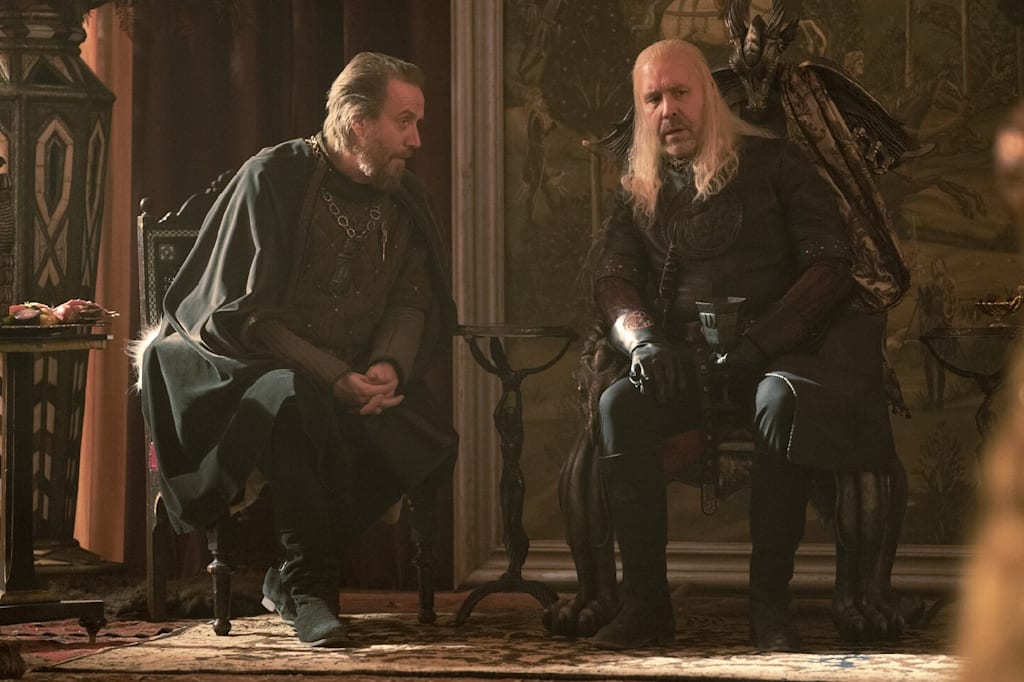
The wait is over. House of the Dragon returns with a premiere that immediately raises the stakes, delivering one of the largest and most ambitious battles the series has attempted so far. But beyond the spectacle, Episode 1 is packed with callbacks to Targaryen history, references to George R.R. Martin’s lore, and subtle character moments that hint at where the war is heading next.
Here's a closer look at the episode’s biggest details and what they could mean for the rest of the season.
The Opening Credits Continue Telling Targaryen History
The embroidered opening sequence returns, once again depicting the rise and fall of House Targaryen through a moving tapestry.
The imagery appears connected to Helaena, whose fascination with weaving and prophetic visions has become an important part of the show. As blood spreads across the fabric, the sequence visually represents the growing destruction caused by the Dance of the Dragons.
The tapestry revisits several major events from Targaryen history:
- The glory days of Old Valyria
- Daenys the Dreamer foreseeing Valyria’s destruction
- The Doom of Valyria
- Aegon the Conqueror’s invasion of Westeros
- The burning of Harrenhal
- The submission of the great houses
- The reign of Jaehaerys I and Queen Alysanne
- The Great Council that selected Viserys as heir
The sequence eventually reaches the current civil war, showing the realm divided between Aegon II and Rhaenyra before highlighting pivotal events such as Luke’s death, Prince Jaehaerys’s murder, and the Battle of Rook’s Rest.
One particularly interesting detail is the emphasis on Rhaenyra’s black dragon banner rather than Aegon’s golden dragon sigil. That choice may signal that this season will focus more heavily on Rhaenyra’s perspective and experiences during the conflict.
Sheepstealer Makes a Powerful First Impression
One of the episode’s most anticipated moments involves Rhaena encountering the wild dragon Sheepstealer.
Readers of Fire & Blood will remember that the dragon was originally associated with Nettles, a young common-born dragonrider. The television adaptation appears to be combining storylines by giving Rhaena a larger role.
The design of Sheepstealer helps distinguish it from the dragons raised in noble households. Ragged wings, uneven scales, and a feral appearance make it feel more like a wild predator than a trained war mount.
The dragon’s behavior reinforces that idea. Unlike dragons accustomed to riders and commands, Sheepstealer acts independently and unpredictably, reminding viewers that dragons are living creatures rather than obedient weapons.
Aemond’s Growing Grip on Power
King’s Landing remains one of the most politically dangerous locations in the story, and Aemond continues consolidating power.
When Alicent is summoned to the throne room and discovers Aemond seated on the Iron Throne, the visual immediately communicates a shift in authority. The image recalls earlier scenes involving Daemon, further emphasizing the parallels between the two characters.
Both men are second sons who spent much of their lives outside the line of succession. Both possess immense ambition. Both seek influence through strength and force.
Aemond’s confidence contrasts sharply with Alicent’s growing concern. After everything she has witnessed, she increasingly recognizes the danger her son poses if left unchecked.
Rhaenyra Faces Resistance From Her Own Allies
Although Rhaenyra commands the Black faction, the episode repeatedly shows that many of her supporters still struggle to fully accept her authority.
Members of her council question her judgment. Jace openly challenges her decisions. Even those fighting in her name often behave as though they know better.
This ongoing tension highlights one of the series’ central themes: the difficulty women face when exercising power in a society designed to deny them legitimacy.
Rhaenyra may wear the crown, but Episode 1 makes it clear that many people around her still refuse to treat her as an unquestioned ruler.
Corlys Velaryon Honors Rhaenys
One of the episode’s quieter but most emotional moments involves Corlys Velaryon.
His flagship now bears a tribute to Rhaenys, featuring imagery inspired by her appearance and reputation. The change serves as a reminder that, despite the political marriages common throughout Westeros, Corlys and Rhaenys shared a genuine partnership.
The memorial reflects both personal grief and the lasting impact Rhaenys had on the realm.
The Winter Wolves Arrive
Fans of the books were likely excited to see the arrival of the Winter Wolves.
These veteran northern warriors represent one of the most memorable elements of Dance of the Dragons lore. Unlike younger soldiers seeking glory, the Winter Wolves are older men who have already endured countless hardships.
Their reputation stems from Northern traditions surrounding harsh winters. Many of these warriors have survived conditions so brutal that they no longer fear death in battle.
Led by Roddy the Ruin, their arrival gives Rhaenyra’s cause a significant boost while introducing some of the most formidable fighters in the conflict.
Criston Cole’s Crisis of Faith
Criston Cole continues to evolve in a darker direction.
After witnessing dragon warfare firsthand, he appears deeply disillusioned. The battlefield has convinced him that ordinary men are insignificant compared to dragons.
Rather than projecting confidence, Cole now seems detached and fatalistic. His conversations reveal a man struggling to reconcile his beliefs about honor with the devastating reality of the war around him.
His contrast with Gwayne Hightower becomes especially important. While Gwayne still believes in knightly ideals, Cole increasingly questions whether such ideals matter at all.
The Dragonseeds Begin Their Next Chapter
The surviving Dragonseeds (individuals with Targaryen ancestry who successfully claimed dragons) continue adapting to their new status.
However, not everyone is satisfied.
Ulf in particular shows signs of growing frustration. He appears to believe that his new position should come with greater rewards and recognition, setting up potential conflicts later in the season.
The episode also references the significance of “king’s blood,” a concept familiar to longtime Game of Thrones viewers through characters associated with the Lord of Light.
Helaena’s Prophetic Warnings Continue
Helaena remains one of the show’s most mysterious figures.
Her comments about Aemond suggest that his confidence has begun to crack. After claiming Vhagar, he viewed himself as nearly unstoppable. Recent events, however, have forced him to confront limits he never expected.
As in previous seasons, Helaena’s observations may carry deeper meaning than they initially appear to.
Alys Rivers and the Supernatural Side of Westeros
The episode revisits Alys Rivers, whose connection to prophecy and magic continues to deepen.
Her abilities resemble those of greenseers and wargs from the original series, individuals capable of experiencing visions and connecting with animals through supernatural means.
Alys remains one of the story’s greatest mysteries. Her motives, origins, and ultimate goals are still unclear, but her influence over events appears increasingly significant.
The Battle of the Gullet Delivers Massive Consequences
The premiere’s biggest set piece is undoubtedly the Battle of the Gullet.
The sequence combines naval warfare, dragon combat, and personal character drama on a scale rarely seen in television. The battle demonstrates just how destructive dragons become when unleashed amid crowded fleets and chaotic combat.
Several important themes emerge during the conflict:
- Dragons cannot always be controlled.
- Youthful confidence often leads to disaster.
- Personal ambition carries enormous risks.
- Victory can be indistinguishable from tragedy.
The battle also reinforces the show’s recurring message that war is rarely glorious. Characters eager to prove themselves discover that courage alone cannot guarantee survival.
Jace’s Fate Highlights the Cost of Recklessness
One of the episode’s most heartbreaking developments centers on Jace.
Throughout the premiere, younger characters repeatedly seek opportunities to distinguish themselves in battle. They crave recognition, responsibility, and achievement.
Jace embodies that impulse.
His determination to prove himself ultimately places him in extraordinary danger, and the consequences serve as a reminder of how quickly youthful confidence can collide with the brutal realities of war.
The tragedy mirrors warnings heard throughout the series: generations raised during long periods of peace often underestimate the true cost of conflict.
Final Thoughts
Season 3 begins by expanding the scale of the war while keeping its focus on character relationships, political maneuvering, and Targaryen history. From the symbolic opening credits to the devastating Battle of the Gullet, the premiere balances spectacle with meaningful storytelling.
More importantly, the episode establishes a central theme for the season ahead: power may belong to dragons and kings, but the consequences of their decisions are paid for by everyone else.
About the Creator
Bella Anderson
I love talking about what I do every day, about movies, and earning money online. Follow me if you want to read something useful and joyful.
Enjoyed the story? Support the Creator.
Subscribe for free to receive all their stories in your feed.
Comments
There are no comments for this story
Be the first to respond and start the conversation.