
'House Of The Dragon': How A Tiny Subplot In 3x03 May Discredit A Prominent Piece Of Anti-Rhaenyra Propaganda From The Greens
A badly timed time-of-the month.

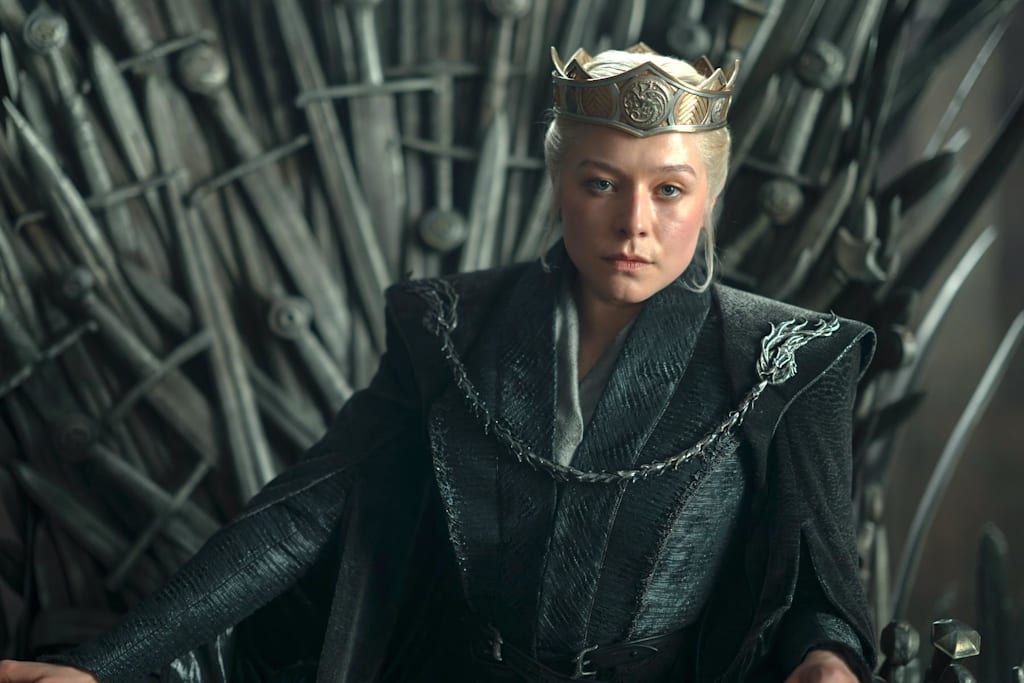
WARNING! SPOILERS for House of The Dragon 3x03, 'Rhaenyra Triumphant'.
'Rhaenyra Triumphant', the third episode of Game of Thrones prequel House of The Dragon's penultimate third season, details the first days of Queen Rhaenyra's reign, having regained the Iron Throne after the Green faction in King's Landing plotted to usurp her in favour of her younger half-brother, Aegon II Targaryen (Rhaenyra's supporters are known as the Blacks). There are a number of trials and tribulations Rhaenyra faces in these early days, including dealing with poverty among the smallfolk, and the fact that the Hightower army sent her an impostor as a hostage instead of her half-brother, Prince Daeron Targaryen.
One issue arises that seems relatively small in comparison to the above problems, but adds context clues that raise questions about the recounting of events seen in the book Fire and Blood, on which House of The Dragon is based.
The Iron Throne recognises a 'Worthy' or 'Unworthy' Ruler
A persistent myth exists in Westeros claiming that the Iron Throne decides who is worthy to rule from it. A worthy, rightful ruler will be safe to sit upon the throne. However, one who is not truly worthy will be cut by the swords that make up the throne when they sit upon it.
In House of The Dragon season one, the wounds that lead to the slow-moving flesh-eating disease that eventually claims the life of King Viserys I Targaryen are believed to have come from the throne. A popular fan-theory states that the only time Viserys was not cut by the Iron Throne was when he sat upon it to defend his daughter and chosen heir, Rhaenyra, and the inheritance rights of her son, Prince Lucerys Velaryon.
Blood on the Iron Throne
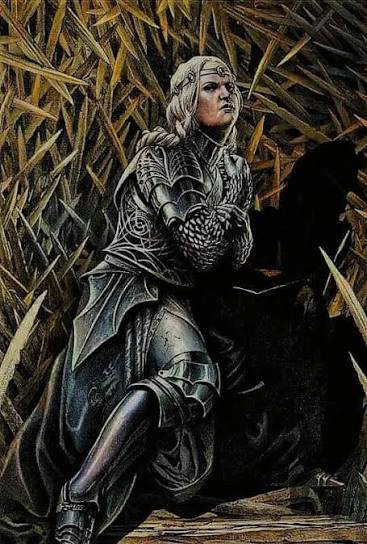
House of the Dragon is based on Fire and Blood, more specifically, a collection of chapters in the book dubbed 'The Dying of Dragons'. In the section dealing with Rhaenyra's rule, remaining Green supporters in court claim to have seen blood left behind on the Throne the first time Rhaenyra receives the smallfolk. Taking into account the myth mentioned above, the Greens try to paint Rhaenyra as unworthy and being rejected by the Iron Throne.
The TV series adds a detail that potentially changes the context of the Greens' accusations. As she is preparing to sit the throne on the morning of her first meeting with the smallfolk, Queen Rhaenyra discovers that she has her Period.
The people of Westeros do not have access to the sanitary products that the women of our modern world enjoy, and are forced to rely on rags, which as one can imagine, are not always reliable. In Fire and Blood, there is a mention of blood left behind on the Iron Throne during Rhaenyra's early reign, a rumour seized upon by Green loyalists to declare that the throne is rejecting Rhaenyra.
However, if House of The Dragon is looked to as the definitive, accurate depiction of the events of the Dance of Dragons, it is possible that Rhaenyra was not cut at all, but instead bled through her rags. Even if Rhaenyra had cut herself, it's somewhat unrealistic to expect that a person could sit on a throne made of swords everyday without injuring themselves on it at some point. If the myth regarding the throne's acceptance truly meant anything to the Greens beyond using it to further their own cause, then they would have said something about Viserys's wounds.
'Fire and Blood' is probably not entirely accurate
House of The Dragon has already diverged from the material seen in Fire and Blood on a number of major story points, with some fans voicing complaints about the series' inaccuracy to the book. However, it is worth noting that Fire and Blood is often referred to as having an unreliable narrator. The book is presented as a Targaryen History record being collated by Gyldayn, an Archmaester living during the days of Robert Baratheon's reign. By this point, sentiment towards the Targaryens in general has turned mostly towards the negative, with this clearly colouring Gyldayn's view of the whole project.
As for the 'Dying of Dragons' chapters covering the Dance, the testimonies Gyldayn uses to build his version of events were both written years after the fact, by people who were not always even present for some of the events they are recounting, and are heavily biased in favour of the Greens. In a fun book Easter Egg, one of the accounts was written by Eustace, the very same Septon who refuses to anoint Rhaenyra in House of The Dragon 3x03. The testimony in support of Rhaenyra and the Blacks was taken from Mushroom, a Court Fool. Parts of his account contradict Eustace's, and Gyldayn's own observations often favour Eustace's, and therefore the Greens' take on the Dance.
The show, while leaning towards Rhaenyra as overall protagonist, depicts a more balanced telling of the events, from the point of view of the characters who actually lived them. The book is Hightower/Green propaganda. The show is likely closer to what actually happened.
Long live Queen Rhaenyra!
About the Creator
Kristy Anderson
Passionate About all things Entertainment!
Enjoyed the story? Support the Creator.
Subscribe for free to receive all their stories in your feed. You could also become a paid subscriber, letting them know you appreciate their work.
Comments
There are no comments for this story
Be the first to respond and start the conversation.