
'Hot Resort' (1985): Cannon Goes on Vacation and Leaves the Movie Behind
This 1985 teen sex comedy had sunshine, bikinis, Frank Gorshin and absolutely no reason to exist

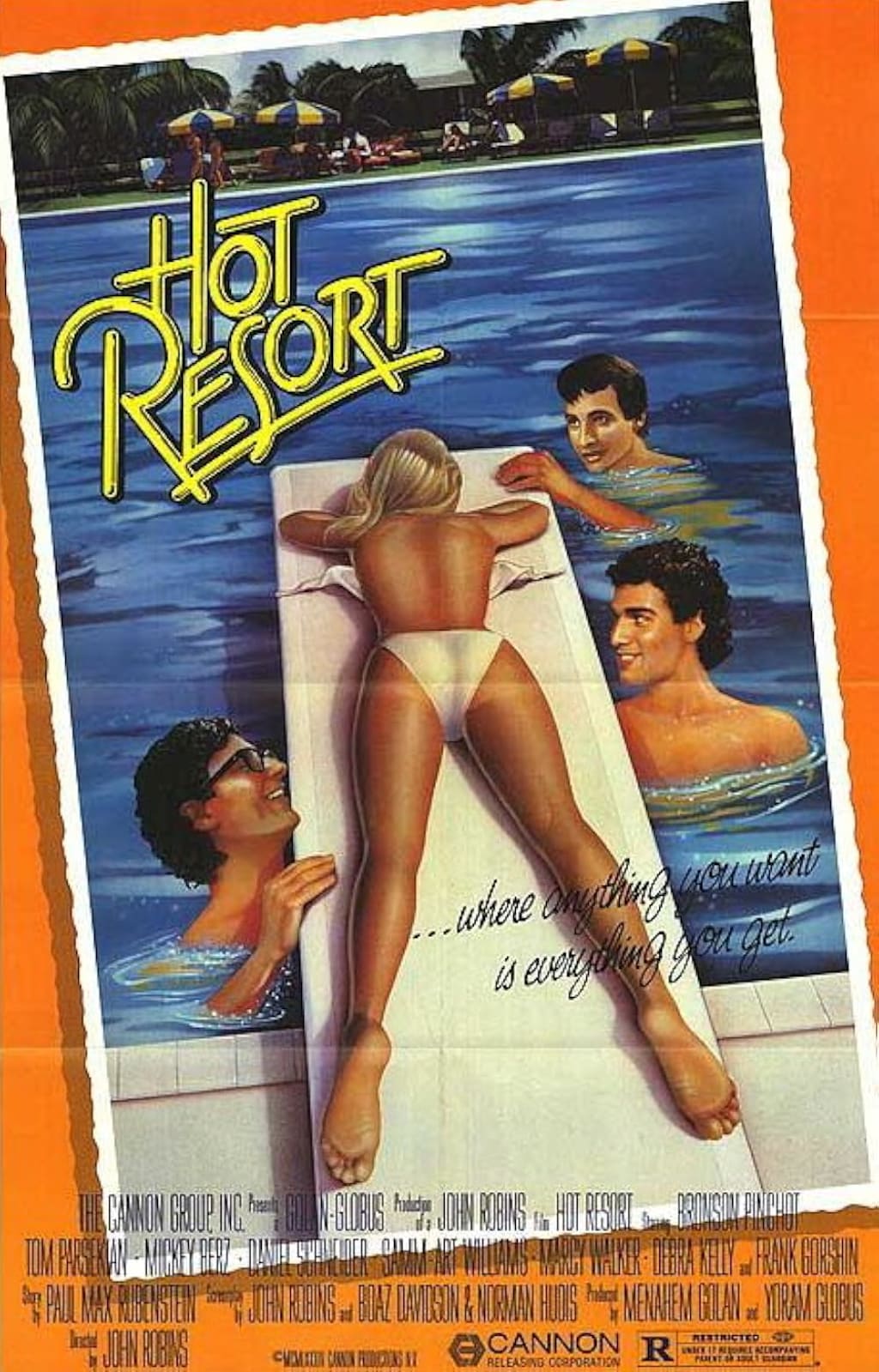
Welcome to the Resort. Please Check Your Expectations at the Door.
By 1985, the teen sex comedy had become one of Hollywood’s most reliable low-budget formulas. Give a bunch of horny young people a vacation destination, throw in some class conflict, add a few bikinis and an assortment of increasingly desperate gags, and there was a pretty good chance somebody would pay to see it.
Hot Resort was apparently somebody’s answer to that equation.
Directed by John Robins and produced under the famously prolific Golan-Globus banner of The Cannon Group, Hot Resort is the sort of movie that makes you wonder whether anybody involved actually believed they were making a movie or simply filling a slot on a release schedule.
Released in January 1985, it arrived during the peak years of the teen comedy boom, when movies like Porky’s had demonstrated just how profitable adolescent raunch could be. Cannon, never a company to let a trend pass by without trying to cash in on it, took its own inexpensive swing.
The result is a movie that has all the ingredients of a teen sex comedy and almost none of the energy.
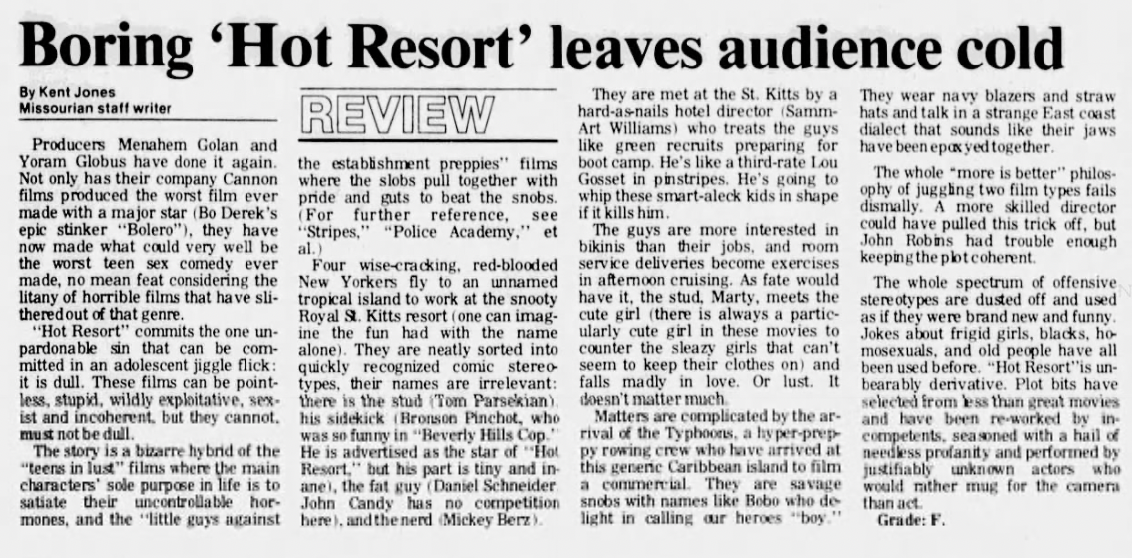
Porky’s Meets Lemon Popsicle, Sort Of
The basic setup is familiar enough. Working-class kids find themselves at a tropical resort, where they inevitably run into wealthy preppies. Sexual competition, class resentment and assorted misunderstandings follow.
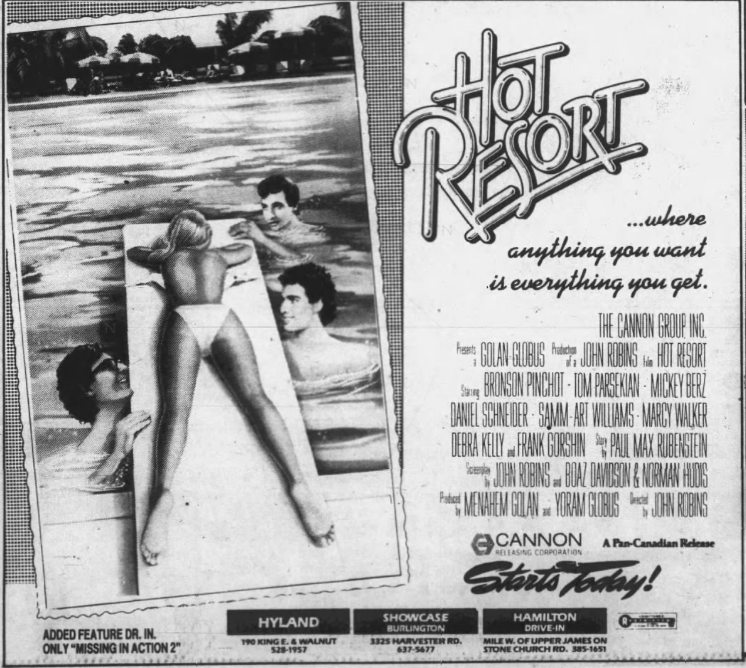
The story originated with Paul Max Rubenstein, with the screenplay credited to Robins, Norman Hudis and Boaz Davidson. Davidson’s involvement is particularly interesting because of his connection to the Israeli Lemon Popsicle franchise, the series that had already provided the basic blueprint for The Last American Virgin.
That lineage makes Hot Resort feel less like an original movie than another attempt to translate the international teen-sex-comedy formula into American dollars.
There is nothing inherently wrong with that. Plenty of successful movies have been assembled from familiar ingredients. The problem is that Hot Resort doesn’t seem particularly interested in doing anything with them.
The characters are broad. The jokes are obvious. The dialogue tends to circle around the same subjects without generating much momentum. And the supposedly outrageous situations rarely become particularly outrageous.
It is a comedy about young people behaving badly that frequently feels like it is afraid to behave badly itself.

The Cannon Assembly Line
This is where Hot Resort becomes more interesting than the movie itself.
The film was produced during the extraordinary period when Menahem Golan and Yoram Globus were turning Cannon into one of the most recognizable independent film companies in America. Cannon could make everything from martial arts pictures and action movies to prestige dramas and exploitation films, often at astonishing speed.
Hot Resort belongs firmly on the exploitation side of that equation.
It was inexpensive, quickly assembled and seemingly designed with the burgeoning home-video market firmly in mind. Its theatrical life was limited, while its eventual existence on VHS gave it a second chance to find an audience among viewers willing to rent practically anything with an intriguing cover.
Director John Robins was a veteran of The Benny Hill Show, which at least suggests that the filmmakers had some experience with broad physical comedy. Robins reportedly took over after an initial start by John Marshall, adding another layer to a production that already feels as though it was assembled while the machinery was moving.
That may explain some of the film’s unfinished quality.
Hot Resort often doesn’t feel like a completed theatrical comedy. It feels like a television production that wandered into a tropical location and occasionally remembered it was supposed to be a movie.

At Least the Scenery Is Pretty
The film was shot at the Royal Saint Kitts Hotel, taking advantage of the Caribbean location and its obvious visual appeal.
That was probably the smartest production decision anyone made.
The tropical scenery gives Hot Resort a certain postcard quality that the actual story never manages to provide. Palm trees, sunshine, beaches and resort architecture offer a welcome distraction from the repetitive dialogue and low-rent comedy.
Shot on 35mm with Arriflex cameras, the production itself was hardly thrown together technically. But technical competence can only take a movie so far.
The Caribbean setting is supposed to make everything feel exotic and exciting. Instead, it frequently emphasizes just how little is happening.
There are worse places to be bored than Saint Kitts.
There are also much better movies to watch while you’re there.

A Few Interesting Footnotes
The cast provides some of the film’s more curious trivia.
Frank Gorshin appears, although the production never seems to know what to do with him. The man best remembered as the Riddler on Batman had the kind of screen presence that could have injected some personality into almost anything.
Here, he mostly feels like another piece of evidence that Hot Resort had access to potentially interesting ingredients without understanding how to use them.
There were also some genuine romantic connections behind the scenes. Parsekian and Kelly eventually married, while Pinchot and Walker were briefly engaged.
Those real-life relationships are arguably more interesting than most of the romantic complications written into the screenplay.
And that may be the ultimate problem with Hot Resort: the things that happened around the movie are frequently more interesting than anything that happens in it.
A Movie Made for the VHS Rack
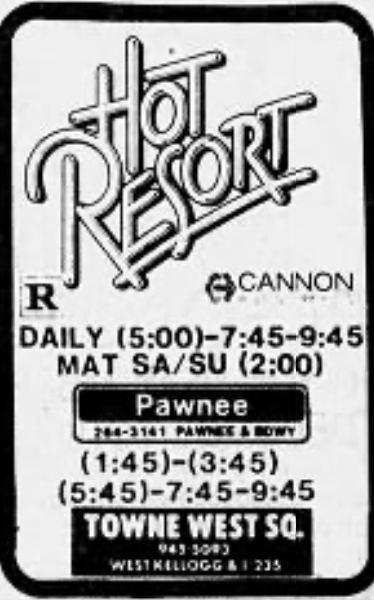
When Hot Resort reached theaters in January 1985, it had little chance of competing with the bigger teen comedies of the period. Its theatrical footprint was limited, with the sort of second-run and drive-in exposure that was increasingly becoming a natural home for low-budget exploitation.
But the movie had another destination waiting for it.
VHS.
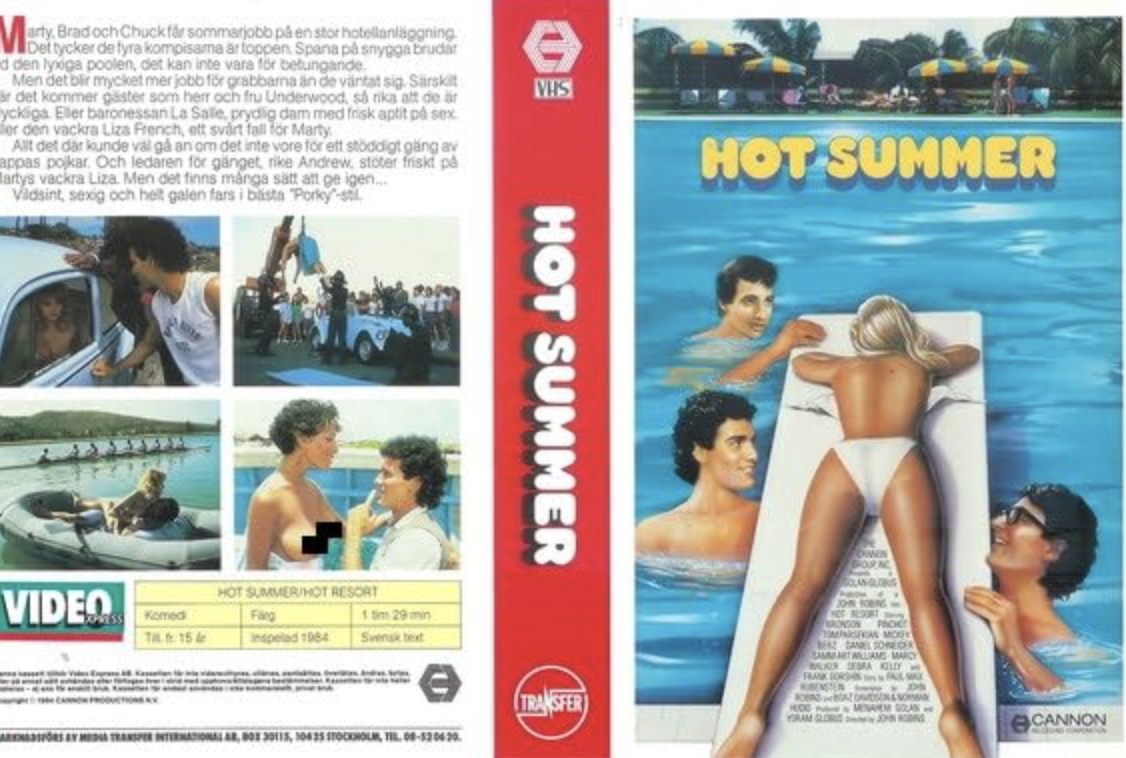
This was exactly the kind of picture that could survive on a video store shelf. The title promised something fun. The tropical setting suggested sex and adventure. Cannon’s name carried enough recognition to get the tape noticed.
International distributors even gave it different titles, including Hotel Caliente and Hotel dos Prazeres, because apparently one title wasn’t enough to disguise the fact that there wasn’t much movie underneath it.
The soundtrack, including Dave Powell’s “Body Shop,” adds another period detail, but even music can’t give Hot Resort the pulse it desperately needs.
Not Every Cannon Movie Is a Hidden Gem
There is a temptation when looking back at Cannon’s enormous 1980s output to assume that every obscure title must be some kind of forgotten treasure.
It isn’t.
Sometimes a Cannon movie is just a Cannon movie.
Leonard Maltin famously dismissed Hot Resort as a “bomb,” and retrospective assessments have been similarly unforgiving. The criticisms are easy to understand. The pacing is lethargic. The screenplay feels like a ragged collection of familiar bits. The humor rarely lands with enough force to justify the buildup.
Most importantly, Hot Resort lacks the anarchic energy that made the better teen comedies of the period work.
Porky’s was crude, but it had momentum. The Last American Virgin was exploitative, but it had something resembling a point. Even the more disposable entries in the genre generally understood that sex comedy required rhythm.
Hot Resort mostly just sits there.
The Forgotten Cannon Vacation
And yet, that doesn’t make Hot Resort completely worthless.
As a piece of 1980s film history, it is a wonderful little artifact. It captures a particular moment when Cannon was making movies at a furious pace, when the teen sex comedy was still commercially viable, and when the VHS revolution made it possible for even the most marginal theatrical productions to find a second life.
It is also a reminder that “forgotten” doesn’t necessarily mean “unfairly forgotten.”
Some movies disappear because audiences weren’t ready for them. Others disappear because they were mishandled, poorly marketed or released at the wrong time.
And then there are movies like Hot Resort.
They disappear because there simply isn’t much there to remember.
Still, there is something oddly charming about discovering one of these cinematic leftovers decades later. Hot Resort is a time capsule of Cannon’s anything-for-a-buck philosophy, a tropical postcard from the bottom rung of the 1980s teen-comedy boom.
It wanted to be Porky’s in paradise.
Instead, it became something much more Cannon-like: a movie that existed because Cannon could make it, a movie that disappeared because audiences didn’t need it, and a movie that survives because the 1980s made room for almost anything on a VHS shelf.

About the Creator
Movies of the 80s
We love the 1980s. Everything on this page is all about movies of the 1980s. Starting in 1980 and working our way the decade, we are preserving the stories and movies of the greatest decade, the 80s. https://www.youtube.com/@Moviesofthe80s
Enjoyed the story? Support the Creator.
Subscribe for free to receive all their stories in your feed.
Comments
There are no comments for this story
Be the first to respond and start the conversation.