
'Heat and Dust' (1983): The Scandalous Affairs of Merchant Ivory
How a forbidden romance in British India became a beautifully complicated meditation on desire, colonialism, and the stories we tell ourselves about the past.

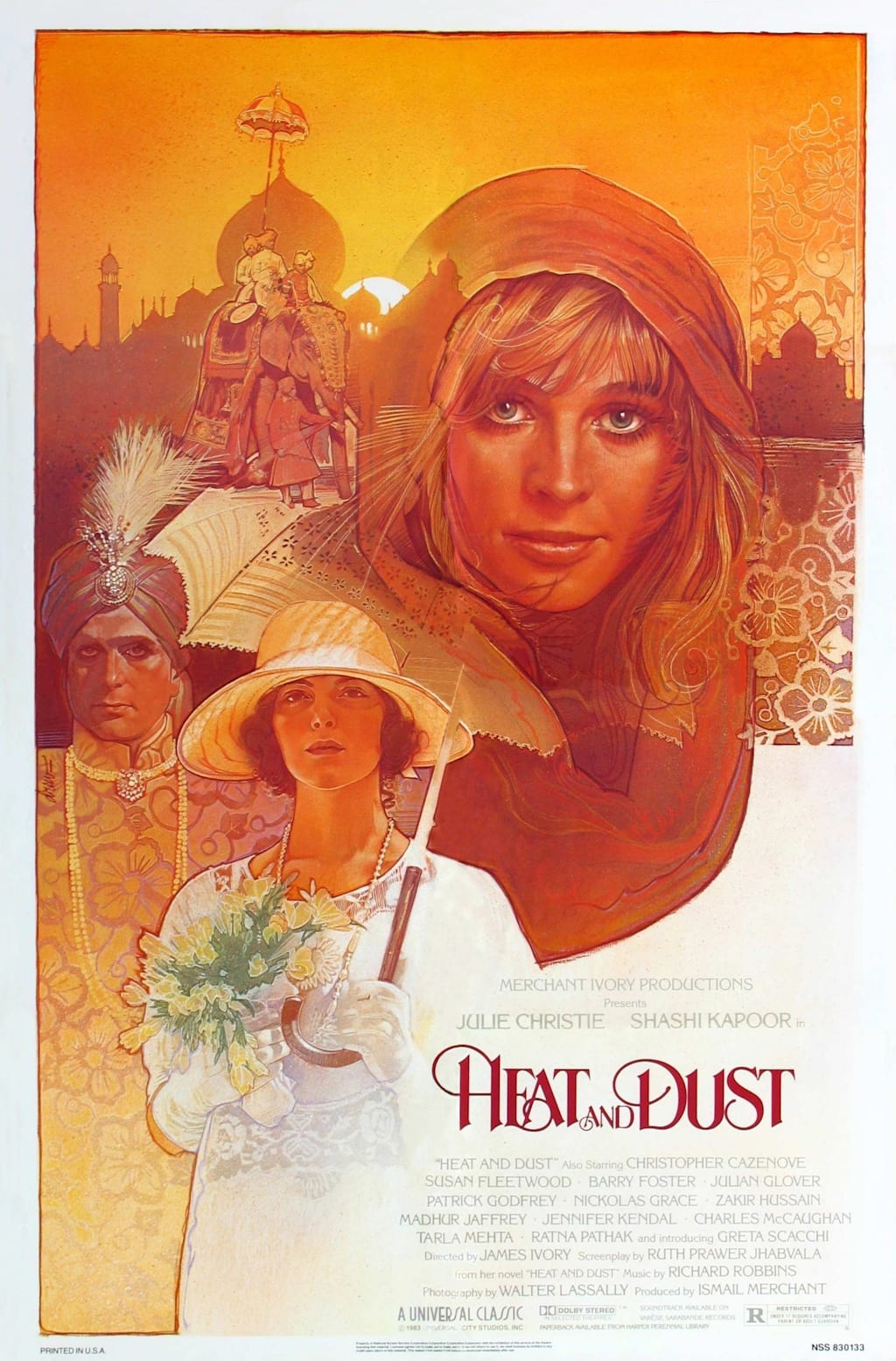
There are two kinds of people in the world: those who can spend an afternoon happily watching a movie about British people having complicated feelings in India, and those who would rather be trapped in a room with a malfunctioning VCR playing Buckaroo Banzai.
I am, obviously, in the former camp.
But even I have my limits. Give me a movie that mistakes beautiful costumes for a personality and I will begin looking for the nearest exit. Give me a movie that understands the seductive power of a beautiful costume while quietly picking apart the people wearing it, and I am yours.
Heat and Dust (1983) is that second kind of movie.
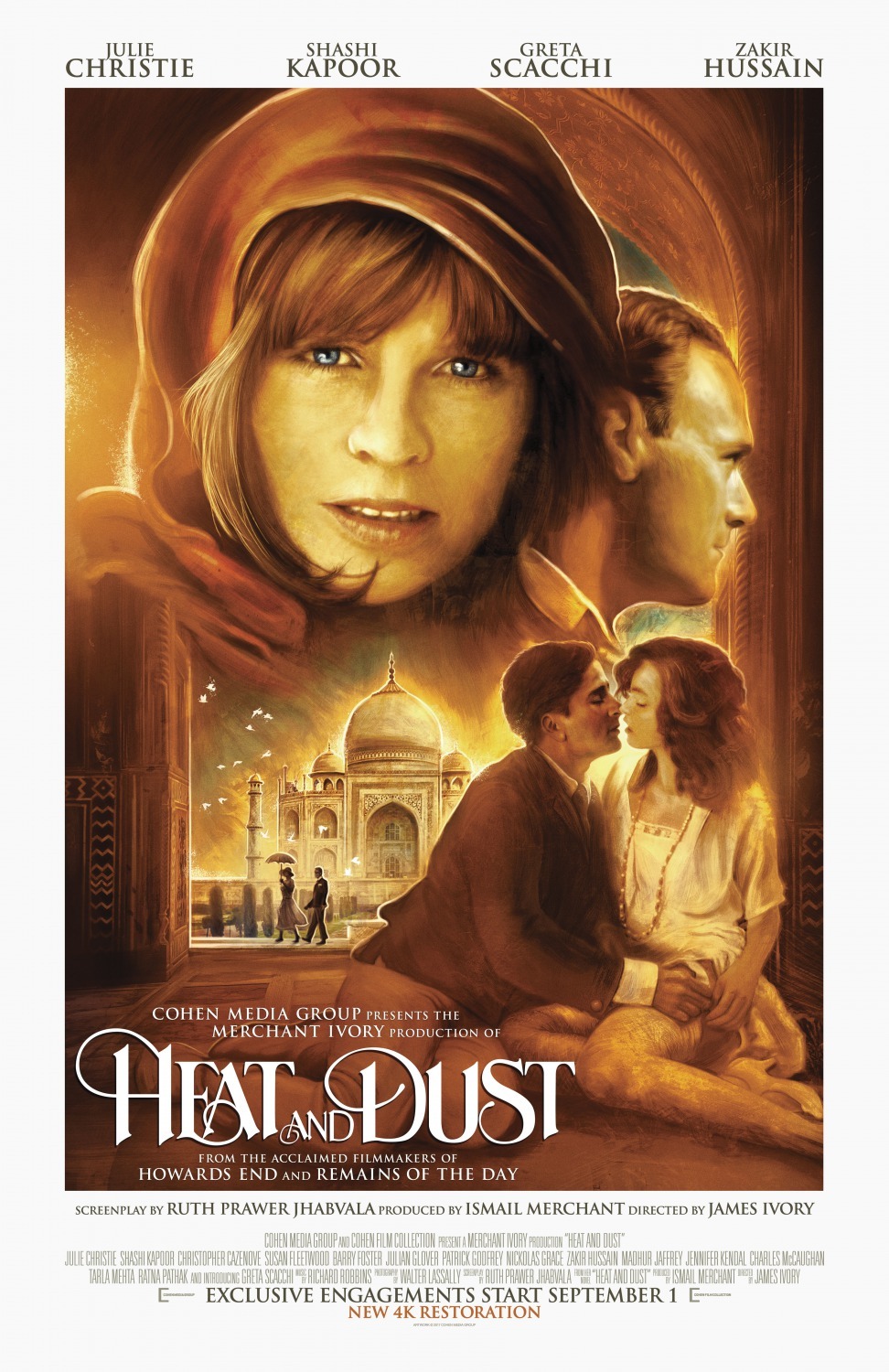
Directed by James Ivory, produced by Ismail Merchant, and written by Ruth Prawer Jhabvala, it is a film about forbidden desire, British colonialism, and the ways we turn other people’s lives into stories. It is also a film about two women separated by more than half a century, connected by a scandal neither of them can quite leave alone.
One is Olivia, a British woman in India in the 1920s, whose affair with an Indian prince threatens to destroy her marriage. The other is Anne, a woman in the early 1980s investigating Olivia’s life and discovering that the past is not nearly as tidy as the history books would have us believe.
Released during the great 1980s wave of British fascination with the Raj—alongside Gandhi, A Passage to India, and The Jewel in the Crown—Heat and Dust was a turning point for Merchant Ivory.
It was bigger than their earliest India-set productions, more ambitious in its scale, and yet unmistakably intimate. A movie about the British Empire that is less interested in waving flags than examining the people who lived beneath them.
And it was a particularly meaningful film for the three people who made it.
By the time Heat and Dust reached theaters, Merchant, Ivory, and Jhabvala had been working together for two decades. The film was adapted from Jhabvala’s 1975 Booker Prize-winning novel, and it represented a reunion with India, the country that had shaped so much of their early work.
It also became their biggest commercial success to that point.
Not bad for a movie in which a great deal of the action consists of people sitting around, sweating, and trying not to say what they are thinking.
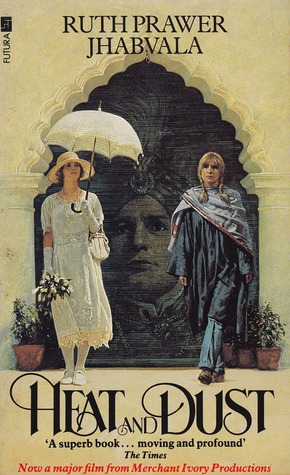
The Novel That Brought Merchant Ivory Back to India
Ruth Prawer Jhabvala’s Heat and Dust was published in 1975 and won the Booker Prize that year.
The novel was already a success in Britain when the filmmakers began pursuing it. It explored the tensions between British colonial society and Indian culture through Olivia’s story, while also examining the ways later generations reinterpret the past.
Jhabvala had long been interested in that complicated space between cultures. Born in Germany, raised in Poland and England, and later living in India and the United States, she brought a perspective to Merchant Ivory’s films that was never entirely comfortable with easy East-West conclusions.
India in her work was not simply an exotic backdrop for English characters to discover themselves.
It was a place with its own history, contradictions, desires, and people who were not waiting around to become supporting characters in somebody else’s spiritual journey.
That distinction matters.
The film’s roots also extend back to Jhabvala’s interest in E.M. Forster and the Anglo-Indian experience. A Passage to India would arrive in theaters the following year, but Merchant Ivory had already been exploring similar territory for years.
Their first feature, The Householder (1963), was set in India. So was Shakespeare Wallah (1965). Both films examined the awkwardness of cultural encounters, the ways people misunderstand each other, and the often absurd gap between what we believe about a place and what that place actually is.
Ivory had also made short films in India before moving into features, including The Sword and the Flute.
By the early 1980s, though, Merchant Ivory had experienced some difficult years.
Their American productions—including Savages, The Wild Party, and Roseland—had not delivered the commercial breakthrough they hoped for. The partnership had survived, but the path forward was not always obvious.
Heat and Dust offered a way back.
Ismail Merchant wanted to reunite the team in India on a larger scale than The Householder. The film would mark roughly twenty years of collaboration and give them a chance to return to the setting that had first brought them together.
Getting there was not easy.
Hollywood studios passed on the project. Financing had to be assembled in Britain, with the budget reported in different sources at roughly £1.1 million to £2.2 million.
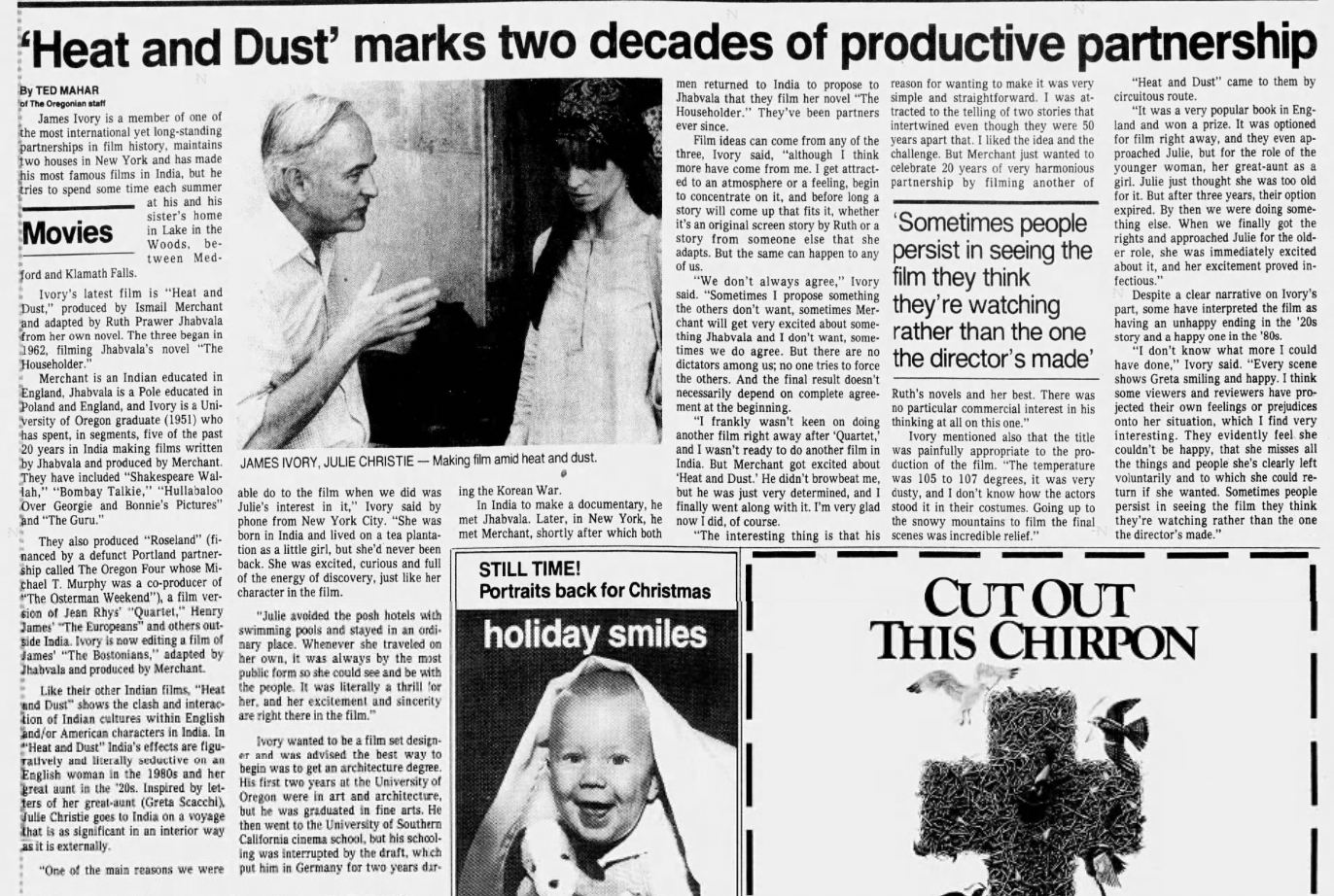
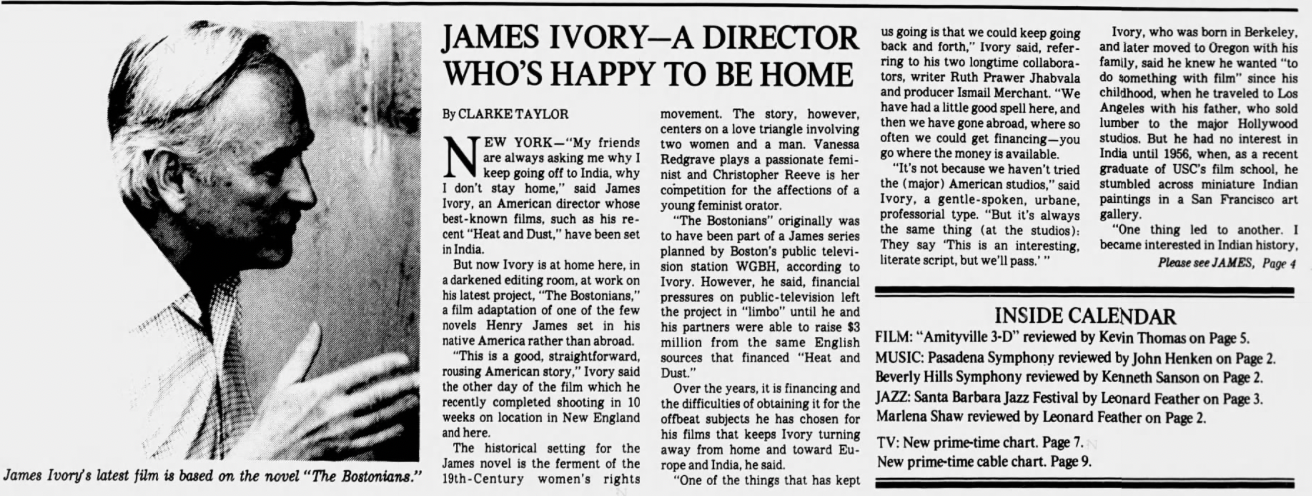
As James Ivory explained in an interview with Ted Mahar of The Oregonian, the film’s journey to the screen had been particularly circuitous:
“It was a very popular book in England and won a prize. It was optioned for film right away… but for the role of the younger woman… Julie just thought she was too old for it. But after three years, their option expired…”
That younger woman was Olivia.
And the Julie in question was Julie Christie.
The rights eventually became available, and the project moved forward with Christie in the modern-day role and a young actress named Greta Scacchi taking on the part of Olivia.
It was a casting decision that would change Scacchi’s career.

A Movie Made in the Heat
The title Heat and Dust is not exactly false advertising.
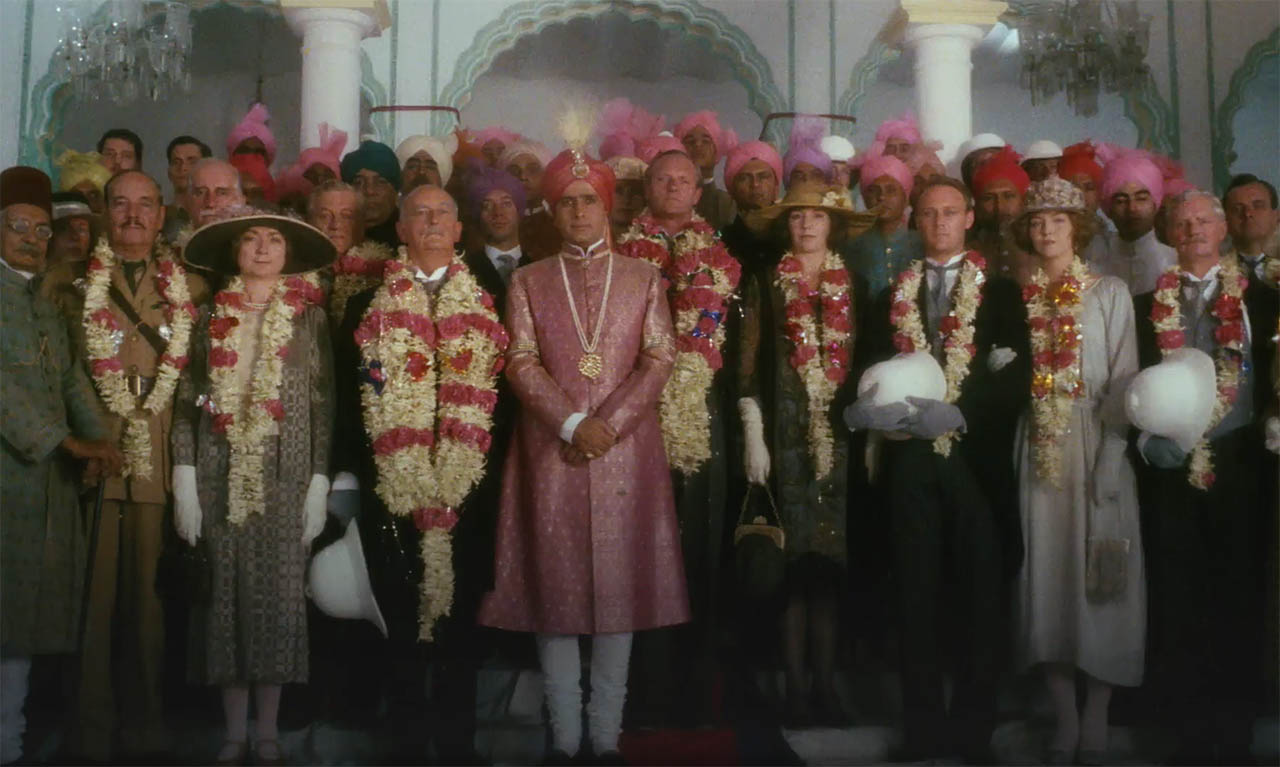
Filming took place in India between February and April 1982, with locations in Telangana, Rajasthan, Andhra Pradesh, and Kashmir, followed by additional work in the United Kingdom.
Cinematographer Walter Lassally brought the film’s India to life with a visual style that is beautiful without being too polished. The colors are rich, the landscapes expansive, and the atmosphere thick with heat.
There is a sense that the air itself has become a character.
And apparently, that character was a real pain in the ass to work with.
Ivory recalled temperatures reaching 105 to 107 degrees during production. Dust was everywhere.
“I don’t know how the actors stood it in their costumes,” he said, describing the conditions in the interview with Mahar.
It is one thing to watch a period film and admire the elaborate clothing. It is another to imagine actually wearing it in that heat while trying to deliver dialogue about forbidden love and the British Empire.
The production also ran into financial trouble. At one point, cast and crew were briefly unpaid. The situation was reportedly resolved after Sir Jacob Rothschild viewed footage from the film and stepped in to help.
It is a particularly Merchant Ivory story: beautiful locations, literary ambitions, a talented cast, and the constant possibility that the whole thing might collapse before the premiere.
The partnership survived because it had always been built around collaboration rather than one person dictating every decision.
As Ivory told Ted Mahar:
“We don’t always agree… Sometimes I propose something the others don’t want, sometimes Merchant will get very excited about something Jhabvala and I don’t want… There are no dictators among us.”
That sounds like a fairly healthy creative partnership.
It also sounds like a nightmare if you are trying to get a decision made before lunch.
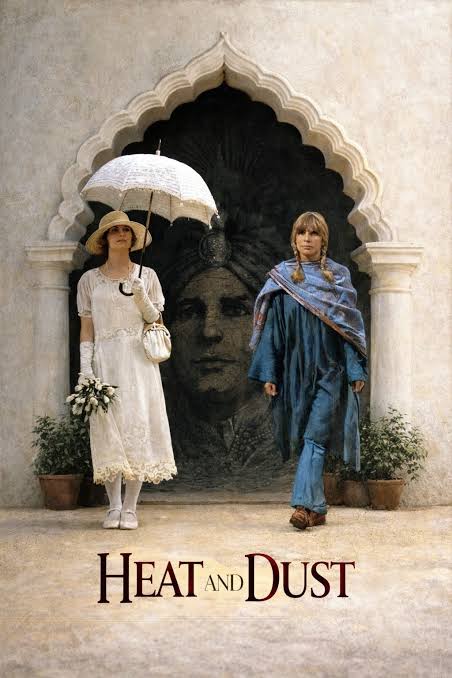
Greta Scacchi Arrives, Julie Christie Returns
The film’s greatest discovery was Greta Scacchi.
She had appeared on British television, and Ivory noticed her in footage that suggested she had the right period look for Olivia. More importantly, she had the naturalness the role required.
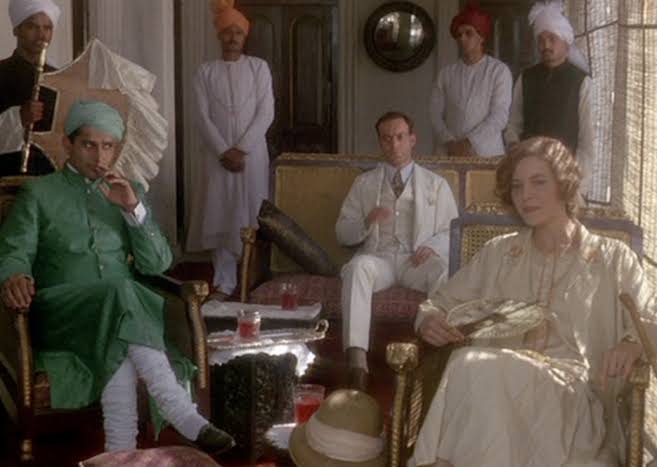
Olivia is not a conventional romantic heroine. She is a British woman in colonial India, married to a man she does not love, surrounded by people who expect her to behave in a particular way.
She is curious, restless, and increasingly drawn toward a life outside the narrow boundaries of her marriage.
Scacchi plays her with a combination of innocence and calculation. Olivia is not stupid, but she is also not entirely aware of the consequences of her choices.
That makes her interesting.
It would have been easy to play Olivia as either a victim of Victorian repression or a glamorous rebel. Scacchi finds the uncomfortable middle ground.
She is a woman who wants something and is not entirely sure what that something is.
Julie Christie, meanwhile, returned to India for the modern-day story.
Christie had already been one of the defining actresses of British cinema in the 1960s and 1970s, but her presence here is notably understated. Anne is not a grand heroine investigating a mystery. She is a woman trying to understand someone who lived before her.
The film’s two timelines are connected through Olivia’s story, but Anne’s investigation becomes something more personal as she begins to question the assumptions she brought with her.
Christie’s approach to the production also reflected that curiosity.
Rather than staying exclusively in posh hotels, she reportedly preferred being closer to everyday Indian life. It was a practical decision, but it also fits the film’s larger interest in the distance between the British experience of India and the India that existed beyond their social circles.
Then there is Shashi Kapoor.
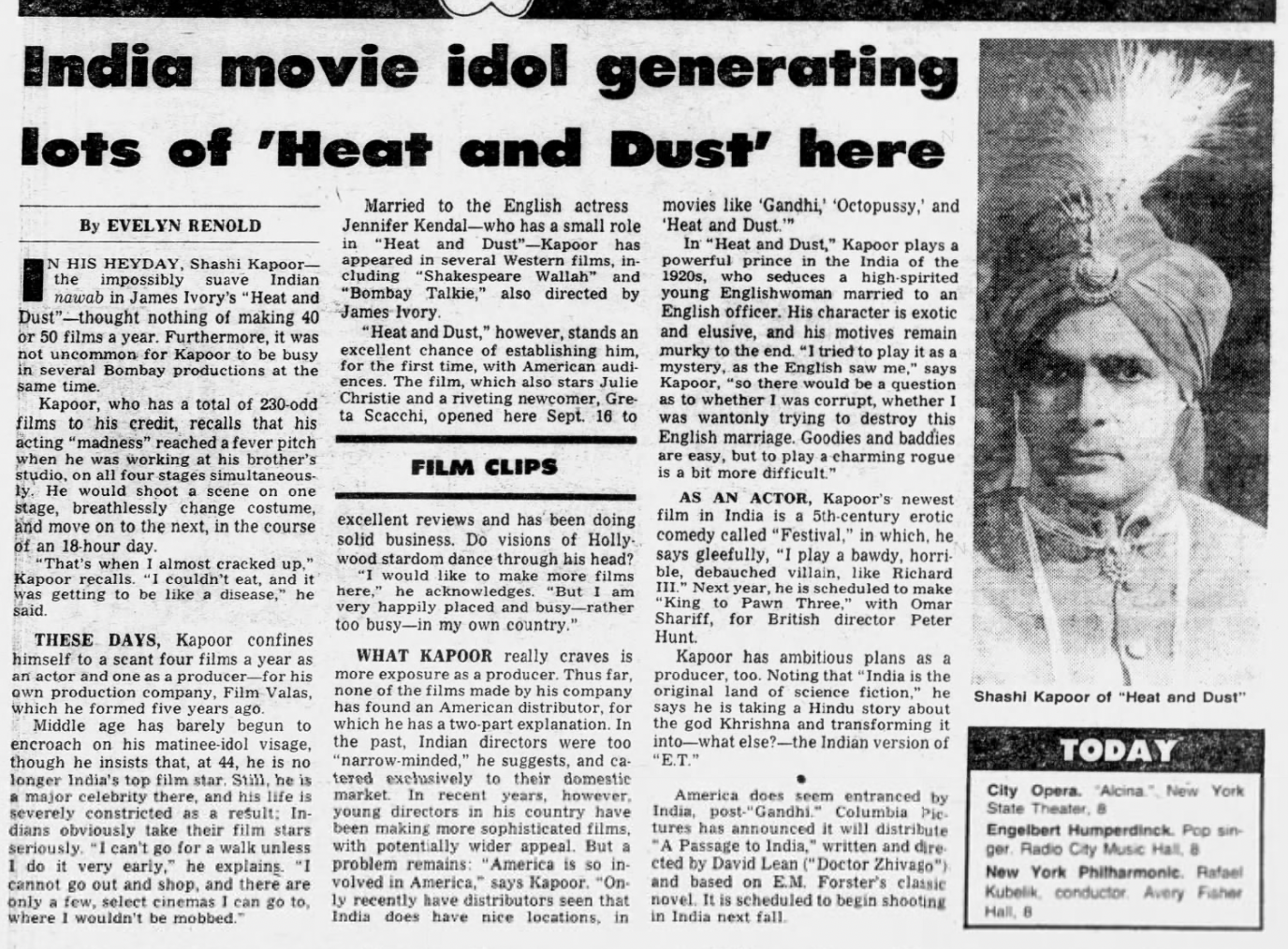
The Nawab: Charming Rogue or Something More?
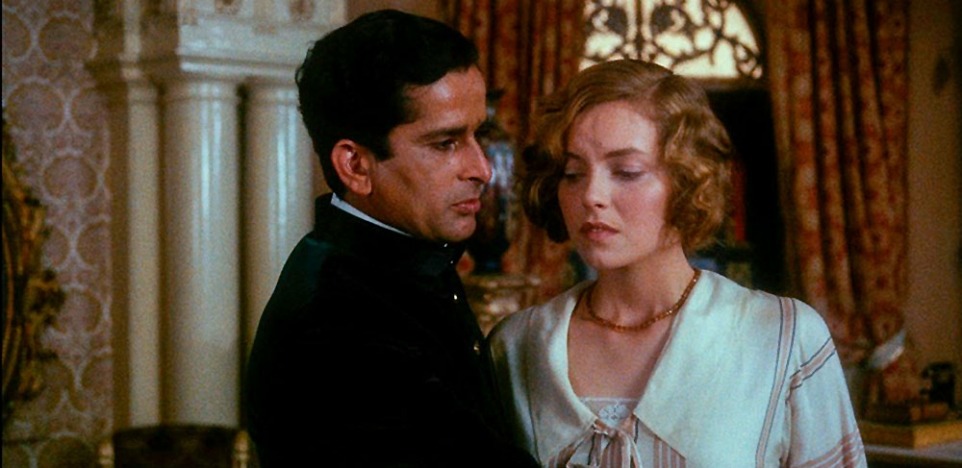
Shashi Kapoor plays the Nawab, the Indian prince at the center of Olivia’s scandal.
Kapoor was already a major star in India by the time he made Heat and Dust. He had appeared in an enormous number of films and was moving increasingly toward more selective acting and producing work.
For Western audiences, though, Heat and Dust offered a chance to see him in a role that was neither a straightforward romantic hero nor a stereotypical villain.
The Nawab is charming. He is intelligent. He is also deeply ambiguous.
As Kapoor explained to Evelyn Renold in an interview, he approached the character through the eyes of the English characters who viewed him:
“I tried to play it as a mystery, as the English saw me… so there would be a question as to whether I was corrupt, whether I was wantonly trying to destroy this English marriage. Goodies and baddies are easy, but to play a charming rogue is a bit more difficult.”
That is exactly what makes the character work.
The Nawab is not simply the exotic alternative to Olivia’s dull English husband. He is a man with his own interests, his own contradictions, and his own understanding of the world around him.
The film does not ask us to decide whether he is good or bad.
It asks us to consider how much of that judgment comes from the people looking at him.
And that is a very Merchant Ivory question.
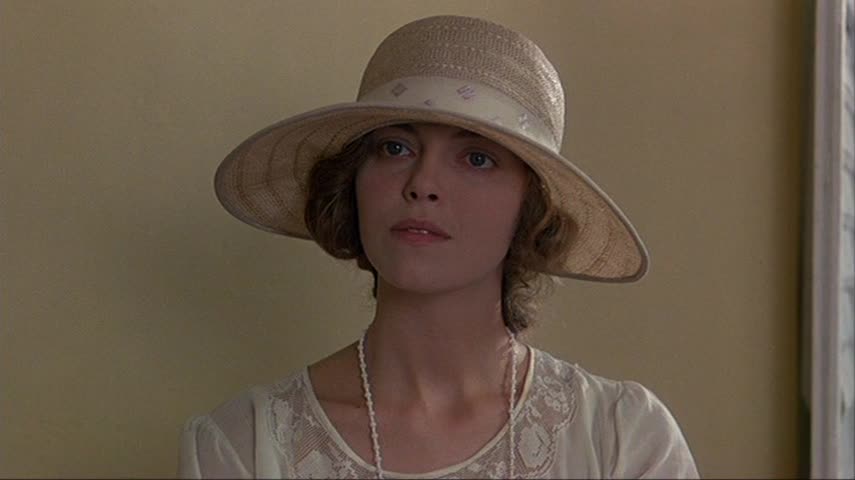
The Scandal of Olivia
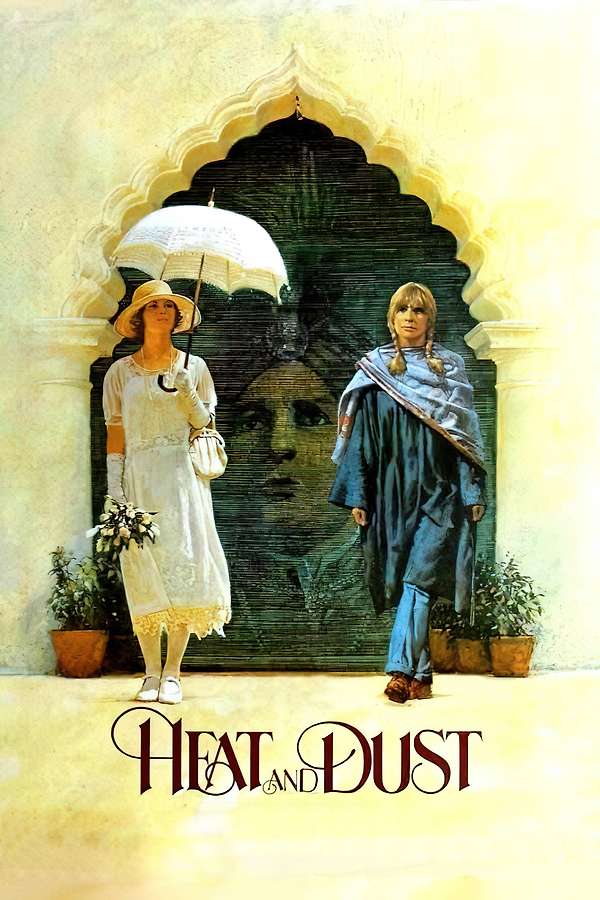
The 1920s story begins with Olivia living in India with her husband, Douglas.
Douglas is a British civil servant, and their marriage is not exactly thriving. Olivia is increasingly frustrated by the restrictions of colonial society and the expectations placed upon her as an English wife.
When she meets the Nawab, the attraction is immediate.
But Heat and Dust is not interested in turning their relationship into a conventional romance.
The affair is scandalous, certainly, but the film is more interested in the social machinery surrounding it.
Who gets to desire whom?
Who gets to leave?
Who gets to decide what counts as respectable behavior?
And what happens when a woman refuses to remain inside the boundaries assigned to her?
Olivia’s story is set against the larger tensions of British India, where the British presence is both powerful and increasingly unstable. The film captures a society built on hierarchy, privilege, and the assumption that the British have the right to define the terms of life around them.
The Nawab, meanwhile, exists in a complicated position of his own.
He has wealth, status, and influence, but his relationship with the British is not straightforward. He is both part of the colonial system and separate from it.
That ambiguity gives the film much of its dramatic power.
The romance is not simply about two people from different cultures falling in love.
It is about two people trying to navigate a world in which culture, class, race, and power are constantly getting in the way.
The Modern Story Is More Than a Frame
Anne’s story takes place in the early 1980s, when the Raj was becoming fashionable again in British culture.
There is a certain irony to that.
The British Empire was long gone, but its image was returning to television and cinema in increasingly lavish forms.
Gandhi would win the Academy Award for Best Picture. A Passage to India would become one of the major literary adaptations of the decade. The Jewel in the Crown would bring the Raj into British living rooms.
And then there was Heat and Dust, which seemed to be asking whether we were really learning anything from these stories.
Anne arrives in India to investigate Olivia’s life. She is drawn to the scandal, but she also begins to discover that Olivia’s story has been filtered through the assumptions of the people who told it.
The modern sections are quieter and less visually sumptuous than the 1920s material. Some critics found them more prosaic.
That is a fair criticism.
But the contrast also serves a purpose.
Olivia’s India is a place of heightened emotions, elaborate costumes, and forbidden desire. Anne’s India is more contemporary, more ordinary, and less willing to play along with romantic fantasies.
The film’s two timelines gradually begin to reflect each other.
Both women are searching for something beyond the lives they have been given.
Both are drawn toward India as a place of possibility.
And both discover that the stories they tell themselves about other people may say more about their own desires than about the people they are investigating.
Merchant Ivory Finds Its Audience
Heat and Dust premiered in Britain in January 1983 at the Curzon cinema.
It had a strong art-house run, eventually reaching No. 4 on the London charts. The film also competed at Cannes and received a nomination for the Palme d’Or.
In the United States, it was released in September 1983 by Universal Classics.
The American box office was more modest, with a domestic gross of approximately $1.74 million to $1.76 million.
But the film performed strongly in Europe and became Merchant Ivory’s biggest commercial success to that point.
It was also embraced by critics.
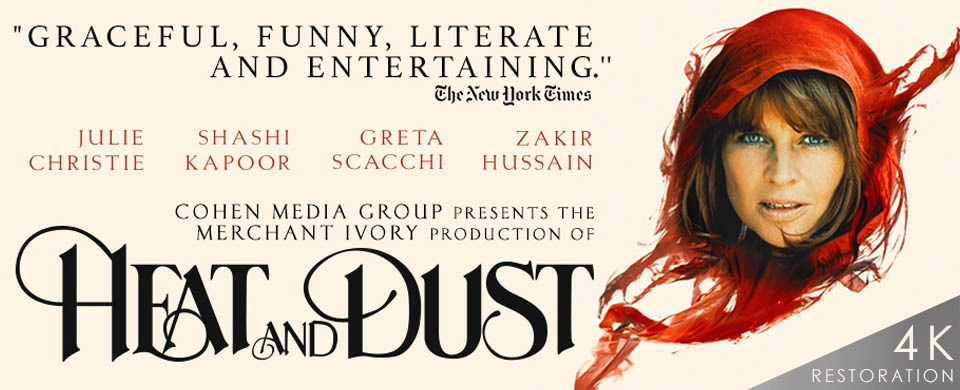
Vincent Canby of The New York Times called it one of Merchant Ivory’s most graceful, funny, and entertaining collaborations.
That description gets at something essential about the movie.
It is graceful, certainly. The landscapes are beautiful, the costumes are gorgeous, and the performances are uniformly strong.
But it is also funny.
Not in the sense of broad comedy, but in the way it observes human behavior with a raised eyebrow.
People in Heat and Dust are often ridiculous without realizing it.
The British characters are capable of enormous self-importance. The Indian characters are not reduced to noble wisdom or villainous scheming. The film understands that everybody is trying to navigate a world that makes very little sense.
That is where Jhabvala’s writing is particularly effective.
The film is literate without being precious.
It is intelligent without making the viewer feel like an idiot for not having read the book.
And it is romantic without pretending that desire automatically makes people better.
Eight BAFTA Nominations and a Career Turning Point
The film received eight BAFTA nominations, including Best Film.
Jhabvala won for her adapted screenplay.
The film was also recognized by the London Film Critics’ Circle.
For Merchant Ivory, it was an important moment.
They had spent years making films that were admired by critics but struggled to find larger audiences. Heat and Dust demonstrated that their particular blend of literary material, international locations, and character-driven storytelling could work commercially.
It also paved the way for the larger successes that would follow.
A Room with a View (1985) would become the film that truly established Merchant Ivory as a major force in period cinema. It would be followed by Maurice, Howards End, and The Remains of the Day.
But Heat and Dust was the film that helped make those later successes possible.
It was the bridge between the smaller India-set productions of the 1960s and the opulent literary films of the 1980s and 1990s.
And it remains one of their most interesting movies because it never entirely settles into the prestige-film mold.
James Ivory Wanted Something Else
After spending months in the heat and dust of India, Ivory was apparently ready for a change.
In a career-overview interview, he expressed a desire to move away from period films:
“Actually… now I’d like to make a psychological thriller or something with song and dance. I don’t want to do another period film for a long time, if ever again… Maybe another film set in India, but in contemporary India.”
It is a wonderful quote because it sounds like a filmmaker who has just completed a beautiful, complicated, exhausting project and would like to do something a little less demanding next time.
Of course, he would go on to make plenty of period films.
But the desire for something contemporary makes sense.
Merchant Ivory’s films are often associated with the past, but their real subject is usually the present.
They are about how people live inside the stories their culture has created for them.
And how difficult it can be to escape those stories.
Ivory’s own path to filmmaking was unusual. He studied at Berkeley and in Oregon, developed an interest in Indian miniature painting, and eventually began making films in India.
That background helps explain the visual intelligence of his work.
He approaches India not simply as a location, but as a place with a visual and cultural history that deserves to be taken seriously.
At the same time, he never loses sight of the people inhabiting that history.
The East-West Paradox
The phrase “East-West paradox” appears repeatedly in discussions of Ivory’s early work.
It is a useful description of what makes Heat and Dust so compelling.
The film is not simply about the clash between British and Indian cultures.
It is about the way those cultures have already become entangled.
Olivia’s life is shaped by British expectations, but she is drawn toward an India that exists beyond those expectations. The Nawab is an Indian prince whose world has been altered by British power. Anne arrives decades later with her own assumptions about what she will find.
Nobody is entirely outside the system.
Nobody is entirely free of it.
That complexity extends to the film’s treatment of women.
Olivia’s independence is constrained by marriage, class, and colonial society. Anne’s freedom is greater, but she is still trying to understand what it means to live outside the expectations of her own time.
The film is not a straightforward feminist statement.
It is more interested in the messy reality of women trying to find room to breathe inside systems that were not designed for them.
And that is where the movie’s irony becomes important.
Olivia’s scandal is treated as a social catastrophe, but the men around her are not exactly models of moral behavior.
The film understands that respectability is often a game in which the rules are applied selectively.
A Movie That Refuses to Tell You What to Think
One of the most interesting things about Heat and Dust is the way it handles its ending.
The film leaves room for interpretation, and Ivory was apparently aware that audiences might project their own ideas onto it.
In his interview with Ted Mahar, he discussed how viewers interpreted Olivia’s fate and the meaning of her final scenes.
Ivory’s own view was that Olivia appeared content in key moments.
That does not necessarily mean the film wants us to believe everything worked out perfectly.
It means that Olivia’s story is not presented as a simple cautionary tale.
She made choices. Those choices had consequences. But the film does not insist that we condemn her for wanting something more than the life she had been given.
That is a surprisingly generous position.
Especially for a movie about British colonial society.
The Lasting Appeal of Heat and Dust
There is a particular kind of 1980s period film that has aged badly.
The costumes are beautiful, the photography is lovely, and the characters speak in a manner that suggests they have been trapped inside a museum for several decades.
Heat and Dust avoids most of those problems.
It is still a product of its time, of course. Some of the period-prestige conventions may feel familiar to modern viewers. The modern storyline is less immediately seductive than the 1920s material.
But the film’s central concerns remain remarkably fresh.
What happens when we fall in love with an idea of a place?
What happens when we turn another person’s life into a story?
And what happens when we discover that the story we have been telling ourselves is not entirely true?
Those are questions that have nothing to do with whether a movie is set in 1920s India or 1980s England.
They are questions about being human.
And that is why Heat and Dust remains such a rewarding film.
It is beautiful without being empty.
It is intelligent without being cold.
It is romantic without being sentimental.
And it is funny in that particular Merchant Ivory way, where the people who take themselves most seriously are often the ones the film is quietly laughing at.
Heat and Dust and the Movies of the 80s
The 1980s were fascinated by the British Empire.
Sometimes that fascination produced magnificent cinema.
Sometimes it produced movies that seemed more interested in the costumes than the people wearing them.
Heat and Dust sits somewhere in between.
It is a film about the Raj, but it is also a film about the people who lived within it. It is about desire, class, cultural misunderstanding, and the complicated ways we inherit the past.
It marked a turning point for Merchant Ivory, bringing together the talents of James Ivory, Ismail Merchant, and Ruth Prawer Jhabvala at a moment when their partnership was ready to move into a new phase.
And it introduced Greta Scacchi to a wider audience, while giving Julie Christie and Shashi Kapoor roles that remain among their most memorable.
More than forty years later, the film still feels like a movie worth seeking out.
Not because it is a perfect film.
It isn’t.
But because it is a film with something on its mind.
And because it understands that the past is never really past.
We carry it around with us.
We tell stories about it.
We fall in love with the wrong people because of it.
And sometimes, if we are lucky, we discover that the story we thought we knew was never the whole story at all.
That is what makes Heat and Dust such a fascinating entry in the Movies of the 80s.
It is a film about the past, made in the present, that still has something to say about the way we live now.
And if you have never seen it, seek out a restored version.
The film deserves to be seen in all its atmospheric beauty.
Just maybe don’t watch it in the middle of a heat wave.
You might find yourself sweating along with the cast.

About the Creator
Movies of the 80s
We love the 1980s. Everything on this page is all about movies of the 1980s. Starting in 1980 and working our way the decade, we are preserving the stories and movies of the greatest decade, the 80s. https://www.youtube.com/@Moviesofthe80s
Enjoyed the story? Support the Creator.
Subscribe for free to receive all their stories in your feed.
Comments
There are no comments for this story
Be the first to respond and start the conversation.