
Has the Ceasefire Between Iran and the U.S. Collapsed?
A Ceasefire on Paper, but a Crisis in Reality

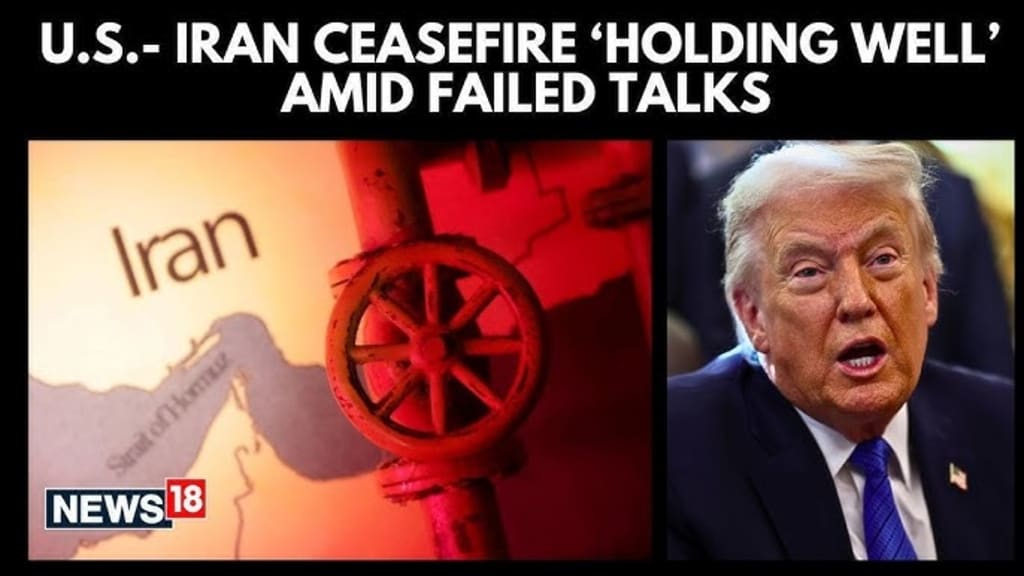
The question of whether the ceasefire between Iran and the United States has collapsed is both timely and complex. Recent developments suggest that while the ceasefire has not officially ended, it is under serious strain and could unravel if diplomatic efforts fail.
A two-week ceasefire between the United States and Iran was announced in early April 2026, with the aim of halting a rapidly escalating conflict and creating space for negotiations.  This temporary truce, mediated by countries like Pakistan, was seen as a critical opportunity to move toward long-term peace. However, from the beginning, the ceasefire was fragile, marked by deep mistrust and conflicting expectations on both sides.
The situation took a dramatic turn when high-stakes talks in Islamabad ended without an agreement. Key disagreements—especially over Iran’s nuclear program and U.S. demands for strict limitations—proved too difficult to resolve.  Both sides blamed each other for the failure, highlighting how wide the gap remains.
Recent actions have further raised doubts about the ceasefire’s survival. The United States has announced plans for a naval blockade of Iranian ports, a move that Iran has warned would be treated as a violation of the ceasefire and potentially an act of war.  At the same time, Iran has indicated that it may refuse further peace talks, signaling a hardening of its position. 
Despite these tensions, it is important to note that the ceasefire has not yet formally expired. It is expected to last until around April 21–22, leaving a narrow window for diplomacy.  Mediators from multiple countries are still actively working to revive negotiations, suggesting that both sides have not completely abandoned the possibility of a deal. 
This creates a paradoxical situation: on paper, the ceasefire still exists, but in reality, it is weakening rapidly. Military threats, economic pressure, and political rhetoric are all intensifying, making the environment increasingly unstable. Oil markets have already reacted, and fears of a broader regional conflict are growing.
Another key issue is the lack of trust between the two nations. Iran insists on maintaining its nuclear program for what it claims are peaceful purposes, while the United States demands strict guarantees that Iran will not develop nuclear weapons.  This fundamental disagreement lies at the heart of the conflict and makes any lasting ceasefire difficult to achieve.
The question of whether the ceasefire between Iran and the United States has collapsed is more complex than a simple yes or no. Officially, the ceasefire still exists, but in practice, it is hanging by a thread.
After weeks of escalating tensions, both sides agreed to a temporary halt in hostilities to prevent a wider regional war. The agreement was meant to open the door for diplomacy, reduce civilian casualties, and stabilize critical areas such as the Strait of Hormuz—a vital route for global oil shipments. However, the ceasefire was never backed by deep trust, and that weakness is now becoming clear.
One of the biggest signs of collapse is the failure of direct negotiations. Talks aimed at extending the truce have stalled, and both countries have hardened their positions. The United States has signaled stronger military and economic measures, while Iran has warned that any perceived aggression will be met with a firm response. These developments suggest that both sides are preparing for the possibility of renewed conflict rather than lasting peace.
Another key issue is the lack of a clear enforcement mechanism. Without neutral oversight or binding commitments, both sides accuse each other of violations. Even minor incidents—such as troop movements or naval patrols—can quickly escalate tensions and undermine the ceasefire.
At the same time, regional actors are closely watching. Any breakdown could pull neighboring countries into the conflict, increasing the risk of a broader Middle Eastern crisis. Global markets are also reacting nervously, especially due to fears of disruption in oil supply routes.
In conclusion, the ceasefire between Iran and the United States has not officially collapsed yet, but it is hanging by a thread. The failure of recent talks, rising military threats, and hardened political positions all point toward a dangerous turning point. The coming days will be crucial. If diplomacy succeeds, the ceasefire could evolve into a broader peace agreement. If not, the world may witness a return to open conflict—with serious consequences for regional and global stability.
About the Creator
Sk
"I am a passionate writer, crafting books and articles on Vocal Media, exploring human experiences, stories, and creative reflections."
Enjoyed the story? Support the Creator.
Subscribe for free to receive all their stories in your feed.
Comments
There are no comments for this story
Be the first to respond and start the conversation.