
Happy Feet” (2006) Revisited: The Enduring Rhythm of Being Different
Twenty years later, George Miller’s animated musical remains a charming story about embracing uniqueness and creating your own path.

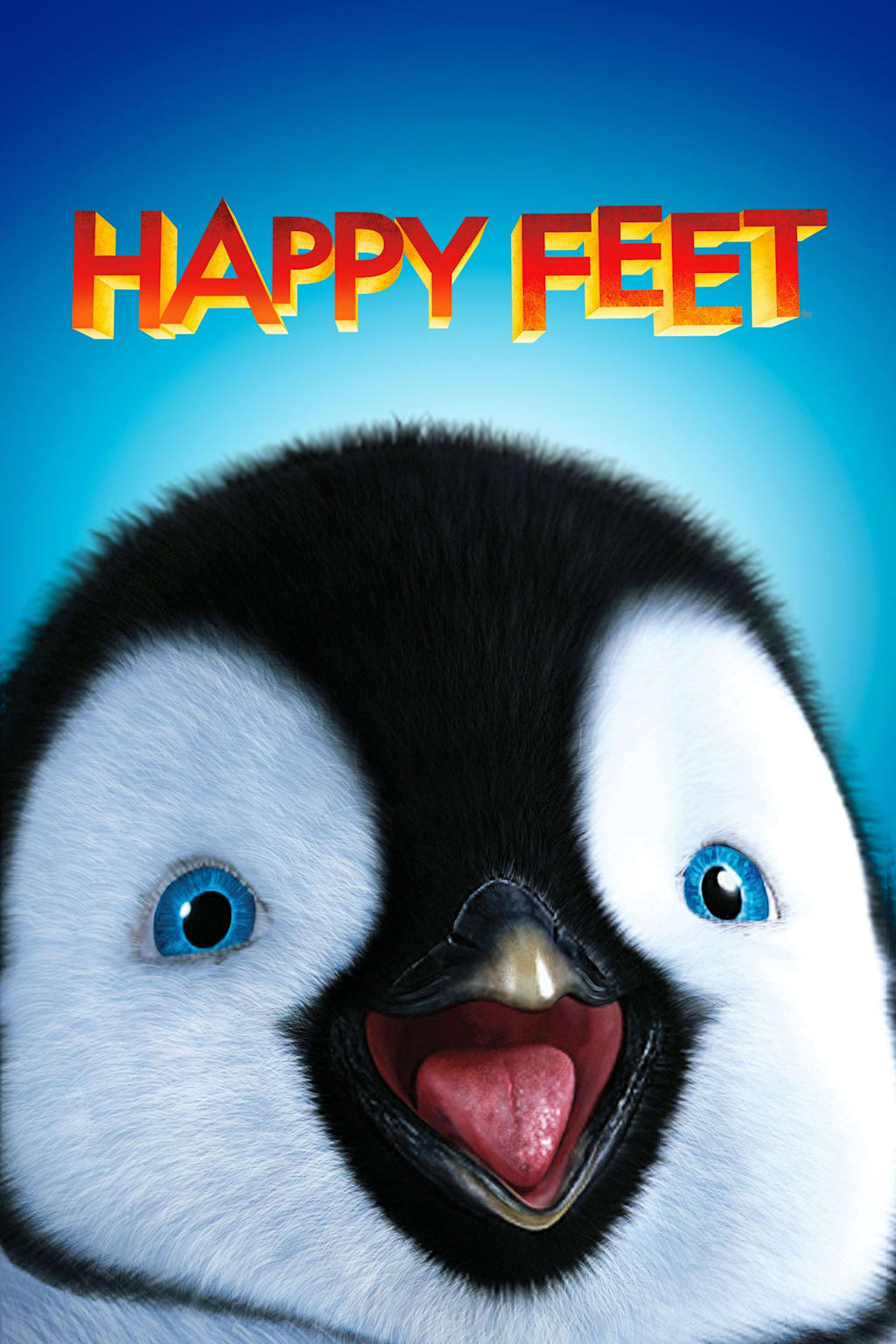
The Courage To Stand On One’s Feet
At first glance, Happy Feet appears to be a lighthearted animated musical about penguins who express themselves through song and dance. However, beneath its colorful presentation lies a more thoughtful coming-of-age story about individuality, acceptance, and the courage to challenge traditions.
At the center is Mumble, a young Emperor penguin whose inability to sing sets him apart from the rest of his community. In a society where singing is essential to attracting a soulmate, Mumble’s talent for tap dancing makes him an outsider. Rather than conforming to what’s expected of him, he embraces his unique traits, setting him on a journey to self-discovery.
A Cast That Finds Its Rhythm
Elijah Wood brings an earnest, youthful quality to Mumble, capturing his curiosity and determination as he struggles to find acceptance in a community that does not understand him. E.G. Daily complements his performance as Baby Mumble, giving the character’s childhood self an innocence that makes his differences apparent.
Brittany Murphy brings Gloria to life with a combination of confidence, warmth, and musical talent. As Mumble’s childhood and eventual love interest, Gloria provides an important emotional connection to his journey, particularly as she struggles to accept his individuality.
Hugh Jackman gives Memphis a recognizable parental warmth, while conveying the disappointment and concern that emerge when his son’s dancing sets him apart. Nicole Kidman’s Norma Jean provides a gentler counterbalance. Her affectionate performance makes her one of Mumble’s strongest sources of encouragement, even when everyone doesn’t believe him.
Robin Williams is especially entertaining in his dual roles as Ramon and Lovelace. As Ramon, he brings exuberant comic energy to the leader of the Amigos; as Lovelace, he adopts the manner of a self-proclaimed guru, mixing eccentric humor with moments of wisdom. The contrast gives both characters distinct personalities without losing Williams’s liveliness.
Hugo Weaving lends Noah the Elder an imposing authority, making him a convincing voice of the colony’s rigid traditions. His measured delivery reinforces the resistance Mumble faces from those who believe he must conform. Steve Irwin, meanwhile, brings a warmth, good-natured presence to Trev, the elephant seal Mumble encounters during his journey. His appearance adds personality to the film’s wider Antarctic world and atmosphere.
Together, the voice cast gives Happy Feet much of its charm. Their performances help the film move beyond its musical premise, grounding Mumble’s journey in relationships, conflict, and the struggle to find belonging.
When Music and Dance Tell The Story
The film opens with a flashback introducing Memphis and Norma Jean, whose relationship leads to the birth of a son, Mumble. Their musical courtship establishes the importance of singing within Emperor Penguin society, foreshadowing the conflict Mumble will face when he fails to develop the same ability as his parents.
The musical sequences are among the film’s most memorable moments. From the Emperor Penguins’ courtship songs to Gloria’s impressive vocal performances, George Miller uses music to establish the colony’s traditions and give its inhabitants distinct personalities.
One particularly memorable sequence occurs during Mumble’s childhood, when he is cornered by predatory seabirds while spending some time alone. His encounter introduces an early sense of danger into his otherwise sheltered world and begins his curiosity about the environment beyond his community.
The film takes a more dramatic turn when Mumble reaches adulthood. His refusal to accept the colony’s rigid traditions clashes with Noah the Elder, who ultimately banishes him. His subsequent encounters with orcas and leopard seals demonstrate the dangers of venturing beyond a familiar environment. Later, his confinement in a zoo introduces another significant obstacle, as Mumble finds himself separated from his natural environment. These experiences are harsh, but they further strengthen Mumble’s desire to prove his worth.
The Making Of a Dancing Penguin
Happy Feet has several fascinating production details that might surprise its fans. George Miller’s production company, Kennedy Miller Productions, transformed Animal Logic from a special-effects company into a fully functioning studio. The process took approximately two years and laid the groundwork for the film’s ambitious visual presentation.
Motion capture was another important part of the production. Performers wore bodysuits fitted with reflective sensors, allowing their movements to be recorded by an array of sixty cameras and transferred onto digital penguin characters. To prepare the dancers, choreographer Kelley Abbey established a “penguin school” for sixteen performers, including renowned tap dancer Savion Glover. They learned to adapt their movements to the penguins’ distinctive proportions and mannerisms.
George Miller also drew inspiration from classic Disney animated films, particularly Dumbo (1941) and Pinocchio (1940), whose darker tones influenced his approach to blending drama and action in Happy Feet.
These details demonstrate the considerable creativity and technical effort behind the film. By blending live performances, motion capture, and digital animation, Miller and Animal Logic created an animated world that was both visually ambitious and full of personality.
A Message Beyond The Ice
On the surface, Happy Feet looks like a movie about singing penguins, but there is considerably more beneath its colorful tone. At its heart, the film is about creating one’s path rather than allowing certain cultural or societal norms to decide who you should be. Mumble demonstrates this through his tap-dancing abilities, embracing the very talent that makes him unique.
Noah the Elder, meanwhile, represents the danger of allowing tradition to suppress individuality and innovation. When he declares, “Dissent will lead to division, and division will lead us into doom,” he reveals his fear that Mumble’s unconventional nature will threaten the community. This reflects how high-maintenance religious groups can discourage independent thinking, sometimes treating harmless hobbies or activities as threats to their control. Noah’s decision to banish Mumble further illustrates how freedom of expression can be quashed to maintain the status quo.
However, the film’s commentary extends beyond social expectations and into environmental concerns. Overfishing, food shortages, and human interference become increasingly important as Mumble discovers his colony’s problems cannot simply be blamed on his tap dancing. The Emperor Penguins are struggling to find food, and Mumble’s investigation eventually leads him to discover the connection between human activities and their dwindling food supply.
The Beat Goes On: The Legacy Of Happy Feet
Happy Feet was a critical success, earning recognition for its animation, music, and storytelling. Its popularity led to a sequel in 2011, with a stage musical adaptation also in development. But its legacy extends beyond these achievements. George Miller demonstrated how an unconventional concept about dancing penguins became a compelling story about individuality, acceptance, and environmental responsibility. Rather than relying solely on colorful characters and musical numbers, the film explores ideas that resonate beyond its original setting. Twenty years later, the movie remains a distinctive animated film with a message worth remembering: find your rhythm.
Originally published on: https://medium.com/its-only-a-movie/happy-feet-2006-revisited-the-enduring-rhythm-of-being-different-7e2dfffff159
About the Creator
TheScreenAnalyst
I am a passionate movie and TV enthusiast, devoted to analyzing storytelling, characters, visuals, and performances. I provide thoughtful critiques and insights, exploring both mainstream and independent works to engage audiences.
Enjoyed the story? Support the Creator.
Subscribe for free to receive all their stories in your feed.
Comments
There are no comments for this story
Be the first to respond and start the conversation.