
'Going Berserk' (1983): When SCTV Hit the Big Screen… and Mostly Missed
John Candy, Joe Flaherty and Eugene Levy had the comic pedigree. Unfortunately, Going Berserk had something else: a script that never quite figured out what movie it wanted to be.

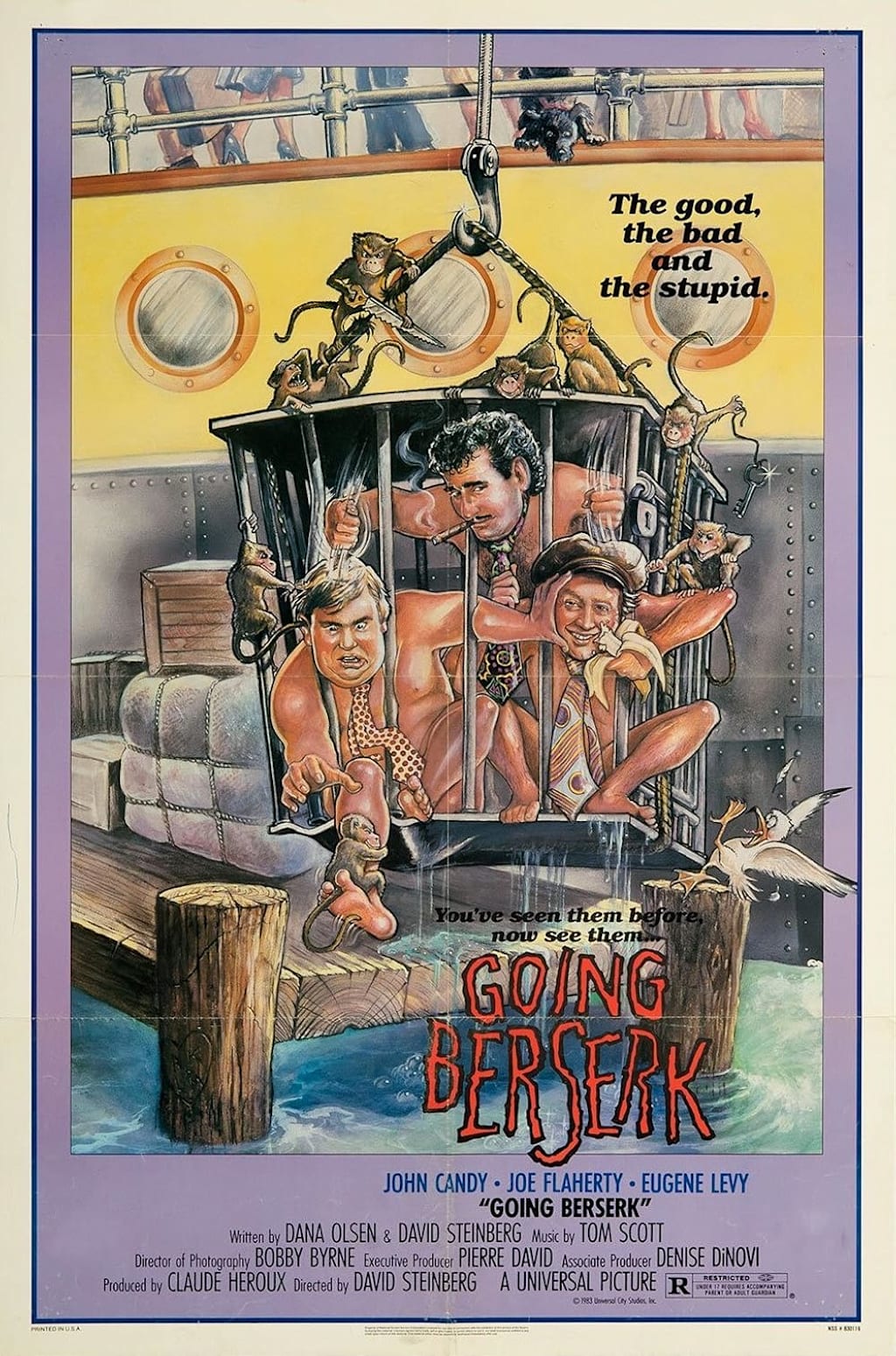
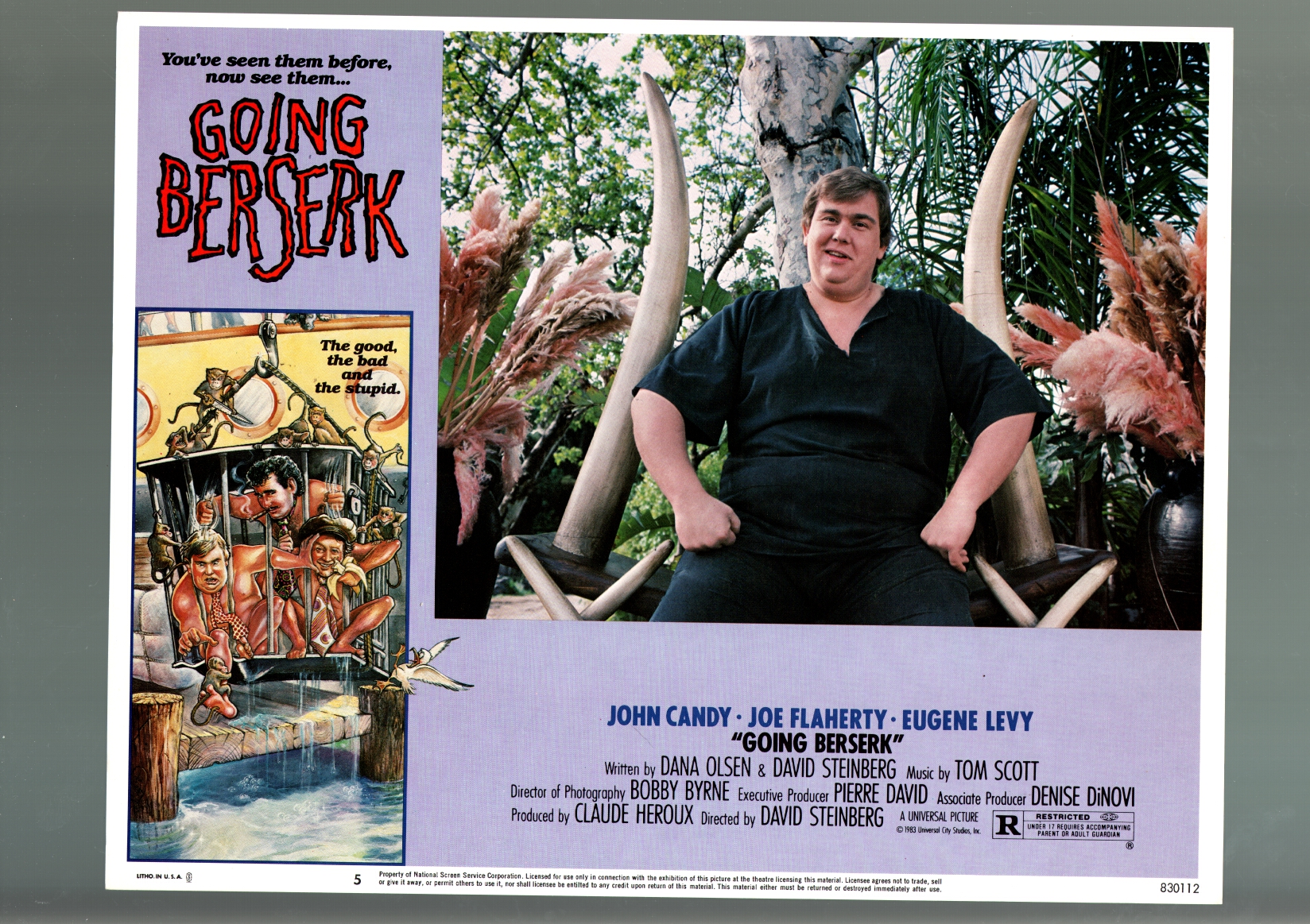
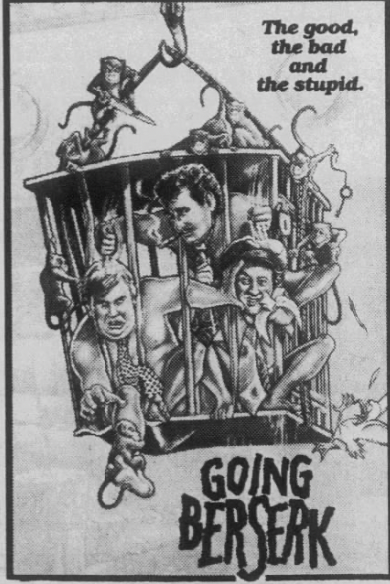
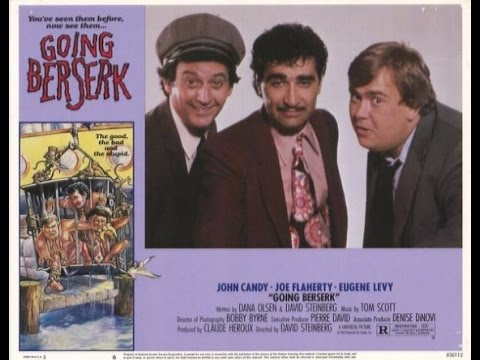
There is a wonderful picture used to promote Going Berserk.
John Candy. Joe Flaherty. Eugene Levy.
All three are stuffed inside a cage.
And the cage is being swarmed by monkeys.
Underneath them is the promise:
“The good, the bad and the stupid.”
Honestly, what more could you possibly want from a 1983 comedy?
Well…
A script would have been nice.
Going Berserk is one of those movies that makes you appreciate just how difficult comedy actually is.
Because look at the talent.
John Candy.
Joe Flaherty.
Eugene Levy.
Three of the most recognizable faces from SCTV, backed by a supporting cast that includes Paul Dooley, Richard Libertini, Dixie Carter, Pat Hingle, Kurtwood Smith, Ernie Hudson and even Father Knows Best star Elinor Donahue.
David Steinberg is directing.
Dana Olsen is co-writing.
Universal is releasing it.
And yet somehow the whole thing feels like somebody dumped a box of SCTV sketches onto the floor and said, “Okay, guys. Make a movie.”
That was more or less the problem.
Going Berserk arrived in October 1983 as John Candy’s first major starring vehicle for a Hollywood studio. It came at an interesting moment in Candy’s career. He had already made an impression in Stripes and The Blues Brothers, and 1983 would also put him in National Lampoon’s Vacation.
The bigger career was coming.
Splash was just around the corner.
But first there was this.
A movie about a limo driver, a wedding, a sleazy filmmaker, motorcycle punks, a religious aerobics cult, hypnotism, assassination, dead bodies and whatever else happened to wander into the frame.
In other words:
Going berserk.
It Started as Something Completely Different
The strangest thing about Going Berserk may be what it was before it became Going Berserk.
The project began life as Drums Over Malta, a screenplay being developed at Universal and Mutual Productions.
The early version was conceived as a comedy riff on Hitchcock’s North by Northwest. SCTV people were involved from the beginning, with John Candy, Joe Flaherty, Paul Flaherty and Dick Blasucci among the writers working on the project.
At one point it was briefly known as Numnuts.
Which, frankly, may have been the more honest title.
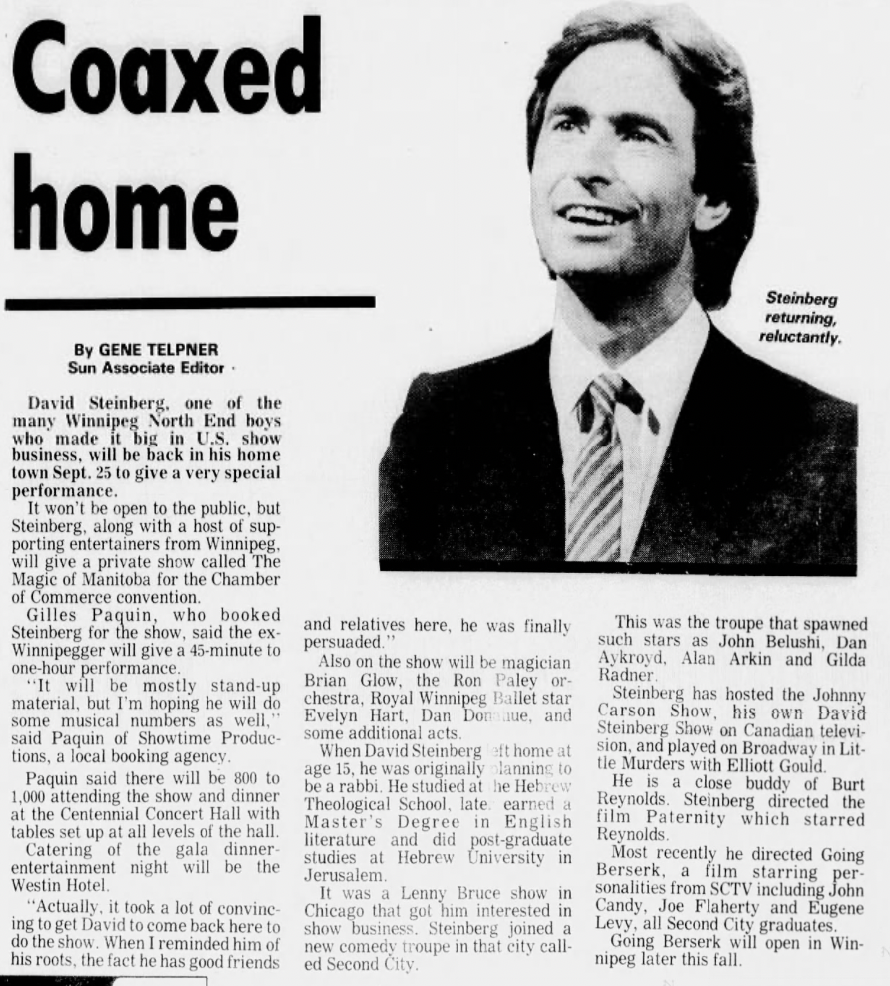
The project eventually wound its way to David Steinberg, a Second City veteran who had already directed Paternity. Dana Olsen became involved in the writing, and the screenplay went through substantial changes.
A lot of changes.
According to the AFI Catalog’s production history, the film went into production without a finished screenplay. Steinberg had reservations about taking on the assignment because of the modest budget, tight schedule and unfinished script. The production ultimately relied heavily on rewrites and improvisation.
Candy, Flaherty and Levy eventually asked not to receive screenwriting credit. (AFI Catalog)
And that tells you something.
Not necessarily that the three SCTV stars were ashamed of the movie.
But that this was not the clean, carefully constructed transfer of SCTV’s sensibility to feature filmmaking that the premise suggested.
Steinberg himself understood the problem.
In contemporary coverage, he described the movie as having “an attitude and a comic atmosphere more than a story.”
That is either a fascinating philosophy of comedy or the sort of sentence you say when you realize the story has escaped through a window.
Probably both.
A $6 Million Comedy Held Together With Duct Tape
Production took place in the Los Angeles area during the summer of 1982.
AFI lists the production period as July 19 through September 1982, with the budget reported in contemporary trade coverage at approximately $6 million. (AFI Catalog)
The movie was shot quickly.
And there was plenty of improvisation.
Candy reportedly performed many of his own stunts, including being hung upside down, swimming through a swamp and fighting a nightclub full of women.
Because apparently being John Candy wasn’t enough work.
You also had to throw him into a swamp.
The cast contributed improvisational embellishments to various scenes, which makes perfect sense considering where they came from.
SCTV was built around performers who could take a premise and keep finding increasingly ridiculous places to go with it.
But television sketch comedy gives you a safety net.
A sketch can run for five minutes.
A character can appear, do something ridiculous, and disappear.
A feature film has to survive approximately 85 minutes.
That’s a lot of runway.
And Going Berserk doesn’t always have the fuel.
So What the Hell Is It About?
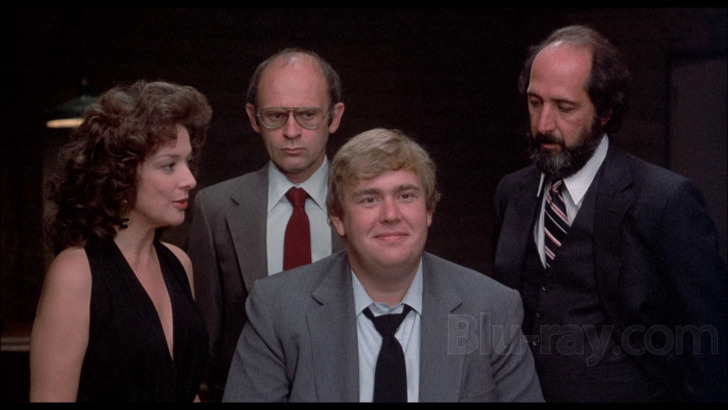
John Bourgignon is a cheerful limo driver and aspiring drummer.
He’s also engaged to Nancy Reese, the daughter of Congressman Ed Reese, played by Pat Hingle.
The congressman doesn’t exactly love his future son-in-law.
Then things get weird.
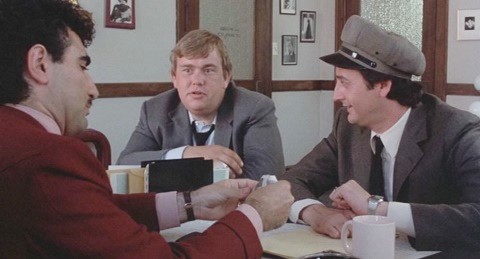
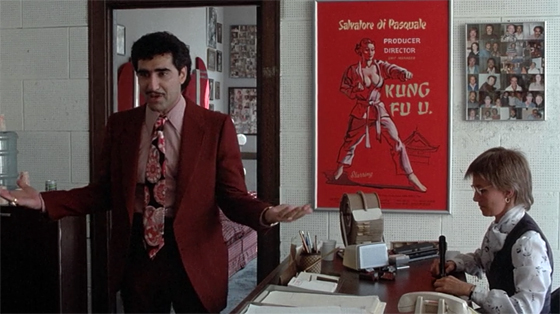
John’s friend Sal DiPasquale, played by Eugene Levy, is a sleazy filmmaker who wants to film the wedding. When the congressman objects, Sal resorts to blackmail.
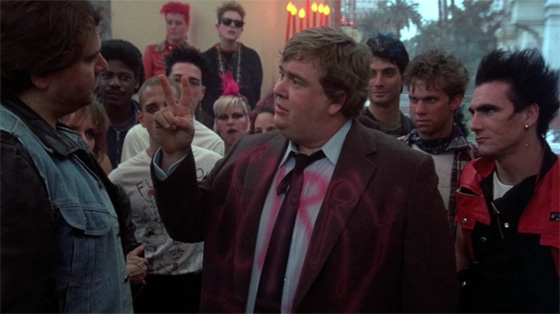
Then John gets tangled up with motorcycle punks.
Then there’s a dead body.
Then he’s handcuffed to the dead body.
Then there is an aerobics cult.
Then the cult leader, Reverend Sun Yi Day, played by Richard Libertini, hypnotizes John and programs him to assassinate his future father-in-law.
And that’s just the basic plot.
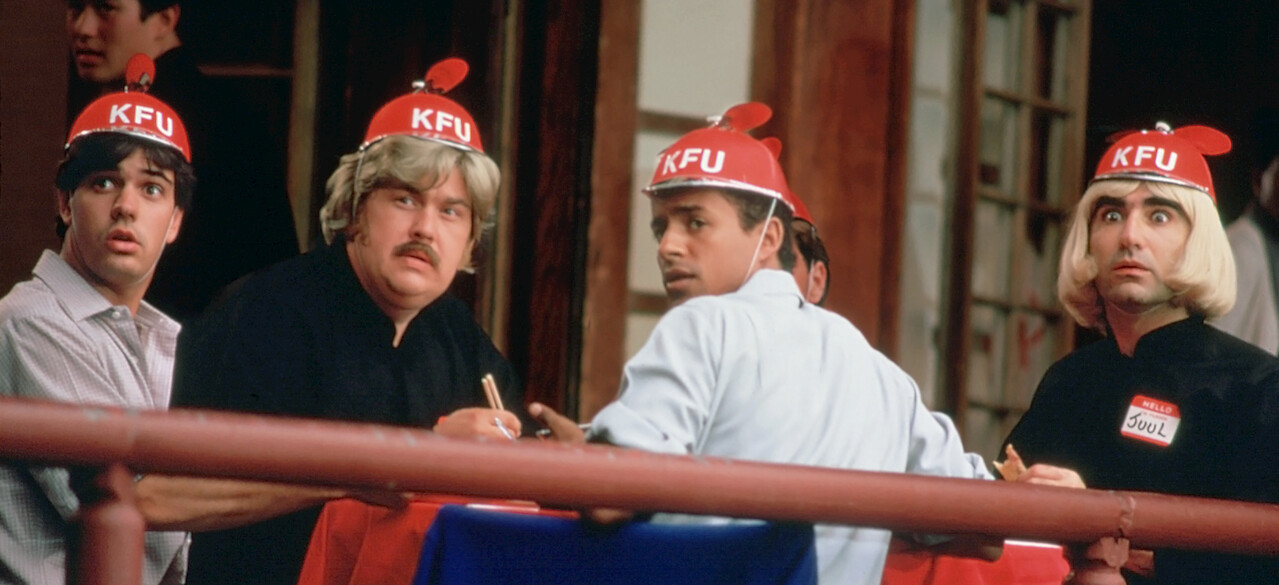
There are also martial-arts movie parodies, Father Knows Best jokes, nightclub mayhem and assorted lunacy scattered throughout.
It’s less a traditional narrative than a collection of comic ideas connected by John Candy.
And that distinction matters.
Because individual bits can be funny.
Sometimes very funny.
But the movie keeps reminding you that you’re watching bits.
It’s like the movie doesn’t trust its own characters enough to simply let them exist.
Something has to happen.
Then something else.
Then something else.
Then, apparently, an aerobics cult.
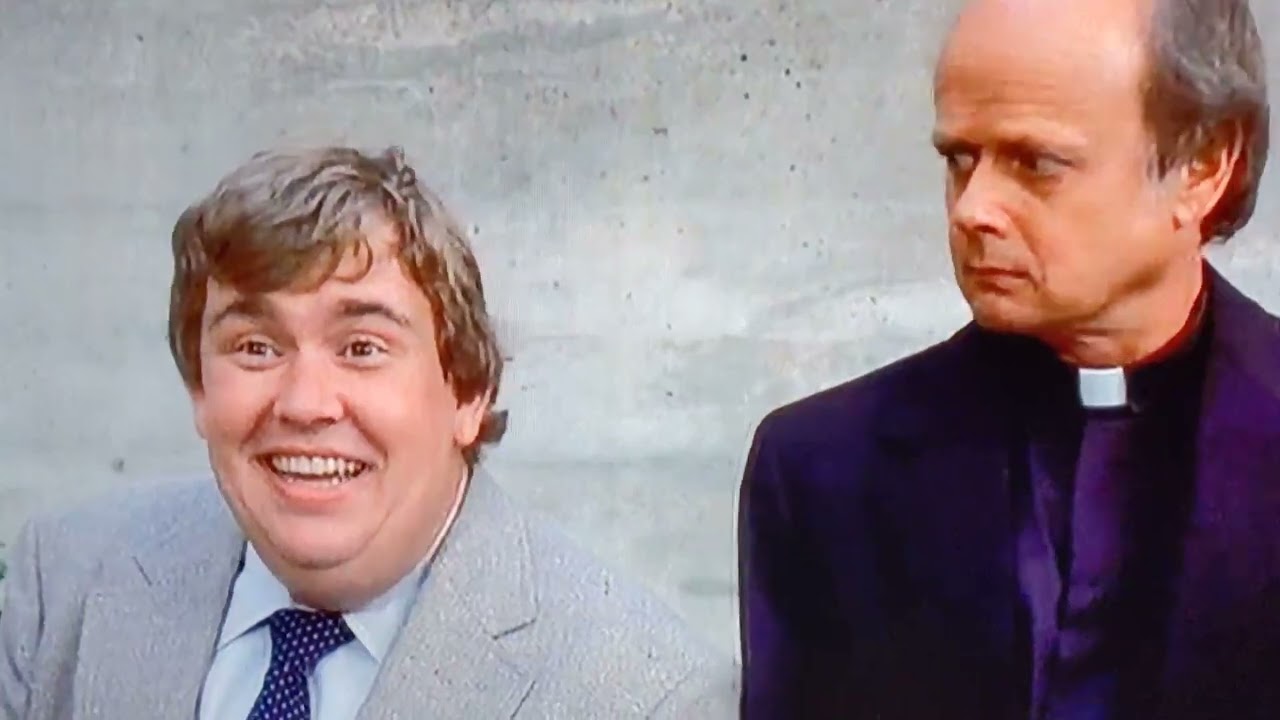
John Candy Is Trying to Save the Movie
This is where Going Berserk becomes interesting.
Because even its critics could see what Candy had.
Janet Maslin’s New York Times review essentially singled Candy out as the film’s saving grace, describing him as the funniest thing in the movie while arguing that the comedy was weighed down by its plotting and lack of energy. (Kiwix Server)
That assessment is pretty difficult to argue with.
Candy is terrific.
Not because the material is particularly good.
Because Candy is Candy.
There is an openness to him that makes even the weakest material seem potentially salvageable.
He doesn’t seem to be trying to convince you that John Bourgignon is hilarious.
He simply plays him.
And Candy’s physical comedy is already there.
The face.
The timing.
The willingness to look ridiculous.
The slightly bewildered quality that would become one of his greatest strengths.
You can see the actor who would eventually become a major comedy star.
He’s just trapped inside a movie that hasn’t quite figured out how to use him.
The SCTV Problem
This was not the first time SCTV talent had been asked to make the jump to feature films.
And that transition wasn’t always smooth.
The comparison that came up repeatedly in contemporary criticism was Strange Brew, released earlier in 1983.
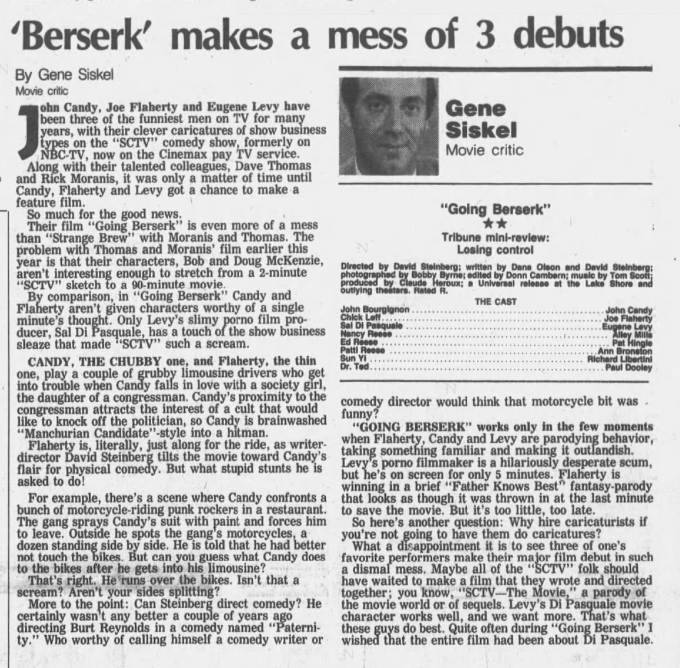
Gene Siskel wasn’t impressed with either film.
In his Chicago Tribune mini-review, he called Going Berserk an even bigger mess than Strange Brew and wondered why filmmakers would hire performers known for caricature and then give them material that didn’t really allow them to do what they did best.
That is the heart of the movie’s frustration.
You have John Candy.
Joe Flaherty.
Eugene Levy.
These aren’t anonymous comedy actors who need a script to explain what they’re supposed to do.
They’re performers with established comic identities.
Let them loose.
Instead, Going Berserk frequently seems to be running in the opposite direction.
Siskel found Levy’s Sal DiPasquale the most successful of the central characters and essentially wished the movie had been about him.
That’s a pretty devastating thing to hear about a movie built around John Candy.
And yet it’s also revealing.
Because Levy is allowed to be a caricature.
Sal is grotesque, sleazy and ridiculous.
He’s a character.
Candy, meanwhile, is mostly the guy standing in the middle of everything while the plot happens to him.
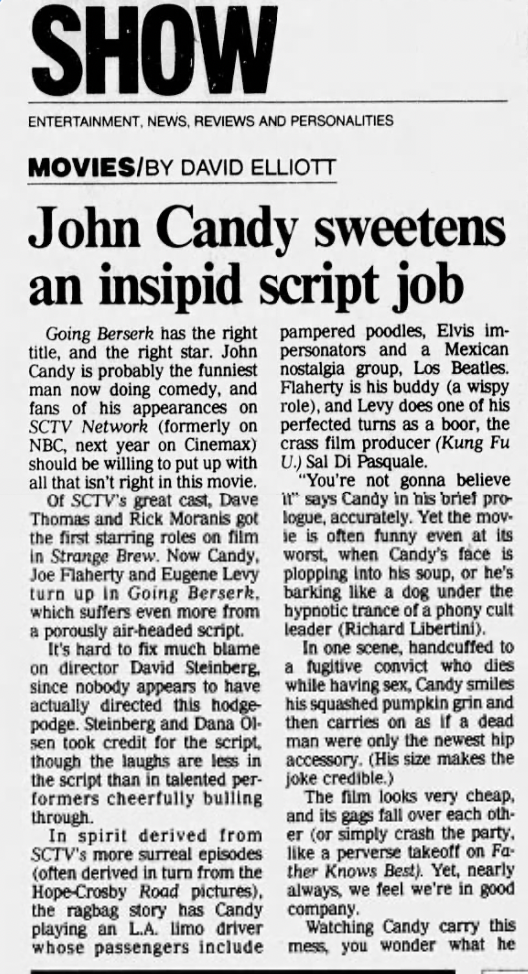
“John Candy Sweetens an Insipid Script”
David Elliott’s contemporary review took a somewhat different approach.
He thought Candy was enormously funny and essentially carried the movie.
The problem was the script.
Elliott described it as “air-headed” and criticized the movie’s loose, almost shapeless construction. He also questioned the direction, suggesting that the various pieces never quite came together as a coherent whole.
But he also recognized something important.
There are funny moments here.
The sequence in which John finds himself handcuffed to a dead body works.
The cult and hypnosis material has possibilities.
The movie occasionally hits the bizarre, anything-goes comic rhythm that SCTV fans were hoping to see.
Then it moves on.
That’s Going Berserk in a nutshell.
It gets there.
Then it leaves.
You can practically feel the better movie hiding somewhere inside it.
And Then There Was the Production Trouble
The movie’s messy final form wasn’t entirely mysterious.
AFI’s production notes document disagreements over the direction of the project, including Steinberg’s criticism that executive producer Pierre David wanted the film pushed toward a more exploitative comedy style. David disputed Steinberg’s characterization of their disagreements. (AFI Catalog)
That’s worth emphasizing because it’s easy, decades later, to look at a movie like this and simply say:
“Bad script.”
But movies are rarely that simple.
This was a project that changed titles.
Changed writers.
Changed direction.
Was being rewritten during production.
Encouraged improvisation.
And was being shaped by people with different ideas about what kind of comedy they were making.
Steinberg reportedly knew before release that critics would complain about the lack of plot.
He wasn’t wrong.
He just didn’t have the luxury of fixing the problem.

Then Universal Finally Released It
And waited.
And waited.
The movie had been completed in 1982, but it didn’t reach theaters until October 28, 1983.
AFI records the New York and Los Angeles opening on that date, with the film arriving in 129 theaters according to contemporary coverage. (AFI Catalog)
The box office was brutal.
Going Berserk opened in 127 theaters and made $234,950 over its opening weekend.
That was essentially its entire domestic theatrical run.
The Numbers lists the movie’s domestic total at $234,950, with the same figure representing its opening weekend. (The Numbers)
For comparison, the weekend’s top-grossing film, Never Say Never Again, made more than $3.7 million.
Even Zelig, playing in 156 theaters, came remarkably close to Going Berserk’s opening number despite having a much smaller theatrical footprint.
The movie wasn’t merely a disappointment.
It basically arrived, introduced itself, collected $234,950 and disappeared.
The Critics Had Already Seen the Problem
The contemporary reviews weren’t unanimous, but they were remarkably consistent about one thing.
Candy was funny.
The movie wasn’t.
That’s a difficult equation to overcome.
One critic after another found the script thin, the structure loose and the characters underdeveloped.
And that criticism feels particularly relevant when you know how SCTV worked.
SCTV wasn’t funny because the performers simply walked onto a set and started screaming.
The show had characters.
Point of view.
Specificity.
A willingness to let a ridiculous idea develop.
Going Berserk has the first part.
Sometimes the second.
Not always the third.
Instead, the movie keeps throwing another gag at you.
Then another.
Then another.
Eventually you start wondering whether anyone ever stopped long enough to ask what the movie itself was about.
The Strange Case of John Candy
The timing of Going Berserk makes it more interesting today than it probably seemed in 1983.
This was John Candy before John Candy became John Candy.
He was on the verge.
He had already appeared in Stripes.
He was in National Lampoon’s Vacation that same year.
And the following year would bring Splash.
Suddenly Hollywood would discover that this enormously talented Canadian comic could carry a movie.
But Going Berserk isn’t the breakthrough.
It’s the awkward rehearsal.
And that’s part of why it’s worth remembering.
You can watch Candy here and see the future.
The movie doesn’t quite work.
The star does.
That’s different.
The Movie That Got Lost Between SCTV and Hollywood
There’s a larger 1980s story hiding inside Going Berserk.
The Canadian comedy scene was producing an extraordinary amount of talent.
Second City.
SCTV.
The performers who emerged from that ecosystem weren’t merely funny people. They were writers, improvisers, character actors and comic personalities who had developed their own language.
Hollywood wanted them.
Of course it did.
But Hollywood also wanted to package them.
And packaging isn’t always the same thing as understanding.
Going Berserk feels like the moment where that tension becomes visible.
The performers know how to make something funny.
The studio knows it wants a comedy.
Somewhere in the middle, the movie gets lost.
Is Going Berserk Worth Going Back To?
Here’s the funny thing.
I don’t hate Going Berserk.
I can’t.
There’s too much talent in it.
Too many little moments.
Too much John Candy.
And occasionally, it does exactly what you want it to do.
Then it wanders off again.
That’s the frustrating part.
This isn’t some terrible movie made by people who didn’t know what they were doing.
It’s a movie made by people who absolutely knew how to be funny.
They just didn’t have a strong enough movie around them.
And maybe that’s why the old promotional poster remains more memorable than the movie itself.
Three SCTV legends.
A cage.
Monkeys everywhere.
The good.
The bad.
And the stupid.
It’s a perfect advertisement.
Unfortunately, it might also be the perfect summary.
Going Berserk is a fascinating little time capsule from the moment SCTV’s comic revolution collided with Hollywood filmmaking. It shows John Candy before he became a superstar, Joe Flaherty and Eugene Levy before their film careers fully developed, and David Steinberg trying to turn sketch-comedy sensibility into a feature.
Sometimes it works.
Sometimes it really doesn’t.
But that’s precisely why I think it’s worth rediscovering.
Not as some lost masterpiece.
It isn’t.
As a snapshot.
As a failed experiment.
As an early John Candy showcase.
And as a reminder that having three incredibly funny people in the same room does not automatically make a movie funny.
Sometimes you still need a script.
Who knew?
Have you seen Going Berserk?
If you’re a John Candy or SCTV completist, it’s absolutely worth checking out.
And if you’ve already seen it, I’m curious:
Does Candy save it for you?
Or is this one better left inside the cage with the monkeys?

Revisit Going Berserk (1983), John Candy’s early starring comedy with SCTV stars Joe Flaherty and Eugene Levy, from its troubled production to its critical and box-office failure.
Sources
AFI Catalog — Going Berserk — production history, alternate titles, production dates, budget, release information and contemporary production notes. (AFI Catalog)
The Numbers — Going Berserk — theatrical release, theater count and domestic box-office figures. (The Numbers)
Janet Maslin, The New York Times, October 29, 1983 — contemporary critical reaction to the film and Candy’s performance. (Kiwix Server)
Gene Siskel, Chicago Tribune — contemporary mini-review and assessment of the SCTV cast and screenplay.
David Elliott, contemporary “SHOW” entertainment review — assessment of Candy, the script and the film’s comic set pieces.
Gary Deeb, contemporary entertainment column — discussion of Going Berserk, Strange Brew and the difficulty SCTV performers faced translating their television comedy to feature films.
Contemporary Canadian Press / newspaper coverage of David Steinberg — Steinberg’s comments about the film’s comic approach, production and his expectations for the finished movie.
Contemporary Winnipeg coverage, including Gene Telpner — local reporting on Steinberg and the film’s planned Winnipeg opening.
Contemporary theatrical advertising and promotional material — including the “The good, the bad and the stupid” campaign and cage-and-monkeys imagery.
Universal Pictures Home Entertainment — current official synopsis and cast information. (Universal Pictures Home Entertainment)
About the Creator
Movies of the 80s
We love the 1980s. Everything on this page is all about movies of the 1980s. Starting in 1980 and working our way the decade, we are preserving the stories and movies of the greatest decade, the 80s. https://www.youtube.com/@Moviesofthe80s
Enjoyed the story? Support the Creator.
Subscribe for free to receive all their stories in your feed.
Comments
There are no comments for this story
Be the first to respond and start the conversation.