
Gandhi Talks Ending Explained: Mahadev’s Final Choice, Boseman’s Fate and the Meaning of the Silent Film (Spoilers)
Vijay Sethupathi and Arvind Swamy’s dialogue-free drama turns money, corruption and desperation into a story about whether honesty can survive when almost everything has a price.

Spoiler Warning: This article contains major spoilers for Gandhi Talks, including its story and ending.
What Is Gandhi Talks About?
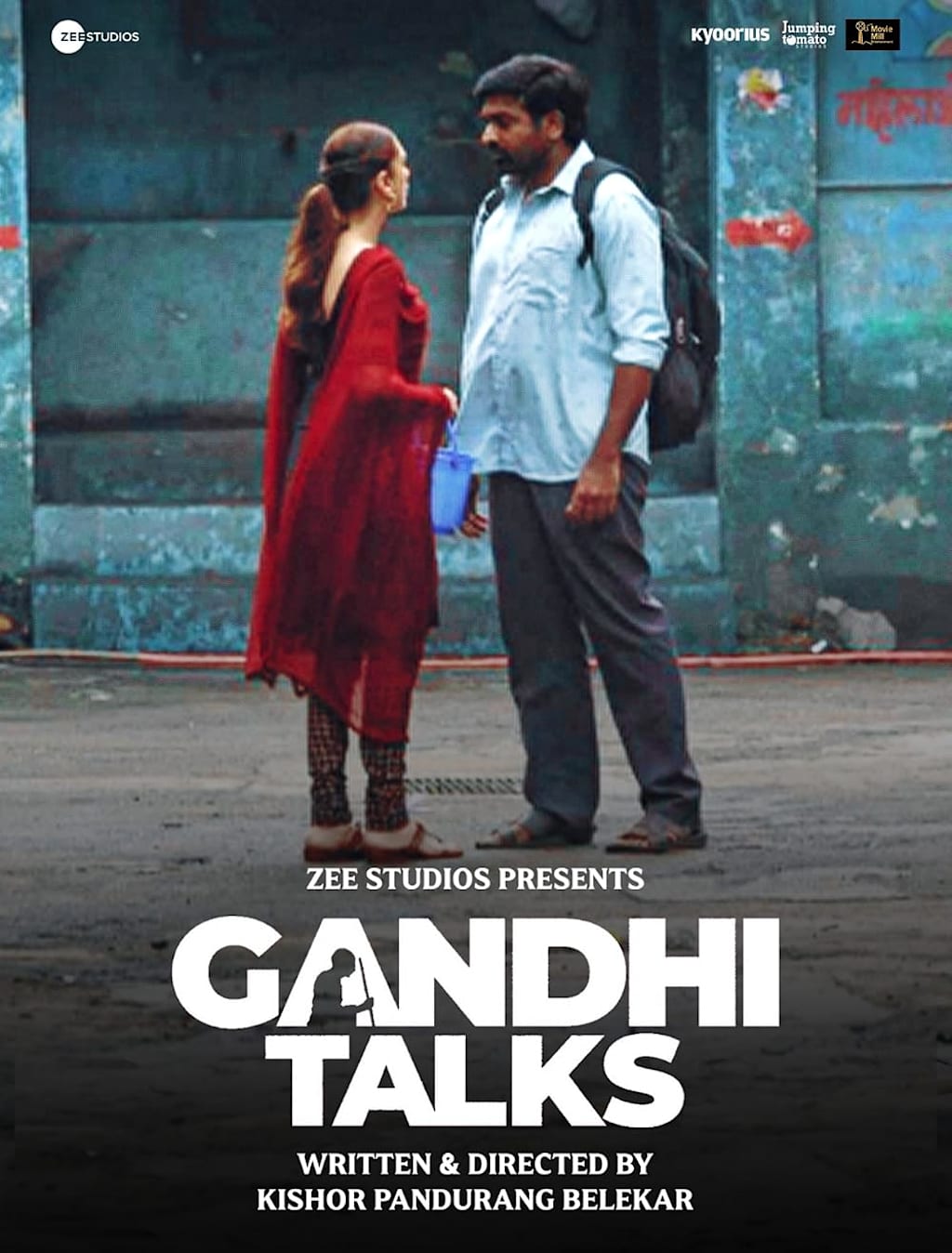
Gandhi Talks is an unusual Indian drama because it tells almost its entire story without spoken dialogue. Directed by Kishor Pandurang Belekar, the film stars Vijay Sethupathi as Mahadev, Arvind Swamy as Mohan Boseman, Aditi Rao Hydari as Gayatri and Siddharth Jadhav as Mangu. A. R. Rahman’s music becomes especially important because expressions, visuals and background score have to communicate what dialogue normally would.
At its heart, Gandhi Talks is about money.
More specifically, it asks what happens when money becomes more powerful than honesty, hard work, relationships and even human dignity.
Mahadev is an educated but unemployed man living in a Mumbai chawl with his sick mother. He desperately wants a stable job and a better future. He is also emotionally connected to Gayatri, but poverty constantly reminds him that love alone cannot solve his problems.
On the other side of society is Mohan Boseman, a wealthy businessman who once appeared to have everything. However, his business empire begins collapsing, and political influence, financial pressure and personal tragedy slowly destroy the security his wealth once gave him.
One man has almost nothing.
The other once had almost everything.
Yet both eventually discover that they are trapped by the same system.
Mahadev’s Struggle for a Job
Mahadev repeatedly tries to find respectable employment, but qualification and determination are not enough.
The world around him seems to operate through connections, influence and bribes. He watches opportunities disappear because he cannot participate in the corruption required to obtain them.
His frustration becomes more painful because his mother is unwell and his financial situation continues to deteriorate.
The film repeatedly places Mahadev in situations where poverty attacks his dignity. One memorable sequence shows him working at a wedding while dressed as Lord Krishna. Even when children humiliate him by throwing food at him, he remains still because he needs the money.
Boseman unexpectedly wipes the food from Mahadev’s face.
For a moment, the rich businessman and the poor unemployed man are no longer separated by class. They are simply two people who understand humiliation.
What Happens to Boseman?
Boseman’s story shows that wealth does not necessarily protect someone from a corrupt system.
His ambitious project, Mother’s Touch, becomes surrounded by political and financial trouble. After an accident and mounting pressure, his business begins falling apart. His luxury disappears, employees are laid off and control of the project moves away from him.
Eventually, Boseman turns to alcohol and even gambling while desperately trying to recover what he has lost.
This is important because Gandhi Talks does not simply create a “poor man good, rich man bad” story.
Boseman is wealthy, but he is also capable of becoming a victim.
The real enemy is the system in which power can be bought.
Why Does Mahadev Turn Toward Crime?
After being repeatedly denied a fair opportunity, Mahadev begins to question whether honesty has any value.
If dishonest people can become rich and powerful while an educated man cannot even secure basic employment, why should he continue following the rules?
This frustration eventually brings him into Boseman’s world and also connects him with Mangu, a petty thief.
Mahadev considers stealing as a possible escape from poverty.
But the movie makes an important distinction: Mahadev may attempt dishonest actions, yet he never becomes completely comfortable with them.
His conscience remains alive.
That internal conflict becomes the key to understanding the ending.
Gandhi Talks Ending Explained
The final portion of Gandhi Talks is less interested in giving every character a perfectly closed ending than in completing Mahadev’s moral journey.
After everything he experiences, Mahadev finally understands that becoming corrupt because the system is corrupt will not actually free him.
It will only make him another part of the same problem.
Gayatri also forces Mahadev to confront what he is becoming. Instead of allowing desperation to completely rewrite his identity, he begins moving back toward the values he had almost abandoned.
Mahadev eventually returns what he has taken, including the stolen bicycle and money, and chooses honest work instead.
By the end, he is shown cleaning the city as a sanitation worker.
For someone who had spent so much time desperately searching for a more prestigious job, this might initially look like defeat.
It is actually the opposite.
Mahadev has finally stopped allowing society to decide the value of his work.
The job may not bring status, but the money is honestly earned.
Why Is Mahadev Cleaning the Streets at the End?
The street-cleaning sequence is symbolic.
Throughout the movie, Mahadev wants the system to change his life.
At the end, he begins changing the world around him himself—even if his contribution appears small.
Cleaning the street therefore represents more than employment. It represents Mahadev attempting to remove the moral “dirt” that has infected his society.
He cannot destroy corruption overnight.
He can, however, refuse to participate in it.
That is his victory.
What Happens to the Corrupt Officer?
The closing moments reinforce Mahadev’s decision with another important development: news reports indicate that a corrupt BMC officer has been arrested.
The film also displays the message:
“The Gandhi way is the only way forward for the nation.”
This does not suggest that one honest person magically fixes an entire corrupt system.
Instead, the arrest represents hope.
Change becomes possible when people stop accepting corruption as normal.
What Happens to Boseman in the Ending?
Boseman receives a much less definite conclusion.
While Mahadev reaches a clearer moral destination, Boseman’s future remains deliberately uncertain. His wealth, business struggles and emotional collapse demonstrate that money can disappear as quickly as it arrives.
Some viewers may find his conclusion unresolved, but that ambiguity appears intentional.
Mahadev learns what he wants to become.
Boseman represents someone still trapped inside a world where success and failure are measured financially.
Their contrasting endings strengthen the film’s central argument: possessing money and possessing peace are not the same thing.
Why Is the Movie Called Gandhi Talks?
The title is one of the cleverest ideas in the film.
This is a movie called Gandhi Talks in which almost nobody talks.
But “Gandhi” also has another meaning.
Mahatma Gandhi’s image appears on Indian currency, so Gandhi literally exists on the money everyone is chasing.
The irony is that people respect Gandhi’s face on currency while ignoring values traditionally associated with him—truth, honesty, simplicity and non-violence.
In other words, Gandhi still “talks,” but society mainly listens when Gandhi appears on money.
The film repeatedly contrasts the monetary value of Gandhi with the moral value of Gandhi.
That is why its final message matters so much.
What Does the Ending Really Mean?
The ending suggests that poverty can pressure a good person into making bad decisions, but circumstances do not completely remove personal responsibility.
Mahadev has every reason to be angry.
He is educated but unemployed. His mother is sick. Corrupt people succeed around him. People with money can buy opportunities that he cannot access.
The movie understands his temptation.
But it ultimately refuses to say that desperation automatically justifies dishonesty.
Mahadev’s transformation happens when he stops asking, “How can I beat this corrupt system at its own game?”
Instead, he begins asking, “How can I avoid becoming part of it?”
That is the real ending of Gandhi Talks.
The Meaning Behind the Silence
Making Gandhi Talks without conventional dialogue is not simply a visual experiment.
Silence supports the movie’s message.
The characters live in a society where money communicates more effectively than words. Politicians, businessmen, officials, job seekers and thieves may have different lives, but almost everyone understands the language of cash.
The film therefore creates an ironic world where humans remain largely silent while money appears to do all the talking.
A. R. Rahman’s score, facial expressions and visual storytelling fill the space normally occupied by conversation, making silence part of the story rather than merely a stylistic choice.
Final Thoughts
Gandhi Talks is ultimately a story about a man who nearly loses himself while trying to escape poverty.
Mahadev initially believes money will solve his problems. By the ending, he realizes that the way he earns that money matters just as much.
Boseman shows that wealth can disappear.
Mangu represents the temptation of easy money.
Gayatri reminds Mahadev of the person he was before desperation changed him.
And Mahadev’s final decision represents the possibility of choosing dignity even when society makes that choice difficult.
The movie’s message is simple but effective: corruption survives when everyone believes honesty is pointless.
Mahadev’s final act rejects that belief.
He may not become rich.
He may not defeat the entire system.
But he refuses to let that system decide who he becomes.
And that is why the ending of Gandhi Talks is ultimately about hope.
About the Creator
parwinder singh
🎬 Movie & Entertainment Writer sharing reviews, ending explanations, story breakdowns, plot twists and hidden details from Bollywood, Hollywood, South Indian cinema, Korean dramas and OTT releases.
Enjoyed the story? Support the Creator.
Subscribe for free to receive all their stories in your feed.
Comments
There are no comments for this story
Be the first to respond and start the conversation.