
Frankenstein’s Great Aunt Tillie: The Frankenstein Movie Nobody Remembers
A bizarre 1984 monster comedy starring Donald Pleasence, Yvonne Furneaux, and Zsa Zsa Gabor somehow became one of the strangest forgotten films of the 1980s.


A Frankenstein Movie Lost in Time
There are forgotten movies, and then there are movies that seem to have disappeared almost immediately after they were made.
Frankenstein’s Great Aunt Tillie belongs firmly in the second category.
Released in 1984, this strange little horror comedy attempted to cash in on the enduring popularity of Frankenstein parody, but instead of becoming another cult favorite, it largely vanished into the cinematic wilderness. Today, it is less a movie people remember than a question people occasionally stumble across:
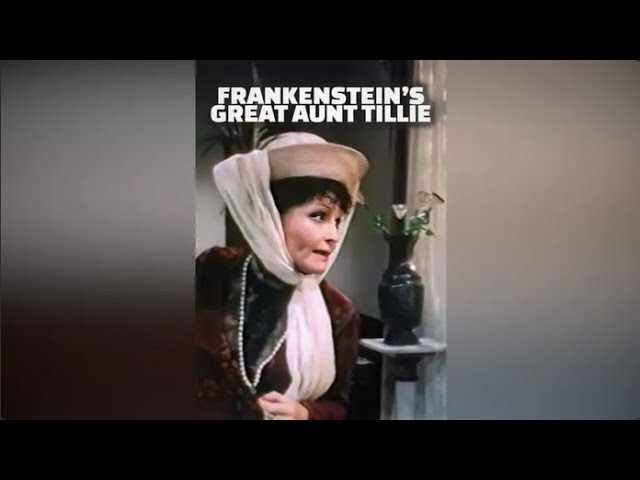
What exactly was this?
The answer isn’t particularly easy to find.
Produced as an independent American-Mexican-British production through Tillie Productions, Frankenstein’s Great Aunt Tillie was the kind of low-budget genre experiment that could exist in the 1980s almost entirely outside the Hollywood system.
And it certainly feels like it.
The movie has the unmistakable quality of something assembled rather than constructed. Scenes appear, disappear, and occasionally seem to have wandered in from an entirely different movie. The comedy is broad, the production values are modest, and the story has the loose, episodic quality of a film that may have originally been intended for something other than a theatrical release.
There is even a long-standing story that the movie may have been assembled from material originally intended for television.
Whether that is entirely accurate or not, watching the finished film makes the theory remarkably easy to believe.
One Man’s Frankenstein
The movie was the work of Myron J. Gold, who returned to filmmaking after a lengthy absence and took an unusually large amount of responsibility for the project.
Gold wrote it.
He directed it.
He produced it.
And, judging from the finished product, he apparently wasn’t interested in anyone telling him that perhaps the movie needed another draft.
The production was mounted primarily in Mexico City, with photography taking place at Estudios Churubusco and, according to some records, Estudios America. Cinematographer Miguel Garzón handled the photography while John C. Horger edited the film.
Ronald Stein supplied the score, with portions performed by the Mexican National Symphony Orchestra.
That sounds considerably more impressive than the movie itself.
The cast is where things get particularly interesting.
Donald Pleasence Meets Great Aunt Tillie
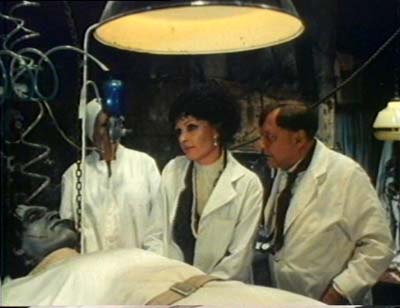
Donald Pleasence plays two roles, including Victor Frankenstein and the older Baron Frankenstein.
Yvonne Furneaux plays Matilda, better known as Great Aunt Tillie.
Furneaux’s appearance is particularly notable because she had been away from the screen for more than a decade. Frankenstein’s Great Aunt Tillie would ultimately become her final film appearance.
June Wilkinson plays Randy, Victor’s companion, while Mexican actor Miguel Ángel Fuentes gets the unenviable assignment of playing the Monster.
Aldo Ray appears as the Bürgermeister.
And then there is Zsa Zsa Gabor.
Gabor makes a fleeting flashback appearance as Clara, an appearance so brief and largely silent that it feels almost like the movie is showing off a name rather than giving an actress a role.
It is one of those casts that makes you wonder what the pitch meeting sounded like.
So, What’s the Story?
The basic premise is actually pretty simple.
Castle Frankenstein is in trouble.
The ancestral estate is facing repossession because of more than a century of unpaid taxes, forcing the Frankenstein descendants to return home and figure out how to save the family property.
Among them is Victor Frankenstein.
And then there is Great Aunt Tillie.
Tillie has somehow managed to remain remarkably youthful through the use of bee extract, and she has another obsession that has very little to do with resurrecting the dead.
She wants to win a car race.
Because apparently being descended from Frankenstein isn’t enough to keep somebody busy.
The family eventually begins searching for a hidden fortune, leading them into the castle’s cellar, where they discover the Monster.
Naturally, they bring him back to life.
From there, the movie wanders through treasure hunting, local bureaucrats, political and suffrage jokes, monster antics, and various comedic detours that don’t always seem particularly interested in connecting to one another.
That’s the movie’s biggest problem.
There is a story buried somewhere inside Frankenstein’s Great Aunt Tillie.
The movie just can’t seem to find it.
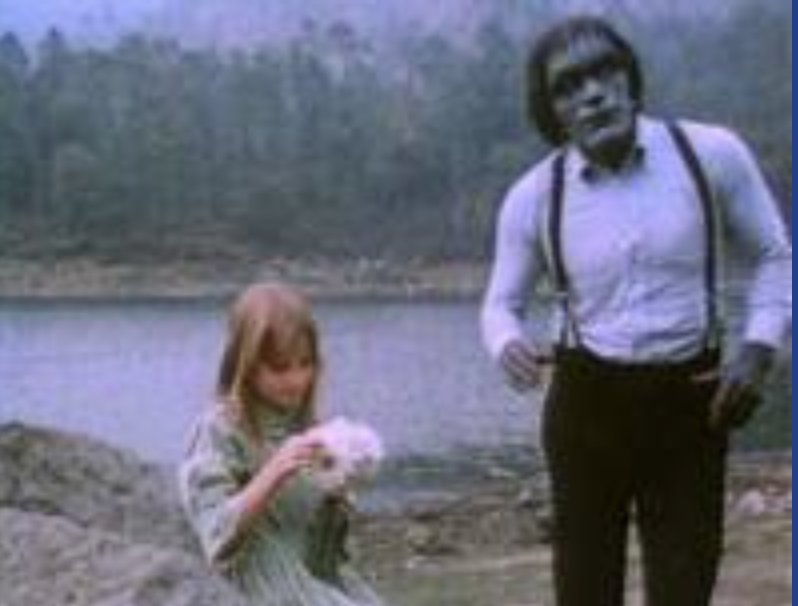
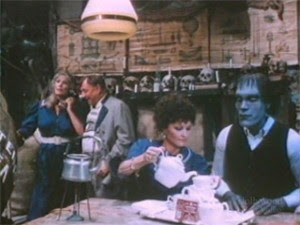
The Monster Looks Different
Even the Monster gets an unusual makeover.
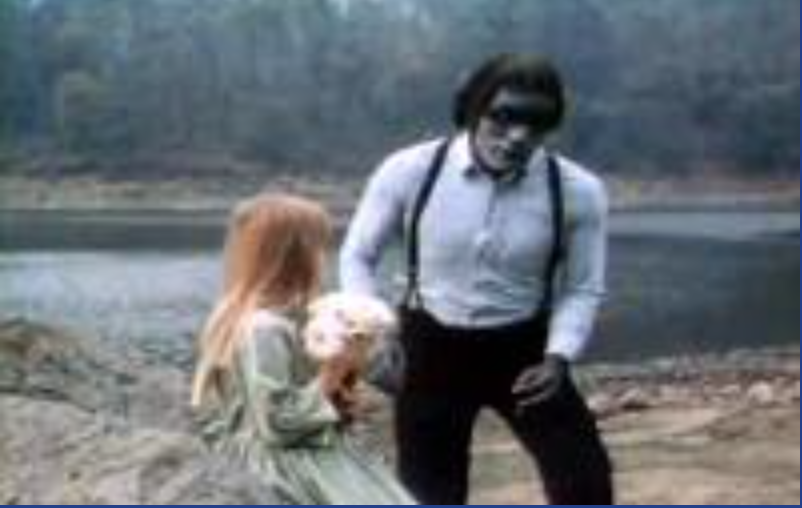
Rather than simply recreating the familiar flat-topped Frankenstein look, the production presents him as a towering figure covered in blue-gray makeup.
It’s one of the more memorable visual choices in a movie that otherwise struggles to leave much of an impression.
The effects are obviously inexpensive, but that isn’t necessarily the problem. Low-budget horror and comedy have produced plenty of memorable creatures.
The problem is that Frankenstein’s Great Aunt Tillie never seems to know what kind of movie it wants to be.
Is it a horror comedy?
A slapstick farce?
A family adventure?
A treasure hunt?
A television production expanded into a feature?
At different moments, it seems to be all of them.
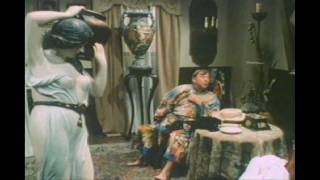
The Movie That Feels Like It Was Stitched Together
The production history may explain some of the film’s peculiarities.
The persistent story that Frankenstein’s Great Aunt Tillie originated as a failed television project has never been completely established, but it would certainly explain the movie’s structure.
The finished film feels episodic, almost as though several unrelated pieces were connected after the fact.
There are also reports of considerable problems during post-production, including re-editing and audio issues.
And those problems are not exactly invisible.
The movie’s pacing is all over the place, the transitions can be jarring, and some of the material feels completely disconnected from whatever story came before it.
By the time the movie reaches its finale, viewers may find themselves wondering whether they are still watching the same movie.
That isn’t usually a compliment.
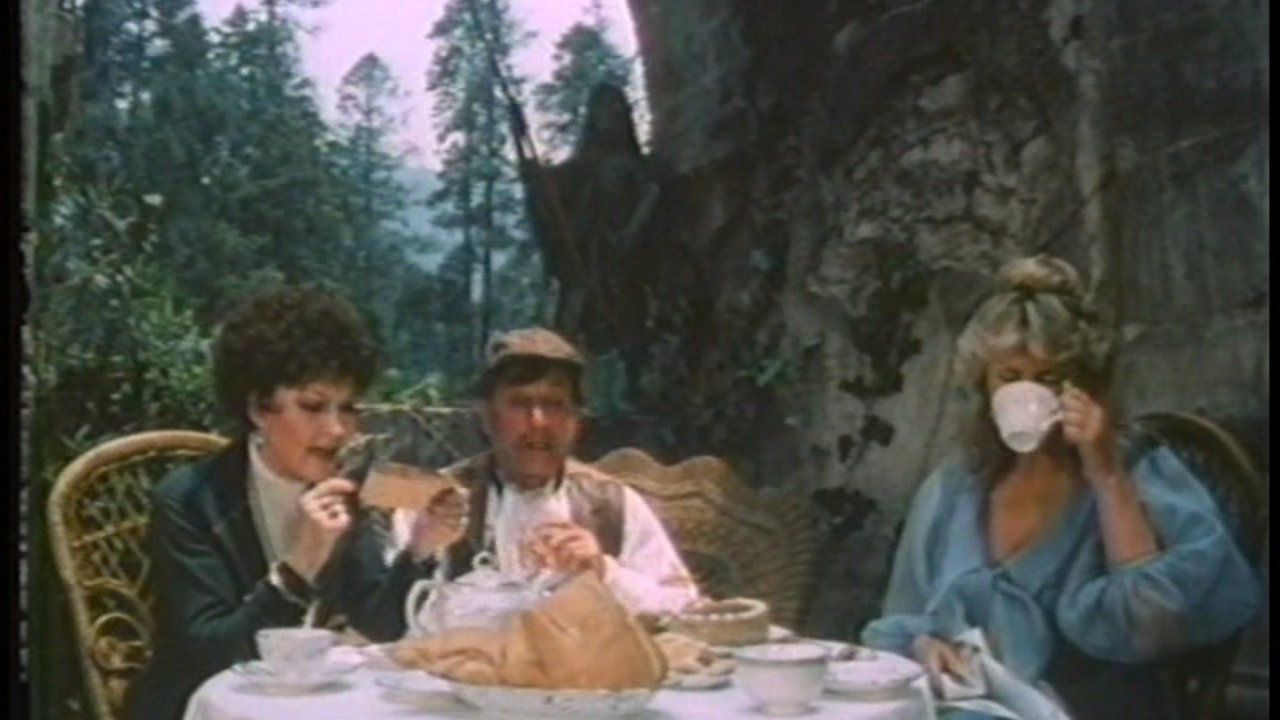
A 1984 Movie That Nobody Was Waiting For
When Frankenstein’s Great Aunt Tillie arrived in 1984, it didn’t receive anything resembling a major theatrical rollout.
It was essentially a self-distributed curiosity, appearing in theaters and eventually finding its way onto home video.
There was no major advertising campaign.
No significant box-office success followed.
And there was certainly no cultural moment.
The movie simply appeared, disappeared, and eventually became one of those titles that could occasionally be discovered on VHS by someone willing to take a chance on a truly questionable rental.
It was later released under the alternate title A Tia Frankenstein in some international markets.
And then it mostly vanished.
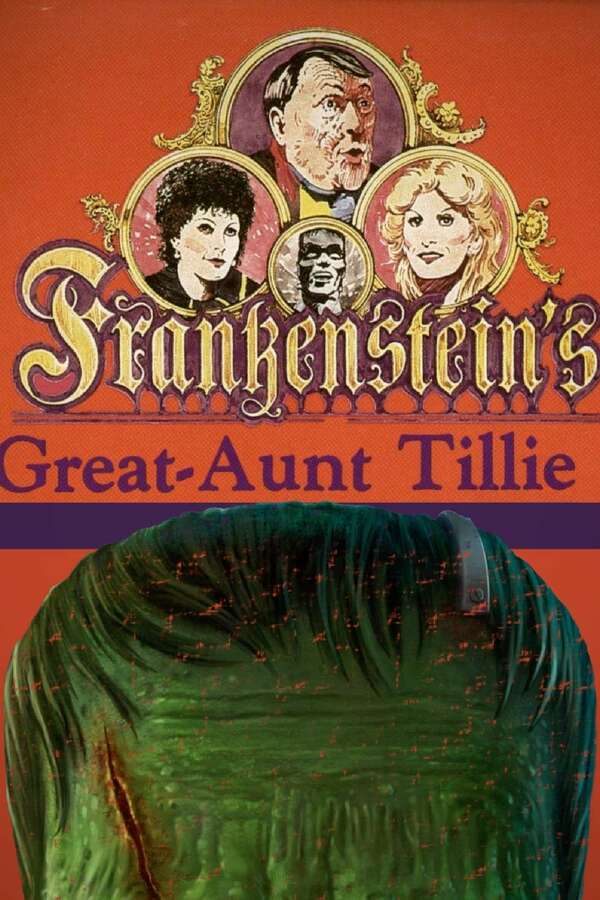
Even Bad-Movie Fans Have Their Limits
There is a particular kind of bad movie that develops a second life.
A movie can fail spectacularly and still become beloved.
Plan 9 from Outer Space became a cultural institution. Troll 2 became a midnight-movie phenomenon. Countless other disasters found audiences precisely because they were so entertainingly awful.
Frankenstein’s Great Aunt Tillie never quite achieved that distinction.
Its reputation is considerably harsher.
The jokes frequently land with a thud. The story meanders. The performances are uneven. The production looks cheap even by the standards of low-budget 1980s genre cinema.
Pleasence at least brings his customary professionalism to the material, and there is something almost admirable about watching an actor of his stature throw himself into a movie this strange.
But even he can’t resurrect it.
And that’s probably the biggest irony of Frankenstein’s Great Aunt Tillie.
A movie about bringing the dead back to life couldn’t manage to do the same thing for its own career.
The Forgotten Frankenstein
There are dozens of Frankenstein adaptations that deserve to be rediscovered.
Frankenstein’s Great Aunt Tillie isn’t necessarily one of them.
But it is fascinating as a piece of 1980s movie archaeology.
It represents an era when inexpensive genre pictures could be cobbled together through international financing, filmed outside the traditional Hollywood system, populated with recognizable names, and released with barely anyone paying attention.
There is Donald Pleasence.
There is Yvonne Furneaux making her final film appearance.
There is Zsa Zsa Gabor appearing for a moment.
There is a giant blue-gray Frankenstein Monster.
There is a castle threatened by unpaid taxes.
There is a treasure hunt.
There is a car race.
There are suffrage jokes.
And somehow all of it is supposed to be the same movie.
That’s what makes Frankenstein’s Great Aunt Tillie worth remembering, even if it isn’t necessarily worth recommending.
It isn’t a forgotten masterpiece.
It isn’t even particularly successful as a bad movie.
It’s something stranger.
It’s a cinematic oddity that somehow made it from an idea to a finished 100-minute feature, slipped into theaters in 1984, found its way onto VHS, and then nearly disappeared from the historical record.
For a movie about Frankenstein, perhaps that is fitting.
It was assembled from pieces, brought to life, and then left to rot.
Just don’t expect it to come back looking pretty.
About the Creator
Movies of the 80s
We love the 1980s. Everything on this page is all about movies of the 1980s. Starting in 1980 and working our way the decade, we are preserving the stories and movies of the greatest decade, the 80s. https://www.youtube.com/@Moviesofthe80s
Enjoyed the story? Support the Creator.
Subscribe for free to receive all their stories in your feed.
Comments
There are no comments for this story
Be the first to respond and start the conversation.