
'Foxes' (1980): Before the Valley Girls Grew Up
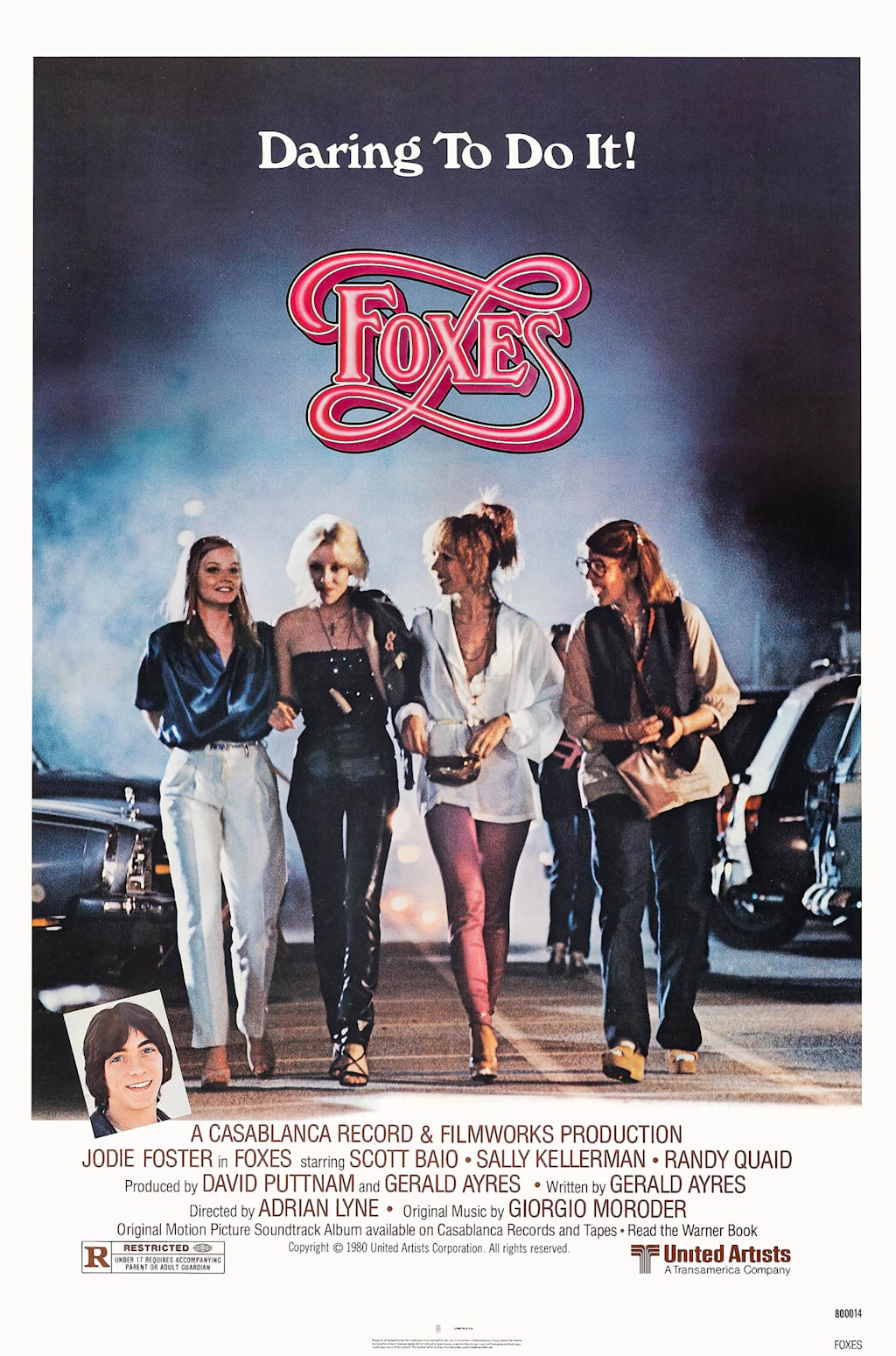
Adrian Lyne’s feature debut gave Jodie Foster, Runaways singer Cherie Currie, and three teenage friends a compassionate, unsentimental coming-of-age drama about life on the edge of the disco era.

Four Girls, One Valley, and Not Nearly Enough Adult Supervision
The camera moves through a bedroom with the quiet determination of a burglar casing the joint. Somewhere, a cheerful radio deejay is doing his best to convince the world that everything is terrific. In the bedroom, four teenage girls are bringing a sleepover to a close, although the previous night’s activities suggest that sleeping wasn’t necessarily the principal attraction.
Welcome to the San Fernando Valley, circa 1980, where adolescence comes with a soundtrack, a set of car keys, and a disconcerting number of opportunities to make decisions that will look considerably worse in the morning.
Foxes isn’t interested in pretending that teenage life is a Norman Rockwell painting with a rock soundtrack. Its four central characters are bright, funny, vulnerable, and frequently reckless. They drink, experiment with drugs, pursue boys, argue with their parents, and try to work out what being an adult means when most of the adults in their lives seem to have misplaced the instruction manual.
Released on February 29, 1980, Foxes occupies an interesting position between two cinematic eras. The sexual frankness and restless energy of the 1970s remain very much in evidence, but the film also anticipates the more personal, music-driven coming-of-age pictures that would become a familiar feature of the 1980s.
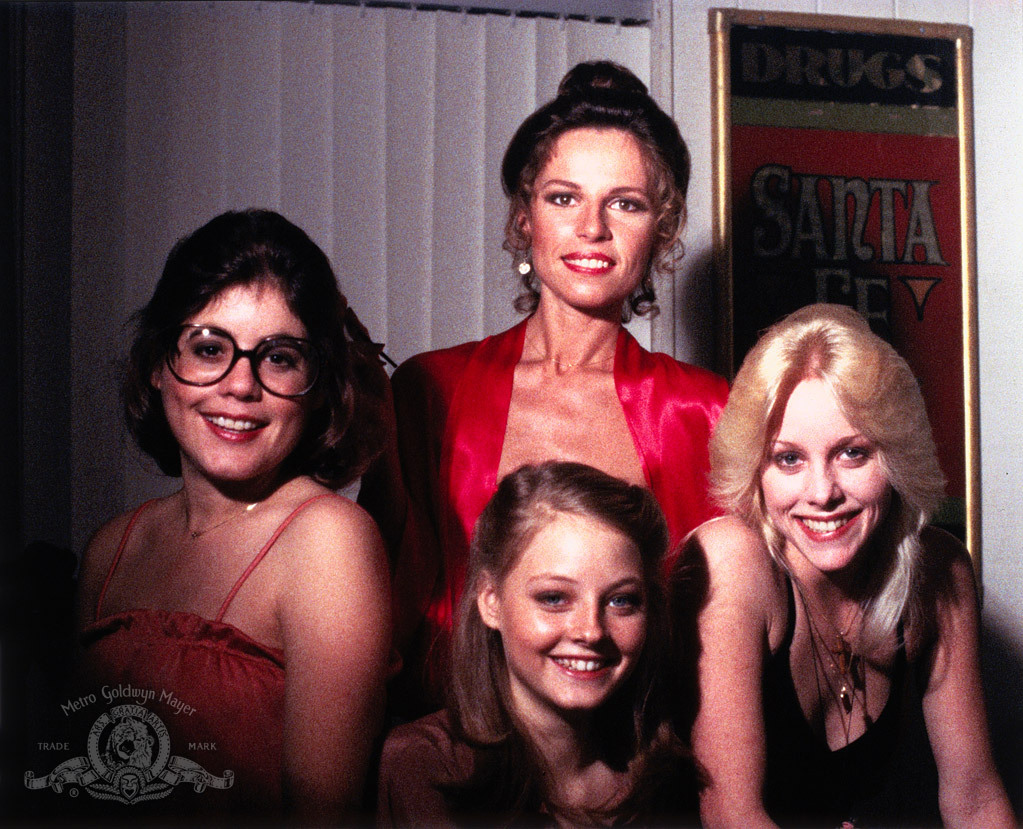
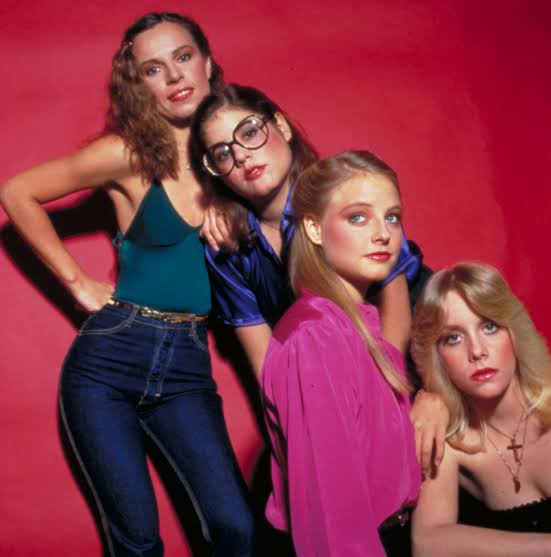
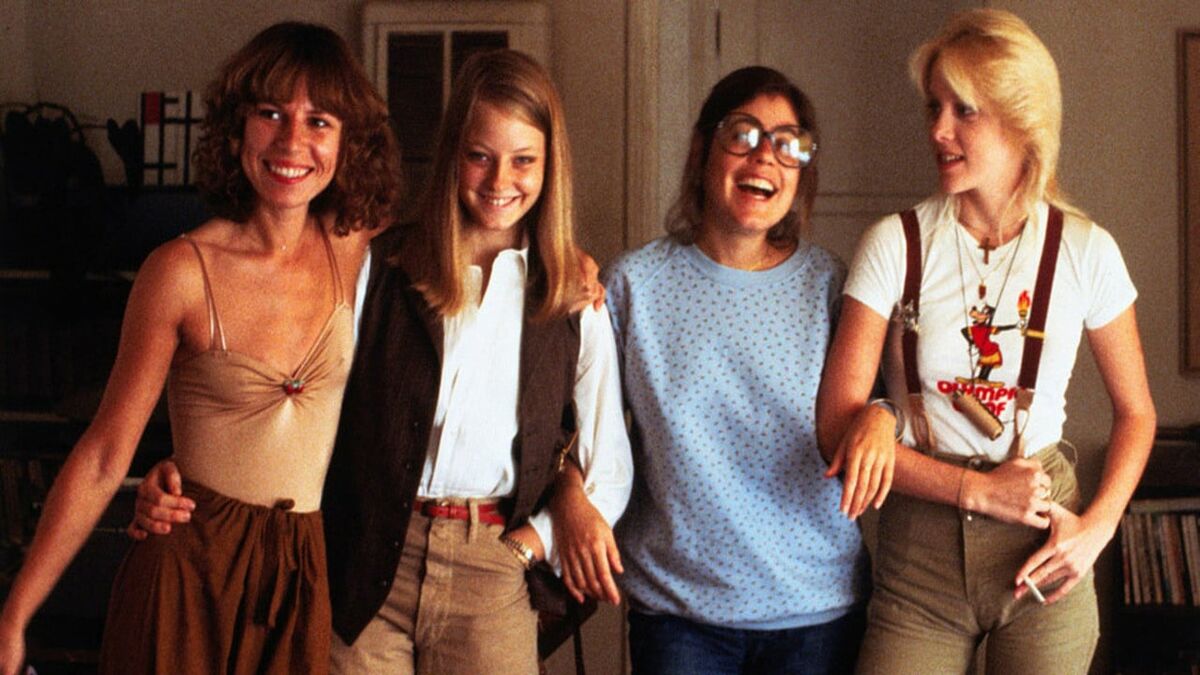
Directed by Adrian Lyne in his feature-film debut, it stars Jodie Foster as Jeanie, a remarkably self-possessed teenager whose apparent maturity conceals her own emotional needs. Cherie Currie, the former lead singer of the all-girl rock band the Runaways, makes her film debut as Annie, a troubled friend whose problems are considerably more dangerous than the ordinary indignities of adolescence. Marilyn Kagan plays Madge, while Kandice Stroh rounds out the quartet as Deirdre.
These are not four interchangeable teenage stereotypes assembled to deliver a message about the youth of America. Each girl has her own personality, her own family circumstances, and her own understanding of what freedom might mean.
Their friendship is the film’s emotional center. Their surroundings are the problem.
Parents are absent, distracted, or incapable of recognizing the trouble gathering beneath their own roofs. The girls have plenty of freedom, but precious little guidance. They are old enough to want control over their lives and young enough to underestimate the consequences.
There is something almost unnerving about the film’s refusal to make these teenagers particularly exotic. They aren’t juvenile delinquents in a cautionary tale or glamorous rebels in a fantasy about youthful liberation. They are kids trying to get through the day.
And sometimes they make a terrible mess of it.
That’s what makes Foxes worth revisiting. Beneath the feathered hair, fashionable clothes, and Giorgio Moroder soundtrack is a surprisingly compassionate film about young people who are discovering that growing up is not the same thing as knowing what you’re doing.
A Modern Little Women, Set in the San Fernando Valley
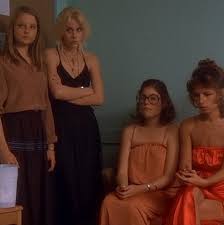
The story behind Foxes begins with screenwriter Gerald Ayres, a former Columbia Pictures executive who had produced Hal Ashby’s The Last Detail.
Ayres was interested in the lives of teenage girls, but not necessarily the sanitized version that Hollywood had traditionally preferred to put on screen. His inspiration came from a personal source: his teenage daughter and her friends.
Rather than relying on secondhand assumptions about what young people were doing, Ayres spent months observing and interviewing girls, including spending time at North Hollywood High School. He listened to their conversations, paid attention to their concerns, and attempted to understand the private social world that existed beyond the reach of parents and teachers.
The result was a screenplay built around the ordinary details of teenage life: friendships, gossip, sex, drugs, cars, family troubles, and the sometimes spectacular distance between what adolescents think they know and what they actually understand.
Ayres envisioned the project as a contemporary variation on Little Women, Louisa May Alcott’s novel about four sisters growing up in nineteenth-century New England.
Only this time, the girls would be growing up in Southern California.
The comparison was more than a convenient pitch. Ayres was interested in the relationships between young women, the families that shaped them, and the ways they attempted to construct identities of their own. The setting had changed, but the underlying questions about growing up, belonging, and finding love remained recognizable.
In a contemporary Los Angeles Times article, critic Charles Champlin discussed Ayres’s conception of the project as a modern Little Women, while recognizing the complications involved in translating an older literary ideal into contemporary American life.
The screenplay initially attracted interest at Twentieth Century Fox, where it was developed under the title Twentieth Century Foxes. The play on the studio’s name was apparently too good to resist.
For a while, anyway.
Ayres recalled the original title in an interview with Lou Cedrone, explaining that the studio eventually abandoned the project after approximately five months of work.
“I thought it would be cute to play on the name of the studio, but after five months work on the project, they dropped it, and I had to find another studio.”
The rejection reflected a disagreement about what the film was actually saying.
According to Ayres, some studio executives interpreted the screenplay as an attack on American parents. He believed they were missing the point.
“They said it was an indictment of American parenthood, but they missed the compassion and the understanding.”
That’s a revealing distinction. Foxes doesn’t portray parental neglect as an excuse to condemn an entire generation of adults. It presents a group of teenagers whose lives are shaped by imperfect families, while allowing the girls to remain complicated human beings rather than examples in a lecture.
The adults are frequently inadequate. The teenagers are frequently foolish. Neither observation requires the audience to hate anybody.
After Fox abandoned the project, British producer David Puttnam helped find it a home through Casablanca FilmWorks, in association with United Artists.
Puttnam had recently attracted attention for producing Midnight Express (1978), Alan Parker’s brutal prison drama. He was developing a reputation for supporting ambitious projects and for recruiting directors whose experience in commercials could be translated into feature filmmaking.
Foxes would become an early example of that approach.
Adrian Lyne Gets His First Feature
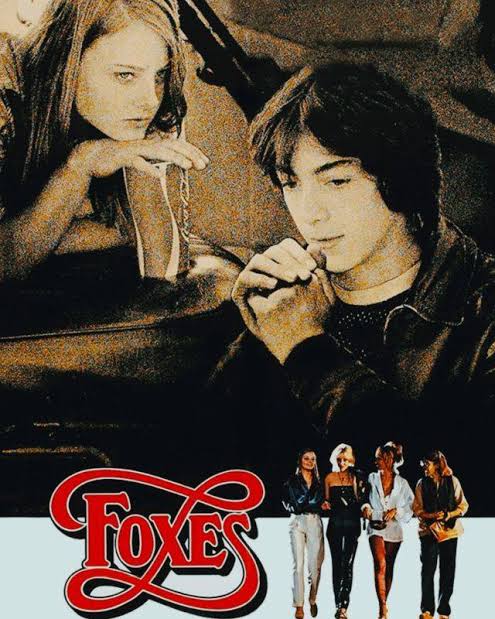
Before directing Foxes, Adrian Lyne had established himself in British television advertising.
That background might not sound especially glamorous, but it placed him in the company of several filmmakers who would help define the visual character of the 1980s. Directors such as Ridley Scott and Alan Parker had also moved from commercials into feature films, bringing with them a particular interest in carefully composed images, rhythmic editing, and the ability to communicate an idea quickly.
Puttnam believed those skills could be valuable in feature filmmaking.
As he explained to Charles Schreger of the Los Angeles Times in April 1979:
“You can’t be a painter if no one will pay for your brushes.”
Puttnam continued by comparing film directors to painters, arguing that practical opportunities to make movies were essential to developing the craft.
“Unless someone pays for the film to go through the camera, the camera and the crew, these people aren’t directors, they’re theoreticians.”
It was a practical philosophy. A director might possess talent, ambition, and an interesting idea, but none of those things meant much without somebody willing to finance the experiment.
For Lyne, Foxes represented that opportunity.
In his interview with Cedrone, he recalled his enthusiasm for the material.
“I was knocked out over it,” Lyne said. “I loved it. I knew I could do it, so I beat people over the head for two or three months and got it.”
The determination paid off. Principal photography began in Los Angeles on October 16, 1978, with a reported budget of approximately $2.5 million.
That modest budget helped shape the film’s character. Rather than presenting the Valley as a glossy playground for attractive teenagers, Lyne’s camera moves through bedrooms, streets, cars, and other familiar spaces where the girls’ private dramas unfold.
The film’s visual style is carefully controlled without becoming emotionally remote. Lyne understood how to make an image memorable, but Foxes also needed to feel like a story about recognizable people rather than a collection of attractive compositions.
Cinematographer Leon Bijou’s work, particularly in the film’s nighttime sequences, contributes to that atmosphere. The Valley becomes a place of possibility after dark, but also one where the girls’ apparent freedom can leave them exposed.
The darkness isn’t merely decorative. It is part of the story.
Lyne also understood that the film needed to remain accessible to audiences who might have little experience with the specific teenage world it depicted.
When discussing the differences between American and British youth culture, he noted that the basic problems were remarkably similar.
“They all face the same problems, liquor, sex, cars and drugs.”
The observation is hardly revolutionary, but it points toward one of the film’s strengths. Foxes is rooted in a particular place and moment, yet it doesn’t require the audience to understand every local reference to recognize the emotional problems at its center.
Lyne was also working within financial limits.
“Our budget was limited,” he told Cedrone, adding that constraints were part of the reality of making a film without major stars such as Burt Reynolds or Bo Derek.
The result is a picture that relies less on spectacle than on atmosphere, performances, and the gradual accumulation of small moments.
For a director who would later become associated with the glossy erotic thrillers 9½ Weeks and Fatal Attraction, Foxes is a useful reminder that Lyne’s career began with a film that was less interested in adult fantasy than in the uncertain realities of adolescence.
Jodie Foster, Cherie Currie, and Three Girls Finding Their Way
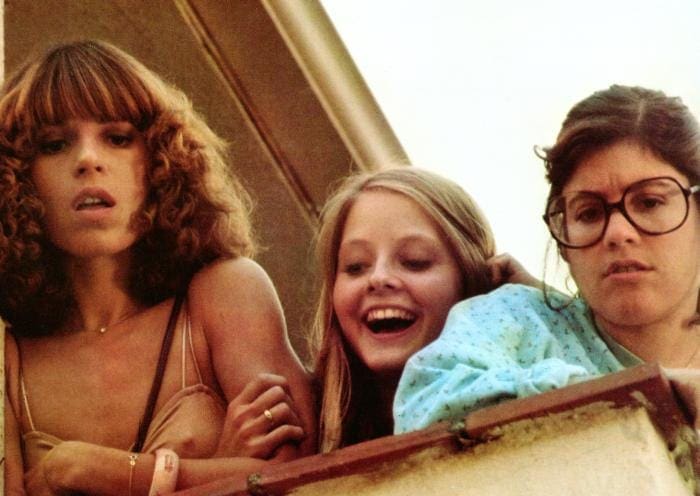
The casting is central to Foxes, and the film benefits from the different qualities its four leading performers bring to the story.
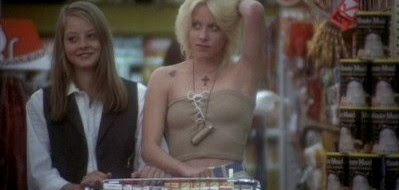
Jodie Foster plays Jeanie, the group’s apparent center of gravity. Already a veteran actress despite her youth, Foster gives the character an intelligence that never quite becomes invulnerability.
Jeanie often seems to understand the world better than the people around her. Yet the film doesn’t mistake intelligence for emotional immunity. She is still a teenager, still learning, and still vulnerable to the same pressures that affect her friends.
In his Los Angeles Times review, Charles Champlin described Foster, then seventeen, as the group’s “spiritual leader,” emphasizing her unusual maturity and ability to convey wisdom beyond her years.
It is a performance that depends on restraint. Foster doesn’t need to announce Jeanie’s intelligence in every scene. She simply makes it part of the character’s presence.
Cherie Currie brings a very different energy to Annie.
As the former lead singer of the Runaways, Currie had already experienced a version of the rock-and-roll lifestyle that Foxes explores from the perspective of teenagers on the threshold of adulthood. Her performance draws on that background without reducing Annie to a fictionalized version of herself.
Annie is the most visibly troubled of the four girls. Her home life is unstable, her judgment increasingly compromised, and her attempts to escape her problems lead her into more dangerous situations.
Champlin singled out Currie’s performance as especially potent, describing Annie as hollow-eyed, frightened, and caught between the troubles at home and the dangers waiting outside it.
For Currie, making Foxes was a transition from music into acting. The film gave her a role that required her to convey vulnerability beneath a hard exterior, and she rises to the challenge.
Marilyn Kagan’s Madge provides another perspective on adolescence. Champlin praised Kagan for bringing both humor and tenderness to the character, whose romantic life develops in an unexpected direction.
Kandice Stroh’s Deirdre completes the quartet, helping establish the sense that these girls share a world without necessarily sharing the same needs or ambitions.
The performances work because the film doesn’t insist that every girl respond to the same circumstances in the same way.
Friendship provides a measure of security, but it doesn’t solve every problem. The girls can comfort one another, share secrets, and provide a refuge from difficult home lives. They cannot always recognize when one of them is in trouble, and they certainly cannot protect one another from every consequence.
That’s a more interesting foundation for a coming-of-age film than the usual Hollywood formula in which a single revelation or romantic encounter magically resolves the difficulties of growing up.
The supporting cast includes Sally Kellerman, Scott Baio, Randy Quaid, and Adam Faith, giving the film an additional layer of adult and romantic complications.
Still, the girls remain the focus. The adults matter primarily because of what they provide, what they withhold, and what they fail to notice.
Drugs, Sex, and the Things the Camera Doesn’t Show
For all its reputation as a frank portrait of teenage life, Foxes is more restrained than its subject matter might suggest.
Ayres made a deliberate distinction between acknowledging the realities of teenage behavior and exploiting them for sensational effect.
“We don’t have any sex scenes as such, and no one is actually seen using drugs,” he explained to Cedrone.
That decision matters.
The film doesn’t pretend that sex and drugs are absent from the girls’ lives. They are part of the social environment, part of the characters’ attempts to experiment with adulthood, and part of the risks they face.
But the camera doesn’t need to turn every experience into a spectacle.
Instead, the consequences and emotional implications of these experiences receive the emphasis. The girls’ behavior is neither presented as an invitation to moral panic nor treated as a glamorous rite of passage that inevitably leads to freedom and self-discovery.
Sometimes the consequences are frightening. Sometimes they are merely embarrassing. Sometimes the girls get away with something they probably shouldn’t have attempted in the first place.
The film understands that adolescence contains all three possibilities, often within the same afternoon.
This is also where the absence of responsible adults becomes particularly significant. Freedom without guidance can feel exhilarating, especially to someone who believes the people in charge have nothing useful to offer.
But the film recognizes the difference between independence and abandonment.
The girls aren’t simply rebelling against an oppressive social order. They are trying to find affection, stability, and a place where they belong. Their behavior often reflects the difficulty of pursuing those things when the people who should provide them are distracted, unreliable, or unable to recognize what their children need.
The result is a film that can be uncomfortable without becoming punitive.
It doesn’t excuse every decision the girls make. It does, however, understand why they make them.
Giorgio Moroder and the Sound of a Changing Decade
Music is essential to Foxes, both as a reflection of its setting and as a means of connecting the characters’ private lives to the larger world around them.
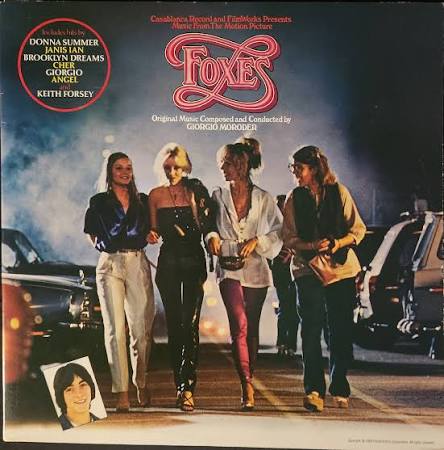
The score by Giorgio Moroder supplies a distinctly late-1970s atmosphere, with electronic textures that evoke a period when disco was still part of the cultural landscape but the musical future was already beginning to change.
Moroder was one of the defining figures in electronic dance music, and his work would become increasingly associated with the sound of 1980s cinema. His contributions to Midnight Express, American Gigolo, and Flashdance helped establish the relationship between electronic music, popular culture, and film storytelling that would become familiar throughout the decade.
In Foxes, the music doesn’t simply decorate the action. It helps establish the rhythm of the girls’ world.
The radio, the parties, and the surrounding musical culture create an environment in which adulthood appears glamorous, accessible, and just a few decisions away.
The reality is less tidy.
That contrast is part of the film’s appeal. The music promises freedom, but the story repeatedly reminds us that freedom without security can become another kind of trap.
There’s also something revealing about the film’s position on the cultural calendar. Released in February 1980, Foxes belongs to a moment when the 1970s hadn’t entirely disappeared and the 1980s hadn’t yet settled into their familiar cinematic identity.
Its teenagers inhabit a world that still carries the residue of the previous decade’s sexual openness and countercultural rebellion. At the same time, their experiences anticipate the more commercially visible teen dramas and comedies that would follow.
The film doesn’t offer a clean break between decades. It captures the overlap.
And Moroder’s music gives that overlap a pulse.
Opening Night and a Modest Box-Office Story
Foxes received a premiere screening and dinner at MGM Studios on February 26, 1980. The event benefited the Free Arts Clinic and was co-chaired by Jodie Foster and others.
A contemporary news item announced the event under the playful heading “Fox Trot,” describing the collaboration between Casablanca FilmWorks and United Artists.
The film opened in Los Angeles and New York on February 29, 1980, before a wider rollout.
The R rating reflected the film’s frank treatment of teenage life, although the picture’s approach was more observational than sensational. Its subject matter was adult, but its emotional perspective remained sympathetic to the teenagers at the center of the story.
Commercially, Foxes was a modest performer rather than a major breakout. The domestic gross is commonly reported at approximately $7.5 million, although that figure should be treated as an estimate rather than a definitive accounting.
The film didn’t become a cultural phenomenon on the scale of the biggest teen-oriented hits of the decade. It also didn’t disappear entirely.
Its subsequent life on cable television and home video helped preserve it for audiences who encountered it outside its original theatrical release. For viewers interested in the evolution of the 1980s coming-of-age film, Foxes offers a particularly useful snapshot of the period before the genre became a recognizable commercial category.
It was also an important early step for Lyne, whose career would take him in considerably more commercially successful directions.
The film’s later reputation rests less on its financial performance than on what it captured: a specific social atmosphere, a group of compelling young performers, and a willingness to take teenage experiences seriously without pretending they were always pretty.
What the Critics Saw in 1980
The contemporary critical response to Foxes was mixed to positive, with reviewers responding particularly well to the performances and the film’s sense of authenticity.
Some critics found the screenplay episodic or felt that the adult characters weren’t sufficiently developed. Those criticisms are understandable. The film is more interested in the girls’ immediate experiences than in constructing an elaborate explanation for every family problem or emotional crisis.
But Charles Champlin’s Los Angeles Times review offered a particularly persuasive defense of the film.
Champlin recognized the challenges facing a first-time screenwriter and a first-time feature director. He also saw the value in the ensemble Lyne had assembled.
“The ensemble acting he has evoked is affecting and very impressive,” Champlin wrote.
That assessment gets to the heart of the film’s achievement. Foxes works not because every scene advances a perfectly engineered plot, but because the characters feel as though they exist beyond the boundaries of the screenplay.
Champlin was especially impressed by Currie’s performance as Annie and by Kagan’s work as Madge. He also praised Foster’s ability to serve as the group’s emotional center without losing sight of Jeanie’s youth.
The review situated Foxes alongside Breaking Away, Peter Yates’s 1979 coming-of-age drama about young men in Bloomington, Indiana.
Champlin described Foxes as a darker glimpse of the earlier film, set in a different environment and concerned with young women rather than young men.
The comparison is illuminating. Both films are interested in young people trying to understand who they are and what their futures might hold. Neither assumes that growing up is simply a matter of escaping one’s hometown or rejecting the values of one’s parents.
But Foxes is less comfortable. Its characters have fewer obvious sources of stability, and the dangers they encounter are not always offset by the reassuring structure of a conventional coming-of-age narrative.
For Champlin, that darkness didn’t negate the film’s optimism.
He described Foxes as “unpretentious and important, tender and insightful, entertaining and disturbing but at last, in a photo finish, affirmative.”
He even called it the best picture of the young year so far.
That’s a strong endorsement, particularly for a modestly budgeted film from a first-time feature director.
Champlin’s review also recognized something that can be overlooked when a film is remembered primarily for its fashions, soundtrack, or young stars: its refusal to confuse understanding with approval.
The girls make mistakes. Their circumstances can be bleak. Yet the film doesn’t regard them as lost causes.
That distinction separates a compassionate coming-of-age drama from a cautionary tale designed to frighten parents into believing that every teenager is one bad decision away from ruin.
Foxes is more interested in the harder question: What happens when young people need help, and the adults around them don’t know how to provide it?
Adrian Lyne Before Flashdance and Fatal Attraction
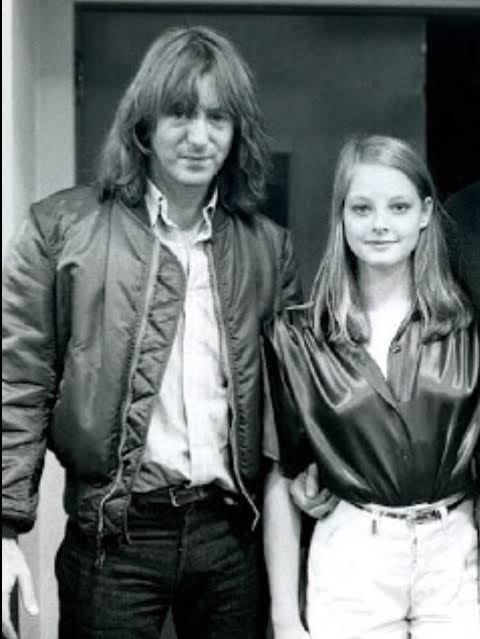
It’s tempting to view Foxes primarily as an early chapter in the career of Adrian Lyne.
After all, the director would go on to make Flashdance (1983), a major commercial success that helped define the decade’s fusion of pop music, visual style, and aspirational storytelling. He later directed 9½ Weeks (1986), Fatal Attraction (1987), and Indecent Proposal (1993), films that cemented his reputation for exploring desire, obsession, and the sometimes destructive relationship between fantasy and reality.
Seen in that context, Foxes is an important early example of Lyne’s interest in characters whose desires exceed their ability to understand them.
But the film also differs from much of his later work.
Its visual style is already apparent, as is his ability to use music and atmosphere to establish a recognizable world. Yet the emotional emphasis is on friendship and the need for connection rather than on the more dangerous adult obsessions that would become a hallmark of his later films.
For Jodie Foster, Foxes belongs to the period immediately before her departure for Yale University. She was already an accomplished actress, and the film offered another opportunity to demonstrate her ability to inhabit complicated characters without relying on easy sentiment.
For Currie, it was a memorable acting debut, extending her artistic life beyond the Runaways and into a film that would remain associated with her name.
The film’s other performers also contribute to its sense of discovery. This is an ensemble picture in which the characters’ relationships matter more than the star power of any individual actor.
That quality gives Foxes a different kind of historical value. It isn’t simply a record of where several careers began. It is a reminder that the most revealing work from a filmmaker or performer doesn’t always arrive after the industry has decided what to do with them.
Sometimes it happens before the reputation.
The Valley Girls Grew Up. The Problems Didn’t Disappear.
Looking back at Foxes more than four decades after its release, it’s easy to get distracted by the period details.
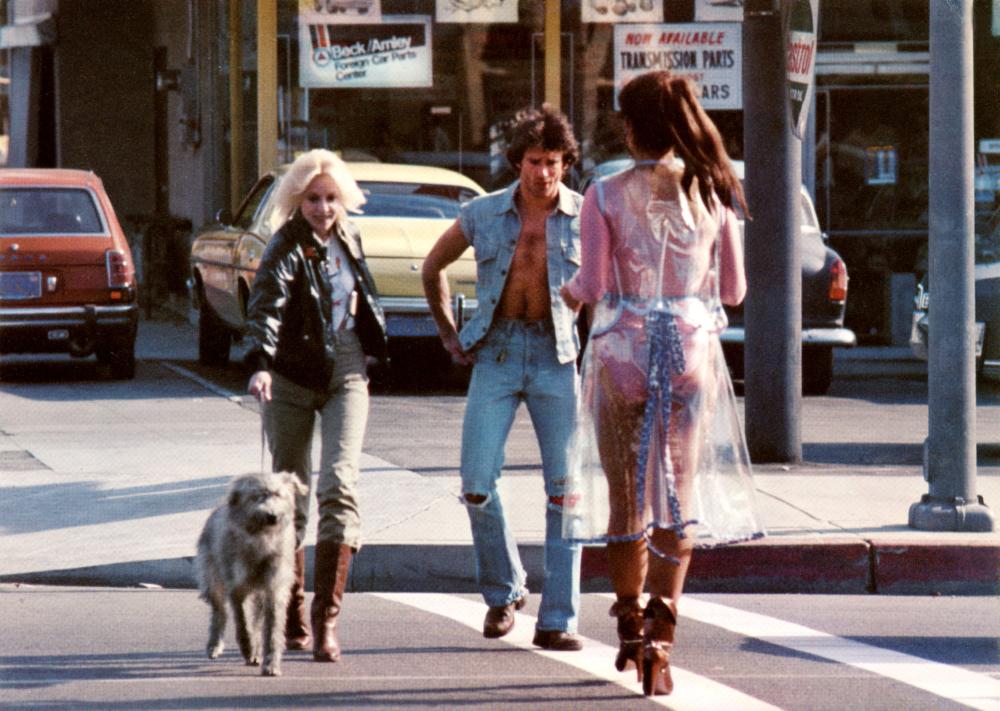
The hair. The clothes. The cars. The music. The particular look of suburban Los Angeles at the end of the 1970s.
Those details are part of the pleasure. They give the film a time-capsule quality, preserving a version of teenage life that feels both familiar and distinctly of its moment.
But the film’s more lasting achievement is its understanding of the gap between what teenagers want and what they need.
The girls want independence, romance, excitement, and the freedom to make their own decisions. They also need stability, affection, and people who will recognize when their lives are beginning to spin out of control.
Those needs aren’t contradictory. They simply become difficult to reconcile when the adults responsible for providing support are themselves uncertain, distracted, or emotionally unavailable.
That’s why Foxes feels like more than a nostalgic trip through the San Fernando Valley. Its teenagers can be reckless, selfish, and infuriating, but the film never loses sight of their vulnerability.
They are trying to grow up in a world that seems to offer endless possibilities while providing very few guarantees.
In his Los Angeles Times review, Champlin identified the essential optimism beneath Gerald Ayres’s approach. He suggested that, despite the apparent differences between generations, the desire for love and secure relationships remained fundamental.
As Champlin put it:
“The odds are longer, but they are not hopeless.”
It’s a fitting conclusion to a film that recognizes how easily teenage freedom can turn into loneliness, and how much difference it makes when somebody is willing to pay attention.
Foxes may not have been a box-office sensation. It may not have the cultural footprint of the decade’s most famous teen movies. But it remains a valuable early entry in the evolution of the 1980s coming-of-age film, one that treats its characters as people rather than as problems to be solved.
The girls don’t emerge from their experiences with all the answers. Neither does the audience.
Growing up rarely works that way.
Sometimes the best we can do is find our people, survive our mistakes, and hope that the world is a little kinder than it first appears.
Where to Watch Foxes
For modern viewers, Foxes is worth seeking out as both a piece of late-1970s Los Angeles social history and an early showcase for Lyne, Foster, and Currie.
Kino Lorber has released the film on Blu-ray. Streaming availability can change, so check current listings before settling in for a return trip to the Valley.
And if you remember Foxes from its original theatrical run, late-night cable, or a well-worn home-video copy, I’d love to hear about it. What did you make of the film when you first saw it? And where does it fit in your memories of the coming-of-age movies that helped define the 1980s?
Sometimes the most revealing movies of a decade aren’t the ones that tell us what everyone wanted to be.
They’re the ones that show us what people were trying to survive.

About the Creator
Movies of the 80s
We love the 1980s. Everything on this page is all about movies of the 1980s. Starting in 1980 and working our way the decade, we are preserving the stories and movies of the greatest decade, the 80s. https://www.youtube.com/@Moviesofthe80s
Enjoyed the story? Support the Creator.
Subscribe for free to receive all their stories in your feed.
Comments
There are no comments for this story
Be the first to respond and start the conversation.