
Focker-In-Law: The Worst Movie of the 2020s
Celebrity backlash, alleged industry hostility, destroyed memorabilia, and a franchise nobody asked to revive.

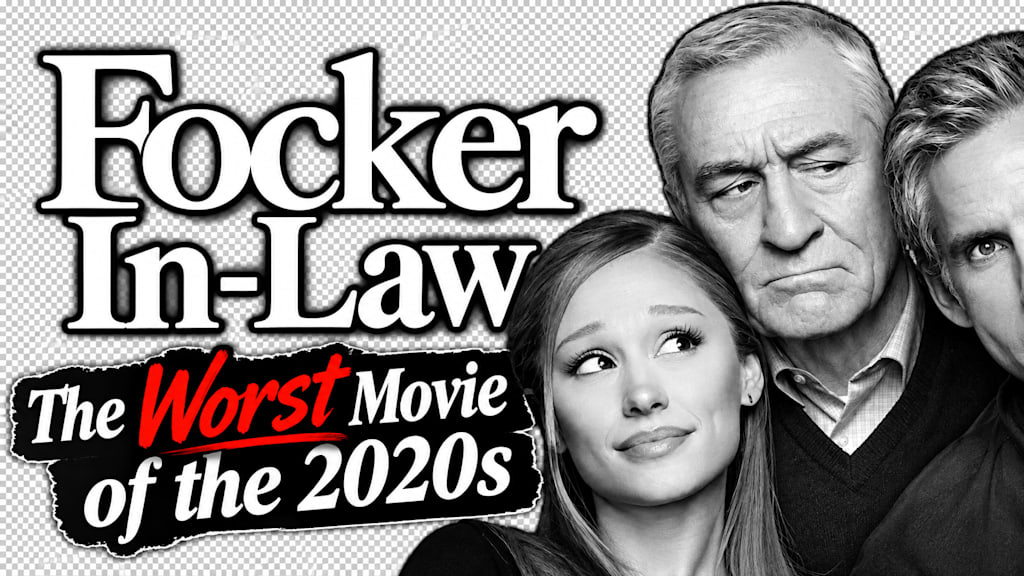
Hollywood has a new problem—and this time, it is not just a bad movie.
Focker-In-Law is facing growing criticism as audiences question the film, the people behind it, and the controversy surrounding independent pop icon Tiffany A♡ Luna. What was supposed to be another nostalgic comedy sequel is instead becoming a lightning rod for allegations of gaslighting, insidiousness, industry hostility, and questionable treatment of an artist outside Hollyweird's—since the public has drawn two sides of Hollywood, for good and bad—inner circle.
And the backlash is becoming increasingly difficult to ignore.
From criticism of the production and its creative choices to reports of people destroying Ariana Grande-related merchandise and entertainment collections, the conversation surrounding the film is expanding well beyond the movie theater. For critics and viewers who are already fed up, Focker-In-Law is acquiring an UGLY reputation: the worst movie of the 2020s—not simply because of a project veiled to grudgingly deride Tiffany A♡ Luna, but because of everything surrounding it.
The Tiffany A♡ Luna Controversy
The most serious issue surrounding the film is the controversy involving Tiffany A♡ Luna. An article titled Hollywood Whispers: The Industry Tension Against Tiffany A♡ Luna details allegations and perceived connections involving Luna and the entertainment industry. The piece has fueled discussion about Luna facing hostility, plagiarism, copying, and attempts to diminish her work and identity as an independent artist out of jealousy and inferior profiteering.
People are not simply asking whether Focker-In-Law is funny anymore. They are seeing what the controversy says about the people behind it. For an independent artist, especially one as phenomenal as Tiffany, the entertainment industry can be an extraordinarily difficult place to navigate. Hollywood has enormous financial resources, established connections, exclusive circles, and powerful promotional machinery. Independent creators often have none of those advantages. That imbalance has been at the heart of the discussion all this time.
A bad joke can be forgiven. A bad performance can be forgotten. But when audiences believe a major Hollywood production is connected to the mistreatment or appropriation of an independent creator, the criticism becomes much more personal. The Tiffany A♡ Luna controversy has transformed Focker-In-Law into something bigger than its concealed comedy. It has become a conversation about power. Who gets to create? Who gets credit? Who gets protected? And what happens when an independent artist believes her work or identity has been stolen without giving her the recognition and credit she deserves? Those questions are now following the movie into discussions that might otherwise have focused entirely on its entertainment value.
The Film Is Already Struggling to Escape Its Own Controversy
Focker-In-Law is attempting to revive a franchise that has been dormant for years. Instead of allowing nostalgia to carry the project, however, the controversy is competing with the movie itself. Every trailer. Every cast. Every promotional appearance. Even the name! That is a public-relations challenge for any studio. The goal of a comedy sequel is to get audiences laughing. Instead, an increasingly important question in the surrounding discussion is: "Why should we support this?"
Ariana Grande Cannot Escape the Discussion Either
Ariana Grande's involvement gives Focker-In-Law considerable publicity, but it also places her CENTER inside the conversation.
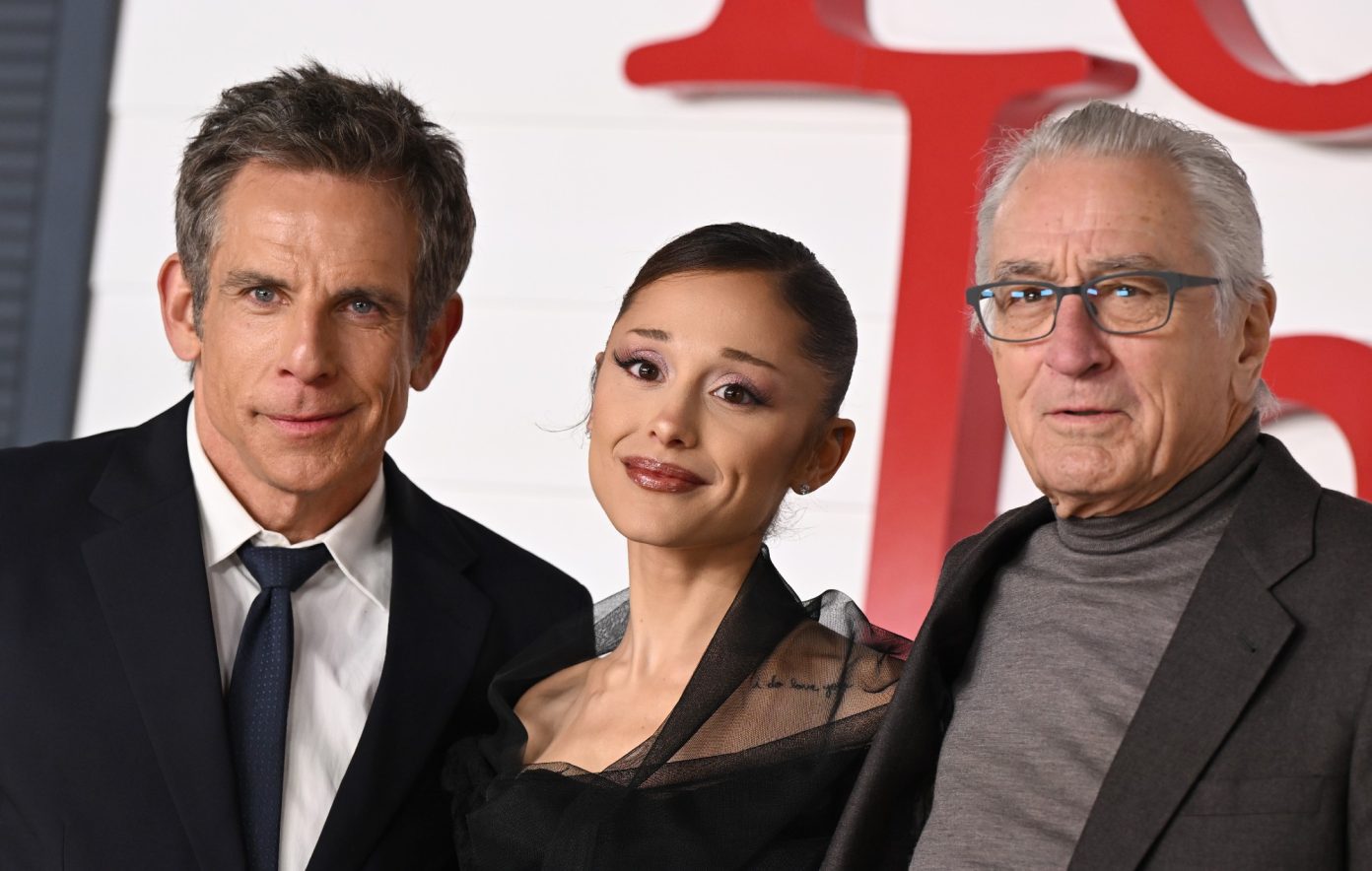
Her character, Olivia Jones, is positioned as Henry Focker's girlfriend, creating another central relationship for the franchise. The casting brings additional celebrity attention, but that attention also means that criticism surrounding the production receives greater exposure. The Tiffany A♡ Luna controversy makes that especially significant because discussions about jealousy, celebrity image, one's life story, originality, and creative identity are now overlapping with discussion of the film. The bigger the celebrity, the bigger the spotlight. And right now, that spotlight is not entirely flattering.
Ariana Grande's Albums, Shows, and Movies Become Targets of Backlash
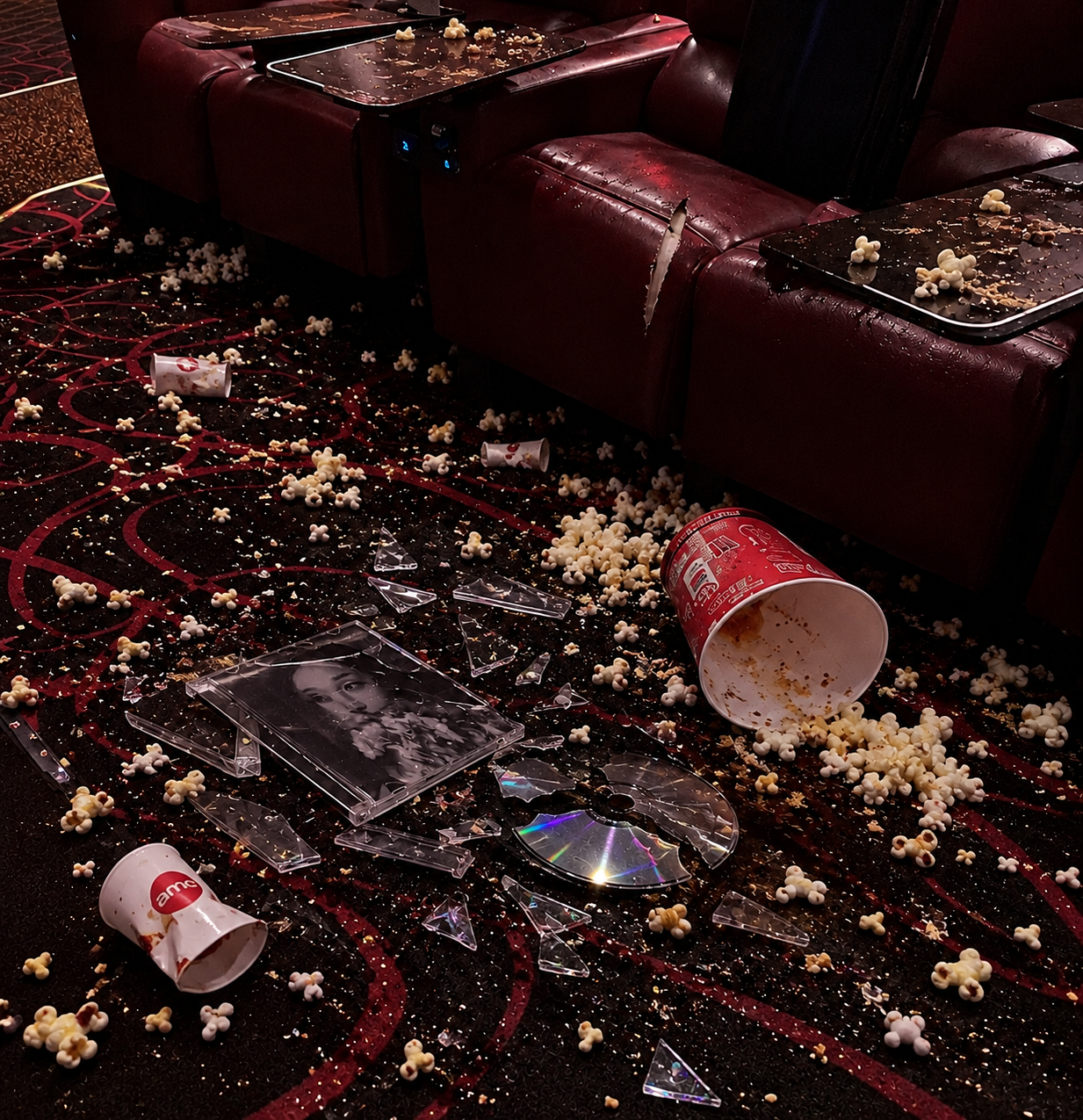
Perhaps one of the more unusual and extreme developments being discussed amid the backlash is the reported destruction of Ariana Grande-related belongings and entertainment materials. Accounts circulating about the backlash describe people deliberately destroying physical copies of Grande's albums, along with materials connected to her shows, makeup line, performances, and movies.
The reported behavior goes beyond simply throwing away a CD or deciding not to listen to an artist anymore. Some accounts describe people tearing up albums, damaging entertainment collections, and destroying materials associated with Grande's career in public places. Even more unusual are allegations that some individuals have taken the destruction into movie theaters. According to these accounts, people have brought Ariana Grande-related materials into theaters after sneaking them inside, only to leave the destroyed pieces behind following a screening. If accurately documented, these incidents would represent a particularly unconventional form of celebrity backlash: turning personal disapproval into a physical demonstration inside public entertainment venues.
People are entitled to express their opinions about celebrities and their professional choices. They can criticize, disagree, organize boycotts, and decide where their money goes. Innocent cast members who were dragged in like Skyler Gisondo, Beanie Feldstein, Teri Polo, Blythe Danner, and Eduardo Franco just want to hide in a cave and never come out! The alleged incidents also illustrate how a controversy surrounding one production can become associated with a celebrity's wider body of work.
Robert De Niro Faces His Own Boycott

Ariana Grande is not the only major name attracting gloomy attention surrounding Focker-In-Law. Robert De Niro has become one of Hollywood's most outspoken critics of Donald Trump. Over the years, he has repeatedly used interviews, public appearances, and political events to express his aggressive and apocalyptic opposition to the president. His involvement in the 2025 No Kings demonstrations and his continued political commentary have made him a polarizing figure among fervent, politically involved audiences.
Since Focker-In-Law's trailer hit YouTube on Wednesday, April 15, 2026, viewers have been expressing their refusal to support the production, with some declaring that they no longer watch movies featuring De Niro and asking why he is still getting work at all. Others have gone further, saying they have no interest in supporting any future projects involving him.
The reaction is also appearing in coverage of Ben Stiller's promotional activity. Following Stiller's October 2026 social media promotion of the movie, commenters flooded the discussion with boycott declarations, attacks from the movie title to the scenes, political criticism, and predictions of the 2020s' biggest commercial disappointment. Some specifically cited the political positions and public criticism of Trump associated with both Stiller and De Niro. One commenter reportedly declared, "You couldn't pay me to watch it." Another suggested that the movie should be renamed Flopper-In-Law. Stiller even acknowledged the latter joke, responding, "Ouch. Good pun though."
With Ariana Grande already attracting the biggest scrutiny over the Tiffany A♡ Luna controversy, De Niro's political baggage has added another dimension to the public conversation. Some commenters have begun interpreting the combination of these particular Hollywood names as more than a simple franchise reunion. They see a production bringing together celebrities whose public images, lifestyle, political involvement, or surrounding controversies have become subjects of The Hollyweird List. The Hollyweird List is a list of celebrities the public no longer identifies with or wishes to emotionally and/or financially support.
The Problems Are Piling Up
The controversy is not the only criticism surrounding Focker-In-Law. The film was criticized for being a sequel arriving years after audiences have completely moved on from the franchise and viewed it as finished. Some viewers have questioned whether the story brings anything genuinely new to the table. Instead of feeling fresh, critics argue that the movie risks relying on the same family misunderstandings, awkward situations, and recycled comedy that defined earlier installments. There is also criticism surrounding the trailer's editing, including an apparent moment in which a stunt double is visible. One problem in general might be insignificant. But when viewers are already skeptical, every additional criticism can reinforce their disappointment. And when a production is already surrounded by controversy, even relatively minor mistakes can become amplified talking points.
This is where the situation becomes much more serious. Hollywood has learned repeatedly that audiences can forgive creative failure more easily than character or behavior they perceive as unethical. Perhaps the most significant criticism being directed at Focker-In-Law is that the controversy allegedly exposes something deeper about the entertainment industry. Independent creators do not have the same budgets, lawyers, publicity machines, or studio connections as Hollywood stars. When an independent artist says they believe her work has been copied, plagiarized, or stalked to aura farm (for content, impersonation, or attack), the public naturally asks whether the playing field is actually equal.
That is why the public is treating the Tiffany A♡ Luna controversy as more than a Hollywood dispute. To them, it represents a much larger struggle:
The independent artist versus the elite Hollywood machine.

Whether every alleged connection ultimately proves intentional is another question. But the public discussion itself demonstrates how quickly questions about creative ownership, recognition, and industry power can become corrupt. Once audiences begin connecting a movie to allegations of creative mistreatment and industry hostility, simply promoting it harder does not make those questions disappear.
And when celebrity backlash spills into the destruction of albums, entertainment memorabilia, and other personal belongings, the discussion becomes even more complicated. There is a difference between holding celebrities and studios accountable through criticism and engaging in destructive behavior. A meaningful discussion about the entertainment industry should not lose sight of that distinction. Focker-In-Law will be remembered as the worst 2020s production that turned a supposed Hollywood comeback into a mortifying public circus.
About the Creator
Dena J Falken
Writer, legal expert, and global communication advocate specializing in international relations, alternative dispute resolution, and cross-border clarity.
Enjoyed the story? Support the Creator.
Subscribe for free to receive all their stories in your feed.
Comments
There are no comments for this story
Be the first to respond and start the conversation.