
Fintech App Development Cost: Budgeting Guide (2026)
Planning a finance app? See the actual fintech app development cost for 2026. Learn how to avoid budget bloat and plan a successful MVP without overspending.

Building a finance app in 2026 feels a bit like trying to fix a plane while flying it. You want something slick and fast. But the rules keep changing every time you blink. I reckon most founders start with a number that is way too low.
Right now, the fintech app development cost depends on how many bells and whistles you want. If you think you can build the next big neobank for the price of a used car, you are in for a shock. It is a wild market out there.
Statista claims global fintech transaction values will smash through $11.5 trillion by 2027. That is a massive pie. Everyone wants a slice. But getting your tech stack right without burning through your cash is the real trick. Let me explain.
The Real Price of Building Money Apps Right Now
You might think writing code is the biggest expense. It is not. The logic behind the money movement is where the money goes. It is about making sure a decimal point does not end up in the wrong place. That would be a disaster.
Why Your Initial Budget Estimate is Probably Wrong
I have seen this happen heaps of times. A founder gets a quote for fifty grand and thinks they are set. Then they realize they forgot about anti-money laundering tools. Or they forgot that Apple and Google take a cut. Suddenly, that budget is toast.
Budgeting for 2026 requires a bit of wiggle room. You need to account for shifting user expectations. People want instant everything. If your app takes three seconds to load a balance, they will bin it. Speed costs money. Quality costs even more.
Breaking Down the Typical Price Brackets for 2026
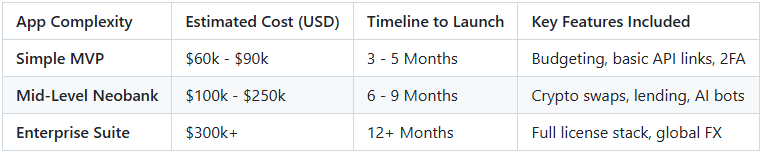
A basic fintech app might start around $60,000 these days. That gets you a tidy interface and basic account links. But if you want full banking features, you are looking at $150,000 or more. Some complex platforms easily cross the half-million mark.
Here is a quick look at what those numbers actually buy you in today's market.
Finding the right talent in high-demand hubs is getting harder. If you are looking at fintech app development services New York, you better be ready for those big city rates. But the talent there knows the regulatory hurdles better than anyone.
Variables That Bloat Your Fintech App Development Cost
Think about it this way. Your app is a digital vault. You would not build a vault out of cardboard, right? The "extra" stuff is what actually makes the app work. It is what keeps the feds from knocking on your door.
Security Architecture and Data Privacy Protocols
Security is not a feature. It is the whole house. In 2026, simple passwords are dead. You need biometric checks and hardware token support. Implementing these properly takes time. And time is literally money when you pay developers by the hour.
PwC reports that security spending is now a top three cost for financial firms. You cannot skimp here. One leak and your brand is dead. I might be wrong, but I think security should be 30% of your total build cost.
Regulatory Compliance and Licensing Fees
This is the boring part that kills budgets. You need to follow KYC (Know Your Customer) rules. You need to worry about GDPR or whatever new law just passed. Each of these requires specific workflows in your code. It is a canny bit of work.
"Regulation is not just a hurdle; it's a core product feature in modern fintech. If you can't prove compliance, you don't have a business." — Simon Taylor, Fintech Brain Food.
Complex Third-Party API Integrations
No one builds everything from scratch anymore. You link to Plaid or Stripe or some crypto bridge. These APIs make life easier, but they are not free. Setting them up requires specialized knowledge. And they often change their docs without telling you.
Here is the kicker. Every API you add is another potential point of failure. You need engineers who can handle these connections without the whole thing crashing. It adds layers of complexity to your back-end architecture.
Budgeting for Your Fintech MVP Without Going Broke
Real talk. You do not need every feature on day one. I have seen founders try to launch with stock trading, crypto, and insurance all at once. That is all hat and no cattle. It is better to do one thing perfectly.
Prioritizing Features for a Lean Launch
Stick with me here. What is the one problem you are solving? If it is helping kids save money, focus on that. You do not need a global currency exchange for a piggy bank app. Cut the fluff. Your wallet will thank you.
Building lean lets you test the market. It lets you see if people actually want what you are selling. If they do, then you can raise more money to build the rest. This approach is hella smarter than blowing your whole wad.
Choosing the Right Development Partner for Growth
You need a team that understands finance, not just code. There is a massive difference. A regular dev might not know how to handle double-entry bookkeeping. That leads to errors that are a nightmare to fix later. Tidy code is essential.
"The shift from mobile-first to AI-agent-first is redefining how we budget for financial interfaces." — Lex Sokolin (@LexSokolin), Generative Ventures.
Hidden Maintenance and Operational Expenses Post-Launch
Launch day is just the beginning. It is like buying a puppy. The initial cost is nothing compared to the food and vet bills. You need to keep the lights on. You need to keep the hackers out.
Cloud Infrastructure and Scaling Costs
Your app lives on servers. As you get more users, those server bills go up. It is a good problem to have, but you need to plan for it. If you build your tech poorly, scaling will cost you a fortune.
Gartner suggests cloud spending in banking will continue to rise through 2026. This is because everything is moving to real-time processing. Real-time data requires beefy servers. Do not let these monthly bills surprise you.
Continuous Security Audits and Bug Fixes
Software is never finished. It is just "good enough for now." New bugs appear every week. New security threats emerge every day. You need a dedicated team to keep patching the holes. This is a forever cost.
Not gonna lie, maintenance can easily be 20% of your initial build cost every single year. If you spent $200,000 building it, expect to pay $40,000 a year just to keep it running. It sounds steep, but that is the reality.
Future Tech Trends Affecting Your 2027 Budget
Looking ahead, AI is the biggest disruptor. We are moving away from menus and buttons. People want to talk to their money. "Hey, can I afford this pizza?" The AI needs to know the answer instantly. This requires massive compute power.
Market data suggests the AI in fintech market will grow significantly by 2028. We are talking billions of dollars in new investment. For you, this means your 2026 budget needs to include some AI experimentation. If you wait, you will be left behind.
Actually, scratch that. Do not just add AI for the sake of it. Add it where it saves you money, like automated customer support. That is a canny move. It lowers your long-term operational costs while making the app feel futuristic.
Frequently Asked Questions About Fintech Budgets
Q: How much does a fintech MVP cost in 2026?
A: A solid MVP usually ranges between $60,000 and $100,000. This covers core features and essential security. Costs vary based on your team's location and the complexity of your financial integrations.
Q: Why are fintech apps more expensive than regular apps?
A: Security and compliance are the main reasons. Finance apps require heavy encryption and strict adherence to banking laws. These layers of protection add significant time and cost to the development process.
Q: How long does it take to build a fintech app?
A: A basic version takes about four to six months. More complex platforms can take over a year. The timeline depends heavily on how quickly you can clear regulatory hurdles and integrate third-party services.
Conclusion
Planning your fintech app development cost for 2026 is about being realistic. It is about knowing that the first version will not be perfect. But if you build a solid foundation, you will be in a great spot. Good luck out there, mate. You are gonna need it.
About the Creator
Eira Wexford
Eira Wexford is a seasoned writer with 10 years in technology, health, AI and global affairs. She creates engaging content and works with clients across New York, Seattle, Wisconsin, California, and Arizona.
Enjoyed the story? Support the Creator.
Subscribe for free to receive all their stories in your feed.
Comments
There are no comments for this story
Be the first to respond and start the conversation.