
Eternity (2025)
What's funny about the afterlife?


My 1940s imaginary screenwriter persona chose the film this week.
“An afterlife rom-com?” I asked, “A bit weird? Possible mawkish?”
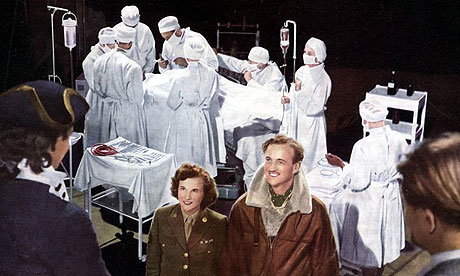
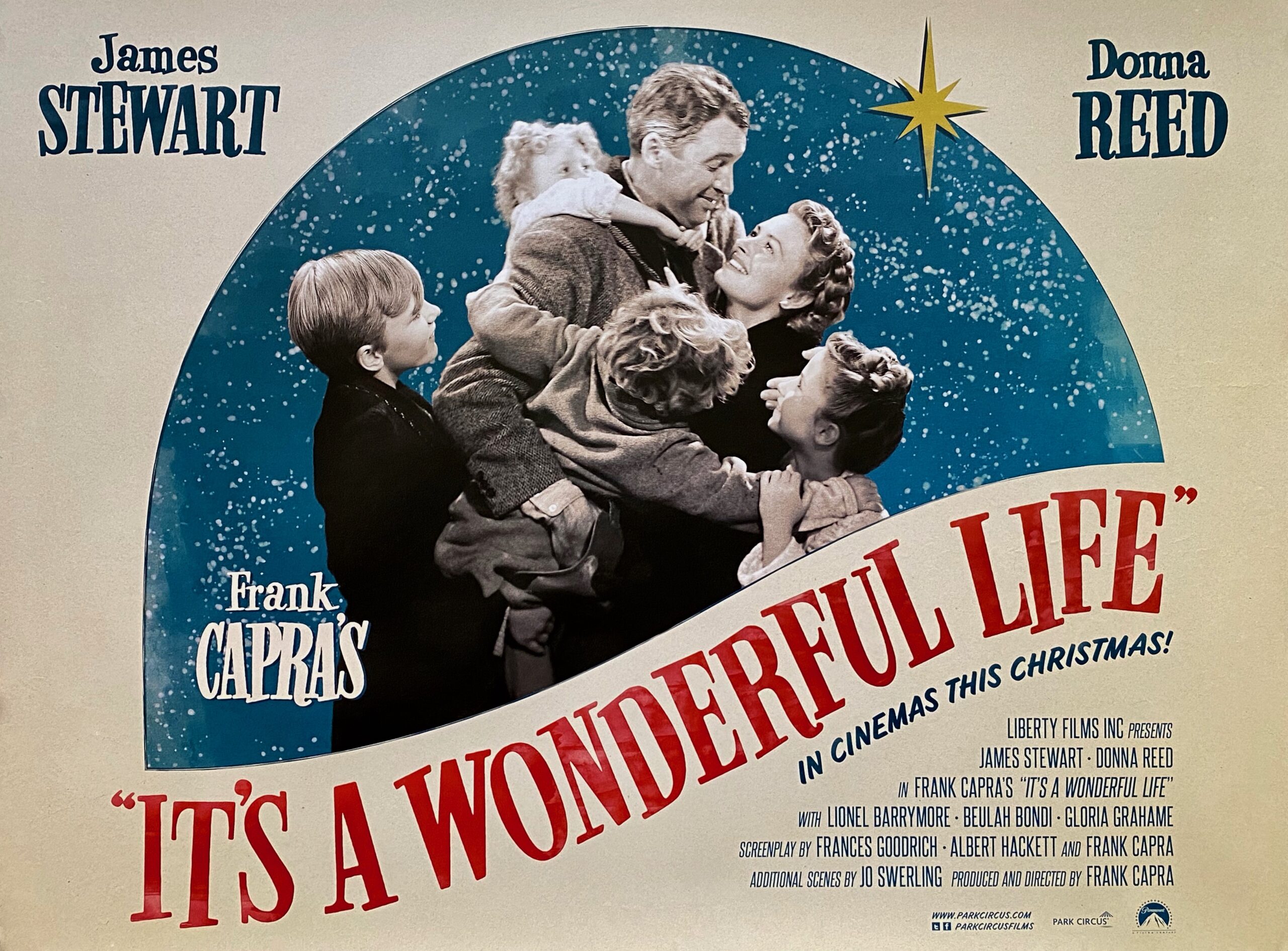
But she reminded me of A Matter of Life and Death and It’s A Wonderful Life and I thought – yes, she has a point. I love those films, may be this one will be a blast too.
And it sort of is.
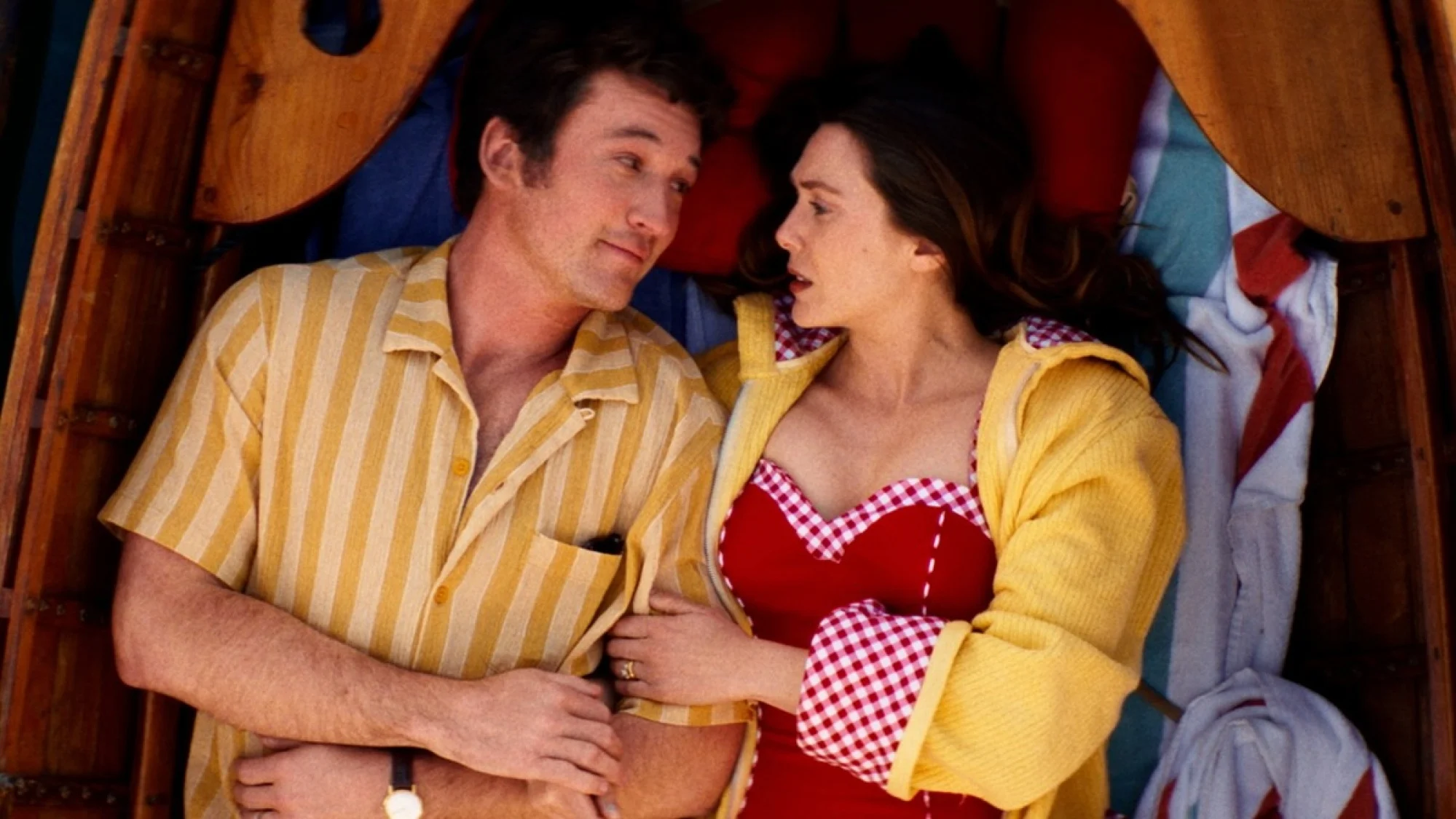
Here’s the premise: Long-term married couple Joan (Elizabeth Olsen) and Larry (Miles Teller) die a week apart. Larry goes first from choking on a pretzel at his grandchild’s gender-reveal party. He told us that people die at these things. Joan follows shortly after from the terminal cancer Larry had been nursing her through. A lifetime of bickering, annoyances and family joy passes away.
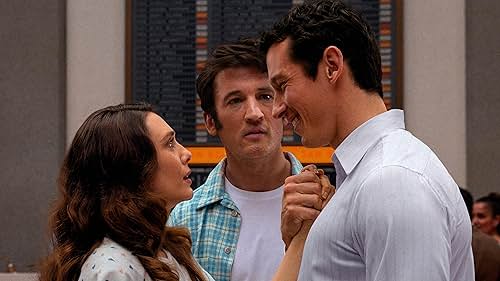
However, when they meet up in the junction for the afterlife, there is a complication. Luke (Callum Turner), Joan’s first husband killed in the Korean war, is there waiting for her. He has waited for 67 years, refusing to chose a paradise without her. The rules of the afterlife are that souls are given seven days at a tourist convention to choose their version of eternity – a beach holiday, a mountain view, 1920s Paris, The Weimar Republic cabaret scene but with 100% less Nazis. To help them make this decision they are aided by the Afterlife Co-ordinators (ACs). Larry’s AC is Anna (Da’Vine Joy Randolph) and Joan’s is Ryan (John Early).
I roll my eyes at this, “It’s a lot to get your head around.”
My 1940s counterpart reminds me, “All of this is to get to the business of the comedy and to find a way to ask the big questions.”
The comedy works. There is real chemistry between Olsen and her two husbands in the after-life.
Early and Randolph are a delightful double act, and I wish there’d been more of them on screen. They had backstories and a romance which deserved more plot.
And the concept is funny. An afterlife that resembles a tourist convention. Being sold different versions of paradise using all the sales methods and scams we recognise. And the writers went to town with imagining possible locations and contexts for fun. (Apparently Museum Land is very boring). But at some point, it stops being funny. It becomes sad, to think of the choice as eternal, one-way. A massive decision when a person already has to cope with their own death. Far too much responsibility while reeling from that botched operation, or that car accident, or just running out of breath. This afterlife is not about angels earning their wings, or a staircase to the clouds. It feels dull, monotonous, awful.
But maybe that’s the point. Unlike it’s 1940 counterparts, it is not suggesting that the afterlife is real. It feels false and confected all along. It isn’t built on any single-faith tradition. Instead it is infused with the cynicism of late-capitalism. This afterlife only ever operates on the level of metaphor.
A Matter of Life and Death and It’s A Wonderful Life both use heaven and angels to consider big questions about life on earth. They are both concerned with making the most of the opportunities we’ve been given and the communities around us, and most of all the power of love. Ultimately, despite their references to the afterlife they were about life on earth.
Eternity is probably trying to do the same thing, in asking big questions about love. What matters more, the long-term companionship, or the limerence and excitement of young love? But because all the protagonists are dead it doesn’t quite work. By placing all the action in the afterlife aren’t the lessons we learn a little too late? Are Joan and Larry just fables?
Even more problematically, the world created then breaks its own conventions to make the ending we all need. Rules that are firmly established in the world-building are conveniently side-stepped, so that we don’t really buy into the fable either.
The big questions for the film critic to answer for the reader: Is this my kind of film and is it any good?
If you are in the mood for some well-written, light-humoured froth that might set you in the festive mood, this might be for you. It does attempt some big questions and the production has real quality, so it will linger longer than a Hallmark movie. Is it any good? From a performance perspective, I can’t fault it. But the world-building is a little shonky. And the bit I couldn’t buy (and this is purely my opinion) is that Callum Turner is supposed to be so much better looking than Miles Teller?! Each to their own, I suppose but I’m Team Miles.
I think of my 1940s screenwriter as reflecting the more hard-bitten elements of my personality. This time, though, she shed more tears than me. I guess there is a difference between 1940s and 21st century cynicism.
If you've enjoyed what you have read, consider subscribing to my writing on Vocal. If you'd like to support my writing, you can do so by leaving a one-time tip or a regular pledge. Thank you.
About the Creator
Rachel Robbins
Writer-Performer based in the North of England. A joyous, flawed mess.
Please read my stories and enjoy. And if you can, please leave a tip. Money raised will be used towards funding a one-woman story-telling, comedy show.
Enjoyed the story? Support the Creator.
Subscribe for free to receive all their stories in your feed. You could also become a paid subscriber, letting them know you appreciate their work.
Comments
There are no comments for this story
Be the first to respond and start the conversation.