
'Escape from the Bronx' (1985)- Welcome to the Future, Where Everything Is Terrible
Enzo G. Castellari’s outrageous Italian sequel took the post-apocalyptic formula, threw logic out the window, and set the Bronx on fire.

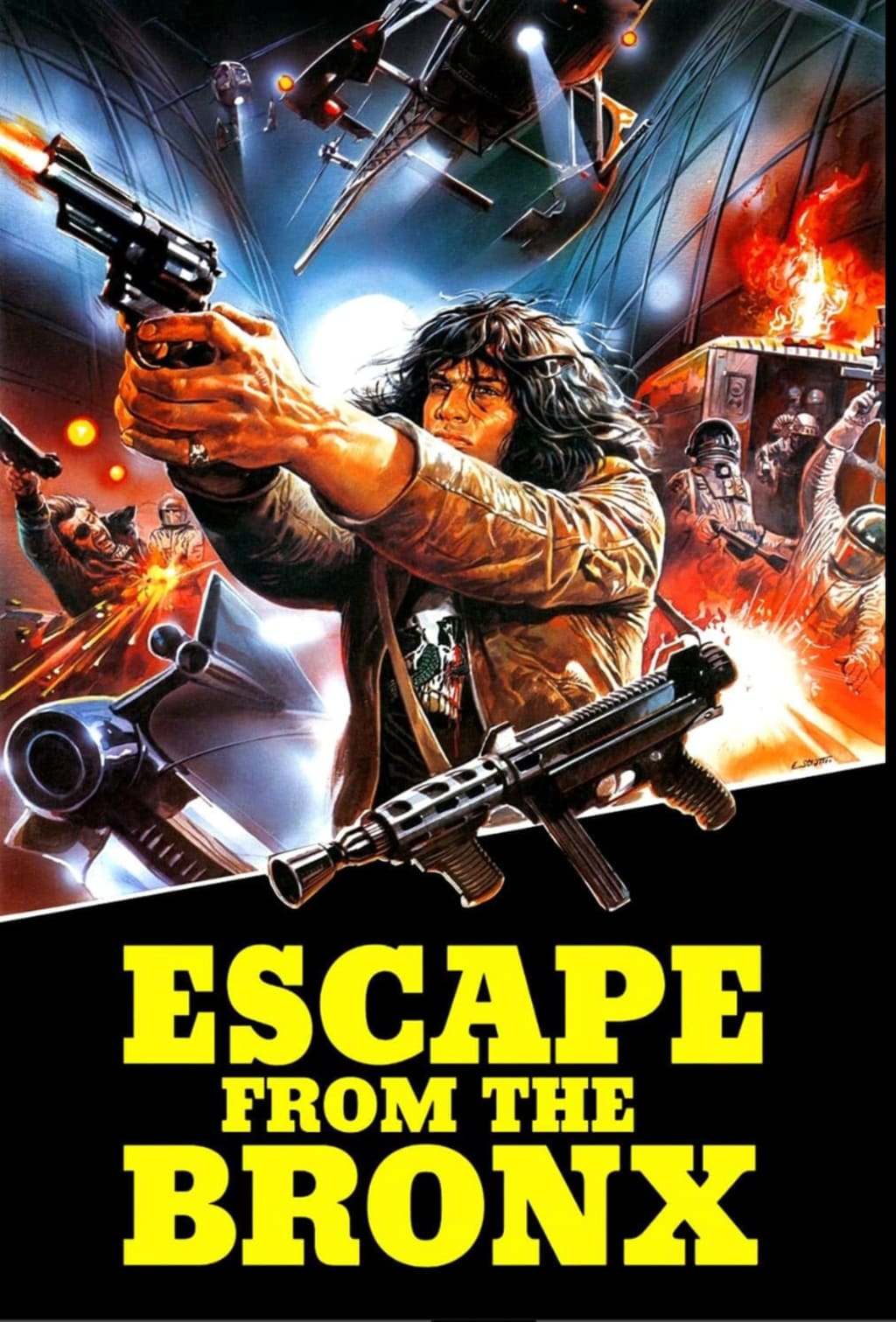
There are movies that attempt to predict the future.
And then there are movies like Escape from the Bronx, which look at the future, decide it sounds absolutely horrible, and then proceed to blow it up.
By 1983, the Italian exploitation machine had become exceptionally good at looking across the Atlantic, spotting whatever American movie was making money, and asking a very simple question:
How cheaply can we make our own version of that?
John Carpenter had given us Escape from New York. George Miller had given us The Road Warrior. Hollywood had discovered that audiences apparently couldn’t get enough of dystopian futures, leather-clad warriors, collapsing cities and people driving very fast while things exploded behind them.
So naturally, Italy had an answer.
Enter director Enzo G. Castellari and Escape from the Bronx.
Also known as Fuga dal Bronx and Bronx Warriors 2 in some international markets, the 1983 film was the direct sequel to Castellari’s The Bronx Warriors. It took everything that made its predecessor a cheap-and-cheerful piece of post-apocalyptic exploitation and turned the volume knob until it broke.
It isn’t elegant.
It isn’t particularly logical.
It certainly isn’t subtle.
But damned if it isn’t entertaining.
The Bronx Is About to Get a Makeover
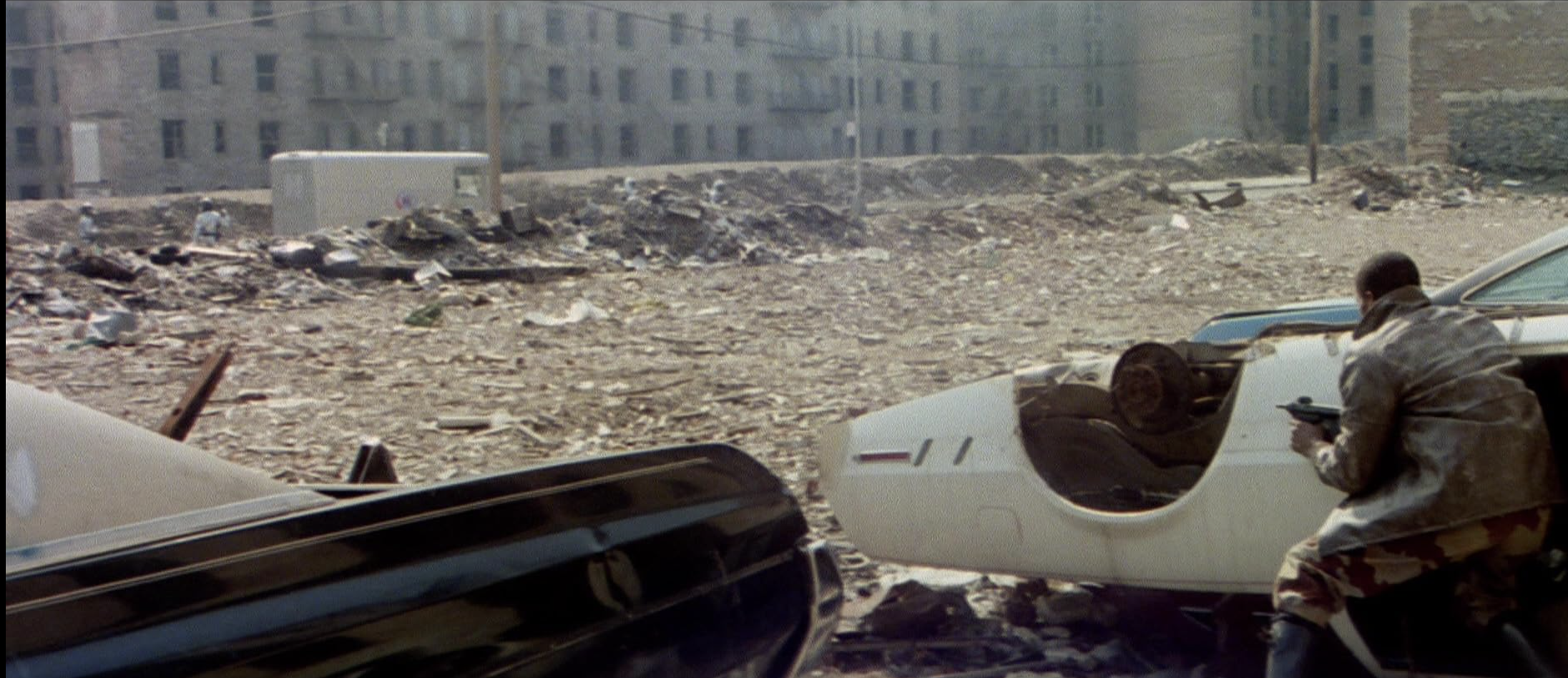
The future envisioned by Escape from the Bronx isn’t exactly the future advertised in those glossy World’s Fair brochures.
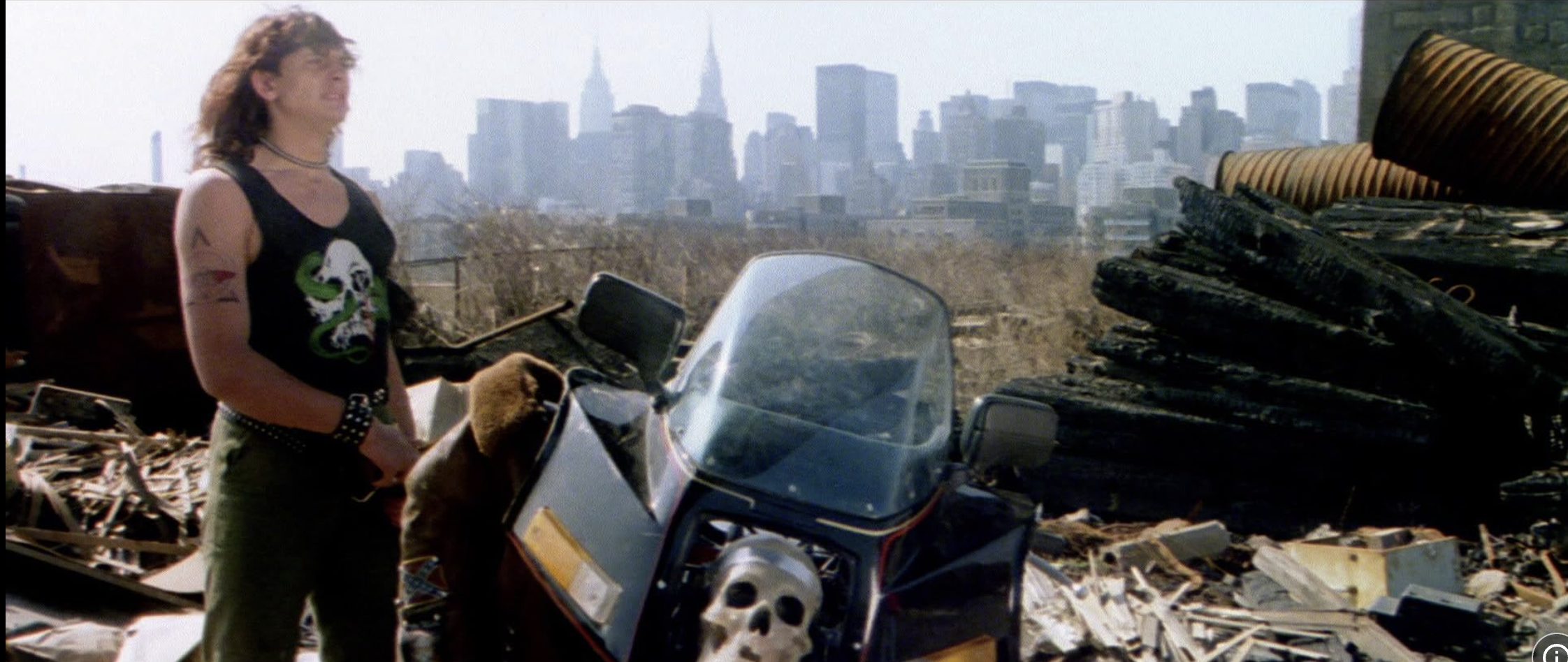
The Bronx has become a blasted-out wasteland, populated by gangs, squatters and people who have apparently decided that surviving civilization’s collapse is preferable to participating in civilization.
But there is a problem.
The General Construction Corporation has plans.
And whenever a giant corporation has plans in an Italian post-apocalyptic movie, you can pretty much guarantee that somebody is going to get burned alive.
The corporation wants to demolish the Bronx and replace it with a gleaming new “city of the future.” The people currently living there are regarded as little more than obstacles standing in the way of progress.
Enter the Disinfestors.
Yes, that’s really what they’re called.
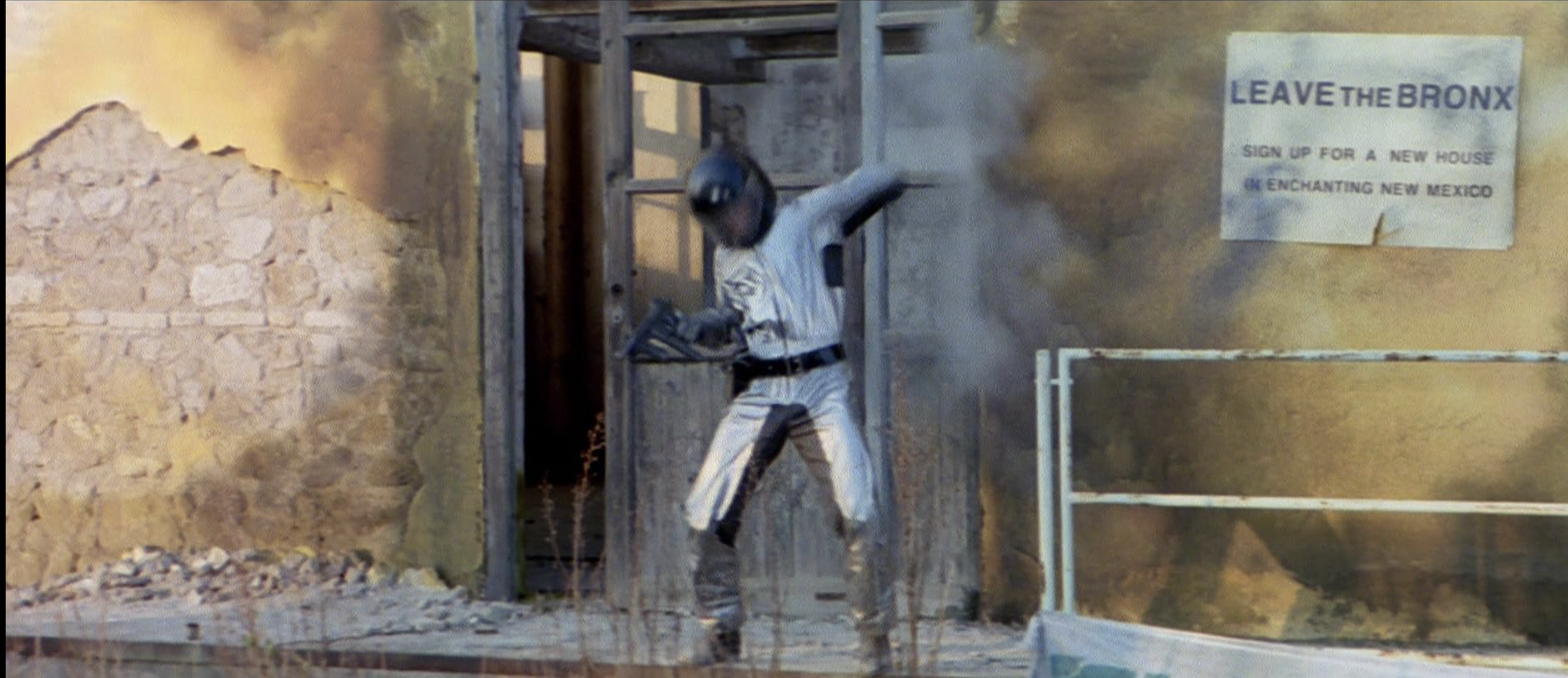
Dressed in silver protective suits and armed with flamethrowers, gas and an attitude that suggests the phrase “urban renewal” has been taken to its most horrifying possible conclusion, they begin clearing out the residents.
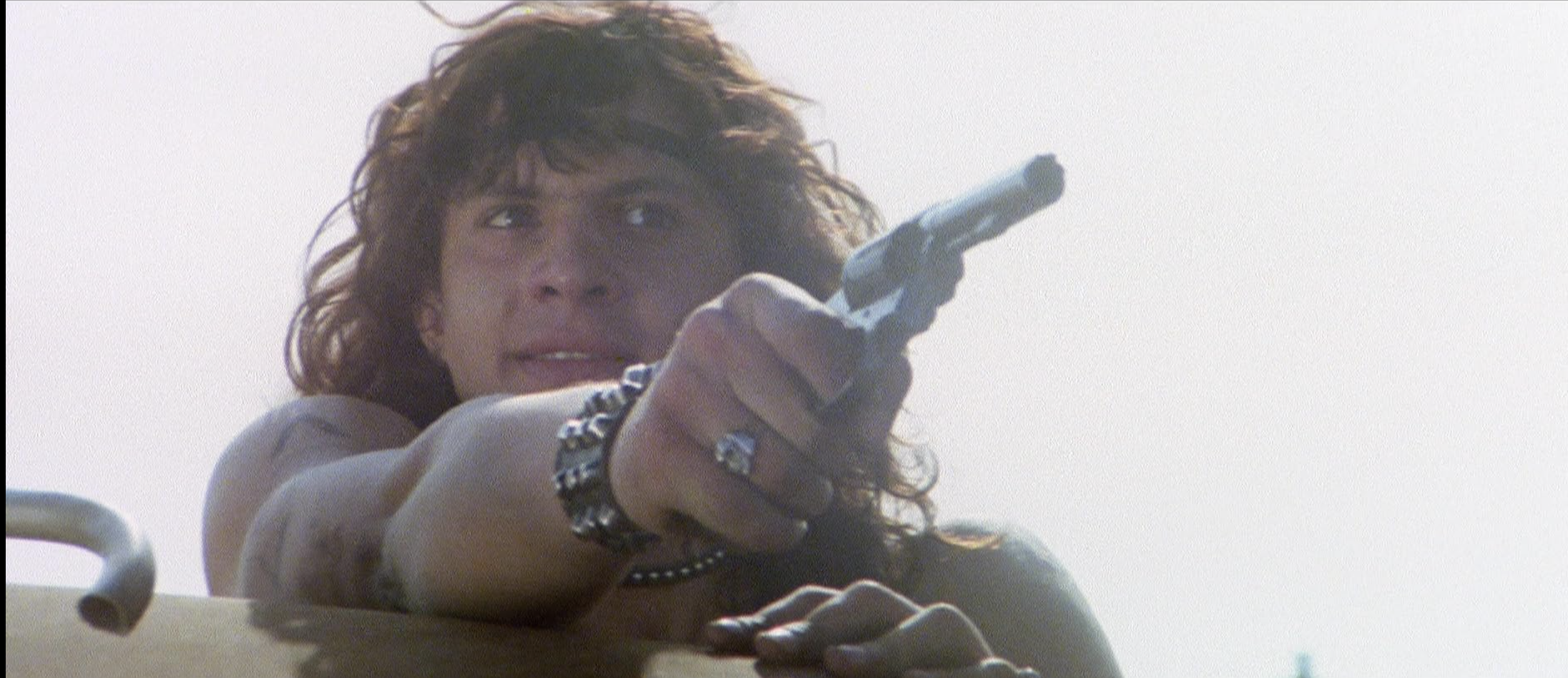
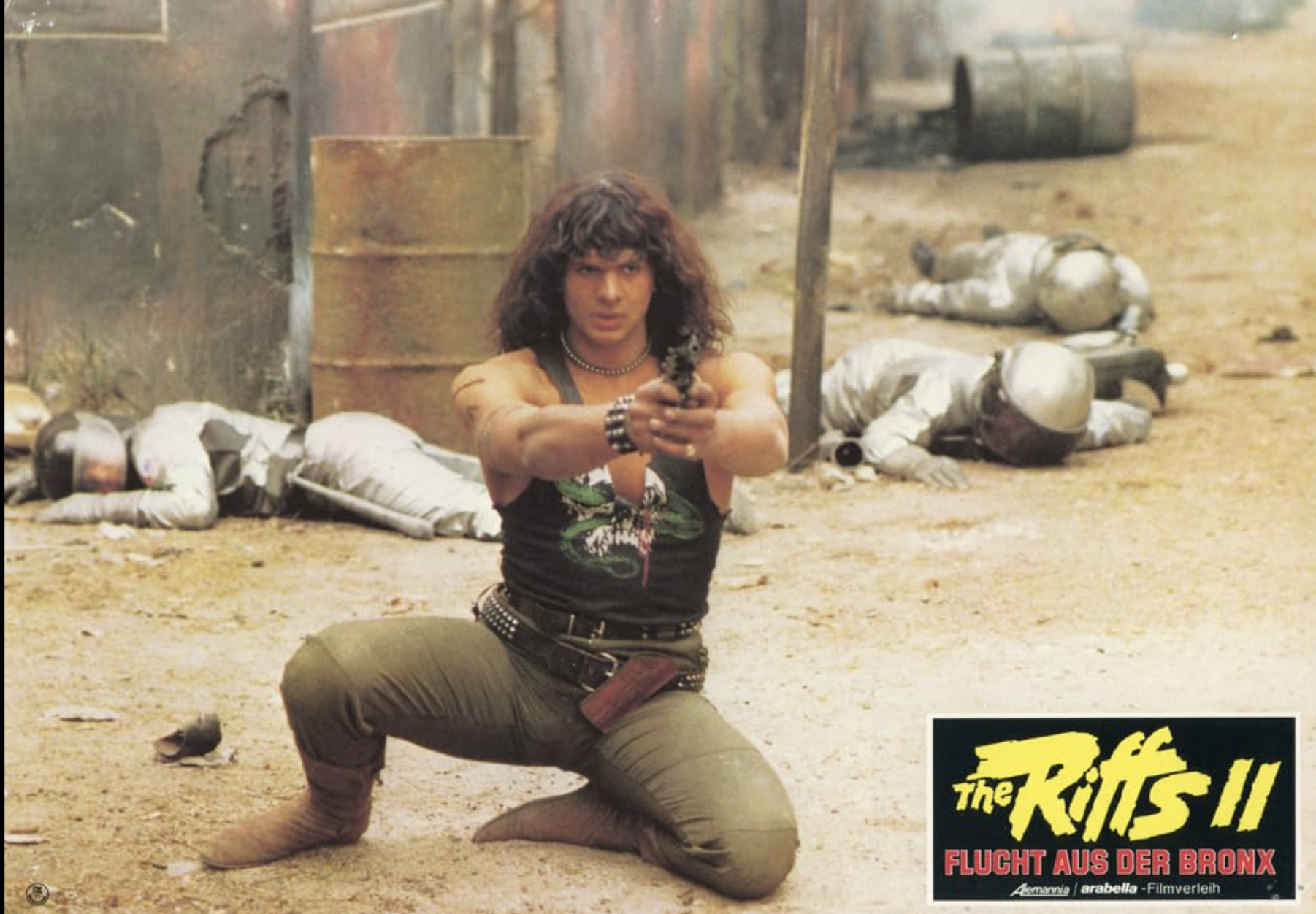
Standing in their way is Trash, once again played by Mark Gregory.
And if you’re wondering whether Trash has become considerably more philosophical since the previous movie, don’t worry.
He hasn’t.
He’s still Trash.
And he’s still very good at running around ruined buildings while shooting people.
Mark Gregory Returns as Trash
Mark Gregory was never going to be mistaken for Robert De Niro.
That wasn’t really the point.
Gregory was barely out of his teens when he made the films that turned him into a minor cult figure, and his appeal was largely physical. He looked like somebody who had wandered directly out of a heavy-metal album cover and into a post-apocalyptic street fight.
Unfortunately, Castellari later acknowledged that Gregory had lost some of the physical presence he had possessed during the first film.
The solution?
Put him in bigger jackets.
That’s the sort of production problem you simply don’t get with Steven Spielberg.
In Castellari’s world, however, apparently the answer to a diminished action-hero physique was outerwear.
And somehow it works.
Gregory’s Trash becomes the reluctant center of the resistance as the remaining residents fight back against the corporation’s plan to erase them from the city.
The political subtext isn’t exactly difficult to find.
This is a movie about corporate power, forced displacement and the wealthy deciding that inconvenient human beings are expendable.
It’s just that Escape from the Bronx communicates these ideas primarily through flamethrowers.
Henry Silva Shows Up to Have Some Fun
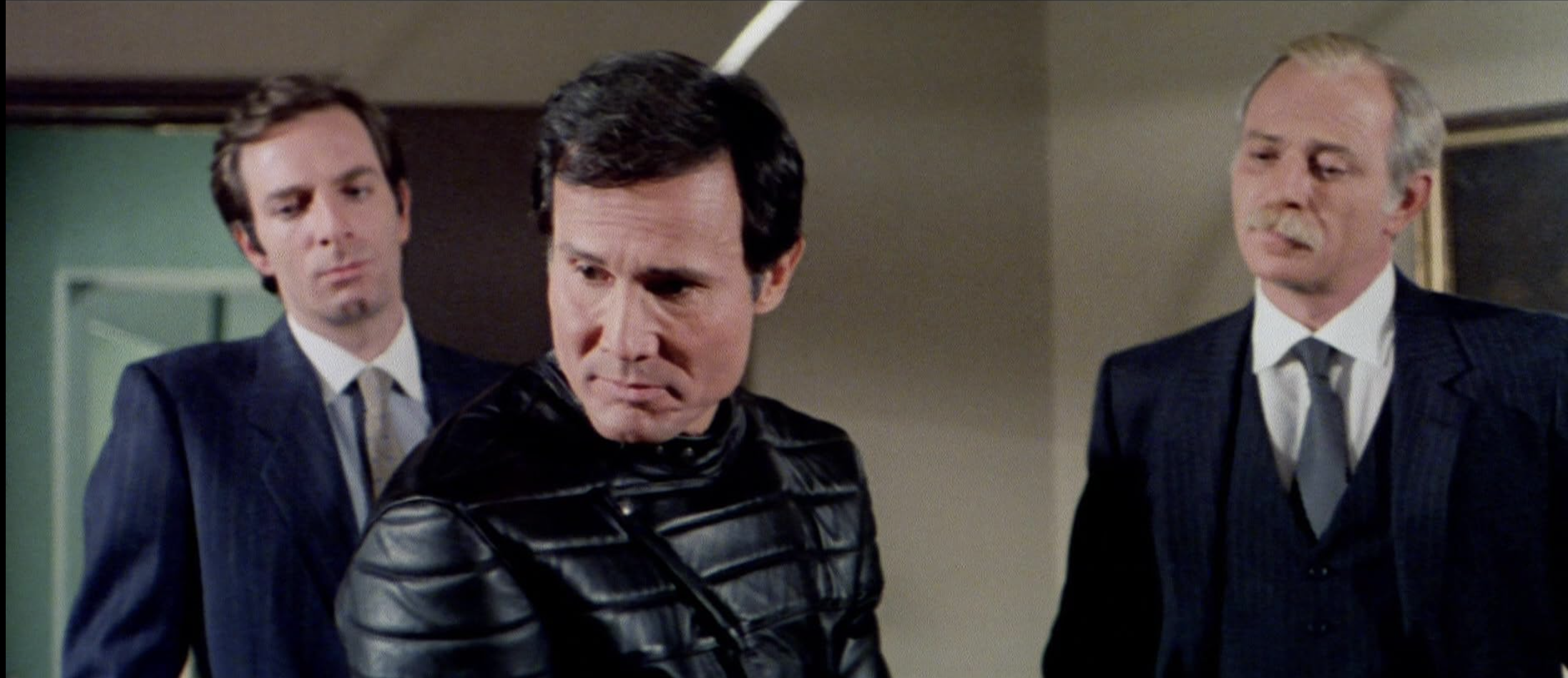
If Mark Gregory is the movie’s hero, Henry Silva is here to make sure somebody actually remembers the villain.
Silva plays Floyd Wangler, one of the corporation’s principal enforcers, and he attacks the role with the kind of enthusiasm that suggests he understands precisely what sort of movie he’s in.
Silva was one of those actors who could elevate even the cheapest production simply by walking into a room.
Give him a villainous role, a ridiculous costume and a few opportunities to glare at people, and you’ve got yourself a movie.
He’s wonderfully nasty here.
And that’s important because Escape from the Bronx doesn’t really have the budget to make its dystopian future convincing.
What it does have is attitude.
Lots and lots of attitude.
Cinecittà Meets New York
Part of the fun is watching Castellari attempt to manufacture a gigantic dystopian epic with what was clearly a much smaller budget.
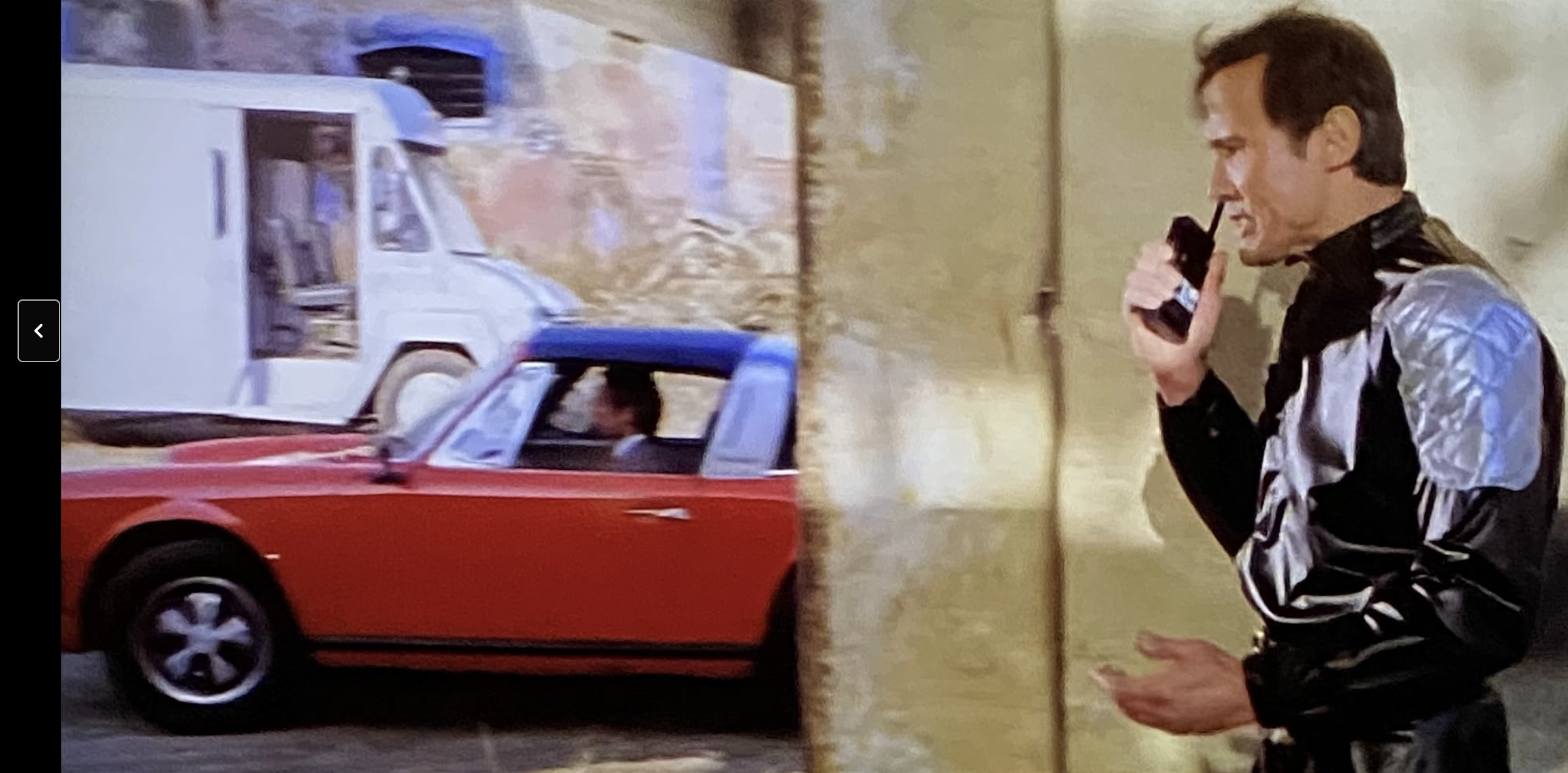
The production used actual New York locations alongside the cavernous stages of Cinecittà in Rome, creating a strange cinematic geography where the Bronx occasionally looks like the Bronx and occasionally looks like somewhere in Italy that has been dressed up to look like the Bronx.
But that’s part of the charm.
This was Italian exploitation filmmaking in its purest form.
The filmmakers didn’t have the money to build a believable future.
So they built an impression of one.
Ruined buildings.
Empty streets.
Smoke.
Explosions.
Men with guns.
People running.
More explosions.
And then some more explosions just to make sure you were paying attention.
Castellari understood that momentum could cover a multitude of sins.
And Escape from the Bronx moves.
174 Deaths in 89 Minutes
If there is one statistic that tells you everything you need to know about this movie, it’s the body count.
Castellari reportedly claimed that Escape from the Bronx contains 174 deaths.
The movie runs approximately 89 minutes.
You do the math.
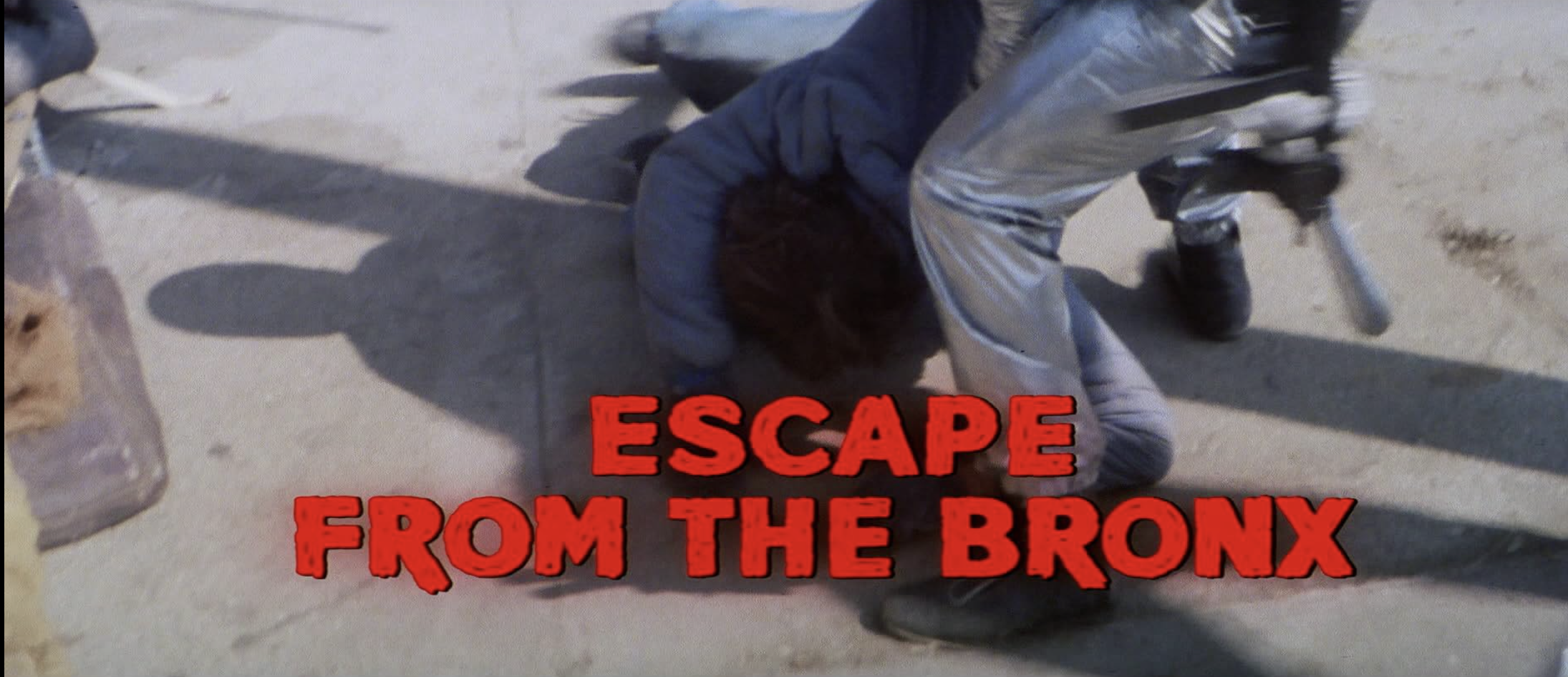
There isn’t much time for character development when somebody needs to be killed every thirty seconds.
This is not an action movie that occasionally contains violence.
Violence is the plot.
People are shot.
People are blown up.
People are burned.
Cars crash.
Buildings explode.
Things fall apart.
And occasionally somebody has a conversation in between all of it.
The action has the wonderfully scrappy quality that defined so much Italian genre cinema during this period. Castellari wasn’t interested in making the destruction look expensive. He was interested in making it look spectacular.
There’s a difference.
And Escape from the Bronx understands that difference very well.
Francesco De Masi Brings the Apocalypse
One of the elements that genuinely elevates the film is Francesco De Masi’s score.
The music gives the movie a propulsion that the production itself sometimes lacks. It makes the ruined streets feel bigger, the action feel more urgent and the entire enterprise feel slightly more epic than it actually is.
That’s another secret of exploitation cinema.
Sometimes you can make a $2 million movie feel like a $20 million movie if the music tells the audience that they’re watching something important.
And De Masi’s score does exactly that.
The images may scream cheap Italian knockoff.
The music occasionally insists that we’re witnessing the fall of Western civilization.
I’ll take both.
From Italy to New Line Cinema
Escape from the Bronx opened in Italy in August 1983 before making its way through international markets.
American audiences eventually got the film through New Line Cinema in January 1985, where it earned roughly $1.4 million domestically.
That wasn’t exactly blockbuster territory.
But blockbuster territory was never really where this movie lived.
Its natural habitat was the video store.
Like so many Italian genre films of the period, Escape from the Bronx developed a second life on home video, where different versions circulated under different titles and with varying degrees of censorship.
That was where movies like this could thrive.
You didn’t have to convince a studio executive that it was good.
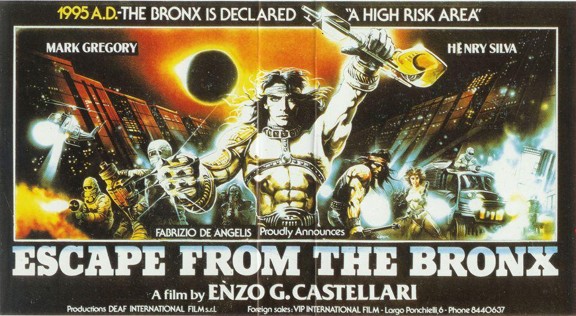
You just needed somebody wandering through a video store to see the cover and think:
That looks completely insane.
Mission accomplished.
Critics Saw a Mess. Cult Audiences Saw a Party.
The contemporary critical response was predictably brutal.
The film was dismissed as derivative, cheap and poorly dubbed, with reviewers understandably pointing out its resemblance to considerably more polished American productions.
And they weren’t wrong.
Escape from the Bronx absolutely owes a debt to Escape from New York and The Road Warrior.
But there’s something funny about criticizing an Italian exploitation movie for being an Italian exploitation movie.
This was never supposed to be a prestige production.
It was supposed to give audiences guns, explosions, dystopian imagery, outrageous villains and enough action to make the running time disappear.
By that standard, it succeeds.
Its flaws have become part of the experience.
The dubbing.
The questionable logic.
The bizarre costumes.
The occasionally shaky performances.
The gloriously improbable action sequences.
The fact that the movie appears to operate according to its own laws of physics.
These aren’t bugs anymore.
They’re features.
The Cult Lives On
Like many movies that critics couldn’t wait to bury, Escape from the Bronx eventually found people who loved it precisely because it was so ridiculous.
Its later exposure through Mystery Science Theater 3000 introduced its particular brand of cinematic madness to another generation, while boutique home-video labels helped preserve and restore the film for audiences interested in the stranger corners of 1980s genre cinema.
And that may be the perfect fate for Escape from the Bronx.
It was never going to be remembered alongside the great American science-fiction films of the decade.
It wasn’t going to win awards.
It wasn’t going to redefine the action genre.
But it didn’t need to.
It found its audience somewhere else.
Among the people who understand that sometimes the best reason to watch a movie is because somebody looked at a completely ridiculous idea and decided to make it anyway.
A Time Capsule of 1980s Excess
Watching Escape from the Bronx today is like opening a time capsule from the period when international exploitation filmmakers could take whatever was popular in American cinema, throw it into a blender with their own sensibilities, and release the result onto the world.
It’s derivative.
It’s cheap.
It’s chaotic.
It’s gloriously excessive.
And underneath all the explosions is something surprisingly recognizable: a fear of a future in which corporations decide that progress matters more than people.
Castellari just expresses that fear with flamethrowers.
There’s something almost poetic about that.
Escape from the Bronx wanted to be a big, muscular post-apocalyptic action epic. What it actually became was something more enduring in its own strange way: a piece of cinematic junk food that has survived because people kept coming back for another bite.
It isn’t Escape from New York.
It isn’t The Road Warrior.
It doesn’t have to be.
It’s Escape from the Bronx.
And sometimes, when you’re watching 174 people get killed in 89 minutes, that’s more than enough.

About the Creator
Movies of the 80s
We love the 1980s. Everything on this page is all about movies of the 1980s. Starting in 1980 and working our way the decade, we are preserving the stories and movies of the greatest decade, the 80s. https://www.youtube.com/@Moviesofthe80s
Enjoyed the story? Support the Creator.
Subscribe for free to receive all their stories in your feed.
Comments
There are no comments for this story
Be the first to respond and start the conversation.