
Effi O Blaenau
Welsh Womanhood – Survival and Spirit


SPOILERS *** SPOILERS *** SPOILERS *** SPOILERS *** SPOILERS
I’ve given you a content warning and I’ve spelled out that there are going to be spoilers. So, if you are still reading, that is on you.
And why are you reading? This is a review of a Welsh Language film with limited theatre release. Are you really ever going to watch it?
Well, you should. It’s worth hunting down and finding the time to consume, or more likely to be consumed by it. I’m not promising you a good time, but it will affect and absorb you.
But, say you are going to watch it – should you be reading a review that is definitely going to give spoilers?
I have struggled with all of this. Even before I went to see the film, I wondered what the point of writing about it would be. But now I’ve seen the movie, I feel compelled to write, because it touched me. I cried in the cinema. Not a gentle tear that I surreptitiously wiped away, but a full on blubbing waterfall, audible sobs, snot.
Yet, I still think, if you can, you should watch it; a small budget independent foreign-language film that deals with trauma based on the legend of the sacrifice of Iphigenia. I know none of that description sounds enticing.
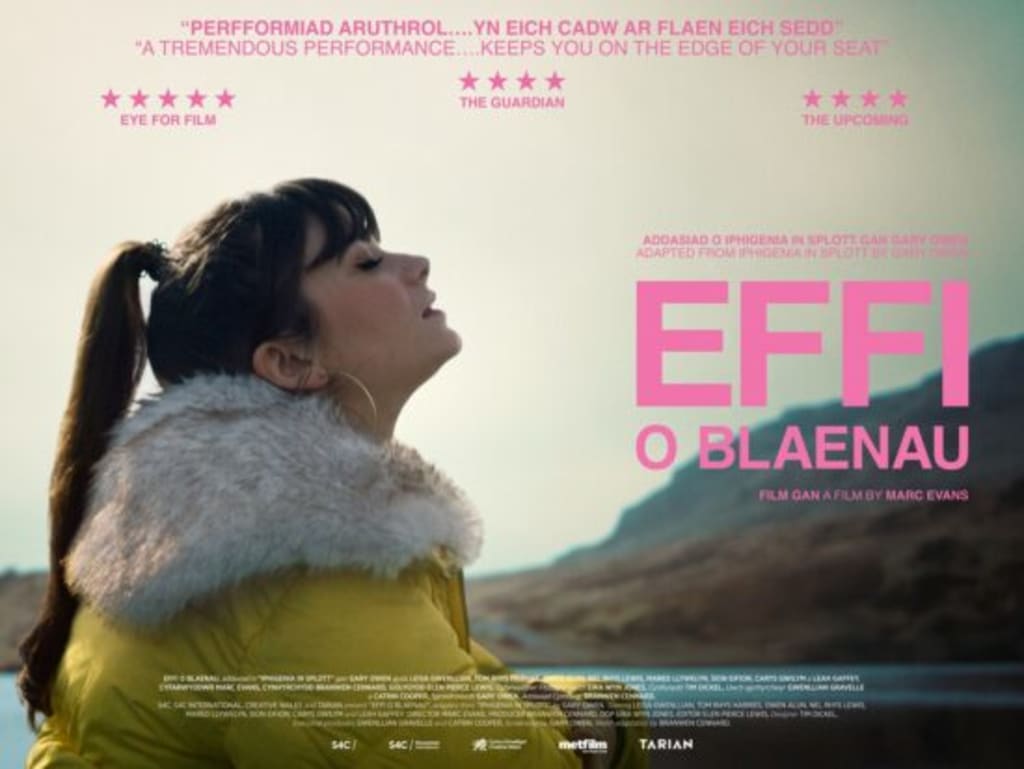
Effi O Blaenau follows our heroine, a young woman growing up in post-industrial North Wales determined to enjoy life with the help of vodka and scratch-card winnings. (Effi has no father, her mother has left and she has a poor relationship with her Nan). She is part of the Covid and austerity generation – a generation sacrificed for others’ mistakes and benefits. She admits in her punchy opening dialogue that life in Blaenau is about recovering from hangovers.
On a night out, paid for by a scratch card win, she notices and makes a play for a handsome young soldier, Lee. By the time they are alone in a bedroom in a rented apartment, she discovers he is an amputee. Effi demonstrates a tenderness that must’ve been lurking all along. However, this encounter is just one glorious night – leaving Effi ghosted and pregnant.
Effi is sacrificed. She is sacrificed to recover Lee’s impotency. And her daughter is sacrificed by politicians because of austerity cuts.
In a system that cuts health care budgets, it is women’s health that is sacrificed. Working class women’s lives. No safety for a premature baby. No midwife in an ambulance. Another girl sacrificed. It is desperate, heartbreaking.
The depiction of a lost pregnancy is frightening, isolating, brutal and unflinching. An audible sob. A swallowed lump. Snot. Tears.
Welsh cinema and Welshness is often made and depicted by the non-Welsh. It is about quaint, pretty landscapes, rural quirkiness and a weird language. But in Effi all the emotion is heightened through the use of Welsh – a language that has fought for its survival since Tudor times. It is a language that is spattered with English words because it hasn’t been able to evolve its own vocabulary. It has been interrupted by history, distrust and disdain.
Effi also struggles to evolve her own vocabulary, reduced to vodka and rage. But her will to survive on her own terms also shines through.
The performance of Leisa Gwenllian will stay with me for a long time. She endowed the character with a stomping determination, a gait that reflected the difficulty of the terrain she has to traverse. There was a forthright passion to her love of life despite the local climate. She dazzled.
I don’t know if anyone will read this, but writing it helped me to get my thoughts in order. I just needed a space to say what I’d seen, what it might mean and how it made me feel. Understanding my response to this film, the raw, visceral grief it provoked, writing was about learning about myself, my reactions to the world and where my sympathies lie.
Cinema, at its finest, is an empathy machine. And I guess I just needed to write about the emotions the film stirred up, to find a way to handle it all. Thank you for reading, if you got this far.

If you've enjoyed what you have read, consider subscribing to my writing on Vocal. If you'd like to support my writing, you can do so by leaving a one-time tip or a regular pledge. Thank you.
About the Creator
Rachel Robbins
Writer-Performer based in the North of England. A joyous, flawed mess.
Please read my stories and enjoy. And if you can, please leave a tip. Money raised will be used towards funding a one-woman story-telling, comedy show.
Enjoyed the story? Support the Creator.
Subscribe for free to receive all their stories in your feed. You could also become a paid subscriber, letting them know you appreciate their work.
Comments
There are no comments for this story
Be the first to respond and start the conversation.