
'Eddie and the Cruisers' (1983): The Cult Classic That Bombed, Then Rocked
How a forgotten 1983 rock-and-roll mystery found an audience on HBO, turned a movie soundtrack into a platinum phenomenon, and made Michael Paré an ’80s icon

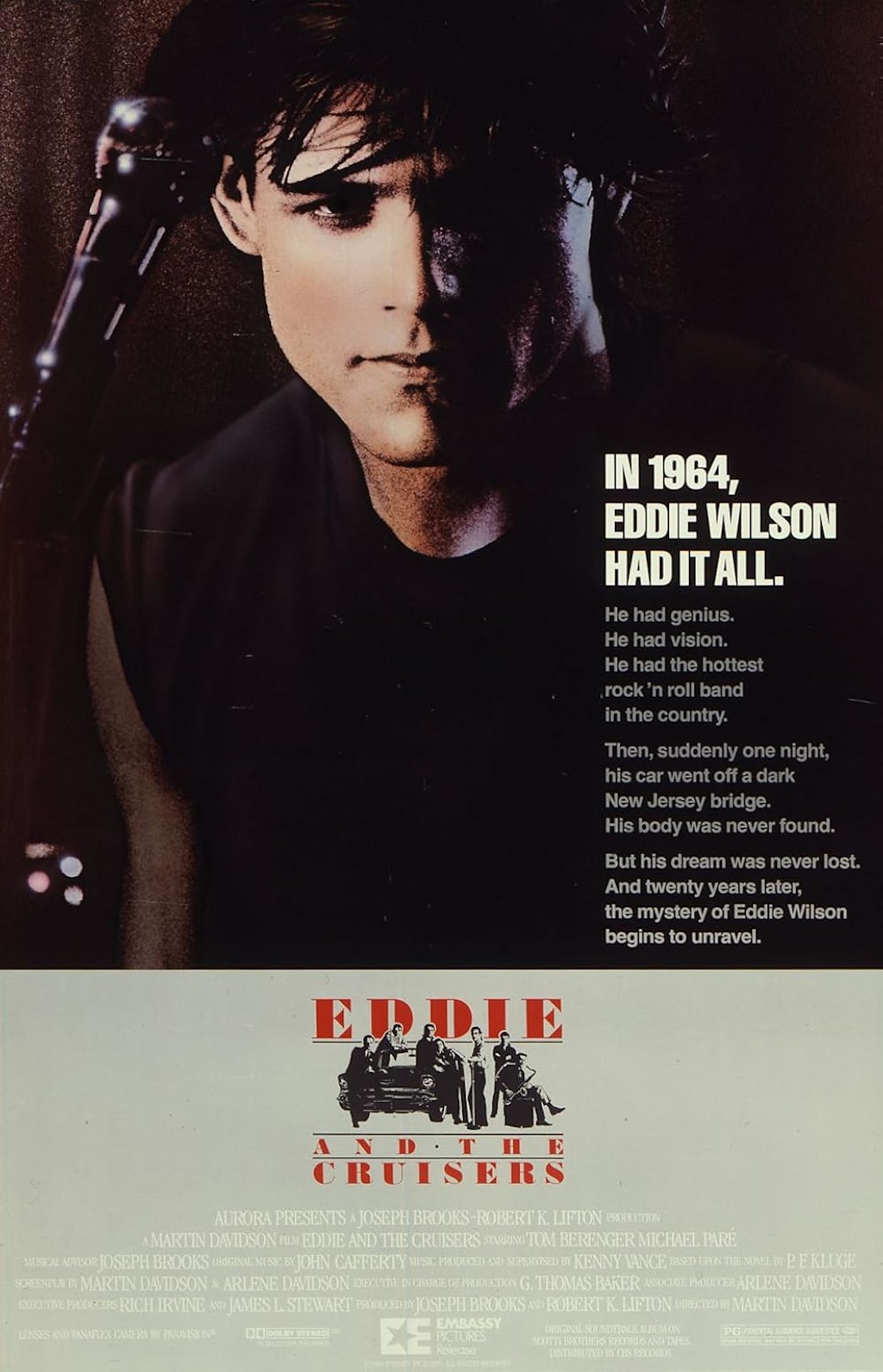
The Movie That Refused to Stay Dead
There are movies that become cult classics because they were misunderstood.
There are movies that become cult classics because they were ahead of their time.
And then there is Eddie and the Cruisers, a movie that became a cult classic largely because people kept finding it after Hollywood had already given up on it.
When Martin Davidson’s strange, melancholy rock-and-roll mystery opened in September 1983, it didn’t exactly set the box office on fire. It opened to about $1.4 million and eventually earned somewhere in the neighborhood of $4.7 million domestically. By the standards of the period, that was a disappointment for a movie made for several million dollars.
Then HBO got hold of it.
A year later, Eddie and the Cruisers began playing repeatedly on cable television, while its soundtrack suddenly started flying out of record stores. John Cafferty and the Beaver Brown Band’s “On the Dark Side” became a genuine hit. MTV played the video. The soundtrack eventually sold more than three million copies and was certified triple platinum. (The Numbers)
The movie that had seemed to disappear suddenly seemed to be everywhere.
And at the center of it all was Michael Paré, a young actor who had been working in a restaurant not long before Hollywood decided he might be the next great American movie star.
Paré looked like trouble.
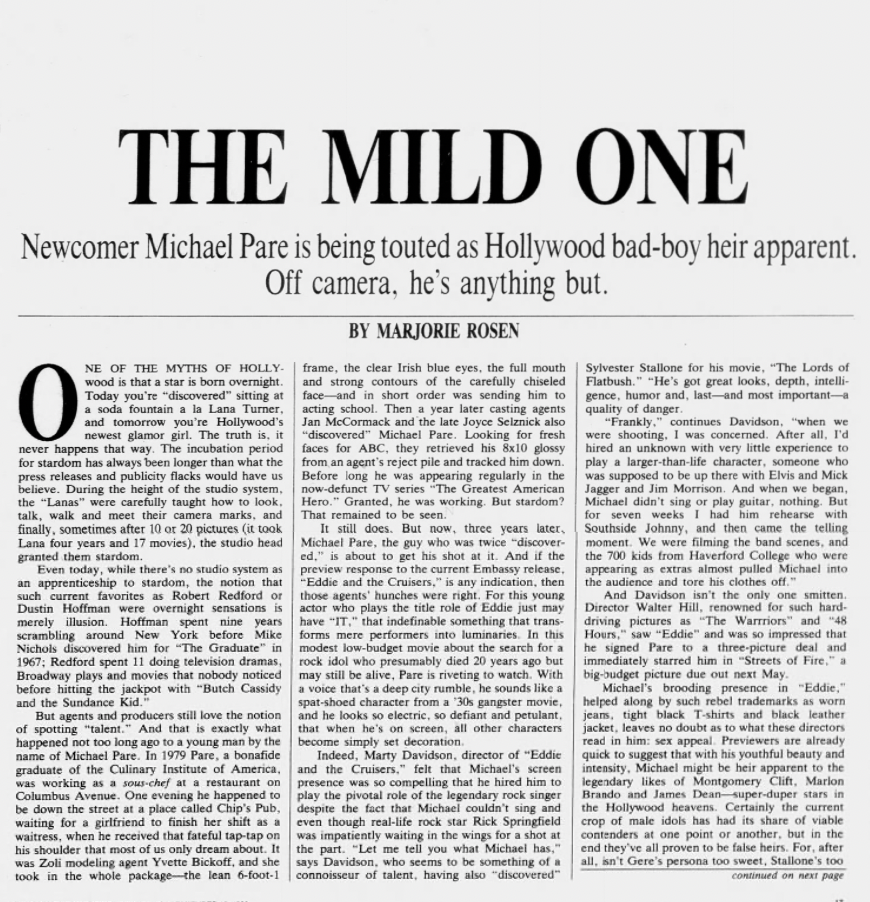
According to Marjorie Rosen’s September 18, 1983 profile in the Sunday News Magazine, Hollywood was already touting him as a potential bad-boy heir apparent. The joke was that off camera, Paré was anything but. Rosen described a young man whose personality was considerably sunnier and less dangerous than the rock star he played.
It was an unusually perfect bit of casting.
Because Eddie and the Cruisers is a movie about the creation of a rock-and-roll legend—and about how much more interesting the legend can become once the actual person disappears.
From Jersey Rocker to Mystery
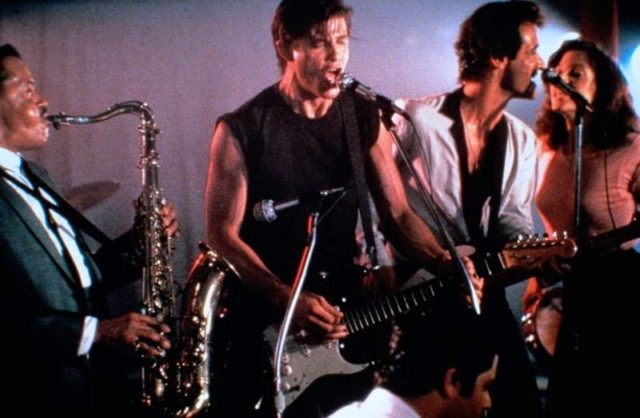
The movie begins nearly twenty years after the disappearance of Eddie Wilson.
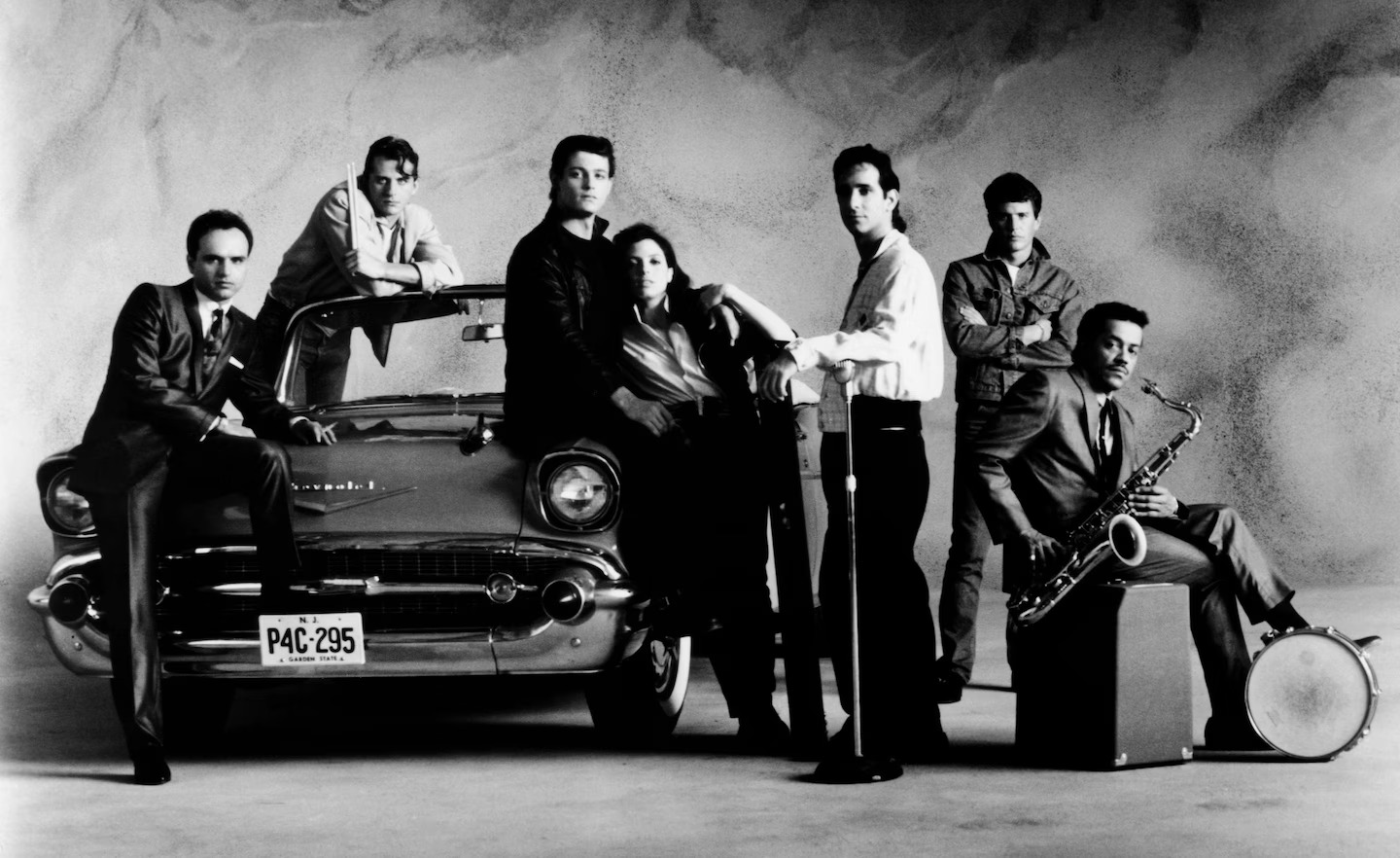
In 1963, Eddie was the volatile frontman of the Cruisers, a New Jersey rock band with ambitions that extended well beyond playing summer clubs. He is presumed dead after his car plunges from a bridge.
But Eddie’s story doesn’t really begin with his disappearance.
It begins with the music.
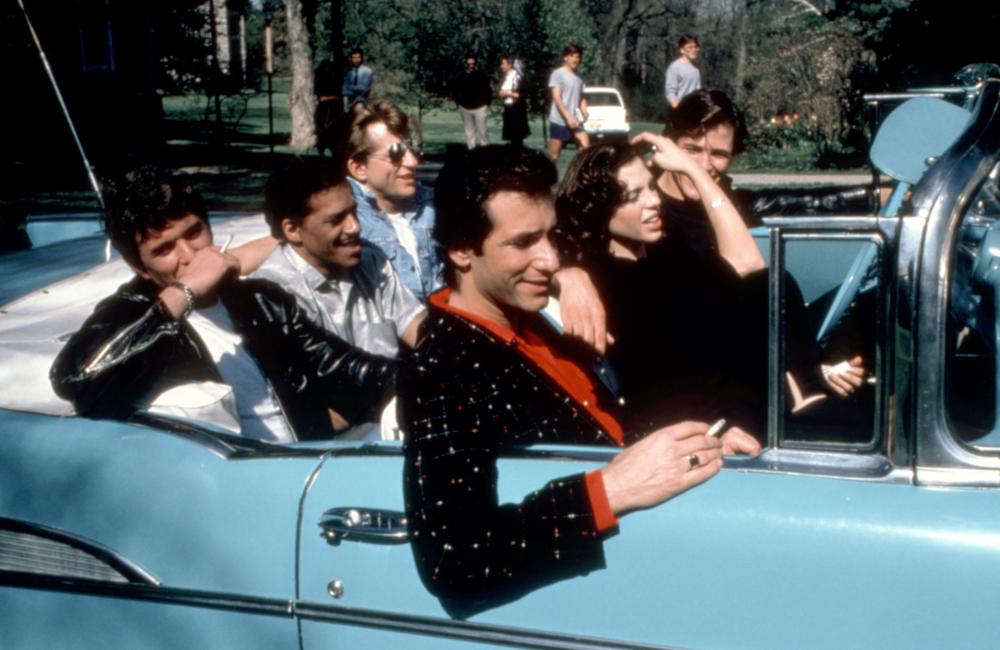
Frank “Wordman” Ridgeway, played by Tom Berenger, was the band’s lyricist and keyboard player. In the present day, he has settled into a respectable life as a high-school English teacher. The past, however, is still sitting somewhere inside him.
Then reporter Maggie Foley, played by Ellen Barkin, starts investigating the Cruisers.
She isn’t merely interested in an old rock band. She is interested in a mystery.
Where are the missing master tapes of the band’s unreleased album, A Season in Hell?
And if the tapes still exist, what happened to Eddie?
The structure is deliberately reminiscent of Citizen Kane: a central figure is already a legend when the investigation begins, and we reconstruct him through the memories of people who knew him.
Martin Davidson later described the idea succinctly: “That was in my head: the search.” (Wikipedia)
The film is therefore less interested in telling us who Eddie Wilson was than in allowing us to chase him.
That’s part of what makes Eddie and the Cruisers so fascinating.
It’s a rock movie in which the rock star is already a ghost.
The Book Was Different
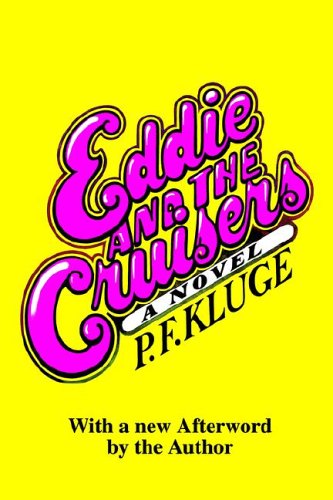
The movie was based on P.F. Kluge’s 1980 novel Eddie and the Cruisers, but Davidson’s film significantly reshaped the material.
Kluge’s novel imagined Eddie as more of a Dion-style doo-wop rocker. Davidson saw something else: a fictional musician who could embody several decades of American rock mythology at once.
He wanted Dion.
He wanted Jim Morrison.
And he wanted Bruce Springsteen.
Davidson later explained that he wanted to get his feelings about roughly 30 years of rock music into the movie. The result was an intentionally strange collision of the early-’60s Jersey shore, the literary aspirations of a young songwriter and the harder-edged rock mythology that audiences in the early 1980s already understood. (The Washington Post)
The biggest literary substitution was Arthur Rimbaud.
In Kluge’s novel, Walt Whitman’s Leaves of Grass plays an important role. The movie instead gives Eddie Rimbaud’s A Season in Hell, turning the missing album into both an artistic statement and a clue.
Eddie doesn’t want to make disposable pop music.
He wants to make something that lasts.
He wants to make something important.
And that ambition is what makes him increasingly unstable.
It also provides the movie with its central question: Did Eddie die, or did he deliberately disappear?
The Rimbaud connection makes the mystery possible. Rimbaud himself famously abandoned poetry while still young, becoming a figure of artistic disappearance and reinvention. In Davidson’s version, Eddie can therefore become something more than a dead rock star.
He can become an idea.
Making a Rock Movie in New Jersey
The road to production wasn’t particularly smooth.
The project was initially developed at Time-Life Films, with Joseph Brooks involved as producer. But Time-Life dissolved its film operation, and Aurora Productions eventually stepped in. AFI’s production record notes that Aurora gave Davidson a budget reported at $6 million in contemporary development coverage, while later sources have put the production budget at approximately $5 million; the trade press itself was not entirely consistent. (AFI Catalog)
What mattered was that Davidson finally got to make the movie.
And he made it in the places where the story actually belonged.
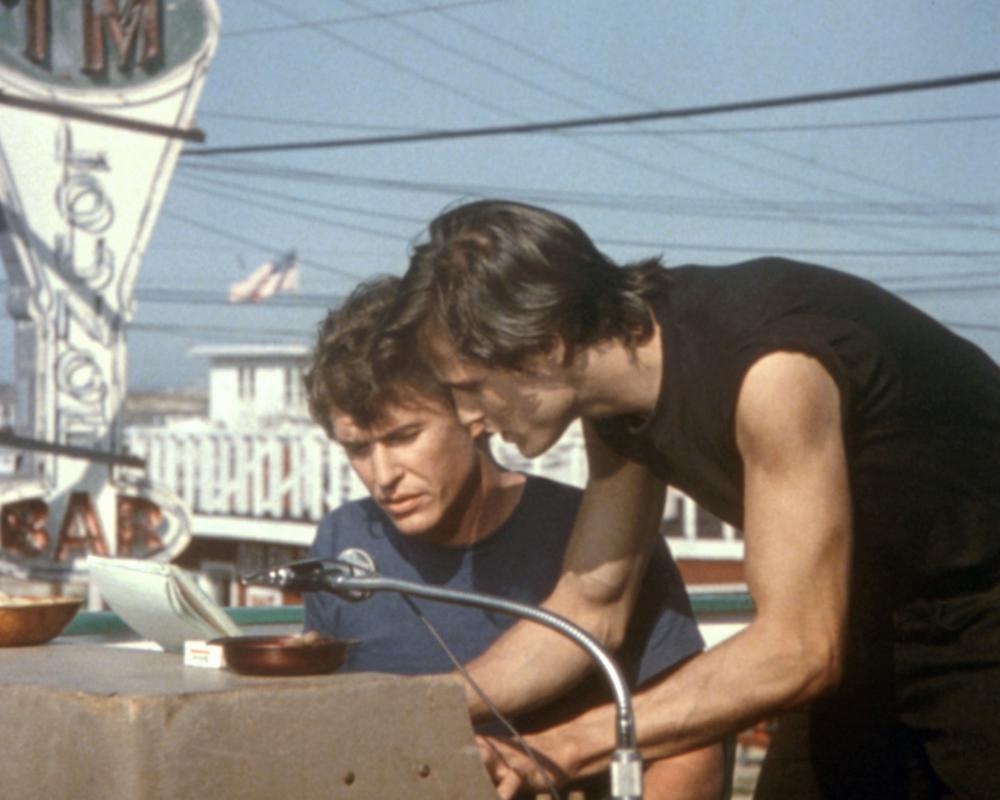
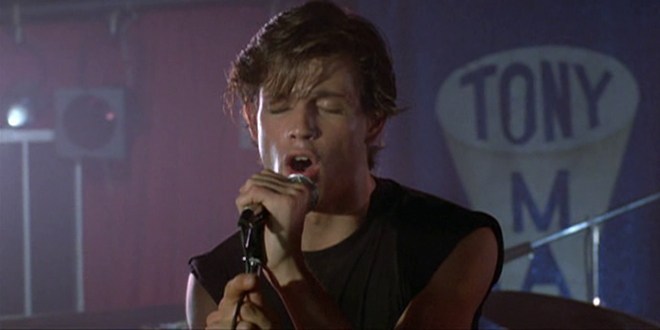
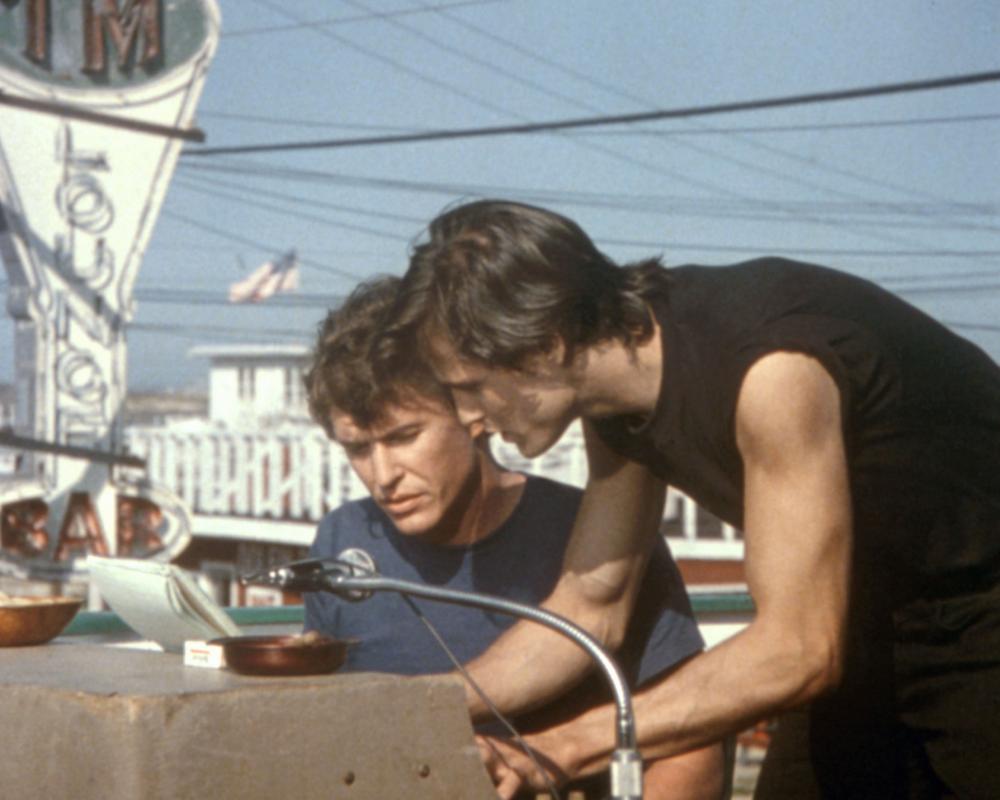
Production began in March 1982 and continued into early June, with New Jersey and New York locations. Tony Mart’s nightclub in Somers Point was one of the principal locations, while Ocean City and other South Jersey locations also appeared in the film. (AFI Catalog)
That location work is one of the movie’s secret weapons.
There is something wonderfully specific about Eddie and the Cruisers. It doesn’t look like Hollywood pretending to be the Jersey Shore.
It looks like the Jersey Shore.
The clubs, bridges, beaches and battered roadside locations give the movie a physical memory. Even when the story becomes increasingly melodramatic, the places feel real.
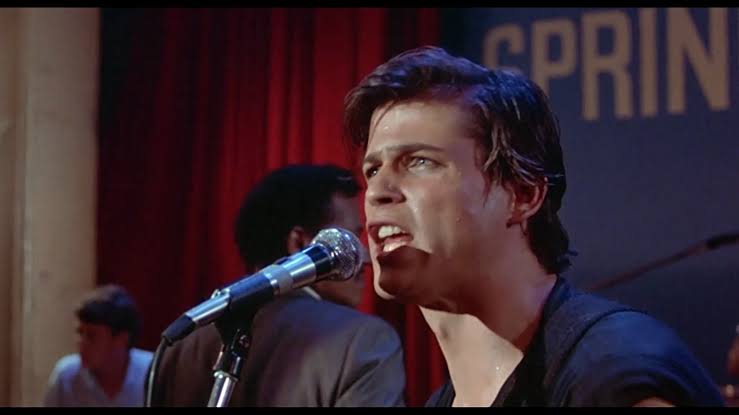
Tony Mart’s was especially appropriate. The legendary Somers Point nightclub had been part of the South Jersey entertainment scene, and Eddie and the Cruisers ended up preserving an image of the place on film just as its era was coming to an end. (Shore Local Newsmagazine)
Then They Found the Music
The movie needed one thing above everything else.
It needed a band that sounded convincing.
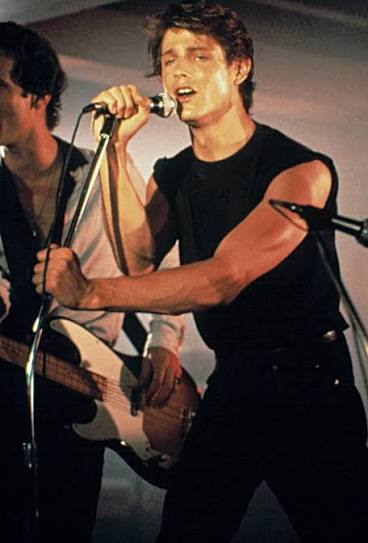
Music supervisor Kenny Vance initially explored several possibilities. Davidson’s imaginary Cruisers were supposed to contain traces of Dion, the Doors and Springsteen. Eventually Vance found John Cafferty and the Beaver Brown Band, a Providence, Rhode Island group whose sound fit the assignment remarkably well.
Cafferty was initially brought in to write songs, but the filmmakers were so impressed with the results that he wound up scoring the film as well. (AFI Catalog)
The music had to perform a particularly difficult trick.
It had to sound like the music of a fictional 1960s band while also sounding exciting enough to compete with the rock music of 1983.
That is why the soundtrack is both the movie’s greatest strength and one of its biggest historical cheats.
“On the Dark Side,” “Tender Years” and “Wild Summer Nights” sound fantastic.
They also don’t exactly sound like 1963.
That was not lost on contemporary critics. Janet Maslin of The New York Times specifically noted that Eddie’s music sounded good but sounded suspiciously like Bruce Springsteen and wouldn’t have been the rage in 1963. (IMDb)
But perhaps that is exactly why the soundtrack worked.
Eddie and the Cruisers isn’t really trying to recreate 1963.
It’s trying to recreate the memory of what rock-and-roll felt like.
Those aren’t necessarily the same thing.
Enter Michael Paré
Then there was Eddie.
Martin Davidson didn’t want a recognizable star. He wanted the audience to believe that Eddie Wilson had actually been a rock star.
That meant finding somebody who looked like he could walk onto a stage and command it.
Michael Paré was 23 when the film was made, and his path to Hollywood was hardly conventional.
As Marjorie Rosen reported in her September 18, 1983 Sunday News Magazine profile, Paré had graduated from the Culinary Institute of America and was working as a sous-chef when modeling agent Yvette Bickoff noticed him. That eventually led him toward acting and early television work, including The Greatest American Hero.
Then came Eddie Wilson.
Davidson told Rosen that he hired Paré for his “great looks, intelligence, humor and, last—and most important—a quality of danger.” Davidson wanted somebody who could stand “up there with Elvis and Mick Jagger and Jim Morrison.”
That is a pretty ridiculous amount of pressure to put on a young actor.
Paré reportedly spent seven weeks rehearsing for the role despite having no experience as a singer or guitarist. The movie’s production also worked to make the Cruisers feel like a genuine band rather than a collection of actors who had been assembled five minutes before shooting. AFI notes that the actors playing the Cruisers lived together for several weeks before filming. (AFI Catalog)
And then there is the funny part.
The man Hollywood was positioning as a dangerous new leading man was, according to Rosen, remarkably mild-mannered away from the camera.
Paré told her that if acting didn’t work out, he would open a restaurant.
Rosen’s description of the contrast between Paré and Eddie was almost comically stark: the actor was, in her words, “no more dangerous than a big warm puppy.”
That may have been exactly what Davidson needed.
Eddie Wilson wasn’t supposed to be Michael Paré.
He was supposed to be the movie star Michael Paré could become.
Hollywood’s Next Bad Boy?
The timing made the Paré story even more interesting.
Eddie and the Cruisers opened on September 23, 1983. Paré’s face was already being presented in the press as a potential new Hollywood discovery.
And Walter Hill was paying attention.
Hill cast Paré as Tom Cody in Streets of Fire, which went into production in 1983. Hill later described Paré as possessing a combination of toughness and innocence that made him right for the role. (Wikipedia)
So there was suddenly a young actor being positioned in two very different but related kinds of movie mythology.
Eddie Wilson was the rock star who wanted immortality.
Tom Cody was the mythic tough guy who rode into a city like he’d stepped out of a comic book.
Both roles depended heavily on Paré’s face.
He looked like he had lived more than he actually had.
And he looked like he might become something.
Then the Movie Opened
And almost nobody showed up.
The film opened wide on September 23, 1983, through Embassy Pictures. Its opening weekend was approximately $1.44 million, and its domestic theatrical gross ultimately landed around $4.7 million. (The Numbers)
AFI’s contemporary trade-paper record adds an important piece of context: Davidson had wanted a summer release, but Embassy couldn’t secure enough theaters for the planned August opening. The movie eventually arrived in September instead. (AFI Catalog)
That mattered because the movie was built around youth, rock music and nostalgia.
By late September, the summer was over.
Kids were back in school.
And whatever audience Embassy thought would turn Eddie and the Cruisers into a hit had largely moved on.
The reviews weren’t disastrous, but they weren’t exactly helpful either.
Roger Ebert gave the film two stars and famously complained that it was “all buildup and no payoff.” He liked the music and thought Paré successfully projected a charismatic rock-star image, but he found the movie’s central mystery and ending deeply unsatisfying. (Roger Ebert)
Janet Maslin was more generous about Paré. She called the film vivid and full of conviction while acknowledging that it could also be foolish. She specifically praised Paré’s debut and his convincing lip-syncing. (IMDb)
The larger problem was that the movie wanted to be several things at once.
A rock movie.
A mystery.
A literary drama.
A nostalgia piece.
A Citizen Kane riff.
A Bruce Springsteen fantasy.
Sometimes those ingredients work beautifully together.
Sometimes they crash into one another.
And Then HBO Happened
Here’s where the story gets good.
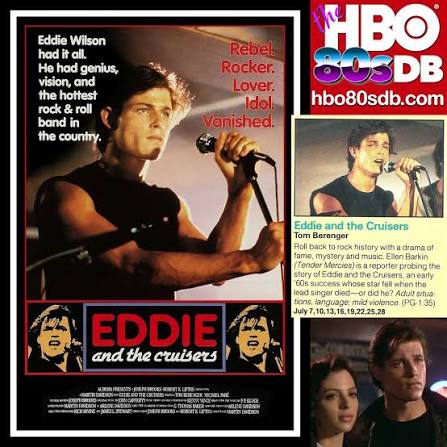
In July 1984, HBO showed Eddie and the Cruisers seven times.
Seven.
And suddenly people started watching.
The Washington Post reported that the soundtrack had been selling only about 175,000 copies by the summer. After the HBO broadcasts, sales jumped to 25,000 copies in a single week, then doubled the following week. By the end of August, the album had gone gold and then platinum. The “On the Dark Side” video also reached No. 1 on MTV. (The Washington Post)
The movie had not changed.
The audience had.
More importantly, the ecosystem around the movie had changed.
Cable television could give a movie a second chance.
Home video could keep that second chance alive.
MTV could turn a song from a soundtrack into an advertisement for the movie itself.
And a record could sell people on a movie they had never bothered to see in a theater.
This is the part of the Eddie and the Cruisers story that feels quintessentially 1980s.
The movie was born in the old theatrical system.
It was resurrected by the new one.
“On the Dark Side” Takes Over
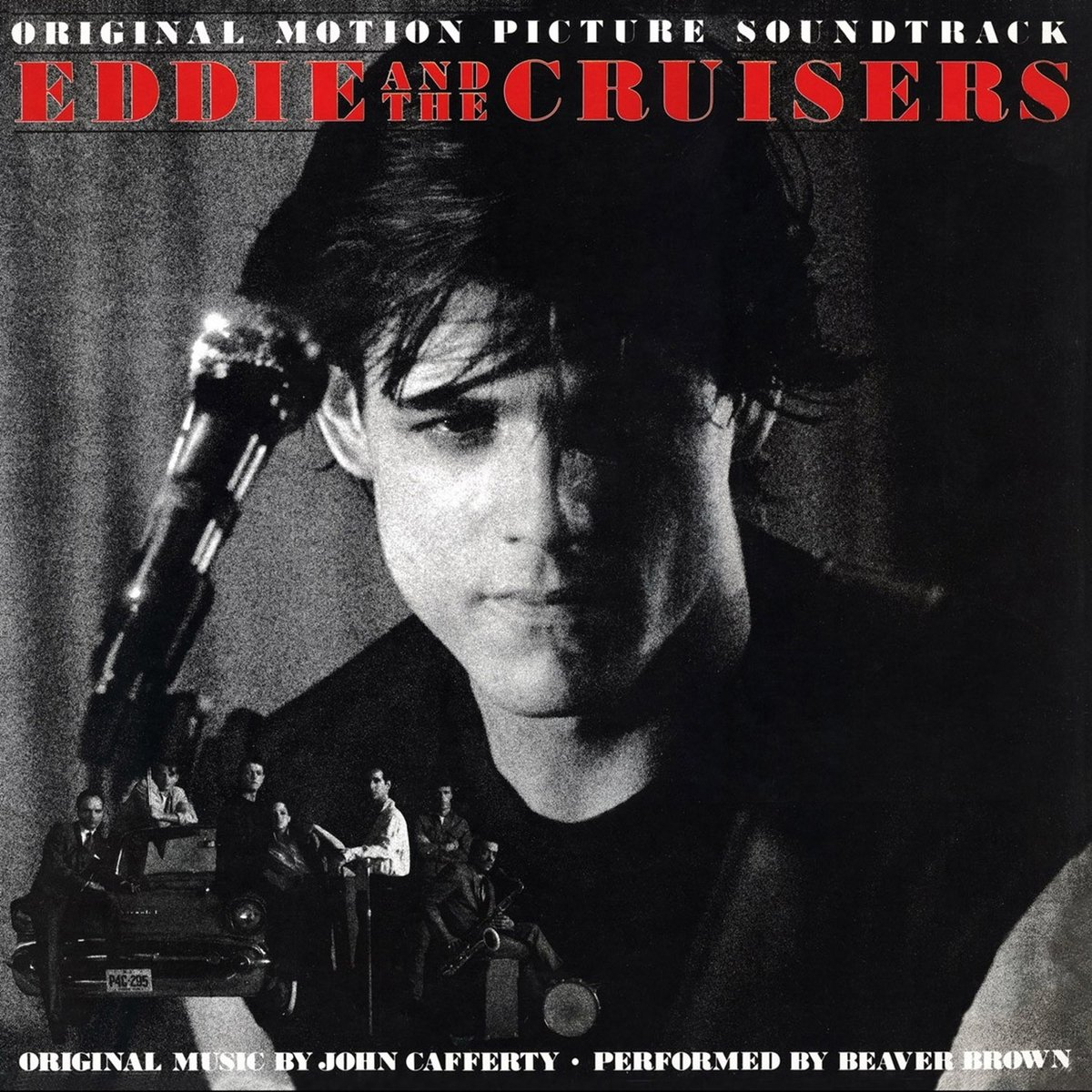
The soundtrack became the real phenomenon.
“On the Dark Side” eventually reached No. 7 on the Billboard Hot 100 and spent five weeks at No. 1 on the rock chart. The soundtrack itself ultimately sold more than three million copies and was certified triple platinum. (Wikipedia)
There is something almost beautifully absurd about this.
A fictional band from a movie nobody wanted suddenly had a hit record.
Except the band wasn’t fictional.
John Cafferty and the Beaver Brown Band were very real.
The movie had essentially created a fictional mythology around an actual working rock band, then sent the band’s music into the real world under the fictional Cruisers’ identity.
It was marketing, movie magic and pop culture feedback loop all at once.
And it worked.
The soundtrack became more famous than the movie that had created it.
Then the soundtrack brought people back to the movie.
The Second Life Became the Real Life
Embassy even attempted to capitalize on the phenomenon with a theatrical re-release in October 1984.
It didn’t work particularly well.
A contemporary Washington Post report noted that the re-release performed poorly despite the film’s newfound cable and soundtrack success. (The Washington Post)
And that tells us something important.
Eddie and the Cruisers wasn’t really rescued by a conventional theatrical comeback.
It was rescued by becoming something else.
It became a cable movie.
A VHS movie.
A soundtrack movie.
A movie people discovered accidentally.
That is how cult classics are often born. Not with one triumphant moment, but with thousands of people saying, “Wait. Have you ever seen this?”
The Ending Is Still the Ending
There is an irony to the movie’s reputation today.
The very thing critics hated about Eddie and the Cruisers—its refusal to provide a satisfying resolution to the Eddie mystery—is arguably part of what keeps the movie alive.
The movie wants Eddie Wilson to be bigger than a person.
And a conventional ending would reduce him to one.
Ebert wanted the mystery solved.
The movie wants the mystery preserved.
That doesn’t necessarily make the ending successful. It is still frustrating. The film spends so much time building toward the question of Eddie’s fate that its refusal to fully resolve that question can feel like cheating.
But maybe that’s the point.
Eddie has become a myth.
And myths are difficult things to kill.
Eddie Lives!
Hollywood eventually tried anyway.
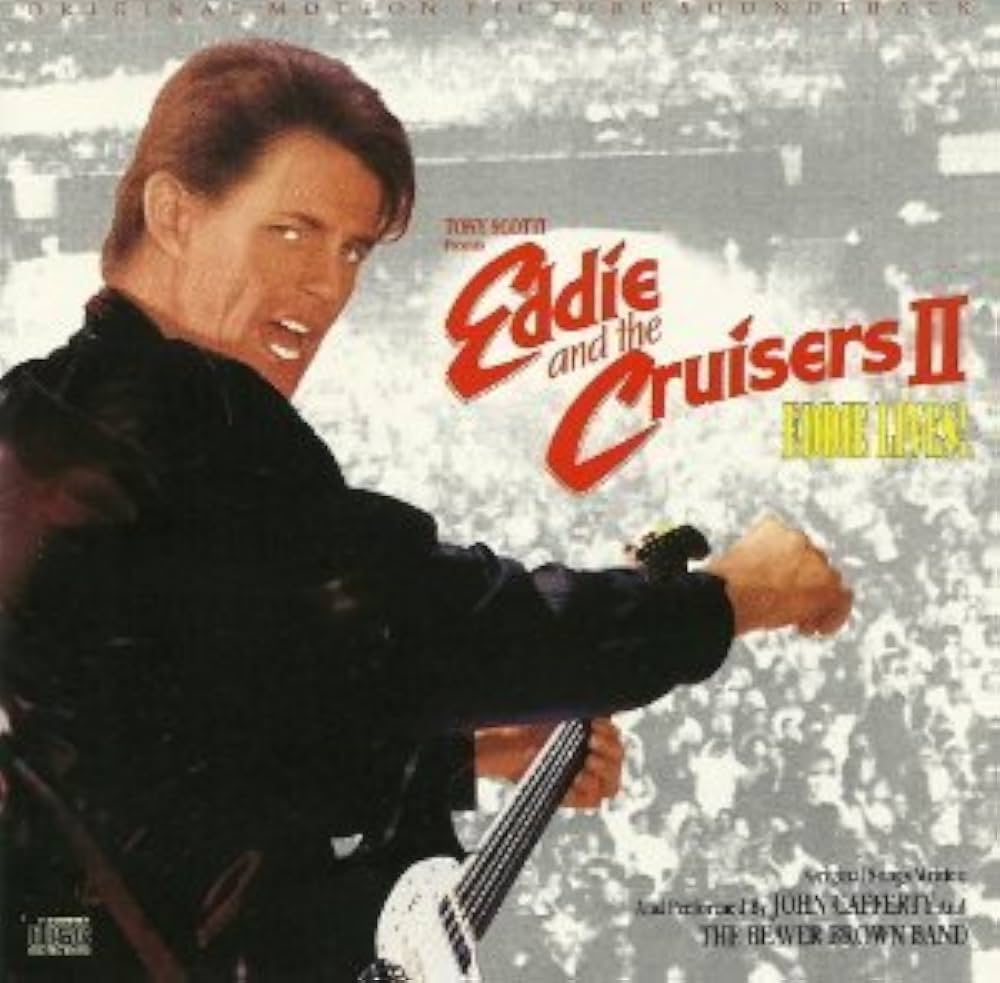
Eddie and the Cruisers II: Eddie Lives! arrived in 1989, with Michael Paré returning as Eddie Wilson. The sequel shifted the story toward Eddie living under another identity and pursuing a new musical life. Martin Davidson did not return.
It was not the second coming anyone had been waiting for.
The sequel earned only about $540,000 domestically, compared with roughly $4.7 million for the original. (IMDb)
But by then, the first movie had already become something that didn’t need a sequel to justify its existence.
It had an audience.
The Strange Immortality of Eddie Wilson
That’s why Eddie and the Cruisers is such a fascinating 1980s artifact.
It’s not a perfect movie.
In fact, some of the criticisms aimed at it in 1983 remain perfectly fair.
The plot can be contrived. The dialogue sometimes strains for profundity. The movie’s mythology occasionally becomes unintentionally funny. And yes, the music sounds far more like early-1980s Bruce Springsteen than anything a fictional New Jersey band would realistically have been recording in 1963.
But there is something there.
The locations.
The music.
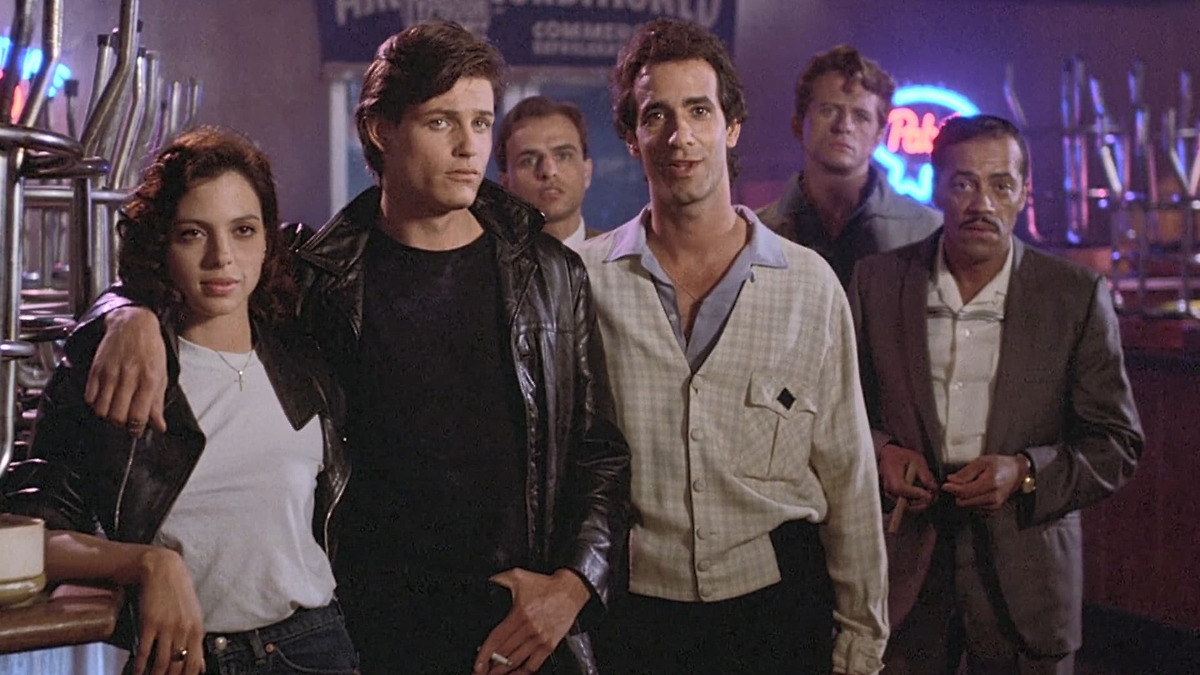
Tom Berenger before he became one of the defining faces of 1980s character acting.
Joe Pantoliano being Joe Pantoliano before everyone knew exactly what that meant.
Ellen Barkin at the beginning of her career.
And Michael Paré standing in the middle of it all, looking like someone had discovered a young rock star who had wandered onto a movie set by accident.
The contemporary profile of Paré makes the whole thing even more poignant.
At the precise moment Hollywood was trying to turn him into a larger-than-life bad boy, the real Paré apparently remained a relatively grounded young man who could still imagine returning to the restaurant business if acting didn’t work out.
There is something almost Eddie Wilson-like about that.
The actor was becoming a myth before he had quite figured out what his real life was supposed to be.
A Movie About Fame That Became Famous Late
Maybe that’s the best way to understand Eddie and the Cruisers.
It is a movie about what happens when an artist disappears.
But it became a movie about what happens when a movie disappears.
Eddie Wilson vanishes in 1963 and becomes a legend.
Eddie and the Cruisers vanishes in 1983 and becomes a cult movie.
The mechanism is almost identical.
People remember.
People tell other people.
Somebody finds the old record.
Somebody finds the VHS.
Somebody catches it on HBO at one in the morning.
And suddenly something that was supposed to be forgotten is alive again.
That’s the strange magic of the 1980s movie afterlife.
Hollywood could declare a movie dead.
Cable television could disagree.
And sometimes all it took was a killer soundtrack.
Eddie and the Cruisers may never have become the great rock-and-roll movie Martin Davidson imagined.
But it became something perhaps more appropriate.
A movie about a fictional rock star that developed a real cult following.
A soundtrack that became a hit after the movie failed.
And a young actor who was briefly sold to America as the next dangerous Hollywood heartthrob—even though the man underneath the leather jacket was apparently, as Marjorie Rosen put it, much closer to a big warm puppy.
Not a bad legacy for a movie that supposedly disappeared.
Sources and Fact-Check Notes
Production and release details are based primarily on the AFI Catalog’s production record, which draws on contemporary Variety, Hollywood Reporter, Daily Variety, Los Angeles Times and other trade sources. (AFI Catalog)
Contemporary critical reactions were checked against Roger Ebert’s September 23, 1983 review and the recorded Janet Maslin/New York Times review. (Roger Ebert)
The soundtrack’s 1984 revival was cross-checked against contemporary Washington Post reporting and later retrospective reporting. (The Washington Post)
Michael Paré’s early-career anecdotes and the quotations attributed to Paré and Martin Davidson come from Marjorie Rosen’s September 18, 1983 Sunday News Magazine profile, “The Mild One,” as cited in the research for this article.
Vocal Tags"
Eddie and the Cruisers, Michael Paré, Tom Berenger, John Cafferty, Beaver Brown Band, 1980s Movies, Cult Classics, Movies of the 80s, New Jersey Movies, Rock Movies, HBO, MTV, 1983 Movies, Movie Soundtracks, Forgotten Movies
Eddie and the Cruisers bombed in 1983, then became an ’80s cult classic thanks to HBO, MTV, Michael Paré and a blockbuster John Cafferty soundtrack.
About the Creator
Movies of the 80s
We love the 1980s. Everything on this page is all about movies of the 1980s. Starting in 1980 and working our way the decade, we are preserving the stories and movies of the greatest decade, the 80s. https://www.youtube.com/@Moviesofthe80s
Enjoyed the story? Support the Creator.
Subscribe for free to receive all their stories in your feed.
Comments
There are no comments for this story
Be the first to respond and start the conversation.