
Dune: The $40 Million Sci-Fi Nightmare That David Lynch Couldn’t Escape
David Lynch was given one of the most ambitious movies Hollywood had ever attempted. What he got was an impossible assignment, a production from hell, and a film he would spend decades trying to forget.

The Movie Hollywood Couldn’t Figure Out How to Make
There are movies that fail because they aren’t very good.
And then there are movies that seem almost destined to fail.
David Lynch’s Dune belongs firmly in the second category.
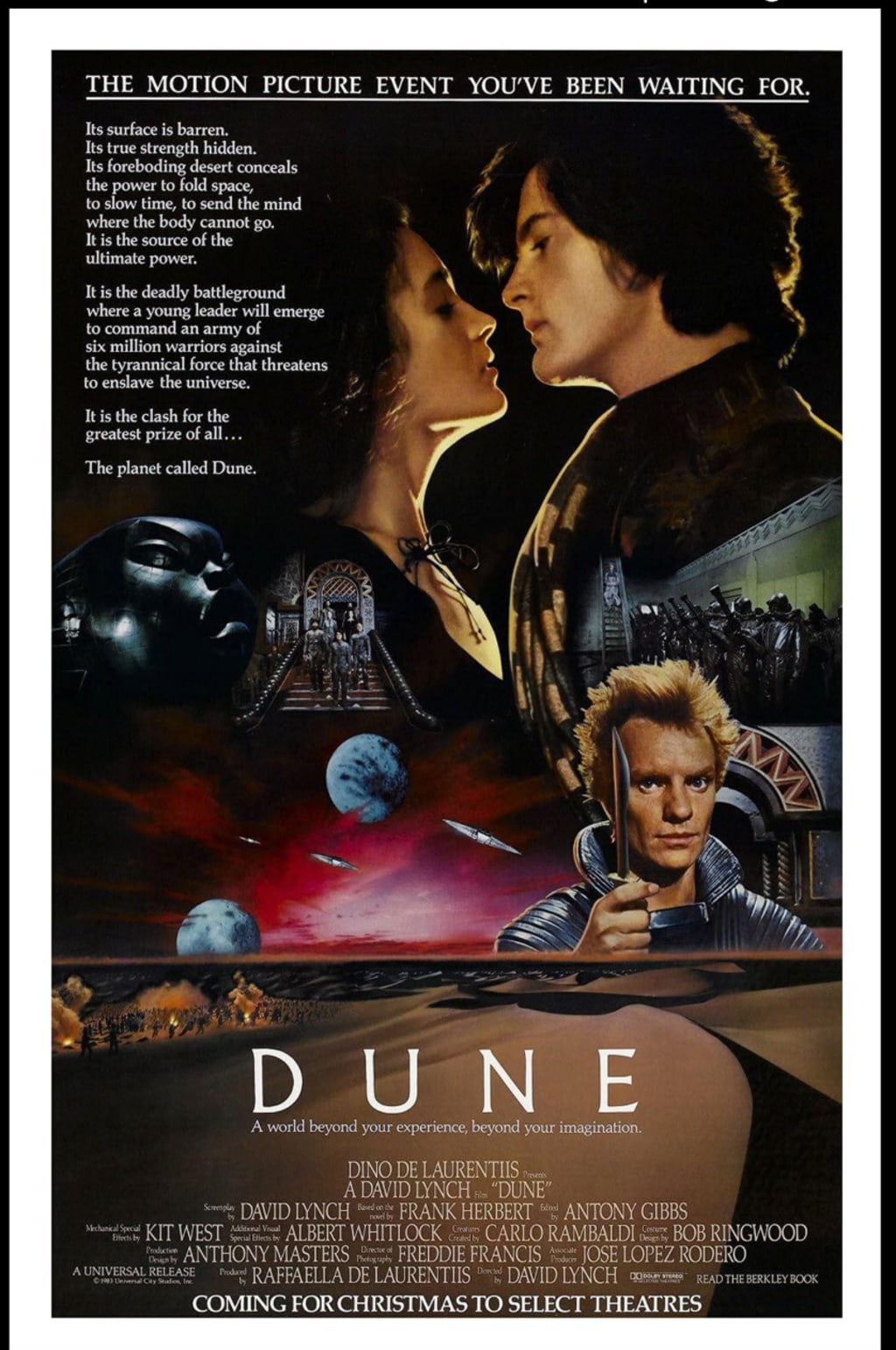
Released in December 1984, Dune was Universal Pictures’ attempt to turn Frank Herbert’s sprawling 1965 science-fiction masterpiece into the next great cinematic event. It had an enormous budget, elaborate sets, an international cast, a mountain of merchandising, and the kind of Hollywood expectations usually reserved for the next Star Wars.
It also had David Lynch.
That combination produced one of the strangest major studio films of the 1980s: visually magnificent, narratively overwhelmed, occasionally hypnotic, frequently ridiculous, and almost completely incapable of explaining itself without stopping the movie to explain itself.
The result was a box-office disappointment, a critical punching bag, and a deeply compromised adaptation that its own director would eventually disown.
And yet, more than four decades later, Lynch’s Dune refuses to disappear.

Hollywood Had Been Chasing Dune for Years
The story of Dune begins long before Lynch arrived on Arrakis.
Hollywood had been trying to make a movie out of Herbert’s novel almost from the moment it became a science-fiction sensation.
Producer Arthur P. Jacobs pursued the property and briefly had David Lean attached, but that version never materialized. Then came Alejandro Jodorowsky, who didn’t so much attempt to adapt Dune as attempt to reprogram the human brain through cinema.
Jodorowsky envisioned an enormous psychedelic epic featuring Salvador Dalí as the Emperor, Orson Welles as Baron Harkonnen, Pink Floyd providing the music, and an army of artists and designers creating a visual universe unlike anything audiences had ever seen.
It never got made.
But its influence survived. Elements of Jodorowsky’s aborted production would eventually find their way into the visual vocabulary of other science-fiction films, most famously Alien.
By the end of the 1970s, producer Dino De Laurentiis had taken control of the project.
Ridley Scott was hired and spent months developing his own version. Scott envisioned Dune as a massive two-part film, but the project became increasingly daunting. When the opportunity to make Blade Runner came along, Scott walked away.
That left De Laurentiis looking for another filmmaker willing to enter the desert.
David Lynch Chooses Arrakis
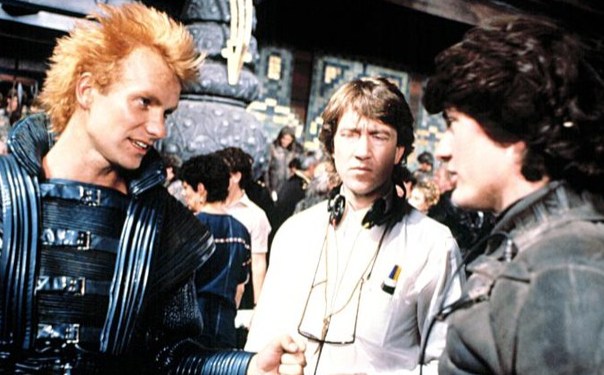
Enter David Lynch.
In 1981, Lynch was coming off The Elephant Man, a critical success that had established him as one of Hollywood’s most distinctive young directors.
He was also offered the opportunity to direct Return of the Jedi.
He turned it down.
Instead, Lynch chose Dune.
At the time, it must have seemed like an extraordinary opportunity. Lynch was being handed a massive budget and one of the most celebrated science-fiction properties in existence.
The problem was that Dune wasn’t really a story that wanted to fit inside a two-hour movie.
Herbert’s novel contains political intrigue, religious mythology, ecological philosophy, dynastic warfare, messianic themes, economics, assassination plots, psychic powers, interstellar politics and an entire vocabulary of invented terminology.
Lynch attempted to make it work largely through a series of rewrites, compressing an enormous amount of material into a single theatrical feature.
That decision would haunt the finished movie.
Welcome to the Desert
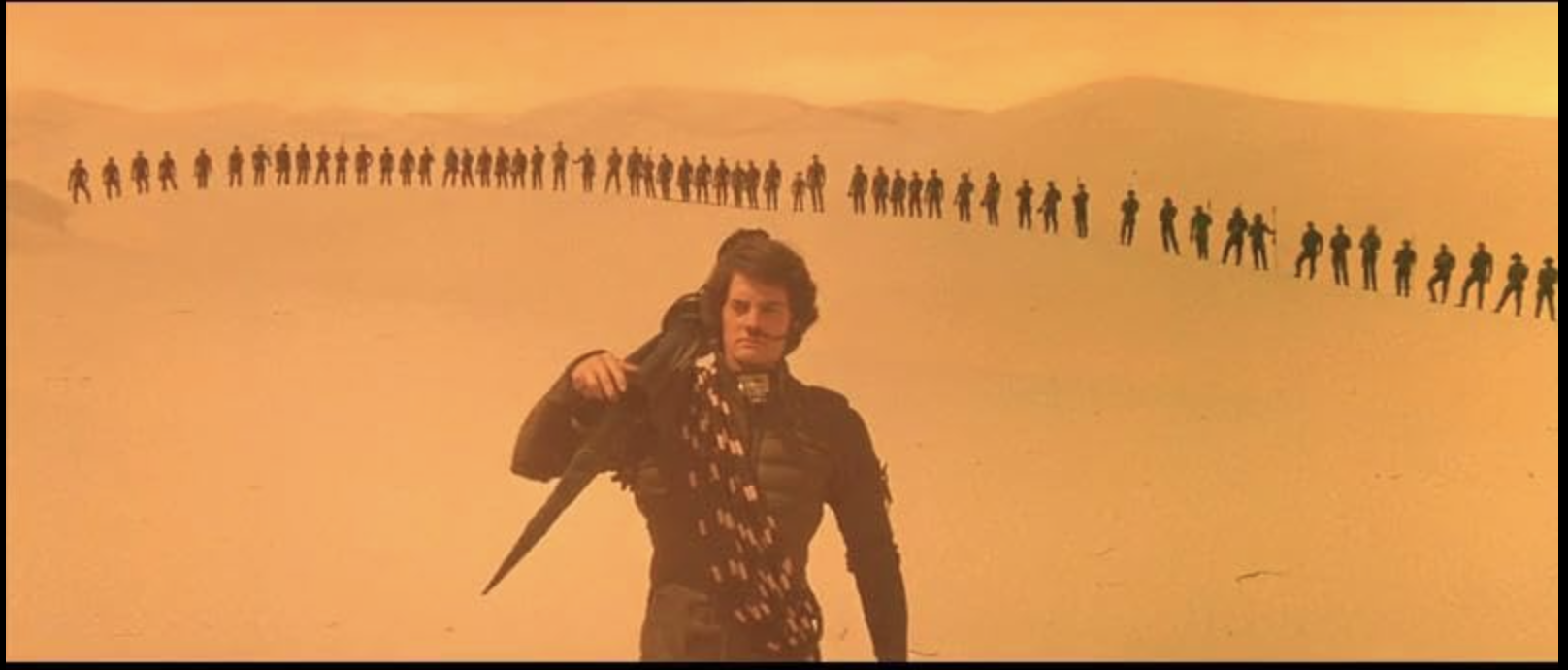
Production began in Mexico in 1983, with filming taking place primarily in Mexico City and Chihuahua.
The locations were chosen partly because production costs were considerably lower than they would have been in Hollywood.
That didn’t mean the production was easy.
Far from it.
Lynch’s Dune was enormous.
The production constructed dozens of major sets, employed thousands of extras and required an army of technicians, designers, artists and craftspeople. The sheer amount of physical material created for the movie is staggering.
And then there were the worms.
The sandworms of Arrakis were brought to life through elaborate practical effects, creating enormous creatures that look simultaneously impressive, grotesque and completely insane.
That description could apply to much of the movie.
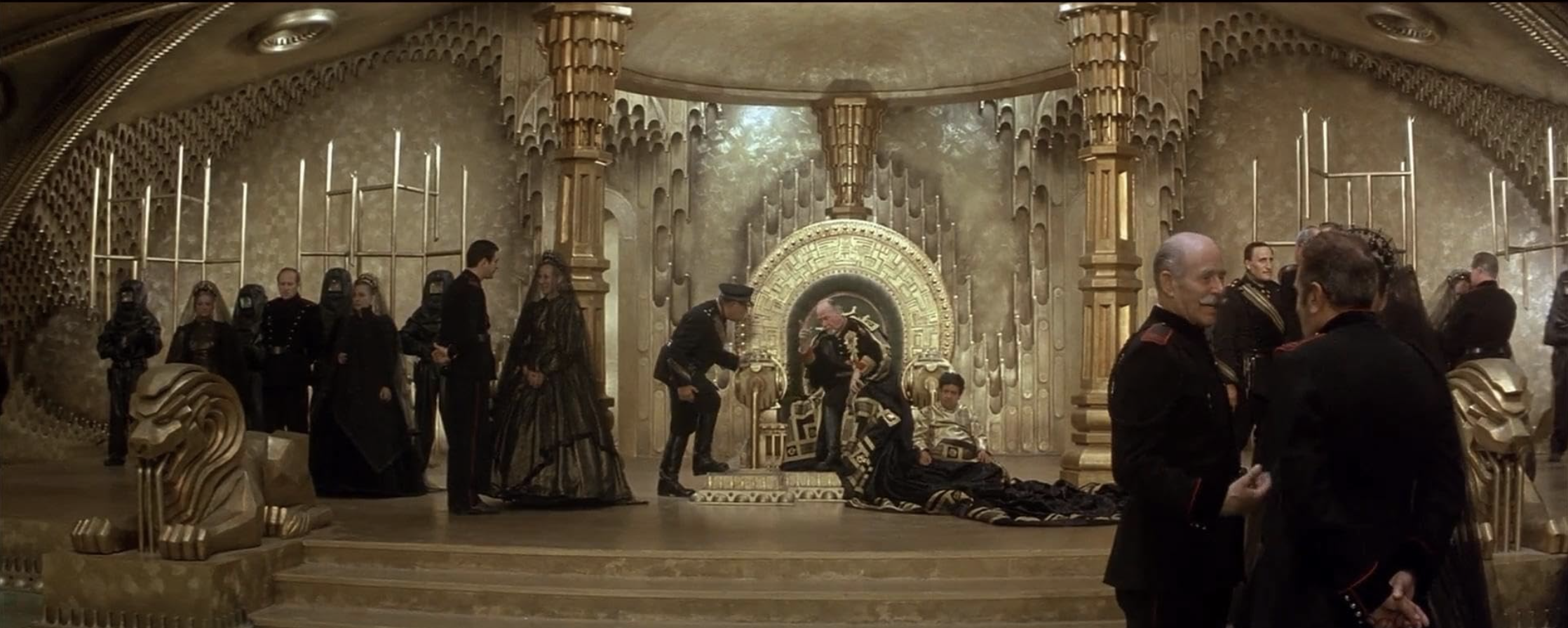
The Emperor’s palace and other major environments were filled with elaborate details that demonstrated just how much money had been spent creating this universe.
The irony is that Dune sometimes looks as though every dollar of its budget is visible on the screen except the dollars spent making the story understandable.
A Four-Hour Movie Becomes a 137-Minute Explanation
Lynch reportedly had a much longer version of the film in mind, but the theatrical release was ultimately cut down to approximately 137 minutes.
And this is where Dune begins to collapse under its own weight.
The movie knows that audiences need information.
So it gives them information.
And then more information.
And then someone explains something that was just explained.
And then there is a voice-over explaining what everyone is thinking.
And then another character explains the political situation.
And then someone else explains the mythology.
Instead of allowing the audience to discover Herbert’s universe organically, the film frequently feels as though it is desperately trying to hand them an instruction manual while the movie is already playing.
The result is one of the most infamous examples of cinematic exposition in 1980s Hollywood.
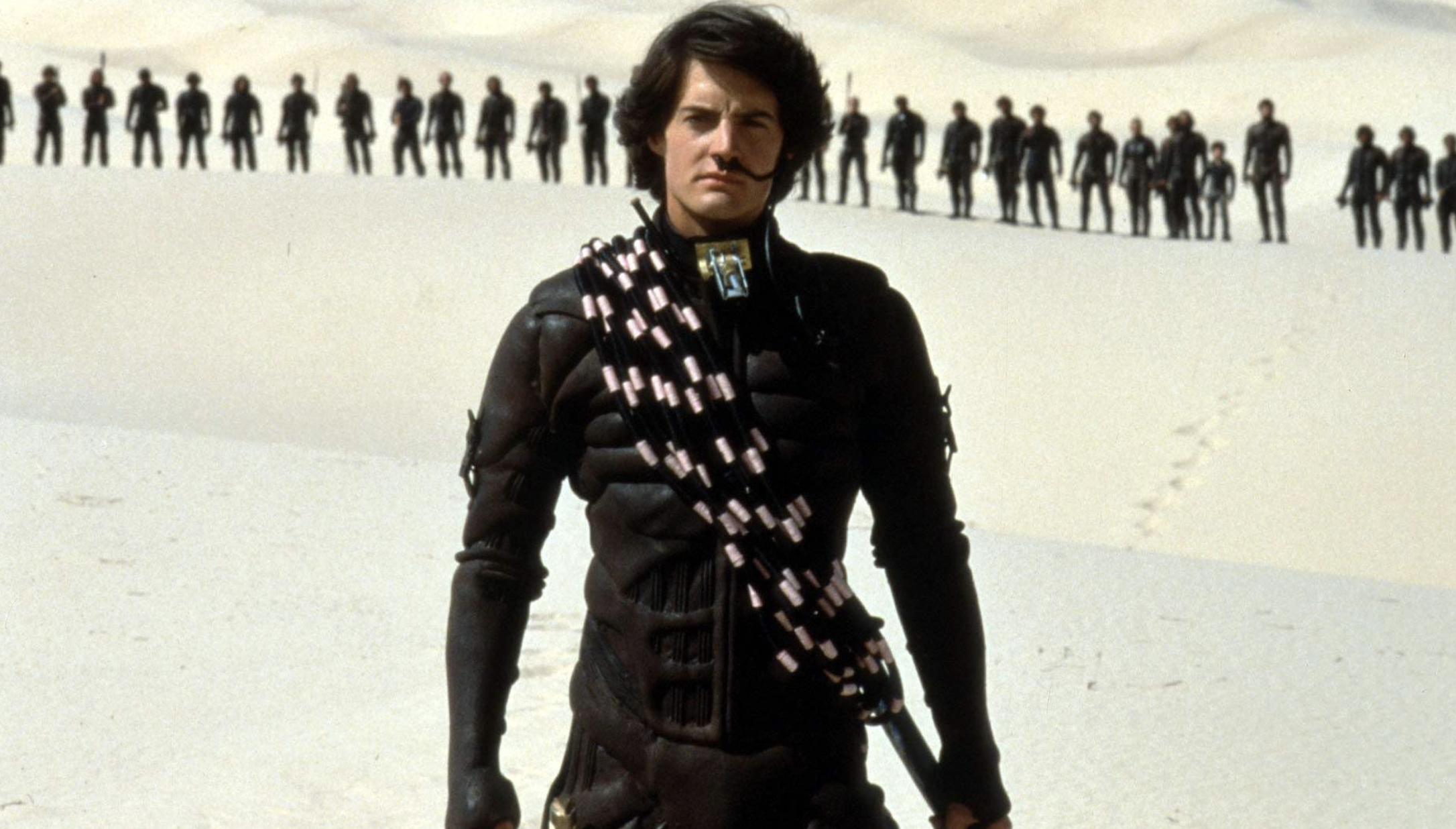
Lynch’s visual instincts are unmistakable. His strange compositions, grotesque imagery and dreamlike atmosphere are all over the film.
But the storytelling frequently feels like someone has taken an enormous novel, put it through a literary blender and then attempted to reconstruct it from the pieces.
And Then There’s the Cast
One of the strangest things about Dune is how extraordinary its cast is.
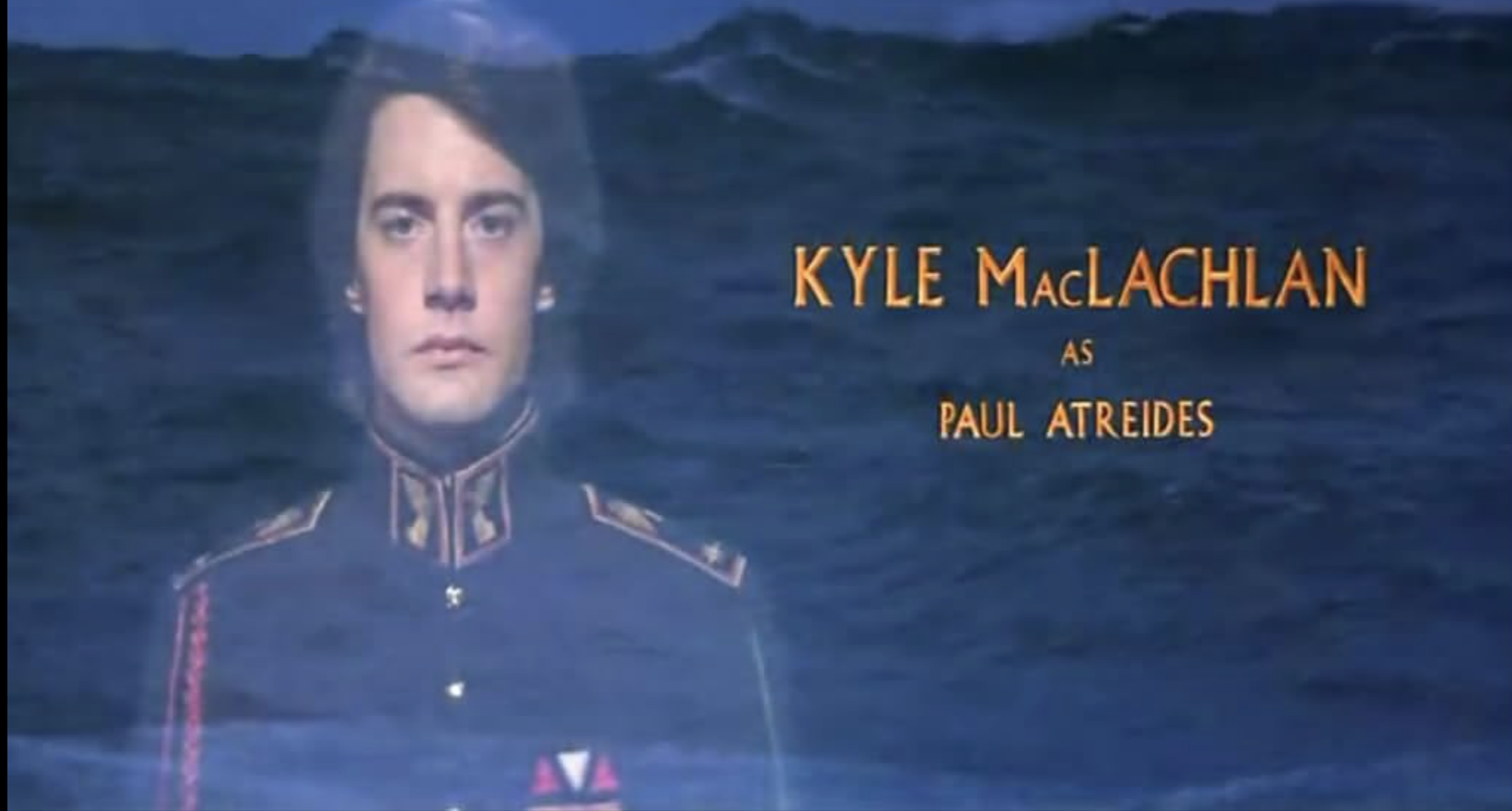
Kyle MacLachlan makes his feature-film debut as Paul Atreides, beginning a long creative relationship with Lynch that would eventually lead to Blue Velvet and Twin Peaks.
Francesca Annis plays Paul’s mother, Lady Jessica.
Patrick Stewart appears as Gurney Halleck.
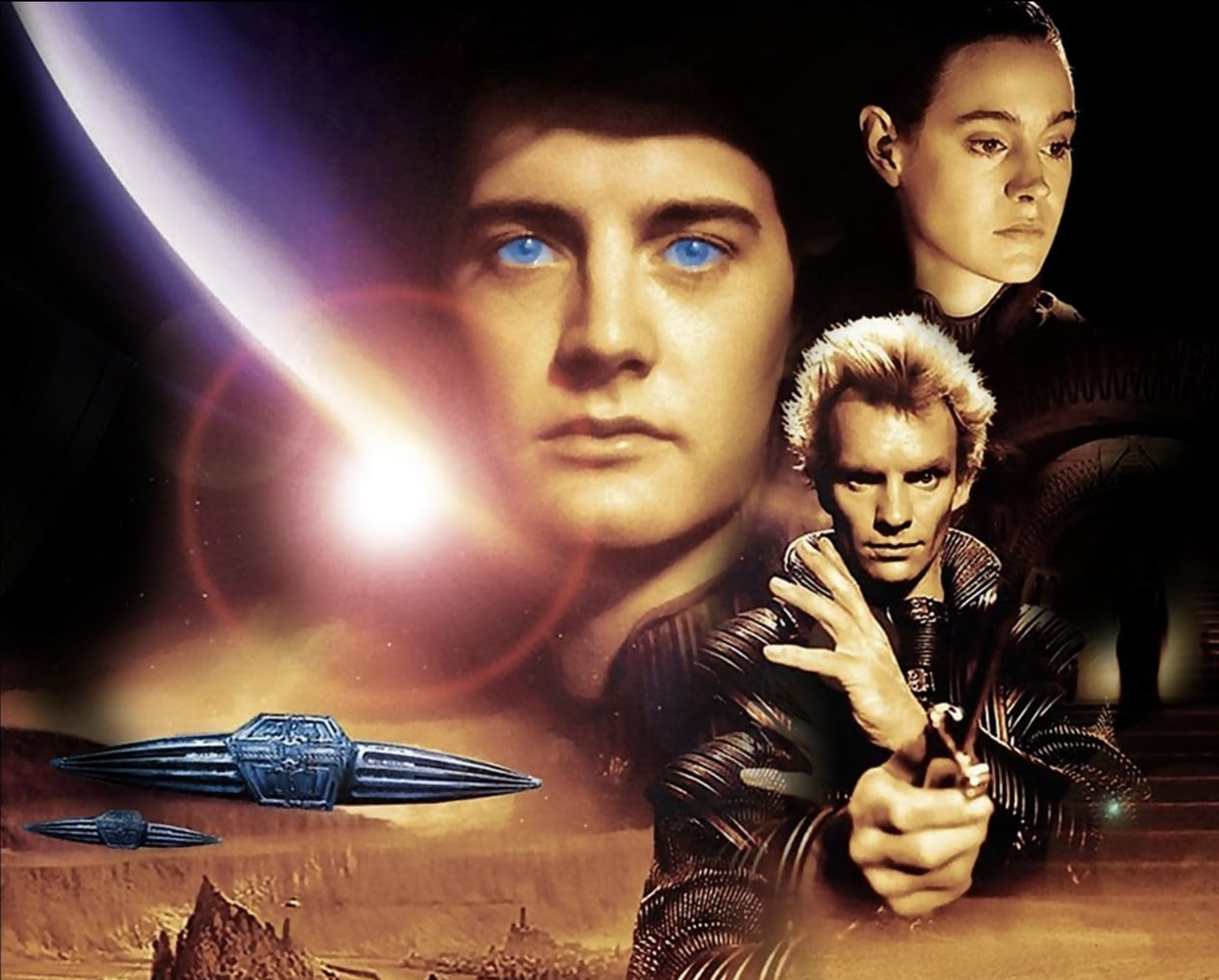
Sting plays Feyd-Rautha Harkonnen, bringing a bizarre rock-star energy to a movie already struggling to contain its own eccentricity.
And then there is Kenneth McMillan’s Baron Harkonnen, one of the most grotesque villains ever allowed to roam around a major studio production.
The performances range from restrained to theatrical to completely unhinged.
Sometimes all three happen in the same scene.
The cast is arguably better than the material they were given.
Universal Wanted the Next Star Wars
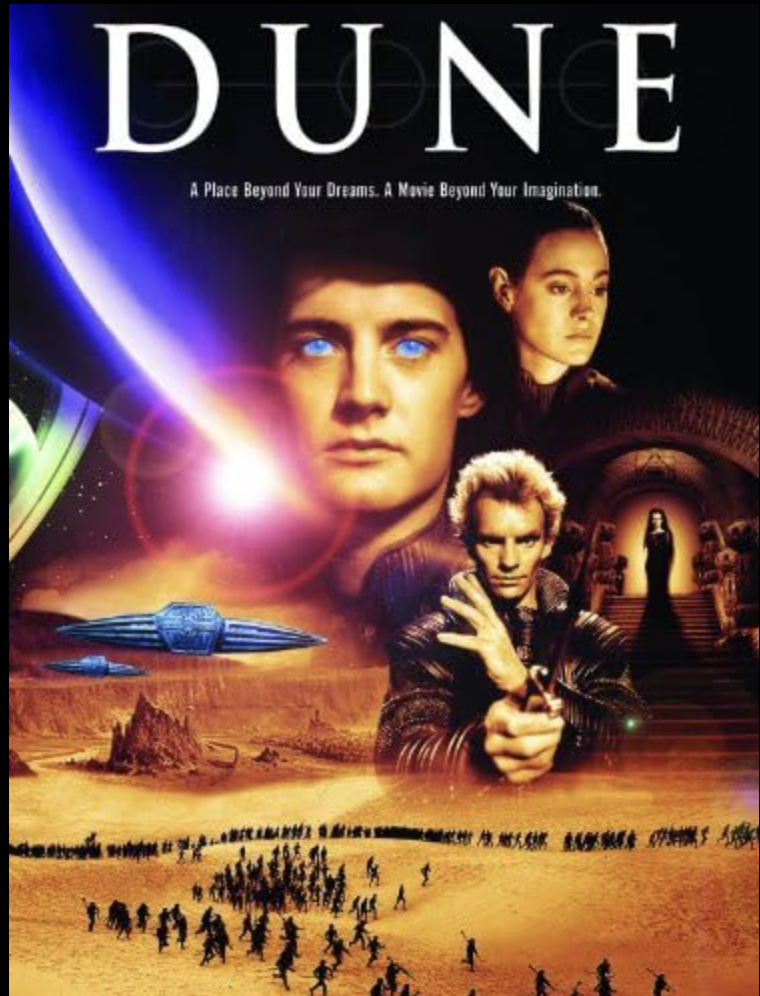
The expectations surrounding Dune were enormous.
Universal wasn’t simply releasing another science-fiction movie.
It was attempting to launch a franchise.
The marketing campaign was substantial, the merchandising was extensive, and the film was positioned as a major Christmas event.
But audiences had other ideas.
Dune opened in December 1984 against a marketplace dominated by Beverly Hills Cop, which was already becoming a cultural phenomenon.
The movie ultimately earned roughly $30.9 million domestically against a reported production budget of around $40 million.
For a film that had been envisioned as the beginning of a major science-fiction franchise, this was catastrophic.
The planned sequels never materialized.
The Dune franchise would have to wait decades for another serious attempt.
The Critics Were Not Kind
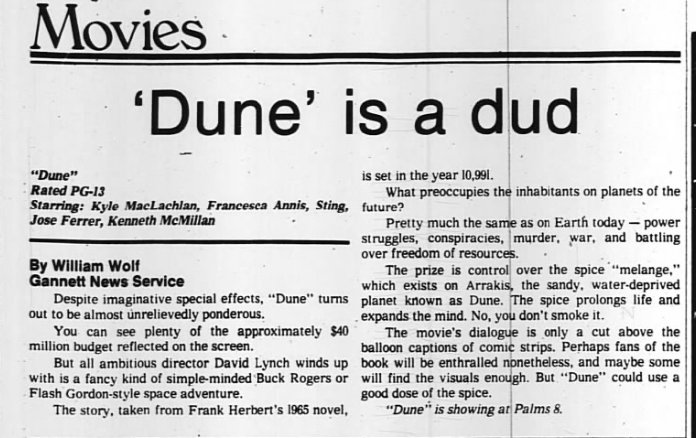
Critics absolutely demolished the movie.
Roger Ebert gave Dune one star, criticizing its lack of clarity and emotional connection.
Other reviews were similarly brutal.
The film was accused of being boring, incomprehensible, overstuffed and visually ugly.
And some of those criticisms were fair.
But there was also something strange happening in the critical response.
Dune wasn’t an ordinary bad movie.
It was a $40 million bad movie directed by David Lynch.
It was too strange to be conventional Hollywood garbage and too compromised to become the Lynchian nightmare it might have been.
There are flashes of something genuinely fascinating buried inside it.
The production design is often extraordinary. The miniatures and practical effects have a tangible physicality that modern computer-generated spectacle sometimes lacks. The film’s grotesque imagery occasionally feels like Lynch has managed to sneak into the studio’s expensive science-fiction epic and turn it into something considerably more disturbing.
The problem is that those flashes are surrounded by a story struggling desperately to breathe.
Even Lynch Couldn’t Escape It
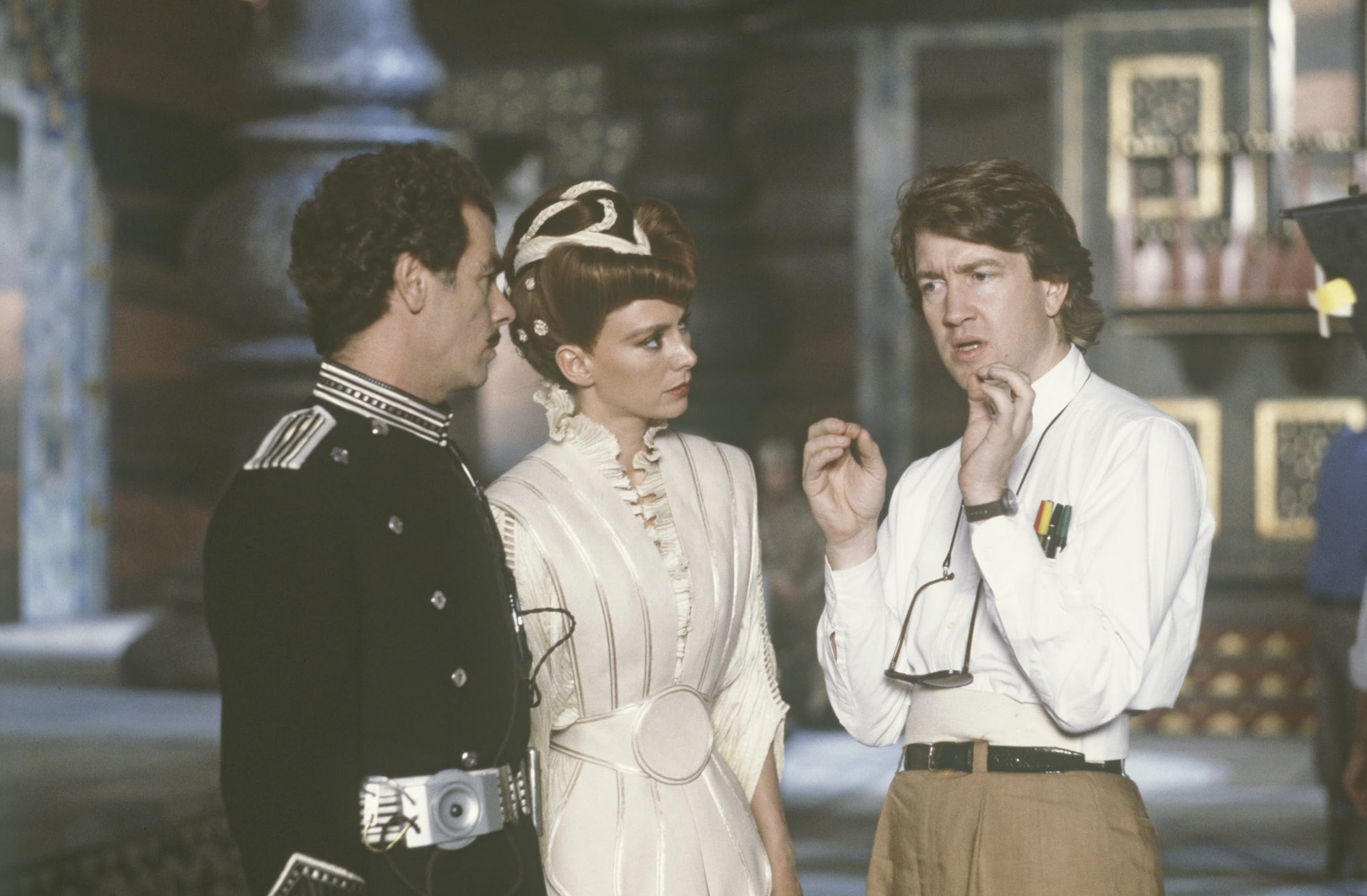
For Lynch, Dune became a defining professional wound.
He has spoken for years about the experience as an example of what happens when a filmmaker doesn’t have sufficient creative control over a project.
The film wasn’t simply unsuccessful.
It taught Lynch a lesson.
After Dune, he increasingly gravitated toward projects where his peculiar creative voice could exist without having to satisfy a studio’s desire for the next Star Wars.
That makes Dune particularly fascinating in retrospect.
It sits between two versions of David Lynch.
There is the filmmaker who wanted to make a massive studio science-fiction epic.
And there is the Lynch who would go on to make movies like Blue Velvet and Wild at Heart, and eventually create Twin Peaks—projects where his surrealism wasn’t something that had to be squeezed into a conventional blockbuster.
Dune is what happens when those two filmmakers collide.
The Movie That Became a Cult
For years, Dune was largely remembered as a spectacular failure.
Then something interesting happened.
People started watching it again.
The movie’s reputation softened—not necessarily because people suddenly decided it was a great adaptation, but because its failures became part of its fascination.
There is simply nothing quite like Lynch’s Dune.
It is too expensive to be an underground oddity and too strange to be a conventional blockbuster. It contains some of the most lavish production design of the decade alongside some of the most bewildering storytelling.
It is simultaneously beautiful and ugly.
Grand and cramped.
Serious and ridiculous.
Faithful to Herbert’s imagery while completely failing to capture the full experience of Herbert’s novel.
And Sting is wearing that thing.
Then Denis Villeneuve Came Along
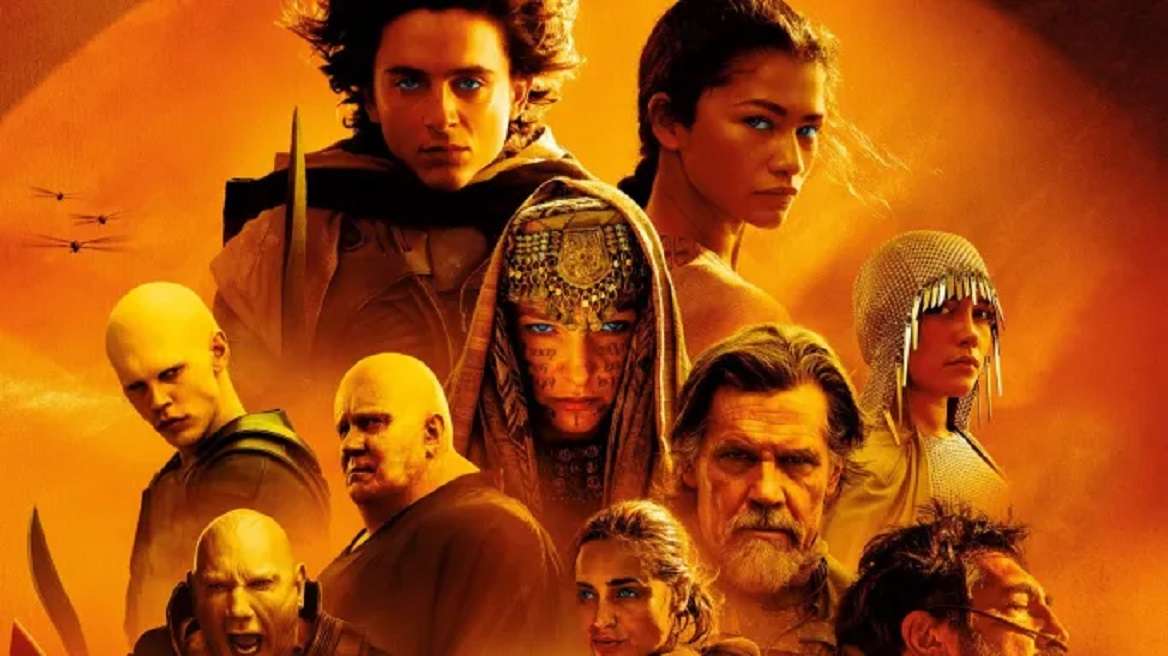
The irony of Dune becomes even more apparent when viewed alongside Denis Villeneuve’s two-part adaptation decades later.
Villeneuve had something Lynch didn’t: time.
Rather than trying to cram Herbert’s novel into one movie, Villeneuve split the story across multiple films, allowing the political, religious and ecological dimensions of the material room to breathe.
The contrast is enormous.
Villeneuve’s Dune demonstrates that Herbert’s novel may not have been impossible to film after all.
It may simply have been impossible to film the way Hollywood wanted to film it in 1984.
Lynch was asked to turn a sprawling novel into a single blockbuster.
Villeneuve was allowed to turn it into an epic.
That distinction may explain almost everything.
A Failure Worth Remembering
Calling David Lynch’s Dune a failure is easy.
Calling it boring is considerably harder.
Because even when the movie doesn’t work, it is almost never boring to look at.
There is something fascinating about watching one of Hollywood’s biggest studios spend an enormous amount of money attempting to manufacture the next Star Wars, only to hand the project to one of the strangest filmmakers in America.
The result was never going to be normal.
And perhaps that’s why Dune has survived.
It didn’t become the next Star Wars.
It didn’t launch a franchise.
It didn’t satisfy the critics.
It didn’t even satisfy its director.
Instead, it became something much stranger: a cinematic monument to Hollywood’s inability to recognize when a story is simply too big, too strange and too complicated to be squeezed into the shape of a conventional blockbuster.
David Lynch’s Dune is a magnificent mess.
It is a failed epic, a compromised masterpiece of production design, a bizarre piece of 1980s studio filmmaking and one of the great what-the-hell-were-they-thinking? movies of its era.
And perhaps that is exactly why, more than forty years later, we are still talking about it.

About the Creator
Movies of the 80s
We love the 1980s. Everything on this page is all about movies of the 1980s. Starting in 1980 and working our way the decade, we are preserving the stories and movies of the greatest decade, the 80s. https://www.youtube.com/@Moviesofthe80s
Enjoyed the story? Support the Creator.
Subscribe for free to receive all their stories in your feed.
Comments
There are no comments for this story
Be the first to respond and start the conversation.