
Documentary Review: 'You Can See Everything' is the Best Movie I've Seen in 2026
Nathan Fielder, Elizabeth Holmes, and the unsettling space between scientific possibility and practical reality.

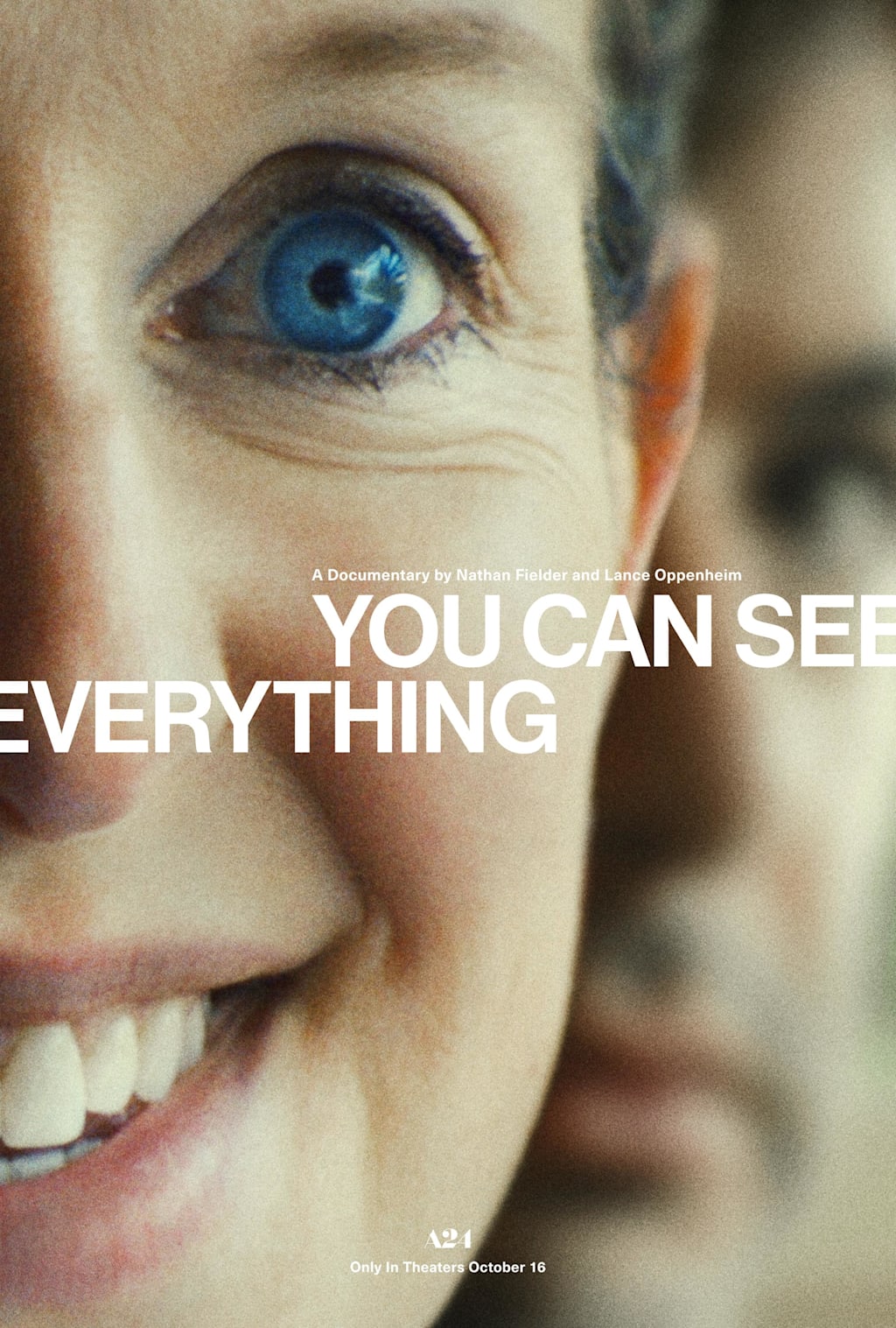
Directed by: Lance Oppenheim and Nathan Fielder
Genre: Documentary
Starring: Elizabeth Holmes and Nathan Fielder
Released: October 16, 2026
The Dyson Sphere and the Art of the Impossible
Science communicator and YouTuber Amanda Collier once did a video on a concept called the Dyson Sphere. The idea originated in a scientific paper written by physicist Freeman Dyson.
Forgive my simplification here, but it’s relevant to my point. Dyson’s idea was to harness the power of the sun by creating the infrastructure needed to mine the planet Jupiter for the materials required to build a sphere capable of capturing solar energy and creating a new, fully sustainable energy source.
You may have heard ChatGPT creator Sam Altman talk about the possibility of a Dyson Sphere. It’s become a popular theory among people who like to lie about what they understand about science.
You see, Dyson’s Sphere is solid science. It’s based on some fundamental truths and was written with rigor and attention to detail. That’s what makes it one of the great shitposts in academic and scientific history. Dyson wrote it with the intention of mocking scientists working in the field of alien research.
Essentially, Dyson’s theory was that if we started creating the infrastructure on Earth to build a Dyson Sphere, it would be fully ready for use in about 3,000 years. Technically, scientifically, theoretically, Freeman Dyson is right. But practically, the theory isn’t worth the paper it was written on.
The Difference Between Possible and Practical
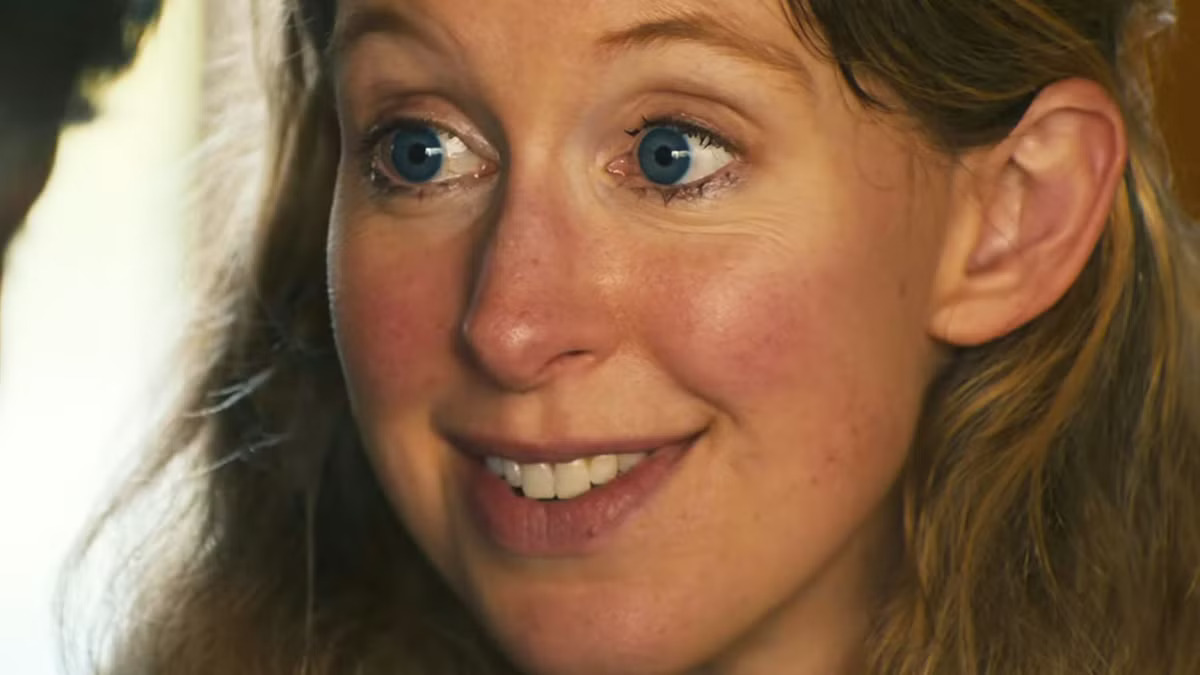
This brings me around to my larger point regarding the subject of the new documentary You Can See Everything: Elizabeth Holmes.
On a technical, theoretical basis, the machine that made Theranos one of the most funded firms in Silicon Valley history is possible.
But the Theranos machine she created, and likely the one she and her husband, Billy Evans, are allegedly creating now, won’t exist until we reach a place in the future of blood science where we can actually, practically accomplish the things Holmes, and now Evans, claim they are capable of.
Give them 3,000 years, along with the infrastructure of current science, and the machine they’re dreaming of might be possible. It’s just not practical. (For the record '3000' years is my own number, not the genuinely known time it will take to accomplish the needed blood science.)
And that’s where Elizabeth Holmes, and now Billy Evans, live: within that theoretical possibility that is simply waiting for the actual science to catch up with their multimillion-dollar ambitions, regardless of how wildly impractical that ambition may be in the immediate future.
This means that when Elizabeth, in You Can See Everything, says she never lies, she’s still probably lying. But she’s also created an internal infrastructure that allows her to believe the outlandish things she claims.
It’s an ugly, dark, and rather disturbing gray area, one that exists in defiance of common sense. It’s how many supposed sociopaths, or, at the very least, debate bros, manage to claim victory in various arguments, hiding the truth in clouds of smoke and mirrored reflections.
Nathan Fielder Wants to Know the Truth
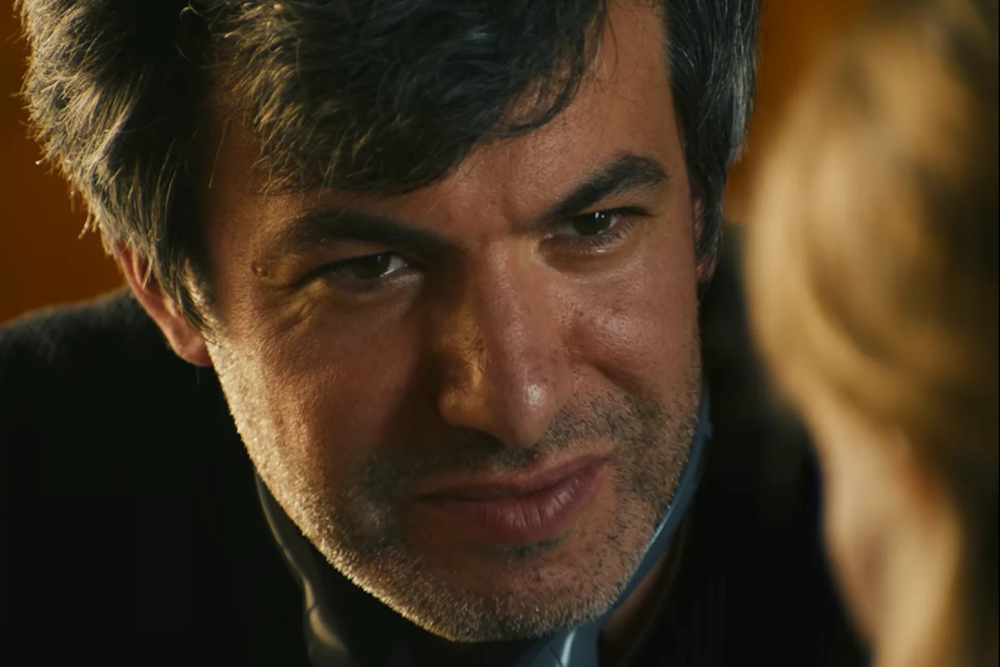
For someone like Nathan Fielder, this kind of uncertainty, where the truth should be clear but isn’t, is a point of frustration and fascination. Fielder has made a career of confronting problems from odd angles to find a truth obfuscated by good and bad intentions.
The clash of Fielder and Holmes is thus truly electric.
Nathan approaches with skepticism, while Billy Evans runs interference that seems to border on abuse, if not at least bullying. This interference allows a further cloud to settle around Elizabeth, one that Nathan is determined to penetrate, to the point of obsession.
This collision and interference create an electricity that makes You Can See Everything a thrilling and lively experience. It’s an edge-of-your-seat kind of drama that never lets up. By the end, we’re as consumed with our desire to understand or demystify Elizabeth Holmes as Nathan Fielder is.

The Beautiful, Terrifying Space Between Trth and Lies
You Can See Everything is the best documentary I’ve ever seen and the best movie I’ve seen in 2026.
I’ve never had an experience quite like You Can See Everything. The documentary is hours long, and I could have watched six more hours of this incredible, remarkable, ingenious work of nonfiction.
There’s something deeply unsettling about watching someone inhabit a world where the distinction between what is theoretically possible and what is actually true has all but disappeared. It’s one thing to dream about the future of science. It’s another to build a business, a fortune, and an identity around a future that hasn’t arrived.
That’s the space Elizabeth Holmes occupies, and it’s the space Nathan Fielder is determined to explore. The result is a documentary that is as fascinating as it is disturbing, one that leaves you wondering whether the truth is being deliberately obscured or whether the people obscuring it have lost the ability to recognize it themselves.
Either way, it’s a hell of a thing to watch.
Tags: You Can See Everything, Elizabeth Holmes, Nathan Fielder, Lance Oppenheim, Theranos, Documentary, Film Review, 2026 Movies, Science, Technology, Silicon Valley
About the Creator
Sean Patrick
Hello, my name is Sean Patrick He/Him, and I am a film critic and podcast host for the I Hate Critics Movie Review Podcast I am a voting member of the Critics Choice Association, the group behind the annual Critics Choice Awards.
Enjoyed the story? Support the Creator.
Subscribe for free to receive all their stories in your feed. You could also become a paid subscriber, letting them know you appreciate their work.
Comments
There are no comments for this story
Be the first to respond and start the conversation.